


Why Small Steps Matter in Your Relationship, Especially Abroad

Looking for couple relationship building exercises? Here are some quick, effective methods to strengthen your bond:
- Communicate better: Daily check-ins, active listening, and “I feel” statements can clear up misunderstandings.
- Deepen emotional connection: Try gratitude exchanges, love maps, or even silent soul gazing to feel closer.
- Build trust and teamwork: Create shared vision boards or plan “micro-trips” together.
- Boost intimacy: A simple 20-second hug can work wonders for physical connection.
You love each other, but lately, does something feel off? Perhaps it’s the daily grind or the pressure of building a new life abroad. For expats, adapting to a city like Barcelona brings unique stresses. Language barriers, cultural differences, and distance from family can strain even the strongest relationships.
Feeling disconnected is common, even when you’re together. But small, consistent actions can make a huge difference. Relationship building isn’t about grand gestures; it’s about the daily efforts that reconnect you, build trust, and reignite your spark.
Why Couple Relationship Building Exercises Are a Game-Changer
Life is a whirlwind, and it’s easy for relationships to slip into autopilot. A vibrant partnership can start to feel more like a comfortable routine, leaving you feeling like flatmates instead of connected partners. This drift is common and often felt more acutely by expats.
This is why putting in intentional effort through dedicated couple relationship building exercises is a game-changer. It’s about proactively nurturing your bond to thrive as a united front.
Effective communication is the heart of a happy relationship. Studies consistently show that couples who communicate well report higher satisfaction and longevity, while poor communication leads to dissatisfaction. You can explore these findings about communication and satisfaction here.
For expats, the stakes are higher. Your partner often becomes your primary support system, which can foster incredible intimacy but also magnify any small cracks in your foundation. Navigating a new culture, making big decisions, and building a life from scratch demands immense teamwork. Without intentional effort, the stress of relocation can lead to misunderstandings and isolation.
It’s worth noting that negative behaviours like stonewalling, contempt, defensiveness, and criticism are highly destructive to relationships. Engaging proactively is crucial. While not a magic cure, these exercises offer practical tools to counteract these patterns and encourage healthier interactions.
Simple, consistent exercises can improve understanding, conflict resolution, and emotional connection. They may help small issues stay small, or support the work you are already doing in therapy. For expat-specific relationship support, learn more about Couples Therapy for Expats.
10 Small Exercises to Strengthen Your Bond
When life as an expat feels overwhelming, it’s easy for your relationship to drift into autopilot. These ten simple couple relationship building exercises can be transformative without being time-consuming. They focus on communication, emotional connection, and trust, creating lasting change with consistent practice.
Communication: Couple relationship building exercises to feel heard
Feeling heard and understood is the foundation of a strong relationship, especially for expats whose partner is often their primary support system.
1. The 10-Minute Daily Check-In
This is a dedicated space for connection, free from distractions. It’s not for problem-solving, but for staying emotionally connected.
How it works: Choose the same time each day. Put phones away and turn off the TV. One person gets five minutes to share while the other simply listens—no advice, just supportive presence. Try prompts like: “What do you feel good about today?” or “What was challenging for you today?” Feeling consistently heard, even for ten minutes daily, builds emotional safety. For deeper strategies, explore our guide to Couples Communication Therapy.
2. Active Listening & Mirroring

Active listening isn’t just waiting to speak; it’s fully absorbing your partner’s words and reflecting them back to ensure you’ve understood.
How it works: One partner speaks for 3-5 minutes. The listening partner stays present, avoiding the urge to interrupt. Once the speaker finishes, the listener reflects back what they heard: “So what I’m hearing is that you felt overwhelmed at work today…” Mirroring prevents misunderstandings from escalating and validates your partner’s feelings. The speaker can then confirm or clarify before you switch roles.
3. “I Feel” Statements
During difficult conversations, language can build bridges or walls. Accusatory statements like “You always…” or “You never…” often trigger defensiveness instead of understanding.
How it works: Use this formula: “I feel [emotion] when [situation] because [my interpretation].” Instead of “You always ignore me,” try “I feel lonely when you’re on your phone during dinner because I interpret it as you being disengaged.” Research shows “I” statements reduce confrontations. They help you own your emotions, allowing your partner to respond with empathy. This is especially valuable for expat couples. Learn more about Assertive Communication.
Emotional Connection: Exercises to deepen intimacy
Beyond communication, these exercises help you refind each other and build new layers of intimacy.
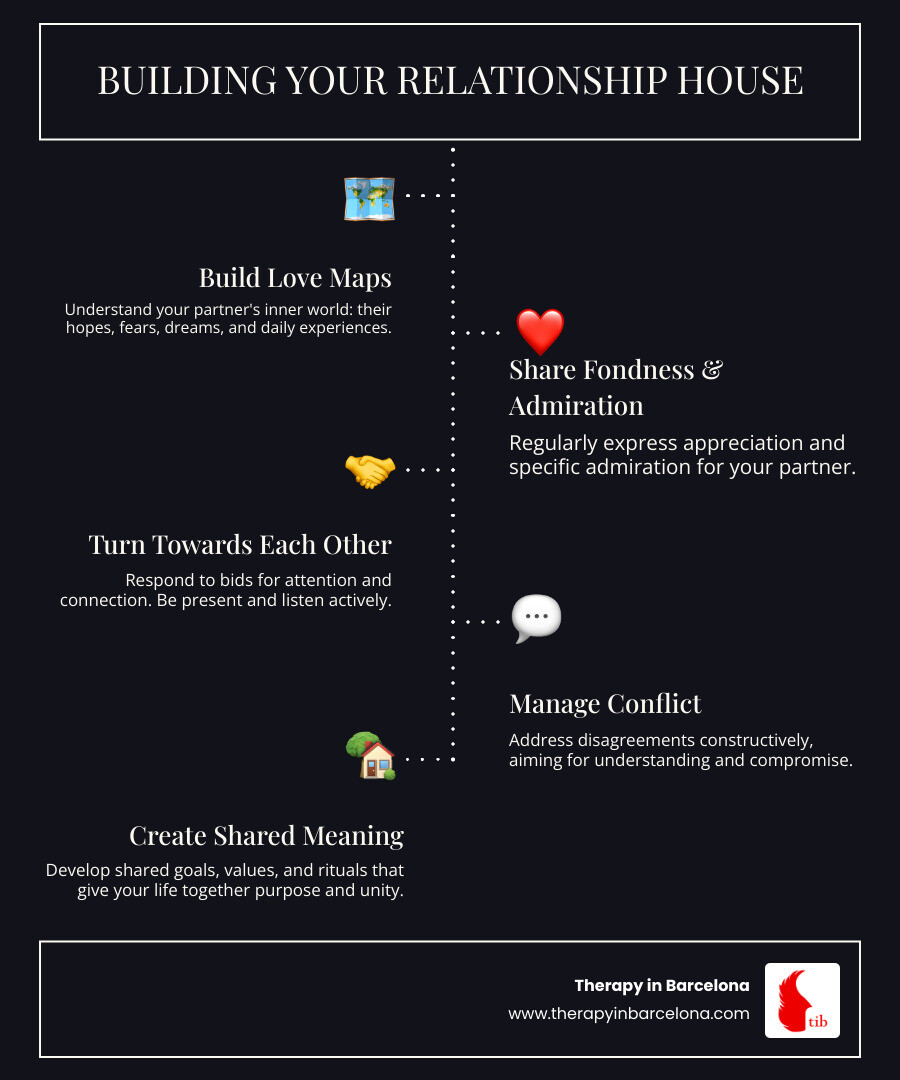
4. Build Your Love Map
Your partner’s inner world is a detailed map of their dreams, fears, and hopes. The Gottman Method calls this a “Love Map,” a strong predictor of relationship success.
How it works: Ask each other meaningful questions beyond “How was your day?” Try: “What’s your biggest dream for the next five years?” or “What’s one thing I do that makes you feel most loved?” This isn’t a quiz; it’s a gentle exploration. The goal is to stay curious about your partner as they grow and change. It’s especially powerful for expat couples. Learn more about the Gottman Method Therapy.
5. The Gratitude Exchange

When stressed, it’s easy to focus on the negative. A gratitude exchange shifts your attention to the positive things you might take for granted.
How it works: Daily or weekly, share one specific thing you appreciate about your partner. It might be small—“I loved how you made my coffee this morning”—or significant—“I’m grateful for how patient you were with the visa paperwork.” Specificity is key. This builds a “culture of appreciation,” making both partners feel valued. You can share these in a journal, aloud, or via text.
6. Soul Gazing
This exercise can feel awkward but is powerful for creating a deep, wordless connection. We rarely give anyone our undivided attention without conversation.
How it works: Sit comfortably facing each other. Set a timer for 2-4 minutes and maintain gentle eye contact without speaking. Think of it as soft, loving attention. Afterward, share your experience. Many couples feel surprisingly connected. It’s a reminder that profound communication can happen without words and that being fully present is deeply intimate.
Trust & Teamwork: Couple relationship building exercises to feel like a unit again
Strong relationships function as a team. These exercises build your sense of partnership and shared purpose.
7. Create a Shared Vision Board

Building a life in a new country requires moving in the same direction. A shared vision board makes your collective dreams tangible and aligns your goals.
How it works: Use magazines, photos, or digital tools to collect images representing your shared future—travel, career, family goals. As you create it, discuss why certain images resonate. The magic is in the collaboration. You might find new shared dreams or need to compromise, strengthening your sense of partnership.
8. The “Miracle Question”
This technique from solution-focused therapy helps you envision your ideal relationship without getting stuck on current problems. It clarifies what you want to change.
How it works: Ask each other: “Suppose tonight, while you slept, a miracle occurred. When you wake up tomorrow, what would be the first things you’d notice that would tell you our relationship had suddenly gotten better?” This isn’t fantasy; it’s about clarifying what “better” looks like. These insights create a roadmap for change, highlighting which small shifts will have the biggest impact.
9. Plan a “Micro-Trip”
Teamwork doesn’t require grand gestures. Relationship-strengthening experiences can come from small, planned trips.
How it works: Choose a small, manageable shared experience, like exploring a new Barcelona neighbourhood or cooking an elaborate meal. The process of planning and sharing the experience matters more than the destination. These micro-trips remind you that you’re a team and create positive shared memories. For more ideas, explore our guide to Activities to Do as a Couple.
10. The 20-Second Hug
Physical touch releases oxytocin, the “bonding hormone,” promoting attachment and trust. When stressed, couples often reduce physical connection to brief touches.
How it works: Commit to one meaningful, 20-second hug each day. Hold each other close and breathe together. Twenty seconds is long enough for your nervous systems to settle and for oxytocin to kick in. This simple, daily ritual reminds you that you’re connected and cared for.
Making It Stick: Consistency is Key
The true power of these couple relationship building exercises lies in consistency, not complexity. Like tending a garden, it’s the small, regular acts of care that create something beautiful and resilient. Your relationship thrives on these daily efforts, which build a stronger bond than infrequent, grand gestures.
This is the power of rituals: meaningful, repeated actions. To make them stick, schedule your exercises like any other important appointment. Putting them on the calendar makes them a non-negotiable part of your life, not an afterthought.
For long-distance relationships, these principles still apply. Adapt the exercises with virtual check-ins, online vision boards, or by watching shows simultaneously. The key is to be creative and intentional about maintaining your connection.
If your partner is resistant, explain the mutual benefits rather than framing it as fixing a problem. If they remain hesitant, start practising the exercises yourself. Often, when one person shifts their behaviour, the other follows. Relationships flourish with active work, and these tools make that work more effective.
When to Seek Professional Support
While these couple relationship building exercises are valuable, some challenges require more support. Professional guidance can be essential for healing, and seeking therapy is a courageous step towards a healthier future, not a sign of failure.
When is it time for professional support? Consider it if you’re caught in a cycle of persistent conflict, with arguments that never resolve or that quickly escalate. Another key sign is the presence of Dr. John Gottman’s “Four Horsemen“: criticism (attacking character), contempt (disrespect), defensiveness (victim-playing), and stonewalling (withdrawing). If these are common, professional help is vital.
A profound sense of emotional disconnection that persists despite trying these exercises is another sign. This can be especially tough for expats who rely heavily on their partner for connection. These exercises may also not be enough for complex issues like past trauma, infidelity, or significant breaches of trust, which require specialised support. Major life transitions, like moving to Spain, can also strain a relationship, making professional guidance invaluable.
How can therapy help? A qualified therapist offers a safe, neutral space to explore issues without judgment. They help identify unhelpful patterns, teach advanced communication skills, and develop conflict-resolution strategies. A culturally sensitive therapist is especially beneficial for expats, as they understand the unique challenges of adjusting to a new country.
The good news is that therapy can offer structure, support, and a calmer space to understand what keeps going wrong. If you’re wondering whether it’s time for this kind of help, you can find more information about When It’s Time for Couples Counselling.
Frequently Asked Questions about Relationship Exercises
Can these exercises really save a relationship?
These couple relationship building exercises are powerful tools for strengthening communication and connection, preventing small issues from becoming big problems. Think of them as vital maintenance. However, they aren’t a magic wand. For deep-seated issues like infidelity, addiction, or high-conflict patterns (the “Four Horsemen”), they are most effective when combined with professional guidance from a skilled therapist.
What if we feel awkward doing these exercises at first?
Feeling awkward is completely normal, especially with exercises like Soul Gazing or the 20-Second Hug. Awkwardness is a sign you’re stepping outside your comfort zone, which is where growth happens. Approach these exercises with curiosity and playfulness, not pressure. Acknowledge the awkwardness, laugh about it, and start with what feels most comfortable. The goal is connection, not perfection.
How often should we do these exercises?
Consistency is more important than frequency. Aim for small, regular efforts to avoid burnout. A 10-minute daily check-in is more powerful than a two-hour session once a month. Integrate some activities (like the daily check-in or 20-second hug) into your daily routine, and schedule others (like the Love Map) weekly or monthly. The key is making them a regular part of your shared life.
Your Relationship is Worth the Effort
Strong relationships grow through small, repeated actions: a check-in, a real listen, a longer hug. For expat couples in Barcelona or elsewhere, these habits matter even more. When life abroad feels uncertain, your relationship can become a steady source of support, comfort, and resilience.
The beauty of these exercises is their accessibility. They meet you where you are, whether you’re stressed or stuck in a distant routine. They don’t require perfect circumstances, just a willingness to try. Start with just one exercise that resonates with you both. See it as an experiment in how small shifts can create meaningful change.
At Therapy in Barcelona, we understand these complexities. Our team of psychology-trained therapists, many of whom are expats, recognise the unique strains of international life. Our practice was founded by Leigh Matthews, an Australian psychologist who moved to Barcelona in 2011. She experienced these challenges and created a practice to provide the culturally sensitive support that expat couples need.
Many couples strengthen their partnership through these practices and, when needed, professional guidance. This combination creates a foundation that can weather difficult seasons. Your relationship is a precious asset. Nurturing it with small, intentional habits improves your partnership and creates a sanctuary that can support you both as you build your life together, in Barcelona or wherever your journey leads.
For more comprehensive support and guidance custom specifically to the expat experience, explore Couples Counselling in Barcelona.
