


What Can Lonely People Do to Feel More Connected?

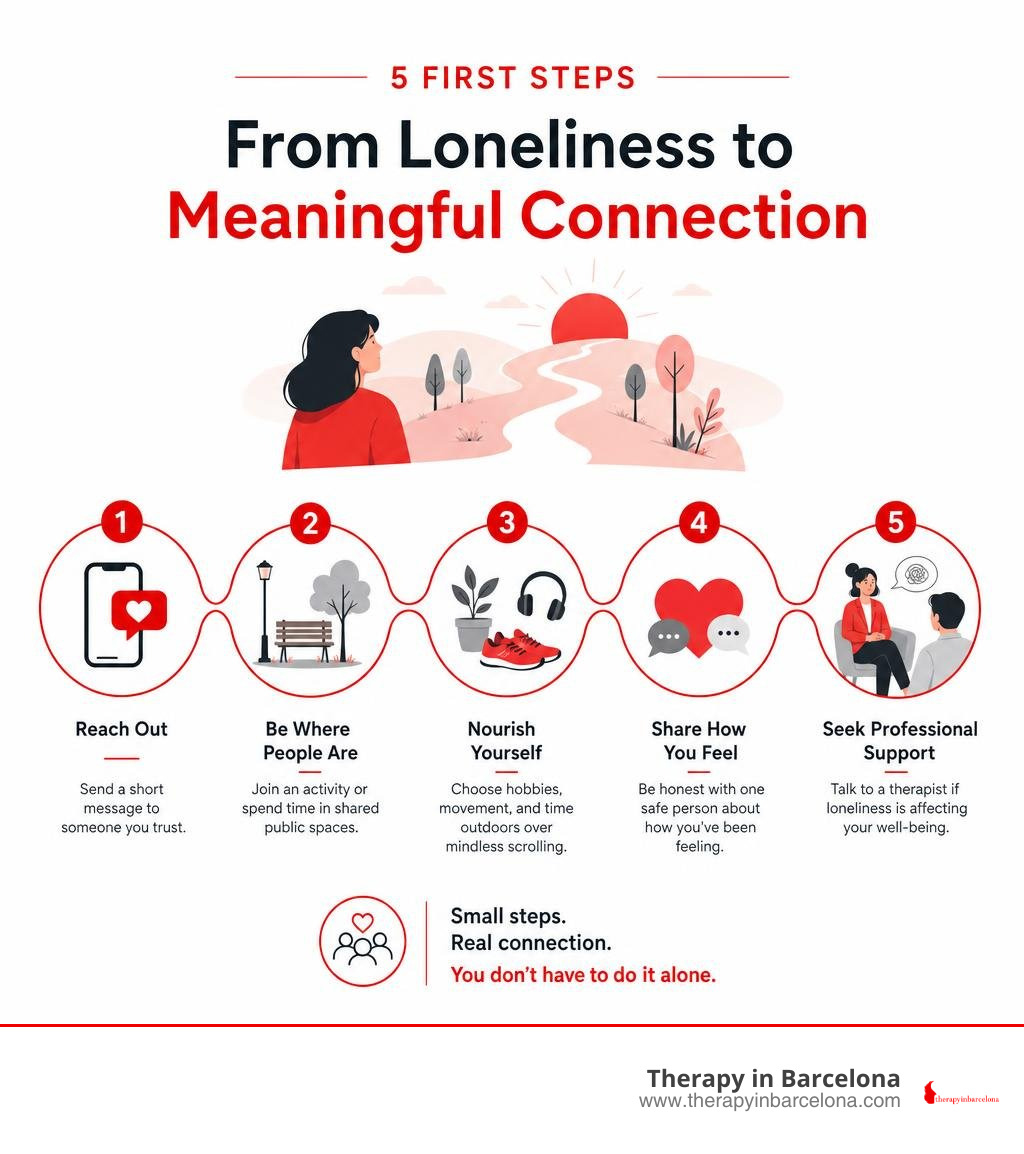
What can lonely people do when connection feels out of reach? Start with one small, real-world action: contact someone you trust, spend time in a shared public space, join an activity built around an interest, volunteer, move your body, or make a plan to speak with a therapist.
The aim is not to force yourself into a busy social life overnight. It is to create regular moments of meaningful contact with yourself, other people, and your community.
- Send a short message to a friend, relative, colleague, or former acquaintance.
- Choose one activity that puts you near others, such as a class, walk, cafe, library, sports group, or volunteer role.
- Replace some passive social media scrolling with a hobby, podcast, exercise, or time outdoors.
- Be honest with one safe person about how you have been feeling.
- Seek professional support if loneliness is persistent or is affecting your mood, sleep, work, relationships, or daily life.
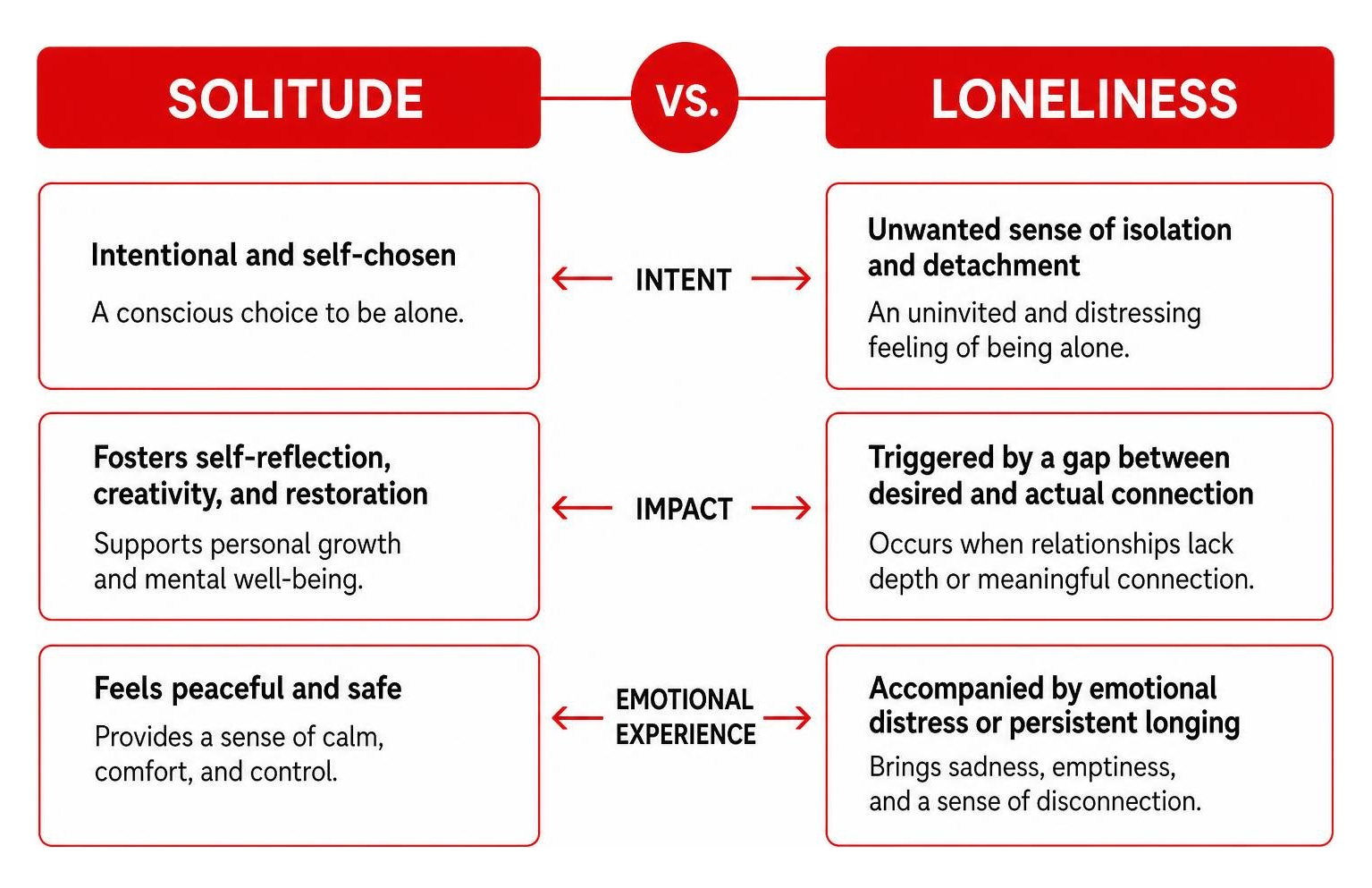
Loneliness is not the same as being alone. Solitude can be chosen and restorative; loneliness is the painful sense that the connection you want is missing. This can happen in a crowded room, in a relationship, or after moving abroad, when familiar language, routines, and friendships are suddenly far away.
It matters because long-term loneliness is linked with poorer mental and physical health. A major meta-analysis on loneliness, social isolation, and mortality found that loneliness and social isolation were associated with a higher risk of early death.
In simple terms, the researchers reviewed many studies and found that weak social connection mattered for health, although this does not mean loneliness determines anyone’s future. The U.S. Surgeon General’s 2023 advisory on social connection also describes social disconnection as an important public-health concern.
For internationals in Barcelona, loneliness can have extra layers: cultural adjustment, language barriers, a demanding job, homesickness, a separation, or the feeling that others do not quite understand your experience. Small, repeated actions can make a difference, especially when they fit who you are rather than who you think you should be.
Understanding Loneliness: Why We Feel Isolated Even in a Crowd
Many people wonder why they feel lonely when they are never physically alone. You might sit in a busy office, attend social events, or live with roommates, yet still feel completely detached. Loneliness is not defined by physical proximity to other human beings. It is defined by your internal perception of connection and relational depth.
Research highlights that almost half of U.S. adults reported measurable levels of loneliness even before recent global health events, according to the 2018 Cigna U.S. Loneliness Index.
Furthermore, the Survey Center on American Life report on friendship found that 49 percent of adults reported having three or fewer close friends, a figure that had roughly doubled since 1990. When asking what can lonely people do, it helps to understand that this experience is widespread.
Chronic loneliness carries genuine health consequences. In the 2015 meta-analysis on loneliness and mortality, loneliness was associated with a 26 percent higher risk of mortality across the studies reviewed.
The U.S. Surgeon General’s 2023 advisory also summarises evidence that weak social connection can be comparable with smoking up to 15 cigarettes a day in its impact on health risk. These findings do not mean loneliness will cause a specific health outcome for any one person; they show that social connection is an important part of human wellbeing.
Early life experiences and attachment styles also shape how we experience isolation in adulthood. Exploring research on attachment theory and loneliness reveals that our childhood emotional security influences how safe we feel reaching out to others today.
For extra context, read this guide on coping with isolation and loneliness to understand how environmental changes impact social stability.
Solitude vs. Loneliness: The Psychology of Disconnection
To manage loneliness effectively, one must distinguish between being alone and feeling lonely. Solitude is an intentional, peaceful state of being by oneself to recharge, reflect, or create. Loneliness, conversely, is an unwelcome emotional state marked by a perceived deficit in emotional intimacy.
Psychologically, adult loneliness is often triggered by emotional memories stored from earlier life transitions or periods of feeling misunderstood. When an adult experiences modern social rejection or subtle distance, the brain may reactivate stored feelings of childhood isolation.
Additionally, people often project a “false self” in public to gain acceptance. When you hide your authentic thoughts and present a curated persona, interactions remain superficial. You may spend hours around people, but because they only know your external mask, you remain emotionally unseen.
Reviewing expert insights on building belonging and connection can clarify how dropping hyper-vigilance helps restore genuine relational warmth.
What Can Lonely People Do to Break Mindset Traps?
When isolation sets in, the mind often generates harsh internal narratives. You might catch yourself thinking, “Nobody cares about me” or “There must be something wrong with me.” These negative self-talk patterns create a protective barrier, encouraging you to cancel plans or avoid reaching out to prevent potential rejection.
Breaking this cycle requires conscious self-compassion. Instead of judging yourself for feeling lonely, acknowledge that wanting connection is a normal biological signal. Try these cognitive adjustments:
- Validate your emotion: Remind yourself that feeling lonely is an experience, not a permanent character trait or personal failure.
- Challenge social assumptions: Notice when you interpret a delayed text message as deliberate rejection, and consider alternative explanations, such as the person simply being busy.
- Reframe alone time: Treat unexpected hours of solitude as an opportunity for self-care, learning, or rest, rather than proof of exclusion.
What Can Lonely People Do? 10 Actionable Strategies for Real Connection

When considering what can lonely people do, concrete behavioural shifts are far more reliable than waiting for your mood to change on its own. Small, deliberate efforts help retrain your nervous system to view the external world as accessible and safe.
10 Practical Connection Strategies
- Initiate micro-connections daily: Say hello to a local barista, comment warmly to a shopkeeper, or smile at a neighbour. These brief interactions stimulate ambient social presence without demanding deep commitment.
- Limit passive social media use: Cap social platforms to 30 minutes per day to stop comparing your private reality to public highlight reels.
- Engage in low-pressure public spaces: Read a book in a bustling café, work from a public library, or sit in a neighbourhood park. Being around others reduces felt isolation.
- Reconnect with old contacts: Send a brief, low-stakes text message to a former classmate or colleague expressing that you thought of them.
- Practice open body language: Make eye contact and uncross your arms when in public settings to signal social availability.
- Focus on productivity and creative hobbies: Work on a tangible project, cook a new meal, or learn an instrument to convert solitude into rewarding achievement.
- Schedule regular outdoor movement: Take a daily walk without headphones to observe your immediate physical environment and community surroundings.
- Share small vulnerabilities: Express genuine feelings to a trusted acquaintance rather than keeping every conversation focused on light pleasantries.
- Volunteer for a local cause: Offer your time to a charity or community initiative to pivot your internal focus towards assisting others.
- Establish structured social commitments: Join a weekly class, run club, or interest group where attendance naturally creates routine contact with regulars.
Solo Activities and Digital Detox: What Can Lonely People Do Today?
When feeling isolated, picking up your phone is often an automatic instinct. However, endless scrolling frequently acts as “social snacking”—it delivers quick dopamine hits without providing the real human reciprocity your nervous system craves.
A landmark study from the University of Pennsylvania showed that limiting social media to 30 minutes a day (10 minutes per platform) led to significant reductions in loneliness, low mood, and FOMO within three weeks.
Instead of passive consumption, consider engaging digital or solo activities that genuinely enrich your mental space:
- Listen to conversational podcasts: Audio content featuring natural, empathetic dialogue can foster connection while keeping your hands busy with chores or walking.
- Focus on health-based routines: Exercise stimulates dopamine and endorphins, boosting mood and self-confidence. Morning movement acts as a powerful baseline for emotional stability.
- Explore solo travel or neighbourhood exploration: Taking yourself out for a deliberate meal or walking tour reframes alone time as an active choice.
For more detailed guidance on balancing digital habits with healthy action, read this expert advice on social media limits and reconnection.
You can also review current research on 3 effective coping strategies, discover actionable tips to stop feeling lonely, and implement these practical strategies to manage isolation.
Rebuilding Your Social Circle and Community Connections

Building a reliable social circle in adulthood requires patience, consistency, and a willingness to accept minor social discomfort. Quality relationships are built over time through repeated, shared experiences.
Volunteering is one of the most effective ways to make meaningful contacts. Working towards a shared objective removes the pressure of forced small talk, allowing relationships to form naturally over common values. Similarly, joining interest-based groups—such as book clubs, hiking groups, or language exchanges—ensures you meet individuals who already share your passions.
If your calendar feels empty, consider these strategic steps:
- Turn solo routines into shared rituals: If you regularly drink coffee or run at a specific time, invite an acquaintance to join you.
- Set clear, low-pressure parameters: Propose short, defined activities like “a 45-minute coffee chat” rather than open-ended hangouts, making it easier for both parties to commit.
- Offer small acts of assistance: Asking for or offering small favours creates natural reciprocity and opens doors for deeper dialogue.
For additional ideas on expanding your network, check out this detailed guide on making friends abroad or learn what to do when your social calendar is empty.
Navigating Loneliness as an Expat or International
Moving to a new city or country brings excitement, but it can also introduce intense post-migration loneliness. After the initial “honeymoon phase” of relocation wears off, practical stresses, bureaucratic hurdles, and language differences can leave you feeling emotionally stranded.
Moving to Spain for an exciting new job can initially feel like an adventure. Exploring historic streets, discovering local food and adjusting to a new culture can make the first few weeks feel energising. But once daily routines settle in, the absence of a genuine support network can become more noticeable.
Without long-term friends nearby to process work stress with or share weekend meals, it can be easy to withdraw, leading to growing feelings of isolation even in a city of millions.
Expats frequently encounter distinct isolation triggers:
- Linguistic and cultural distance: Communicating in a second language requires cognitive energy, often leaving newcomers feeling unable to express their true humour or emotional depth.
- Transient social environments: International hubs attract mobile professionals, which can make long-term friendship feel difficult to establish.
- Loss of contextual support: Being far away from family means missing established safety nets during life transitions or illness.
Overcoming international isolation involves intentional effort. Joining expat associations, participating in local language exchanges, and engaging with community events can help you bridge the gap between being a temporary visitor and feeling at home. Explore practical insights on building community as an international to ease your transition.
When to Seek Professional Support for Persistent Isolation
While self-help strategies and social efforts offer great benefit, loneliness can sometimes become chronic, leading to persistent low mood, overwhelming worry, or deep emotional fatigue. When feelings of isolation persist for more than two weeks despite your best self-care efforts, professional mental health support can provide structured guidance.
It is helpful to understand the landscape of care available. Public health systems offer general medical oversight, though wait times for specialised care can vary. Large global online platforms provide wide access, but may lack localised cultural understanding.
Local private practices offer high-quality care, though finding clinicians fluent in your native language can take time. Therapy in Barcelona sets itself apart from these options by prioritising strict privacy without data selling, bespoke therapist matching, and culturally sensitive support in your native language.
Therapy provides a safe environment to explore underlying attachment patterns, dismantle social anxiety, and build effective interpersonal skills. Evidence-based modalities commonly used to address loneliness include:
- Cognitive Behavioural Therapy (CBT): Focuses on identifying and reframing automatic negative self-talk and social avoidance behaviours.
- Acceptance and Commitment Therapy (ACT): Helps you accept difficult emotions while taking committed action towards your core personal values.
- Internal Family Systems (IFS): Explores internal protective parts and heals emotional wounds linked to past rejection.
Note on Crisis Resources: Therapy services are designed for ongoing emotional growth and mental health care, not immediate emergency crisis intervention. If you or someone you know is experiencing severe distress, self-harm thoughts, or a mental health crisis, please reach out immediately to emergency services (such as 112 in Europe or 988 in the US/Canada) or visit your nearest emergency medical facility.
Frequently Asked Questions About Overcoming Loneliness
Why do I feel lonely when I am surrounded by people?
Feeling lonely in a group usually stems from a lack of emotional depth rather than physical isolation. If you feel unable to share your authentic self, or if you project a protective “false self” to fit in, your interactions remain superficial. True connection requires mutual vulnerability and feeling genuinely understood by those around you.
How does limiting social media help reduce feelings of loneliness?
Social media often encourages passive scrolling, which can trigger comparison loops and create a sense of connection without genuine social reciprocity. Setting limits on social media use can help create more space for direct, real-world interactions, meaningful connection and active self-care routines.
How long does it take to build meaningful adult friendships?
Building deep adult friendships takes consistent effort over time. Research on friendship formation suggests it takes roughly 50 hours of shared time to move from an acquaintance to a casual friend, and up to 200 hours to form a close friendship. Focus on regular, repeated interactions—such as attending weekly groups or shared activities—to allow connections to develop naturally.
Taking Your First Step Towards Connection
Overcoming loneliness is not about filling every evening on your calendar; it is about taking consistent, compassionate steps towards real connection. Start small. Choose one manageable action today, whether that means taking a quiet walk without your phone, sending a text to an old friend, or sitting in a neighbourhood café.
If you are experiencing persistent isolation or finding it difficult to adjust to life in Spain, tailored professional support can make a meaningful difference. Therapy in Barcelona was founded in 2011 by Leigh Matthews, an Australian psychologist who has lived in Barcelona since then.
She created the practice as a compassionate space for expats, Third Culture Kids, accompanying spouses, digital nomads and international families navigating the emotional and practical challenges of life abroad.
Therapy in Barcelona is a trusted group practice in Spain established in 2011, offering psychology-trained multilingual care in English, German, French, Spanish, Afrikaans, Portuguese, Austrian-German, and Swiss-German.
They work both online with clients worldwide (including the USA and Canada) and offer face-to-face therapy sessions at their office in Barcelona, providing careful personalised matching for adults, couples, teens, and families.
Setting a high standard in international mental health, the practice is defined by key differentiators such as bespoke therapist matching, expat-specific cultural sensitivity, strict privacy without data selling, and private-pay quality care.
Seeking support is a positive step towards rebuilding belonging and emotional strength. If you’d like support, book a Free Discovery Call.
