


Why Marriage Counseling Questions for Engaged Couples Are Essential

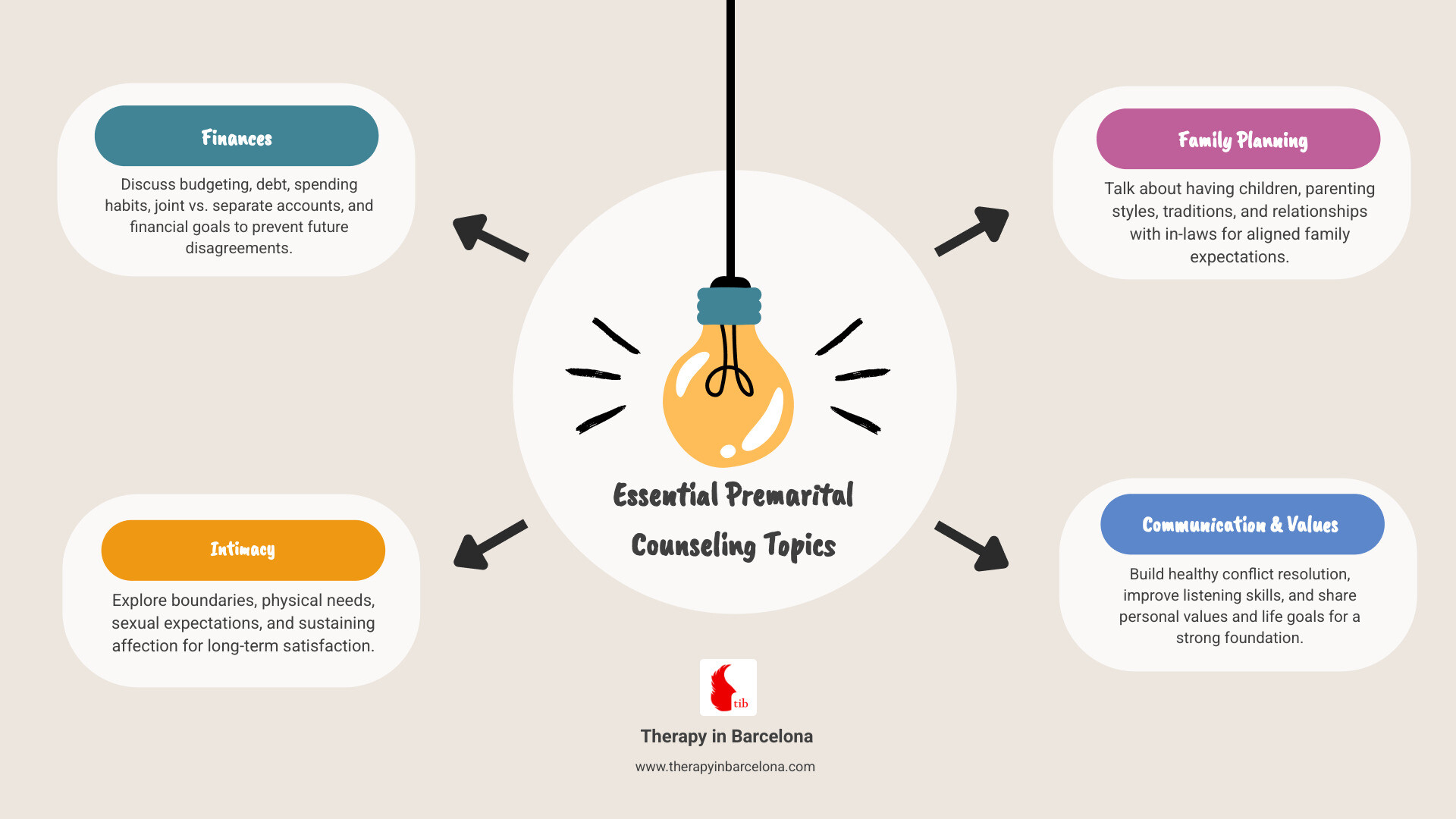
Marriage counseling questions for engaged couples help you avoid future relationship pitfalls by addressing crucial topics before they become sources of conflict. Here are the key areas to explore:
Essential Discussion Topics:
- Finances – budgeting, debt, spending habits, joint vs separate accounts
- Intimacy – physical needs, boundaries, frequency expectations
- Family – children planning, parenting styles, in-law relationships
- Communication – conflict resolution, listening skills, emotional needs
- Values – life goals, religious beliefs, career priorities
No marriage is perfect – every couple faces their share of problems. Yet research shows that couples who engage in premarital counseling trend toward higher marital satisfaction and lower divorce rates. The challenge? Most couples wait an average of 2.68 years after problems arise before seeking help.
For expats navigating life in Barcelona or elsewhere, these conversations become even more vital. Cultural differences, distance from family, and career pressures can amplify relationship challenges. Whether you’re an international couple like Emily and Tom adjusting to life abroad, or intercultural partners like Carlos and Sophie bridging different backgrounds, addressing these topics early builds a stronger foundation.
The questions in this guide aren’t just conversation starters – they’re tools for understanding your partner’s deepest beliefs, fears, and aspirations. By creating a safe space for these discussions now, you’re investing in your relationship’s future success.
The Power of Premarital Counseling: Building a Strong Foundation
Think of premarital counseling as relationship insurance rather than a warning sign. It’s not about fixing problems that don’t exist yet—it’s about building the strongest possible foundation before life inevitably tests it. For engaged couples, especially those navigating the complexities of international life, these conversations become even more crucial.
When you’re living abroad, away from familiar support systems and cultural norms, the stakes feel higher. Simple disagreements about family traditions or holiday celebrations can become magnified when you’re also juggling visa applications, language barriers, and homesickness. That’s precisely why addressing these topics proactively makes such a difference.
Why Premarital Counseling Matters
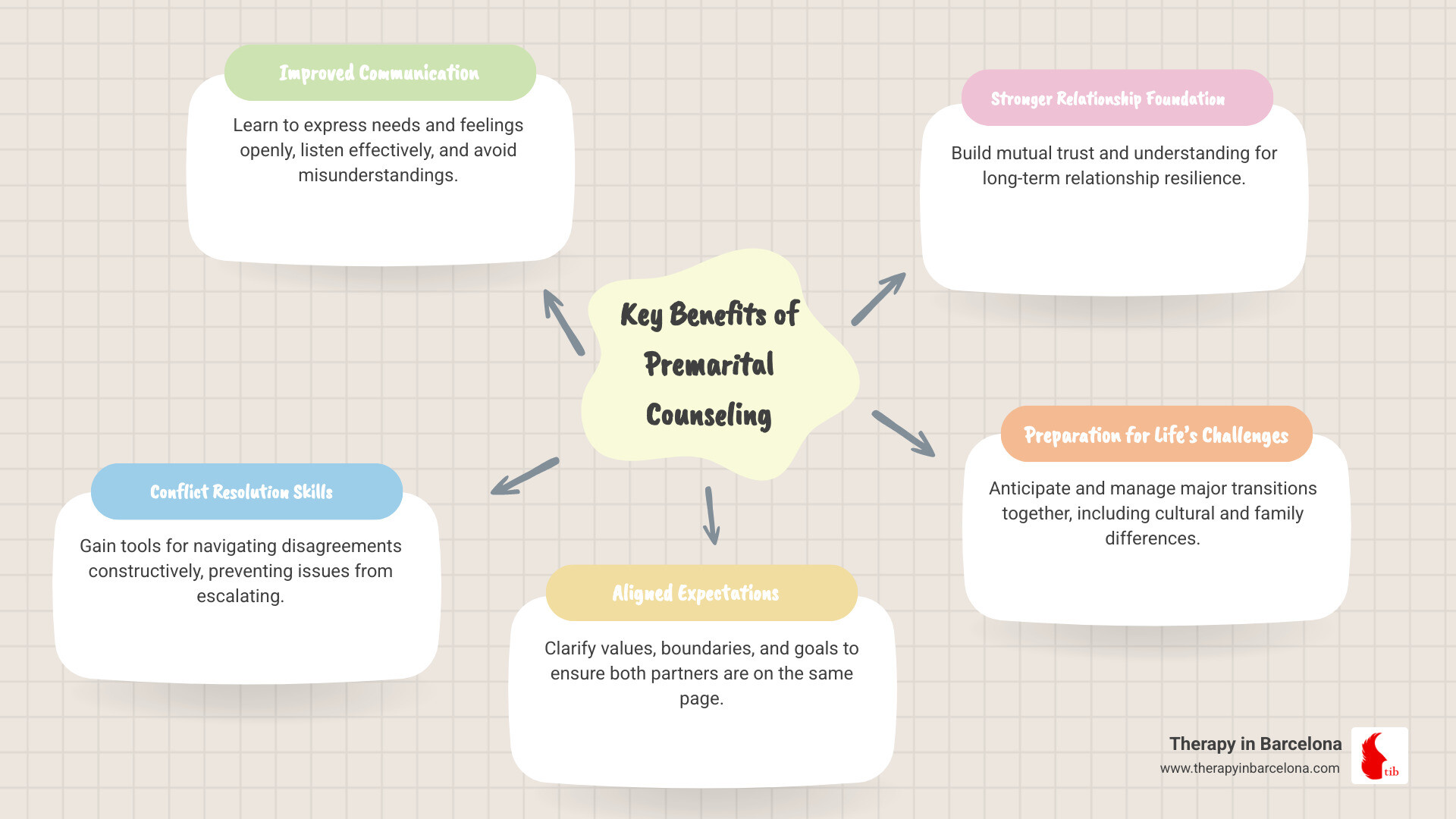
Premarital counseling creates a structured space to explore the topics that couples often avoid until they become sources of tension. It’s about developing essential communication skills, understanding each other’s unspoken expectations, and learning how to steer disagreements before they escalate into relationship-threatening conflicts.
The beauty of this approach lies in its preventive nature. Rather than waiting until you’re arguing about money management or parenting styles, you’re building a shared understanding of each other’s values and creating strategies for handling differences constructively.
Leigh Matthews, an Australian Psychologist who founded Therapy in Barcelona, understands this deeply from both professional and personal experience. Having lived in Barcelona since 2011 and experienced her own intercultural marriage, she recognised the profound need for culturally sensitive mental health support for internationals. Her extensive experience supporting expats highlights how proactive discussions about cultural differences, family expectations, and life goals can prevent minor misunderstandings from becoming major relationship fractures.
For international couples, these conversations take on additional layers. You might be blending not just two personalities, but two cultures, two sets of family expectations, and two different approaches to everything from conflict resolution to career priorities. Working through these differences early creates a roadmap for your marriage rather than leaving you to steer them in the heat of the moment.
The Statistics Speak: Proactive Steps for Lasting Love
The research backing premarital counseling is compelling. Studies consistently show that couples who engage in premarital counseling tend to experience higher marital satisfaction and lower divorce rates. One clinical study found that participants who had premarital counseling showed a clear trend toward higher marital satisfaction compared to those who didn’t.
Even more encouraging is the evidence around Emotionally Focused Couple Therapy (EFT), a common approach used in couples counseling. Research demonstrates that EFT produces positive effects on relationship satisfaction and attachment that last for up to two years post-treatment. This isn’t just temporary improvement—it’s lasting change that strengthens your relationship’s foundation.
What makes these statistics particularly relevant is that most relationship conflicts stem from having different perspectives, experiences, and expectations—precisely the areas that marriage counseling questions for engaged couples are designed to address. When you invest time in understanding each other’s viewpoints on finances, intimacy, family planning, and life goals before marriage, you’re essentially building bridges over the gaps that typically cause couples to stumble.
The evidence becomes even more compelling when you consider that most couples wait an average of 2.68 years after problems arise before seeking help. By then, patterns are entrenched, resentments have built up, and solutions require more intensive work. Premarital counseling flips this script entirely, giving you the tools and understanding you need from day one of your marriage.
Essential Marriage Counseling Questions for Engaged Couples: Key Areas to Explore

When you’re planning a wedding, it’s easy to get caught up in the flowers, venue, and guest list. But the most important preparation happens away from Pinterest boards and wedding magazines. The real work lies in understanding your partner’s deepest thoughts, fears, and dreams through meaningful conversation.
These marriage counseling questions for engaged couples aren’t just conversation starters—they’re your roadmap to building a marriage that can weather any storm. Think of them as your relationship’s insurance policy, addressing potential challenges before they become deal-breakers.
The 25 Essential Questions Every Engaged Couple Should Discuss
We’ve organised these questions into five crucial areas that research shows are most likely to create conflict if left unaddressed. Each category explores different aspects of your shared life, helping you understand not just what your partner thinks, but why they think it.
Finances and Future Planning often becomes the source of heated arguments, especially when couples find they have vastly different money philosophies. Start by exploring: How do we plan to manage our finances jointly? and What are our individual financial goals? Don’t shy away from the uncomfortable topics like How will we address debt or loans? The question of Do you want separate or combined bank accounts? can reveal fundamental differences in trust and independence. Finally, discuss How will we split or share costs? to avoid future resentment over who pays for what.
Intimacy and Affection requires vulnerability but creates the deepest connection. Begin with How do we define intimacy in our relationship? since intimacy means different things to different people. Explore What are our needs and boundaries regarding affection? and honestly discuss How often do you desire to have sex? How will we come to a decision if we have different ideas of how often? Address any deal-breakers by asking Are there certain things that are clearly off limits in our intimate life? Most importantly, plan ahead with How do you plan to sustain intimacy throughout your relationships? because maintaining connection requires intentional effort.
Family, Children, and Parenting Styles can make or break a marriage if partners aren’t aligned. The fundamental question Do we plan to have children? If so, how many? needs to be answered honestly by both partners. Discuss What are our views on parenting and discipline? before you’re sleep-deprived with a crying baby. Consider How do we feel about involvement from in-laws and extended family? especially if you’re living abroad where boundaries might be different. Think about What traditions or values do we want to pass on to our children? and practically address How will you deal with times when we do not want to conceive a child?
Communication and Conflict Resolution skills determine whether you’ll grow together or apart. Reflect on How do we communicate when we’re upset with each other? and How do we currently resolve conflicts? Be honest about What triggers most of our disagreements? and commit to improving by asking How can we improve our listening skills? Create a plan for reconnection with What rituals will you develop to reach out to each other after a big fight?
Personal Values, Goals, and Expectations form the foundation of your partnership. Explore What are our individual personal and professional goals? and What are your core values, and how do they align with mine? Dream together about Where do we see ourselves in 10, 20, or 30 years? Understand each other’s perspectives on What does marriage mean to you? Finally, accept vulnerability by discussing What do you consider your greatest weakness? How are you working on this?
Beyond the Basics: Deeper Conversations for Lasting Connection
These marriage counseling questions for engaged couples are designed to go beyond surface-level discussions, prompting you to explore your deepest beliefs, fears, and aspirations. When you discuss your greatest weaknesses, you’re not opening yourself up for criticism—you’re creating space for your partner to support your growth. When you envision your life decades from now, you’re not just daydreaming—you’re building a shared vision that will guide your decisions.
For expat couples, these conversations take on added complexity. Cultural differences in family expectations, financial management, and communication styles can create unique challenges. Setting the Stage: Must-Discuss Premarital Counseling Topics explores how international couples can steer these additional layers while building a strong foundation.
The beauty of these questions lies in their ability to reveal both your compatibility and the areas where you’ll need to compromise. They help you understand not just what your partner thinks, but the experiences and values that shaped their perspectives. This understanding becomes the bedrock of empathy in your marriage, allowing you to approach conflicts with curiosity rather than defensiveness.
There are no right or wrong answers to these questions—only honest ones. The goal isn’t to agree on everything, but to understand each other deeply enough to steer your differences with love and respect.
Navigating Sensitive Conversations: Tips for Effective Dialogue

Asking these marriage counseling questions for engaged couples is only half the battle; how you discuss them is equally important. The difference between a conversation that brings you closer and one that creates distance often lies in your approach rather than the topic itself.
Creating an environment of trust and openness becomes paramount when delving into sensitive topics like finances, intimacy, or family expectations. These conversations can feel vulnerable, especially when you’re discussing areas where you might not perfectly align.
Creating a Safe Space for Openness
Think of these discussions as explorations rather than negotiations. Approach each conversation with genuine curiosity rather than the need to prove a point or win an argument. This shift in mindset can transform potentially tense exchanges into opportunities for deeper understanding.
Research consistently shows that the most effective relationship conversations happen when both partners feel heard and valued. Focus on understanding your partner’s perspective rather than immediately defending your own position. This means actively listening, validating their feelings, and refraining from interrupting or dismissing their viewpoint.
Create a safe and encouraging space where honest communication can flourish without fear of judgment or retaliation. When your partner shares something vulnerable, resist the urge to immediately offer solutions or counterarguments. Sometimes, simply acknowledging their feelings with phrases like “I can see why that would be important to you” can create the emotional safety needed for deeper conversations.
Listening to Understand, Not Just to Respond
Lesli Doares, a Licensed Marriage and Family Therapist, highlights that “having the ability to listen to understand instead of respond or react is the way around this.” This practice transforms relationship dynamics, fostering harmony rather than constant defensiveness.
When your partner is speaking, focus entirely on grasping their perspective without mentally preparing your rebuttal. Try paraphrasing what you’ve heard: “What I’m hearing is that financial security feels really important to you because of your childhood experiences. Is that right?” This approach demonstrates genuine interest in their thoughts and feelings.
Ask clarifying questions that show you want to understand their deeper motivations: “Help me understand what family involvement means to you” or “When you say you want to keep some finances separate, what would that look like practically?” These questions invite elaboration rather than creating defensiveness.
The “Clear is Kind” Approach
As Brené Brown wisely states, “Clear is kind.” Being direct and honest about your needs, fears, and expectations—while maintaining kindness and respect—prevents misunderstandings from festering into resentment.
This approach means setting clear boundaries and expectations while ensuring both partners feel valued. Instead of hinting at what you need, express it directly: “I need us to check in with each other before making purchases over €200” or “Physical affection is really important for me to feel connected.”
Conflict is natural in any relationship; research shows that even the happiest couples disagree regularly. The key lies in how you steer these disagreements. The couples who thrive aren’t those who never argue, but those who’ve learned to discuss differences constructively, maintaining respect and connection even during challenging conversations.
When discussing these essential topics, remind yourselves that you’re on the same team, working towards a shared future. These conversations aren’t about winning or losing—they’re about building the mutual understanding that will strengthen your relationship for years to come.
When to Seek Professional Guidance: Your Path to a Harmonious Union
Sometimes, even with the best intentions and questions, couples may find themselves stuck. This is where professional guidance can make a significant difference. Seeking therapy is a sign of strength, not weakness, and it can provide invaluable tools and insights.
Recognising the Right Time for Support
Many couples wait an average of 2.68 years after problems arise before seeking couples therapy. However, early intervention can prevent issues from becoming deeply entrenched. If you find yourselves repeatedly having the same arguments, struggling to communicate effectively, or feeling disconnected despite your efforts, it might be time to consider professional support.
A therapist can offer an objective perspective and introduce new strategies. They can help you identify patterns in your communication that might be hindering connection and teach you more effective ways to express your needs and understand your partner’s.
What to Expect from Premarital Counselling
Premarital counseling typically involves structured sessions where a therapist guides you through discussions on various topics, helps you identify strengths and areas for growth, and teaches effective communication and conflict resolution techniques. The first session often includes a comprehensive assessment of your relationship dynamics and goals.
First therapy sessions are often extended to 90 minutes and begin with a structured relationship strengths and wellness assessment. A good therapist will tailor the sessions to your unique needs, ensuring you feel heard and supported throughout the process.
Therapy in Barcelona’s Unique Approach for Expats
At Therapy in Barcelona, we understand the unique complexities faced by engaged expat couples. Our team of psychology-trained therapists, many of whom are expats themselves, offer culturally sensitive support, whether you’re in Barcelona or elsewhere through online therapy.
We pride ourselves on our personalised therapist matching, ensuring you connect with a professional who truly understands your specific challenges, from cultural adjustment to navigating family expectations from afar. Our goal is to provide a safe and supportive space where you can openly explore your relationship and build a resilient foundation for your marriage.
Unlike larger online platforms that may lack cultural sensitivity or local practices that might not understand the expat experience, our therapists have lived the challenges of adapting to a new country. This experience, combined with professional training, creates a unique therapeutic environment where international couples feel truly understood.
Frequently Asked Questions about Premarital Counseling
When couples consider premarital counseling, they often have questions about its effectiveness, what to expect, and whether it’s truly worth the investment. Here are the most common concerns we hear from engaged couples, along with insights from research and clinical experience.
Does Premarital Counseling Actually Work?
Absolutely. Research consistently demonstrates that couples who engage in premarital counseling experience higher marital satisfaction and lower divorce rates compared to those who don’t. One particularly compelling study found that participants in premarital counseling showed a clear trend toward greater marital satisfaction over time.
Emotionally Focused Couple Therapy (EFT), one of the most widely used approaches in couples counseling, has demonstrated remarkable staying power. Studies show that couples who participate in EFT maintain positive relationship outcomes for up to two years after treatment ends. This isn’t just about temporary improvement—it’s about building lasting skills that strengthen your relationship foundation.
The evidence becomes even more compelling when you consider that premarital counseling is preventative rather than crisis-driven. You’re not waiting until problems become entrenched; you’re proactively building the tools for success. Think of it as relationship insurance—an investment that pays dividends throughout your marriage.
What Causes the Most Conflict Between Couples?
Most relationship conflicts stem from differing perspectives, experiences, and expectations—precisely the areas that marriage counseling questions for engaged couples are designed to address. The most common friction points include financial management, intimacy expectations, parenting philosophies, extended family involvement, and career priorities.
For expat couples, these challenges often intensify. Cultural differences around money management, varying approaches to family obligations, and navigating visa or residency requirements can create additional stress. When you’re already adapting to a new country, these relationship challenges can feel overwhelming.
What’s particularly interesting is that it’s not the presence of differences that causes problems—it’s the lack of awareness about these differences. Couples who discuss their expectations openly before marriage are far better equipped to steer disagreements constructively when they arise.
Should Couples Have a Time Limit to Fix Their Issues?
While there’s no universal “time limit” for relationship work, experts suggest that couples commit to a focused period of active engagement—typically around six months—to address their concerns. This timeframe allows for meaningful progress whilst maintaining momentum and motivation.
The key factor isn’t the timeline itself, but rather both partners’ willingness to engage and take ownership of their role in any relationship challenges. When both people are genuinely committed to growth and change, significant improvements often happen more quickly than expected.
For premarital counseling specifically, the timeline is usually shorter and more structured. Most couples benefit from 4-6 sessions to thoroughly explore the essential topics, though some may choose ongoing support throughout their engagement period.
How Many Sessions Does Premarital Counseling Typically Require?
The number of sessions varies based on your specific needs and goals. Some couples find that just a few targeted sessions help them address particular concerns, whilst others prefer ongoing support throughout their engagement period. Most therapists recommend at least 4-6 sessions to cover the fundamental areas comprehensively.
The beauty of premarital counseling lies in its preventative nature. Because you’re not dealing with crisis situations or deeply entrenched patterns, fewer sessions are typically needed compared to couples therapy that begins after problems have become established. You’re building skills and understanding from a position of strength rather than trying to repair damage.
At Therapy in Barcelona, we often begin with an extended 90-minute first session that includes a comprehensive relationship assessment. This allows us to understand your unique dynamics and tailor subsequent sessions to your specific needs. The process feels collaborative rather than prescriptive, focusing on your strengths whilst addressing areas for growth.
Conclusion
Engaging in these marriage counseling questions for engaged couples is a powerful step towards building a resilient and fulfilling marriage. It’s an opportunity to deepen your understanding of each other, align your visions for the future, and equip yourselves with the communication skills needed to steer life’s journey together.
Think of these conversations as an investment in your relationship’s future. A strong marriage isn’t about avoiding challenges – it’s about having the tools and understanding to face them as a united team. When you discuss finances openly, explore your intimacy needs, and understand each other’s family expectations, you’re creating a foundation of mutual respect and understanding that will serve you well throughout your married life.
For expat couples, this preparation becomes even more crucial. The added complexities of cultural differences, distance from family, and adapting to new environments can strain even the strongest relationships. Whether you’re navigating the vibrant streets of Barcelona or settling into life in another Spanish city, these unique challenges require intentional preparation and understanding.
By addressing these topics proactively, you’re not just preventing future conflicts – you’re building the kind of partnership that thrives. You’re learning to communicate effectively, resolve conflicts constructively, and support each other’s growth. These skills become invaluable when facing the inevitable ups and downs of married life, especially when you’re far from your familiar support systems.
Seeking support – whether through structured conversations like these or professional counseling – is a sign of wisdom, not weakness. The couples who thrive are those who recognise the value of preparation and aren’t afraid to invest in their relationship’s success. Many couples wait years before seeking help, but the research shows that early intervention leads to better outcomes and higher satisfaction.
At Therapy in Barcelona, we’ve seen countless international couples strengthen their relationships through thoughtful preparation and culturally sensitive support. Our personalised approach ensures you’re matched with a therapist who truly understands both your relationship dynamics and the unique challenges of expat life.
Ready to build a stronger foundation for your marriage? Explore how premarital and couples counseling can support your journey. Contact Therapy in Barcelona today to book your free discovery call.
