


Why Mental Wellbeing Support Matters When You’re Far From Home

Mental wellbeing is essential for everyone, but it becomes even more crucial when you’re navigating life in a new country. Whether you’re dealing with cultural adjustment in Barcelona, feeling isolated in Valencia, or struggling with relationship challenges in Málaga, knowing where to turn for help can make all the difference. Here’s what you need to know:
Quick Guide to Mental Wellbeing Support:
- Self-care practices – Evidence-based approaches like the Five Ways to Wellbeing (Connect, Be Active, Take Notice, Keep Learning, Give)
- Personal networks – Friends, family, peer support groups, and local community connections
- Professional support – GPs, therapists, counsellors, and mental health specialists
- Workplace resources – Employee Assistance Programmes (EAPs) and workplace mental health support
- Digital tools – Mental health apps, online communities, and telehealth services
Moving abroad is exciting. But it’s also normal to feel overwhelmed, lonely, or anxious when you’re far from home. Research shows that more than a billion people globally live with a mental health condition, and the challenges of expat life—language barriers, cultural differences, missing loved ones—can amplify existing struggles or create new ones.
The good news? Effective, affordable support exists. From simple daily practices that boost your mood to professional therapy that helps you process complex emotions, you have options. The key is knowing where to start and what kind of support fits your needs right now.
This guide walks you through five practical steps to build your mental wellbeing support system in Spain. You’ll learn about evidence-based self-care, how to find your people (both personally and professionally), and how to understand the sometimes confusing landscape of mental health services—from the public system to private practices like ours that specialise in supporting internationals.
Whether you’re a recent arrival in Barcelona, a long-term expat in Valencia questioning your path, or somewhere in between, you deserve to feel supported.
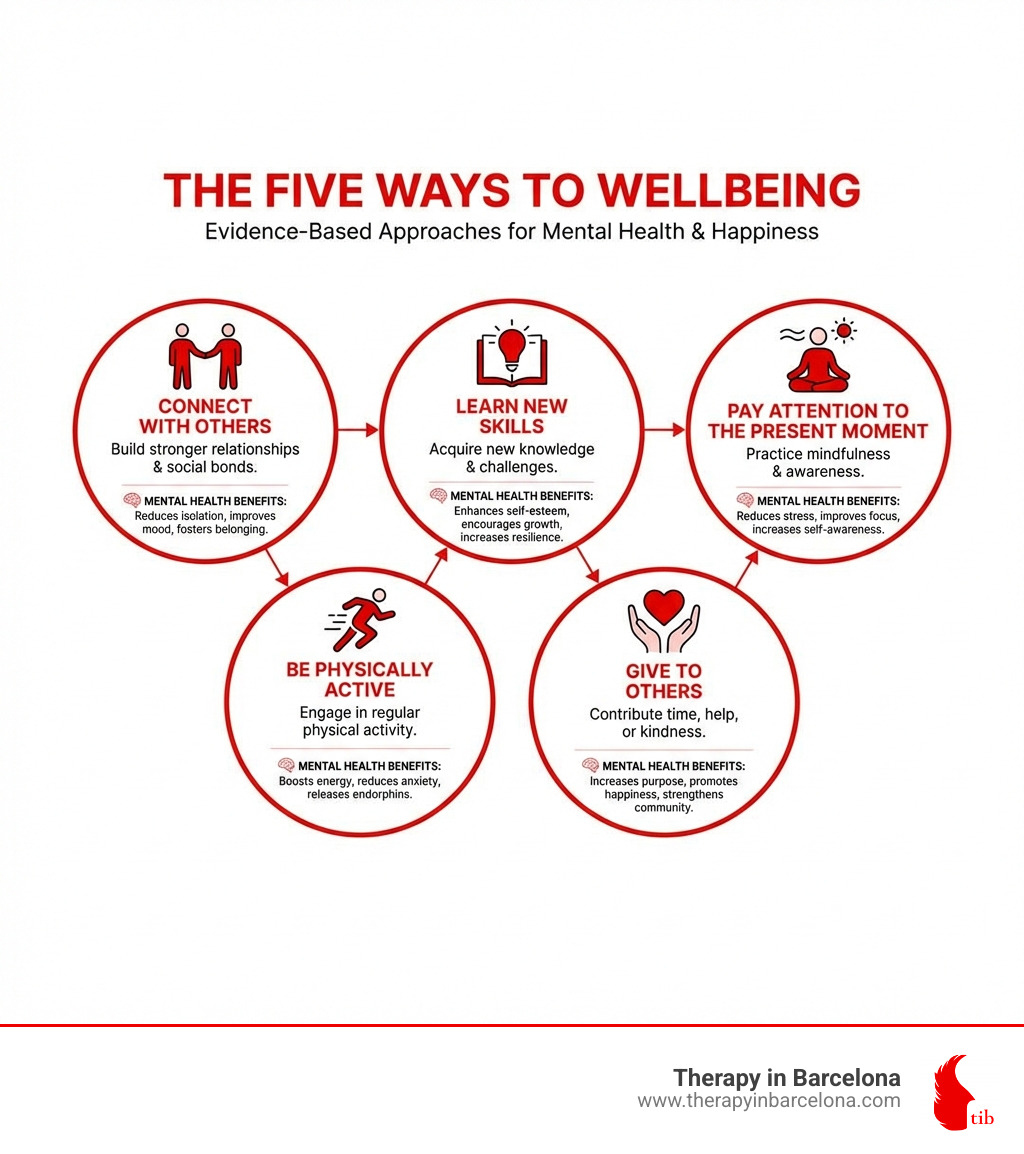
Step 1: Start with the Five Ways to Wellbeing
Feeling good about yourself and your life often starts with small, consistent actions. Evidence suggests there are five key steps you can take to improve your mental health and overall wellbeing. These aren’t just feel-good suggestions; they’re scientifically supported methods that can help you feel more positive and get the most out of life.
How to use the Five Ways in your expat life
Connect with other people: Good relationships are crucial for mental wellbeing. They build a sense of belonging, boost self-worth, and provide emotional support when you need it most. For expats, this might mean making a conscious effort to overcome the initial isolation that often comes with living abroad.
- Practical ideas: Join a language exchange in Valencia, arrange a fixed time to eat dinner with your family, or make the most of technology to stay in touch with friends and family back home. Having lunch with a colleague, even remotely, can also make a big difference.
Be physically active: Exercise isn’t just good for your body; it’s a powerful tool for your mind. Physical activity can raise self-esteem, help you set and achieve goals, and trigger chemical changes in your brain that naturally improve your mood. You don’t need to become an athlete overnight.
- Practical ideas: Walk the beaches in Málaga, take a brisk walk around your neighbourhood in Madrid, or try a new dance class in Barcelona. Even simple activities like improving your strength and flexibility can have a positive impact.
Learn new skills: Learning keeps your brain active and can significantly boost your self-confidence and self-esteem. It gives you a sense of purpose and can even connect you with new people.
- Practical ideas: Try a new hobby in Barcelona, such as painting or cooking, sign up for a course at a local college in Sevilla, or take on a new responsibility at work. Even working on a DIY project at home can be a rewarding learning experience.
Give to others: Acts of giving and kindness create positive feelings and a sense of reward. They can give you a feeling of purpose and self-worth, and, importantly, help you connect with other people.
- Practical ideas: Volunteer at a local school, hospital, or community group in your city. Saying thank you to someone for something they’ve done, asking colleagues how they are and truly listening, or spending time with friends or relatives who need company are all simple yet powerful acts of kindness. Find out how to volunteer in your community.
Pay attention to the present moment (mindfulness): This means becoming more aware of your thoughts, feelings, body, and the world around you. Mindfulness can help you enjoy life more, understand yourself better, and change how you feel about life’s challenges.
- Practical ideas: Take a few moments each day to notice the sounds, sights, and smells around you in a busy street in Alicante, or practice mindful breathing in a quiet park in Gran Canaria. This simple practice can help you regain composure during stressful moments.
These five steps are not about perfection, but about integrating small, enjoyable changes into your daily life. They offer a flexible framework for enhancing your mental wellbeing support and resilience. Find out more about the 5 ways to wellbeing on the MIND website.
Step 2: Build Your Personal Support Network
Connecting with others is a fundamental human need and a key part of strong mental wellbeing support. For expats, building a strong personal support network can be challenging but is well worth the effort. When you’re far from your familiar surroundings, friends, and family become even more vital.

Why peer and community support matter
Good relationships foster a sense of belonging and self-worth. They provide a safe space to share experiences, both positive and challenging, and offer crucial emotional support. For internationals, this often means actively seeking out new connections while maintaining old ones.
- Friends and family, wherever they are: Regular calls or messages can help you feel grounded. In Spain, small steps like saying yes to coffee after work, joining a class, or reconnecting with someone nearby can help you build local support too.
- Local community groups: Shared activities make connection easier. A walking group, book club, language exchange, or volunteer role can help you meet people naturally and feel more at home.
- Peer support: Talking to people with similar experiences can reduce isolation and build belonging. For expats, local or online groups can be especially helpful because they understand homesickness, culture shock, and the challenges of starting over abroad.
Building this network takes effort, especially when you’re new to a place. But the investment in these relationships is invaluable for your mental wellbeing, creating a safety net and enriching your experience abroad.
Step 3: Choosing the Right Professional Mental Wellbeing Support
Sometimes, despite our best efforts with self-care and personal networks, we need professional help. Knowing when to seek this help is the first step. If you’re worrying more than usual, finding it hard to enjoy life, experiencing difficult thoughts or feelings that impact your daily routine, or simply looking for more robust support, it’s always okay to ask for help.
Your options for professional support in Spain
Finding your way through mental health services in a new country can feel daunting. In Spain, like many other places, you have a few avenues for finding support, each with its own advantages and considerations.
Public system clinicians Spain’s public healthcare system includes mental health support, often at low or no cost. That can make it a good starting point. The trade-off is that waiting times can be long, and it may be harder to find English-speaking professionals, especially outside larger international cities. In many cases, your GP is the first step. They can assess what’s going on, offer initial help, and refer you to a specialist if needed.
Large online platforms Many online platforms offer convenient access to therapists from around the world. They can be a good option for flexibility and finding a therapist quickly, often in multiple languages. However, they can sometimes feel impersonal, and the sheer volume of choices can be overwhelming. Some users also raise concerns about data privacy and the consistency of care across a vast network of providers.
Therapy in Barcelona As a trusted practice in Spain since 2011, we focus on providing specialised therapeutic support to the international community. We understand that life, especially for expats, can be messy and challenging. Here’s what makes our approach different:
- Personalised therapist matching: We don’t just connect you with the next available professional. Our intake process is thorough, aiming to match you with a therapist who best fits your specific needs, concerns, and even your personality. This careful matching is designed to improve the chances of a good therapeutic fit from the start.
- Culturally sensitive care for internationals: Our team of psychology-trained therapists are often expats themselves, bringing a deep understanding of the unique challenges of living abroad—cultural adjustment, isolation, work-life balance, and language barriers. This empathy and shared experience ensures culturally informed care.
- Strict privacy: We are committed to your confidentiality. We adhere to GDPR compliance and never sell your personal data.
- Highly qualified team: Our therapists are psychology-trained professionals with diverse specialisations and therapeutic approaches, including Cognitive Behavioural Therapy (CBT), Acceptance and Commitment Therapy (ACT), Internal Family Systems (IFS), and many more. We are a group practice, meaning our therapists collaborate and support each other, ensuring high-quality care.
- Flexible access: We offer therapy in English and other languages (like German, French, Spanish, Afrikaans, Portuguese, Austrian-German, and Swiss-German). You can access our services both online (worldwide, including USA and Canada) and in-person at our offices in Barcelona.
- Private-pay service: We are a private-pay service, which allows us to offer bespoke, high-quality care without the constraints often found in public systems. We believe this investment in your mental health is invaluable. For those with financial needs, some of our therapists offer sliding scale fees, and we encourage prospective clients to inquire about this during their initial contact.

How to know if a therapist is right for you
The connection and therapeutic alliance with your therapist is the most important factor for a successful outcome. This means finding someone you feel comfortable and safe with, someone who truly understands you.
- Prepare questions: Don’t hesitate to ask potential providers about their experience treating someone with your specific issue, their typical treatment approach, and how long they expect treatment to last.
- Ask about experience with your concerns: If you’re an expat, ask if they have experience working with internationals or understanding cultural adjustment challenges.
- Understand their approach: Familiarise yourself with different therapeutic approaches like CBT, ACT, or psychodynamic therapy. A good therapist will be able to explain their methods clearly. Learn more about individual therapy services.
- Notice if you feel safe and understood: During initial conversations or your first session, pay attention to how you feel. Do you feel heard? Do they seem to grasp your situation?
- Trust your gut: This is a deeply personal decision. If something doesn’t feel right, it’s okay to explore other options. You are actively involved in your treatment decisions, and it’s important to make yourself heard. Never discontinue treatment without first discussing it with your healthcare provider.
Finding the right help is a significant step. Whether you choose to start with your GP, explore online platforms, or seek specialised support from a practice like Therapy in Barcelona, the most important thing is to take that first step towards getting the support you need.
Step 4: Using Workplace and Digital Support Systems
Beyond personal efforts and professional therapy, modern life offers additional layers of mental wellbeing support through our workplaces and digital tools. These resources can be invaluable for managing daily stress, accessing quick help, and fostering a healthier work-life balance, particularly for internationals.
How your employer can help
Many organisations now recognise that supporting employee mental health isn’t just good for their staff; it makes sound business sense. Effective mental health support can lead to significant clinical and financial impacts, including reduced absenteeism and increased productivity.
- Confidential Employee Assistance Programmes (EAPs): Many companies, especially international ones, offer EAPs. These are free, confidential services paid for by employers to help staff with various issues, including mental health. EAPs can provide short-term counselling, referrals to specialists, and resources for stress management, work-life balance, and more. Some platforms, like “It’s Complicated,” partner with companies to provide employees with access to free counselling sessions.
- Manager training: Organisations are increasingly investing in training managers to recognise signs of mental distress and offer appropriate support. This helps foster a more supportive work environment.
- Reducing burnout: Employee burnout is now recognised as an organisational risk, not just an individual HR issue. Companies are implementing strategies, policies, and targeted interventions to prevent burnout and promote a healthier workplace culture.
- The value of workplace support: Companies that invest in their employees’ mental health see clear benefits. For example, some platforms have seen a 15x increase in utilisation compared to traditional EAPs, with 95% of users continuing with their recommended provider and 92% showing clinical improvement. This demonstrates the real benefits of accessible, effective workplace mental health resources. If your company doesn’t yet offer such a programme, it is worth recommending it to your HR department.
Digital tools for everyday support
Technology has changed access to mental wellbeing support, offering convenience and anonymity for many.
- Mindfulness apps: Apps like Headspace or Calm offer guided meditations, breathing exercises, and sleep stories that can help you pay attention to the present moment and manage stress.
- Self-help resources: Many apps provide structured self-help programmes based on therapeutic techniques like CBT, offering tools to manage anxiety, depression, or improve sleep.
- Online communities: Connecting with others who share similar experiences through online forums or support groups can provide a sense of community and understanding, particularly for expats in less populated areas of Spain.
- Benefits and limits of digital tools: Digital tools offer immediate access, flexibility, and often lower costs. They can be a great first step or a complementary resource. However, they are not a substitute for professional therapy, especially for complex or severe mental health conditions. Always ensure any app or platform you use is reputable and respects your privacy.
The role of technology in modern mental healthcare is expanding, from telehealth platforms that connect you with therapists remotely (like our online therapy services at Therapy in Barcelona) to AI-driven tools that personalise self-help. These tools are making mental wellbeing more accessible and personalised.
Frequently Asked Questions about Seeking Support
Seeking mental wellbeing support can bring up many questions. Here, we address some common concerns to help you feel more confident in your journey.
Where can I find immediate help in a crisis?
If you or someone you know is in immediate danger or experiencing a life-threatening situation, it is crucial to act swiftly.
- Call emergency services: In Spain, you can call 112 for emergencies.
- Crisis hotlines: For urgent emotional distress or suicidal thoughts, confidential support is available 24/7. . For global resources, the International Association for Suicide Prevention (IASP) offers a helpline finder tool to locate free, confidential crisis support worldwide.
- Emergency room: Go to the nearest emergency room if you are in severe distress and need immediate medical attention.
What’s the first step to getting help?
The first step is often the hardest, but it doesn’t have to be a giant leap.
- Talk to someone you trust: This could be a friend, family member, partner, or colleague. Sharing your feelings can lighten the load and help you articulate what you’re going through.
- Reach out to your GP: Your General Practitioner is often the gateway to professional mental health services. They can offer initial advice, provide support, and refer you to specialists if needed.
- Research local services: Explore what’s available in your city or region in Spain. This could include community mental health services, charities, or private practices.
- Book a Free Discovery Call: Many private practices, including Therapy in Barcelona, offer a free initial consultation. This is an excellent, low-pressure way to discuss your needs, learn about available services, and see if a particular therapist or practice feels like a good fit. It’s an opportunity to ask questions and understand your options without commitment.
How can I support a friend or family member who’s struggling?
Supporting a loved one through mental health challenges requires empathy, patience, and understanding.
- Listen without judgement: Offer a safe space for them to express their feelings without trying to fix everything or offer unsolicited advice. Just being present and truly listening can be incredibly powerful.
- Offer practical help: Sometimes, simple acts of kindness can make a huge difference. This could be helping with errands, preparing a meal, or accompanying them to an appointment.
- Encourage professional support: Gently suggest that they seek professional help, sharing resources or offering to help them find a therapist. Frame it as a sign of strength, not weakness.
- Share resources: Provide them with information about helplines, support groups, or reputable mental health services.
- Respect their choices: They might not be ready to seek help immediately. Continue to offer your support and let them know you’re there for them, respecting their autonomy and timeline.
Take Your First Step Towards Feeling Supported in Spain
Living abroad, especially in a vibrant country like Spain, brings unique joys and challenges. It’s completely normal to feel overwhelmed, isolated, or anxious at times. The good news is that you don’t have to face these experiences alone. Many internationals in Barcelona, Valencia, Málaga, and across Spain have successfully found the mental wellbeing support they need and have built fulfilling lives.
The journey to strong mental wellbeing is ongoing, a continuous process of self-care, connection, and sometimes, professional guidance. By taking proactive steps, whether it’s connecting with your community, learning new skills, or seeking custom therapy, you’re investing in your own resilience and happiness.
If you are an expat struggling with cultural adjustment, homesickness, relationship issues, or simply seeking a space for self-discovery, specialised support can be a great help. At Therapy in Barcelona, we understand the unique complexities of expat life because many of our psychology-trained therapists are expats themselves. We offer culturally sensitive, personalised therapy in English and other languages, both online (worldwide) and in-person at our welcoming offices in Barcelona.
You deserve to feel seen, heard, and supported. If you’d like support, book a Free Discovery Call. It’s a simple, confidential step towards finding the right support system for you.
