


Why Managing Workplace Stress Matters More Than Ever

5 ways to manage stress in the workplace have become essential knowledge for anyone navigating today’s demanding work environment. Whether you’re an expat adjusting to a new corporate culture in Barcelona or a seasoned professional feeling overwhelmed by mounting pressures, workplace stress can touch us all.
Here’s a quick preview of the five evidence-based strategies that can transform your workday:
- Prioritise & Plan – set realistic goals and healthy boundaries
- Get Moving – use physical activity to lift mood and focus
- Practice Mindful Minutes – quick breathing and meditation resets
- Optimise Your Environment – create a stress-reducing workspace
- Reach Out for Support – tap into resources and relationships
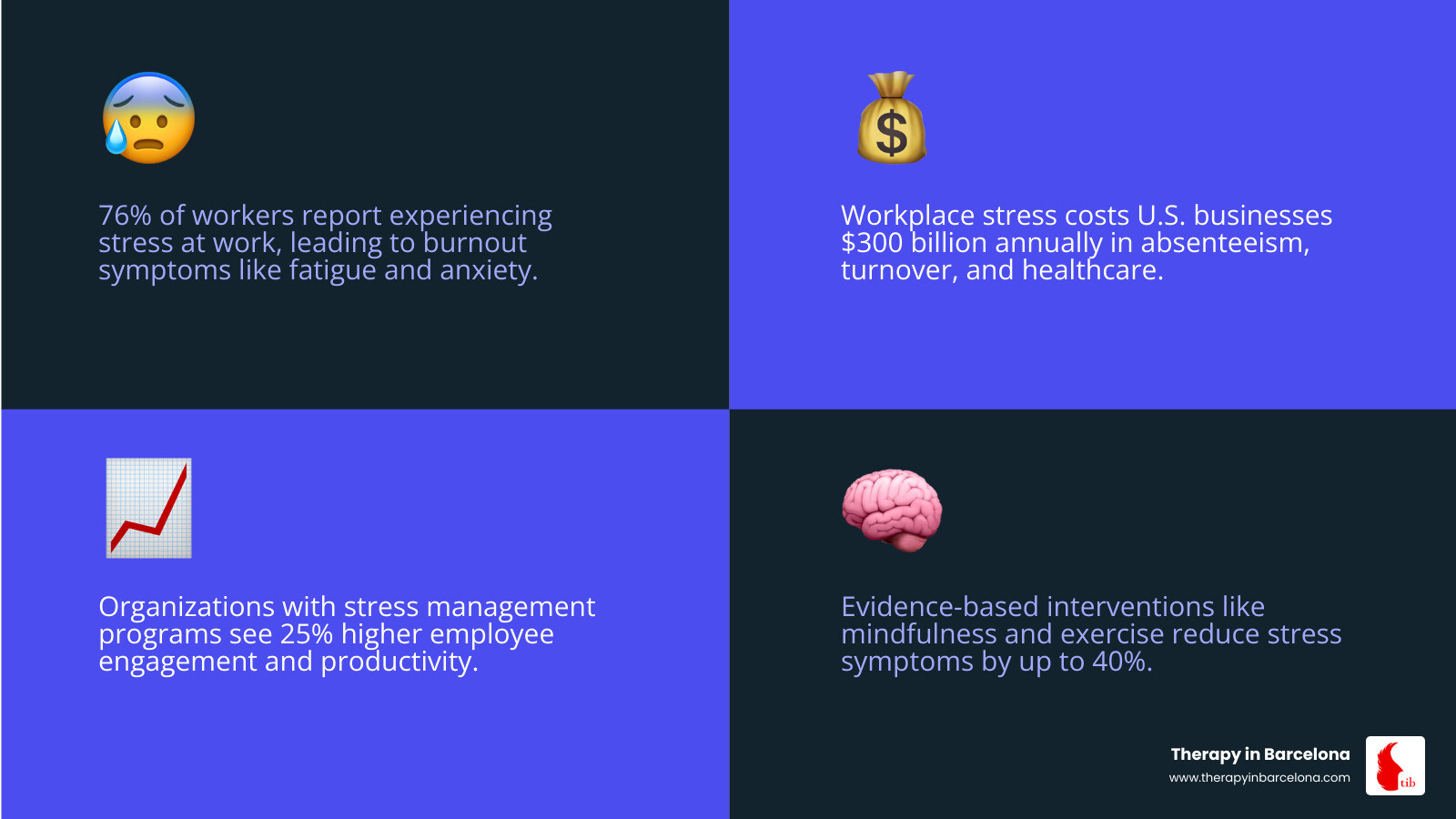
The numbers tell the story. Workplace stress is common, and its effects reach far beyond a tough day at the office, influencing focus, health, and overall wellbeing. For expats in particular, extra pressures like adapting to a new culture, navigating another language, and rebuilding support networks can make work stress feel even heavier.
The good news? Small, steady changes can make a real difference. Taking things one step at a time, using simple breathing techniques, and focusing on what you can handle right now are practical ways to reduce workplace stress without feeling overwhelmed.
Why Are We So Stressed at Work?
Ever felt that knot in your stomach on a Sunday evening? You’re not alone. Modern workplaces pile on demands our bodies were never designed to handle long-term. Key stressors include:
- Overwhelming workload – the to-do list that never ends
- Role ambiguity – unclear expectations create constant second-guessing
- Job insecurity – economic shifts and redundancy fears
- Toxic culture & micromanagement – little autonomy, lots of tension
- Long hours & work-life blur – especially common with remote work
- Unfair pay & poor physical conditions – financial strain plus hard-to-ignore noise, lighting or safety issues
For internationals, these pressures often hit harder. Language barriers, unfamiliar workplace norms, and being far from your usual support system can make everyday job stress feel much bigger, especially when you’re also adjusting to life in a new city.
Recognising Red Flags Early
Our minds and bodies send warnings when helpful pressure tips into harmful strain:
Physical signs: tension, headaches, stomach upsets, frequent colds
Emotional/behavioural signs: anxiety, irritability, apathy, sleep trouble, concentration dips, withdrawal, reliance on alcohol or caffeine
Keeping a short stress diary – what happened, how you felt – helps you spot patterns quickly and apply the strategies that follow.
Not all stress is bad. Compare eustress and chronic stress:
| Feature | Good Stress (Eustress) | Chronic Stress (Distress) |
|---|---|---|
| Duration | Short, goal-focused | Long, pervasive |
| Feeling | Energising | Draining |
| Impact | Boosts performance | Leads to burnout |
| Physical | Brief alertness | Ongoing symptoms |
Unchecked chronic stress links to heart disease, depression and high turnover – costly for people and organisations alike.
5 ways to manage stress in the workplace: the evidence-based playbook
Work stress is common, but managing it does not have to mean turning your whole life upside down. Small, practical changes often help more than dramatic overhauls. Simple habits, used consistently, can ease pressure, improve focus, and help you feel more in control throughout the workday.
These strategies are not random tips. They are backed by research and used in many workplaces to reduce stress. For expats in Barcelona and beyond, they can be especially helpful when everyday job pressure is combined with cultural adjustment, language barriers, and distance from familiar support.
Think of these approaches as building blocks for a stronger, more resilient you. Each one tackles a different facet of stress – from offering immediate relief in a tough moment to helping you build lasting coping mechanisms. The most powerful way to use them? By mixing and matching! This allows you to create your very own personalised toolkit, perfectly custom to your unique work situation and lifestyle. It’s about finding what truly works for you.
1. Prioritise & Plan – 5 ways to manage stress in the workplace with smart boundaries
Stress management starts with clarity, not cramming more into an already full day.
- Daily top three. Before emails, list the three tasks that matter most. Research shows narrowing focus lowers stress and boosts output.
- Use the Eisenhower grid. Urgent-important tasks first; schedule, delegate or delete the rest.
- Say no with respect. “I’d love to help, but I’m at capacity. Can we revisit this next week?” Clear, kind refusals protect your energy.
- Pomodoro breaks. Work 25 minutes, rest 5. After four rounds, take a longer break.
- Digital boundaries. Batch email checks, silence notifications and define “office hours”, even when working remotely.
Expat tip: Observe how respected local colleagues set limits, then adapt what feels authentic for you. More info about Work-Life Balance
2. Get Moving for an Endorphin Boost
Movement floods the brain with mood-lifting endorphins and lowers cortisol. You don’t need a marathon; tiny bursts throughout the day work wonders:
- Walking meetings – swap the conference room for the pavement.
- Desk stretches – neck rolls, shoulder shrugs, seated twists.
- Lunchtime loop – a brisk 20-minute walk or jog resets focus.
- Chair yoga or resistance bands for quick strength and stretch.
Consistency beats intensity, and pairing movement with 7–9 hours of sleep super-charges stress resilience. Barcelona’s climate makes outdoor exercise an easy win – from beach walks to Collserola hikes.
Scientific research on exercise benefits
3. Mindful Minutes Anywhere – 5 ways to manage stress in the workplace using breath & meditation
A one-minute reset can switch your nervous system from “fight-or-flight” to “rest-and-digest”.
60-second reset
- Inhale deeply, belly rising
- Hold for two counts
- Exhale slowly
- Repeat 3–5 times
Box breathing (4-4-4-4 counts) or a quick body scan at your desk deepen relaxation.
Guided apps make it easy to practise on the metro or between meetings. Insert micro-pauses – three conscious breaths before opening your inbox – and calm accumulates across the day.
Scientific research on meditation tips More info about Mindfulness for Anxiety and Stress: A Guided Meditation
4. Optimise Your Workspace & Schedule Micro-Breaks
Your surroundings can soothe or strain you. Simple tweaks pay off:
- Add plants – they can cut stress by 15 %.
- Maximise natural light or use a daylight lamp.
- Tame noise with headphones or soft background sounds.
- Stand-friendly set-up – adjustable chair, screen at eye level, sit-stand desk if possible.
- Healthy snacks within reach to dodge sugar crashes.
Mini-breaks matter:
- 20-20-20 rule for eyes
- Hourly stretch alarms
- A meeting-free half-day for deep work
- Quiet corners for breathing breaks

5. Reach Out & Tap Into Support Systems
Stress shrinks in the presence of support.
- Peer buddies & expat groups. Shared experience = fast relief.
- Supervisor check-ins. Flag workload issues early and suggest solutions.
- Employee Assistance Programmes (EAPs). Confidential counselling often free of charge.
- Company wellness perks. Use that gym stipend or mindfulness workshop.
- Professional therapy. When stress lingers, culturally sensitive help matters. Therapy in Barcelona matches you with an English-speaking therapist who understands expat life.
More info about Stress Management Scientific research on workplace resources
Communicating Needs & Building a Supportive Culture
Managing stress isn’t only personal; it’s collective. Use the 4 A’s:
- Avoid unnecessary stressors
- Alter what you can influence
- Accept what you cannot change
- Adapt your mindset and expectations
Communicate with assertive “I” statements – “I work best with clear deadlines” – and celebrate colleagues’ wins to foster psychological safety. If policies need updating, frame suggestions as shared problem-solving, not complaints.
For expats, tuning into local communication norms while honouring your wellbeing is a learning curve, but one worth mastering.
More info about Therapy for Career Stress Scientific research on EAP effectiveness
Frequently Asked Questions about Workplace Stress
What happens if stress goes unmanaged?
For people: higher risk of heart disease, anxiety, depression, weakened immunity, absenteeism and relationship strain.
For organisations: lost productivity, higher healthcare bills, turnover and a damaged culture – a multi-billion-euro problem each year.
How can the workspace reduce stress quickly?
Prioritise natural light, quiet zones, ergonomic furniture, calming colours, plants and distinct break areas. Small environmental tweaks improve mood and concentration.
When is it time to seek professional help?
If symptoms persist for several weeks, impact sleep, physical health, relationships or job performance – or if you feel hopeless or on edge most days – reach out. Expats may feel extra isolated; culturally sensitive therapy (in person or online) offers custom support.
Conclusion

The five strategies – plan wisely, move often, breathe mindfully, shape your space, seek support – work best when you make them your own. Start with one change this week and watch the ripple effect.
Asking for help shows self-awareness, not weakness. Therapy in Barcelona’s English-speaking team, led by Australian psychologist and long-term expat Leigh Matthews, is here whether you’re in busy Barcelona, sunny Valencia or logged in from elsewhere in Spain.
Ready to lighten the load? Book a free discovery call or fill in our intake form today. Small steps, big difference.
