


Why Feeling Lonely Matters More Than You Think

What to do when feeling lonely is a common search for those struggling with disconnection. Here’s a quick guide to get you started:
Quick Solutions for Loneliness:
- Reach out to someone you trust – Call a friend or family member and share how you’re feeling.
- Get out of the house – Visit a café, park, or library where other people gather.
- Join a group or class – Find activities based on shared interests in your area.
- Practice self-compassion – Acknowledge your feelings without judgment.
- Move your body – Exercise, walk, or join a fitness class.
- Volunteer – Help others while building new connections.
- Seek professional support – Consider therapy if loneliness feels overwhelming.
Imagine moving to Barcelona for a fresh start, only to find that being surrounded by people does not automatically create connection. That experience is common for many expats in Barcelona, Valencia, Málaga, and beyond. You may have colleagues but no close friends. You may come home to an empty flat and scroll through social media, watching other people’s lives unfold while yours feels painfully disconnected.
Loneliness isn’t just being physically alone. It’s the gap between the connection you crave and what you have. You can be in a crowded room or a relationship and still feel isolated. It’s a subjective and deeply personal feeling.
The numbers are hard to ignore. In 2023, the U.S. Department of Health and Human Services warned of an epidemic of loneliness. Younger adults are especially affected, with high rates of loneliness reported among Gen Z and millennials. For expats in places like Barcelona, Valencia, or Madrid, loneliness can feel even heavier when language barriers and missing your usual support system are part of daily life.
Loneliness isn’t just an emotional discomfort. It activates your body’s stress response, disrupts sleep, weakens your immune system, and increases your risk for depression, anxiety, and heart disease. Research shows chronic loneliness is as harmful as smoking 15 cigarettes a day. It’s not something to ignore.
But there’s some hope. Loneliness is a signal, not a life sentence. It’s your body telling you that a fundamental need—connection—is missing. And you can do something about it. Small, intentional actions can help you build the meaningful relationships you’re craving.
This article offers seven practical, evidence-based strategies to help you stop feeling lonely. Some focus on reconnecting with others, others on reconnecting with yourself. All are designed to be realistic, whether you’re an expat adjusting to life abroad or simply feeling disconnected at home.
Understanding the Roots of Your Loneliness
Loneliness is the distress that arises when our social needs aren’t met. It’s a fundamental human signal, like hunger or thirst, that activates the same neural networks as physical pain and lifts stress levels. It’s a crucial sign from your mind that something needs attention.
For many, especially expats in cities like Barcelona, Valencia, or Madrid, this feeling can be particularly acute. A new culture, a different language, and distance from familiar faces can strip away social safety nets, leaving you feeling isolated. As the U.S. Department of Health and Human Services noted in 2023, we are in an “epidemic of loneliness,” highlighting its widespread impact. Ignoring this signal can have serious consequences for your wellbeing.
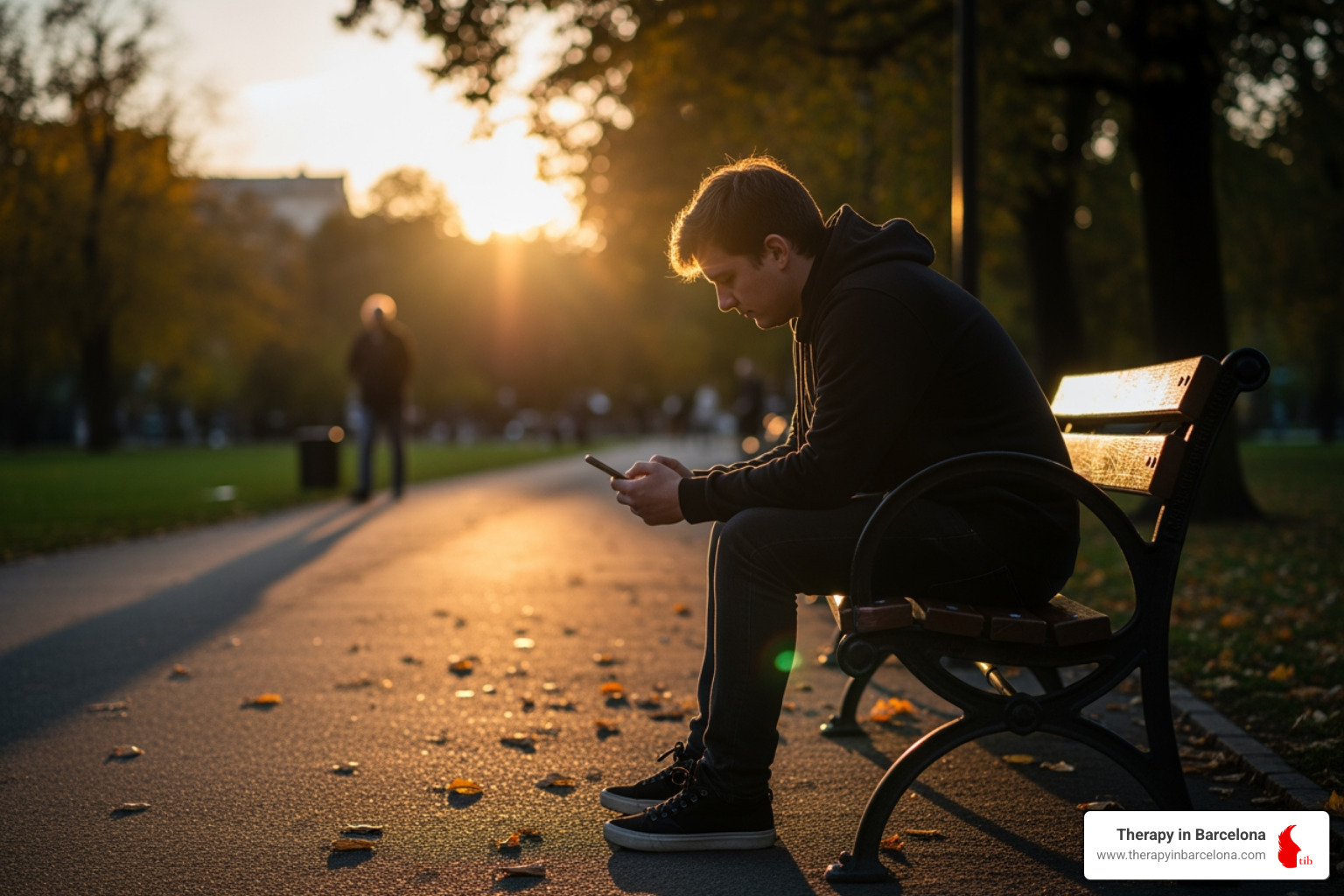
What are the common causes of feeling lonely?
Loneliness often stems from a perceived lack of meaningful connection, even when you’re surrounded by others. Several factors can trigger these feelings:
- Life Transitions: Major changes are significant triggers. Moving to a new city, starting a new job, a relationship breakdown, or bereavement can disrupt social circles. For expats, the excitement of moving to a place like Málaga can give way to isolation as the novelty fades and the work of building a new life begins.
- Expat Challenges: Living abroad presents unique problems. Cultural adjustment, language barriers, and feeling misunderstood can create a profound sense of isolation. Even with a good grasp of Spanish, subtle cultural differences can make deep connection challenging.
- Grief: Loneliness can be a profound part of grieving, not just for a person, but also for a lost way of life, community, or a past version of yourself. Unacknowledged grief can lead to severe isolation.
- Mental Health Impact: Conditions like depression or social anxiety can distort perceptions, making it harder to connect. This can create a cycle where loneliness fuels the mental health issue, which in turn makes connection seem more daunting.
- Lack of Satisfying Connections: Sometimes, the issue isn’t a lack of people, but a lack of quality in your relationships. You might feel lonely because your social needs aren’t being met by your current connections.
How does loneliness affect your health?
The impact of chronic loneliness extends far beyond emotional discomfort, affecting both mental and physical health.
- Mental Health: Loneliness is strongly linked to depression and anxiety. It can lead to negative self-talk, low self-esteem, and a sense of hopelessness, making it difficult to find the motivation to seek connection.
- Physical Health: When you feel lonely, your body can enter a state of chronic stress. This activates the fight-or-flight response, leading to increased stress levels. Prolonged stress can weaken your immune system, making you more susceptible to illness. Research shows that loneliness and social isolation are significant risk factors for serious conditions like coronary heart disease and stroke. It can also disrupt sleep, further impacting your overall wellbeing.
What to do when feeling lonely: 3 Ways to Connect with Others
When loneliness strikes, it’s a signal that your need for social connection is unmet. The good news is that you can take practical steps to bridge this gap. These strategies focus on actively engaging with the world around you and reaching out to others.

1. Re-engage with Your Existing Network
Sometimes the most powerful antidote to loneliness is reaching out to those already in your life. This is about deepening existing bonds, not just adding new contacts.
- Be Vulnerable and Honest: Share how you’re feeling. Admitting you’re lonely takes courage but can open the door to genuine connection. You might be surprised to find that others have felt the same.
- Reach Out Actively: Don’t wait for others to call. Send a text, make a phone call, or schedule a video chat. For expats in Barcelona, maintaining these connections with loved ones back home is vital for emotional support.
- Schedule In-Person Time: If possible, arrange to meet up. Face-to-face interactions reduce stress and stimulate positive feelings. Even a simple coffee or a walk can make a big difference to your existing friendships and social life.
- Handwritten Notes: In our digital age, a handwritten letter can be incredibly meaningful. It’s a tangible reminder that you’re thinking of someone, and the act of writing can be therapeutic.
2. Build New Connections in Your Community
Sometimes, existing networks aren’t enough, or you might be in a new place like Alicante or Sevilla and starting from scratch. Building new connections requires putting yourself out there, but the rewards are immense.
Spend time in “third places”: These are everyday spaces outside home and work where people naturally gather, such as cafes, parks, libraries, and community centres. Simply being in these places more often can help you feel less isolated and make casual conversation easier.
Join local classes or groups: Choose an activity that gives you regular contact with people who share your interests, like a language exchange, cooking class, walking group, or book club. Websites like Meetup can help you find events nearby. In cities like Barcelona or Madrid, there are often plenty of expat-friendly and local community groups.
Volunteer for something meaningful: Helping with a cause you care about can reduce loneliness by adding both structure and purpose to your week. It also introduces you to people who value the same things you do, whether that is supporting animals, community projects, or local events.
Start with small interactions: Brief, friendly moments still count. Saying hello to a neighbour, chatting with your barista, or making a quick comment in a class can help you feel more connected to the people around you and make new relationships feel less intimidating.
3. Use Social Media Mindfully
Social media is a double-edged sword for loneliness. It offers connection but also carries significant pitfalls.
- Constructive Use: Social media can be a valuable tool for staying in touch with distant friends and family, especially for expats. It can also help you find online communities based on shared interests. Research suggests that online connection can make us feel less alone when used to improve existing relationships or when face-to-face interaction is limited.
- Potential Pitfalls: The curated lives often portrayed on social media can lead to social comparison, making you feel worse. Endless scrolling can also be a distraction from addressing deeper feelings of loneliness and can even increase isolation.
- Set Digital Boundaries: Be mindful of how social media makes you feel. If you find yourself feeling worse after scrolling, it’s time to set boundaries. Consider taking breaks, limiting your time on certain platforms, or unfollowing accounts that trigger negative emotions.
4 Ways to Reconnect with Yourself and Find Contentment
While connecting with others is vital, overcoming loneliness also involves nurturing your relationship with yourself. Finding inner contentment means learning to enjoy your own company and cultivating a strong sense of self-worth.
1. Cultivate a Positive Relationship with Solitude
There’s a crucial difference between loneliness and solitude. Loneliness is the painful feeling of lacking connection. Solitude is a chosen state of being alone that can be positive, enriching, and restorative.
- Reframe Being Alone: Instead of viewing time alone as a punishment, see it as an opportunity for self-reflection, growth, and activities you enjoy. Solitude can be an enjoyable and enriching experience, allowing you to recharge and reconnect with your inner self.
- Engage in Hobbies and Creative Activities: Dive into a personal project, learn a new skill, read a book, paint, or listen to music. These activities provide a sense of purpose and fulfillment, making time alone feel productive. For international students in Barcelona or Zaragoza, personal hobbies can be a great way to manage isolation. More info about adolescent therapy for students feeling isolated can also provide support.
- Be a Tourist in Your Own City: Explore your surroundings with fresh eyes. Visit a museum, wander through a new neighbourhood, or sit in a park and observe. This can help you feel more connected to your environment and foster a sense of adventure, even when you’re by yourself.
2. Practice Self-Compassion and Reframe Negative Thoughts
Loneliness often brings negative thoughts and self-criticism. You might blame yourself or feel “unlikable.” Self-compassion is your most powerful tool against this.
- Challenge Self-Criticism: Instead of berating yourself, ask: “What would I say to a friend feeling this way?” You’d likely offer kindness. Extend that same kindness to yourself. Practising self-compassion helps you suffer less from loneliness by changing your internal dialogue.
- Recognise Loneliness as Universal: Understand that loneliness is a common human experience, not a personal failing. Almost everyone feels lonely at some point. This normalisation can reduce the shame associated with the feeling.
- Reframe Negative Thoughts: Use techniques from Cognitive Behavioural Therapy (CBT) to challenge unhelpful thought patterns. For example, reframe “No one cares about me” to “I’m feeling disconnected right now, and I need to find ways to reach out.” Our psychology-trained therapists are skilled in CBT and can help you develop these skills.
3. Nurture Your Physical and Mental Well-being
Your physical and mental health are deeply interconnected. Taking care of your body can profoundly impact your mood and ability to cope with loneliness.
- The Body-Mind Connection: When your physical health is run down, loneliness can feel heavier. Looking after your body can lift your mood, support your energy, and help you cope better.
- Exercise Regularly: Movement can be a real mood booster. Even a short walk can break cycles of overthinking. Physical exercise can help reduce feelings of loneliness, partly because it gets you moving and can create chances for connection. Try a walking group in Barcelona, Valencia, or Málaga, or join a local fitness class.
- Healthy Diet and Quality Sleep: Eating regularly and getting enough restful sleep can make a big difference. Poor sleep and an unbalanced diet can make you feel more emotionally vulnerable and less able to manage stress.
- Spend Time in Nature: Time outdoors can calm your nervous system and improve mental wellbeing. A walk in a local park, a hike in the hills near Barcelona, or even gardening can lower stress and help you feel more grounded. Nature can be restorative on its own, and shared outdoor activities can also open the door to new social contact.
4. Engage Your Mind with Gratitude and Nostalgia
Shifting your mental focus can be a surprisingly effective way to ease loneliness. Practising gratitude and positive nostalgia can foster a sense of connection.
- Gratitude Journaling: Regularly noting things you’re grateful for can shift your perspective from what’s missing to what’s present. One study found that older adults who practised daily gratitude journaling felt less lonely. This simple practice can cultivate a more positive outlook.
- Help Others and Perform Acts of Kindness: Focusing on helping others can shift your mood and make you feel more connected. Small acts of kindness boost your sense of purpose and belonging. Volunteering is a fantastic way to combine this with building new connections.
- Positive Nostalgia: Remembering past events where you felt socially connected can help fight loneliness. Nostalgia can increase your sense of meaning in life, which often suffers when you’re feeling lonely. Revisit happy memories and reflect on the positive relationships you’ve had.
When to Seek Professional Support for Loneliness
While the strategies above can make a difference, there are times when loneliness becomes overwhelming and extra support can help. It’s important to notice when these feelings are becoming chronic and exhausting.
- Chronic Loneliness: If feelings of loneliness persist for several months and significantly impact your daily life, it may be becoming chronic. This can take a toll on both emotional and physical health.
- Persistent Sadness or Despair: When loneliness is accompanied by ongoing sadness, hopelessness, or despair, it might be time to seek support.
- Impact on Daily Functioning: If loneliness makes it difficult to work, maintain personal hygiene, or engage in activities you once enjoyed, it’s a clear sign you deserve extra help.
- Suicidal Thoughts: If loneliness leads to thoughts of self-harm or suicide, seek immediate help. In Spain, you can call 112 for emergencies.
Therapy can offer a safe, non-judgemental space to explore the roots of your loneliness and try new ways of relating to yourself and others. Many people find evidence-based approaches like Cognitive Behavioural Therapy (CBT), Acceptance and Commitment Therapy (ACT), Interpersonal Therapy, or mindfulness-based approaches helpful in shifting painful patterns of thinking and behaviour.
For expats, it can be especially valuable to work with someone who understands what it is like to adjust to life abroad, learn a new language, and rebuild community from scratch.
Your options for getting support
People often feel unsure about where to start. Here are some common routes, with their strengths and limitations.
Public healthcare in Spain
You can access mental health support through the public system. This can be a good option if budget is tight.
- Often low-cost or free at the point of use.
- Waiting lists can be long, especially in larger cities like Barcelona, Madrid or Valencia.
- Sessions may be shorter and less frequent.
- It can be harder to find an English-speaking therapist, which can be a real barrier when you are trying to talk about feelings.
Large online therapy platforms
There are many big international platforms offering quick sign-up and a wide pool of therapists.
- Convenient and accessible from anywhere.
- Matching is often automated and not always tailored to expats’ specific needs.
- Therapists may not have lived experience of international life in Spain, so cultural nuances and expat stressors can be missed.
- Data policies and privacy practices vary, so it is worth checking how your information is stored and used.
Local private practices in your city
In hubs like Barcelona, Málaga, Alicante, Valencia or Sevilla you will find local therapists and smaller practices.
- You may find someone close to home and able to see you in person.
- Some therapists speak English or other languages, though this is not guaranteed.
- Approaches, training and experience vary, so it can take time to find the right fit.
Therapy in Barcelona
Therapy in Barcelona is a group practice of psychology-trained therapists who offer their services as therapists in Spain. We have been supporting internationals since 2011.
- Established and trusted: Founded in 2011 by Australian Psychologist Leigh Matthews, in Barcelona since 2011 and experienced in supporting internationals.
- Expat-specific and culturally sensitive: Our therapists are also internationals or have strong international backgrounds. We understand homesickness, culture shock, mixed-language relationships and the realities of life in cities like Barcelona, Madrid, Valencia, Málaga or Gran Canaria.
- Languages: We work in English, and some of our therapists also speak German, French, Spanish, Afrikaans, Portuguese, Austrian-German and Swiss-German.
- Personalised matching: We do not believe therapy is one size fits all. We take care to match you with a therapist whose experience, approach and personality are a good fit for you.
- Collaborative expertise: We are a team, not a single clinician. We work with adults, couples, teens and families, and we share knowledge and support within the team to offer high quality care.
- Flexible access: We offer online therapy to clients worldwide, and face-to-face sessions in our office in Barcelona.
- Privacy: We prioritise confidentiality and do not sell your data.
We use evidence-based therapies tailored to your needs, including CBT, ACT, Schema Therapy, somatic, interpersonal, mindfulness-based, narrative, psychodynamic, and systemic approaches. For couples, we may also use the Gottman Method or Imago Relationship Therapy. The focus is on finding what helps you most, not fitting you into one fixed model.
What to do when feeling lonely becomes overwhelming
Recognising that you want support is an important step.
If you’d like support, book a Free Discovery Call. We can talk through what you are struggling with, answer questions, and suggest a therapist from our team who may be a good fit. We work online with clients across Spain and around the world, and in person in Barcelona’s Eixample district.
Frequently Asked Questions about Feeling Lonely
How is loneliness different from being alone?
Loneliness is the painful, subjective feeling of lacking social connection, even when you’re with other people. In contrast, solitude is the chosen state of being alone, which can be positive and restorative. It’s an opportunity for self-reflection and recharging, leading to contentment rather than distress.
Can you feel lonely even if you have friends or are in a relationship?
Yes. Loneliness is determined by the quality of your connections, not the quantity. You can feel emotionally isolated with friends or a partner if you don’t feel truly understood, supported, or able to share your deepest feelings. This highlights that the subjective experience of connection is what truly matters.
Is it normal for young people and students to feel lonely?
Yes, it is very normal, especially during your teens, twenties, and student years. This stage of life often brings big changes, like moving to a new city, starting university, or adjusting to life abroad. Those shifts can make it harder to feel grounded and connected. For expat students, loneliness can feel even stronger when language differences, homesickness, or cultural adjustment are part of daily life. If you are struggling, support services like Student Space can be a helpful place to start.
Conclusion
Feeling lonely is a universal human experience—a signal that your need for connection is unmet, not a personal flaw. From the busy streets of Barcelona to the coasts of Gran Canaria, Valencia or Málaga, expats and locals alike can struggle with this emotion. Ignoring it can harm your wellbeing, but by understanding its roots and using intentional strategies, you can foster more meaningful connections.
Whether you re-engage with old friends, build new communities, nurture a positive relationship with solitude, or practise self-compassion, every small step can create a shift towards a more connected life.
If you are an expat struggling with loneliness and isolation, support is available. The unique challenges of living abroad can amplify these feelings, but you don’t have to face them alone.
Find support for loneliness while living abroad and take the first step towards feeling more connected.
If you’d like support, book a Free Discovery Call. We offer online therapy worldwide and in-person sessions in Barcelona.
