


Why Living Abroad Challenges in Spain Are More Complex Than You Think

Living abroad challenges in Spain go far beyond the sunny stereotypes of endless siestas and cheap sangria. While Spain attracts thousands of expats each year with promises of Mediterranean bliss, the reality involves navigating a complex web of bureaucracy, cultural shifts, and unexpected costs that can leave even the most prepared newcomers feeling overwhelmed.
The 7 Most Common Living Abroad Challenges in Spain:
- Language barriers – Spanish plus regional languages like Catalan
- Bureaucratic maze – NIE, empadronamiento, and endless paperwork
- Hidden financial surprises – Tax brackets, utilities, and exchange rate swings
- Cultural adaptation stress – Mañana mentality and late dining schedules
- Career limitations – High unemployment and low salaries
- Healthcare navigation – Public system waits vs private insurance costs
- Social isolation – Building genuine connections beyond transient expat circles
Research shows that in cities like Barcelona, 22% of residents are foreign-born, yet many struggle with integration. The honeymoon phase of expat life often masks deeper challenges that emerge months later – from the shock of Spain’s 19-47% tax brackets to the mental health impact of feeling perpetually lost in translation.
As Leigh Matthews, an Australian psychologist who’s lived in Barcelona since 2011 and founded Therapy in Barcelona, observes: “Many expats arrive with romanticised expectations, but Spain’s daily reality requires genuine cultural adaptation, not just tolerance.”
The good news? Understanding these challenges upfront helps you prepare mentally and practically for the journey ahead.

1. The Language Barrier: Beyond “Hola”
Living abroad challenges in Spain often begin with a linguistic reality check that catches even prepared expats off guard. While you might arrive with solid Spanish skills, Spain’s multilingual landscape presents complexities that basic language courses simply don’t prepare you for.
In regions like Catalonia, Galicia, and the Basque Country, you’ll quickly find that Spanish is just one piece of the puzzle. Take Barcelona, where Catalan dominates local life in ways that can leave Spanish speakers feeling surprisingly lost. Your landlord might prefer conducting business in Catalan, your child’s school sends home communications primarily in the regional language, and even your local gym classes switch seamlessly between languages.
The practical implications extend into every corner of daily life. You might feel confident chatting with neighbours about the weather, then find yourself completely lost when trying to understand your electricity bill or steer a medical emergency. Administrative Spanish involves specialised terminology that can make fluent speakers feel like beginners again.

Why It Hurts Your Mental Health
The psychological impact of language barriers creates ripple effects that reach far beyond simple communication frustration. When you can’t express yourself fully, you lose touch with your own sense of competence and identity – qualities that form the foundation of mental wellbeing.
Confidence erosion becomes a daily reality. You might be brilliant in your native language, capable of nuanced discussions and witty observations, yet find yourself reduced to simple phrases and gestures. This intellectual diminishment can trigger feelings of inadequacy that persist even outside language-dependent situations.
Social anxiety often follows, creating a cycle where fear of misunderstanding leads to social avoidance. You might skip networking events, avoid making phone calls, or decline invitations simply because the mental energy required for translation feels overwhelming.
More info about coping with culture shock
Quick Wins to Tackle It
Rather than waiting for perfect fluency, focus on strategic language building that addresses your specific needs and builds confidence through achievable wins.
Join neighbourhood-specific conversation groups – many Barcelona districts host weekly intercambios where locals and internationals practice together in relaxed settings. Download apps like Tandem or HelloTalk to connect with native speakers who want to practice your language.
Watch Spanish Netflix with Spanish subtitles rather than English ones. This trains your ear to connect spoken and written Spanish while enjoying entertainment. Learn key phrases for your specific situation – whether that’s banking terminology, healthcare vocabulary, or work-related expressions.
Find a language exchange partner who shares your interests beyond just language goals. Common hobbies or professional backgrounds create natural conversation topics that make practice feel less forced.
More info about expat mental health
2. The Bureaucracy Maze: NIE, Empadronamiento & Endless Paperwork
Imagine standing in a government office at 8:30 AM, clutching a folder of documents you’ve spent weeks gathering, only to be told you need one more form that wasn’t mentioned anywhere online. Welcome to Spain’s administrative reality – a system that can make even the most organised expat question their sanity.
The NIE (Número de Identidad de Extranjero) isn’t just a number – it’s your golden ticket to existing legally in Spain. Without it, you can’t open a bank account, sign a rental contract, or even get a mobile phone plan. Yet securing this crucial document often requires multiple appointments, each with its own specific requirements that seem to change depending on which office you visit.
Then comes empadronamiento – registering your address with the local council. This seemingly simple process becomes a catch-22 when you need proof of residence to get residency papers, but need residency papers to prove you live somewhere.
Paperwork Stress & Your Well-Being
The psychological toll of bureaucratic uncertainty runs deeper than most people realise. When you can’t complete basic adult tasks – opening a bank account, registering for healthcare, proving you exist legally – it creates a persistent undercurrent of anxiety that affects everything else.
Loss of control becomes a daily reality. You might be a successful professional in your home country, yet here you feel helpless navigating systems that seem designed to confuse rather than assist.
Break down bureaucratic tasks into manageable steps, and celebrate small victories along the way. Connecting with other expats who have been through the process can also provide valuable guidance. Book a free consult with Entre Tramites.
Practical survival strategies include hiring a gestor (administrative assistant) for complex procedures – the cost often pays for itself in saved time and stress. Keep multiple copies of every document in both physical and digital formats, because you’ll need them more often than expected.
More info about making your Spain move easier
3. Hidden Financial Surprises & Cost of Living Curveballs
Spain’s reputation as an affordable Mediterranean haven can be misleading. While your morning café con leche might cost €1.50 and a three-course lunch €12, the hidden financial realities of Spanish life often catch expats completely off guard.
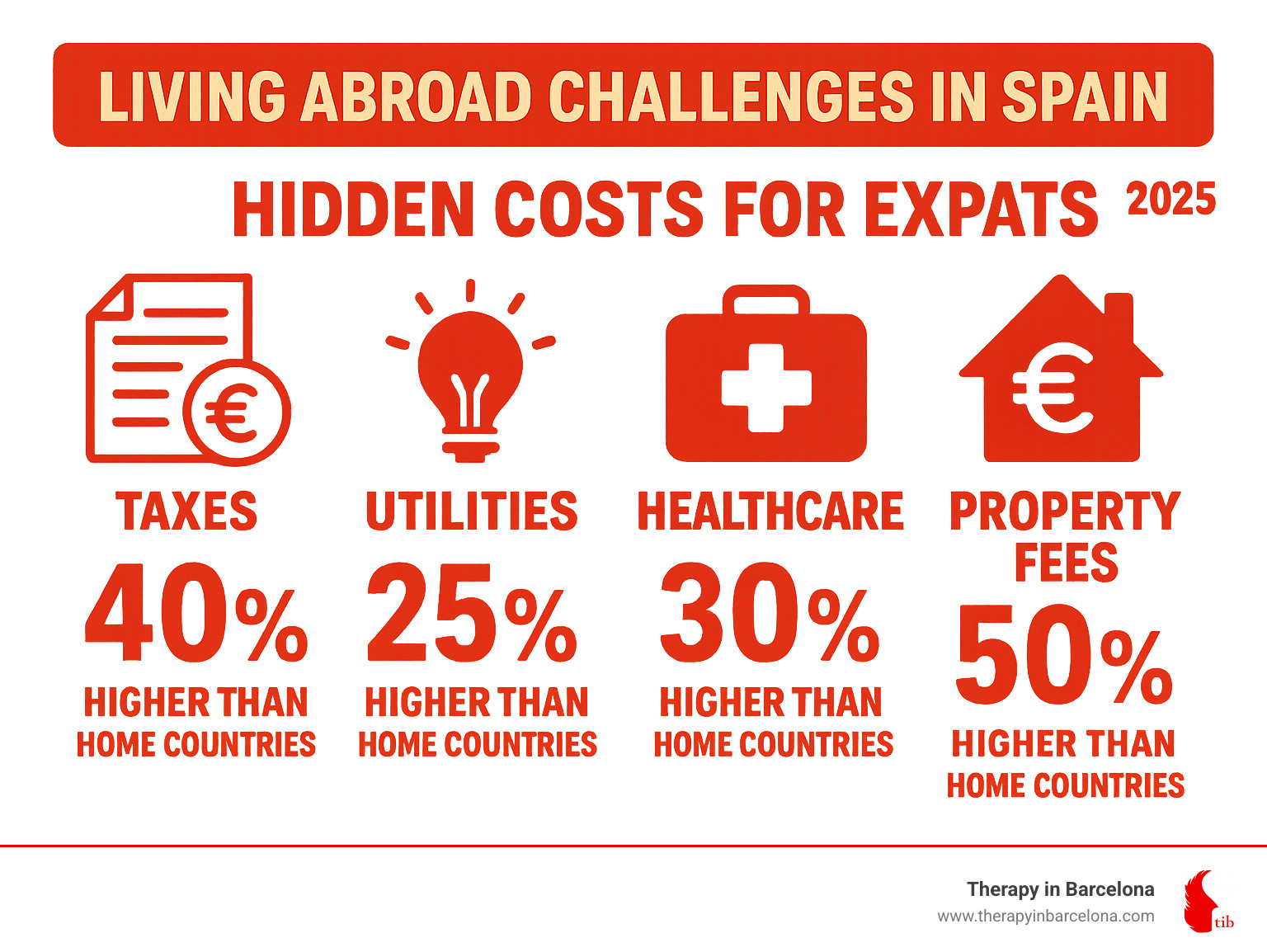
The tax system alone deserves your immediate attention. Spain’s income tax ranges from 19% to 47%, and once you’re a resident for more than 183 days per year, you’ll owe tax on your worldwide income – not just what you earn in Spain. Many retirees find the wealth tax kicks in at €700,000 in assets, suddenly affecting their property and savings in ways they never anticipated.
Property costs extend far beyond your monthly rent or mortgage. Community fees for apartment buildings can range from €50-300 monthly, depending on amenities. IBI (property tax) varies by region but can add hundreds annually to your housing budget.
Smart Money Moves
Financial preparation isn’t just about budgeting – it’s about understanding two completely different financial systems and how they interact. The stress of unexpected costs can seriously impact your mental health, especially when you’re already adjusting to a new culture.
Opening a multi-currency account protects you from exchange rate swings that can eat into your savings. Research private health insurance costs before you need them. While Spain’s public healthcare is comprehensive, wait times can be lengthy, and language barriers in medical settings add extra stress.
Build an emergency fund specifically for Spanish bureaucratic fees and unexpected costs. From gestor fees to document translations, these seemingly small expenses add up quickly during your first year.
More info about financial preparedness
4. Cultural Adaptation: More Than Just Late Dinners
Understanding Spain’s cultural rhythm requires more than accepting that dinner happens at 10 PM. The entire social and business structure operates on different assumptions about time, relationships, and priorities that can feel jarring for newcomers.
The reality hits quickly when you’re trying to accomplish basic tasks. That charming siesta becomes frustrating when you need to collect a package or speak to your bank manager, only to find everything closed from 2-5 PM. The mañana mentality that feels spontaneous during a holiday becomes exhausting when you’re waiting weeks for a repair appointment.
Expectations vs Reality in Spain:
- Expectation: Relaxed siesta lifestyle. Reality: Businesses often close 2-5 PM, disrupting your productivity.
- Expectation: Affordable Mediterranean living. Reality: Hidden costs and taxes can match Northern European expenses.
- Expectation: Easy integration with locals. Reality: Close-knit Spanish social circles can take years to penetrate.
- Expectation: Efficient modern infrastructure. Reality: Bureaucracy and appointments move at a glacial pace.
Mental Health Impact
The psychological impact of cultural adjustment often surprises expats who expected Spain to feel “easy” compared to more exotic destinations. Identity confusion becomes common when familiar social cues don’t work anymore.
Chronic low-level stress develops from constant cultural translation – figuring out what’s expected, when, and how. Your brain works overtime processing not just language differences but social expectations and unspoken rules that locals take for granted.
Restlessness, Rootlessness, and Resilience in Expat Life
Practical Adaptation Strategies
Rather than fighting Spanish culture, successful expats learn to work with it. Reframe delays as opportunities to practice patience and presence. When your internet installation gets postponed for the third time, use that frustration as a chance to notice your stress response and practice acceptance.
Build Spanish time into your schedule by adding 30 minutes to every appointment or errand. This buffer prevents constant frustration and helps you arrive with realistic expectations.
Find your personal rhythm within Spanish cultural patterns. Maybe you love late dinners but need earlier bedtimes, or perhaps you enjoy long lunch breaks but prefer morning productivity.
5. Career & Job Market Realities
Spain’s job market can feel like a reality check for many expats who arrive with optimistic career expectations. With unemployment rates consistently hovering above 12%, the competition for positions is fierce, and average salaries often fall 30-40% below what you might expect in Northern Europe or North America.
The autónomo (self-employed) system presents its own maze of complications for freelancers and remote workers. Monthly social security contributions may start around €300, regardless of whether you earn €500 or €5,000 that month. Many digital nomads find that Spain’s new digital nomad visa, while attractive on paper, comes with significant tax obligations that weren’t immediately apparent.
Professional credential recognition varies dramatically by field. Doctors, lawyers, and teachers often face lengthy validation processes that can take months or even years to complete.

Navigating Work Culture
Spanish work culture emphasises hierarchy, relationship-building, and indirect communication styles that can frustrate expats accustomed to more direct feedback. The long lunch break isn’t just about food – it’s relationship maintenance time that directly affects business decisions made later in the day.
Understanding Spanish workplace dynamics requires patience and cultural sensitivity. “No” often means “not yet” rather than “never,” and pushing too hard for immediate decisions can actually slow down the process.
Focus on developing your Spanish language skills as a career multiplier – even basic conversational ability can dramatically expand your opportunities. Many expats find success by developing expertise in areas where international perspective adds genuine value.
Latest research on Spain’s unemployment
Thriving in Barcelona as an International: Navigating Cultural Adjustments and Mental Health
6. Healthcare & Family Considerations
Moving to Spain with a family adds layers of complexity that single expats don’t face. Healthcare decisions, school choices, and supporting children through cultural transitions require careful navigation of systems that operate very differently from what you might expect.
Spain’s healthcare system offers excellent quality care – it’s ranked seventh globally – but understanding how to access it as an expat can feel overwhelming. EU citizens can use the European Health Insurance Card temporarily, but establishing long-term coverage requires either registering with the public SNS system or purchasing private insurance.
The public healthcare system provides comprehensive coverage once you’re registered, but wait times for non-emergency procedures can stretch for months. Private insurance, costing €50-200 monthly depending on your age and coverage needs, offers faster access but comes with its own limitations.
Education choices represent another significant puzzle piece. Public schools offer free education from age three, but instruction happens primarily in Spanish and regional languages like Catalan. International schools provide English-language education but at considerable cost – typically €8,000-15,000 annually per child.
Supporting Your Family’s Transition
Supporting your children’s integration requires patience and strategic thinking. Research your local area’s language policies carefully – some regions offer more English support than others, and bilingual schools can provide a middle ground.
Prepare children for cultural differences in Spanish classroom management and social dynamics. Spanish schools often emphasise group harmony and respect for authority in ways that might surprise children from more individualistic educational systems.
Social integration happens through local activities and sports clubs where children can build friendships naturally. These connections often become lifelines for both children and parents, creating the community bonds that make Spain feel like home.
Find the Best International Insurance
7. Building Your Support Network
Perhaps the most underestimated challenge of expat life in Spain is the profound loneliness that can develop despite being surrounded by people. The transient nature of expat communities means friendships often feel temporary, while breaking into established Spanish social circles requires years of consistent effort.
Language barriers compound social isolation in ways that catch many expats off guard. Even with decent Spanish skills, you might struggle to express your personality, humour, or deeper thoughts. This linguistic limitation can make you feel like a simplified version of yourself.
Cultural differences in friendship formation add another layer of complexity. Spanish social relationships often develop slowly through family connections, neighbourhood ties, or long-term shared activities. The quick, activity-based friendships common in international communities might feel superficial by comparison.

Building Resilient Connections
Creating meaningful relationships in Spain requires a different approach than what worked in your home country. The key is understanding that building genuine connections takes time – often much longer than you’d expect.
Start with consistent presence rather than trying to force instant friendships. Join multiple types of groups – professional networks, hobby-based clubs, and social meetups – but commit to showing up regularly.
Volunteer for causes you care about to meet like-minded people who share your values. Whether it’s helping at an animal shelter, supporting refugees, or participating in environmental cleanups, shared purpose creates bonds that transcend language barriers.
Accept the neighbourhood approach that’s so central to Spanish social life. Find your regular spots – a local café, gym, or market – where people begin to recognise you. Spanish friendships often grow from these repeated casual encounters rather than formal introductions.
For your mental health during this relationship-building phase, recognise that feeling lonely doesn’t mean you’re failing at expat life. Most successful long-term expats went through periods of isolation before finding their tribe.
Frequently Asked Questions about Living Abroad Challenges in Spain
Do I really need to learn Spanish if I live in Barcelona?
This question comes up constantly, and I understand why. Barcelona feels incredibly international, with English-speaking meetups, international schools, and entire neighbourhoods where you can get by without Spanish. But here’s the reality: learning Spanish (and ideally some Catalan) transforms your entire experience from surviving to truly thriving.
Without Spanish, you’ll find yourself constantly dependent on others for basic tasks. Healthcare appointments become stressful guessing games. Banking issues turn into hour-long ordeals. Even simple things like understanding your utility bills or communicating with your building’s portero become sources of anxiety.
The good news? Even basic conversational Spanish dramatically improves your daily life quality. You don’t need perfection – just enough to handle emergencies, express your needs, and show respect for local culture.
How long does NIE and residency paperwork usually take?
If you’re coming from countries where government processes happen quickly, prepare for a cultural adjustment in expectations.
NIE applications typically take 2-6 weeks for processing – but that’s after you successfully submit everything. Getting the initial appointment can add months to your timeline, especially in popular cities like Barcelona and Madrid.
Full residency permits vary dramatically by visa type. EU citizens have it relatively straightforward – about 3 months for complete registration if you have all your documents prepared. Non-EU citizens face a longer journey, often 6-12 months for complete processing.
Having all documents translated, apostilled, and ready before you start makes an enormous difference. Many successful expats recommend hiring a gestor (administrative assistant) for complex procedures.
Is Spain still affordable with current tax rates and inflation?
Spain’s affordability depends heavily on your lifestyle expectations, location, and income source. It’s still more affordable than many Northern European countries, but the gap is narrowing.
Regional differences are dramatic. Rural areas in Andalusia or Extremadura remain quite affordable, while Barcelona and Madrid have seen significant price increases. Spain’s income tax ranges from 19% to 47%, and if you’re resident for more than 183 days yearly, you’ll pay tax on your worldwide income.
Smart financial planning makes the difference. Many expats find Spain affordable for basic living – groceries, public transport, and casual dining remain reasonably priced.
Conclusion
The journey of living abroad challenges in Spain is rarely the sun-soaked trip portrayed in travel brochures. From language barriers that go beyond tourist Spanish to bureaucratic mazes that test your patience, from hidden financial surprises to the profound loneliness that can creep in despite being surrounded by people – these challenges are real, complex, and often catch even the most prepared expats off guard.
Yet here’s what we’ve learned from supporting thousands of internationals through these transitions: struggling doesn’t mean you’re failing. The most successful long-term expats in Spain – those who’ve built rich, fulfilling lives that blend their international backgrounds with Spanish culture – all faced similar obstacles. They experienced the same frustrations with NIE appointments, the same bewilderment at Spain’s tax system, and the same moments of wondering if they’d made the right choice.
What sets them apart isn’t that they avoided these challenges, but how they approached them. They learned to view living abroad challenges in Spain as temporary growing pains rather than permanent roadblocks. They sought support when needed, celebrated small victories along the way, and gradually built the resilience that comes from navigating unfamiliar territory.
The language barriers that once felt impossible became opportunities for deeper cultural connection. The bureaucratic processes that initially sparked anxiety became familiar routines. The financial surprises that caught them off guard became lessons in better planning and adaptation.
Most importantly, they recognised that asking for help isn’t a sign of weakness – it’s a sign of wisdom. Whether that support comes from other expats who’ve walked this path, professional services that understand the Spanish system, or mental health support that addresses the emotional complexity of rebuilding your life in a new country, reaching out is often the turning point.
As Leigh Matthews, founder of Therapy in Barcelona and an Australian psychologist who has steerd these same challenges since moving to Barcelona in 2011, often tells clients: “The expat journey isn’t about avoiding difficulties – it’s about developing the tools to handle them with grace and self-compassion.”
If you’re feeling overwhelmed by the complexities of expat life in Spain, professional support designed specifically for the international community is available. At Therapy in Barcelona, our team of qualified therapists are also expats themselves, offering both professional expertise and personal understanding of your journey. We provide culturally sensitive mental health support that addresses the unique challenges of living abroad – from culture shock and identity shifts to relationship strain and career uncertainty.
Your expat story in Spain doesn’t have to be written alone. With realistic expectations, proactive planning, and the right support network, these challenges can become the foundation for a richer, more resilient version of yourself.
Book a free no-obligation Discovery call with us at Therapy in Barcelona
