


Why Emerging Adulthood Requires a Tailored Therapeutic Approach
Key therapy topics for young adults often include establishing independence from family, managing career anxiety and perfectionism, navigating shifting friendships and romantic relationships, and coping with digital comparison and modern pressures. These themes sit at the heart of the years between 18 and 30, a psychologically unique chapter often called emerging adulthood. During this window, individuals move away from the structured environment of adolescence without stepping into fully settled adult roles. It is a period marked by profound identity exploration, high self-focus, and frequent instability.
When you are frequently switching flats, cities, jobs, or friendship circles, emotional equilibrium can feel elusive. Early adulthood often brings substantial emotional strain, making it one of the most intense developmental stages as personal and professional responsibilities expand.
Understanding the challenging transition from adolescence to adulthood helps explain why standard therapeutic methods must be adapted for this age group. With teens, therapists often work closely alongside parents and schools. With older adults, treatment frequently addresses established career tracks or long-standing family systems.
For young adults, the therapeutic relationship works best when the therapist acts as an empathetic guide rather than an authority figure. Young people are actively establishing their independence. If a clinician tells them what to do, it can inadvertently mimic parental pressure. Instead, tailored individual therapy offers a collaborative partnership where clients learn to trust their own decision-making skills.
Essential Therapy Topics for Young Adults Navigating Life Transitions
Walking into a therapy session without an agenda can feel daunting. Having a roadmap of common themes can help you identify what you are feeling beneath everyday stress. Here are several practical therapy topics for young adults to explore:
- Untangling your authentic values from family or cultural obligations.
- Managing chronic overthinking, perfectionism, and career paralysis.
- Coping with the constant comparison driven by social media.
- Navigating shifting dynamics with parents, romantic partners, and old friends.
- Building genuine emotional resilience when dealing with climate worry or world events.
Identity and Independence: Core Therapy Topics for Young Adults
Finding out who you are when nobody is watching is one of the central tasks of your twenties. Many young adults experience intense identity confusion, especially if they are Third Culture Kids, international students, or professionals living far from home.
A significant hurdle during this phase is the tension between gaining autonomy and remaining dependent on parents. Rising living costs mean that many young people rely on family for financial support or housing, which can blur emotional boundaries.
Fictional composite example: Consider Mateo (a fictional composite profile representing common international and expat challenges, not a real client), a 24-year-old software designer who relocated from Valencia to a shared flat in a new city. While he earned his own salary, his parents still expected daily check-ins and weighed in on his spending choices. Every phone call left Mateo feeling torn between gratitude and resentment.
In sessions, approaches like narrative therapy help individuals rewrite these internalised family scripts. Clinicians support clients in communicating clear boundaries without unnecessary guilt. When intergenerational tensions run deep, exploring family dynamics counselling can illuminate how past patterns shape current self-worth.
Career Paths and Ambivalence: Practical Therapy Topics for Young Adults
Career anxiety in your twenties is rarely just about updating a CV. It is often fuelled by perfectionism, imposter feelings, and a deep dread of “choosing wrong.” With countless visible paths showcased online, making one professional choice can feel like closing the door on all other possibilities.
Evidence-based strategies for young adult challenges focus on values clarification and cognitive restructuring. Rather than hunting for an unattainable “perfect” job, therapy helps you identify your core values—such as autonomy, creativity, or stability—and align your career choices with them.
Therapy is also a safe space to process ambivalence around major life decisions. Questions about whether to pursue further study, relocate to hubs like Madrid, Málaga, or Marbella, commit to a long-term partner, or plan for children can bring up intense internal debate. A therapist helps untangle genuine personal desires from external social expectations.
Digital Well-Being, Social Comparison, and Modern Pressures
Modern young adults are the first generation to live through early adulthood alongside saturated digital media. Constant access to curated highlights of other people’s careers, travels, and relationships creates an unhelpful cycle of upward comparison.
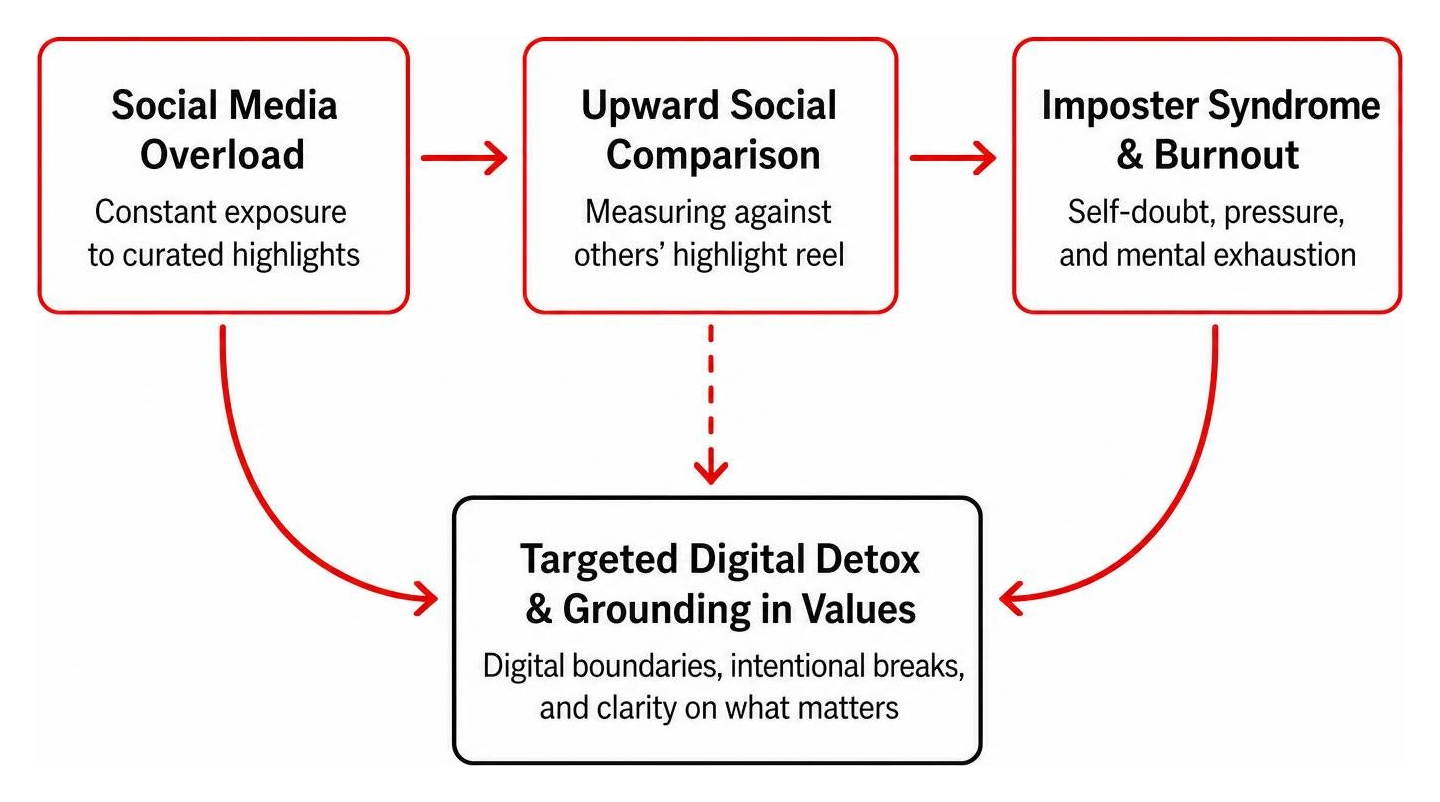
Sessions frequently address digital boundaries, sleep hygiene, and intentional breaks from screens. Beyond personal habits, concerns about the planet and global uncertainty also weigh heavily on young minds. In therapy, clinicians help clients transform paralysing eco-anxiety into grounded, community-focused action while building emotional stamina.
Relational Patterns, Intimacy, and Social Connection
Friendships and romantic partnerships shift dramatically during your twenties. High school and university social circles naturally diverge as people move away or take on demanding jobs. This transition can trigger surprising waves of loneliness and isolation.
Exploring your attachment style in therapy sheds light on why you might pull away from intimacy or cling tightly when anxious. For those in committed partnerships, couples counselling offers practical tools to resolve recurring arguments, build emotional safety, and practice active listening.

Evidence-Based Modalities That Work for Twenties and Beyond
Different challenges respond best to specific therapeutic tools. An effective therapist tailors their approach to your unique personality and life situation rather than applying a rigid template.
- Cognitive Behavioural Therapy (CBT): Highly effective for breaking loops of catastrophic thinking, exam anxiety, work stress, and social fear. CBT helps you identify cognitive distortions and test them against real-world evidence.
- Acceptance and Commitment Therapy (ACT): Encourages psychological flexibility. Instead of fighting difficult thoughts or waiting for anxiety to vanish, ACT helps you take meaningful action based on your values.
- Internal Family Systems (IFS) & Ego-State Work: Helps you understand the different “parts” of yourself—such as the inner critic, the perfectionist, or the people-pleaser—and builds self-compassion.
- Interpersonal & Narrative Therapy: Focuses on your life story and relational habits, helping you reframe perceived shortcomings into opportunities for growth.
Finding the Right Fit for Your Situation
There are several routes to mental health support, and each person’s circumstances will point them towards a different one. Public healthcare clinics across Spain, including in Valencia, Sevilla, and Gran Canaria, offer subsidised care, though waiting lists and limited language options can make it harder to find the right match. Large online directories can offer quick digital access, though therapist turnover and automated matching may mean less continuity of care.
At Therapy in Barcelona, the focus is on bespoke matching rather than a one-size-fits-all approach. Clients work with psychology-trained clinicians who understand international life, with sessions offered in English and several other languages, strict privacy standards with no selling of personal data, and flexible scheduling for both online and in-person appointments. This is a private-pay service, though some therapists offer sliding-scale options based on financial circumstances, and prospective clients are welcome to ask about this during intake.
Shifting from Reactive Support to Proactive Mental Health Care
Historically, many people only considered therapy during a major crisis, such as feeling persistently down, overwhelmed, or experiencing the breakdown of a relationship. Today, young adults increasingly view therapy as a proactive resource—akin to physical conditioning or routine health maintenance—to foster emotional health and self-knowledge before burnout sets in.
Investing in online therapy support during your twenties provides you with tools that serve you for decades. Building healthy self-talk, emotional regulation, and clear boundaries early in life prevents temporary challenges from becoming chronic patterns.
If you are in immediate distress, experiencing overwhelming despair, or need urgent crisis care, please contact local emergency resources or a crisis helpline in your area immediately, as outpatient therapy is not designed for acute emergencies.
Frequently Asked Questions About Therapy in Your Twenties
What should I talk about in my first therapy session?
You do not need an eloquent speech prepared. Your therapist will guide the conversation with low-pressure questions about your week, your background, and what prompted you to reach out. Sharing one recent moment that felt difficult—like an exhausting workday or an awkward family conversation—is an ideal starting point.
How do I know if my issues are significant enough for therapy?
You do not need to be in a crisis to benefit from therapy. If self-doubt, unresolved experiences, relationship struggles, persistent anxiety, or a sense of feeling stuck are affecting your day-to-day well-being, therapy provides a supportive space to explore underlying emotional patterns and build lasting coping skills.
How can therapy help me set boundaries with my parents?
Therapy gives you a private space to separate your own goals from your family’s expectations. Your clinician can help you role-play difficult conversations, develop respectful scripts for asserting your independence, and work through the inevitable guilt that arises as you individuate.
Finding the Right Support for Your Journey
Navigating your twenties involves balancing freedom with responsibility, ambition with well-being, and personal values with family ties. Taking time to unpack these dynamics in a supportive environment allows you to make life choices with clarity rather than reacting to external pressure.
Therapy in Barcelona is a trusted psychology practice in Spain established since 2011. Founded by Leigh Matthews, an Australian Psychologist who has lived in Barcelona since 2011 and is highly experienced in supporting internationals, the team provides culturally sensitive care for adults, couples, teenagers, and families.
The practice pairs clients through a bespoke matching process with psychology-trained therapists who understand the realities of building a life abroad. While primary sessions are conducted in English, team members also offer therapy in Spanish, French, German, Portuguese, Afrikaans, Austrian-German, and Swiss-German. Services are available face-to-face at the central Barcelona office in the Eixample district, as well as via secure online sessions for clients across Spain—including Madrid, Valencia, Málaga, Alicante, Sevilla, Marbella, Zaragoza, and Gran Canaria—and worldwide (including the USA and Canada).
Therapy in Barcelona operates as a private-pay service. Some therapists provide sliding-scale options for individuals with demonstrated financial need; prospective clients are welcome to inquire during intake.
If you’d like support, book a Free Discovery Call to find a therapist matched to your needs. Online therapy is available worldwide.
