


Understanding Work Stress and Your Therapy Options

Therapy for work stress helps many people. When job pressures become too much, it can affect your whole life. So, what does therapy for work stress offer? It helps you understand stress triggers, learn healthy coping mechanisms, manage difficult thoughts, and find a better work-life balance, improving your overall well-being.
Work stress is the mental, physical, or emotional tension your job causes. While some pressure is motivating, constant stress is a problem. It’s a common issue, with studies showing a majority of workers suffer from work-related stress.
For expats in Barcelona—take our composite avatar Emily, for instance—these pressures can feel even heavier due to cultural adjustment, language barriers, and isolation. Emily is not a real client, but her story mirrors the challenges many internationals face when settling into life abroad.
This guide explores work stress, its impact, and how different types of therapy can offer real support. Finding the right therapist can be complex, but Therapy in Barcelona simplifies this with a free, personalised matching service for expats. Our collaborators set their own fees, which we will share once you are matched. Individual sessions range from 70-95 Euros, and couples sessions from 90-115 Euros.
You don’t have to face work stress alone. The right support can empower you to thrive, not just survive, in your professional life.
Understanding Work Stress and Its Pervasive Impact
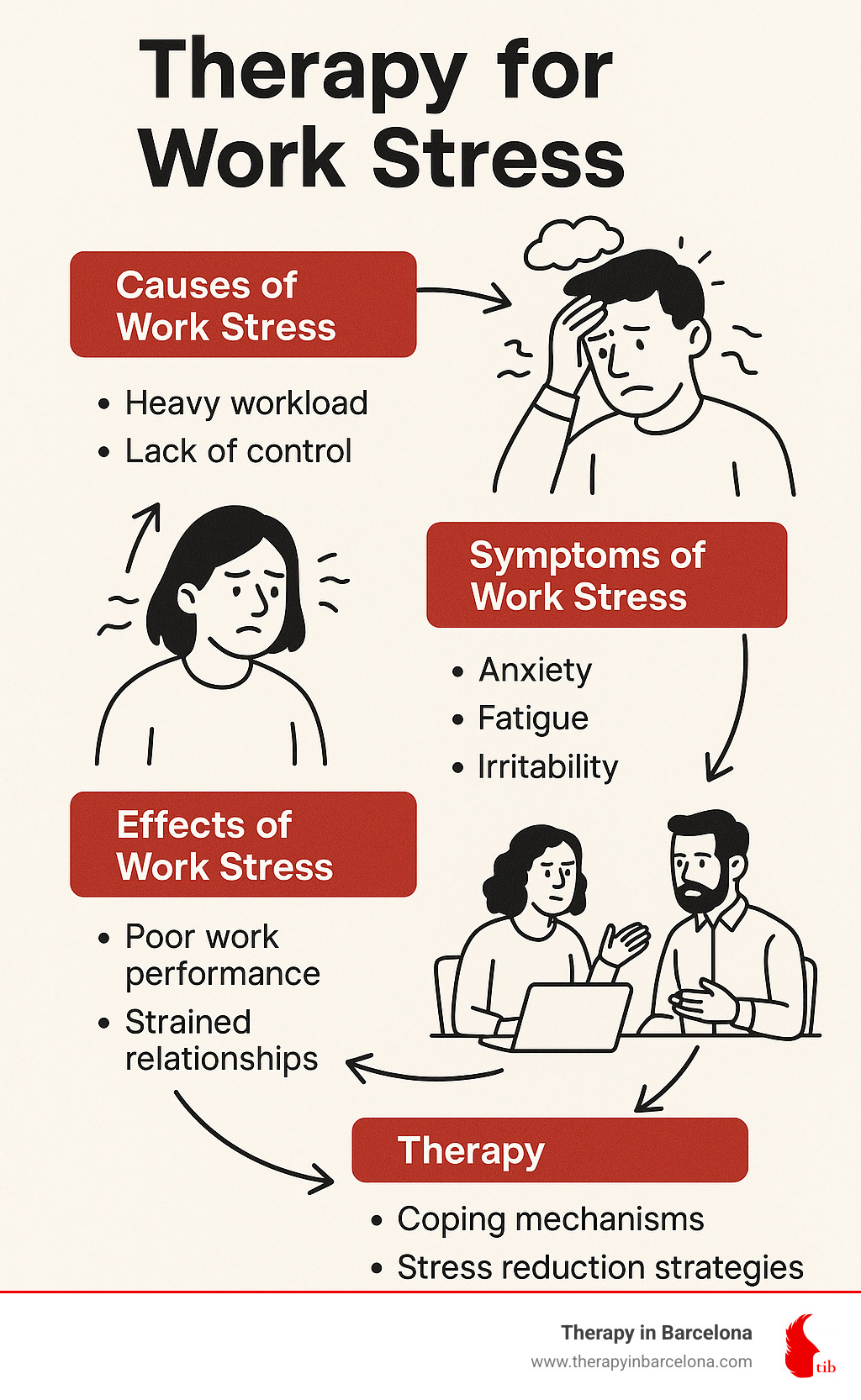
Work stress is more than just a rough day at the office; it’s the deep mental, physical, or emotional tension that arises when job demands outweigh your ability to cope. This imbalance can turn what might have been a healthy challenge into a truly heavy burden.

Common Symptoms of Work Stress
The signs of work stress can start small but often grow to touch every part of your well-being. Spotting these symptoms is the first step toward finding the right therapy for work stress.
Work stress can manifest in several ways:
- Psychological Symptoms: You might experience constant anxiety, worry, or a feeling of being overwhelmed. Other signs include irritability, pessimism, difficulty concentrating, and even depression or cynicism about your work.
- Physical Symptoms: Your body often carries the burden through chronic fatigue, muscle tension, frequent headaches, heart palpitations, or insomnia. Digestive issues and a weakened immune system are also common.
- Behavioural Symptoms: Your actions might change, leading to increased absenteeism, a drop in creativity and initiative, or a tendency towards procrastination and lack of motivation. This can result in poor performance, interpersonal conflicts, or leaning on unhealthy coping mechanisms.
Types of Work Stress
Work stress isn’t a single thing; its triggers vary widely. You might be experiencing stress from being overworked and/or underpaid, having a lack of control over your work, or dealing with interpersonal conflict. Career changes or uncertainties are also common stressors.
Many people struggle with work-life balance issues, which can lead to burnout—a state of profound emotional, physical, and mental exhaustion. For those in caring professions, vicarious trauma is a real risk. Other factors can include the physical workplace, discrimination or harassment, and internal struggles like imposter syndrome or perfectionism.
Impact on Overall Well-being
The effects of work stress extend far beyond the office, impacting nearly every part of your life.
Mental Health Consequences: Chronic work stress is a major contributor to mental health challenges, and can trigger or worsen anxiety disorders and depression. The constant feeling of being on edge makes it incredibly hard to relax or find joy.
Physical Health Risks: Your body also takes a hit. Constant exposure to stress hormones can lead to high blood pressure, a weakened immune system, and an increased risk of heart disease and other chronic conditions.
Impact on Relationships and Quality of Life: Work stress often spills over into your personal life, straining relationships with partners, family, and friends. When you’re constantly battling work pressures, it’s tough to be fully present with loved ones or enjoy hobbies that once brought you joy, severely impacting your work-life balance.
Effective Strategies for Managing Work Stress Before and During Therapy
While professional therapy offers a powerful path to healing, there are many strategies you can use to manage work stress yourself. These proactive steps are helpful whether you’re just starting to feel overwhelmed or are already in therapy, and are vital for building resilience and finding a healthier work-life balance.
Proactive Management and Self-Care
Taking control of your daily routine can make a huge difference. A key step is setting boundaries, such as not checking emails after hours and creating a dedicated workspace to mentally “switch off”. Refining your time management techniques by prioritising, breaking down tasks, and delegating can prevent overwhelm. Assertive communication is also crucial; learn to say “no” when needed and clearly state your workload. Finally, take regular breaks throughout the day and use your holiday time to truly disconnect and recharge.
Mind-Body Connection
Your mind and body are deeply connected, and nurturing both can significantly reduce work stress.

One wonderful practice is mindfulness and meditation. Focusing on the present moment can reduce anxiety, and even a few minutes of deep breathing can bring calmness. Regular physical activity is a powerful stress reliever; a brisk walk can boost your mood and release tension. Spending time in nature, whether in a Barcelona park or the nearby mountains, has a uniquely soothing effect on the mind.
Finally, remember to nurture life outside work. Leigh Matthews—an Australian Psychologist who has lived in Barcelona since 2011 and founded Therapy in Barcelona to offer culturally sensitive support to the international community—often reminds clients that maintaining a rich personal life is crucial for sustaining wellbeing abroad. For more custom advice, check out our Essential Expat Stress Management Tips.
A Guide to Professional Therapy for Work Stress
When work stress starts feeling like a constant companion, it’s a clear signal that it might be time to reach out for professional help. Think of therapy not as a last resort, but as a powerful tool to understand what’s really going on, build inner strength, and learn skills that will help you in every part of your life.
Of course, Therapy in Barcelona is not the only option. You could also explore local clinicians through the Spanish public-health system, large online platforms like BetterHelp or Talkspace, or other private practices across Spain. While these services can be useful, many internationals value Therapy in Barcelona’s bespoke matching service, strict privacy policy (we never sell or share your data), and our deep understanding of expat life.
When to Seek Help
If you find that stress symptoms are consistently affecting your performance, health, or relationships, therapy can offer invaluable support. It’s about finding that “sweet spot” where your work feels engaging and purposeful, without leaving you drained. Therapy can help you regain a sense of control and find a healthier, more sustainable way to steer your professional life.

Different Therapeutic Modalities
There are several effective therapeutic approaches for work stress, each offering a unique way to address your experience. Your therapist will help you find the best fit for you.
Cognitive Behavioural Therapy (CBT): A Practical Approach
Cognitive Behavioural Therapy (CBT) is a widely used and well-researched therapy for managing stress. It works on the idea that our thoughts, feelings, and behaviours are all connected. CBT helps you spot and challenge unhelpful negative thought patterns that add to your stress, like “I’m not good enough for this job.” You can learn more about how the American Psychological Association explains Cognitive Behavioral Therapy.
In practice, CBT helps you identify specific triggers and equips you with tools to challenge unhelpful beliefs like perfectionism. You’ll learn practical skills such as problem-solving and assertive communication to respond more effectively to workplace challenges and build resilience. If you’re struggling with work-related issues, exploring Therapy for Career Stress can offer further insight. Plus, studies show that online CBT can be just as effective as in-person therapy, offering a flexible option for busy professionals.
Other Effective Therapeutic Approaches for Work Stress
While CBT is effective, other approaches can also provide significant relief:
- Acceptance and Commitment Therapy (ACT) helps you accept difficult emotions and commit to actions that align with your core values.
- Mindfulness-based approaches teach you to observe your thoughts and feelings without judgment, helping you respond to stress more thoughtfully.
- Psychodynamic Therapy takes a deeper dive, exploring how past experiences and unconscious patterns might influence your current work stress.
- Interpersonal Therapy (IPT) focuses on improving communication and resolving conflicts in your relationships.
- Solution-Focused Brief Therapy (SFBT) is a goal-oriented approach that looks forward, focusing on solutions rather than dwelling on problems.
- Dialectical Behaviour Therapy (DBT) teaches valuable skills for emotional regulation and distress tolerance in highly stressful environments.
Finding the Right Therapist for Work Stress in Barcelona and Online
Finding the right therapist is one of the most important steps. That special connection, often called the therapeutic alliance, is a critical factor for effective therapy. You should feel comfortable and truly understood.
Always make sure your therapist is qualified and registered (or licensed) and has a specialisation in work stress. For internationals in Barcelona, finding a therapist with experience with expats is incredibly valuable. Therapists who are expats themselves, like many at Therapy in Barcelona, can offer truly culturally sensitive support, understanding the complexities of being a Digital Nomad in Spain.
Use the initial consultation to see if you feel comfortable. At Therapy in Barcelona, we offer a personalised matching process to connect you with a therapist whose approach and cultural understanding align with your needs. We will inform you of your matched therapist’s fees, which range from 80-95 Euros for individual sessions and 90-115 Euros for couples sessions. You can see current fees here.
Finally, consider online vs. in-person therapy. We offer both in-person sessions in Barcelona’s Eixample district and flexible online therapy options for expats worldwide (though we cannot serve clients in the USA and Canada).
Beyond Coping: The Long-Term Benefits of Therapy for Your Career
Engaging in therapy for work stress isn’t just about getting by; it’s about open uping a new level of professional and personal flourishing. The support you gain leads to transformative changes in your career and overall wellbeing.
One of the most powerful shifts is moving from surviving to thriving. Instead of reacting to demands, you learn to proactively shape your career path, turning challenges into opportunities for growth.
As you build new coping mechanisms, you’ll often find a significant increase in job satisfaction. When you feel more in control and resilient, your work can transform into a source of engagement and meaning.
Beyond feeling happier at work, you’ll also see improved performance and creativity. Therapy helps clear the mental fog caused by chronic stress, allowing you to approach problems with renewed energy and innovative solutions.
For those in leadership roles, therapy for work stress can lead to markedly better leadership skills. By understanding your own stress triggers, you can lead with greater empathy and effectiveness, fostering a healthier environment for your team.
A key benefit is building emotional intelligence. This heightened self-awareness is vital for navigating complex workplace dynamics, building stronger professional relationships, and making clear-headed decisions under pressure.
Therapy is also fantastic at overcoming career problems. Whether you’ve grappled with Imposter Syndrome or Perfectionism, therapy can help you get “unstuck” from these patterns and break free from limiting beliefs.
Therapy is a profound investment in your long-term career growth and success. As Leigh Matthews, an Australian Psychologist and expat who founded Therapy in Barcelona, highlights, psychological coaching can be instrumental in identifying your “dream” career—perhaps even venturing into becoming an Entrepreneur in Barcelona—and building the emotional strength to achieve it.
Frequently Asked Questions about Therapy for Work Stress
How long does therapy for work stress usually take?
The duration of therapy is deeply personal and depends on your unique needs and the therapeutic approach. Goal-oriented therapies like Cognitive Behavioural Therapy (CBT) often bring noticeable changes within 8-20 sessions. Deeper approaches like Psychodynamic Therapy might take longer as they explore underlying issues. Your therapist will always work with you to ensure the treatment plan aligns with your goals.
Can therapy help if my toxic workplace is the real problem?
Yes. While a therapist can’t change your office culture, they can absolutely empower you to steer it with greater strength. Therapy helps you build robust coping strategies and resilience to protect your mental well-being. You’ll also learn improved communication skills to handle conflicts assertively. Most importantly, therapy supports you in making informed decisions about your career, whether that means finding ways to thrive where you are or making the decision to move on.
Is online therapy as effective as in-person for work stress?
Absolutely. Research shows that for managing work stress, online therapy is often just as impactful as in-person sessions, especially for approaches like CBT. It offers incredible flexibility and accessibility, which is a game-changer for busy professionals and expats. Many people also find the virtual setting offers a sense of comfort and privacy. The key to effective therapy, online or face-to-face, is the therapeutic alliance—the bond you build with your therapist—which can be just as strong in a virtual space.
Conclusion: Take the First Step Towards a Healthier Work Life
We’ve journeyed through the ins and outs of work stress, from its symptoms to powerful proactive strategies. While its impact can be pervasive, the comforting truth is that work stress is absolutely manageable, and you don’t have to face it alone.
While self-care strategies like setting boundaries and mindfulness are valuable, professional therapy for work stress offers a clear path forward when pressures feel too heavy. Whether it’s through CBT, Psychodynamic Therapy, or ACT, there is an approach that can equip you to build resilience and truly thrive. The key is finding the right therapist—someone with whom you feel a strong connection and who understands your unique context.
For internationals and expats, this understanding is even more crucial. Living abroad adds layers of complexity that can amplify work-related pressures. That’s why services like Therapy in Barcelona are specifically designed to provide culturally sensitive, expert support. We understand the unique challenges of expat life because many of us are expats ourselves. We truly believe you are not alone.
Taking the first step towards seeking help is an act of incredible strength. It’s about empowering yourself to regain control, not just over your work life, but over your overall happiness. Imagine improved job satisfaction, boosted creativity, and the confidence to overcome career problems. These are very real, long-term benefits of engaging with professional support.
Don’t let work stress dim your light any longer. It’s time to take charge of your professional well-being and start on a path towards a more balanced and fulfilling life.
Take control of your professional wellbeing with Work Stress Management.
