


Understanding the Neurobiology and Challenges of Geographic Distance

Managing geographical separation requires practical long-distance relationship coping strategies. Thriving couples protect their connection by establishing predictable communication rhythms, anchoring visits in shared daily routines, and mapping out a clear relocation timeline. Understanding how to regulate emotional intimacy across distance prevents conversational burnout and keeps your bond secure.
When you are separated by miles, your body feels the gap before your mind rationalises it. Human attachment is biological. In close proximity, partners regulate each other through eye contact, touch, and voice inflections. This process, known as somatic co-regulation, lowers cortisol and releases oxytocin.
When physical contact disappears, the nervous system can register the separation as a threat. Physical separation naturally challenges physiological safety. Without deliberate coping strategies, partners can mistake this physical longing for emotional disconnection.
Practical research-backed tips for making a long-distance relationship work show that acknowledging these biological hurdles is the first step toward lasting security. Understanding how a long distance relationship affects your emotional health helps keep your bond stable.
Attachment Styles and the Pursuer-Withdrawer Cycle
Physical distance often intensifies individual attachment habits. When contact feels inconsistent, an anxiously attached partner may experience a biological alarm. This alarm shows up as hyper-vigilance, repeated texting, or desperate bids for connection.
Conversely, an avoidantly attached partner may respond to relationship stress by pulling away. They might bury themselves in work, delay replies, or shut down emotionally. This dynamic creates a painful pursuer-withdrawer cycle. The pursuer demands reassurance, while the withdrawer retreats further to protect their autonomy. Breaking this pattern requires both partners to realise that these reactions are protective reflexes, not signs of declining love.
The Illusion of Closeness: Overcoming Fiat Intimacy and Partner Idealisation
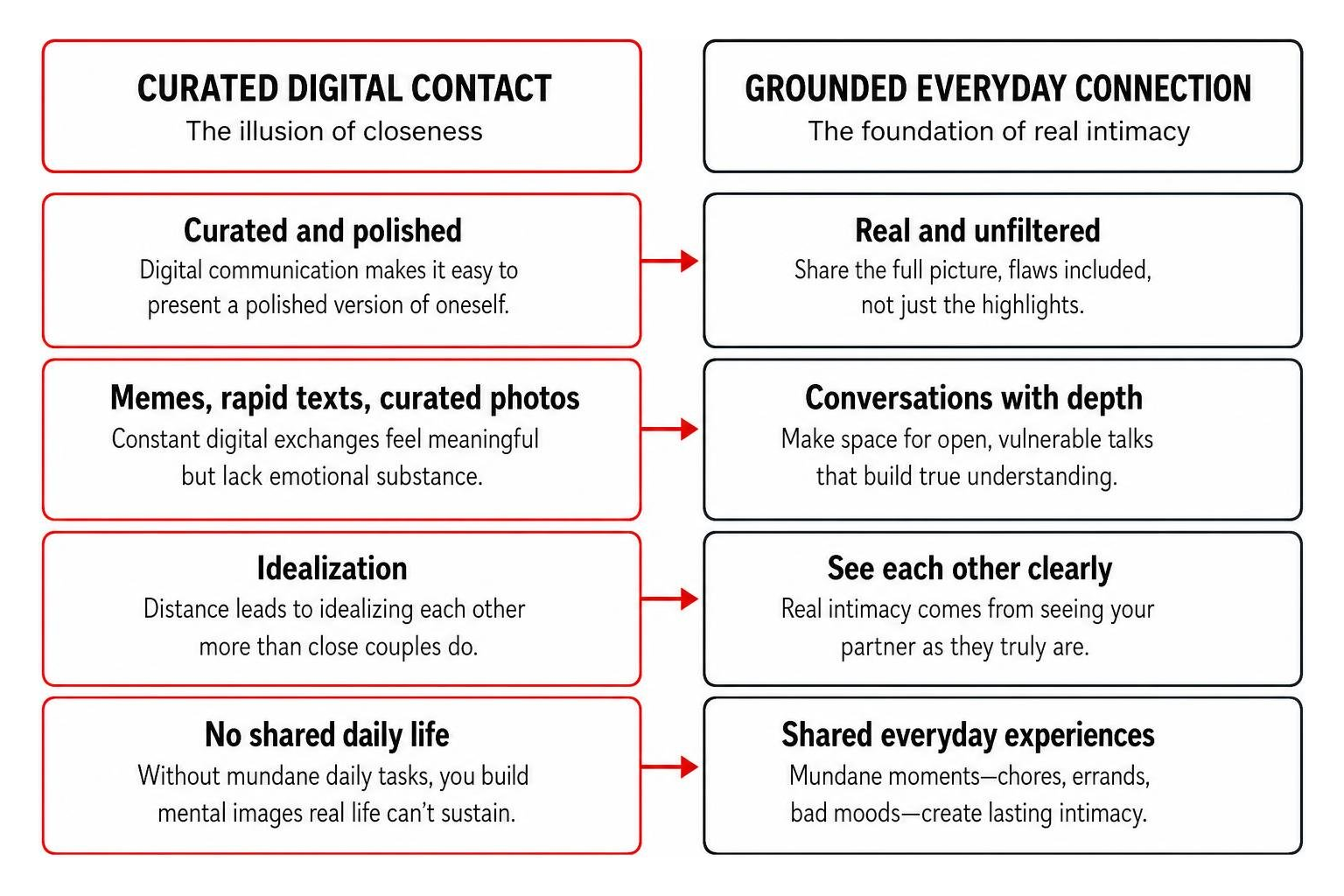
A hidden hazard of living apart is the creation of “fiat intimacy.” This occurs when couples trade constant memes, rapid texts, and curated photos that feel meaningful, but lack emotional substance.
Digital communication can make it easy to present an idealised version of ourselves. In long-distance relationships, the lack of everyday shared experiences can create expectations that real life may not match. Genuine intimacy grows through seeing and accepting each other more fully, including imperfections and difficult moments.
Communication Strategies and Connection Rituals Across Time Zones
Managing an international relationship requires practical communication tools rather than non-stop digital messaging. Trying to stay connected across wide time differences can easily lead to conversational fatigue if you expect immediate replies. Instead, healthy couples rely on predictable rhythms and shared presence.
For international partners, bridging cultural expectations alongside different time zones is essential. Engaging with cross cultural marriage counseling provides helpful frameworks for handling diverse communication styles and family traditions across borders.
Digital Tools and Daily Habits for Long Distance Relationship Support
Couples do not need to spend hours glued to video screens every night. Instead, prioritise genuine quality and sensory connection through intentional daily habits:
- Send low-pressure voice dispatches: Send one-way voice recordings sharing a quick story or reflection. Your partner can listen when their schedule permits without feeling pressured to reply right away.
- Cultivate ambient presence: Keep a video link open in the background while cooking dinner, reading, or folding laundry. Sharing ordinary moments removes the pressure of formal conversation.
- Use shared sensory anchors: Listen to the same playlist on your morning commute, brew the same coffee blend, or wear a particular perfume or jumper that reminds you of your partner.
- Synchronise shared experiences: Watch a documentary simultaneously using shared streaming extensions, or follow the same recipe on a weekend dinner date.
- Coordinate shared digital calendars: Maintain visibility over each other’s work trips, exams, and social outings so you know when your partner is occupied without asking constantly.
Managing Jealousy, Uncertainty, and Trust Without Surveillance
When your partner has an independent life thousands of miles away, uncertainty will arise. Anxious partners often try to calm their distress through surveillance, such as tracking locations, scrutinising social media, or demanding instant updates.
Digital tracking can fuel anxiety rather than build trust. Trust grows through consistent, transparent behaviour and open communication. When something feels off, approach it with curiosity rather than accusation and ask open questions instead of assuming the worst.
Navigating In-Person Visits, Departures, and Sustained Intimacy
Visits are deeply cherished, but they also bring unexpected emotional pressure. Couples often feel every hour must be magical. Balancing these visits requires letting go of unrealistic expectations and embracing ordinary life together.
The practical demands of travel, work adjustments, and managing two separate lives can create friction. Exploring the strain of moving abroad on relationships provides clear insight into handling these cross-border pressures.
In-Person Visits: High-Pressure Expectations vs. Grounded Reality
Unrealistic Visit Approach
- Scheduling every hour with sightseeing, fine dining, and social events.
- Avoiding difficult conversations to prevent ruining the reunion.
- Expecting instant physical passion the second you step off the plane.
- Feeling guilty or frustrated if either partner needs solo downtime to rest.
Grounded Visit Reality
- Building in unscheduled downtime for reading, solo walks, or naps.
- Using in-person presence to address sensitive issues with soothing physical touch.
- Allowing a gentle decompression window to adjust from travel fatigue.
- Integrating normal household routines like cooking at home and grocery shopping.
Managing the Pain of Farewells and Anticipatory Grief
The 24 to 48 hours before parting ways often bring sudden grief, sadness, or irritable arguments. This happens because the nervous system is bracing for the pain of separation.
Instead of withdrawing or pretending the departure is easy, plan for it. Set aside dedicated time the evening before leaving to acknowledge your sadness together. Confirm the date for your next reunion and agree on your initial check-in plan once you arrive home. Having a clear reconnection plan eases the emotional crash after saying goodbye at the airport.
Nurturing Sexual and Emotional Intimacy from Afar
Sustaining romantic connection across distance requires emotional safety and open communication. Understanding long distance relationship nervous system insights helps partners realise that emotional vulnerability is the real bridge across physical separation.
Schedule regular conversations to share subtle feelings, vulnerabilities, and unexpressed desires. When exploring digital intimacy and romantic messaging, always ensure clear mutual consent and comfortable boundaries. Consistent verbal appreciation, heartfelt letters, and open emotional intimacy keep your bond resilient when physical touch is absent.
Building a Shared Future and Closing the Distance
A long-distance relationship cannot remain indefinite. Research confirms that individuals uncertain about ever living in the same city as their partner experience significantly higher emotional distress and lower relationship satisfaction. Love alone cannot sustain physical separation; you need a concrete logistical roadmap.
Navigating the transition toward shared living requires thoughtful communication. Seeking dedicated expat counseling gives couples a structured space to navigate international moves, career sacrifices, and lifestyle adjustments.
The 12-Month Roadmap: From Separate Cities to Cohabitation
Closing the distance requires deliberate planning. Breaking the relocation into clear stages prevents overwhelm:
- Months 12–9: Shared vision and preliminary research: Discuss career goals, target cities, and individual non-negotiables. Investigate visa prerequisites, international tax rules, and professional qualifications.
- Months 8–6: Financial and housing roadmaps: Create a realistic relocation budget, establish joint savings goals, and determine whether you will rent a new flat or move into an existing home.
- Months 5–3: Logistics, visas, and careers: Submit immigration applications, give notice on leases, begin job applications, and coordinate personal belongings.
- Months 2–1: Final transitions and departure rituals: Say meaningful goodbyes to local friend groups, organise shipping, and schedule rest before the final move.
Preventing the Post-Reunion Breakup Phenomenon
Relocating to the same city is an exciting milestone, but the transition can also bring unexpected challenges. Daily life may reveal differences that were less visible during periods of separation, requiring couples to adjust expectations and build intimacy in a more grounded, realistic way.
When you share an apartment, you encounter your partner’s uncurated habits, morning moods, and domestic quirks. Successfully navigating this transition means establishing personal autonomy alongside shared life. Both partners must cultivate individual hobbies, build independent social circles, and give each other room to adapt without feeling smothered.
Finding Effective Long Distance Relationship Support: When and How to Seek Help
Even dedicated couples hit communication deadlocks, chronic insecurity, or emotional exhaustion. When arguments repeat without resolution, seeking professional long distance relationship support can help you realign.
While some couples turn to local public health system services or large online platforms, international partnerships often face distinct cross-border challenges. Therapy in Barcelona provides private-pay care featuring bespoke therapist matching, strict privacy without data selling, and culturally sensitive support in the client’s native language. Accessing specialised couples counselling in Barcelona offers balanced support whether you attend together in person or join from separate locations worldwide.
Living between two countries can place significant strain on a relationship, particularly when communication becomes dominated by texting arguments and uncertainty around relocation. Online couples therapy can help partners recognise underlying attachment patterns, establish healthier communication rhythms, and create a practical plan for living together that respects both partners’ needs and careers.
Why Professional Long Distance Relationship Support Matters for Global Couples
Couples therapy provides an objective, structured setting to de-escalate circular arguments. Online video platforms now allow multi-location sessions where both partners and the therapist connect from different countries.
Therapists draw on evidence-based approaches, such as Cognitive Behavioural Therapy (CBT), Acceptance and Commitment Therapy (ACT), Emotionally Focused Therapy (EFT), and the Gottman Method. These frameworks help couples identify defensive habits, rebuild emotional safety, and handle the practical stress of cross-border living.
Integrating Social Circles and External Support Networks
Do not rely entirely on your partner for emotional connection. Couples who thrive maintain active local support networks.
Nurture friendships in your current city, participate in community groups, and pursue solo hobbies. When visiting each other, introduce your partner to friends and family in relaxed, casual settings. Integrating your partner into your wider social circle anchors the relationship in real life and builds lasting community resilience.
Frequently Asked Questions About Long-Distance Relationships
Can a long-distance relationship be as healthy and satisfying as living together?
Yes. Long-distance relationships can still be deeply satisfying. Physical separation often encourages partners to develop clearer communication, greater emotional intentionality, and consistent habits that strengthen the relationship.
How often should couples communicate across long distances?
There is no universal rule. Quality and predictability matter far more than non-stop messaging. Forcing constant contact throughout the day often leads to burnout and superficial small talk. Sustainable connections rely on predictable check-ins, asynchronous voice notes, and shared ambient moments that fit naturally around work and personal commitments.
What are the biggest warning signs that an LDR is no longer working?
Key warning signs include ongoing avoidance when discussing reunion dates, declining communication quality without explanation, replacing mutual trust with continuous digital tracking, and hiding emotional difficulties. A long-distance relationship cannot thrive without mutual transparency and a shared commitment to eventually live in the same place.
Conclusion
Sustaining a healthy long-distance relationship is ultimately a journey of emotional resilience, nervous system awareness, and clear planning. When you replace constant digital contact with intentional connection rituals and maintain an actionable relocation roadmap, physical distance becomes a meaningful chapter in your shared story rather than an endless hurdle.
Therapy in Barcelona was founded in 2011 by Australian Psychologist Leigh Matthews. Our psychology-trained, multilingual team supports internationals, expats and cross-border couples in English and several European languages.
Therapy in Barcelona provides careful personalised matching for adults, couples, teens, and families. They offer face-to-face therapy sessions at their office in Barcelona and work online with clients worldwide (including the USA and Canada). While this is a private-pay service, some therapists offer sliding scale fees for those with financial need, which prospective clients can inquire about.
If your relationship is navigating time apart or preparing for a major international relocation, professional couples counselling services can provide the tools and perspective you need to stay connected. Please note that therapy services are not intended for crisis situations; if you are experiencing an acute mental health crisis, please contact your local emergency services or a dedicated crisis helpline immediately.
What is one small, intentional ritual you and your partner can put in place this week to feel more connected across the miles? If you’d like support, book a Free Discovery Call.
