


Your Journey to Spain: A Comprehensive Overview

Moving to Spain is a dream for many, drawn by its vibrant culture, relaxed pace of life, and sunny climate. The idea of a life rich in experience, with a cost of living that’s over 30% lower than in Canada, according to global data aggregator Numbeo, is undeniably appealing. But turning this dream into reality requires careful planning.
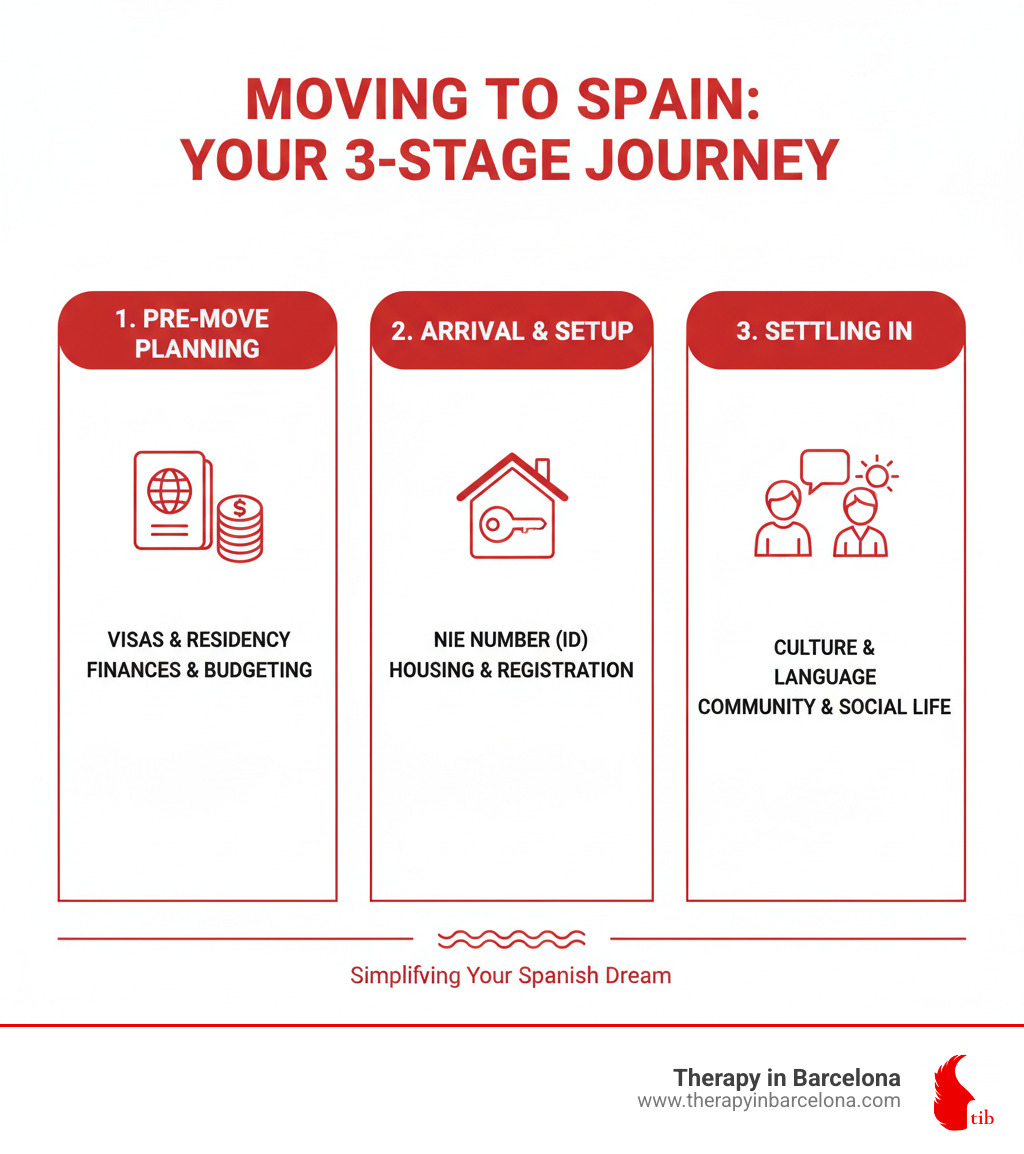
The process can be broken down into three key phases:
- Pre-Move Planning: This covers everything you need to do before leaving Canada, from securing a visa to organising your finances.
- Arrival & Setup: Once you land, this phase focuses on essential tasks like getting your ID numbers and finding a home.
- Settling In: The final stage is about integrating into Spanish life, understanding the culture, and building a community.
This guide will walk you through each step, addressing not just the practicalities but also the emotional side of expat life. From visa requirements to cultural norms, we’ll help ensure a smoother transition to your new Spanish home.
Before You Go: Essential Pre-Move Planning
Before you swap your Canadian winter coat for a Mediterranean breeze, a solid plan is your best friend. This stage is about laying a strong foundation by understanding the legalities, getting your finances in order, and mentally preparing for the adventure ahead.
Understanding Your Spanish Visa Options
As a non-EU citizen from Canada, you’ll need a visa for stays longer than 90 days. Spain offers several pathways depending on your plans.
Here are the main long-stay visa options:
- Non-Lucrative Visa (NLV): Popular with retirees or those with passive income, this visa requires you to prove you can support yourself without working in Spain. You’ll need to show funds of around €29,000 annually (400% of Spain’s IPREM), plus more for dependants.
- Digital Nomad Visa: Ideal if you work remotely for clients or an employer outside Spain. It allows you to live and work in Spain with some tax benefits. Read more about the Digital Nomad Visa.
- Golden Visa (Investor Visa): This offered residency for those making a significant investment, such as €500,000 in Spanish property. As at 2025 the Golden Visa is no longer offered.
- Student Visa: For those enrolling in a Spanish educational institution. You’ll need proof of acceptance and sufficient funds for living costs.
- Work Visa: If you have a job offer from a Spanish employer, they will typically start the application process in Spain.
Applying for any visa involves significant paperwork, including proof of funds, health insurance, and a clean criminal record. You must apply at the Spanish Consulate in Canada serving your region. Processing times vary, so apply well in advance. Many people find it helpful to work with immigration lawyers to handle the legal requirements accurately.
For more information on the various pathways available for expats, you can explore our services: More info about our services for expats.
Financial and Logistical Preparations
Your visa choice dictates the financial requirements, but a monthly income of €1,500 to €2,000 generally affords a comfortable life in Spain, especially outside big cities like Barcelona or Madrid. The cost of living is over 30% cheaper than in Canada, with significant savings on housing. A one-bedroom flat in Madrid’s centre might cost €1,300 – €1,400 per month, far less than in Toronto or Vancouver.
When budgeting, include one-off costs like flights and initial accommodation. Once you arrive, you must open a Spanish bank account and get your NIE (Número de Identificación de Extranjero). This foreigner’s ID number is essential for almost every financial or legal transaction, from renting a flat to setting up utilities.

Preparing for the Cultural Shift
Beyond logistics, preparing for cultural differences is key. While Castilian Spanish is the official language, you’ll also hear regional languages like Catalan in Barcelona, Basque, and Galician. Learning some Spanish is highly recommended; it will smooth daily life and deepen your integration. Spaniards are generally patient when you try to speak their language.
Other cultural norms include the “siesta”, which means smaller shops may close in the afternoon. Meal times are later—lunch is around 3:00 PM and dinner is often near 10:00 PM. Social greetings usually involve two kisses on the cheeks. Family is central to society, and the pace of life is more relaxed. The Spanish often “work to live,” valuing leisure and social connections. Embracing this new rhythm is a big part of the emotional journey and will help you transition from planning your move to truly living your new Spanish life.
Your First 90 Days in Spain: A Checklist for Arrival
Congratulations, you’ve landed! The dream of Moving to Spain is now a reality. These first three months are about gathering official documents and setting up your new home. With a plan, you can manage this busy time smoothly.
Essential Paperwork and Registrations
Once on Spanish soil, a few administrative steps are crucial.
First is your NIE (Número de Identificación de Extranjero). This foreigner’s identification number is vital for nearly every official transaction, from opening a bank account in Barcelona to signing a rental contract in Valencia. If you didn’t get it with your visa, make it a priority.
Next, apply for your TIE (Tarjeta de Identidad de Extranjero). This is your physical residence card, proving your legal status. You typically have a limited time after arrival to apply at the local Oficina de Extranjería (Immigration Office) or a designated police station.
Then there’s the Empadronamiento, or town hall registration. This certificate proves your address and is needed for public healthcare, school enrolment, and other services. This step is required whether you’re in Madrid or a small town in Andalucía.
Be prepared for the Cita Previa, Spain’s appointment system. Most government offices require a pre-booked appointment, which can test your patience. A local gestor (administrative consultant) can be a great help if you get stuck.
For the most up-to-date information, always consult official government sources: Official guidance on Spanish residency.
Setting Up Your New Life
With paperwork underway, it’s time to build your new life. Finding accommodation is a top priority. Many expats start by renting, which offers flexibility to explore neighbourhoods in cities like Málaga or Sevilla before committing. Websites like Idealista and Fotocasa or Habitaclia are excellent resources. Be aware that deposits can be one to six months’ rent, and agents often charge a fee. Always get a written lease (Contrato de Arrendamiento).

Once you have a home, you’ll need to set up utilities (electricity, water, internet) and get a Spanish SIM card. Major cities like Madrid and Barcelona have efficient public transport, and a monthly pass is often better value than owning a car.
Understanding the Spanish Healthcare System
Spain has a high-quality healthcare system with public and private options. The public system (Sistema Nacional de Salud – SNS) is accessible to legal residents who contribute to social security. If you’re employed in Spain, your contributions grant you access.
However, if you’re on a non-lucrative or student visa, you will need private health insurance, which is a mandatory requirement for the visa application. Private insurance is affordable and offers benefits like shorter waiting times and a wider choice of doctors, including English-speaking ones. Both systems provide excellent care. Spanish pharmacists are also highly trained and can offer advice for minor ailments.
Adjusting to a new country can be challenging. For those moments when the emotional side of the move feels overwhelming, support is available. Individual therapy can be an invaluable tool for managing these life transitions. More info about individual therapy for managing life transitions.
The Expat Experience: Thriving, Not Just Surviving in Spain
Moving to Spain is more than just paperwork; it’s about building a genuine life. This phase is about shifting from visitor to resident, finding your rhythm, and making Spain feel like home.
Lifestyle, Pros, and Cons of Moving to Spain
Life in Spain moves at a different tempo. The Spanish prioritise family, long meals with friends, and leisure. The siesta, while less common in big cities like Madrid or Barcelona, reflects a cultural appreciation for balance. Spain consistently ranks high for quality of life, happiness, and well-being, according to the US News Quality of Life Ranking.
The upsides are considerable. Expats often report better mental and physical health, enjoying a relaxed lifestyle and strong community. With over 320 sunny days a year in many southern regions, according to regional climate data, the climate is a huge draw. The Mediterranean diet, lower cost of living, and easy travel to the rest of Europe are other major benefits.
But it’s not all sunshine and sangria. Spanish bureaucracy can be slow and frustrating. The country has a relatively high unemployment rate, making it hard to find work without fluent Spanish. While English is spoken in tourist areas, daily life requires Spanish. Also, the “August shutdown,” when many businesses close, can catch newcomers by surprise.
Best Places for Canadians to Live in Spain
Spain offers incredible diversity. Your ideal spot depends on your lifestyle and budget.
- Barcelona: A cosmopolitan city with a vibrant international community and cultural scene. It’s great for digital nomads but can be pricey.
- Madrid: The capital offers career opportunities, world-class museums, and a buzzing nightlife. Its central location is perfect for exploring Spain.
- Valencia: Often praised for its high quality of life, affordability, and beautiful beaches. It’s a great balance of city life and a relaxed pace.
- Málaga and the Costa del Sol: Popular with retirees and sun-seekers, this region has a large expat community and a relaxed environment. Marbella attracts a luxury-seeking crowd.
- Alicante: A family-friendly and affordable coastal city with a pleasant climate.
- Sevilla: Offers authentic Andalusian charm, rich history, and is more affordable than Madrid or Barcelona.
- Gran Canaria: A unique island option with volcanic landscapes, beaches, and a growing digital nomad scene.
- Zaragoza: A central, affordable alternative with rich history and a strong local culture.
Work and Career as an Expat
Finding a job in Spain as a Canadian can be competitive, especially without fluent Spanish. The best opportunities are often in Barcelona and Madrid. Key industries include tourism, automotive, renewable energy, and a growing tech sector.
Securing a job offer from a Spanish company is usually required for a work visa, which is hard to do from abroad. However, there are other routes. The Digital Nomad Visa is perfect for remote workers with income from outside Spain. Starting a business is another option, as Spain encourages entrepreneurship.
If you arrive on a Non-Lucrative Visa, you cannot work initially. It is sometimes possible to switch to a work visa after the first year, but renewing the NLV first can provide more stability while you explore your options.
Career changes and work-life balance in a new country can also affect relationships. If you and your partner are feeling the strain, couples counselling can provide a supportive space to adapt together. More info about couples counselling for managing work-life balance.
Long-Term Life in Spain: Residency, Citizenship, and Mental Wellbeing
Beyond the first few months, a new chapter begins: building a permanent life. This stage is about putting down roots, understanding your future, and nurturing your emotional well-being as you integrate.
The Path from Temporary Resident to Spanish Citizen
If you envision a permanent future in Spain, there is a clear path. Your initial temporary residency, granted by your visa, is typically for one year. This can be renewed, often for two-year periods. For example, a Non-Lucrative Visa is usually renewed for two years after the first.
After five years of continuous legal residency, you can apply for long-term (permanent) residency. This grants you a more stable status to live and work in Spain indefinitely. The standard route to Spanish citizenship for Canadians requires ten years of continuous legal residency. This is reduced to just one year if you are married to a Spanish national. Spain has specific rules around dual citizenship, so it’s wise to seek legal advice for your situation.
The Psychological Side of Moving to Spain
While Spain is appealing, the emotional journey of an expat can be complex. It’s normal to experience culture shock, expat loneliness, or homesickness, especially when far from your support networks. Even in busy cities like Barcelona, Madrid, or Valencia, it’s possible to feel like an outsider.
These experiences can lead to identity shifts and strain on relationships. Take Mark, a fictional composite example representing common expat challenges: a 40-year-old from Vancouver who moved to Madrid. Despite the excitement, he struggled to connect and missed his old life. His feeling of being an outsider is a story we hear often from expats across Spain, whether in Málaga, Alicante, or Sevilla. Acknowledging these challenges is the first step toward building resilience and thriving. The expat journey is about growth, and it’s okay to seek support. More info about therapy for expats.
Finding the Right Mental Health Support in Spain
When you’re dealing with the psychological side of expat life, finding the right support is crucial. It’s important to understand your options.
- Public System Challenges: Spain’s public healthcare system (SNS) is excellent, but accessing mental health services can involve long waiting lists. Finding a therapist who speaks your language and understands the expat experience can also be difficult.
- Large Online Platforms: These platforms offer a vast choice of therapists, but the experience can feel impersonal, and data privacy may be a concern. The sheer volume can make it hard to find a good match.
- Local Spanish Practices: While an option, language and cultural gaps can sometimes hinder deep connection and understanding when discussing sensitive topics.
This is where a specialised service like Therapy in Barcelona makes a difference. Our team is made up of psychology-trained therapists who are expats themselves. We don’t just understand mental health; we empathise with the challenges of cultural adjustment and loneliness that come with Moving to Spain. We offer personalised matching to connect you with a therapist who fits your needs. Our services are culturally sensitive, and we prioritise strict privacy. We provide high-quality care in English and other languages. Our offices in Barcelona and our online services reaching expats worldwide (except USA and Canada) are hubs of support. Finding a therapist who understands your experience can make all the difference. More info about our team of expat therapists.
Frequently Asked Questions about Moving to Spain
How much money do I need to move to Spain from Canada?
This depends on your visa and lifestyle. For a Non-Lucrative Visa, you must prove a passive income of at least €29,000 annually for the main applicant, plus more for dependants. This is based on Spain’s IPREM income indicator.
For daily life, a monthly budget of €1,600 to €2,000 can provide a good standard of living, especially outside major hubs like Madrid or Barcelona. Remember to also budget for one-off relocation costs like flights, shipping, and initial accommodation.
Can I work in Spain as a Canadian?
Yes, but you need the correct visa. A standard work visa requires a job offer from a Spanish employer, which can be difficult to get from abroad. Alternative routes are more common for Canadians.
The Digital Nomad Visa is a great option if you work remotely for a non-Spanish company. You can also start your own business. It’s sometimes possible to convert a non-lucrative visa to a work visa after your first year, but this can be a complex process.
How does the Spanish healthcare system work for Canadian residents?
Spain has a high-quality healthcare system with public and private options. If you are employed in Spain and pay social security, you are eligible for the public system (Sistema Nacional de Salud – SNS).
However, many visas, like the Non-Lucrative or Student Visa, require you to have private health insurance. This is often a mandatory part of the application. Private insurance in Spain is affordable, typically €50 to €200 per month, depending on age and coverage, and offers benefits like quicker access to specialists and English-speaking doctors. Both systems provide excellent care.
Moving to Spain is a life-changing adventure, blending practical steps with a journey of emotional growth. From getting your NIE to finding a favourite tapas bar, every step builds your new life. It’s also a journey that comes with challenges. Cultural shifts, loneliness, and homesickness can be part of the experience, even in a sunny, vibrant country. Acknowledging this is key to a fulfilling transition.
Handling the psychological side of relocation is as crucial as the paperwork. While you can explore support through the public system, large online platforms, or local practices, these options can have drawbacks like waiting lists or language barriers. Finding help that truly understands the expat experience is vital.
Our team of psychology-trained therapists at Therapy in Barcelona are expats themselves. We offer a compassionate, culturally sensitive space and match you with a therapist who gets your journey. We provide online therapy to expats worldwide and in-person sessions in Barcelona. You don’t have to do it alone.
Ready to explore how we can support you? Book a Free Discovery Call today.
