


Why Understanding Therapist Relationship Issues Matters

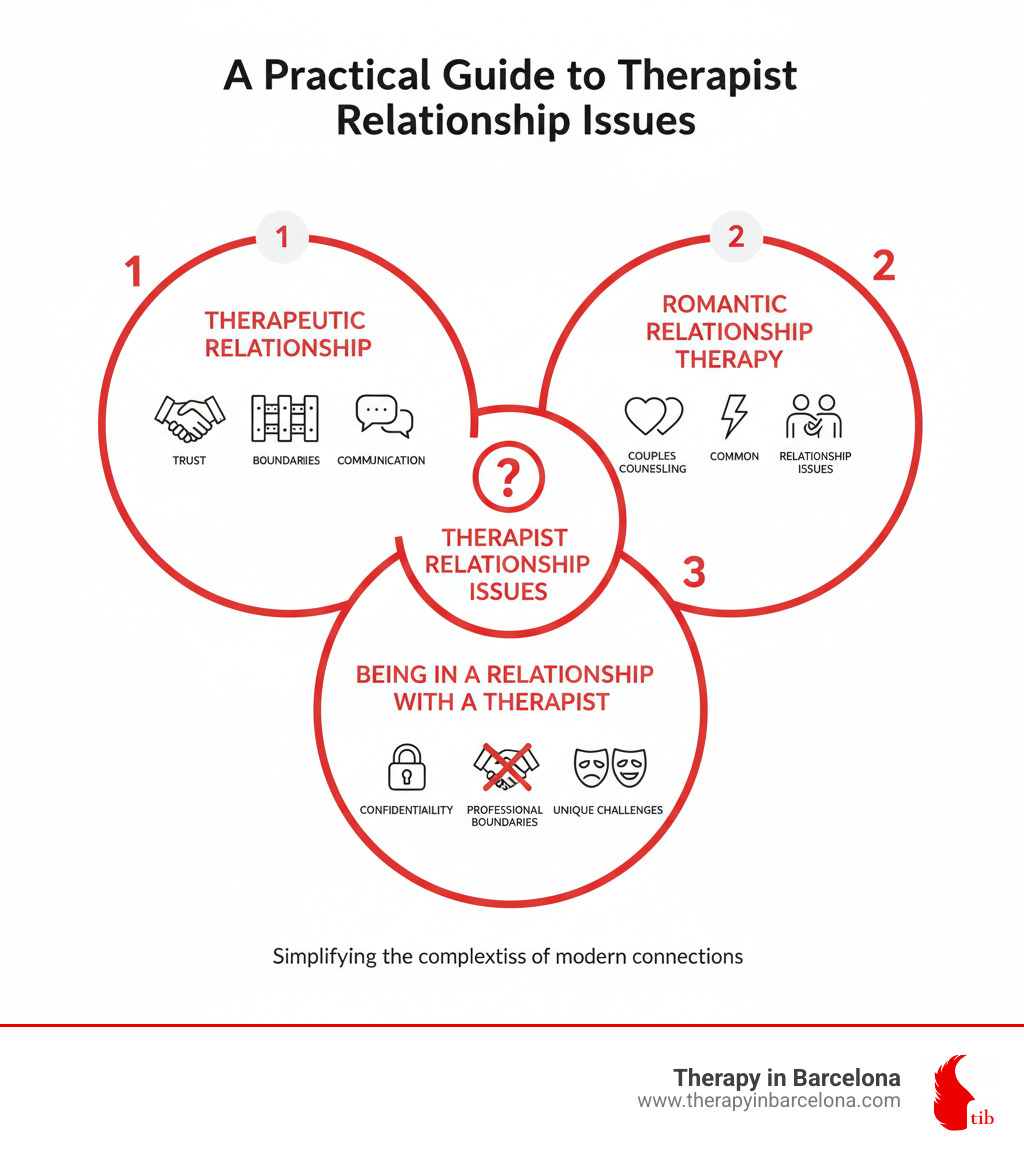
Therapist relationship issues can mean three different things. Understanding which one applies to you is the first step towards finding support. People are typically searching for:
- Issues within the therapeutic relationship – Problems between you and your therapist, like feeling misunderstood or communication breakdowns.
- Seeking therapy for your personal relationship problems – Finding a therapist to help with couples issues, communication struggles, or trust concerns.
- Relationship challenges when your partner is a therapist – Navigating the unique dynamics of being in a relationship with someone in the helping profession.
For internationals in Barcelona, Valencia, Málaga, or elsewhere in Spain, these issues can feel more layered. Cultural differences, language barriers, and the stress of expat life can amplify relationship struggles, whether with your therapist, your partner, or both.
The therapeutic relationship is a cornerstone of effective therapy. Research shows it’s as powerful—if not more so—than the specific techniques a therapist uses. When it works, you feel heard and safe. When it doesn’t, progress stalls.
Similarly, a skilled therapist can help you rebuild trust and improve communication in your romantic relationship. And if you’re dating a therapist, you face a unique set of challenges that deserve support.
This guide explores all three meanings of “therapist relationship issues.” You’ll learn about the therapeutic alliance, when to seek help for relationship problems, and strategies for a healthy partnership with a therapist. We’ll help you understand your options and find the support that fits your needs.
The Dynamics of the Therapeutic Relationship
The therapeutic relationship, or therapeutic alliance, is the foundation of healing. It’s the bond and collaborative spirit between you and your therapist. Research consistently shows this relationship is at least as powerful as the specific techniques used.
When you feel connected to your therapist, you’re more likely to engage in the work, which predicts better outcomes. This relationship, built on trust, empathy, and collaboration, creates a safe environment for real growth. You can read more about how Better relationships with patients lead to better outcomes.
The Unique Nature of the Therapist-Client Bond
The therapist-client relationship is unlike any other. It’s intimate yet professional, with a singular focus: you. For many, it’s the first time their feelings are truly heard without judgement.
A good therapist provides a safe space by being genuine, empathetic, and non-judgemental. They don’t offer advice like a friend or share their own problems. This professional intimacy can be incredibly powerful, especially for those feeling isolated in a new country like Spain.
Navigating Boundaries and Ethics in Therapy
Boundaries define the therapeutic relationship, keeping it safe and professional. When crossed, they can create therapist relationship issues that undermine trust. A boundary crossing, like a thoughtful self-disclosure, might be done with your welfare in mind to improve the alliance.
A boundary violation, however, is always unethical. It occurs when a therapist misuses their power for personal gain, such as through exploitative business or sexual relationships. The APA’s Ethical principles of psychologists and code of conduct advises against such dual relationships.
Dual relationships (e.g., therapist and friend) are generally avoided but can be unavoidable in small expat communities. In these cases, strict ethical guidelines must be followed.
Confidentiality is another cornerstone; you need to know what you share stays private. A breach can shatter trust. The inherent power imbalance means the therapist must always use their influence responsibly and for your benefit.
When Communication Breaks Down: Ruptures and Repairs
Even in strong therapeutic relationships, misunderstandings, or therapeutic alliance ruptures, can happen. A client might become silent or critical of the therapist. But ruptures aren’t necessarily a bad sign. Repairing a rupture can lead to a stronger relationship.
A skilled therapist will acknowledge the issue without judgement, initiate an open dialogue, and work with you to resolve it. This might involve clarifying a task, renegotiating goals, or simply offering empathy. For expats, where cultural misunderstandings can occur, having a safe space to voice concerns is paramount.
Cultural Sensitivity and the Expat Experience
For internationals in Spain, cultural, moral, and religious differences are lived realities. A culturally sensitive therapist understands that your background shapes your worldview and how you express distress. An approach that works in one culture may not translate to another.
At Therapy in Barcelona, our team of expat professionals understands the challenges of cultural adjustment, isolation, and identity shifts. They are equipped to tailor treatment to your individual characteristics, including your cultural background and beliefs, ensuring trust is built across diverse landscapes.
Seeking a Therapist for Your Relationship Issues

Relationships can be a source of deep pain and confusion. If you feel stuck or disconnected, you’re not alone. Couples therapy isn’t just for relationships on the brink of collapse; it’s a tool for strengthening bonds. Yet, the average couple waits six years before seeking therapy—a long time for problems to fester.
Common Triggers for Seeking Couples Counselling
Couples seek therapy for many reasons, but common patterns emerge:
- Communication problems: An astounding 70% of couples cite poor communication, from constant arguments to feeling unheard.
- Intimacy and passion issues: A decline in physical or emotional intimacy can leave partners feeling like roommates.
- Infidelity and trust: Betrayals require a structured environment to process pain and decide how to move forward.
- Financial stress: Disagreements about money are often about underlying values, security, and control.
- Parenting disagreements: Differing styles can drive a wedge between partners.
- Life transitions: Moving to a new country, job loss, or illness puts immense strain on relationships. For expats in Barcelona or Valencia, these transitions bring unique pressures.
Our team at Therapy in Barcelona understands these layers. You can find More info about couples counselling in Barcelona on our website.
How a Therapist Can Help Your Relationship Issues
A therapist acts as a neutral third party, creating a safe space for both partners. They don’t take sides but instead facilitate constructive dialogue. A primary goal is teaching effective communication skills, like speaking openly without blame and listening actively.
Many therapists use established approaches like The Gottman Method, which targets destructive communication patterns, or Emotionally Focused Therapy (EFT), which helps couples express underlying emotions and attachment needs. The goal is to equip you with tools to steer future challenges independently.
Building Trust and Fairness: The Core of Relational Healing
At the core of resolving relationship issues is the interplay of trust and fairness. Research on building trust and fairness in couples therapy highlights its importance. Healthy relationships benefit from trustworthiness and a fair balance of give-and-take.
A common challenge is when someone who has been hurt in the past feels justified in acting unfairly in their current relationship, often without realising it. For example, someone neglected in childhood might demand excessive attention from their partner, feeling they are owed it.
Therapists help uncover these dynamics, encouraging responsibility and accountability. The aim is to cultivate trust through fairness.
This involves acknowledging how past family dynamics impact current interactions and promoting reciprocity. By addressing injustice, couples can build a relationship founded on mutual respect.
The Other Side of the Couch: When Your Partner is a Therapist

Being in a relationship with a therapist brings its own unique therapist relationship issues. Therapists are trained in empathy and communication, but their work inevitably shapes their personal relationships.
As clinical social worker Rick Miller writes in his article on The Challenges of Being a Therapist’s Partner, these relationships face unique pressures.
The Unique Pressures on a Therapist’s Partner
Partners of therapists often learn to steer awkward situations. Client encounters in public, whether in Sevilla or Gran Canaria, can be a common reality, forcing you to manage unexpected shifts in atmosphere.
At home, some partners report feeling “assessed”, as if every conversation is being analysed. While most therapists try to leave work at the door, it can be hard to switch off their professional lens.
The wall of confidentiality is another challenge. A therapist cannot share details about their day, which can lead to a sense of exclusion for their partner. A significant part of your partner’s emotional life remains hidden by professional obligation.
The use of professional jargon at home can also create a barrier, making connection feel more like a consultation. It’s also natural to sometimes wonder if there’s enough emotional energy left for you at the end of the day.
Strategies for a Healthy Partnership with a Therapist
Building a healthy relationship with a therapist requires intentional effort from both partners.
- Open and honest conversations are essential. The partner needs to feel safe expressing feelings of exclusion or judgment without being “therapised.”
- Establishing clear home boundaries helps the therapist shift from work to personal mode. This could be a ritual like taking a walk to mark the end of the workday.
- Appreciating confidentiality while finding ways to connect is key. The therapist can share the emotional impact of their work (e.g., “I had a challenging session”) without disclosing details. This allows the partner to offer support while respecting professional ethics.
- Seeking your own support is vital. Having your own therapy or strong friendships provides a space to process your experiences. It’s a proactive step towards maintaining your well-being and strengthening the partnership. For those seeking individual support, More info about individual therapy in Barcelona is available.
Many of our therapists at Therapy in Barcelona are in relationships themselves and understand these dynamics. We offer support custom to the unique pressures you face, whether you’re the therapist or the partner.
Finding the Right Support for Your Relationship

When you’re struggling with therapist relationship issues, seeking support is a sign of strength. The first step is often finding the right therapist—someone who is not just qualified, but also a good personal fit.
The quality of the therapeutic relationship is one of the strongest predictors of positive outcomes. This is especially true for expats in Barcelona, Valencia, or Málaga, where cultural nuances can add to the challenge.
What to Look for in a Therapist
Choosing a therapist is a personal decision. Start by ensuring they are properly qualified and registered. Look for therapists with experience in relationship issues, whether that’s couples counselling or family therapy.
For expats, cultural sensitivity is paramount. A therapist who understands expat life—the loneliness, identity shifts, and language barriers—can provide more relevant support. Finally, consider a style that suits you. Some therapists are directive, while others are more reflective.
You can learn more about our diverse team and their approaches on More info about our team.
Your Options for Therapy in Spain: What to Consider
As an expat in Spain, you have several options for therapy.
Public Health System Spain’s public system offers free or low-cost services but often has long wait times. Finding English-speaking therapists familiar with expat challenges can be difficult, especially outside major hubs.
Large Online Platforms These platforms offer convenience and a wide selection of therapists. However, they may not provide bespoke matching, and the quality of expat-specific expertise can vary. It’s also important to scrutinise their privacy policies, as some sell user data.
Specialised Private Practices (like Therapy in Barcelona) Specialised practices focus on bespoke, high-quality care. This is a private-pay service, though some therapists offer sliding scale fees. Our key differentiators include bespoke therapist matching, where we take time to find the best fit for you.
Our team consists of psychology-trained therapists who are expats themselves, bringing a deep understanding of life abroad in cities like Barcelona, Madrid, and Valencia. We adhere to strict privacy standards and have been a trusted practice in Spain since 2011, offering both online therapy worldwide and in-person sessions in Barcelona.
Making Therapy Effective: Your Role in the Process
Finding the right therapist is the first step; your active engagement is equally vital. Therapy is a collaborative effort.
Being honest and open is crucial. The therapy room is a safe space, and holding back will only hinder progress. If you feel misunderstood, say so. Be prepared for discomfort, as growth rarely happens in the comfort zone.
If you’re in couples counselling, listen to your partner without immediately preparing a defence. Finally, putting in the time and effort through consistent attendance and active participation is non-negotiable.
If you’d like support for your relationship, our team of expat therapists is here to help. Book a Free Discovery Call to start the conversation.
Conclusion
Understanding the different meanings of “therapist relationship issues“—from the dynamics within therapy, to seeking help for your romantic life, to being partnered with a therapist—is a meaningful first step. Relationships are rarely straightforward, and seeking support isn’t a sign of failure; it’s an act of courage and self-awareness. Acknowledging the need for help is where change begins.
For internationals adapting to life in Spain, these challenges can feel amplified by cultural differences and the isolation that sometimes accompanies expat life. Finding a therapist who truly understands your context can make all the difference.
At Therapy in Barcelona, we’ve been supporting internationals since 2011. Our team of psychology-trained expat therapists knows what it’s like to build a life in a new country. We offer bespoke therapist matching and culturally sensitive care using a range of evidence-based approaches. Our services are available online worldwide (including USA and Canada) and in-person at our Barcelona office.
If you’d like support for your relationship—whether it’s your romantic partnership, your therapeutic relationship, or the unique dynamic of being with a therapist—our team is here to help. Book a Free Discovery Call today, and let’s find the right fit for you. You don’t have to walk this path alone.
