


Understanding Expat Depression Barcelona: Why Living Abroad Amplifies Low Mood

Moving to a new city often starts with great optimism. Yet beneath the Mediterranean lifestyle, research highlighted in discussions on expat depression indicates that expatriates face up to 2.5 times the risk of experiencing anxiety and depression compared to domestic workers. Living abroad often brings hidden emotional challenges, and expat depression Barcelona professionals see regularly among internationals is far more common than many newcomers expect.
When living abroad, routine tasks demand conscious energy. Everything from deciphering a supermarket label to booking a medical appointment carries an extra cognitive load. This ongoing mental strain can slowly exhaust personal reserves. Over time, that chronic fatigue creates a fertile ground for low mood to set in.
Living abroad also brings disenfranchised grief—a sense of loss that is rarely acknowledged by others. When moving to Spain, people leave behind childhood friends, family rhythms, professional credibility, and familiar cultural reference points. Because friends back home often view moving to Spain as a permanent holiday, internationals frequently feel guilty about feeling down, hiding their struggles instead of seeking help.
This pattern is not unique to Barcelona. Internationals in Valencia, Málaga, Alicante, and Madrid report similar waves of adjustment, though each city carries its own social rhythms and practical hurdles.
Sadness and Culture Shock vs. Persistent Low Mood
It is natural to feel sad, homesick, or disoriented after relocating. Culture shock typically follows a wave-like pattern: an initial honeymoon phase, a period of frustration, and gradual adjustment. Normal sadness comes and goes, often lifting after a phone call home or an enjoyable weekend.
Feeling persistently down, unmotivated, or overwhelmed feels different from standard relocation blues. It is characterised by persistent low mood, emotional numbness, and a loss of interest in activities once enjoyed, lasting for weeks. When low mood begins to impair daily life—making it difficult to work, get out of bed, or maintain daily routines—it moves beyond standard culture shock. Exploring specialised expat therapy can help untangle whether these feelings stem from temporary relocation fatigue or deeper emotional distress.
Note: The following profile is a fictional composite example representing common expat challenges, not a real client.
Case Example: Marcus, 32
Marcus moved from Manchester to Barcelona for a tech position. After the initial excitement faded, he found himself overwhelmed by administrative tasks and struggling to build deep connections. Within four months, he stopped attending social gatherings, felt emotionally flat, and spent weekends in bed. He initially dismissed his symptoms as homesickness, but therapy helped him recognise that he was experiencing persistent low mood and emotional exhaustion triggered by social isolation and identity disruption.
Common Triggers for Expat Depression Barcelona Internationals Experience
Several distinct stressors contribute to expat depression in Barcelona:
- Administrative Exhaustion: Securing an NIE, finding an apartment, or sorting out Spanish residency can involve prolonged bureaucratic delays that leave newcomers feeling powerless.
- The Transient Expat Bubble: Many internationals find that the local expat community turns over quickly. Forming deep, lasting friendships becomes difficult when friends move away every year.
- Identity Stretch and Career Shifts: Moving abroad often requires redefining professional status or adjusting to different workplace cultures.
- Accompanying Partner Challenges: Trailing spouses frequently give up established careers and independent networks, leaving them vulnerable to isolation while their partner remains occupied with work.
- Language Anxiety: Even after reaching conversational Spanish, expressing nuance, humour, or vulnerability in a second language can feel exhausting and alienating.
The Isolation Trap: How Loneliness and Low Mood Feed Each Other
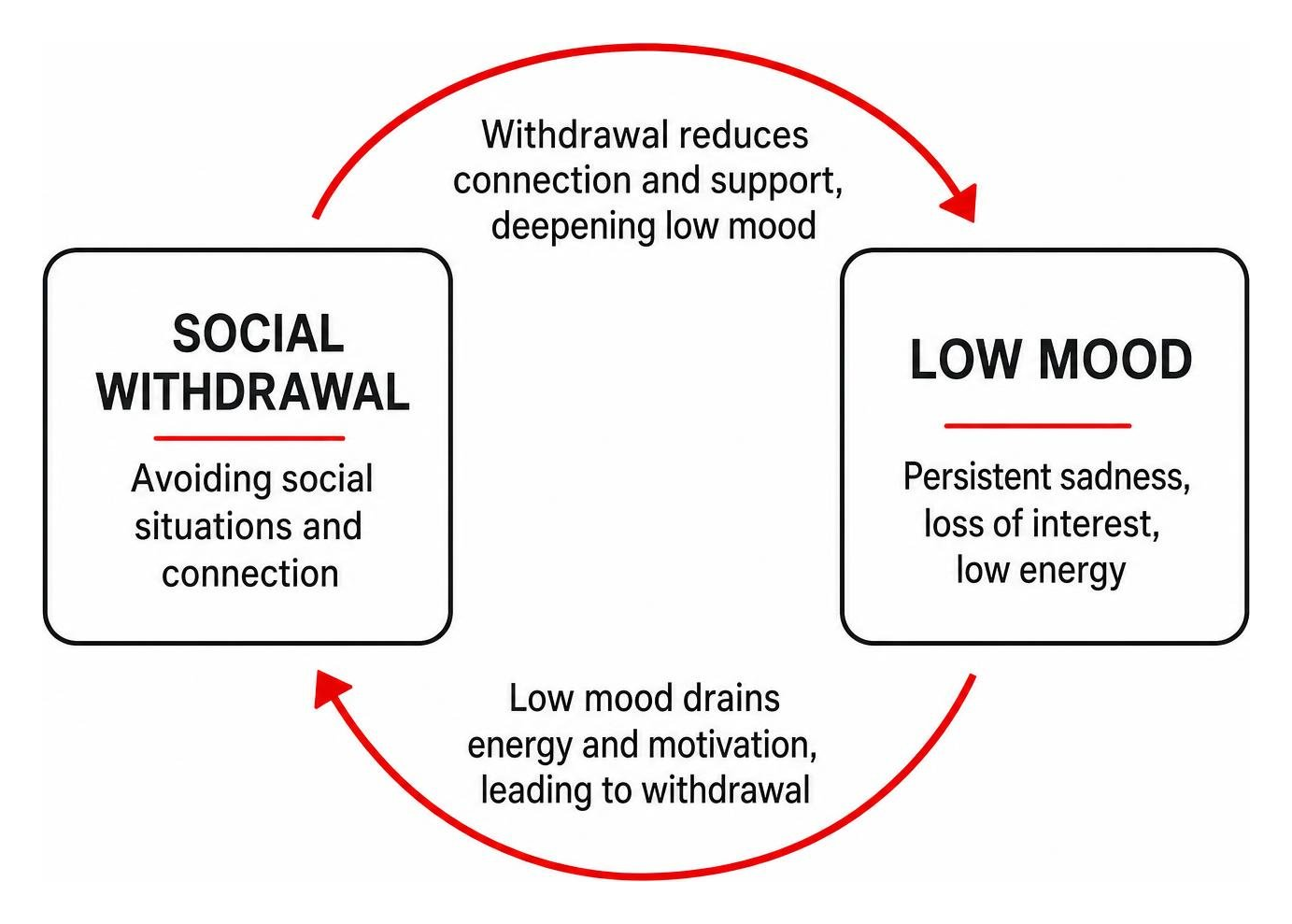
Low mood and isolation exist in a bidirectional relationship. Feeling overwhelmed or unmotivated depletes energy, leading people to withdraw from social situations. This withdrawal removes positive reinforcement and connection, deepening feelings of despair. Recognising the signs of persistent low mood early helps stop this cycle before it becomes deeply entrenched.
Social Isolation vs. Loneliness in Spain
Social isolation is an objective measure of how many social contacts a person has, whereas loneliness is the subjective, painful feeling of being emotionally disconnected. A person can live alone without feeling lonely, or feel profoundly lonely in a crowded bar in Madrid, Valencia, or Barcelona.
In Spain, social life often revolves around lifelong family and neighbourhood circles. While locals are polite and welcoming, breaking into tight-knit social groups takes significant time. Internationals may find themselves surrounded by people yet lacking genuine emotional depth in their interactions, leading to deep subjective loneliness.
Serious Physical and Emotional Impacts of Untreated Low Mood and Withdrawal
Ignoring prolonged emotional distress and social isolation carries noticeable physical and psychological consequences:
- Social withdrawal places chronic strain on the body and depletes daily energy reserves.
- Prolonged loneliness is frequently accompanied by elevated stress and poorer sleep patterns.
- Persistent emotional numbness makes daily self-care, focus, and healthy habits harder to sustain.
- Ongoing low mood can undermine physical vitality and immune resilience over time.
Addressing low mood early protects both mental and physical wellbeing over the long term.
Effective Evidence-Based Approaches and Therapy Options in Spain
Experiencing persistent low mood is treatable, and the vast majority of people improve with appropriate support. Support typically involves a combination of psychological therapy, lifestyle adjustments, and, when indicated, medical care.
Taking advantage of individual therapy options in Barcelona allows individuals to work through cultural stressors with a professional who understands the expat landscape.
Psychological Approaches: CBT, ACT, and Meaning-Making
Evidence-based therapies provide structured methods to alleviate low mood and rebuild daily engagement:
- Cognitive Behavioural Therapy (CBT): Helps identify negative thought patterns, such as catastrophic thinking about living abroad, and introduces behavioural activation to rebuild daily routines.
- Acceptance and Commitment Therapy (ACT): Encourages acceptance of difficult emotions while helping individuals commit to actions that align with personal values.
- Internal Family Systems (IFS): Explores internal conflicts and parts of the self that feel overwhelmed by relocation.
- Logotherapy and Existential Approaches: Assists expats in rediscovering purpose and meaning after major life transitions.
Navigating Mental Health Care: Finding English-Speaking Support in Spain
Expressing deep emotional pain in a second language can create unintended emotional distance. Seeking accessible online therapy or in-person sessions in your native language ensures you are fully understood without linguistic barriers.
Internationals in Spain have several legitimate routes to mental health support. The public health system offers clinicians through local CAPs (Centros de Atención Primaria), though waiting times can be long and English-speaking availability varies by region. Large online platforms and local Spanish practices also provide alternatives, each offering value depending on your circumstances, budget, and language needs.
Therapy in Barcelona was founded in 2011 by Leigh Matthews, an Australian Psychologist who has been in Barcelona since 2011 and is experienced in supporting internationals. The practice offers personalised therapist matching to ensure clients find a strong relational and cultural fit. Therapy in Barcelona focuses on bespoke matching, expat-specific cultural sensitivity, strict privacy with no data selling, and high-quality private-pay care. Sessions are available in person at the Barcelona office or online for internationals across Spain and worldwide.
Practical Steps to Break the Cycle and Rebuild Daily Wellbeing
Rebuilding daily wellbeing does not require an immediate lifestyle overhaul. Small, consistent micro-steps help restore a sense of control and stability.
How Friends and Family Can Support Someone Who Is Withdrawing
When supporting a friend, partner, or family member who is withdrawing:
- Listen Without Problem-Solving: Allow them to share their sadness without immediately offering advice or reminding them how wonderful their new city is.
- Maintain Low-Pressure Contact: Send gentle messages that do not require an immediate reply, letting them know they are remembered.
- Assist with Practical Tasks: Offer help with administrative paperwork, meal preparation, or researching English-speaking doctors.
- Encourage Professional Support: If relationship strain has developed alongside low mood, consider exploring couples counseling support to rebuild healthy communication.
Crisis Resources and Immediate Emotional Support in Spain
If you or someone you know is in distress or experiencing thoughts of self-harm, immediate help is available:
- Spain National Emergency Number: Call 112 for immediate medical assistance.
- Spain National Suicide Helpline: Call 024 (toll-free, confidential, available 24/7 with English support).
- Samaritans in Spain: Call 900 525 100 (free, confidential emotional support in English from 10:00 to 22:00 daily).
- Mental Health Crisis Line (061): Regional medical emergency response in Catalonia and other autonomous communities.
Frequently Asked Questions About Expat Depression
How do I know if my low mood is just homesickness or something more persistent?
Homesickness usually centres around longing for home and tends to ease when engaging in enjoyable activities or connecting with family. Persistent low mood involves feeling unmotivated, drained, emotionally numb, or struggling with sleep and appetite over several weeks in ways that interfere with daily functioning.
Can I access therapy in English if I do not speak fluent Spanish or Catalan?
Yes. Private practices across Spain cater specifically to the international community. Accessing therapy in English or your native language allows you to communicate nuance, emotion, and humour naturally.
Is online therapy as effective as in-person sessions for internationals?
Research shows that online video therapy produces outcomes comparable to face-to-face sessions for managing low mood and anxiety. Virtual therapy also allows clients to maintain continuity of care if they travel or relocate between cities like Málaga, Alicante, or Marbella.
Moving Forward with Support
Adapting to life in a new country takes time, and experiencing persistent low mood abroad does not mean your move was a mistake. With compassionate, culturally informed support, you can work through isolation, process the changes in your life, and regain a sense of ease.
Therapy in Barcelona has supported the international community since 2011, offering both in-person sessions at its central office and online therapy worldwide. If you’d like support, book a Free Discovery Call.
