


Adjusting the Approach: Therapy Interventions for Adjustment Disorder

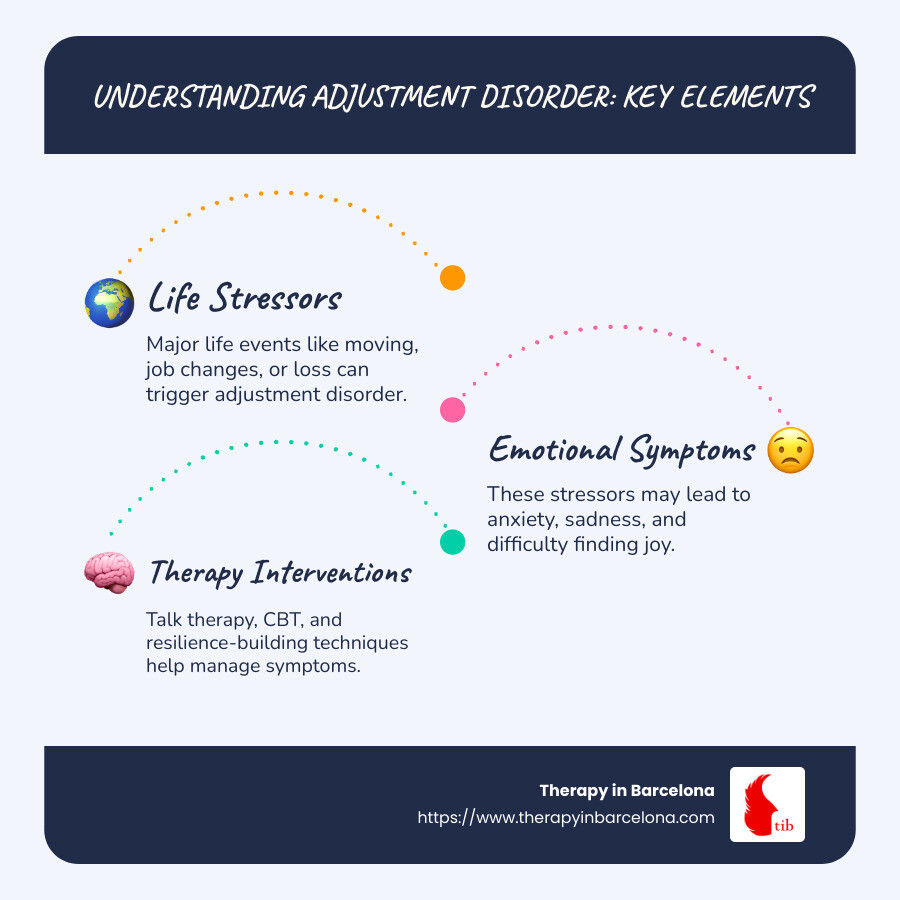
Adjustment disorder therapy interventions aim to help individuals manage stressors causing emotional symptoms. If stress feels overwhelming and interferes with life, targeted therapy can be beneficial. Techniques include:
- Talk Therapy: Provides emotional support and coping strategies.
- Cognitive Behavioural Therapy (CBT): Helps change negative thought patterns and improve behaviours.
- Nonpharmacologic Approaches: Such as stress management techniques to build resilience.
Adjustment disorders often arise from significant life changes, leading to emotional symptoms like anxiety and sadness. Recognising these signs is crucial for finding effective help.
Picture this: You’ve just moved to a vibrant city like Barcelona, ready for a fresh trip. Yet, instead of excitement, you find yourself feeling inexplicably overwhelmed and anxious. This scenario, familiar to many expats, is a classic case where adjustment disorders come into play.
Life’s transitions—such as relocating, changing jobs, or losing a loved one—can sometimes trigger emotional responses that feel too unwieldy to handle. While it’s natural to feel stressed during big changes, sometimes these feelings grow into something more. They can lead to a condition known as an adjustment disorder, characterised by emotional symptoms that pop up in response to life’s curveballs. Imagine feeling persistently anxious, or struggling to find joy in activities you once loved, all because of stressors you’re unable to shake off.
Understanding these responses and seeking appropriate therapy interventions can be a game changer. Not only do they address the symptoms, but they also tackle the underlying stressors, ultimately helping you regain balance in your life.
Understanding Adjustment Disorders
Picture this: You’ve just moved to a vibrant city like Barcelona, ready for a fresh trip. Yet, instead of excitement, you find yourself feeling inexplicably overwhelmed and anxious. This scenario, familiar to many expats, is a classic case where adjustment disorders come into play.
Adjustment disorders often arise from significant life changes, leading to emotional symptoms like anxiety and sadness. Life’s transitions—such as relocating, changing jobs, or losing a loved one—can sometimes trigger emotional responses that feel too unwieldy to handle. While it’s natural to feel stressed during big changes, sometimes these feelings grow into something more. They can lead to a condition known as an adjustment disorder, characterised by emotional symptoms that pop up in response to life’s curveballs. Imagine feeling persistently anxious, or struggling to find joy in activities you once loved, all because of stressors you’re unable to shake off.
Psychological Responses to Major Life Events
When faced with a major life event, our minds and bodies react in various ways. These reactions can be emotional, such as feeling sad or anxious. They can also be behavioural, like withdrawing from social activities or experiencing changes in sleep patterns. Such responses are part of how we process change, but when they become overwhelming, they might indicate an adjustment disorder.
Coping Mechanisms
Understanding these responses and seeking appropriate therapy interventions can be a game changer. Not only do they address the symptoms, but they also tackle the underlying stressors, ultimately helping you regain balance in your life.
- Talk Therapy: Provides emotional support and coping strategies, helping individuals steer their feelings and develop resilience.
- Cognitive Behavioural Therapy (CBT): Focuses on changing negative thought patterns and improving behaviours, which can be particularly effective in managing stress and emotional responses.
- Nonpharmacologic Approaches: Techniques such as stress management and resilience building can empower individuals to handle stressors more effectively.
Adjustment disorder therapy interventions aim to help individuals manage stressors causing emotional symptoms. If stress feels overwhelming and interferes with life, targeted therapy can be beneficial. Techniques include:
- Talk Therapy: Provides emotional support and coping strategies.
- Cognitive Behavioural Therapy (CBT): Helps change negative thought patterns and improve behaviours.
- Nonpharmacologic Approaches: Such as stress management techniques to build resilience.
Recognising these signs is crucial for finding effective help. As Leigh Matthews, founder of Therapy in Barcelona, emphasises, support from mental health professionals can be invaluable in these situations. Leigh, an Australian Psychologist with extensive experience supporting internationals in her role as a therapist in Barcelona, understands the unique challenges faced by expats which is why her team of therapists offers culturally sensitive mental health support in Barcelona.

By addressing both the symptoms and the stressors, individuals can find their footing again and accept their new life with confidence.
Therapy Interventions for Adjustment Disorder
Cognitive Behavioural Therapy (CBT)
When life throws unexpected challenges, like moving to a new city or starting a new job, it’s easy to feel off balance. This is where Cognitive Behavioural Therapy (CBT) comes into play. CBT is a powerful tool for tackling adjustment disorder therapy interventions. It works by helping individuals identify and change unhelpful thought patterns that might be holding them back.
Imagine Emily, a 34-year-old professional who recently moved to Barcelona. She finds herself constantly worrying about fitting in and making new friends. Through CBT, Emily learns to recognise these worries as just thoughts—not facts—and begins to challenge them. This shift in perspective helps her manage stress better and feel more in control.
CBT also emphasises coping strategies and behavioural activation. It encourages individuals to engage in activities that bring joy and a sense of accomplishment. This can be as simple as going for a walk in a new neighbourhood or joining a local group. These actions counteract the negative emotions and help build a more positive outlook.
Nonpharmacologic Approaches
Beyond CBT, there are other nonpharmacologic approaches that can be incredibly effective. These techniques focus on building resilience and managing stress without medication.
Stress inoculation training is one such method. It prepares individuals to handle stress by gradually exposing them to stressors in a controlled way. This builds resilience, making it easier to cope with real-life challenges. For example, practicing mindfulness or relaxation techniques can reduce the physiological impact of stress, helping one stay calm and focused.

Building resilience is like strengthening a muscle. The more you practice, the stronger you become. Simple practices like journaling, meditation, or even regular exercise can significantly bolster one’s ability to handle stress.
At Therapy in Barcelona, we understand the unique challenges faced by expats. Leigh Matthews, our founder, emphasises the importance of culturally sensitive support. Her experience in supporting internationals ensures that the interventions offered are custom to the specific needs of our diverse clientele.
By utilising these adjustment disorder therapy interventions, individuals can not only manage their current stressors but also develop skills to handle future challenges with confidence.
Pharmacotherapy in Adjustment Disorder Treatment
While nonpharmacologic approaches like CBT and stress management are effective, sometimes medication is necessary to address more severe symptoms of adjustment disorders. Let’s explore the role of pharmacotherapy in treatment. Doctors and Psychiatrists manage pharmacotherapy.
Antidepressants
Antidepressants can be a crucial part of the treatment plan for those experiencing significant depressive symptoms. They work by balancing chemicals in the brain that affect mood and emotions, helping individuals feel more stable and less overwhelmed by their circumstances.
For instance, medications like selective serotonin reuptake inhibitors (SSRIs) are commonly prescribed. They are known for having fewer side effects than older antidepressants, making them a viable option for many.
Anti-Anxiety Drugs
When anxiety is a predominant symptom, anti-anxiety drugs might be recommended. Benzodiazepines, such as lorazepam and diazepam, are often used to provide quick relief from acute anxiety. However, they must be used with caution due to the risk of dependency so are a last resort option.
Interestingly, a study reviewed in a systematic review identified etifoxine as an option with fewer side effects compared to traditional benzodiazepines. It offers a promising alternative for managing anxiety in adjustment disorders.
Dietary Supplements
In recent years, dietary supplements have gained attention as a complementary treatment. They can be particularly appealing for those seeking a more natural approach. For example, a blend of bioactive peptides and magnesium has shown potential in alleviating anxiety symptoms related to adjustment disorders.
Additionally, plant extracts like Kava-kava and Ginkgo biloba were explored in clinical trials, offering a safer option compared to conventional anti-anxiety medications.
At Therapy in Barcelona, we recognise the importance of a custom approach. Our team ensures that if a client may need pharmacotherapy and a Psychiatrist in Barcelona to be engaged with this step, they will be guided to the appropriate medical professionals to assist. This shared care strategy empowers our clients to steer life’s challenges quickly and confidently, in a supported fashion.
Considering medication and the involvement of psychiatrists when necessary, alongside nonpharmacologic interventions, is part of a comprehensive framework for managing adjustment disorders effectively.
Lifestyle and Self-Help
When dealing with adjustment disorders, lifestyle changes and home remedies can play a significant role in managing symptoms and promoting overall well-being. Let’s explore how resilience, mindfulness, and social support can be powerful tools in your journey to recovery.
Resilience: Bouncing Back Stronger
Resilience is the ability to adapt and recover from stress, adversity, or trauma. Building resilience is like strengthening a muscle; it’s not something you are born with; it takes practice but can significantly improve your ability to cope with life’s challenges.
Here are some strategies to help build resilience:
- Face Your Fears: Accept challenges and view them as opportunities for growth. This mindset shift can help you become more adaptable. Avoidance is where anxiety grows, so facing your fears, though very hard, can help you extend your comfort zone further. Remember to tap into a voice of encouragement: “You’ve got this.” “I just need to go one step at a time.” “It’s OK to feel uncomfortable; this will pass.” “Think of how great you’ll feel once you take this next step.”
- Learn from the Past: You have managed adversity and challenging times in the past, and you made it through. Reflect on past experiences and identify what coping strategies worked well for you. Use these insights to improve your current and future responses to stress.
- Practice Gratitude: While feeling sad or angry is normal, practicing gratitude can help you focus on the good things in life. Consider keeping a journal of what you are grateful for and what you are looking forward to the following day. This helps prime your brain to look for the positives in your environment, no matter how seemingly small.
- Build a Support Network: Resilience isn’t all up to you; it’s also about having a community. Whether those supports are in Barcelona, including a therapist, or your people from your country of origin, remember to stay in touch with them! You don’t have to do it alone.
Mindfulness: Staying Present
Mindfulness involves being fully present in the moment, which can reduce stress and improve emotional regulation. Practices like journaling, prayer, or yoga can centre your mind and body, helping you manage anxiety and depression.
- Mindful Breathing: Spend a few minutes each day focusing on your breath. This simple act can calm your mind and reduce stress.
- Gratitude Journaling: As mentioned, write down things you’re grateful for daily. This practice can shift your focus from your unhelpful thoughts to positive aspects of your life.
- Yoga and Meditation: Incorporate these activities into your routine to improve physical and mental well-being.
Social Support: Connecting with Others
Social support is crucial for mental health. Connecting with loved ones, joining support groups, or participating in community activities can provide emotional support and reduce feelings of isolation.
- Stay Connected: Regularly reach out to family and friends who offer positive and healthy support.
- Join a Support Group: Find a group where you can share experiences and receive encouragement from others facing similar challenges.
By integrating these lifestyle changes and “home remedies” into your daily routine, you can bolster your resilience, cultivate mindfulness, and strengthen your support network. These steps not only aid in managing adjustment disorder symptoms but also contribute to long-term mental health and well-being.
Next, we’ll dive into frequently asked questions about adjustment disorder therapy interventions, where we’ll explore common queries and concerns.
Frequently Asked Questions about Adjustment Disorder Therapy Interventions
What are the interventions for adjustment disorder?
Adjustment disorder therapy interventions are designed to help individuals manage stress and emotional challenges. One of the most effective approaches is psychotherapy, which involves talking with a professional to explore thoughts, feelings, and behaviours. This can help individuals understand their reactions to stress and develop healthier coping mechanisms.
Family therapy can also be beneficial, especially if family dynamics contribute to the stress. In family therapy, members work together to improve communication and resolve conflicts.
Support groups provide a safe space to share experiences and learn from others facing similar challenges. These groups can foster a sense of community and offer practical advice for managing stress.
How to counsel adjustment disorder?
Counselling for adjustment disorder often starts with emotional support. It’s crucial to create a safe and empathetic environment where individuals feel comfortable expressing their feelings. Talk therapy is a common method, focusing on helping individuals understand their emotions and develop strategies to handle stressors.
Group therapy can also be effective. It provides an opportunity for individuals to connect with others who are going through similar experiences. Sharing stories and solutions in a group setting can be empowering and offer new perspectives.
What activities help adjustment disorder?
Engaging in certain activities can significantly aid those dealing with adjustment disorder. Exercise is a powerful tool; it releases endorphins, which can improve mood and reduce stress. Regular physical activity, such as walking or cycling, can be particularly beneficial.
Mindfulness practices like meditation or yoga help individuals stay present and manage anxiety. These activities encourage relaxation and can improve emotional regulation.
Social activities are also important. Whether it’s joining a club, volunteering, or simply spending time with friends, social interactions can provide emotional support and reduce feelings of isolation.
By combining these interventions and activities, individuals can better manage adjustment disorder and improve their overall well-being. In our next section, we’ll explore pharmacotherapy options for adjustment disorder treatment, including the role of antidepressants and anti-anxiety medications.
Conclusion
At Therapy in Barcelona, we understand the unique challenges that come with living abroad. Our mission is to provide personalised and culturally sensitive mental health support to the international community in Barcelona. Whether you’re dealing with stress, loneliness, or the complexities of adjusting to a new culture, we’re here to help.
Personalised Therapist Matching
One of our key strengths is our personalised therapist matching service. We carefully pair clients with therapists who not only have the right expertise but also share a deep understanding of the expatriate experience. This matching process ensures that our clients receive the most effective and empathetic care possible. It’s not just about finding a therapist; it’s about finding the right therapist for you.
Culturally Sensitive Support
Living in a foreign country can be both exciting and daunting. Cultural differences, language barriers, and the absence of familiar support systems can amplify stress and emotional challenges. Our team at Therapy in Barcelona is composed of expats who have walked this path themselves. They bring a wealth of personal and professional experience to their practice, offering culturally sensitive support that truly resonates with our clients.
We employ a range of therapeutic approaches, from Cognitive Behavioural Therapy (CBT), Acceptance and Commitment Therapy (ACT), Internal Family Systems (IFS), Solution Focused Therapy (SFT), to mindfulness-based strategies and many more, all custom to fit the diverse needs of our international clients. This diverse toolkit allows us to address a wide array of issues, from anxiety and depression to relationship challenges and identity struggles.
In conclusion, Therapy in Barcelona is more than just a mental health service. It’s a supportive community dedicated to helping expats thrive in their new environment. Whether you seek in-person sessions in our Barcelona office or prefer online therapy, we are committed to guiding you toward a healthier, more balanced life. Reach out to us today and take the first step toward well-being and resilience.
