


Is Your Teen Struggling? Here’s What Adolescent Therapy Can Do

Adolescent therapy is designed to support teenagers through the challenges of growing up. Whether they’re dealing with anxiety, stress, low mood, relationships, or self-esteem, therapy provides a safe, confidential space to help them thrive.
- What it is: Talk-based (and sometimes activity-based) therapy tailored to the unique developmental needs of teenagers, provided by a trained mental health professional.
- Who it’s for: Teens experiencing anxiety, feeling persistently down, low self-esteem, social difficulties, trauma, identity questions, or major life transitions — including moving to a new country.
- How it works: Through regular one-to-one sessions (usually 50–60 minutes), a therapist helps a young person understand their emotions, build coping skills, and work through specific challenges.
- What approaches are used: Evidence-based methods such as Cognitive Behavioural Therapy (CBT), Dialectical Behaviour Therapy (DBT), Interpersonal Therapy (IPT-A), and others, all adapted for adolescent development.
- How parents fit in: Families are often involved in the process, especially at the start, though the teen’s confidentiality within sessions is generally protected.
- How long it takes: This varies widely depending on the young person’s needs, but many teens see meaningful progress within a few months of consistent sessions.
- Where to start: A Free Discovery Call with a practice like Therapy in Barcelona is a low-pressure first step.
Around 20% of adolescents experience a mental health condition at some point — yet the majority never receive professional support, according to the World Health Organization. That gap matters, because the teenage years are not just a phase to get through. They’re a critical window in which habits of thinking, relating, and coping are shaped for life.
For families living abroad — whether in Barcelona, Valencia, or Madrid — the stakes can feel even higher. Expat teens face not only the usual pressures of adolescence but also the additional weight of cultural adjustment, language barriers, and the loss of their established social world.
A teenager who was confident and connected back home can become withdrawn, anxious, or difficult to reach after a move — and parents are often unsure whether what they’re seeing is normal growing pains or something that warrants professional attention.
This guide is here to help you work that out. We’ll walk you through what adolescent therapy actually involves, the most common challenges it addresses, the evidence-based approaches therapists use, and how to find the right support for your family — wherever you are in Spain.
Understanding Adolescent Therapy: How It Differs from Adult Support
Adolescence is a distinct developmental passage. It is not simply “older childhood,” nor is it “mini-adulthood.” Because of this, clinical work with teenagers requires a completely different approach than working with adults.
During these years, the brain undergoes a massive structural overhaul. The prefrontal cortex — the area responsible for long-term planning, impulse control, and emotional regulation — is still developing.
Meanwhile, the amygdala, which drives emotional responses, is highly active. This neurobiological mismatch explains why teenagers often feel emotions with raw, overwhelming intensity and why they may struggle to explain why they feel the way they do.
Adults usually seek therapy voluntarily because they have identified a problem they want to solve. Teens, on the other hand, are often brought to therapy by their parents or school counsellors.
They can arrive as “reluctant volunteers,” feeling defensive or misunderstood. A skilled adolescent therapist knows how to dismantle this initial resistance by building a collaborative relationship rather than acting as another authority figure.
There are also unique clinical boundaries to navigate. While adults enjoy complete confidentiality, adolescents are legal minors. This creates a delicate balance for the therapist, who must build trust with the teen while keeping parents informed of general progress and safety concerns.
For a deeper look into these legal and clinical nuances, you can read about the Ethical Issues in Psychotherapy with Adolescents.
At Therapy in Barcelona, our approach to Adolescent therapy Barcelona prioritises this delicate balance, ensuring the young person feels safe enough to speak honestly while supporting the family unit.
Common Mental Health Challenges for Expat Teens in Spain
While all teenagers face social and emotional hurdles, international families face a unique set of stressors. Moving to a new country disrupts a teenager’s entire social framework at the exact developmental moment when peer relationships matter most.
Expat teenagers are often referred to as “Third Culture Kids” (TCKs). They grow up rootless, balancing the culture of their home country with the culture of Spain, sometimes feeling like they do not fully belong to either. This can lead to a quiet, lingering sense of isolation.
Many international teenagers experience significant emotional challenges after relocating to Spain. Moving to a new country often means leaving behind friends, familiar routines, and a sense of belonging. Language barriers, cultural differences, and the pressure to fit into a new school environment can leave teens feeling isolated, anxious, or withdrawn.
These experiences are common among the international adolescents we support across Spain, from Málaga to Zaragoza. While every young person’s journey is unique, therapy can provide a safe, supportive space to process these changes, build resilience, and regain confidence.
Anxiety and feeling persistently down are the most common manifestations of this stress. When a teen feels disconnected, their self-esteem can plummet, making them vulnerable to peer pressure or leading them to withdraw entirely.
Understanding these dynamics is essential for parents, which is why exploring Why expat teens mental health matters more than you think can provide valuable perspective on the hidden pressures your child might be carrying.
Evidence-Based Approaches in Adolescent Therapy

When supporting a young person, therapists do not just chat; they use structured, scientifically validated methods tailored to the teenager’s specific struggles. These evidence-based therapies provide practical tools that teens can use in their daily lives to regulate their emotions, challenge negative thoughts, and improve their relationships.
Cognitive Behavioural Therapy (CBT) in Adolescent Therapy
Cognitive Behavioural Therapy (CBT) is one of the most widely researched and effective treatments for adolescent emotional struggles and anxiety. It operates on a simple premise: our thoughts, feelings, and behaviours are interconnected. By changing how we think about a situation, we can change how we feel and how we react.
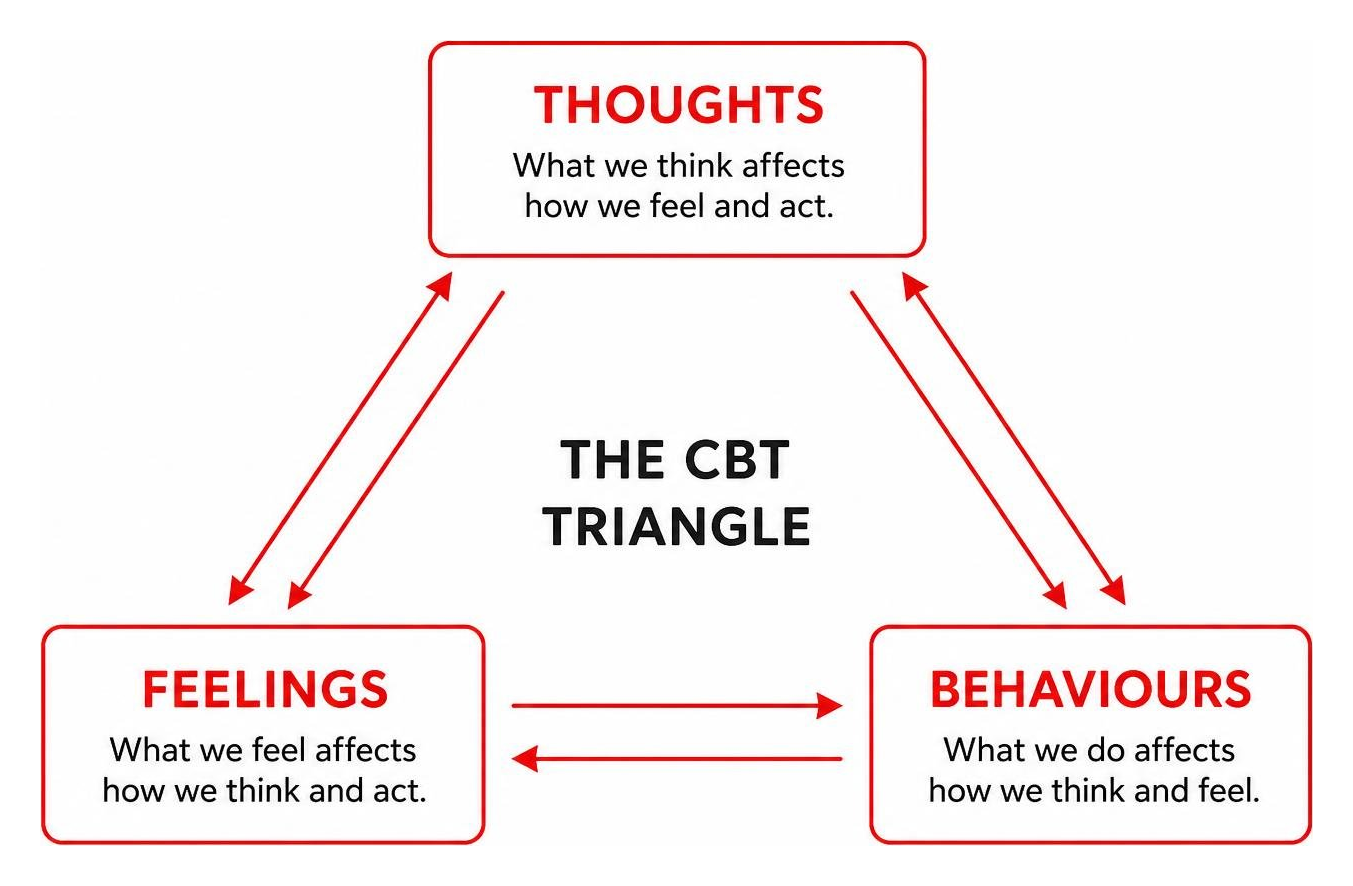
CBT helps teenagers identify “thought traps” — such as catastrophising (expecting the worst) or black-and-white thinking — and replace them with more balanced perspectives.
Research shows that cognitive behavioural therapy (CBT) can help adolescents reduce feelings of sadness, anxiety, and emotional withdrawal. As young people develop healthier ways of thinking and coping, they often experience improvements in daily functioning, academic performance, social relationships, and overall well-being.
Therapy can also strengthen long-term resilience, build self-confidence, and equip teenagers with practical skills to manage future challenges more effectively.
For clinical practitioners and families interested in how these structured sessions are organised, the CARIBOU + CBT manual offers an excellent example of a youth-informed, modular approach to treating low mood and anxiety.
If you would like to explore how this approach is applied in practice, you can read more under our Tag adolescent therapy archive.
Dialectical Behaviour Therapy (DBT) and Other Modalities in Adolescent Therapy
While CBT is highly effective for many, other therapeutic modalities offer specialised support for different challenges:
- Dialectical Behaviour Therapy (DBT): Dialectical Behaviour Therapy (DBT) helps older adolescents manage intense emotions, self-harm, and emotional distress. It teaches practical skills in mindfulness, emotion regulation, distress tolerance, and healthy relationships.
- Interpersonal Psychotherapy for Adolescents (IPT-A): This time-limited approach focuses on the teen’s relationships. It helps them address grief, interpersonal disputes, role transitions (like moving to Spain), and social isolation by improving their communication skills.
- Trauma-Focused Therapies (EMDR & TF-CBT): For teenagers experiencing trauma or relocation-related distress, EMDR and Trauma-Focused CBT can help them process difficult experiences, reduce emotional distress, and improve overall well-being.
- Group Therapy: Group therapy helps teenagers realise they are not alone while building social skills and confidence in a supportive environment. For an academic review of how peer dynamics facilitate healing, see the study on Group Therapy to Promote Adolescents’ Mental Health: Clinical and Empirical Evidence.
Whether sessions happen in person or online, these modalities can be adapted effectively. If your family travels frequently or lives in a more remote part of Spain, you might find our guide to Virtual couch time best online therapy for teens helpful.
Recognizing When Your Teen Needs Professional Help
It is entirely normal for teenagers to experience mood swings, crave privacy, and occasionally clash with their parents. However, there is a difference between typical adolescent rebellion and a mental health challenge that requires professional support.
Parents should look out for persistent changes in behaviour that last longer than two to three weeks. Key warning signs include:
- Academic Changes: A sudden, unexplained drop in grades, skipping classes, or a loss of interest in school.
- Social Withdrawal: Dropping out of sports or clubs, avoiding long-term friends, and spending excessive amounts of time isolated in their room.
- Mood Shifts: Extreme irritability, frequent outbursts of anger, or a persistent flat, sad mood.
- Physical Indicators: Significant changes in sleep patterns (insomnia or sleeping all day), drastic changes in appetite or weight, or neglected personal hygiene.
- Risk-Taking Behaviour: Evidence of drug or alcohol use, reckless behaviour, or violent outbursts.
- Self-Harm: Unexplained cuts, burns, or scratches, often hidden under long sleeves or trousers in warm weather.
If you are noticing these patterns, trust your parental intuition. It is always better to seek an assessment early than to wait for a crisis. For practical advice on how to initiate this conversation, read our guide on Teen troubles in Barcelona therapy in Barcelona to the rescue.
The Role of Parents and Families in the Therapeutic Journey

Many parents assume that therapy is a process where they drop their teenager off at an office, the therapist “fixes” them, and they return home cured. In reality, adolescent therapy is far more systemic.
A teenager does not exist in a vacuum; they are part of a family system, and lasting change often requires the whole system to adapt.
While the therapist will protect the teenager’s privacy during individual sessions, parents are an essential part of the journey. This involvement typically begins in the very first session, where the therapist meets with the parents and the teen together to establish goals, discuss boundaries, and address safety.
Parents can support the therapeutic process at home by:
- Practising non-judgment: Creating a safe space where the teen can express difficult emotions without immediately receiving advice or criticism.
- Respecting boundaries: Allowing the teenager to have their private space in therapy without demanding to know every detail of what was discussed.
- Avoiding power struggles: Stepping back from “because I said so” arguments and instead trying to understand the underlying emotion driving the behaviour.
If you are wondering what kind of conversations happen in these early stages, you can explore our resources on From awkward to awesome therapy questions for teens and young adults.
Navigating Your Options: Finding the Right Support in Spain
Finding the right mental health support for your teenager in a foreign country can feel overwhelming. Families living in Spain, whether in bustling cities like Barcelona and Madrid or coastal regions like Alicante and Marbella, have a few different pathways to choose from.
To help you make an informed decision, let us look at the main options available for international families.
Public Healthcare System (CatSalut / Seguridad Social)
What it is: Free mental health services accessed through your local public health centre (CAP) in Spain.
The benefits: This service is fully funded and accessible to all registered residents who have a public health card.
The limitations: The public system faces high demand. This often results in long waiting lists, infrequent sessions (sometimes only once every few weeks), and a high likelihood of language barriers, as English-speaking specialists are rare in the public sector.
Large Online Therapy Platforms
What they are: Global digital directories and mobile apps that connect users with remote therapists worldwide.
The benefits: They offer convenient scheduling, a quick setup process, and lower initial session costs.
The limitations: These platforms often suffer from high therapist turnover, meaning your teen may have to change therapists repeatedly. They lack personalised, human-led matching, and some platforms have faced criticism regarding how they handle sensitive user data.
Specialised Private Expat Practices (Therapy in Barcelona)
What we offer: A dedicated group practice of highly qualified, psychology-trained therapists who are expats themselves, serving families in Barcelona and online across Spain (including Gran Canaria and Sevilla).
The benefits: We provide bespoke therapist matching based on your teen’s unique personality and needs, deep expat-specific cultural sensitivity, and multilingual support. Our practice maintains strict privacy standards with absolutely no selling of client data.
The limitations: This is a private-pay service, meaning it is not covered by the public healthcare system. However, we believe the quality of personalised care is worth the investment, and some of our therapists offer sliding scale fees for those with financial need (prospective clients are welcome to inquire about this).
Frequently Asked Questions about Adolescent Therapy
How long does teen therapy typically last?
The duration of therapy is highly individual. Some teenagers only need a few sessions (typically 8 to 12) to learn specific coping strategies for a transition, such as adapting to a new school in Spain.
Others, who are navigating deeper issues like chronic low mood, difficult memories, or complex family dynamics, may benefit from long-term support spanning several months or even longer.
Progress is measured collaboratively. At the start of therapy, the therapist, teen, and parents will outline clear, realistic goals. Sessions are typically held once a week to maintain momentum, and the therapist will regularly check in to evaluate if those goals are being met.
Will my teen’s therapist tell me what they talk about in sessions?
Trust is the foundation of effective adolescent therapy. If a teenager believes their therapist will report everything back to their parents, they will not speak openly. Therefore, what is said in individual sessions remains confidential.
However, confidentiality has strict, non-negotiable legal limits. If the therapist suspects the teenager is in danger — such as experiencing abuse, expressing active thoughts of self-harm, or engaging in severe self-injury — they are legally and ethically obligated to inform the parents and relevant authorities immediately.
Outside of safety risks, the therapist will often work with the teen to find healthy ways to share general updates and progress with their parents.
What if my teenager refuses to go to therapy?
It is common for teenagers to feel anxious or resistant to the idea of therapy. If your teen refuses, avoid forcing them into a power struggle. Instead, try to understand their hesitation. They might fear being labelled as “broken,” or they might worry that therapy is a punishment.
Start by suggesting a compromise: ask them to attend just one initial consultation or a Free Discovery Call to see how they feel. Reassure them that therapy is a collaborative space where they are in control of what they share.
If they still refuse, parents can often benefit from attending sessions themselves to learn new communication strategies and boundary-setting techniques that can indirectly support their teen at home.
Finding the Right Path Forward
Navigating the teenage years is rarely a smooth journey, and doing so while adjusting to a new life abroad adds an entirely new layer of complexity. Whether your family is based in Barcelona, Valencia, Madrid, or Malaga, you do not have to navigate these challenges in isolation.
Founded in 2011, Therapy in Barcelona provides professional, English-speaking mental health support for the international community. Our team of psychology-trained therapists offers personalised therapy for adults, couples, teenagers and families with a strong focus on culturally sensitive care.
We do not believe in a one-size-fits-all approach. We take the time to understand your family’s specific situation, matching your teenager with a therapist who truly fits their personality and needs.
We offer sessions in person at our central Barcelona offices in the Eixample district, as well as online therapy services for international families worldwide, including the USA and Canada.
If you would like support for your teenager, we invite you to take a gentle first step.
