


An Essential Guide to Navigating Expat Life Challenges

Navigating expat life is a complex journey filled with emotional highs and lows. Moving to a new country promises change and opportunities, but it also brings a unique set of challenges. Expats often find themselves struggling to adapt to unfamiliar cultures and environments, leading to feelings of isolation and stress. The excitement and novelty of landing in a new place can quickly give way to the reality of cultural shock, language barriers, and homesickness.
The practicalities of moving are essential, but understanding the emotional landscape of expat life is crucial, too. Adjusting to a new cultural setting involves more than logistical changes. It requires embracing the shift in identity and dealing with unexpected challenges. Many expats find themselves wrestling with loneliness and anxiety despite the allure of their new surroundings, leaving them asking, “If I made it to paradise, then why does it feel so hard?” These emotional struggles are a standard part of the immigrant experience.
However, with the right support and coping strategies, expats can turn challenges into opportunities for personal growth and development. Embracing cultural differences, building a local support network, and seeking professional guidance, including counseling for mental health support, can make the transition smoother and more fulfilling.

Understanding the Emotional Landscape of Expat Life
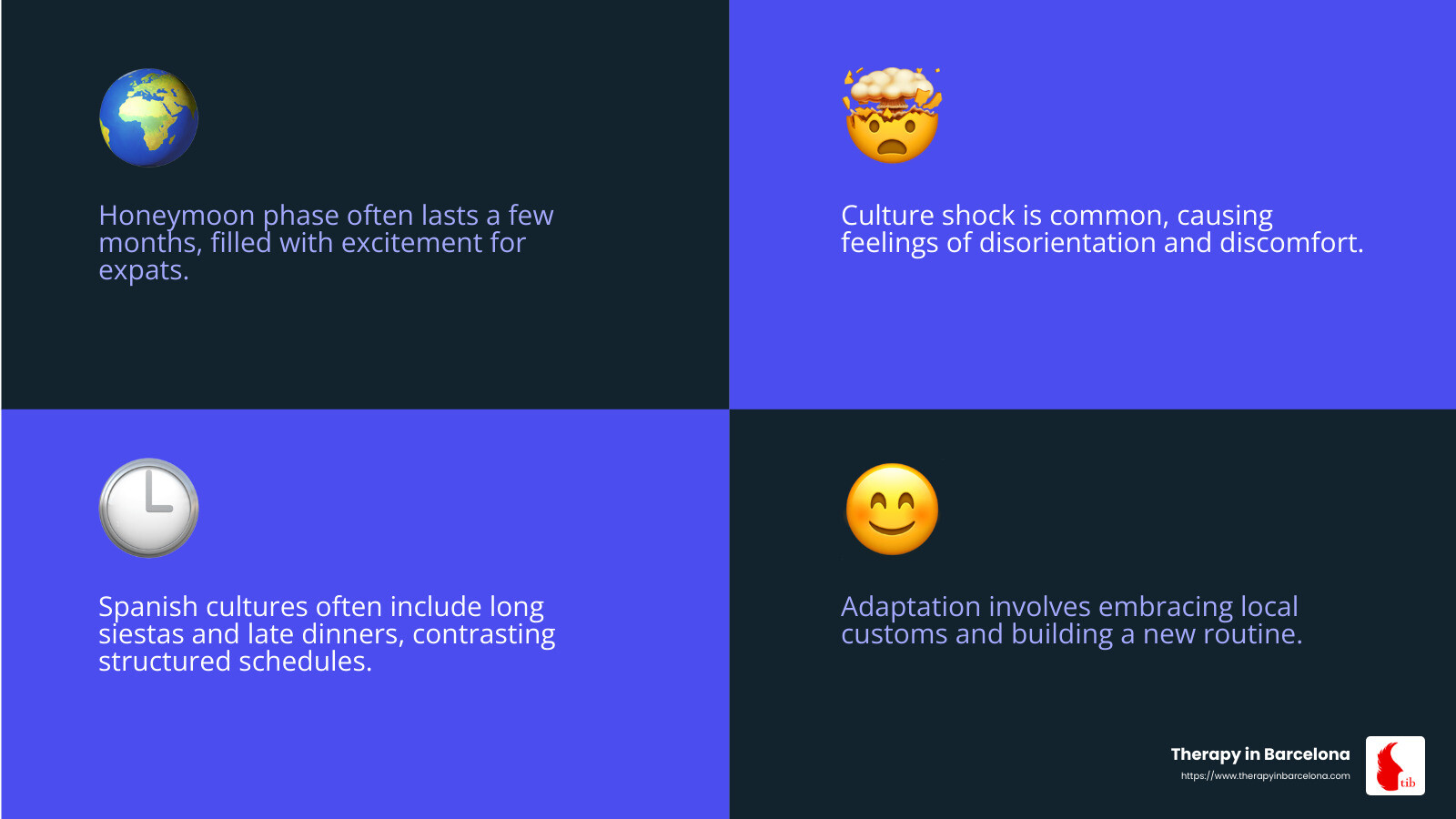
Moving abroad is a brave and exciting step. The initial excitement, known as the “honeymoon phase,” is filled with the joy of exploring new places and cultures. This phase can feel like living in a dream, where everything seems perfect and exciting. Imagine Emily, our composite expat, who enthusiastically arrives in Barcelona, eager to find the city’s vibrant life and rich history.
However, as the initial thrill fades, reality sets in. This is when many expats encounter culture shock. Culture shock is the feeling of disorientation when faced with an unfamiliar culture or way of life. It’s like being a fish out of water—everything feels different, from the language to the daily routines. For Emily, the relaxed pace of life in Spain, with its long siestas and late dinners, might be a stark contrast to the structured schedule she was used to back home.
The Honeymoon Phase
During the honeymoon phase, expats often feel optimistic and curious. Everything is new, and the differences between their home country and the new one are fascinating rather than frustrating. This is a time to soak in the sights, sounds, and flavours of the new environment. It’s common to feel like you’re on an extended holiday, and this positivity can help in forming initial connections and exploring the local culture.
Culture Shock and Adaptation
As the honeymoon phase wanes, expats may start to feel overwhelmed. The novelty wears off, and the day-to-day challenges become more apparent. Language barriers can make simple tasks like grocery shopping or asking for directions daunting. Cultural shifts, such as different social norms or bureaucratic processes, can lead to frustration.
This is also when feelings of identity loss and migratory grief may emerge. Being away from familiar surroundings and support systems can lead to a sense of being unanchored. Expats like Emily might question where they fit in this new world and how to reconcile their past identity with their present circumstances.
Adapting to these changes involves developing new coping strategies. Building a routine, learning the local language, and engaging with the community can help ease the transition. These feelings are normal and temporary. With time, many expats find a balance between the old and new, creating a hybrid identity that accepts elements of both cultures.
Understanding and navigating these emotional phases is essential for a successful expat experience. By acknowledging the emotional rollercoaster and seeking support when needed, expats can transform challenges into opportunities for growth and connection.
Practical Tips for Navigating Expat Life
Preparing Thoroughly Before Your Move
Proper preparation is key to a smooth transition into expat life. It’s not just about packing your bags and booking a flight. Start by understanding the visa requirements of your destination country. Each country has its rules, and getting the correct visa is crucial for a hassle-free stay. Check official government websites or consult with immigration experts to ensure you’re on the right track. We recommend working with Entre Tramites or Moving to Spain (use our discount code TIB10 when you book a service).
Learning the language basics is another important step. Even a few simple phrases can make a big difference. Language apps like Duolingo can be a great start. Being able to say “hello,” “thank you,” and “where is the bathroom?” can ease your day-to-day interactions and help you feel more at home.
Don’t forget to research the cost of living, healthcare options, and local customs. Knowing what to expect financially and culturally can prevent unpleasant surprises. This preparation can make your initial days less stressful and more enjoyable.
Embracing the Local Culture
Once you’ve arrived, dive into the local culture. Cultural immersion is not only enriching but also essential for adapting to your new environment. Attend local events and festivals to get a taste of the community’s traditions and way of life. Whether it’s a local market or a music festival, participating in these events can help you feel more connected.
Engaging with the local culture also means being open to trying new foods and embracing different social norms. It’s about seeing the world through a new lens and appreciating the diversity around you. This openness can lead to meaningful connections and a deeper understanding of your new home.
Building a Support Network
Building a support network is vital for navigating the ups and downs of expat life. Start by connecting with expat communities. These groups often have online forums and social media pages where you can meet others who are in the same boat. Sharing experiences and tips can be incredibly comforting and informative.
But don’t stop there. Form local friendships to truly integrate into the community. Join clubs, take classes, or volunteer in local initiatives. These activities can help you meet locals and understand the culture from an insider’s perspective.
You’re not alone. Many expats, like Emily, find that a mix of expat and local friends provides a balanced support system. This blend of connections can offer both the familiarity of shared experiences and the excitement of finding new perspectives.
By preparing thoroughly, embracing the local culture, and building a strong support network, you can turn the challenges of expat life into opportunities for growth and enrichment.
Maintaining Well-being as an Expat
Staying Connected with Loved Ones
Living abroad can be an exciting trip, but it often comes with a feeling of disconnection from family and friends back home. To maintain emotional well-being, it’s crucial to stay connected with loved ones. Thanks to technology, this is easier than ever. Video calls, social media, and messaging apps are lifelines that bridge the distance. Use platforms like Zoom or WhatsApp to schedule regular catch-ups.
Creating a routine for communication can provide comfort and consistency. Whether it’s a weekly video call or a simple daily text, staying in touch helps maintain those important bonds. This connection can act as a support system, providing emotional stability when you’re navigating the challenges of expat life.
Prioritising Physical and Mental Health
Taking care of your physical and mental health is essential for a fulfilling expat experience. Exercise is not just about staying fit; it’s a powerful tool for boosting mood and resilience. Regular physical activity, whether it’s a morning jog or a yoga class, can help reduce stress and improve overall well-being.
In a busy city like Barcelona, there are plenty of opportunities to stay active. Joining local gyms or fitness classes can also be a great way to meet new people and integrate into the community. As Teodora Skylane from Attika Fitness in Barcelona notes, “Physical fitness is more than just strength—it’s about building resilience and a sense of accomplishment.”
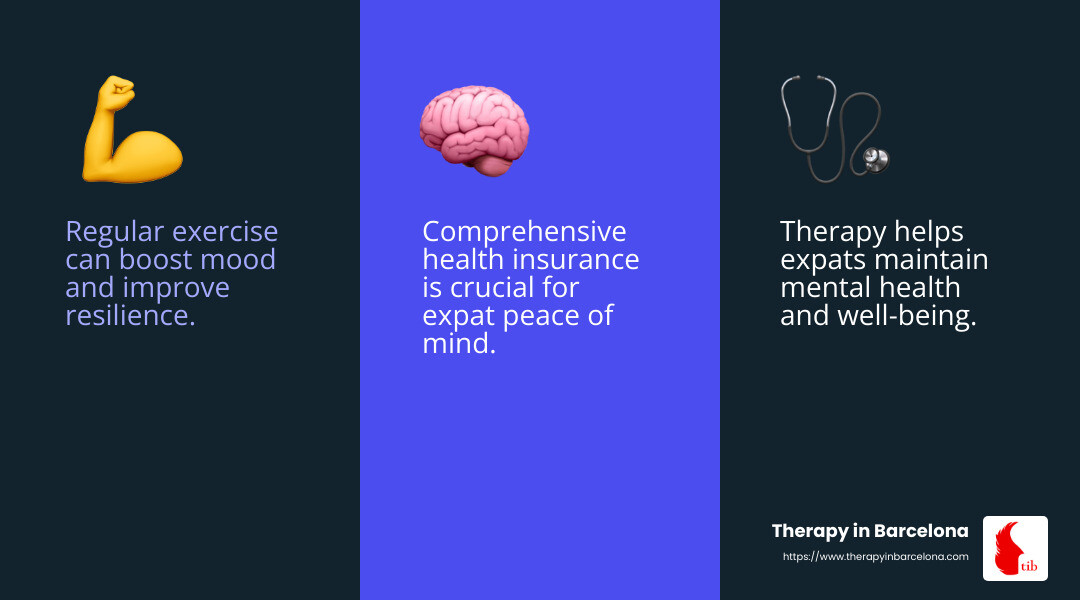
Mental health is equally important. Therapy in Barcelona offers culturally sensitive support custom to the unique challenges faced by expats. Whether you’re feeling overwhelmed, anxious, or simply need someone to talk to, reaching out for professional help can be a vital step in maintaining mental health. Leigh Matthews, the founder of Therapy in Barcelona, emphasizes the importance of seeking support: “Therapy is not a sign of weakness; it’s a proactive step towards well-being.”
Health insurance is another critical aspect to consider. Ensure you have a plan that covers both routine check-ups and unexpected emergencies. This peace of mind allows you to focus on enjoying your expat journey without the constant worry of medical uncertainties.
By staying connected with loved ones and prioritising both physical and mental health, you can build resilience and thrive in your new environment. Next, we’ll explore how Therapy in Barcelona can support you in navigating expat life with personalised care.
Navigating Expat Life with Therapy in Barcelona
Therapy in Barcelona is your partner in navigating the ups and downs of expat life. Having a supportive hand on the rollercoaster ride while living abroad can make all the difference. Founded by Leigh Matthews, an Australian psychologist who has lived in Barcelona since 2011, Therapy in Barcelona provides culturally sensitive care custom to the unique needs of internationals. All therapists on the team are English-speaking therapists, multilingual and internationals like you.
Personalised Support
Every expat’s journey is unique, and so are their challenges. Therapy in Barcelona offers personalised support that considers your individual experiences and needs. Whether you’re dealing with culture shock, identity struggles, or loneliness, the team here understands. They offer a safe space where you can explore your feelings and find strategies to improve your well-being.
Take Emily, our composite example of many expats: She’s a 34-year-old professional from the UK who moved to Barcelona seeking a new life and adventure. Like many, she was excited but soon found herself feeling unexpectedly lonely. Therapy in Barcelona helps individuals like Emily by offering custom support that addresses her specific concerns and helps her build resilience.
Culturally Sensitive Care
Adjusting to a new culture can be overwhelming, and starting therapy is a vulnerable moment for most people. Therapy in Barcelona provides nonjudgmental, culturally sensitive care, ensuring that therapy feels warm and confidential and aligns with your background and experiences. This approach acknowledges the challenges of the moment you may be in when reaching out and honours the diverse cultural identities of expats while helping you steer the complexities of adapting to life in a new country.
The therapists at Therapy in Barcelona are well-versed in the common issues faced by expats, such as cultural adjustment and work-life balance. They offer insights and strategies to help you integrate into your new environment while maintaining your cultural identity.
A Safe and Supportive Environment
Therapy is not just about addressing current problems; it’s about building a fulfilling and authentic life and equipping you with strategies to meet future challenges. Therapy in Barcelona focuses on creating a supportive environment where you can explore your thoughts and feelings without judgment. This approach empowers you to develop coping strategies, build resilience, and accept the opportunities that expat life presents.
Whether you’re an expat professional, a Third Culture Kid, or an accompanying spouse, Therapy in Barcelona is committed to supporting your mental health and well-being. By providing a compassionate and understanding space, they help you steer the challenges of expat life with confidence.
In the next section, we’ll address some frequently asked questions about expat life, including how to cope with expat guilt and the best countries for expats to live in.
Frequently Asked Questions about Expat Life
What is the difference between an expat and an immigrant?
The terms “expat” and “immigrant” are often used interchangeably, but they carry different connotations. An expatriate, or expat, typically refers to someone who has chosen to live outside their native country for work, trip, or personal reasons, often with the intention of returning home eventually. This term is frequently associated with professionals or retirees who move for temporary assignments or lifestyle changes.
On the other hand, an immigrant usually implies a more permanent relocation, often driven by the desire to settle in a new country for long-term opportunities or to escape adverse conditions in their home country. Immigrants may seek citizenship or long-term residency, whereas expats often maintain strong ties to their home country.
Both expats and immigrants face unique challenges, including cultural adjustment and identity shifts, but their motivations and plans for the future often differ. At Therapy in Barcelona, we work with all internationals, regardless of their identification as expats, humans, global citizens, immigrants, or otherwise. If you are in between worlds, we are here for you!
How can I cope with expat guilt?
Expat guilt is a common feeling among those living abroad. It arises from being away from loved ones during important events or not being able to support family members as much as you’d like. Here are some strategies to manage this guilt:
- Stay Connected: Use technology to maintain regular contact with family and friends. Video calls and social media can help bridge the distance.
- Set Realistic Expectations: Understand that you cannot be physically present for every event. Communicate openly with your family about what you can realistically manage.
- Focus on the Positives: Remind yourself why you chose this path. Consider the personal and professional growth you’ve achieved as an expat.
- Seek Support: Engage with local expat communities or seek professional support, like the services offered by Therapy in Barcelona, to process your feelings and find balance.
What are the best countries to live as an expat?
Choosing the best country to live in as an expat depends on individual preferences and priorities. Here are a few countries often praised for their expat-friendly environments:
- Spain: Known for its vibrant culture, mild climate, and welcoming communities, cities like Barcelona and Madrid offer a rich expat experience. The cost of living is relatively affordable, and the lifestyle is relaxed.
- Portugal: Offers a high quality of life, with beautiful landscapes and a warm climate. Lisbon and Porto are popular among expats for their friendly locals and thriving expat communities.
- Singapore: Known for its clean and safe environment, Singapore is a hub for business professionals. It offers excellent healthcare and education systems, though the cost of living can be high.
- New Zealand: Offers stunning natural beauty and a laid-back lifestyle. It’s a great choice for those seeking outdoor trips and a friendly community.
- Canada: Known for its diverse culture and high quality of life, Canada offers strong healthcare and education systems. Cities like Vancouver and Toronto are popular among expats.
When choosing a country, consider factors like cost of living, healthcare, climate, and language. Each expat’s needs are unique, so it’s important to find a place that aligns with your lifestyle and goals.
Conclusion
Navigating expat life is a journey of personal growth and embracing challenges. Living abroad pushes you out of your comfort zone, leading to profound personal development. It requires adapting to new cultures, languages, and ways of life. These experiences improve your resilience, problem-solving skills, and cultural awareness.
Accept Challenges as Opportunities
Challenges are inevitable, but they are also opportunities for growth. Facing cultural differences, language barriers, and homesickness can be daunting. However, each obstacle you overcome builds your confidence and adaptability. These experiences teach you to view challenges not as setbacks but as stepping stones to a richer, more fulfilling life.
Personal Growth through Expat Experiences
Living as an expat often leads to significant personal growth. It encourages you to explore new perspectives, develop empathy, and gain a deeper understanding of the world. Engaging with diverse cultures broadens your worldview and enriches your life. This growth is not only personal but also professional, as it improves your global awareness and communication skills.
Support and Growth with Therapy in Barcelona
At Therapy in Barcelona, we understand the complexities of expat life. Our culturally sensitive support is custom to help you steer these unique challenges. Whether you’re dealing with cultural shock, identity shifts, or the stress of adaptation, our team is here to guide you through your journey. Our personalised approach ensures you receive the support you need to thrive in your new environment.
As you accept the challenges of expat life, growth and adaptation go hand in hand. With each new experience, you’re building a stronger, more resilient version of yourself. Accept the journey, and enjoy the personal growth that comes with it.
