


Asking the Right Questions: Culturally Adapted Therapy Insights

When it comes to effective therapy, understanding the unique cultural backgrounds of clients can make all the difference. Questions to ask a client in culturally adapted therapy are not just routine checks; they are essential tools for building trust, uncovering underlying issues, and fostering meaningful dialogue.
Here’s a quick list to kick-start these invaluable interactions:
- What aspects of your cultural background are important to you?
- How does your family view mental health?
- Are there any cultural practices you find comforting or challenging?
- What language are you most comfortable expressing yourself in during therapy?
By asking such thoughtful, open-ended questions, therapists can dig deeper into a client’s cultural identity, which is crucial for personalised and effective treatment.
Cultural competence in therapy isn’t about checking a box. It’s about recognising and appreciating the diverse mix of client experiences. At Therapy in Barcelona, we believe that every client deserves to feel seen, heard, and understood, regardless of their cultural background. This context-sensitive approach ensures that therapy is not only relevant but also transformative.
Importance of Culturally Adapted Therapy
Imagine walking into a room where everyone speaks a language you don’t understand. That feeling of being out of place is what some clients experience in therapy when cultural differences aren’t acknowledged. Culturally adapted therapy bridges this gap, ensuring that every client feels at home, heard, and understood.
Why Cultural Sensitivity Matters
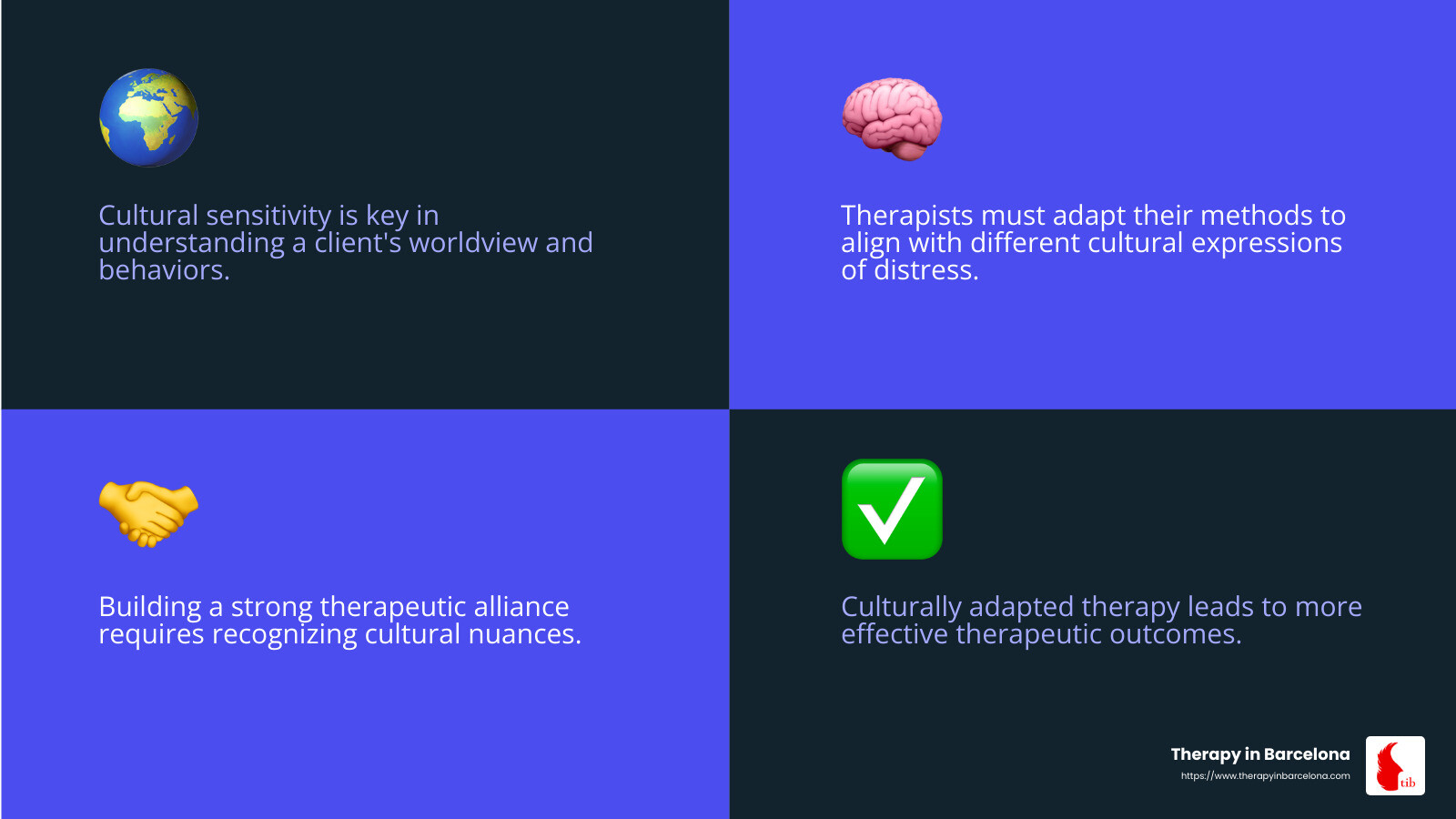
Cultural sensitivity is more than just being aware of different customs or holidays. It’s about understanding how a client’s cultural background shapes their worldview, emotions, and behaviours. Every culture has unique ways of expressing distress and coping with life’s challenges. Without cultural sensitivity, therapists might miss these nuances and misinterpret a client’s needs.
Consider a therapist working in Barcelona, where a melting pot of cultures exists. They must recognise that a client from Japan might express emotions differently than someone from Brazil. This understanding can prevent misunderstandings and build a stronger therapeutic alliance.
Understanding Client Background
Every client brings a rich mix of experiences to therapy, influenced by their cultural background. Understanding this background is critical for tailoring therapy to their needs. For instance, a client from a collectivist culture might prioritise family harmony over personal desires. Recognising this can guide the therapist in setting realistic and culturally appropriate goals.
Leigh Matthews, founder of Therapy in Barcelona, emphasises the importance of this approach. As an Australian psychologist living in Barcelona, Leigh understands the complexities of navigating a foreign culture and integrates this knowledge into her practice. Her experience highlights the value of therapists who can relate to and respect the diverse backgrounds of their clients.
Pathway to Therapeutic Success
Therapeutic success isn’t just about resolving issues; it’s about empowering clients to thrive in their unique cultural context. Culturally adapted therapy can lead to more effective outcomes by ensuring that treatment plans align with a client’s values and beliefs.
For example, Steele, a clinician at Kalamazoo Cognitive and Behavioural Therapy, highlights how traditional cognitive-behavioural therapy (CBT) can sometimes overlook cultural contexts. By adapting CBT to include cultural considerations, therapists can avoid invalidating a client’s experiences and instead create a supportive environment that acknowledges systemic influences on mental health.
In conclusion, culturally adapted therapy is not a luxury but a necessity. It fosters a therapeutic environment where clients feel validated and understood, paving the way for meaningful change. At Therapy in Barcelona, we are committed to this culturally sensitive approach, ensuring every client receives the personalised care they deserve.
Questions to Ask a Client in Culturally Adapted Therapy
When entering a culturally diverse therapeutic setting, asking the right questions is essential. Cultural assessment involves understanding how a client’s background influences their worldview, emotions, and behaviours. To achieve this, therapists should focus on three key elements: open-ended questions, active listening, and cultural sensitivity.
Cultural Assessment
A thorough cultural assessment helps therapists understand the unique aspects of a client’s identity. This involves exploring their cultural background, values, and traditions. It’s not just about ticking off boxes but diving deep into what truly matters to the client.
For instance, asking about family dynamics can reveal how a client views relationships and responsibilities. A question like, “Can you share a bit about your family’s traditions and what they mean to you?” opens the door to understanding their cultural influences.
Open-Ended Questions
Open-ended questions are the cornerstone of effective therapy. They encourage clients to express themselves freely, providing richer insights into their experiences. Instead of asking, “Do you feel stressed about your cultural identity?” a more open-ended approach would be, “How has your cultural background influenced your experiences and feelings?”
This style of questioning not only invites detailed responses but also helps clients feel more comfortable and understood. It shows that the therapist is genuinely interested in their story, not just the symptoms.
Active Listening
Active listening is crucial in culturally adapted therapy. It involves more than just hearing words; it’s about truly understanding and reflecting on what the client is saying. This can be shown through verbal affirmations like, “It sounds like your cultural heritage is very important to you,” or by summarizing what the client has shared to ensure accuracy and understanding.
By practicing active listening, therapists can build trust and rapport with their clients, making them feel valued and respected. This approach helps the therapist to avoid assumptions and ensures that the client’s voice is at the forefront of the therapeutic process.
In summary, asking the right questions in culturally adapted therapy is about more than just gathering information. It’s about creating a safe, respectful space where clients feel seen and heard. By focusing on cultural assessment, open-ended questions, and active listening, therapists can better support their clients’ unique journeys.
Key Questions for Understanding Cultural Background
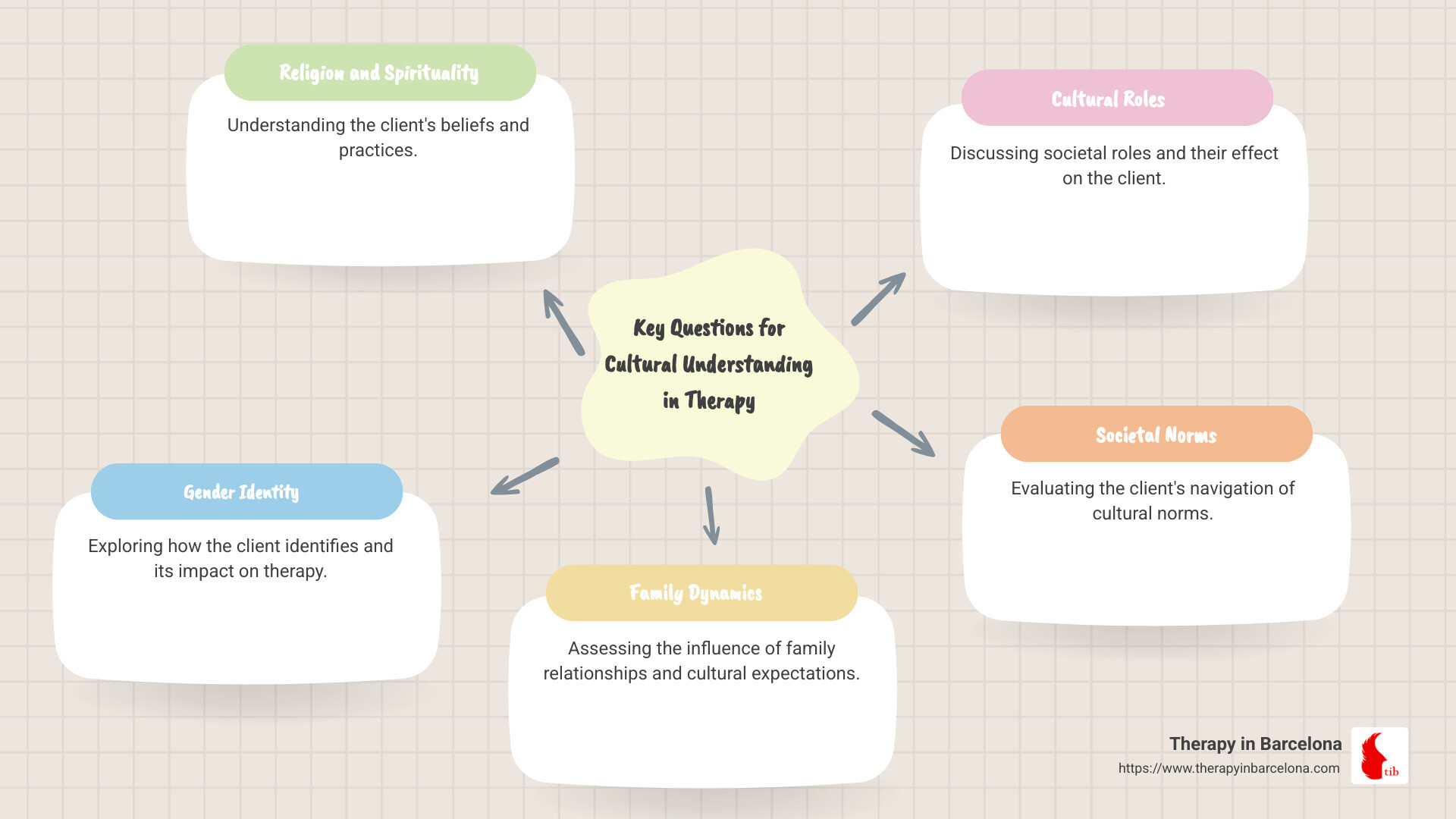
Understanding a client’s cultural background is crucial in therapy, especially in a diverse city like Barcelona. It involves exploring key areas such as religion and spirituality, gender identity, and family dynamics. Let’s explore how these elements can shape a person’s experiences and how therapists can ask the right questions to uncover these influences.
Religion and Spirituality
Religion and spirituality can deeply influence a person’s worldview and coping mechanisms. They often provide a sense of community and support, but can also be sources of conflict or stress. To understand this aspect, therapists might ask:
- “Can you describe your spiritual or religious beliefs and how they play a role in your life?”
- “How do your beliefs impact the way you view challenges or make decisions?”
These questions allow clients to share how their spirituality shapes their identity and how it might affect their mental health.
Gender Identity
Gender identity is a personal and sometimes complex part of a client’s life. It’s important for therapists to approach this topic with sensitivity and openness. Questions like:
- “How do you identify your gender, and what does that mean for you?”
- “Have you faced any challenges related to your gender identity?”
These questions help clients express their experiences and any societal pressures they might face. It also shows the therapist’s commitment to understanding and respecting their identity.
Family Dynamics
Family dynamics can greatly influence a person’s behaviour, values, and stress levels. In many cultures, family plays a central role in decision-making and daily life. To explore this, therapists can ask:
- “What role does your family play in your life, and how do you steer family expectations?”
- “Can you share any family traditions that are important to you?”
These questions help uncover the client’s support systems and any familial pressures they might experience.
By asking thoughtful and open-ended questions about religion, gender identity, and family, therapists can gain a deeper understanding of their clients’ cultural backgrounds. This approach not only enriches the therapeutic process but also builds a stronger, more empathetic connection between the therapist and client.
Next, we’ll explore effective therapeutic questioning techniques to improve culturally adapted therapy.
Effective Therapeutic Questioning Techniques
In culturally adapted therapy, asking the right questions is key to understanding a client’s unique experiences. Let’s explore some effective techniques that therapists can use: open-ended questions, active listening, and clarification.
Open-Ended Questions
Open-ended questions are vital in therapy. They invite clients to share more about their thoughts and feelings, without feeling restricted to a yes or no answer. For example:
- “What has your experience been like adjusting to life in Barcelona?”
- “Can you tell me more about how your cultural background influences your daily life?”
These questions encourage clients to explore their emotions and experiences, providing rich insights for the therapist.
Active Listening
Active listening goes beyond just hearing words. It involves fully engaging with the client, showing empathy, and understanding their perspective. This technique includes:
- Maintaining eye contact and nodding to show attentiveness.
- Reflecting back what the client has said to confirm understanding, like, “It sounds like you’re feeling overwhelmed by the cultural differences here. Is that correct?”
By actively listening, therapists build trust and rapport, making clients feel valued and understood.
Clarification
Clarification ensures that the therapist accurately understands the client’s experiences and feelings. It’s okay to ask for more details or explanations when needed. For example:
- “When you mentioned feeling ‘different’ at work, can you explain what you mean by that?”
- “Did I understand correctly that family expectations are causing you stress?”
These questions help avoid misunderstandings and ensure that the therapist and client are on the same page.
Using these techniques—open-ended questions, active listening, and clarification—therapists can create a supportive environment that respects and acknowledges a client’s cultural identity. This approach not only improves the therapeutic process but also fosters a deeper connection between the therapist and client.
Next, we’ll address some frequently asked questions about culturally adapted therapy to further illuminate this important topic.
Frequently Asked Questions about Culturally Adapted Therapy
What are some cultural questions to ask in therapy?
When working with clients from diverse backgrounds, explore their cultural roles, education, and societal norms. These factors can significantly influence a client’s worldview and experiences. Here are a few questions therapists might ask:
- Cultural Roles: “How do your cultural roles impact your daily life and relationships?”
- Education: “What was your educational experience like, and how has it shaped your views?”
- Societal Norms: “Are there societal expectations from your culture that affect how you feel or act?”
These questions help therapists gain insights into the client’s cultural context and how it affects their life in Barcelona or elsewhere in Spain.
How do you handle cultural issues in therapy?
Addressing cultural issues in therapy requires sensitivity and a strong client rapport. Therapists should:
Demonstrate Cultural Sensitivity: Acknowledge and respect the client’s cultural background. This involves understanding cultural nuances, such as communication styles and values. For example, some cultures may prioritize family harmony over individual expression.
Build Client Rapport: Establish a trusting relationship by showing genuine interest in the client’s cultural experiences. This might involve discussing cultural traditions or challenges faced in adapting to a new environment.
- Implement Therapeutic Strategies: Tailor therapeutic approaches to align with the client’s cultural beliefs. For instance, incorporating culturally adapted cognitive behavioural therapy (CBT) techniques can be beneficial for clients facing cultural stressors.
By integrating these strategies, therapists can effectively support clients in navigating cultural challenges.
What questions should I ask for cultural competence?
Cultural competence is about understanding and respecting cultural differences. To improve this competence, therapists can engage in critical discussions and reflect on their own biases. Consider these questions:
- Cultural Biases: “What assumptions might I have about this client’s culture, and how can I challenge them?”
- Student Experiences: “How has my education prepared me to work with clients from diverse backgrounds?”
- Critical Discussion: “What ongoing learning opportunities can help me improve my cultural competence?”
By continually questioning and expanding their understanding, therapists can better support their clients in a culturally sensitive manner.
Next, we’ll explore how Therapy in Barcelona provides personalised therapist matching and culturally sensitive support to help clients thrive in their new environment.
Conclusion
At Therapy in Barcelona, we understand the unique challenges internationals face when adapting to life in a new country. Our approach is centred around personalised therapist matching to ensure each client receives the most effective and culturally sensitive support possible.
Personalised Therapist Matching
Finding the right therapist can be a daunting task, especially when cultural nuances come into play. That’s why we prioritise personalised matching, taking the time to understand each client’s specific needs, background, and preferences. This ensures that the therapist-client relationship begins on a strong foundation, enhancing the likelihood of positive therapeutic outcomes.
Our team is composed of highly qualified, psychology-trained therapists who are also expats themselves. This shared experience allows our therapists to connect deeply with clients, understanding the complexities of living abroad and providing support that resonates on a personal level.
Culturally Sensitive Support
Cultural sensitivity is at the heart of our practice. We believe that therapy should be a space where clients feel understood and respected, regardless of their cultural background. Our therapists are trained to appreciate and integrate cultural contexts into the therapeutic process, addressing issues like cultural adjustment, identity struggles, and societal pressures with empathy and insight.
By offering multilingual therapy services both in-person and online, we ensure that language is not a barrier to accessing mental health support. This commitment to accessibility and understanding makes Therapy in Barcelona a sanctuary for expats seeking guidance and healing.
A Supportive Community
Beyond individual therapy sessions, Therapy in Barcelona is dedicated to fostering a supportive community for internationals. We offer resources, workshops, and support groups custom to the needs of expats, ensuring that our clients have access to comprehensive care and connection.
In conclusion, Therapy in Barcelona is more than just a therapy practice; it’s a supportive ally in your journey of adaptation and growth. With our personalized therapist matching and culturally sensitive approach, we are here to help you steer the challenges of expat life with confidence and resilience.
