


Why Work Stress Matters More Than You Think

How to manage stress at work is a question many professionals ask. Whether it’s tight deadlines, unclear expectations, or adjusting to a new culture in cities like Barcelona or Valencia, work stress can impact your health, relationships, and sense of self.
The numbers are stark. The American Psychological Association’s 2023 survey found 77% of employees experience work-related stress. Chronic stress is linked to serious health issues, including heart disease and a weakened immune system. For expats, these pressures can feel amplified by language barriers, cultural adjustment, and being far from home. Take Emily, a 34-year-old from the UK in Barcelona. She is fictional, but her story of feeling overwhelmed at work without her usual support system is common among internationals.
The good news is that work stress doesn’t have to control your life. This article offers immediate relief strategies and long-term techniques to build resilience. You’ll learn to recognise stress, use coping mechanisms, set boundaries, and know when to seek professional support. These strategies can help you regain control, whether you’re in Madrid, Málaga, or anywhere else.
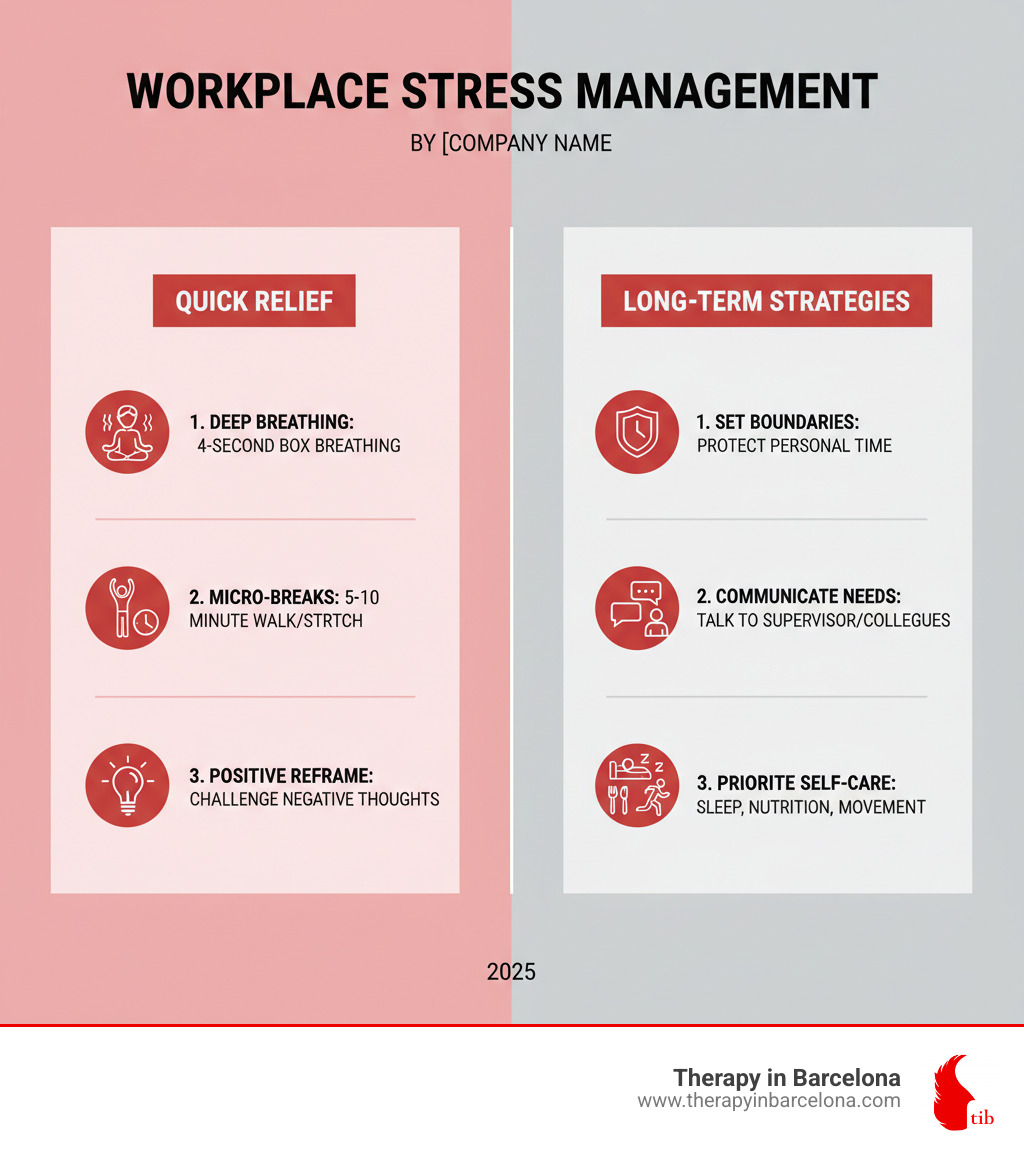
Quick ways to manage stress at work:
- Ground yourself: Use deep breathing like box breathing (inhale-4, hold-4, exhale-4).
- Take strategic breaks: Step away for 5-10 minutes to stretch or walk.
- Reframe negative thoughts: Challenge unhelpful thinking and practise self-compassion.
- Set clear boundaries: Define your work hours and protect personal time.
- Communicate your needs: Talk to your supervisor or colleagues for support.
- Prioritise self-care: Focus on sleep, nutrition, and social connection.
Understanding Work Stress: Causes and Symptoms
A bit of pressure can be motivating—psychologists call this “eustress.” But when it becomes relentless, it turns into chronic stress, which can lead to burnout and serious health problems. Understanding the causes and recognising the signs is the first step to taking back control.
Common Causes of Work-Related Stress
Work stress often stems from specific pressures. Common culprits include excessive workloads, impossible deadlines, and a lack of control over your work. Poor management, such as micromanagement, can create a toxic environment. Unclear expectations and interpersonal conflict add to feelings of unease. Job insecurity and a lack of growth opportunities can also be draining. For expats in cities like Barcelona, Valencia, or Málaga, these stressors are often amplified by cultural adjustment, language barriers, and the absence of familiar support systems.
Recognising the Signs of Stress at Work
Stress manifests in physical, emotional, and behavioural ways. Psychotherapist Dr. Noah Kass recommends regular self-check-ins to catch it early.

- Physical symptoms: Headaches, a pounding heart, digestive issues, insomnia, a weakened immune system, and changes in appetite or libido.
- Emotional symptoms: Feelings of worry or unease, irritability, a persistent low mood, and feeling overwhelmed or emotionally exhausted.
- Behavioural symptoms: Procrastination, difficulty concentrating, loss of motivation, and relying on unhealthy coping mechanisms like smoking or drinking more.
The Long-Term Consequences of Unmanaged Stress
Ignoring chronic stress floods your body with hormones like cortisol, leading to serious consequences. The World Health Organization recognises burnout as an occupational phenomenon characterised by exhaustion and reduced effectiveness. Research suggests a potential link between work-related burnout and feelings of persistent low mood or worry. Beyond burnout, chronic stress contributes to heart disease, high blood pressure, a weakened immune system, and persistent feelings of sadness or hopelessness. The American Psychological Association’s 2023 survey found that for 57% of workers, stress leads to burnout-related symptoms. These are serious threats to your health. If you recognise these signs, support is available. For more guidance, explore Therapy for Career Stress: Finding Balance in the Workplace.
How to Manage Stress at Work: In-the-Moment Strategies
When stress hits mid-workday, you need immediate tools. Think of these as circuit breakers for your nervous system.
Ground Yourself with Breathing and Mindfulness
Your breath is a powerful, accessible tool. Slowing your breathing signals your brain to relax.
- Deep Breathing: Inhale slowly through your nose, letting your belly expand, then exhale slowly through your mouth.
- Box Breathing: Inhale for four counts, hold for four, exhale for four, and hold for four.
- 4-7-8 Technique: Inhale for four, hold for seven, and exhale for eight.
Even a three-minute meditation break at your desk can help. The National Center for Complementary and Integrative Health (NCCIH) confirms meditation is effective for relaxation. For custom guidance, see Mindfulness for Expats.
Take Strategic Breaks to Recharge

Sitting all day creates physical tension that fuels mental stress. Strategic breaks are essential.
- Use the Pomodoro Technique: Work in 25-minute intervals with five-minute breaks.
- Step away from your desk: A short walk outside can shift your mental state. A 2019 study found that spending 20 minutes outdoors reduces stress.
- Stretch: Roll your shoulders, tilt your head, and reach your arms overhead to release tension.
Reframe Your Negative Thoughts
Stress can trigger catastrophic thinking (“I can’t handle this”). Managing stress means managing the stories you tell yourself.
- Cognitive Reframing: Challenge automatic negative thoughts. Is your manager’s silence really about you, or could they be preoccupied?
- Practise Self-Compassion: Speak to yourself as you would a friend. Instead of “I’m an idiot,” try “Everyone makes mistakes.”
- Journal: Writing down your worries can make them feel more manageable. For a structured approach, learn about Cognitive Behavioural Therapy (CBT), which helps challenge unhelpful thinking patterns.
Building Resilience: Long-Term Stress Management Techniques
Quick fixes are temporary. Lasting change comes from building resilience through better habits and systems.
Master Your Time and Workload
Feeling buried by your to-do list is a major stressor. Effective time management is about doing what matters most.
- Prioritise: Use a system like the Eisenhower Matrix to focus on tasks that are both urgent and important.
- Set realistic goals: Be honest about what you can achieve in a day. Overcommitting leads to burnout.
- Break down large projects: Smaller steps are less intimidating and easier to start.
- Learn to say ‘no’: It’s okay to decline or negotiate new tasks when you’re at capacity.
- Delegate: Trust colleagues with tasks to lighten your load and empower them.
How to Manage Stress at Work by Setting Healthy Boundaries
Constant connection to work creates relentless pressure. Protecting your personal time is crucial for managing stress.
- Define your work hours: Decide when your day starts and ends, and stick to it.
- Have a digital detox: Avoid checking work emails or messages after hours.
- Create a “shut-down routine”: A simple ritual like closing your laptop or taking a walk signals that the workday is over.
- Communicate your boundaries: Let colleagues know your availability. A simple “I’m offline after 6 PM but will respond tomorrow” sets clear expectations. For more tips, see our guide to Work-Life Balance.
The Power of Communication and Support

You don’t have to manage stress alone. Open communication and a strong support network are vital.
- Talk to your supervisor: If you’re overwhelmed, schedule a meeting to discuss your workload. Approach it with solutions, not just complaints. For example: “Can we discuss prioritising my projects to ensure the most critical tasks are completed first?”
- Build a support network: Connect with trusted colleagues, friends, and family. Sharing your feelings provides relief and perspective.
- Avoid office gossip: It increases stress and creates a toxic atmosphere. Focus on building positive, supportive relationships.
The Role of Lifestyle and Professional Support
How you live outside the office profoundly impacts your ability to handle stress. And sometimes, your best efforts aren’t enough, which is when professional support becomes essential.
Prioritise Your Well-being Outside of Work
Your time away from work is for recovery. Neglecting it makes every challenge harder.
- Sleep: Aim for at least seven hours of quality sleep. A lack of sleep worsens stress. Create a consistent, screen-free bedtime routine.
- Nutrition: A balanced diet of whole foods provides steady energy and supports stable moods. Limit sugar and processed foods, and stay hydrated.
- Movement: Regular physical activity is a powerful stress reliever. Aim for 2.5 hours per week of something you enjoy, like walking, yoga, or dancing.
- Hobbies and Social Connection: Make time for joy and connect with people you trust. A strong support network is a buffer against stress.
How Employers Can Create a Healthier Workplace
Employers have a responsibility to support mental health. A healthy workplace is good for people and for business. Key actions include promoting open conversations about stress, offering flexibility in hours or location, providing resources like employee assistance programmes (EAPs), and fostering a culture of psychological safety where people feel safe to speak up. Clear communication and fair compensation are also fundamental.
When and Where to Seek Professional Help
If stress remains unmanageable despite your efforts, seeking professional help is a sign of strength. It’s time to reach out if stress persistently affects your sleep, relationships, or daily functioning, or if you’re relying on unhealthy coping mechanisms.
You have options. Many people find support through public health services, larger online platforms, or local practices. At Therapy in Barcelona, we offer a tailored service for internationals. We provide bespoke therapist matching and are a trusted group practice, established in Spain since 2011. Our psychology-trained therapists are also expats and offer cultural and linguistic sensitivity. We work in English, and some of our therapists also speak German, French, Spanish, Afrikaans, Portuguese, Swedish, Austrian-German, and Swiss-German. We support adults, couples, teens, and families. We keep your data private—we do not sell it—and offer a high-quality private-pay service.
Take Alex, a 29-year-old from Germany who moved to Valencia. Alex is fictional, but their story is common. Overwhelmed by work pressure and cultural differences, they developed insomnia and persistent feelings of worry. Self-help apps didn’t address the nuances of expat life. Therapy provided a safe space to develop coping strategies custom to their experience.
You should consider seeking professional help if you:
- Experience persistent worry, sadness, or irritability.
- Have trouble sleeping or concentrating for weeks.
- Find yourself turning to unhealthy coping mechanisms.
- Feel your work stress is harming your personal life.
- Feel overwhelmed by tasks that used to be manageable.
A therapist can help you identify the sources of your stress and develop personalised strategies. For a comprehensive overview, explore A Comprehensive Guide to Therapy for Work Stress. If you’d like support, book a Free Discovery Call to see how we can help. Learn more about our approach to work stress management. We offer online therapy worldwide, including the USA and Canada, and face-to-face sessions in Barcelona.
Frequently Asked Questions about Managing Work Stress
What are the ‘4 A’s’ of stress management?
The ‘4 A’s’ provide a practical framework for handling stress:
- Avoid: Remove yourself from unnecessary stress. This means learning to say ‘no’ to extra tasks when your workload is already full.
- Alter: Change the situation. This could involve communicating your needs to a colleague or asking your supervisor for a more flexible schedule.
- Accept: Some things are beyond your control. Acceptance means redirecting your energy toward what you can control, like your response and your self-care.
- Adapt: Change your reaction to the stressor. This might mean adjusting your standards (letting go of perfectionism) or reframing negative thoughts.
How can I talk to my boss about feeling stressed?
This conversation can be productive if approached thoughtfully.
- Schedule a dedicated meeting. This shows the conversation is important.
- Be specific. Instead of “I’m stressed,” say “I’m finding it hard to meet deadlines for projects A and B simultaneously.”
- Propose solutions. Suggest prioritising tasks or adjusting deadlines. This shows a collaborative mindset.
- Frame it as a desire to maintain effectiveness. Good managers want you to succeed and will appreciate you raising concerns early.
Can changing my diet really help with work stress?
Yes, what you eat affects your ability to manage stress. A balanced diet of whole foods provides steady energy and helps regulate mood. Limiting caffeine can reduce feelings of unease and improve sleep—the FDA advises no more than 400mg per day (about four coffees). Reducing sugar and processed foods helps prevent energy crashes that make stress feel worse. Finally, staying hydrated is crucial, as dehydration can cause fatigue and irritability. These changes won’t solve workplace problems, but they improve your baseline resilience.
Take Control of Your Work-Life Well-being
Learning how to manage stress at work is an ongoing process of self-awareness and strategy. The tools in this article—from breathing exercises to setting boundaries—are practical steps you can start using today.
You are not alone in this. Work stress is a common challenge, especially for internationals juggling workplace pressures with cultural adjustment and the emotional weight of being far from home. Whether you’re in Barcelona, Valencia, Málaga, Madrid, or elsewhere, the isolation of expat life can make stress feel heavier.
There are several routes to support—public health services, larger online platforms, and local practices. Therapy in Barcelona offers a specialised service for internationals. Our differentiators include bespoke therapist matching with psychology-trained expat therapists, genuine cultural and linguistic sensitivity (we work in English, and some therapists also speak German, French, Spanish, Afrikaans, Portuguese, Swedish, Austrian-German, and Swiss-German), and strict privacy with no data selling. We are a trusted group practice in Spain, established since 2011, and we support adults, couples, teens, and families. We provide a high-quality private-pay service.
We offer online therapy worldwide and face-to-face sessions in our Barcelona office. If you’d like support, book a Free Discovery Call.
Taking control of your well-being isn’t about eliminating stress, but building the skills to steer it. Try one small change today—like a five-minute breathing break or a clear end-of-day routine—and build from there.
