


Why Finding the Right English-Speaking Therapist Matters

English speaking therapy connects you with a mental health professional in your native language, whether you’re seeking support online or face-to-face. For expats and internationals living abroad, this means:
- Access to therapists who understand both your language and your expat experience – from cultural adjustment to the emotional weight of living far from home.
- In-person sessions in cities like Barcelona, or online therapy available worldwide
- Personalised matching with psychology-trained therapists who specialise in helping with feelings of worry, low mood, and the unique challenges of expat life.
- Private-pay services that prioritise your privacy and quality of care (some therapists offer sliding scale fees – enquire directly).
Moving to a new country is an adventure, but it can also be isolating and exhausting. You might be thriving professionally in Valencia or Madrid, yet feel disconnected from the life you imagined. Or perhaps you’re in a coastal town like Marbella or Alicante, surrounded by beauty but struggling with loneliness.
Take Emily, a 34-year-old from the UK who moved to Barcelona for a fresh start. Emily is a fictional composite example created to represent the common challenges many expats face, not a real client. She found herself professionally successful but personally adrift—questioning her move and feeling a gnawing sense of unease she couldn’t name. She needed a therapist who spoke her language and understood the expat experience, someone who could help her make sense of her feelings without a language barrier.
Finding that kind of support can feel overwhelming. This guide will help you understand your options, know what to look for, and take the first step towards feeling at home in yourself, wherever you are.
The Unique Mental Health Landscape for Expats
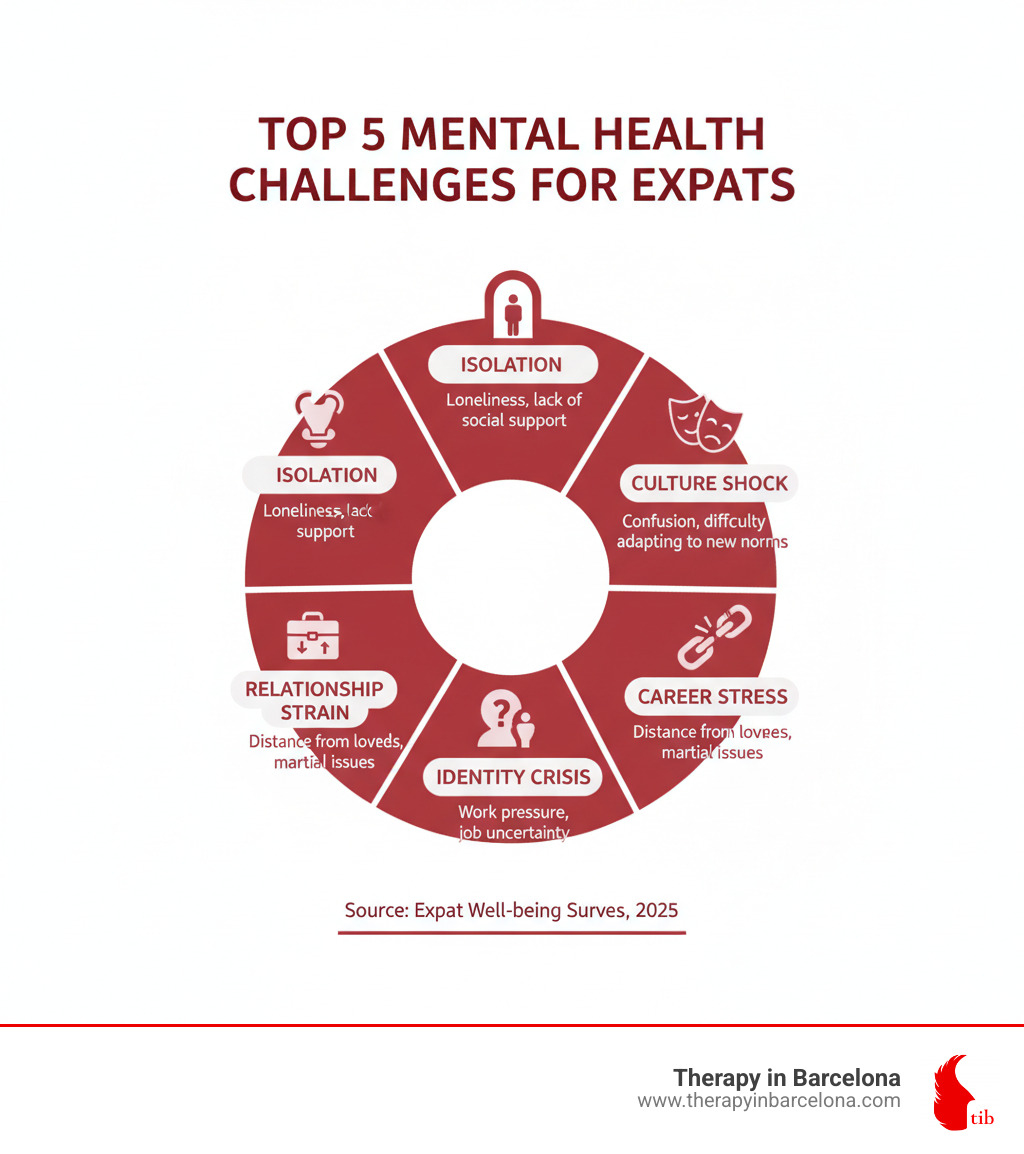
Living abroad looks beautiful on Instagram, but the reality often includes a unique set of mental health challenges. These struggles are real, common, and deserve to be talked about. Research shows a significant portion of expats report feeling more susceptible to mental health challenges, such as feeling overwhelmed or persistently down, due to cultural differences, isolation, and stress. A 2019 study highlighted that many expats feel at a higher risk of mental health issues than in their home country.
Culture shock isn’t just about late dinners; it’s the deep disorientation of constantly adapting to new social cues and systems, which can be exhausting, especially when dealing with bureaucracy in a new country like Spain.
Isolation and loneliness can be profound, even in busy cities like Madrid or Barcelona. You might be surrounded by people but lack the deep connections that create a sense of belonging.
Homesickness is a deep longing for the familiar—the ease of your own culture, the comfort of your native tongue, and the jokes that land without explanation.
An identity crisis is common when you’re living between worlds, questioning who you are and where you fit in. This is especially true for Third Culture Kids who grow up between cultures.
For trailing spouses, who move to support a partner’s career, the transition can be particularly tough. They often leave behind their own careers and support networks, leading to feelings of unfulfillment and loss of identity.
Career pressure and burnout are heightened by the demands of performing in a high-stakes role in a foreign environment.
Relationship strain often increases under the stress of a move, while cultural differences can cause misunderstandings with a partner, family back home, or new friends.
Take Sarah, a 35-year-old from the UK who moved to Málaga for a new job. Sarah is a fictional composite example created to illustrate common expat experiences, not a real client. Sarah found her days filled with demanding work, but her evenings were quiet. She missed the easy banter with friends and the feeling of simply ‘fitting in’. This unexpected loneliness, coupled with the constant effort of adapting, began to affect her mood and sleep, highlighting the deep need for understanding and support.
If you’re struggling with these feelings, you are not alone. Many resources are available to help you with these unique challenges. For more insights into staying well while abroad, you can explore guides like Expat Mental Health: Staying Sane Abroad.

Why Choose English-Speaking Therapy When Living Abroad?
When you’re trying to make sense of your life in a new country, the language you use in therapy matters. English speaking therapy isn’t just about convenience; it’s about expressing yourself fully, without the exhausting work of translating your feelings first. In many parts of Spain, there simply aren’t enough mental health professionals who can communicate effectively in English, let alone understand the expat experience.
The Power of Your Native Tongue in English speaking therapy
Your native language is wired into your emotions. In therapy, speaking it allows you to express yourself without the cognitive load of translating your thoughts. This is vital for exploring complex feelings or difficult past experiences. It helps build the therapeutic alliance—the trust between you and your therapist—which research consistently shows is a key factor in successful therapy outcomes. As one client said, “My therapist speaks perfect English… It was vital that she fully understands me.”
When you feel truly heard, not just understood in a general sense, that’s when change becomes possible. For more on why this matters, see The Benefits of Choosing English Speaking and Expat Professionals in Barcelona (Including English Speaking Therapists in Barcelona).
The Value of a Therapist Who is Also an Expat
Beyond language, working with a therapist who has lived the expat experience is powerful. They get it. They know what it’s like to feel out of place, to miss familiar foods, or to feel exhausted by bureaucracy that locals handle effortlessly. This shared experience means less time explaining and more time working on what brought you to therapy.
The story of Therapy in Barcelona’s founder, Leigh Matthews, illustrates this. An Australian Psychologist, in Barcelona since 2011 and experienced in supporting internationals, Leigh moved here and felt the gap in culturally attuned, English-speaking care. She founded Therapy in Barcelona to close that gap, building a team of qualified, English-speaking therapists—many of whom are expats themselves. This “by expats, for expats” approach ensures you receive care from professionals who genuinely empathise with your experience, whether you’re in Barcelona, Málaga, or Sevilla.
Navigating Your Options: Finding the Right Support Model
Finding the right support model is crucial when you’re seeking mental health care abroad. Therapy has become more flexible and accessible, which is especially helpful for those living far from home.

The Rise of Online Therapy for Expats
Online therapy has become a lifeline for the international community, solving many practical challenges.
- Global accessibility: Connect with a therapist from anywhere, whether you’re in a major hub like Madrid or a remote town like Gran Canaria. Your support doesn’t stop if you move.
- Proven effectiveness: Research consistently shows that for many people, online therapy is just as effective as in-person treatment for working through challenges like persistent low mood or feelings of worry.
- Convenience and flexibility: Schedule sessions around your work and time zone, without travel time.
- Privacy and discretion: Receive support from the comfort of your home, which is ideal for those in small, tight-knit expat communities.
To explore this option further, read more at The Expats’ Guide to Online Therapy: Bridging Distances, Building Connections.
Comparing Therapy Providers: A Practical Guide
Here’s how different services compare:
Large Online Platforms: Services like BetterHelp offer convenience and vast networks. However, the algorithm-based matching can feel impersonal, and data privacy can be a concern.
Public Health Systems: In countries like Spain, public options are low-cost. The trade-off is often long waiting lists, language barriers, and clinicians who may lack specific expertise in the expat experience.
Local Private Practices: In cities like Sevilla or Zaragoza, you might find skilled local therapists. The challenge is finding someone who is both fluent in English and truly understands the cultural context of your struggles.
Specialist Expat Practices: A group practice focused on internationals, like Therapy in Barcelona, offers a distinct advantage. The matching process is careful and thoughtful, connecting you with a psychology-trained expat therapist. These practices operate on a private-pay model, ensuring strict privacy and high-quality, customised care. The focus is on finding the right fit for you, not just the next available professional.
It’s therapy by expats, for expats, with a client-centred pathway to healing and personal growth.

How to Find and Choose the Right English-Speaking Therapist
Finding the right therapist is a personal journey. It’s about building a therapeutic alliance—a relationship based on trust and empathy. Research consistently shows this connection is one of the most important factors for a successful outcome in therapy. So how do you find someone who truly gets it?
What to Look For in a Therapist
- Qualifications and registration: Always verify a therapist’s credentials. Look for advanced degrees and proof of registration or licence. Reputable services are transparent about their team’s qualifications.
- Experience with expats: A therapist who is an expat or has extensive experience with them will grasp your challenges without lengthy explanations. This shared understanding allows you to dive into the real work faster.
- Therapeutic approach: Find a style that resonates with you, whether it’s Cognitive Behavioural Therapy (CBT), Psychodynamic therapy, or another approach. Therapy in Barcelona offers a wide range of modalities to ensure a good fit.
- The initial consultation: Use the free introductory call—often a Free Discovery Call—to gauge the connection. This is your chance to ask questions and see if it feels right. Trust your gut.
Here are some key questions to ask during that first conversation:
- What is your experience working with expats?
- What therapeutic approaches do you use, and how might they help with my concerns?
- How do you ensure client confidentiality and data security?
- What are your fees, and do you offer sliding scale options?
- What is your availability and scheduling policy?
If you don’t feel a good connection, it’s okay to continue your search. Finding the right fit is worth the time. For more guidance, visit Finding an English Speaking Therapist in Spain.
Understanding Cross-Border Regulations and Privacy
When engaging in online therapy, it’s important to understand regulations and privacy.
Therapist licensing and registration are complex across borders. A therapist is licensed where they practise, not necessarily where you live. Reputable practices are transparent about how they handle international service delivery. You can gain more insight by watching CRPO’s recorded webinar on cross-border electronic practice.
Confidentiality is paramount. Ensure any platform is secure and encrypted. For therapy in Europe, look for GDPR compliance. Reputable providers like Therapy in Barcelona commit to “strict privacy with no data selling.” Your therapist should be able to explain their security measures clearly. For more detail, consult Encrypted Emotions: Understanding Secure Online Therapy.
Frequently Asked Questions about English speaking therapy
What types of issues can I address in therapy as an expat?
Therapy can help with universal issues like feelings of worry, persistent low mood, and difficult past experiences, as well as challenges specific to expat life: cultural adjustment, loneliness, relationship strain, career stress, and identity questions. If something is weighing on you, it’s worth exploring in a confidential space.
Is online therapy as effective as meeting in person?
Yes. Extensive research confirms that for many people, online therapy is just as effective as in-person sessions for working through a range of challenges. For expats, it’s often more practical, offering greater accessibility, convenience, and privacy, especially if you live in an area with limited English-speaking services like Sevilla or Gran Canaria.
How does a personalised therapist matching process work?
Instead of assigning you to the next available person, a personalised process begins with a conversation, like a Free Discovery Call, to understand your needs. Based on this, you are carefully matched with a therapist on the team whose expertise and style are the best fit. This thoughtful approach increases the chance of a strong therapeutic connection from the start and is a core part of how we work.
Your Path to Feeling at Home, Wherever You Are
Living abroad is often more complex and isolating than you imagined. But you don’t have to go through it alone. Taking the first step to find support is a powerful move for your well-being. It’s about building a life that feels as good on the inside as it looks from the outside.
Finding a therapist who speaks your language and understands your world can make all the difference. When you work with someone who has walked a similar path, therapy becomes a place where you can be honest and heard without having to translate your emotions first.
English speaking therapy offers that connection. It’s about feeling grounded, understood, and empowered to build a life that feels truly fulfilling.
This is why Therapy in Barcelona was founded in 2011. Our group practice brings together highly qualified, psychology-trained therapists who collaborate to provide high-quality care. We work with adults, couples, teens and families. We speak English, and some of our therapists also speak German, French, Spanish, Afrikaans, Portuguese, Swedish, Austrian-German and Swiss-German.
We offer therapy in our Barcelona office on Calle Paris or online to clients worldwide.
If you’d like support, book a Free Discovery Call. It’s a simple, no-pressure way to see if we’re the right fit for you—and to take that first step towards feeling at home, wherever you are.
