


Why Counseling for International Students is Essential

Counseling for international students offers custom mental health support designed to help students studying abroad steer unique challenges like cultural adjustment, isolation, language barriers, and identity exploration.
If you’re looking for quick guidance, effective counseling for international students typically includes:
- Culturally Sensitive Therapists who understand different backgrounds
- Language Accessibility, allowing sessions in students’ mother tongues
- Confidential and Safe Spaces to build trust and privacy
- Proactive Approaches, such as workshops, group sessions, and skill-building
- Accessible Services, including online therapy (teletherapy or telehealth)
Whether you’re experiencing homesickness, anxiety, loneliness, or stress, counseling can offer meaningful support to improve your emotional and academic well-being while abroad.
Moving abroad is exciting—but it can also be really difficult. International students like Emily—a 34-year-old British expat fictionalised from the experiences of many internationals—often find themselves confronting unexpected feelings of loneliness and anxiety upon entering a completely new environment. These struggles are common, understandable, and importantly: support is available.
In this guide, you’ll learn how counseling can make a difference, helping international students thrive emotionally and academically, no matter how far from home they may be.

Understanding the Unique Challenges Faced by International Students
Moving abroad to study is an trip filled with excitement and possibilities. Yet it also introduces international students to a unique set of challenges that can deeply impact mental health, emotional well-being, and academic success. Domestic students often take certain comforts for granted, but for international students, adjusting to life abroad means navigating through unfamiliar terrain—culturally, socially, linguistically, and academically.
One of the first problems many international students encounter is culture shock. It’s that unsettling feeling when everything around you seems different, from social norms to the taste of food, even the rhythm of daily life. These cultural differences can make it challenging to build connections or feel at home. As one international student shared in a research interview, “In my culture, mental health is not something we openly talk about or seek help for. It would be helpful if counsellors could consider these differences and not assume that all clients have the same beliefs and attitudes toward mental health.”
Beyond cultural differences, language barriers can pose significant difficulties, even for students who have strong English skills. Expressing complex emotions or subtle nuances in a second language is not easy. One student described this frustration simply: “It’s hard to express myself in English, and sometimes I feel like I’m not being understood.” This struggle can lead to feelings of isolation and stress, making daily interactions and classroom participation particularly daunting.
Adding another layer of challenge is the immense academic pressure international students often feel. Adjusting to new educational systems, unfamiliar teaching styles, and different expectations can be overwhelming. Moreover, many students carry a heavy emotional responsibility—they feel pressure to succeed, not just for their own goals, but also to honour the sacrifices their families might have made to support their studies overseas. This pressure can amplify stress and anxiety, making it harder to perform academically.
The Emotional Impact of Studying Abroad

Studying abroad isn’t just about exploring new places; it also involves navigating profound emotional shifts. Homesickness is incredibly common among international students, often appearing as a deep yearning for familiar comforts—favourite foods, everyday routines, and, most importantly, loved ones back home. The longing for connection can feel intense, especially during the initial months of adapting to a new country.
Perhaps unexpectedly, studying abroad can also prompt significant identity exploration. Removed from familiar surroundings, students often begin reflecting deeply on their personal values, beliefs, and identity. Questions like “Who am I?” and “Where do I fit in?” can arise more frequently, leading to growth and self-findy—but also moments of confusion and uncertainty.
Closely tied to this is the widespread experience of loneliness. Even surrounded by people, international students may still feel alone—a phenomenon described by one student as “feeling invisible in a crowded room.” Indeed, studies show international students often report higher levels of loneliness than their domestic peers. Over time, this loneliness can take a toll, impacting mental well-being significantly.
When all these emotional challenges accumulate, mental health can begin to suffer. Researchers have found that international students are more vulnerable to mental health issues due to the stresses of adapting culturally, yet they remain less likely to seek professional help.
Mental Health Needs of International Students
International students frequently grapple with feelings of anxiety, depression, and persistent stress. The combination of navigating a new language, adjusting to different customs, and managing academic expectations creates a fertile ground for mental health struggles.
Anxiety is common, manifesting as worries about academic performance, fitting in socially, or simply handling everyday interactions in a new culture. Depression often emerges from persistent loneliness, isolation, or the sense of loss felt when distanced from familiar support networks. Stress can become an ever-present companion, especially if students feel overwhelmed and unsure about accessing help.
The unique mental health needs of international students make culturally sensitive support essential. Traditional Western therapeutic approaches might not always resonate with students from non-Western cultures. As one international student pointed out, “I felt like my psychologist didn’t understand the cultural nuances and just gave me generic advice that didn’t really help me.” Similarly, a university counselling manager noted, “Some students come from cultures where talking about mental health is seen as taboo. Mental health professionals need to be sensitive to this and find ways to make mental health support more culturally acceptable and accessible.”
That’s why having access to culturally aware, multilingual support can make a substantial difference. At Therapy in Barcelona, we offer specialised counseling for international students custom to each individual’s cultural background, language, and personal needs. Whether through in-person sessions in Barcelona or online therapy accessible throughout Spain and beyond, our team of compassionate, psychology-trained therapists—many of whom have their own expat experiences—are here to help students thrive emotionally and academically abroad.
The Importance of Culturally Sensitive Counseling
When it comes to supporting international students, one size definitely doesn’t fit all. Culturally sensitive counseling recognizes that mental health concepts and effective interventions vary widely across different cultures and backgrounds. What helps a student from one cultural background might be completely ineffective—or even harmful—for someone from another.

Research consistently shows that international students are much more likely to continue with counseling when they feel their cultural background is understood and respected. As Elizabeth J. Jacob, an expert in counseling education, emphasizes:
“Counselor educators need to provide awareness and knowledge about the issues faced by international students within graduate coursework and training models.”
Cultural differences profoundly impact how mental health is perceived and expressed. For instance, in some cultures, psychological distress manifests primarily through physical symptoms rather than emotional language. In others, seeking help outside the family circle might be viewed as bringing shame to loved ones.
The taboos around mental health remain powerful in many societies. One international student shared this perspective: “In my culture, recovery from mental health does not mean that you are problem-free. Also, the emphasis is not just on the individual but also on the family and community.”
Developing Multicultural Self-Awareness in Counselors
Before counselors can effectively help students from diverse backgrounds, they must first understand their own cultural biases and assumptions. This multicultural self-awareness forms the foundation of effective counseling for international students.
Modern counselor training increasingly emphasizes cultural competence as essential, not optional. As one practitioner noted, “Professionals need to be equipped with knowledge of cultural differences to provide effective mental health services to international students.”
Cultural empathy goes deeper than traditional empathy—it incorporates understanding different worldviews and cultural contexts. Researchers Chung and Bemak highlight this beautifully: “Counselors need to expand their idea of empathy beyond the mainstream culture in the United States.”
An inclusive therapeutic approach recognizes that mental health support must address the whole person, including their cultural identity. This means acknowledging that international students’ mental health challenges are often intertwined with their experiences of cultural adjustment, discrimination, and isolation—not separate from them.
Counseling for International Students: Overcoming Cultural Barriers
Language accessibility stands as perhaps the most fundamental barrier to effective counseling. While many international students speak English, they often struggle to express complex emotions in a non-native language. As one student eloquently put it: “My counselor’s empathy made me feel heard and validated. It helped me open up and trust her.”
Trust-building takes time and requires genuine cultural sensitivity. Some international students come from contexts where mental health professionals aren’t trusted or where sharing personal problems with strangers is actively discouraged. Recognizing this reality is crucial for establishing an effective therapeutic relationship.
Stigma reduction requires thoughtful, proactive approaches. Yi and colleagues noted in their 2003 research: “It is more culturally acceptable to seek help in improving their grades or choosing an esteemed career than to seek personal counseling for anxiety or depression.” This insight suggests that framing counseling as academic support may reduce stigma for some students, creating a more accessible entry point.
Proactive outreach is essential since many international students won’t seek help until problems become severe. One student shared this important perspective: “Many international students tend to wait until their problems become unmanageable before seeking support. More ways are needed to encourage them to seek help earlier on before problems escalate.”
At Therapy in Barcelona, we understand these unique challenges. Our team includes therapists who are expats themselves and understand the complexities of navigating mental health while living abroad. This experience allows us to provide truly culturally sensitive counseling that acknowledges the whole person—their cultural background, unique challenges, and individual needs.
Effective Counseling Strategies for International Students

Let’s face it—studying abroad is exciting but can also come with some tough emotional problems. At Therapy in Barcelona, we’ve learned from experience that effective counseling for international students means recognising and adapting to each student’s unique blend of cultural background, personality, and personal experiences. There’s no one-size-fits-all solution; instead, counseling should always reflect sensitivity, flexibility, and genuine human connection.
One key way to provide effective support is through preventive strategies. Why wait for issues to snowball when we can address them early on? Orientation programmes, stress management workshops, and group sessions on cultural adjustment are powerful proactive tools. By offering these supports early in a student’s journey, we help build resilience and equip them with the skills to thrive, no matter what challenges come their way.
Another essential ingredient is providing genuinely individualised support. Every international student has their own story—different origins, language skills, past experiences abroad, and unique ways of coping with change. Acknowledging these differences through early assessments allows counselors to understand students deeply from the start. As one faculty member from a recent study pointed out, “Early assessments allow us to recognise the individuality of each student, plan accordingly, and provide more effective and inclusive mental health support from the beginning.”
Early assessment and structured planning are paramount. It’s common for students to feel uncertain about what support will look like in practice. One international student voiced this clearly, saying, “It’s important to have a plan. Sometimes I felt professionals didn’t have one.” At Therapy in Barcelona, we ensure each student has clarity about the support they’ll receive, along with structured assessment and treatment planning that helps address concerns before they escalate.
Counseling for International Students: Tailoring Therapeutic Techniques
Culturally appropriate interventions are crucial. For instance, students from collectivity-oriented cultures often prefer therapeutic approaches that include their family or community contexts instead of solely focusing on individual well-being. Our therapists always keep these cultural contexts in mind, adapting their interventions accordingly.
Individualised treatment plans are fundamental at Therapy in Barcelona. One student we spoke to mentioned frustration over repeatedly being offered the same type of counseling. “Every time I went to the support centre, they recommended individual counseling as if they had no other options.” At our practice, we are committed to providing a range of custom options, ensuring that each student receives the precise support they need.
Flexibility is also key. Students’ emotional needs can shift over time—what worked at the beginning of their studies might not be helpful months later. Our therapists are trained to be agile, adjusting their therapeutic approaches based on students’ evolving needs and feedback.
At Therapy in Barcelona, we practise what we preach. All our therapists are expats too, bringing a deep empathy and understanding of international students’ struggles. We offer various therapeutic approaches, including Cognitive Behavioural Therapy (CBT), Acceptance and Commitment Therapy (ACT), and many more, adapting each to suit every student’s unique needs and cultural background.
If you’re an international student finding the adjustment abroad challenging, know that you’re not alone. Whether you’re in Barcelona or anywhere else in Spain, we’re here to help you thrive emotionally and academically. Ready to take the first step? Learn more about our Therapy Services for Internationals today.
Overcoming Barriers to Accessing Mental Health Services
Studying abroad comes with countless opportunities for growth and trip, but it can also bring challenges—particularly when it comes to reaching out for help. Even though most universities offer mental health support, international students often face obstacles that prevent them from seeking the care they need. Understanding these barriers is the first step towards making support accessible and effective for everyone.
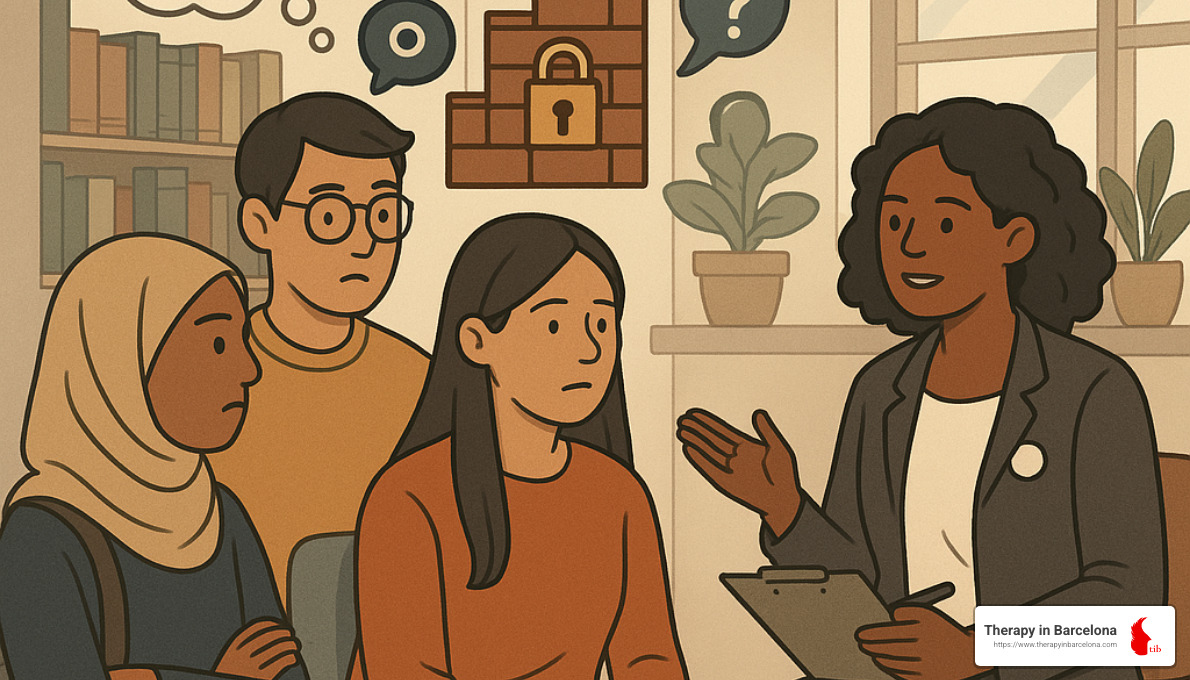
One of the biggest problems is stigma. In many cultures, seeking mental health support is still mistakenly seen as a sign of weakness, causing international students to hesitate in reaching out. They worry about judgement from their peers or disappointing family back home. Often, this means problems escalate before students feel comfortable to seek support.
Another significant concern is confidentiality. International students often express anxiety about privacy, fearing their personal issues might become known within their social circles or academic departments. One student shared, “I felt uncomfortable about others seeing me in the counselling waiting room. I worried that people would judge me or that my professors would find out.” Such worries can make students reluctant to use available services.
Additionally, there are multiple layers of accessibility issues. These go beyond simply navigating a university campus and extend to cultural, linguistic, and even financial barriers. Services primarily geared towards domestic students might not adequately address the distinct experiences or needs of international students. Without culturally informed support, students can feel misunderstood or unwelcome.
Ensuring Confidentiality and Privacy
For students to feel comfortable seeking mental health help, guarantee privacy and confidentiality. This begins with practical steps, like creating secure counselling spaces. A welcoming, discreet waiting area and comfortable therapy rooms can greatly improve a student’s sense of security. One international student described an experience where the waiting area was visible to other students passing by: “I just didn’t feel safe or relaxed knowing people could see me.”
Building trust is equally important. Students must feel assured that their conversations are completely confidential. Clear communication from counsellors and staff about privacy policies helps students feel safe to talk openly. A private setting—where students know their disclosures won’t leave the room—makes all the difference in encouraging genuine engagement with the therapeutic process.
At Therapy in Barcelona, privacy and confidentiality are at the heart of our practice. Our comfortable offices, located in the welcoming Eixample neighbourhood of Barcelona, provide discreet and secure environments. Here, students can explore their thoughts and feelings openly, knowing their privacy is respected and that their information remains strictly confidential.
Addressing Language and Communication Barriers
Language can be one of the most challenging barriers for international students seeking mental health support. Even if students speak the local language well, expressing complex emotions and thoughts in a second language can be incredibly difficult. As one student explained, “I speak good English, but when it comes to emotions and deeper thoughts, I feel stuck—I just can’t express myself fully.”
That’s why providing access to multilingual therapists is crucial. Being able to communicate in one’s mother tongue can dramatically improve the effectiveness of counselling. It allows students to articulate their feelings more clearly, feel genuinely understood, and engage more deeply with the therapeutic process.
Even when therapy must occur in English or another secondary language, therapists can adapt communication styles to match the student’s language proficiency. This often involves slowing down, using simpler language, or incorporating visual aids to improve understanding.
At Therapy in Barcelona, we deeply understand the importance of language. Our team includes multilingual therapists who can offer counselling in various languages, helping international students feel genuinely heard and understood in their sessions.
Whether you’re dealing with homesickness, anxiety, or just the challenges of adapting to life abroad, overcoming these barriers opens the door to meaningful support. By making small yet impactful changes—like prioritising confidentiality, creating welcoming spaces, and offering multilingual support—mental health services can become more accessible to international students.
Feeling ready to seek support? Learn more about our culturally sensitive, multilingual Therapy Services for Internationals today.
The Role of Faculty and Academic Staff
Faculty and academic staff have an essential part to play in supporting the mental health of international students. Because they regularly interact with students in both academic and informal settings, they are perfectly positioned to notice when students might be facing emotional or psychological struggles.
From creating inclusive classrooms to recognising early signs of distress, faculty involvement can significantly improve students’ well-being. A manager at a university counseling centre recently remarked, “Faculty involvement in mental health support delivery is limited. However, involvement would improve the impact of mental health services on students.” Indeed, when professors and lecturers cultivate supportive environments, students feel safer reaching out and asking for help.
Early assessments conducted by academic advisors can also make a major difference. By proactively checking in with students, advisors can identify those who may be at risk of academic or emotional difficulties. These early interventions should always be culturally sensitive, honouring the diverse backgrounds and experiences that international students bring with them. When assessments take into account students’ unique strengths and potential challenges, they set the stage for personalised guidance and effective support.
Collaboration between academic staff and counseling services creates a robust support network. One faculty member highlighted this point clearly: “Having faculty involvement in the training and supervision is crucial for developing multicultural competence in future mental health staff.” By actively bridging the gap between academic departments and counseling resources, faculty members help ensure no student falls through the cracks.
To equip faculty with the skills they need, training and supervision are key. Workshops on recognising psychological distress, understanding cultural differences, and effective referral practices can empower professors and staff to confidently step into their supportive roles. When faculty have the tools and knowledge to respond sensitively and appropriately, they become powerful advocates for students’ well-being.
As one educator aptly put it, “Faculty members can contribute significantly to creating a supportive environment for international students.” When professors, lecturers, and advisors become active participants in promoting mental health, they create a campus culture where international students feel welcomed, understood, and genuinely supported.

Frequently Asked Questions about Counseling for International Students
How can international students access counseling services?
Accessing counseling for international students is simpler and more comfortable than many students realise. Most universities offer dedicated counseling services custom specifically for the international community. You can usually get started by visiting your university’s counseling centre or international student office, where staff are familiar with the unique challenges you might be facing.
If you prefer support outside your university, specialised private counseling practices like Therapy in Barcelona provide culturally sensitive and multilingual therapy options designed for expats and international students. Our therapists are expats themselves, bringing warmth, empathy, and a deep understanding of your experiences abroad. We offer flexible scheduling and personalised therapist matching, making it easier to find the right support for your individual needs.
For students looking for extra convenience and privacy, online therapy (also known as teletherapy or telehealth) has become a highly popular and effective option, especially following the COVID-19 pandemic. Online counseling gives you the freedom to connect with your therapist from the comfort and privacy of your own home or wherever you feel most at ease. This flexibility can be especially beneficial if your schedule is busy or if you’re looking for therapists who speak your native language.
The process to begin counseling is usually straightforward. You can schedule your first appointment online, by phone, or in person. At Therapy in Barcelona, we offer a free initial consultation—a friendly chat—to ensure we match you with a therapist who best aligns with your goals and preferences. Ready to explore counseling options? Visit our page on Therapy Services for Internationals to learn more.
Is counseling confidential for international students?
Absolutely! Confidentiality is one of the core foundations of counseling for international students (and everyone else, for that matter). When you meet with a counselor, you can trust that what you share stays strictly between you and your therapist. Mental health professionals are ethically and legally obliged to protect your privacy. This means they cannot disclose any information about you, your sessions, or your specific concerns without your explicit consent.
There are only very rare exceptions: situations where there may be an immediate risk of harm to you or someone else. Even in these exceptional cases, your counselor will always discuss confidentiality openly with you during your initial session, ensuring you fully understand how your information is protected.
If confidentiality is a concern for you, always ask your therapist directly about their confidentiality policy. At Therapy in Barcelona, we prioritise creating secure, private, and comfortable spaces—both physically in our office in Barcelona’s Eixample district and virtually through our online therapy platform—so you can talk openly without fear or anxiety.
Does online therapy for international students work?
Yes—online therapy can be incredibly effective for international students! In fact, research consistently shows that online counseling is just as impactful as face-to-face therapy for common concerns like anxiety, depression, loneliness, cultural adjustment, stress, and more.
Many international students find online therapy particularly appealing because it bridges language and cultural barriers, allowing them to choose therapists who speak their native language and understand their cultural background, regardless of geographic distance. You can access your session from wherever feels safest and most comfortable for you—no need to worry about being spotted at a counseling centre!
Of course, every student has different needs. While online therapy suits many, some students may prefer in-person contact, especially if they have severe emotional or mental health concerns or simply prefer face-to-face interaction.
At Therapy in Barcelona, we provide both online and in-person therapy sessions. Our online sessions are designed with the same personalised and culturally sensitive care you receive in-person, making quality mental health support accessible wherever you are. Many of our international student clients find online counseling ideal for navigating busy schedules and maintaining privacy. No matter your preference, we’re here to offer support that fits your lifestyle and comfort level.
Conclusion
The journey of studying abroad brings both incredible rewards and unique challenges. International students face a complex blend of obstacles—from navigating culture shock and language barriers to managing intense academic pressure and feelings of loneliness. Yet with the right support, these challenges can become opportunities for profound personal growth.
Counseling for international students works best when it accepts cultural sensitivity, accessibility, and personalization. When counselors understand and respect students’ cultural backgrounds while addressing their specific challenges, they create a foundation for students to not just survive their time abroad, but to truly flourish.
What makes counseling truly effective for international students? It comes down to several key elements working together:
First, cultural sensitivity from counselors who understand the nuances of different backgrounds and worldviews. This isn’t just about awareness—it’s about genuine empathy and respect for how culture shapes our experience of the world.
Second, accessible services that break down barriers—whether they’re related to language, cultural understanding, or practical concerns like scheduling and location. When services feel welcoming and approachable, students are more likely to reach out before problems escalate.
The most effective support also includes preventive approaches that offer guidance and resources before challenges become overwhelming. This might mean orientation programs, workshops, or group sessions that build resilience and coping skills from day one.
Creating confidential, safe spaces where students feel comfortable sharing their concerns without judgment is absolutely essential. Many international students worry about privacy and stigma, making trust-building a crucial element of effective counseling.
Finally, successful support systems involve collaboration between counseling services and academic staff, creating a network of care that addresses both emotional well-being and academic success.
At Therapy in Barcelona, we deeply understand the unique challenges faced by international students. Our team includes multilingual, culturally sensitive therapists—many of whom have lived the expat experience themselves. This understanding allows us to provide truly personalized support that acknowledges the complexities of studying abroad.
Whether you’re struggling with homesickness that leaves you feeling adrift, academic pressure that seems overwhelming, cultural adjustment that feels isolating, or any other aspect of international student life, we’re here to help. Our approach blends evidence-based therapeutic techniques with a warm, genuine understanding of what it means to build a life in a new country.
We create a supportive environment where you can explore your concerns, develop practical coping strategies, and cultivate the resilience you need to make the most of your international experience.
Ready to find support? Learn more about our Therapy Services for Internationals
Seeking help isn’t a sign of weakness—it’s a powerful step toward creating a fulfilling international education experience. By reaching out for support, you’re investing not just in your academic success, but in your personal wellbeing and growth during this transformative time in your life.
