


Why Gran Canaria Has Become a Digital Nomad Hub

The Gran Canaria digital nomad scene has grown rapidly. If you’re thinking of joining the remote workers who call this island home, you’re probably wondering what life is really like beyond the beach photos.
Quick Answer: What Makes Gran Canaria Ideal for Digital Nomads?
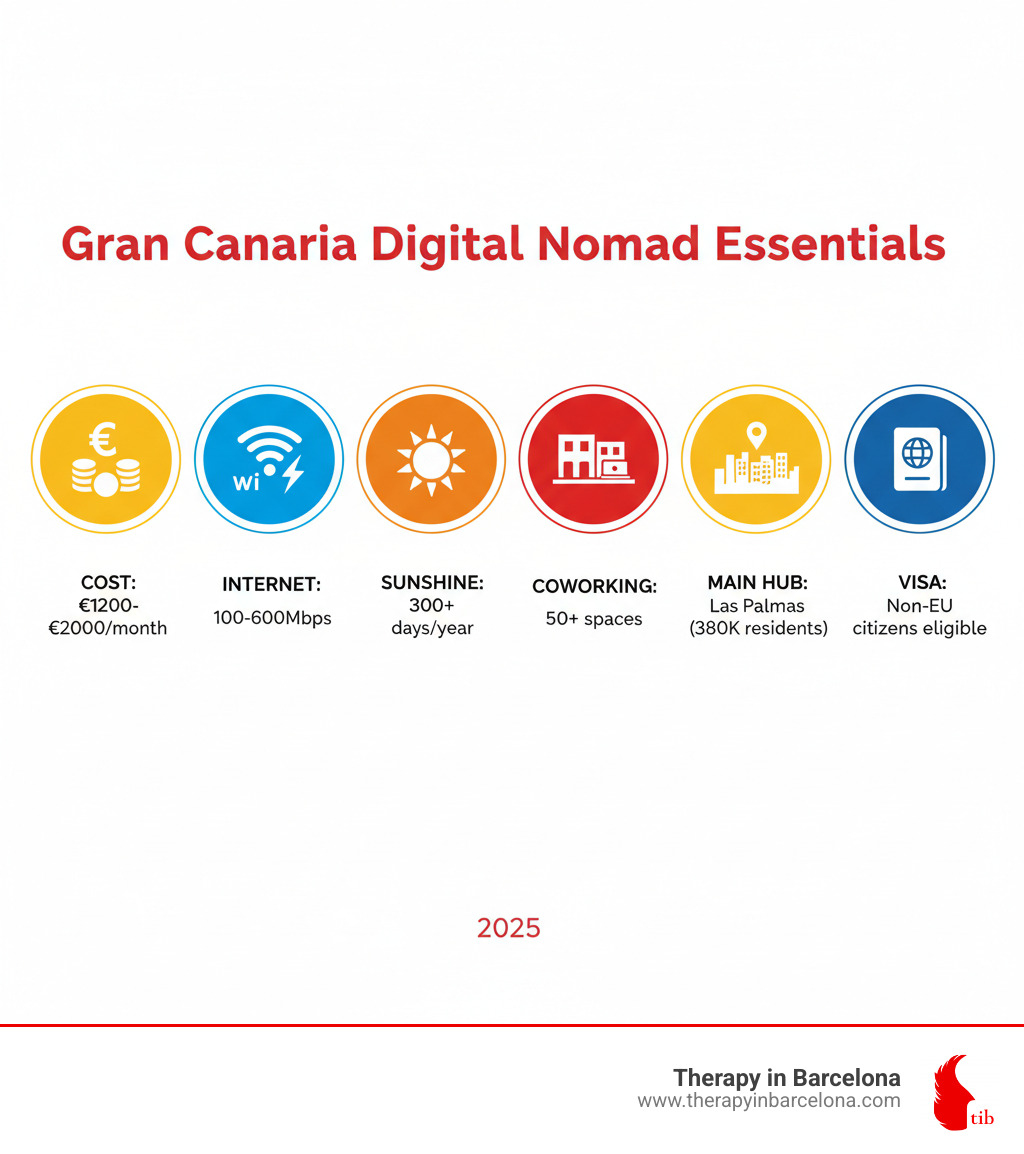
- Climate: 300+ days of sunshine, with year-round temperatures around 20-26°C.
- Cost: More affordable than most European cities (€600-€1500/month for accommodation).
- Internet: Fibre optic speeds often exceed 120Mbps.
- Community: A 4000+ member Facebook group, regular meetups, and the annual Nomad City Festival.
- Infrastructure: Over 50 coworking spaces and an international airport connected to 109 destinations.
- Lifestyle: A mix of city life in Las Palmas, nature, and Canarian culture.
I spent two months in Las Palmas to understand its appeal. It wasn’t just another sunny spot with good WiFi; it was a place for a functional life, complete with grocery runs, beachside coworking, and weekend hikes to Roque Nublo. But it also came with unexpected challenges: bureaucracy, the “siesta” schedule, and the emotional weight of building a life somewhere new.
This guide offers an honest look at what being a Gran Canaria digital nomad involves. We’ll cover the practicals—visas, costs, internet—and the deeper questions about community, loneliness, and mental health. Whether you’re planning a short trip or a long-term move, you’ll get a clear picture of what to expect.
The Allure: Why Remote Workers Choose Gran Canaria

There’s a reason Gran Canaria digital nomad groups keep growing. The island offers a rare combination of a place to live, not just visit, while working remotely.
The year-round climate is a major draw. With over 300 days of sunshine and temperatures between 20-26°C, it lives up to its “island of eternal spring” nickname. This consistent warmth makes outdoor work and weekend hikes possible all year.
The cost of living is another advantage. While not the cheapest destination, it’s more affordable than London, Amsterdam, or Barcelona. Your money goes further, allowing for a better quality of life and making long-term stays feasible.
Connectivity is excellent. The international airport links to over 109 destinations, and fibre optic internet with speeds over 120Mbps is common, ensuring a reliable connection for work.
The community is what keeps many nomads here long-term. Las Palmas has a large remote worker community, with the Digital Nomads Gran Canaria Facebook group boasting over 4,000 members. Regular meetups and the annual Nomad City Festival make it easy to connect with others.
Finally, the lifestyle and nature are unparalleled. Known as a “miniature continent,” the island has diverse landscapes, from the sand dunes of Maspalomas to lush northern forests. This variety makes it easy to disconnect from work and enjoy your surroundings.
Compared to other Spanish hubs like Madrid, Barcelona, or Valencia, Gran Canaria offers a unique island pace. Its sub-tropical climate and compact size create a hard-to-find blend of affordability, sunshine, community, and nature.
Your Island Office: Internet, Coworking, and Cafes
For any Gran Canaria digital nomad, a solid internet connection is essential. The island’s infrastructure is well-equipped for remote work.
Internet and Connectivity
Fibre optic broadband is widely available, especially in Las Palmas, with speeds often exceeding 120Mbps. 4G covers most of the island, with 5G rolling out in urban areas, so you can stay connected even from a beach or mountain village. For a local SIM, Yoigo and Mundo are popular prepaid options; just remember to bring your passport. While EU roaming works, a local SIM is better value for longer stays.
Where to Work: Coworking and Cafes
Gran Canaria has a strong network of workspaces for when you want a change of scenery from your apartment.
Coworking spaces are plentiful, with around 50 on the island. Many focus on community, which is great for newcomers. Popular choices include Repeople with its multiple locations, the seaside Beach House, and the calmer creative hub Talleres Palermo. Other options like The House, Soppa de Azul, and GoCoworking each have a unique vibe.
Laptop-friendly cafes provide a more casual setting. Un Lugar Café is a well-known remote worker spot in Las Palmas, so arrive early to get a seat. LUWAK is another good choice, and the Starbucks in Playa de las Meloneras offers ocean views. When working from a cafe, remember the unwritten rule: make regular purchases and be mindful of space during busy hours.
Finding Your Base: Best Areas and Accommodation for a Gran Canaria Digital Nomad
Where you live on Gran Canaria will shape your experience. The island offers remarkable diversity, from buzzing city life to quiet mountain villages.
Choosing the Right Neighbourhood
- Las Palmas de Gran Canaria: The main hub for most Gran Canaria digital nomads. It has the best amenities, the largest community, and Las Canteras beach.
- Maspalomas: Located in the south, this area is for beach lovers. It’s more touristy and expensive but offers guaranteed sunshine and famous dunes.
- Agaete: For a quieter, more authentic experience in the north-west. It’s surrounded by dramatic landscapes and is Europe’s only coffee-growing region.
- Teror: A historic mountain town ideal for hikers and those seeking cooler temperatures and traditional Canarian architecture.
- Puerto de Mogán: Known as the “Venice of the Canaries,” this picturesque fishing village is beautiful and relaxed but can feel touristy and isolated from the main nomad scene.
Accommodation Options for Every Budget
- Coliving Spaces: Popular for instant community. Options like Repeople, Ecoisleta, and Coliving 1907 combine accommodation with workspaces and social events.
- Private Rentals: For short stays, Airbnb and Flatio are useful. For longer-term rentals, local sites like Idealista offer better deals. Be prepared to contact landlords directly and negotiate rates.
- Hotels and Aparthotels: The easiest option for short, hassle-free stays. Some, like Cordial Hotels & Resorts, cater specifically to remote workers with properties like Apartments Cordial Mogán Valle.
A full apartment typically costs €600 to €1500 per month. Utilities are reasonable, with electricity, internet, and water for a two-bedroom flat averaging around €105 per month.
The Practical Side: Budget, Visas, and Getting Around
Understanding the practicalities is key to settling in as a Gran Canaria digital nomad. Here’s a look at costs, paperwork, and getting around.
Estimated Cost of Living
Gran Canaria is more affordable than many mainland European cities. A comfortable monthly budget for a single nomad is €1200 to €2000.
- Accommodation: Your biggest expense, with private apartments from €600 to €1500 per month.
- Food: Groceries are reasonably priced. A meal at a local restaurant costs €10 to €15, while a coffee is just €1 to €1.50.
- Transportation: Public buses are cheap, with a “bono guagua” card making trips in Las Palmas around €0.85. Fuel is about €1.27 per litre.
- Leisure: A gym membership is €30 to €50 monthly, and surf lessons are €35 to €50. Hiking is free.
Visa Requirements
- EU citizens: Can live and work in Gran Canaria without a visa. For stays over 90 days, getting an NIE number (foreigner identification number) is recommended.
- Non-EU citizens: Options include:
- Schengen Visa: Allows stays up to 90 days in a 180-day period, ideal for short trips.
- Digital Nomad Visa: For qualified professionals working remotely for foreign companies. Requires proof of income and private health insurance.
- Non-Lucrative Visa: For those with sufficient savings or passive income who won’t work in Spain.
- Self-Employment Work Visa: For freelancers or entrepreneurs wanting to work with Spanish clients.
Important note: Visa rules change. Always check with the Spanish Ministry of Foreign Affairs or your local consulate before your trip.
Transportation on the Island
- Public buses (“guaguas”): The cheapest and most extensive option, connecting most towns and tourist areas.
- Car rental: Essential for exploring remote areas. Companies like Cicar offer affordable rates, from €19 to €30 daily.
- Taxis: Good for short distances. Ride-sharing apps like Uber are not available.
Mixing transport is a practical approach: use buses for daily life and rent a car for weekend adventures.
Life Beyond the Laptop: Community, Culture, and Well-being

Being a Gran Canaria digital nomad is about more than work. It’s about the friendships you build, the culture you experience, and how you care for yourself when the novelty fades.
Connecting and Exploring
The island has a thriving remote worker community. The Digital Nomads Gran Canaria Facebook group and platforms like Live It Up, Las Palmas are great for finding events and advice. Beyond the nomad bubble, accept Canarian culture by trying local dishes like papas arrugadas con mojo at authentic spots like Restaurante Tasca Galileo. The international food scene is also excellent, with everything from Korean at Kim’s Pojangmacha to Italian at Delizia Pizzeria Italiana.
The island is a natural playground. Hike to Roque Nublo, explore the Dunes of Maspalomas, or visit charming villages like Puerto de Mogán and Teror. Don’t miss the Carnival of Las Palmas if you’re here in February. While other Spanish hubs like Valencia or Málaga have their own appeal, Gran Canaria’s unique island setting stands out.
The Hidden Challenges of Nomad Life
Life as a nomad isn’t always perfect. Be prepared for:
- Cultural Adjustment: The slower pace and siesta lifestyle can be frustrating at first.
- Language: While English is common in tourist areas, learning some Spanish is essential for daily life.
- Bureaucracy: Spanish paperwork is notoriously slow. Patience is a must.
- Loneliness: Even in a busy community, it’s easy to feel isolated far from home.
- Work-Life Balance: It’s hard to switch off when paradise is your office.
- Local Tensions: Rising rental prices have caused some friction. Be a respectful guest.
- Parcel Deliveries: Getting packages from abroad can be surprisingly complicated.
Prioritising Your Mental Health
The pressures of nomad life can take a toll. Recognising signs of burnout or anxiety is the first step. While Spain’s public healthcare system, large online platforms, and local practices offer support, finding a therapist who understands the expat experience can be difficult.
Therapy in Barcelona specialises in this. We offer online therapy for nomads in Gran Canaria, Valencia, and across Spain. Our team of psychology-trained therapists are expats themselves, so we understand the unique challenges of adjusting to a new country. Our approach is personalised; we take the time to match you with a therapist who fits your needs, improving the chances of a positive outcome. We offer therapy in English and several other languages.
As a private-pay service, we provide a high-quality, confidential experience and never sell your data. Founded by Australian Psychologist Leigh Matthews, our practice has been a trusted resource for internationals in Spain since 2011.
If you’d like support, book a Free Discovery Call with a therapist who understands. We offer online therapy worldwide, including USA and Canada.
Frequently Asked Questions about the Gran Canaria Digital Nomad Experience
What is the best time of year for a Gran Canaria digital nomad?
While the weather is good year-round, the best times are late spring (April-June) and early autumn (September-November). These shoulder seasons offer ideal temperatures with fewer crowds and lower prices than the peak summer and winter months.
How safe is Gran Canaria for remote workers?
Gran Canaria is generally very safe, with low crime rates. As you would anywhere, take standard precautions against petty theft in busy tourist areas, but violent crime is rare. Safety is one of the key reasons many nomads feel comfortable staying long-term.
What are the biggest challenges for a digital nomad in Gran Canaria?
The main challenges for a Gran Canaria digital nomad include practical frustrations. Receiving international parcels can be difficult due to customs. Rising rental costs, especially in Las Palmas, have created some local tensions. And finally, slow Spanish bureaucracy requires a great deal of patience.
Conclusion
Gran Canaria offers a rare mix of sunshine, community, and infrastructure that makes the Gran Canaria digital nomad dream a reality. The lifestyle is rewarding, but it comes with challenges like bureaucracy, loneliness, and the pressure to balance work and life.
Adjusting to life abroad is complex, and it’s okay to need support. While options like Spain’s public healthcare system or large online platforms exist, they may not fully grasp the expat experience.
At Therapy in Barcelona, we specialise in supporting internationals. Our psychology-trained therapists are expats who understand the challenges of living abroad because we’ve been there. Founded in 2011 by Australian Psychologist Leigh Matthews, we offer a personalised, high-quality service. We carefully match you with the right therapist and provide culturally sensitive care in English and other languages. Your privacy is our priority, and we never sell your data.
If you’d like support, book a Free Discovery Call with a therapist who understands. We offer online therapy worldwide, including the USA and Canada.
