


Why EMDR Therapy in English Matters for Expats in Spain

EMDR therapy is an evidence-based treatment that helps people process traumatic memories and distressing experiences by using bilateral stimulation—typically eye movements, taps, or tones—while recalling difficult events. Here’s what you need to know:
- What it stands for: Eye Movement Desensitisation and Reprocessing (EMDR)
- Who it helps: People dealing with PTSD, anxiety, depression, phobias, and unresolved trauma
- How it works: Helps the brain reprocess “stuck” memories so they lose their emotional intensity
- Session length: Often 6-12 sessions, usually 50-90 minutes each
- Recognition: Recommended by the World Health Organization, and recognised by major clinical bodies (including the American Psychiatric Association and the U.S. Department of Veterans Affairs)
- Availability in Spain: Available online internationally, and in-person in cities like Barcelona with properly trained, qualified therapists (including options like Therapy in Barcelona)
You’ve built a new life in Spain—perhaps in Barcelona, Madrid, or Málaga. You’ve steered visa paperwork, learned to order coffee in Spanish, and found your favourite local haunts. But some things from your past still feel heavy. Maybe it’s a traumatic event you thought you’d got over. Maybe it’s anxiety that flares up without warning, or a persistent feeling that you’re not quite yourself anymore.
Moving abroad can bring these struggles into sharper focus. When you’re far from home, old wounds can surface in unexpected ways. The isolation of expat life, the pressure to “make it work,” and the distance from familiar support systems can make unprocessed memories feel even more overwhelming.
EMDR therapy offers a different approach. It’s not about talking through your trauma for years. It’s about helping your brain finish processing what it couldn’t at the time. And for English speakers in Spain, finding a therapist who truly understands both the method and your experience as an international can make all the difference.
What is EMDR and How Does It Really Work?
EMDR (Eye Movement Desensitisation and Reprocessing) is a structured psychotherapy that helps reduce the emotional impact of distressing memories. It was developed by Dr. Francine Shapiro in 1987 after she observed that specific eye movements could ease upsetting thoughts. That insight evolved into the eight-phase EMDR approach used today, now widely used in trauma treatment to help people feel less stuck in the past and more present in daily life.
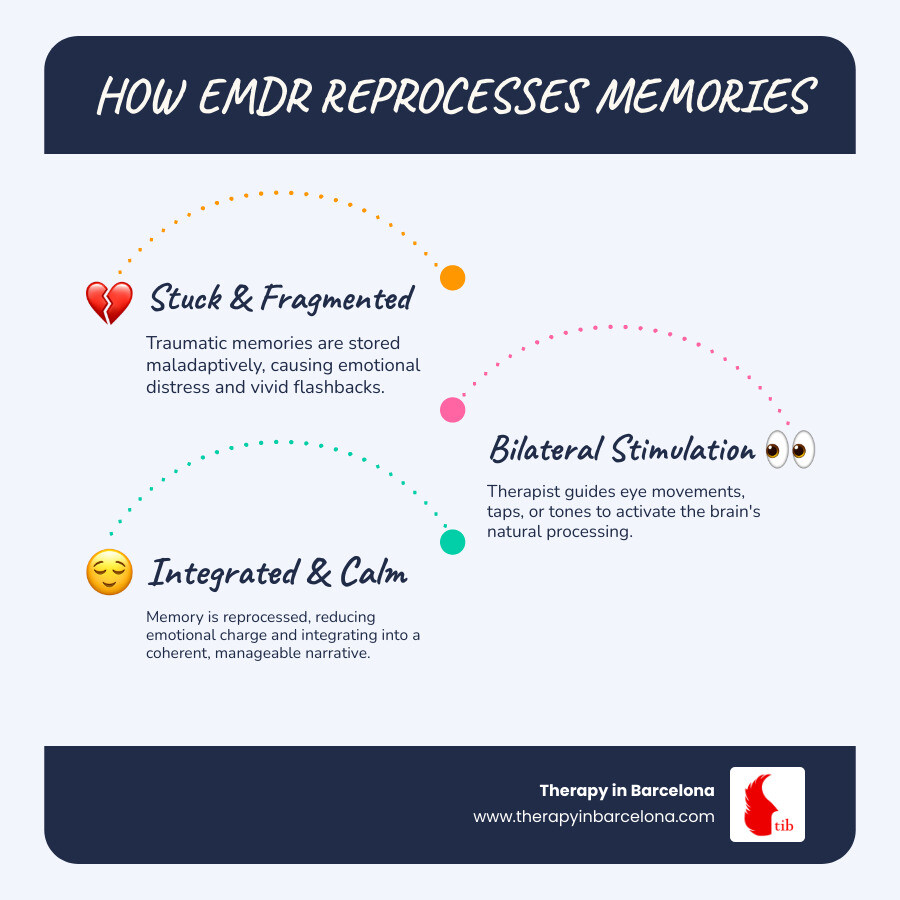
At its core, EMDR therapy aims to change how distressing memories are stored in your brain. Instead of trying to forget or suppress a memory, EMDR helps your brain reprocess it, reducing its emotional impact and allowing you to integrate it into a healthier narrative. This often leads to a significant reduction in the vividness and emotion associated with traumatic memories.
The process is guided by a specific theoretical framework called the Adaptive Information Processing (AIP) model, and it relies on bilateral stimulation—typically eye movements, but sometimes taps or tones—to facilitate this reprocessing. It sounds a bit mysterious, but it’s all about kickstarting your brain’s natural healing abilities.

The Science Behind the Sensation: The Adaptive Information Processing Model
Think of your brain as a filing cabinet. When a traumatic or deeply distressing event happens, sometimes the “files” for that memory don’t get stored properly. Instead of being filed away as a past event, they remain “stuck” or unprocessed, complete with all the raw emotions, negative thoughts, physical sensations, and beliefs you experienced at the time.
This is the essence of the Adaptive Information Processing (AIP) model. It suggests that symptoms of PTSD, anxiety, and other difficulties often trace back to past distressing experiences your brain could not fully process at the time. These “stuck” memories can be triggered by everyday events, leading to flashbacks, intense emotional reactions, or coping patterns that once protected you but now keep you from moving forward.
EMDR therapy works by helping your brain to “unstick” these memories. It’s like finally getting around to organising that messy filing cabinet. By stimulating your brain in a specific way, EMDR helps it to reprocess these memories, integrate them into your broader life experience, and understand that the danger is now in the past. This allows the memory to lose its power to disturb you in the present. As Francine Shapiro herself wrote, EMDR helps with adaptive information processing and case conceptualisation.
The Role of Bilateral Stimulation
The key to EMDR’s unique approach is bilateral stimulation. This usually involves following a therapist’s hand movements with your eyes, but it can also be achieved through alternating tactile sensations (like taps on your knees or hands) or auditory tones (through headphones).
This rhythmic left-right stimulation is believed to engage both hemispheres of your brain, mimicking the process that occurs naturally during REM sleep, when your brain processes daily experiences. By focusing on a distressing memory while simultaneously engaging in bilateral stimulation, your working memory is taxed. This “dual attention” helps to reduce the emotional intensity and vividness of the memory. It allows you to access the memory without becoming overwhelmed, helping your brain to reprocess it more adaptively.
EMDR is not hypnosis. You remain fully conscious and in control throughout the session. The bilateral stimulation simply acts as a catalyst, helping your brain to do what it naturally wants to do: heal and integrate difficult experiences.
The 8 Phases of an EMDR Session: A Step-by-Step Guide
EMDR therapy is a highly structured process, typically following eight distinct phases. These phases ensure that the therapy is conducted safely and effectively, moving from understanding your history to fully processing specific memories.
- Phase 1: History-taking and Treatment Planning. Your therapist will get to know you, understand your history, and identify specific memories or issues that contribute to your current difficulties. This helps create a custom treatment plan.
- Phase 2: Preparation. This crucial phase focuses on building a safe and trusting therapeutic relationship. Your therapist will explain EMDR in detail and teach you coping mechanisms and stress reduction techniques, such as the “calm place” exercise, to use during and between sessions if things feel overwhelming. This ensures you feel resourced and stable before processing begins.
- Phase 3: Assessment. Once you’re prepared, you and your therapist will pinpoint a specific target memory to work on. You’ll identify a vivid image representing the memory, a negative belief you hold about yourself related to it, the emotions and physical sensations it evokes, and a positive belief you’d prefer to hold. You’ll also rate the intensity of your distress (SUD scale, 0-10) and the truthfulness of your positive belief (VOC scale, 1-7).
- Phase 4: Desensitisation. This is where the “bilateral stimulation” comes in. While you focus on the distressing memory (image, negative thought, sensations), your therapist will guide you through sets of eye movements, taps, or tones. After each set, you’ll simply notice whatever comes to mind—thoughts, feelings, images, or sensations—without judgment. The goal is to reduce the distress associated with the memory.
- Phase 5: Installation. Once the distress from the target memory is resolved (SUD score of 0 or 1), the focus shifts to strengthening the positive belief you identified in Phase 3. You’ll pair this positive belief with bilateral stimulation until it feels completely true and integrated (VOC score of 6 or 7).
- Phase 6: Body Scan. Even if the emotional distress is gone, residual tension can sometimes remain in the body. In this phase, you’ll mentally scan your body to identify any lingering physical sensations. If detected, these will be reprocessed with bilateral stimulation until they dissipate.
- Phase 7: Closure. At the end of each session, your therapist will ensure you feel calm and grounded. If a memory hasn’t been fully processed, they’ll guide you on how to manage any residual feelings until your next session. You might be asked to keep a log of any related material that arises during the week.
- Phase 8: Re-evaluation. Every new session begins with a re-evaluation of previously processed memories to ensure that the positive changes have held. This also helps identify any new areas of distress that might need attention.
For more information on the process, you can explore More info about EMDR Therapy.
Your Role and the Therapist’s Role in a Session
EMDR therapy in English is a truly collaborative process where you, the client, play an active and central role. You are the expert on your own experience, and your therapist acts as a skilled guide, creating a safe space for healing.
Your role involves being present, open to your internal experience, and communicating what you notice during the bilateral stimulation sets. You don’t need to analyse or force anything; simply observe. This active participation is crucial for the therapy’s effectiveness.
Your therapist, on the other hand, is responsible for establishing a secure environment, pacing the session, and guiding you through each phase. They provide the structure, expertise, and support needed to steer potentially difficult memories. They are trained to respond to any distress and ensure your well-being throughout the process.
Who Can Benefit from EMDR Therapy in English?
EMDR therapy in English is best known for helping people with Post-Traumatic Stress Disorder (PTSD), but its use can extend well beyond that. A strong base of research and clinical trials supports EMDR for trauma-related symptoms and other difficulties linked to distressing life events. Major organisations like the American Psychological Association and the World Health Organization recognise EMDR as an effective treatment. In U.S. clinical guidelines, the Department of Veterans Affairs also describes the evidence for EMDR in PTSD treatment as “strong.”
Many individuals have found profound relief through EMDR, including notable public figures. Prince Harry has openly spoken about using EMDR to address childhood trauma, and Jameela Jamil shared how it helped her process past distressing experiences, stating that it “removed emotion linked to the traumatic memory.” Sandra Bullock also used EMDR to cope with trauma following a home invasion. These stories highlight the diverse applications and positive impact of EMDR.
EMDR for PTSD: A Path to Healing for English Speakers
PTSD can manifest in various ways, including distressing flashbacks, recurring nightmares, hypervigilance (feeling constantly on edge), and avoidance of anything that reminds you of the trauma. These symptoms can be debilitating, making it difficult to function in daily life, especially when navigating the additional complexities of expat life in cities like Barcelona or Madrid.
EMDR specifically targets the unprocessed traumatic memories that fuel these symptoms. Instead of just managing the symptoms, it aims to resolve the underlying cause. By reprocessing these memories, EMDR helps to reduce their emotional charge, allowing you to recall the event without being re-traumatised. This can lead to a significant decrease in flashbacks, nightmares, and hypervigilance, helping you regain a sense of safety and control.
If you’re an English-speaking expat struggling with PTSD, finding a therapist who understands both the nuances of trauma and your cultural background is vital. Our team at Therapy in Barcelona is uniquely positioned to offer this culturally sensitive support, helping you move Beyond the flashbacks- your guide to EMDR for post-traumatic stress.
Beyond Trauma: Other Conditions Treated with EMDR Therapy in English
While PTSD is EMDR’s most recognised application, its benefits extend to many other mental health challenges that can make expat life in Spain feel overwhelming.
- Anxiety Disorders: EMDR can effectively treat various anxiety disorders, including generalised anxiety, panic disorder, and social anxiety. It helps process past experiences that contribute to current anxious patterns, allowing for a reduction in overall anxiety levels.
- Panic Attacks: For those experiencing sudden, intense panic, EMDR can help address the underlying fears or past events that trigger these attacks, offering a path to feeling more grounded and secure. You can learn more about how EMDR can help you move Beyond panic- How EMDR therapy can transform your life.
- Performance Anxiety: Whether it’s public speaking, academic pressure, or professional performance, EMDR can help desensitise past negative experiences that contribute to current performance fears.
- Depression: When depression is linked to unresolved past events or negative self-beliefs stemming from distressing experiences, EMDR can be a powerful tool for reprocessing these memories and fostering more adaptive perspectives.
- Phobias and Fears: EMDR can help reduce the emotional intensity associated with specific phobias, allowing individuals to approach feared situations with greater calm and control.
- Complicated Grief: For grief that feels “stuck” or overwhelming, EMDR can assist in processing the painful aspects of loss, helping individuals integrate the experience and move towards healing.
EMDR is also used for a range of other issues, including dissociative disorders, eating disorders, obsessive-compulsive disorders (OCD), and personality disorders, by targeting the distressing memories and beliefs that underpin these conditions.
EMDR vs. Other Therapies: What to Expect
When considering therapy, it’s natural to wonder how different approaches compare. EMDR therapy has gained significant recognition for its effectiveness, particularly in trauma treatment, often showing results faster than many other methods.
A typical EMDR therapy process involves 6-12 sessions, though some individuals may benefit from fewer, especially for single-incident traumas. Sessions are usually 50-90 minutes long and typically occur one to two times per week. The duration depends on the complexity and number of traumatic experiences being addressed.
EMDR is strongly backed by research, but it has had its skeptics. Early criticism focused on the still-debated question of why bilateral stimulation helps, and some dismissed it with nicknames like “purple hat therapy.” Others point to common research pitfalls in psychotherapy, such as “allegiance bias,” where study results can lean toward the researchers’ preferred approach. Even so, decades of trials and reviews, including recommendations from the World Health Organization, support EMDR as an effective treatment, especially for PTSD. Today, debate is mostly about mechanisms, not effectiveness.
How EMDR Differs from Cognitive Behavioural Therapy (CBT)
Both EMDR and Cognitive Behavioural Therapy (CBT) are evidence-based treatments, particularly for trauma-related conditions. However, they approach healing from different angles. Here’s a breakdown:
Focus
- EMDR: Primarily focuses on reprocessing specific distressing memories and the associated sensory, emotional, and cognitive components. It’s about changing how the brain stores and perceives these memories.
- CBT: Focuses on identifying and challenging unhelpful thought patterns (cognitive distortions) and changing maladaptive behaviours that contribute to distress.
Homework
- EMDR: Typically involves minimal or no formal homework assignments. The primary work happens during the session itself.
- CBT: Often includes structured homework, such as thought records, behavioural experiments, exposure exercises, or journaling, to practice new skills and insights outside of sessions.
Talking
- EMDR: Requires less detailed verbal recounting of traumatic events. Clients are encouraged to briefly focus on the memory and report what they notice, rather than extensively narrating the event.
- CBT: Involves more verbal processing, where clients discuss their thoughts, feelings, and behaviours in detail with the therapist.
Technique
- EMDR: Utilises bilateral stimulation (eye movements, taps, or tones) to facilitate memory reprocessing.
- CBT: Employs techniques like cognitive restructuring (challenging negative thoughts), behavioural activation, relaxation strategies, and exposure therapy (gradual confrontation of feared situations or memories).
For many, the choice between EMDR and CBT depends on individual preferences and the nature of their challenges. Some clients find the less verbal, memory-focused approach of EMDR particularly appealing, especially if they struggle to articulate their trauma or prefer not to dig into extensive verbal detail.
Finding Quality EMDR Therapy in English in Spain
Finding quality EMDR therapy in English can feel like a significant step, especially when you’re an expat in Spain. Whether you’re in Barcelona, Madrid, Sevilla, or Alicante, ensuring your therapist is both skilled in EMDR and understands your unique expat experience is crucial.
The first step is to look for a trained EMDR therapist. Organisations like the EMDR International Association (EMDRIA) maintain directories of certified practitioners, ensuring they have met rigorous training standards. This certification is a strong indicator of a therapist’s competence in delivering EMDR.
As an expat, you face unique challenges: cultural adjustment, language barriers, feelings of isolation, and navigating new systems. A therapist who is also an expat, or deeply familiar with the expat experience, can provide culturally sensitive support that truly resonates. They understand that a “bad day” for an expat might mean something entirely different than for someone living in their home country.
When considering your options, you might encounter various alternatives:
- Public mental health services: These can be difficult to access in English and may have long waiting lists.
- Large online therapy platforms: While convenient, they often lack the personalised matching and cultural sensitivity that expats often need.
- Local private practices: These might offer EMDR, but finding an English-speaking therapist who understands the expat context can be a challenge.
At Therapy in Barcelona, we specialise in serving the English-speaking international community across Spain. Our unique approach includes:
- Bespoke Therapist Matching: We take the time to understand your needs and match you with a therapist who is the best fit, ensuring a strong therapeutic alliance.
- Expat-Focused Care: Our therapists are often expats themselves, bringing a deep, lived understanding of the challenges of living abroad, whether that’s in Barcelona, Madrid, or Zaragoza.
- Culturally Sensitive Support: We understand the nuances of cultural adaptation, identity shifts, and the unique stresses of your international life.
- Online and In-Person Options: We offer online therapy worldwide (including the USA and Canada) and face-to-face sessions in our Barcelona office, located in the vibrant Eixample district. This allows us to support expats in Málaga, Gran Canaria, and Marbella, too.
- Private-Pay Service: We are a private-pay service, which allows us to offer flexible, high-quality, and personalised care. Some of our therapists also offer sliding scale fees for those with financial needs, and prospective clients can inquire about this during their initial contact.
What to Look for in an EMDR Therapist as an Expat
Choosing the right therapist is a personal decision, but for EMDR therapy in English as an expat, here are some key considerations:
- Qualifications and Training: Ensure your therapist is a psychology-trained professional with specific EMDR training from a recognised body like EMDRIA. This guarantees they are equipped with the necessary skills and ethical guidelines.
- Experience with Internationals: Look for a therapist who has experience working with expats. They’ll be better equipped to understand issues like cultural shock, homesickness, and the complexities of building a life in a foreign country. Our founder, Leigh Matthews, an Australian Psychologist in Barcelona since 2011, created Therapy in Barcelona specifically to address this gap, assembling a team of expat-aware therapists.
- Therapeutic Relationship: The connection you feel with your therapist is paramount. Look for someone who makes you feel safe, understood, and respected. This strong therapeutic alliance is often cited as the most important factor for successful therapy outcomes.
- Language Fluency: It might seem obvious, but perfect fluency in English is essential for EMDR, as it requires precise communication of internal experiences. Our therapists speak English and some also speak other languages like German, French, Spanish, Afrikaans, Portuguese, Austrian-German and Swiss-German.
Conclusion: Taking the Next Step in Your Healing Journey
Living abroad in Spain, whether in the busy streets of Barcelona, the sunny shores of Málaga, or the historic charm of Sevilla, offers incredible opportunities for growth and adventure. Yet, it can also amplify past hurts and create new challenges. If you’ve been carrying the weight of unresolved memories or distressing experiences, know that healing is not just possible, but within reach.
EMDR therapy offers a powerful and effective pathway to process the past, reduce its emotional grip, and step into your present with greater freedom and resilience. It’s about empowering your brain to complete its natural healing process, allowing you to draw meaning from experiences that once caused pain and build a more fulfilling life.
Taking the first step can feel daunting, but you don’t have to steer it alone. If you’d like support to process difficult memories and move forward, our team of expat therapists at Therapy in Barcelona is here to help. We understand the unique journey of internationals and are committed to providing culturally sensitive, personalised care. Book a Free Discovery Call to find the right support for you, whether you’re seeking online therapy worldwide (including the USA and Canada) or in-office sessions in Barcelona.
