


Why Feeling Down is Different When You’re Far from Home

EMDR for depression is a trauma-focused therapy that can help you process distressing memories and beliefs that fuel low mood. Research shows it’s particularly effective when depression feels intense, with studies showing remission rates as high as 70% and evidence of long-term stability .
Quick answer for those searching:
- What it is: Eye Movement Desensitisation and Reprocessing (EMDR) therapy uses bilateral stimulation (eye movements, tapping, or tones) to help your brain reprocess stuck memories that may be driving your low mood
- How it helps: It targets the root causes—unprocessed difficult life events, negative core beliefs—rather than just managing symptoms
- Who it’s for: People whose low mood hasn’t fully responded to medication or traditional talk therapy, those with a history of difficult life events, or anyone who feels stuck
- The evidence: A recent meta-analysis found a significant reduction in depressive symptoms (effect size of 0.75), with particularly strong results when symptoms are intense
- Where to start: Find a certified EMDR therapist who understands expat life.
Take a fictional expat in their mid-30s who moves to Barcelona for a fresh start and runs into unexpected loneliness. What begins as excitement about a new life can quietly shift into persistent sadness, low energy, and a sense of being stuck. Medication might take the edge off, but it can still feel like something deeper hasn’t been processed or resolved.
Feeling persistently down doesn’t just make you sad. It drains your energy, steals your interest in things you once loved, and whispers that you’re not good enough. For internationals in Spain—whether in Barcelona, Valencia, or Málaga—cultural adjustment, language barriers, and distance from family can amplify these feelings.
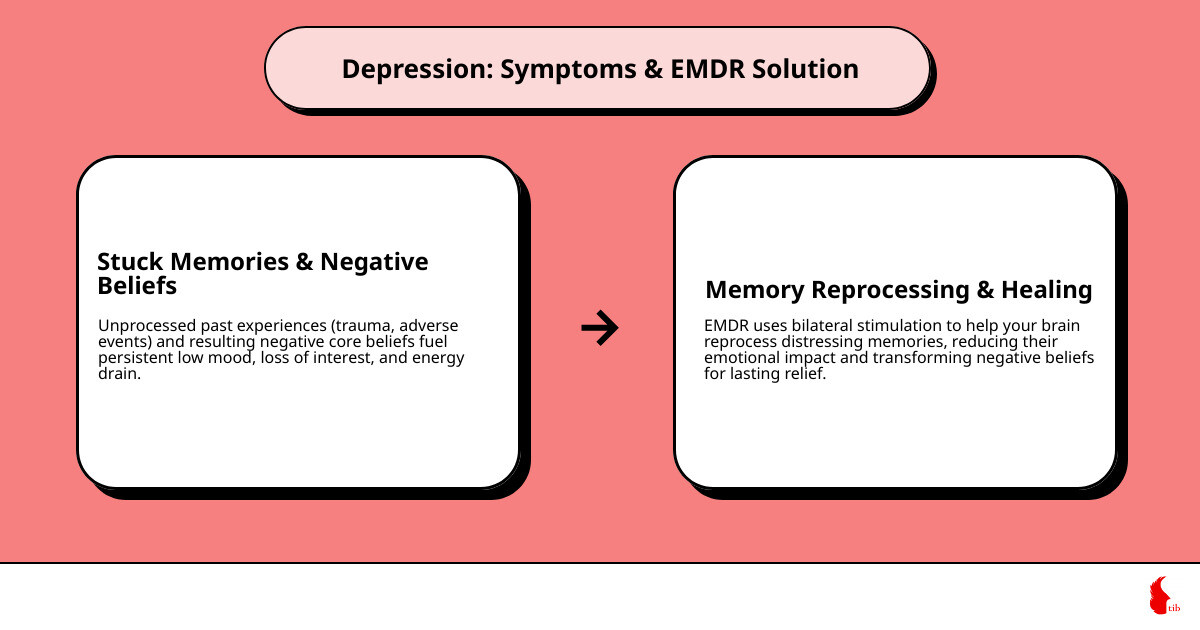
Standard treatments like antidepressants and Cognitive Behavioural Therapy (CBT) help many people. But if depression is being fuelled by unresolved painful experiences, they can sometimes reduce symptoms without getting to the root. EMDR is based on the idea that stressful events can become “stuck” as dysfunctionally stored memories that keep low mood and hopelessness going of hopelessness . EMDR works to reprocess those memories so they feel less intense and the negative beliefs linked to them can soften.
This isn’t about reliving painful experiences. EMDR is a structured, evidence-based therapy that works with your brain’s natural healing capacity. It’s available in Spain—whether you’re in Barcelona, Madrid, Alicante, or accessing support online from anywhere in the world.
Why Look Beyond Standard Approaches?
Living with persistent low mood carries an enormous weight. The World Health Organization estimates that approximately 280 million people worldwide have depression . The impact ripples through every part of life: work, relationships, energy, and hope.
Current treatments help many, but they don’t help everyone equally. Around **one-third of people treated for depression don’t achieve full remission** , and many experience a return of their symptoms later on . This is especially true when low mood is rooted in unresolved past experiences. Medication or talk therapy might ease surface symptoms, but if the emotional roots remain untouched, the feelings can be stubbornly persistent.
How Depression Treatments Differ
Understanding your options can help you make an informed choice about what might work best for you.
Medication (Antidepressants) are often a first-line defence. They adjust brain chemistry and can provide relief, but they don’t address the underlying memories or beliefs fuelling your low mood. When you stop taking them, the risk of symptoms returning is significant, and research suggests they may have only a modest advantage over placebo for milder symptoms .
Cognitive Behavioural Therapy (CBT) is a widely used talk therapy that helps you notice unhelpful thoughts and replace them with more balanced, realistic ones. It’s evidence-based and teaches practical coping skills you can use day to day. That said, CBT doesn’t always fully process deeper emotional wounds or “stuck” memories that keep old feelings alive. And even after improvement, relapse can still happen for some people within a couple of years.
EMDR for depression offers a different pathway, especially when low mood is linked to distressing life experiences. It focuses on helping your brain reprocess “stuck” memories that may be driving your symptoms. This happens through bilateral stimulation, such as eye movements, which helps reduce the emotional charge of these memories. A meta-analysis in the Journal of Clinical Medicine found that EMDR had a significant effect on reducing symptoms of depression (effect size of 0.75), with particularly strong results when symptoms are intense.
Finding the Right Support in Spain
Finding mental health support in a foreign country adds another layer of complexity. You might consider public system clinicians, but waiting lists can be long and language barriers difficult. Large online platforms offer convenience but can feel impersonal and may lack the cultural understanding expats need. Local private practices vary widely in approach and specialisation.
Therapy in Barcelona offers a distinct alternative. We are a trusted group practice, established in 2011, of highly qualified, psychology-trained therapists who work with adults, couples, teens, and families. We collaborate as a team to offer high-quality care.
We provide sessions in English, and some of our therapists also work in German, French, Spanish, Afrikaans, Portuguese, Austrian-German, and Swiss-German. We see clients online worldwide and in person in our Barcelona office.
Our personalised therapist matching connects you with a professional who fits your needs and cultural context. We are a private-pay service, and some therapists offer sliding scale fees. We keep your information strictly private and never sell data.
We offer culturally sensitive support across Spain, including Barcelona, Valencia, Madrid, Málaga, Alicante, and Sevilla, with sessions available in person in Barcelona and online worldwide.
How EMDR Therapy Can Help Lift Low Mood
When distressing experiences happen, they can become “stuck” in your brain, holding onto the original emotions and thoughts. This is the foundation of the Adaptive Information Processing (AIP) model, which underlies EMDR for depression.
These unprocessed memories can fuel low mood, keeping you trapped in negative patterns. EMDR for depression works by helping your brain “unstick” these memories. Your therapist guides you to focus on a distressing memory while using bilateral stimulation—usually rhythmic eye movements, though sometimes tapping or tones. This process is thought to mirror what happens during REM sleep, when your brain naturally processes experiences.
As memories are reprocessed, the emotional charge diminishes. Negative beliefs like “I’m worthless” or “I’m not good enough” begin to transform into more positive ones. The memory itself doesn’t disappear, but its power to distress you does.
Many people living with depression notice a familiar pattern: a move, a breakup, work stress, or loneliness brings back a heavy sense of shame, emptiness, or “I’m not good enough.” In EMDR, you don’t just talk about those feelings in the abstract. You work with the specific memories and body sensations that keep them stuck.
As those experiences are processed with bilateral stimulation, the brain can “file” them differently. A painful memory may still exist, but it stops hijacking the present. Over time, the old belief (like “I’m worthless”) can soften and shift into something more accurate and supportive (like “I’m capable” or “I have value”)—often with less emotional charge and fewer spirals into hopelessness.
The 8 Phases of EMDR
EMDR is a structured, eight-phase therapy that ensures you feel safe and supported.
- History-taking: Your therapist discusses your history and identifies target memories related to your low mood.
- Preparation: You learn coping skills and relaxation techniques to manage any distress that might arise.
- Assessment: You choose a target memory and identify the associated negative belief and physical sensations.
- Desensitisation: While focusing on the memory, you engage in bilateral stimulation, allowing your brain to reprocess the experience.
- Installation: You work to strengthen a positive, more adaptive belief about yourself.
- Body Scan: You check for any lingering physical tension related to the memory, which is then reprocessed.
- Closure: Each session ends with techniques to ensure you leave feeling stable and grounded.
- Re-evaluation: At the start of the next session, you and your therapist review your progress and decide what to work on next.
How Past Experiences Shape Low Mood
Feeling persistently down is often deeply connected to our life experiences. Adverse Childhood Experiences (ACEs)—like neglect, abuse, or even chronic criticism—can leave lasting imprints. Research on childhood maltreatment and depression confirms this link, showing that these experiences significantly increase the risk of developing depression in adulthood.
These past events can become the “stuck” memories that feed negative core beliefs: “I’m not good enough,” “I’m unlovable.” These beliefs then fuel low mood, colouring how you interpret everything. EMDR is particularly effective for individuals with a history of childhood maltreatment, suggesting that by addressing these foundational experiences, it can open up healing pathways that other therapies might miss.
Specialised EMDR Protocols for Depression
While the standard EMDR protocol is highly adaptable, specific approaches like the DeprEnd protocol have been developed to target feelings of depression more directly. This specialised approach focuses on reprocessing memories contributing to depressive symptoms and strengthening positive self-beliefs. By carefully targeting the emotional roots of low mood, these protocols aim for more comprehensive and lasting relief. For more details, you can refer to: More on the DeprEnd protocol.
The Evidence: EMDR for Depression and Lasting Change
The growing body of research on EMDR for depression offers significant hope. Scientific studies are increasingly affirming its power to address depressive symptoms, giving internationals in Spain a clear, evidence-based path forward.
What Studies Show
A recent meta-analysis found that EMDR had a significant effect on reducing symptoms of depression, with a robust overall effect size (Hedges’ g) of 0.75 . This means EMDR can lead to meaningful, measurable symptom reduction.
What’s particularly encouraging is that EMDR’s effectiveness appears strongest when symptoms of depression are intense. For individuals struggling with overwhelming low mood, EMDR offers a powerful option that addresses root causes rather than just managing surface symptoms.
The therapy works by helping to reframe negative core beliefs and resolve unprocessed adverse experiences. Clients often report improved energy, mood, and a more positive understanding of themselves. The shift isn’t just about feeling less sad; it’s about fundamentally changing how you relate to your own story. For a deeper look at the evidence, explore this systematic review: Systematic review of EMDR for depression.
Remission and Relapse: What’s Possible?
Beyond reducing symptoms, a critical measure of any treatment is its ability to achieve remission and prevent relapse. Here, the evidence for EMDR is striking. A meta-analysis found that remission rates in some studies were as high as 70%, with the positive effects often maintained at follow-up .
EMDR’s sustained impact is noteworthy because it addresses the underlying emotional distress. By helping your brain fully process distressing memories, EMDR appears to build resilience against future periods of low mood.
The Brain and EMDR
While we know EMDR works, the exact neurobiological mechanisms are still an active area of research. The emerging picture is fascinating.
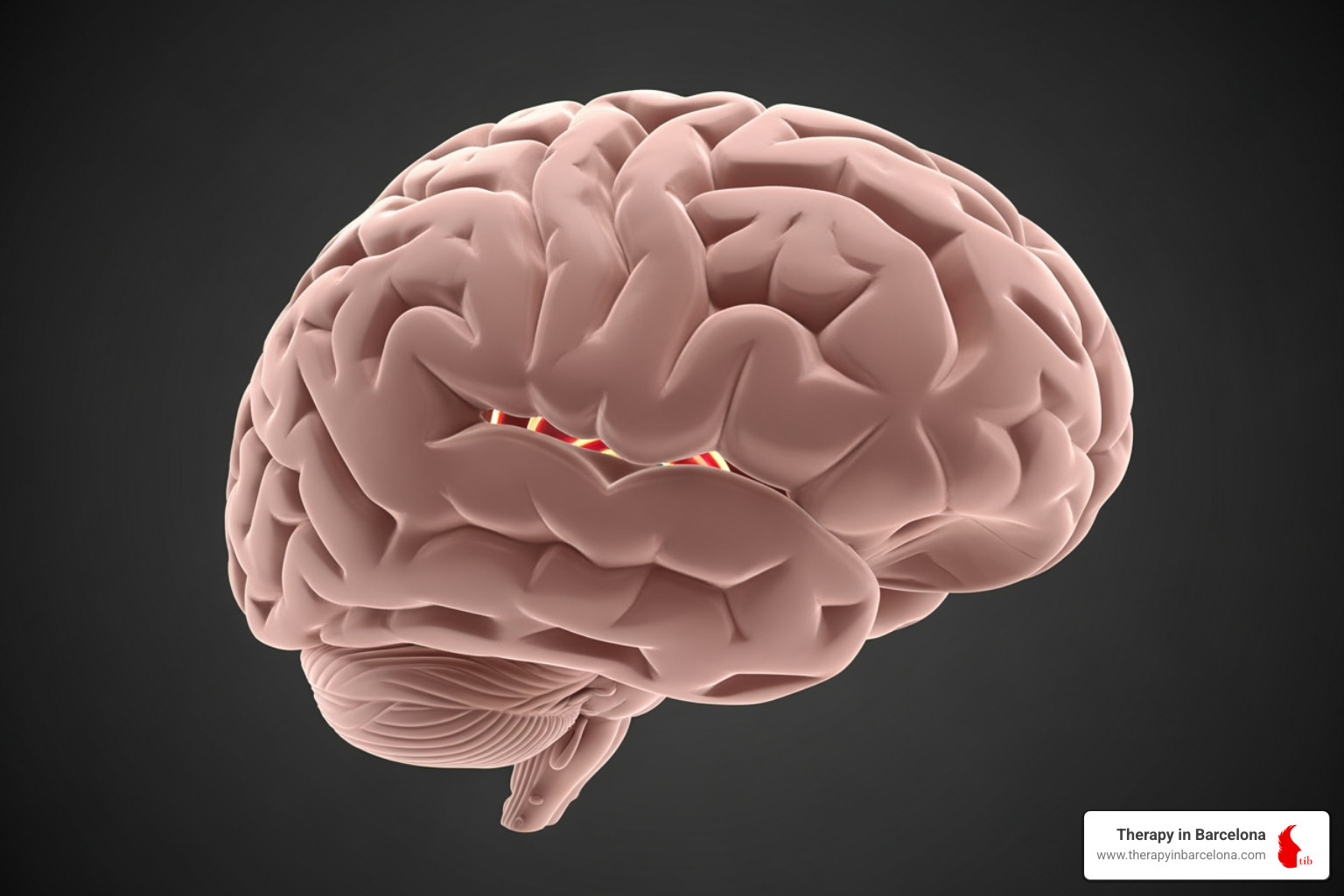
The Adaptive Information Processing (AIP) model suggests EMDR helps the brain integrate traumatic memories that were previously “stuck.” On a neurobiological level, research indicates EMDR may influence key brain regions involved in emotion and memory.
One theory is that EMDR reduces hyperactivity in the amygdala—the brain’s “fear centre”—while improving activity in the prefrontal cortex, which is responsible for emotional regulation. Think of it as turning down the alarm system while strengthening the part of your brain that helps you think clearly and respond calmly.
Some researchers propose that the bilateral stimulation mimics brain states during REM sleep, when our brains naturally process experiences. By accessing this state while you’re awake, EMDR may help integrate distressing memories into a more adaptive neural network. The memory’s emotional intensity fades, and you can think about it more rationally.
Starting Your EMDR Journey: What to Expect
Beginning therapy when you’re struggling with low mood takes courage. With EMDR for depression, you’re starting on a path that’s both structured and deeply personal—one designed to work with your brain’s natural ability to heal.
Is EMDR a Good Fit?
EMDR can be particularly effective if you’ve tried other treatments and your low mood still feels persistent. It often helps people whose feelings of depression haven’t fully responded to antidepressants or CBT. It’s also powerful if you have a history of trauma or difficult life experiences feeding your current symptoms. This doesn’t have to mean major trauma; sometimes it’s a series of smaller wounds that accumulate over time.
For internationals in Spain, EMDR addresses the unique stressors of expat life. Cultural adjustment and loneliness can trigger or worsen feelings of depression, especially if they echo earlier experiences. EMDR helps process these layered experiences, both past and present.
You can use EMDR as your primary therapy or combine it with other approaches. Your therapist will help you work out what makes sense for your situation.
How to Find a Qualified EMDR Therapist in Spain
Finding the right therapist matters enormously. Certification is essential—look for a therapist who’s completed rigorous EMDR training. For internationals, cultural and linguistic sensitivity is also crucial. You need a therapist who understands what it’s like to live between cultures.
At Therapy in Barcelona, our personalised matching service sets us apart. We take time to understand your needs and match you with a therapist who’s genuinely suited to your situation. This is a private-pay service, though some of our therapists offer sliding scale fees—ask about this when you book your Free Discovery Call.
We offer support across Spain, including Barcelona, Valencia, Madrid, Málaga, and Alicante. Our online therapy services are available worldwide, including the USA and Canada.
When considering a therapist, ask about their training with EMDR for depression, how they keep you safe if you feel overwhelmed, and their experience with expats. These conversations help you gauge whether someone is the right fit.
What Happens in a Typical EMDR Session?
An EMDR session is a collaboration held in a safe space. After the initial history and preparation phases, you’ll identify a specific memory to target. During the desensitisation phase, you’ll focus on this target while your therapist guides you through bilateral stimulation (eye movements, tones, or tapping). You simply notice whatever comes up, without judgment.
Your therapist isn’t asking you to relive the trauma. They are creating a container for the process, letting your brain do the work of reprocessing the memory and reducing its emotional charge. Before the session ends, your therapist will ensure you feel calm and grounded, ready to continue your week.
Frequently Asked Questions about EMDR for Depression
Is EMDR a quick fix?
While EMDR for depression can be remarkably efficient, it’s not a magic wand. It’s a structured therapy that works deeply to reprocess distressing memories, and lasting change takes time.
The duration varies. A single disturbing event might see progress in 3 to 6 sessions. More complex issues, like long-term low mood rooted in multiple difficult experiences, could take 8 to 12 sessions or more. The goal is lasting change, not just temporary relief.
Will I have to relive my trauma?
This is a common and understandable concern. In EMDR, the goal is to process distressing memories safely, not to re-traumatise you. You don’t need to describe every painful detail out loud.
Instead, you focus on the memory while engaging in bilateral stimulation. Your brain does the work naturally, with your therapist creating a safe container and teaching you coping skills. The aim is to reduce the distress associated with the memory, so it becomes more like a story from the past rather than something that feels like it’s happening right now.
Can EMDR be done online?
Absolutely. Online EMDR for depression has proven to be just as effective as in-person sessions for many people. This is particularly helpful for expats living anywhere in Spain or worldwide.
Bilateral stimulation can be delivered effectively through online tools, such as on-screen visual cues or self-tapping exercises. The therapeutic relationship and processing work happen just as powerfully through a screen.
A Way Forward
Living with depression is hard enough. When you’re also dealing with a new culture and distance from your support network, it can feel overwhelming. But there is a way forward. EMDR for depression offers a research-backed approach that goes beyond managing symptoms to address the root causes of your low mood.
The evidence is compelling: studies show high remission rates, with positive effects that are often maintained long-term. For those whose depression hasn’t fully responded to other treatments, EMDR can open a door to lasting change.
At Therapy in Barcelona, we understand what it’s like to build a life far from home. Our team of expat therapists offers culturally sensitive, personalised care. Founded in 2011 by Australian Psychologist Leigh Matthews, we’ve become a trusted presence for internationals across Spain.
If you’d like support, book a Free Discovery Call. We are a private-pay service, some of our therapists offer sliding scale fees, and we keep your information strictly private—we never sell data.
You don’t have to stay stuck. Help is available.
If you are experiencing thoughts of harming yourself or others, please seek immediate help. In Spain, you can call 112 for emergencies. You can also reach out to local crisis lines or emergency services in your country.
Living abroad as an expat in Spain can be an exhilarating experience, filled with cultural immersion, adventure, and personal growth. However, when faced with the challenging reality of divorce, navigating the legal and emotional aspects can become even more complex. In this blog post by Leigh Matthews, Australian Registered Psychologist and Director of Therapy in Barcelona, we will explore some key insights and strategies to help expats manage divorce in Spain, ensuring a smoother transition during this challenging period.