


Why Sexual Trauma Therapy Near Me Matters

Sexual trauma therapy near me is a search that reflects courage, not weakness. If you’re reading this, you may be carrying the weight of an experience that has shaken your sense of safety, trust, or self-worth. You might be feeling anxious, disconnected, or simply exhausted from trying to manage on your own. You deserve support, and finding the right therapist can be a crucial step toward healing.
Quick answers for finding sexual trauma therapy near you:
- In Barcelona and across Spain: Therapy in Barcelona offers trauma-informed care in English and other languages, both online and in-person. We specialise in supporting internationals and expats.
- Online therapy worldwide: Access qualified, psychology-trained therapists from anywhere, including the USA and Canada.
- Look for: Therapists with trauma-specific training in approaches like TF-CBT, EMDR, Somatic therapy, or CPT.
- Start with: a Free Discovery Call to find the right fit. Book yours here.
- Crisis support: If you’re in immediate danger, contact local emergency services or RAINN’s 24/7 hotline at 1-800-656-4673.
Sexual trauma can happen to anyone. According to the Centers for Disease Control and Prevention (CDC), about 1 in 4 girls and 1 in 13 boys experience sexual abuse during childhood (https://www.cdc.gov/sexual-violence/about/?CDC_AAref_Val=https://www.cdc.gov/violenceprevention/sexualviolence/fastfact.html). For adults, at least 1 in 6 men have experienced unwanted or abusive sexual experiences in their lifetime (https://www.rainn.org/statistics/scope-problem), and about 10% of sexual assaults in the United States are perpetrated against men (https://www.rainn.org/articles/sexual-assault-men-and-boys). Eight out of 10 sexual assaults are committed by someone the victim knows (https://www.rainn.org/statistics/perpetrators-sexual-violence). These aren’t just statistics—they represent real people dealing with real pain, often in silence.
Living abroad can make the situation feel even more complicated. You may feel isolated, unsure where to turn, or worried about finding a therapist who understands your cultural background and speaks your language. Perhaps you’ve been carrying this burden for years, or maybe something recent has brought old wounds to the surface. Either way, reaching out for help is a sign of strength, not failure.
Therapy offers a safe, confidential space to process what happened, reduce distressing symptoms, and rebuild your sense of self. Whether you experienced trauma recently or long ago, professional support can help you move from surviving to thriving. In this guide, we’ll walk you through recognising the signs that you might benefit from therapy, understanding what effective treatment looks like, and finding the right support—whether you’re in Barcelona, Valencia, or anywhere else in the world.
Noticing When You Need Support: Signs of Sexual Trauma
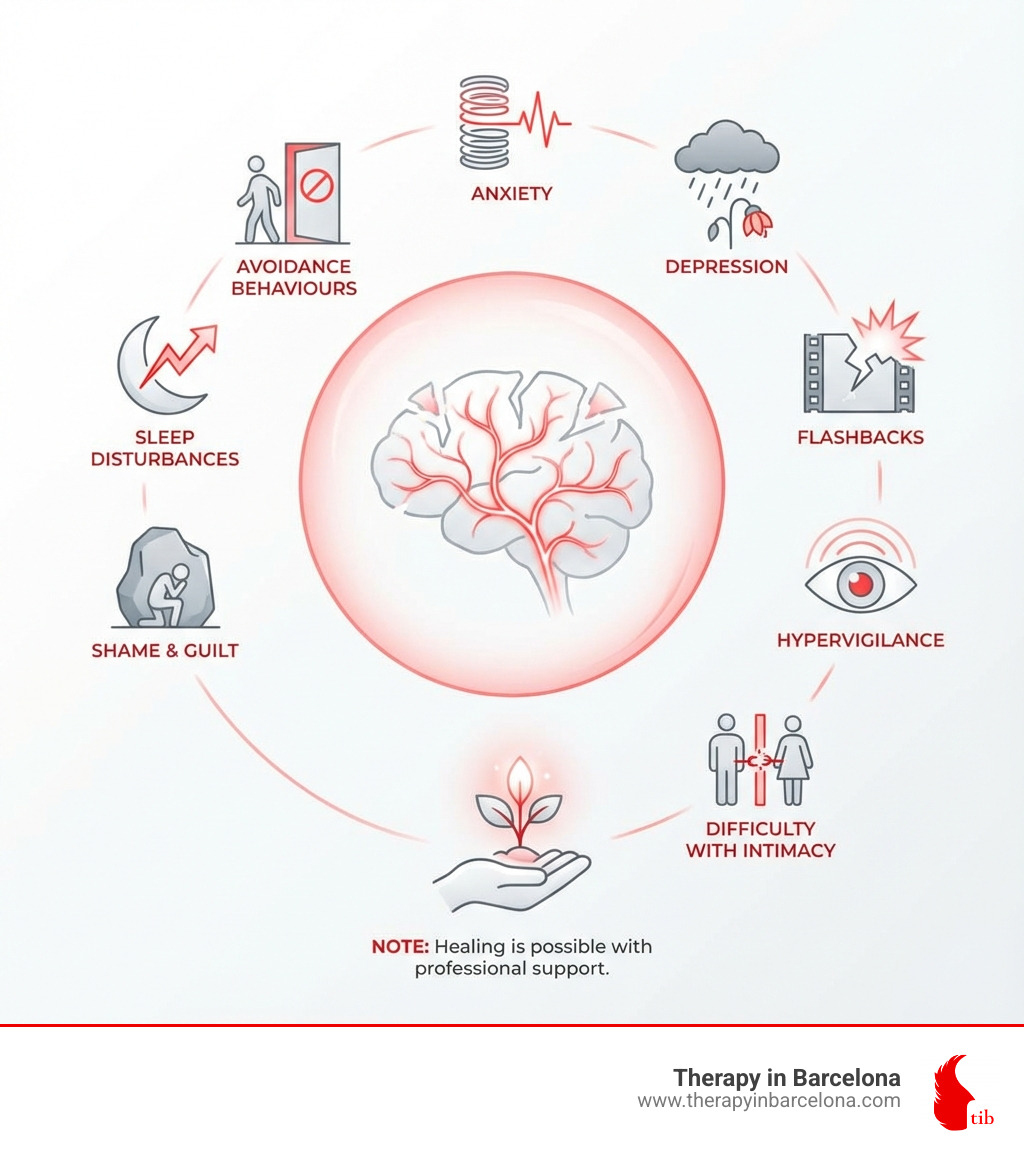
Sexual trauma leaves a deep imprint, often showing up in various emotional, psychological, and behavioural ways. It’s not always about what happened, but how your body and mind reacted to protect you. Recognising these signs is the first step towards seeking the support you deserve. These feelings are not your fault, and they don’t have to define your life.

You might experience persistent anxiety, a pervasive sadness, or profound shame that makes it hard to connect with others. Self-blame can also be a heavy burden, making you question your worth or what happened. These are all common, understandable reactions to an overwhelming experience.
Common Signs in Adults
For adults, the aftermath of sexual trauma can show up in many forms. You might find yourself struggling with:
- Flashbacks and Nightmares: Unwanted, intrusive memories or dreams that make you feel like you’re reliving the trauma.
- Feeling Constantly on Edge: A constant sense of alertness, as if danger is always lurking, making it hard to relax.
- Avoiding Reminders: Going to great lengths to steer clear of people, places, or situations that trigger memories of the trauma.
- Intimacy Struggles: Difficulty forming close relationships or engaging in physical intimacy due to fear, discomfort, or a feeling of disconnect.
- Relationship Challenges: Finding it hard to trust others, maintaining healthy boundaries, or experiencing volatile relationships.
- Feeling Disconnected or Detached: A sense of detachment from your body, emotions, or the world around you, sometimes feeling like you’re watching your life from outside.
These symptoms can interfere with your daily life, career, and personal relationships. If you recognise these patterns and they don’t ease over time, or if they cause significant distress, it’s a strong sign that professional support could be beneficial. For more information about trauma and its effects, you can explore our resources on healing from trauma and abuse.
Recognising Signs in Children and Teenagers
Sexual trauma in childhood can have profound and lasting effects. Young children, in particular, may cope with sexual abuse by disconnecting from their feelings or surroundings, a response that can have long-term effects. It’s crucial for parents, guardians, and caregivers to be aware of the signs, as children may not have the words to express what they’ve experienced.
Look out for:
- Sudden Changes in Behaviour: A noticeable shift in personality or typical actions.
- Regression: Returning to earlier behaviours like bed-wetting, thumb-sucking, or wanting to be carried.
- Unexplained Fears: Developing new or intense fears that seem out of proportion to the situation.
- Avoiding Certain People or Places: A sudden aversion to a specific individual, family member, or location.
- Withdrawing from Friends and Family: Isolating themselves from social interactions they once enjoyed.
- School Problems: A decline in academic performance, difficulty concentrating, or behavioural issues at school.
- Angry Outbursts: Increased irritability, aggression, or difficulty managing emotions.
If you observe these signs in a child or teenager, remember it’s never their fault. Seeking help early can make a significant difference in their healing journey. Therapy in Barcelona offers specialised support for young people. You can find more information about child and adolescent therapy on our website.
The Path to Healing: How Therapy Can Help
Healing from sexual trauma is a journey, not a destination, and therapy can be an invaluable guide along the way. It offers a structured, safe, and confidential space where you can begin to process difficult experiences without judgment.

With professional guidance, you can gradually rebuild trust, learn effective coping skills, and reduce the overwhelming distress that often accompanies trauma. The goal is not to forget what happened, but to integrate the experience in a way that allows you to reclaim your life and move towards a future filled with peace and purpose.
Why Seek Professional Support?
Therapy with a qualified professional allows survivors to process trauma in a safe environment. It can help with long-term emotional and psychological effects, such as persistent feelings of anxiety, anger, low mood, and the distressing experiences associated with trauma. Here’s how:
- Restoring a Sense of Safety: Trauma often shatters your sense of security. Therapy helps you re-establish internal and external safety.
- Rebuilding Self-Worth: Many survivors grapple with feelings of shame and worthlessness. Therapy helps challenge these beliefs and foster self-compassion.
- Managing Triggers: You’ll learn to identify triggers and develop strategies to cope with intense emotional or physical reactions when they arise.
- Improving Relationships: By addressing trust issues and communication patterns, therapy can help you build healthier, more fulfilling connections with others.
- Feeling Heard and Validated: Sharing your story with an empathetic, trained professional can be incredibly validating, helping you realise you’re not alone and what happened was not your fault.
Therapy can help you move beyond the immediate pain and work towards a more integrated and fulfilling life. For further insights into the healing process, consider reading about Therapy for Emotional Trauma: A Path to Recovery.
Evidence-Based Approaches at Therapy in Barcelona
At Therapy in Barcelona, our psychology-trained therapists employ a range of evidence-based approaches to support individuals healing from sexual trauma. We understand that each person’s experience is unique, and so is their path to recovery. Our diverse team uses various modalities, all delivered in English and other languages, to tailor therapy to your specific needs.
Here are some of the effective approaches we utilise:
- Trauma-Focused Cognitive Behavioural Therapy (TF-CBT): This approach helps you understand how thoughts, feelings, and behaviours are connected to your trauma. It teaches coping skills and helps you gradually process traumatic memories.
- Somatic Therapy: This focuses on the body’s response to trauma, helping you release stored tension and regulate your nervous system.
- Sensorimotor Psychotherapy: A body-oriented therapy that helps process trauma by addressing the physical sensations and responses associated with it.
- Cognitive Processing Therapy (CPT): CPT helps you challenge and change unhelpful beliefs about the trauma, yourself, and the world, reducing its ongoing impact.
- Eye Movement Desensitisation and Reprocessing (EMDR): EMDR therapy is a powerful, evidence-based treatment specifically designed for trauma. It involves a structured process where you recall distressing memories while engaging in bilateral stimulation (like eye movements). This process helps your brain reprocess the traumatic memory, reducing its emotional intensity and allowing you to integrate it in a healthier way. Many survivors find EMDR incredibly effective in lessening the charge of difficult memories and moving past the trauma. You can learn more about EMDR Therapy and its benefits.
- Mindfulness-Based Approaches: These techniques help you stay present, observe thoughts and feelings without judgment, and develop a greater sense of calm and self-awareness.
- Art Therapy: A non-verbal approach that uses creative expression to process emotions and experiences that may be difficult to put into words.
- Narrative Therapy: This helps you reframe your story, separating yourself from the trauma and identifying your strengths and resilience.
- Schema Therapy: Addresses deeply ingrained, unhelpful patterns of thinking and feeling that often stem from early life experiences, including trauma.
- Ego-State Therapy: Works with different ‘parts’ of your personality that may have developed in response to trauma.
- Systemic and Psychodynamic Approaches: Explore the influence of past experiences, relationships, and unconscious patterns on your current functioning.
All therapies are delivered by psychology-trained therapists, in English and other languages, ensuring culturally sensitive and expert care.
Finding Sexual Trauma Therapy Near You
When you’re ready to seek support, finding the right therapist can feel overwhelming. The search for “sexual trauma therapy near me” often brings up many options, and knowing what to look for is key. Whether you’re in Barcelona, Valencia, Málaga, or another vibrant city in Spain, or connecting with us online from anywhere in the world, the goal is to find a qualified professional who truly understands.
Online directories are a great starting point, allowing you to filter by specialisation, location, and language. Professional recommendations can also be valuable. For expats, cultural sensitivity is paramount – you need a therapist who not only speaks your language but also understands the unique challenges of living abroad.
What to Look for in a Sexual Trauma Therapist
Choosing a therapist is a very personal decision, especially when dealing with something as sensitive as sexual trauma. A strong therapeutic alliance and sense of trust are crucial for therapy, particularly for sexual abuse survivors. Here’s what to prioritise:
- Trauma-Informed Care: This means the therapist understands the pervasive impact of trauma and integrates this understanding into all aspects of treatment. They recognise that symptoms are often adaptations to trauma, not character flaws.
- Specialised Training: Look for therapists with specific training in trauma-focused therapies (like those mentioned above). This indicates they have the expertise to guide you safely through the healing process.
- Experience with Survivors: A therapist experienced in treating sexual abuse and trauma will have a deeper understanding of the complexities involved and can offer more effective support.
- Empathy and Trust: You need to feel understood and safe. A good therapist will create a non-judgmental space where you feel comfortable sharing your experiences at your own pace.
- Non-Judgmental Approach: A therapist should never blame you or minimise your experience. They should validate your feelings and reactions.
- Good Fit: This is perhaps the most important. The connection you feel with your therapist is a significant predictor of successful outcomes. Don’t be afraid to have an initial conversation to assess this fit.
At Therapy in Barcelona, our team of highly qualified, psychology-trained therapists are also expats themselves, bringing a unique perspective and empathy to their work. You can learn more about our team of therapists and their specialisations.
Therapy for Expats in Spain
Living as an expat in Spain—whether in Barcelona, Valencia, Málaga, Alicante, Madrid, Marbella, Sevilla, Zaragoza, or Gran Canaria—comes with its own set of unique challenges. Cultural adjustment, language barriers, and distance from your usual support networks can intensify the impact of past or present trauma. This is where culturally sensitive therapy becomes vital.
Therapy in Barcelona was founded by Leigh Matthews, an Australian Psychologist who, as an expat in Barcelona since 2011, is experienced in supporting internationals. She founded the practice specifically to address the need for English-speaking, culturally aware mental health services for the international community. Our therapists, many of whom are also expats, understand these nuances firsthand. They understand the challenges of intercultural relationships, homesickness, cultural shock, and the feeling of isolation that can arise when living in a new country.
We offer personalised therapist matching, ensuring you’re paired with a professional who not only has the right clinical expertise but also understands your unique expat experience. Our multilingual care means you can receive therapy in English, German, French, Spanish, Afrikaans, Portuguese, Austrian-German, and Swiss-German, making your therapeutic journey more comfortable and effective. We provide both in-person sessions in our central Barcelona office and online therapy for expats worldwide, including the USA and Canada. For more on how we support those living abroad, see Trauma Therapy for Expats: Because Moving Countries Shouldn’t Mean Moving Problems.
Comparing Your Options for Sexual Trauma Therapy
When seeking sexual trauma therapy near me, you’ll likely encounter several types of providers. Understanding the differences can help you make an informed choice that best suits your needs.
Public Health System Therapists in Spain
- Pros: Often free or low-cost, making therapy accessible regardless of financial situation.
- Cons: May involve long waiting lists, limiting immediate access to care. You might have less choice in selecting your therapist, and language options can be limited, primarily to Spanish or Catalan, which can be a barrier for many expats.
Large Online Therapy Platforms
- Pros: Highly accessible from almost anywhere in the world, offering convenience and flexibility.
- Cons: The quality and qualifications of therapists can vary widely. There may be less focus on bespoke matching, and privacy standards can differ (some platforms may sell data). They often lack the deep understanding of expat-specific cultural nuances.
Local Private Practices in Spain
- Pros: Can offer in-person sessions, which some people prefer for deeper connection. There’s usually more choice in therapists and potentially shorter waiting times than public services.
- Cons: Experience with internationals and trauma may vary significantly from practice to practice. Finding a therapist who understands expat challenges and speaks your native language might require extensive searching.
Therapy in Barcelona
- Pros: Offers bespoke therapist matching, ensuring you’re paired with a professional best suited to your individual needs and concerns. Our therapists are multilingual and psychology-trained, with many being expats themselves, providing culturally sensitive care. We uphold strict privacy policies (no data selling) and offer both online therapy worldwide (including USA and Canada) and in-person sessions in Barcelona. We cater to clients across Spain, including Valencia, Málaga, Alicante, Madrid, Marbella, Sevilla, Zaragoza, and Gran Canaria.
- Cons: As a private-pay service, it may not be suitable for everyone. However, some of our therapists do offer sliding scale fees for those with financial need, and we encourage prospective clients to inquire about this during a Free Discovery Call.
Building a Circle of Support: Resources for Survivors and Loved Ones
Healing from sexual trauma is a deeply personal journey, but it doesn’t have to be a solitary one. Building a strong circle of support, whether through professional guidance, peer groups, or understanding loved ones, is crucial for reducing isolation and fostering a sense of community healing.
This network can provide validation, encouragement, and a safe space to process emotions, helping you rebuild your life and move forward.
The Role of Support Groups
Support groups play a vital role in healing from sexual trauma. They offer a unique environment where survivors can connect with others who have similar experiences. This shared understanding leads to:
- Shared Experiences: Hearing others’ stories can normalise your feelings and reactions, making you feel less alone.
- Peer Validation: Receiving affirmation from those who truly “get it” can be incredibly empowering and validating.
- Feeling Less Alone: Trauma often fosters isolation. Support groups break down these barriers, creating a sense of belonging.
- Community Healing: Collective healing can be powerful, as members support each other through their individual journeys.
- Mutual Encouragement: Members can offer practical advice, coping strategies, and hope, drawing on their own experiences.
While Therapy in Barcelona does not currently offer specific support groups for sexual trauma, we believe in the power of community and can help refer you to suitable resources if needed.
How to Support a Loved One
Supporting someone who has experienced sexual trauma requires immense patience, empathy, and a non-judgmental approach. It’s about being a steadfast presence without trying to “fix” them. Here’s how you can help:
- Listen Without Judgment: Allow them to share their experience and feelings without interruption, questioning, or criticism. Just listen.
- Believe Them: Your belief is incredibly powerful. Reassure them that what happened was not their fault.
- Offer Practical Help: Trauma can make daily tasks overwhelming. Offer concrete assistance, like running errands, cooking meals, or helping with childcare.
- Respect Their Pace: Healing is not linear, and everyone’s timeline is different. Avoid pressuring them to “get over it” or to talk before they’re ready.
- Avoid Blame: Never imply that they were responsible for what happened, even subtly.
- Encourage Professional Help: Gently suggest seeking therapy, framing it as a brave step towards healing. Offer to help them research options or accompany them to an initial appointment.
Essential Helplines and Organisations
If you or someone you know needs immediate support, please reach out to these resources:
- Crisis Resources https://www.therapyinbarcelona.com/crisis-resources/
Organisations featured offer critical support, advocacy, and guidance, often free of charge.
Frequently Asked Questions about Sexual Trauma Therapy
It’s natural to have questions when considering therapy for sexual trauma. Here, we address some common concerns to help you feel more informed and prepared.
How long does therapy for sexual trauma take?
The duration of therapy for sexual trauma is highly individual. There’s no one-size-fits-all answer, as it depends on many factors, including the nature of the trauma, how long it occurred, your unique coping mechanisms, and your personal goals.
Some individuals may benefit from short-term, focused therapy, especially if the trauma is recent or they have strong existing support systems. Others, particularly those with complex or prolonged trauma, may need longer-term support to process deeper issues and rebuild their lives.
Many structured, evidence-based treatments for trauma, such as TF-CBT or EMDR, are often completed in an average of 16-20 sessions. However, healing is not linear. There will be good days and challenging days, and progress may come in waves. The most important thing is to work at a pace that feels safe and comfortable for you, in collaboration with your therapist.
Do I have to talk about the details of the trauma in therapy?
No, you do not have to talk about the explicit details of the trauma if you are not ready or if it doesn’t feel helpful. You are always in control of what you share and when. A good trauma therapist will respect your boundaries and guide you through the process at your pace.
For many, the focus in therapy is less on recounting every detail and more on understanding and managing the impact the trauma has had on your life. This might involve:
- Focusing on Feelings and Body Sensations: Instead of explicit narratives, therapy can explore the emotions, physical sensations, and triggers associated with the trauma.
- Non-Verbal Therapies: Approaches like art therapy, somatic therapy, or EMDR can help process trauma without requiring a detailed verbal recounting. These methods allow you to work through the experience in a way that feels safe and less overwhelming.
- Developing Coping Skills: Much of the initial work might focus on building resources and coping strategies to manage distressing symptoms like anxiety, flashbacks, or dissociation.
The goal is to help you process and integrate the experience so it no longer holds the same power over you, not necessarily to relive every moment.
What if I can’t afford therapy?
Concerns about the cost of therapy are very common, and it’s important to know that options are available. While Therapy in Barcelona is a private-pay service, some of our therapists offer sliding scale fees for those with financial need. We encourage prospective clients to inquire about this during a Free Discovery Call.
Here are other options to consider:
- Public Health System Therapists in Spain: These services are often free or low-cost, though they may come with longer waiting lists and less choice in therapists. Inquire at your local health centre for mental health services.
- Large Online Therapy Platforms: Some platforms offer more affordable subscription models, though it’s crucial to vet the therapist’s qualifications and ensure their approach aligns with your needs, especially for trauma.
- Free or Low-Cost Crisis Centres: Many non-profit organisations and crisis centres offer free counselling or support groups for survivors of sexual trauma. These can be excellent starting points for immediate support.
Prioritise finding a good fit and quality care. Investing in your mental health is an investment in your overall well-being and future.
Your Path to Healing Starts Here
Finding support for sexual trauma is a profound act of self-care and courage. Healing is possible, and taking that first step towards seeking help is a monumental achievement. You don’t have to carry this burden alone.
At Therapy in Barcelona, we understand the challenges of healing from sexual trauma, particularly for expats living in Spain. Our commitment is to provide a compassionate sanctuary where you can feel safe, understood, and empowered. With personalised therapist matching and culturally sensitive care, we aim to connect you with a psychology-trained professional who truly “gets it.”
Whether you’re in Barcelona, Valencia, Málaga, Alicante, Madrid, Marbella, Sevilla, Zaragoza, Gran Canaria, or connecting with us online from anywhere else in the world, we are here to support you. If you’d like support, book a Free Discovery Call today. It’s a no-obligation conversation designed to help you find the right fit and begin your path to healing and growth.
