



Psychodynamic psychotherapy techniques hold a special place in therapeutic practices, offering profound insights into the human psyche. This approach is rooted in the belief that our unconscious beliefs profoundly shape our behaviors and emotions, even if we’re not aware of their influences. By delving into these hidden parts of the mind, psychodynamic therapy goes beyond surface-level issues to foster deep, lasting change through insight-oriented therapy.
- Unconscious Beliefs: The hidden drivers of thoughts and behaviors.
- Insight-Oriented Therapy: Understanding past conflicts to improve present life.
Why does it matter? Because understanding these techniques can help you solve emotional complexities, paving the way for a more fulfilling and self-aware life.
In the busy city of Barcelona, many internationals like Emily, a 34-year-old UK expat, find themselves in need of such introspective therapy. They seek to understand the deeper roots of their anxieties and relationship strains exacerbated by life abroad.
As we explore psychodynamic psychotherapy techniques further in this article, you’ll see how these methods can support individuals in navigating life’s challenges with greater clarity and emotional resilience.
Understanding Psychodynamic Psychotherapy Techniques
Psychodynamic psychotherapy offers a treasure trove of techniques designed to uncover the layers of our unconscious mind. These techniques—dream analysis, free association, and transference analysis—help individuals like Emily, our fictional UK expat in Barcelona, understand and transform their emotional landscapes.
Dream Analysis
Dreams are often seen as windows to our unconscious mind. In psychodynamic therapy, analyzing dreams can reveal hidden emotions and conflicts. Sigmund Freud, a pioneer in this field, believed that dreams are the “royal road to the unconscious.” By interpreting the symbols and narratives in dreams, therapists can help individuals connect past experiences with current emotional states. For Emily, understanding her recurring dreams about feeling lost in unfamiliar places might uncover deeper feelings of insecurity or fear related to her expat life.
Free Association
Imagine a conversation where you’re encouraged to speak your mind without any filters. That’s free association. This technique allows individuals to express thoughts and feelings as they arise, without censorship. It helps bring unconscious thoughts to the surface, offering insights into current behaviors and emotions. For someone like Emily, who might be struggling with adapting to a new culture, free association can help identify subconscious patterns that affect her present behavior and relationships.
Transference Analysis
In therapy, the relationship between client and therapist is crucial. Transference analysis explores how past relationships influence current interactions. Individuals might project feelings about significant people in their lives onto the therapist. By examining these projections, therapists can help clients like Emily understand unresolved emotional patterns. This understanding can lead to healthier ways of relating to others, both in therapy and in daily life.
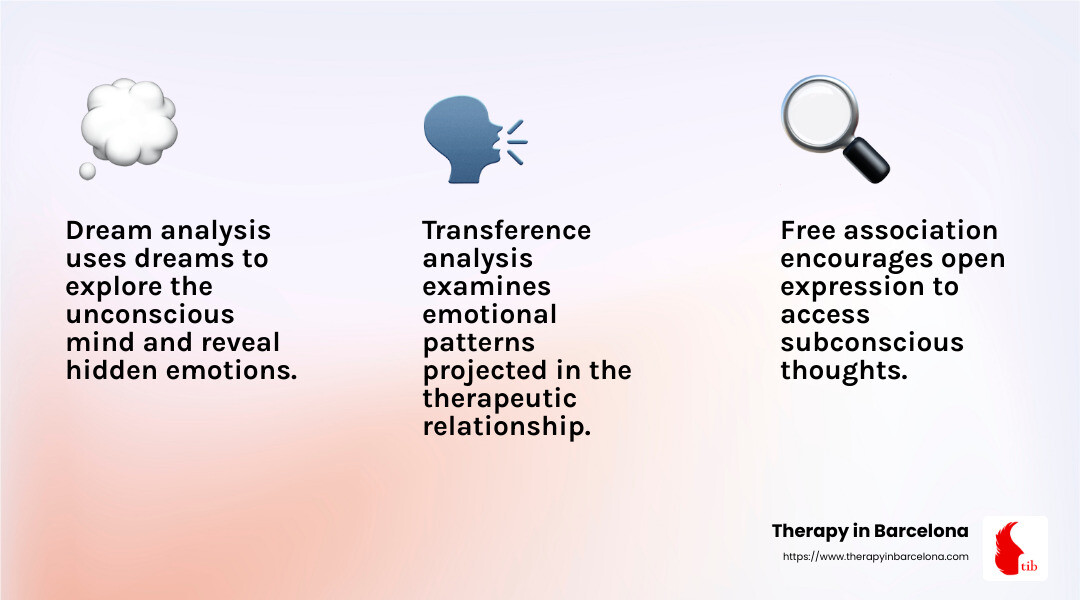
These psychodynamic psychotherapy techniques offer powerful tools for self-finding and emotional growth. They help individuals steer complex feelings and improve their relationships, making them particularly valuable for expats facing the unique challenges of life abroad. As we dig deeper into these techniques, you’ll find how they can be applied to foster emotional resilience and personal growth.
Key Techniques in Psychodynamic Psychotherapy
Dream Analysis
Dreams are more than just nighttime narratives; they’re a peek into the unconscious mind. In psychodynamic therapy, dreams can be a powerful tool for understanding hidden emotions and unresolved conflicts. Sigmund Freud famously called dreams the “royal road to the unconscious,” and this holds true even today. By examining the symbols and stories in dreams, therapists can help individuals link past experiences to their current emotional states. Take Emily, our fictional UK expat in Barcelona, for example. Her recurring dreams of being lost might reveal deeper insecurities or fears related to her life as an expat, helping her gain insight into her emotional patterns.
Free Association
Picture a conversation where you can say anything that comes to mind, without judgment or filters. This is the essence of free association. This technique encourages individuals to express their thoughts and feelings spontaneously, bringing unconscious ideas to the surface. It can reveal hidden connections between past experiences and present behavior. For someone like Emily, who might be navigating the challenges of adapting to a new culture, free association can uncover subconscious patterns impacting her current relationships and emotional well-being.
Transference Analysis
The therapeutic relationship is a cornerstone of psychodynamic therapy. Transference analysis focuses on how past relationships influence current interactions, particularly with the therapist. Clients might unknowingly project feelings about important people in their lives onto their therapist. By exploring these projections, therapists can help clients like Emily understand unresolved emotional patterns. This can lead to healthier ways of relating to others, both within and outside therapy sessions.
These psychodynamic psychotherapy techniques—dream analysis, free association, and transference analysis—offer valuable insights into the unconscious mind. They help individuals like Emily steer complex emotions and improve their interpersonal relationships, making them especially beneficial for expats facing the unique challenges of life abroad. As we continue to explore these techniques, you’ll see how they can foster emotional resilience and personal growth.
Comparing Psychodynamic Therapy with Other Therapies
When it comes to therapy, one size doesn’t fit all. Different approaches offer unique benefits, and understanding these can help you choose the right path for your mental health journey. Let’s explore how psychodynamic therapy stacks up against other popular therapeutic modalities.
Cognitive Behavioral Therapy (CBT)
Cognitive Behavioral Therapy (CBT) is like the practical sibling of psychodynamic therapy. While psychodynamic therapy focuses on uncovering unconscious motivations and past experiences, CBT zeroes in on the here and now. It helps individuals identify and change negative thought patterns and behaviors. Think of it as a mental workout, where you learn to challenge unhelpful thoughts and develop healthier habits.
A study comparing psychodynamic therapy and CBT for depression found that both were equally effective immediately after treatment. This suggests that for those struggling with depression, either approach could be a good fit. However, CBT is often shorter and more structured, which can be appealing if you’re looking for a more direct approach to managing symptoms.
Psychoanalysis
Psychoanalysis is the deep dive of therapies, rooted in the theories of Sigmund Freud. It’s the precursor to psychodynamic therapy, sharing many core principles but often requiring a more intensive commitment. While psychodynamic therapy might meet weekly, psychoanalysis can involve several sessions a week over many years.
This depth allows for a thorough exploration of the unconscious mind, but it also means a significant time and financial investment. For those ready to explore the intricate layers of their psyche, psychoanalysis can offer profound insights, particularly for complex and chronic conditions.
Therapeutic Modalities: A Blend of Approaches
Modern therapy often involves a blend of different therapeutic modalities. Practitioners might integrate techniques from both psychodynamic therapy and CBT, creating a custom approach that addresses both surface-level symptoms and deeper psychological issues.
This integrative approach is particularly beneficial in an interprofessional setting, where various experts collaborate to provide comprehensive care. For example, a therapist might use CBT techniques to address immediate anxiety symptoms while employing psychodynamic methods to explore underlying emotional patterns.
In summary, whether you resonate with the structured approach of CBT, the depth of psychoanalysis, or the flexibility of an integrative model, each therapy has something unique to offer. The key is finding what aligns best with your needs and life circumstances. For expats like Emily, navigating the complexities of life abroad, these therapies can provide essential support and guidance.
Unique Features of Psychodynamic Therapy
Psychodynamic therapy stands out for its focus on deeper emotional and relational patterns. It’s like peeling back layers of an onion to understand the core of emotional and interpersonal challenges. Let’s explore some of its unique features.
Affect and Emotion
In psychodynamic therapy, emotions are front and center. This approach helps individuals not just to understand but also to feel their emotions deeply. It encourages expressing and processing emotions that might have been buried or resisted. By doing so, clients can confront feelings like anger or sadness that may have been affecting their lives in hidden ways. This emotional exploration can lead to greater self-awareness and personal growth.
Interpersonal Relations
Early relationships shape how we interact with others today. Psychodynamic therapy dives into these past connections to uncover patterns in current relationships. For instance, someone who felt neglected as a child might struggle with trust in adult relationships. By understanding these patterns, clients can start to change how they relate to others, improving their interpersonal dynamics.
Research shows that focusing on these relational patterns can be particularly effective for individuals dealing with complex relationship issues or severe personality pathology. The therapy offers insights into how past experiences influence present interactions, promoting healthier and more fulfilling relationships.
Therapeutic Relationship
The relationship between therapist and client is a cornerstone of psychodynamic therapy. This bond, known as the therapeutic alliance, provides a safe space for clients to explore their unconscious processes. It’s a collaborative journey where trust and openness are key. A strong therapeutic alliance can lead to significant emotional experiences and improvements in functioning.
In this relationship, transference and countertransference play crucial roles. Clients might unconsciously project feelings about significant others onto their therapist. Similarly, therapists might experience countertransference, where their emotional responses to the client reflect their own unconscious feelings. These dynamics are explored to gain insights into relational patterns and unresolved conflicts.
In summary, the unique features of psychodynamic therapy—emotional exploration, focus on interpersonal relations, and the therapeutic relationship—create a rich and transformative experience. These elements work together to foster long-term psychological growth and self-awareness, offering a path to deeper understanding and lasting change.
This section leads us into the frequently asked questions about psychodynamic psychotherapy techniques, where we’ll address common queries and provide further clarity on this insightful therapeutic approach.
Frequently Asked Questions about Psychodynamic Psychotherapy Techniques
What are the 5 techniques of psychoanalytic therapy?
Psychoanalytic therapy, rooted in Freud’s theories, involves several core techniques. Here are the five most notable ones:
Dream Analysis: This technique explores the symbolic meaning of dreams to gain insight into the unconscious mind. Dreams are seen as a window into our deepest thoughts and desires, often revealing unresolved conflicts from our past.
Free Association: In this approach, clients are encouraged to express their thoughts freely without censorship. This spontaneous flow of thoughts can reveal hidden associations and provide a deeper understanding of subconscious motivations.
Transference Analysis: This involves examining the emotions clients project onto their therapist. It helps uncover feelings and patterns from past relationships, offering valuable insights into current interpersonal dynamics.
Defense Mechanisms: These are strategies the mind uses to protect itself from anxiety or discomfort. Analyzing these mechanisms, like repression or denial, helps clients understand how they avoid confronting painful emotions.
Resistance Analysis: Resistance can show up as reluctance or avoidance in therapy. Exploring these behaviors can lead to breakthroughs, as they often point to underlying fears or unresolved issues.
What technique is typically used in psychodynamic therapy?
Free Association is a hallmark of psychodynamic therapy. This technique allows clients to speak freely, helping to uncover subconscious thoughts and feelings. By encouraging an open dialogue, therapists can identify recurring themes and emotional patterns that might be influencing the client’s present behavior. It’s a bit like following a trail of breadcrumbs back to the source of one’s distress.
What are psychodynamic group therapy techniques?
In a group setting, psychodynamic therapy takes on a unique dimension. Here, individuals interact with others who may share similar struggles. This environment can illuminate unconscious motivations and relational patterns.
Key techniques include:
Group Free Association: Participants share thoughts and feelings openly within the group. This collective exploration can reveal shared themes and individual differences.
Role-Playing: This helps members understand and analyze their behavior in relationships. By acting out scenarios, individuals can gain insights into their interpersonal dynamics.
Feedback and Reflection: Group members provide feedback to each other, offering different perspectives on shared experiences. This process can foster self-awareness and personal growth.
Group therapy can be particularly powerful as it mirrors real-world social interactions, allowing participants to practice new ways of relating to others in a supportive environment.
These techniques, whether in individual or group settings, highlight the depth and versatility of psychodynamic psychotherapy techniques. They provide a framework for exploring the subconscious, fostering emotional insight, and promoting meaningful change.
Conclusion
Therapy in Barcelona offers a sanctuary for internationals seeking custom mental health support. Their approach to therapy is not just about addressing symptoms but about understanding the deeper layers of one’s psyche through techniques like psychodynamic psychotherapy. This method digs into the unconscious mind, helping clients uncover hidden motivations and unresolved conflicts that might be affecting their daily lives.
A standout feature of Therapy in Barcelona is their commitment to personalised therapist matching. This means clients are carefully paired with therapists who not only speak their language but also understand their unique cultural backgrounds and experiences. This personalized approach ensures that therapy is not just effective but also deeply resonant with each individual’s needs.
Moreover, Therapy in Barcelona‘s dedication to culturally sensitive support sets them apart. They recognize that living in a foreign country can bring its own set of challenges, from cultural adjustment to feelings of isolation. Their therapists, many of whom are expats themselves, provide a compassionate and understanding environment where clients can explore these issues without judgment.
By integrating psychodynamic psychotherapy techniques with a culturally informed approach, Therapy in Barcelona helps clients achieve deeper self-awareness and emotional growth. Whether you’re navigating the complexities of expat life or seeking to understand your inner world, Therapy in Barcelona offers a path to healing and personal development.
If you’re ready to explore what therapy can do for you, find more about our services and start your journey with a therapist who truly understands your needs.
