


Why Solution-Focused Therapy Works So Well for Adjustment Disorder

Solution-focused therapy for adjustment disorder offers a refreshingly different approach to navigating life transitions. Instead of spending months dissecting what went wrong, this brief therapy method helps you build on what’s already working and create concrete steps forward.
Quick Overview: Solution-Focused Therapy for Adjustment Disorder
- What it is: A brief, strengths-based therapy focusing on solutions rather than problems
- Duration: Typically 3-8 sessions, perfect for adjustment disorder’s time-limited nature
- Key techniques: Miracle question, scaling questions, exception finding, goal setting
- Best for: Life transitions, cultural adaptation, work stress, relationship changes
- Evidence: Over 60 controlled studies support its effectiveness for various conditions
- Approach: Collaborative, future-focused, empowering clients as experts in their own lives
If you’re an expat in Barcelona struggling with cultural adjustment, work transitions, or relationship changes, you’re experiencing what clinicians call adjustment disorder. It’s that overwhelming feeling when life throws you a curveball—maybe a job change, a move abroad, or a relationship shift—and your usual coping strategies just aren’t cutting it.
Here’s the thing: adjustment disorder typically resolves within six months. Your brain and emotions are essentially recalibrating to new circumstances. This is where solution-focused brief therapy (SFBT) shines. Rather than spending months exploring your childhood or analysing every detail of your stressor, SFBT asks: “What would your life look like if this problem was solved?”
As Leigh Matthews, an Australian psychologist who founded Therapy in Barcelona after her own expat journey since 2011, often explains to her international clients: “You already have the resources within you to steer this transition. We just need to help you access them.”
The beauty of SFBT lies in its collaborative nature. You’re not a patient being diagnosed—you’re the expert on your own life, working with a therapist to map out practical solutions. It’s particularly effective for expats because it doesn’t require you to become fluent in therapy-speak or dive deep into cultural analysis. Instead, it focuses on building the future you want, one small step at a time.
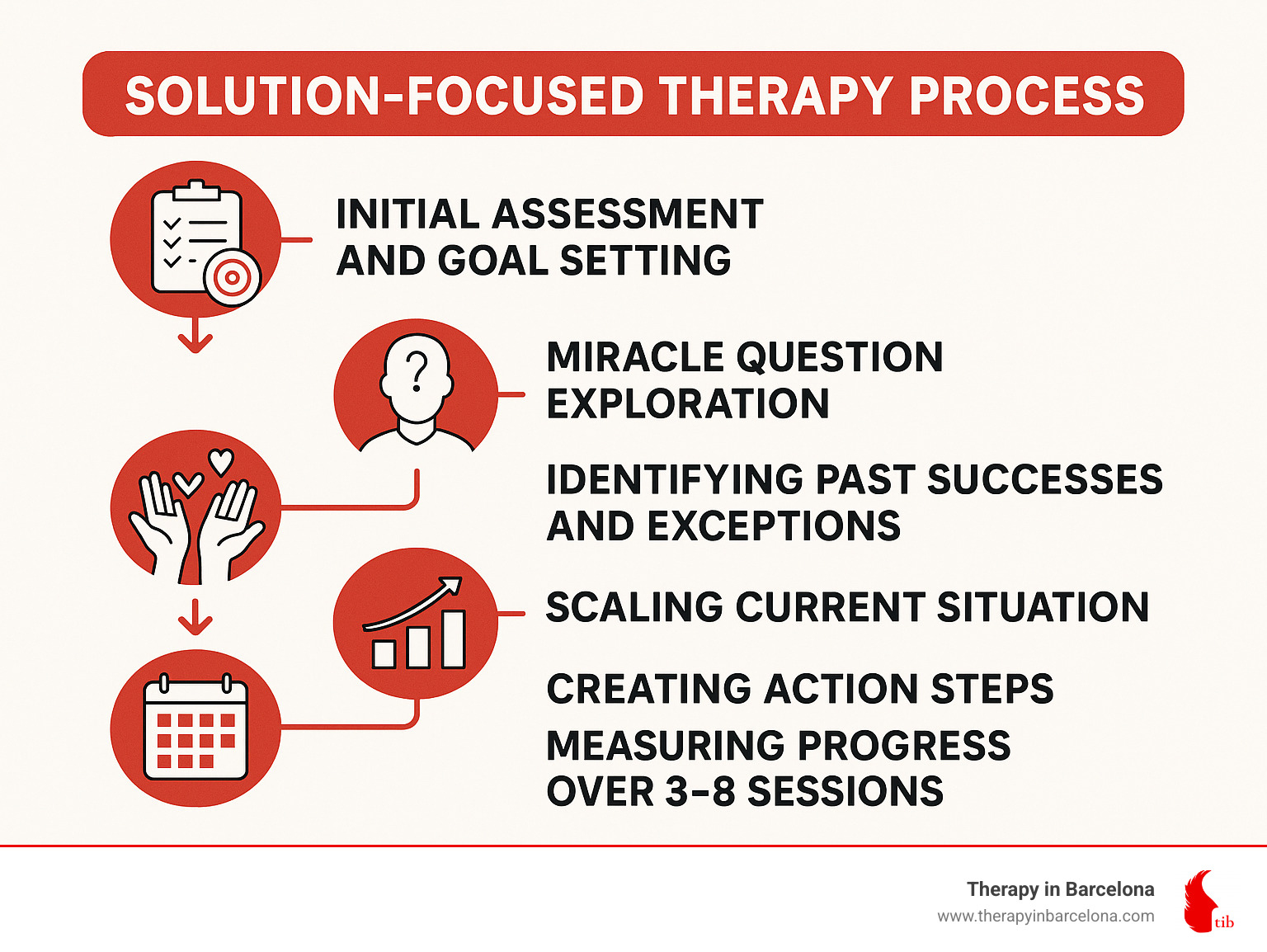
What Makes Solution-Focused Brief Therapy Different?
Picture this: you sit down with a therapist and, instead of analysing every reason you feel overwhelmed, you hear, “If you woke up tomorrow and your problem was solved, what would be different?” That single question captures the spirit of Solution-Focused Brief Therapy (SFBT), created in the 1980s by Steve de Shazer and Insoo Kim Berg.
Unlike traditional approaches that dig through years of history, SFBT:
- emphasises the strengths and resources you already have;
- keeps conversations future-focused and goal-oriented;
- treats you as the expert on your own life;
- delivers noticeable change in 3–8 sessions.
Research (see this conceptual framework image) shows that focusing on solutions rather than problems reliably accelerates progress.
From Problem Talk to Solution Talk
When you feel isolated in Barcelona, old-school therapy might ask why you feel lonely. SFBT asks, “When was loneliness less intense?” These exception questions transform vague struggles into concrete clues. Add in strategic compliments—genuine acknowledgements of your resilience—and you quickly shift from “struggling expat” to “capable problem-solver”.
Brevity Without Cutting Corners
Most clients see meaningful gains within five to eight meetings. Scaling questions track change numerically (e.g., “On a scale of 1-10, where are you today?”) so even tiny improvements are visible. Therapists “lead from one step behind”, asking curious rather than prescriptive questions—an empowering stance that fits the self-reliant spirit of many internationals who have already steered big life moves.
Solution-Focused Therapy for Adjustment Disorder: Why It Fits Hand-in-Glove

Adjustment disorder is, by definition, temporary—symptoms usually settle within six months as your mind adapts to new circumstances. That built-in deadline mirrors SFBT’s brief structure, making the two a natural match. A systematic review of 23 studies confirms that short, goal-centred interventions work especially well for this diagnosis.
Common expat triggers include cultural norms, paperwork, language barriers, identity shifts, and homesickness. The Adjusting the Approach guide breaks down other methods, but SFBT stands out for its speed and clarity.
How the Approach Builds Momentum Fast
The famous miracle question cuts through overwhelm: “If the adjustment stress vanished tonight, what might you notice first?” Answers such as “I’d wake up excited to explore” or “I’d chat confidently in Spanish” become precise therapy targets.
Because SFBT looks for what’s already helping, relief often arrives early. Identifying a hidden strength (“I actually felt better after that language exchange”) sparks small, repeatable actions that snowball into bigger change.
Tackling Everyday Expat Stressors
- Relocation anxiety → recall a past move you handled well; adapt that strategy here.
- Isolation → examine occasions you felt connected; schedule more of those situations.
- Work-life balance → pinpoint one boundary (e.g., no emails after 20:00) and test it for a week.
- Hidden supports → map people, skills, and routines you already possess but may have overlooked.
By rooting every step in your own successes, SFBT avoids one-size-fits-all advice and keeps sessions laser-focused on results.
Core Principles & Techniques You’ll Encounter in Session
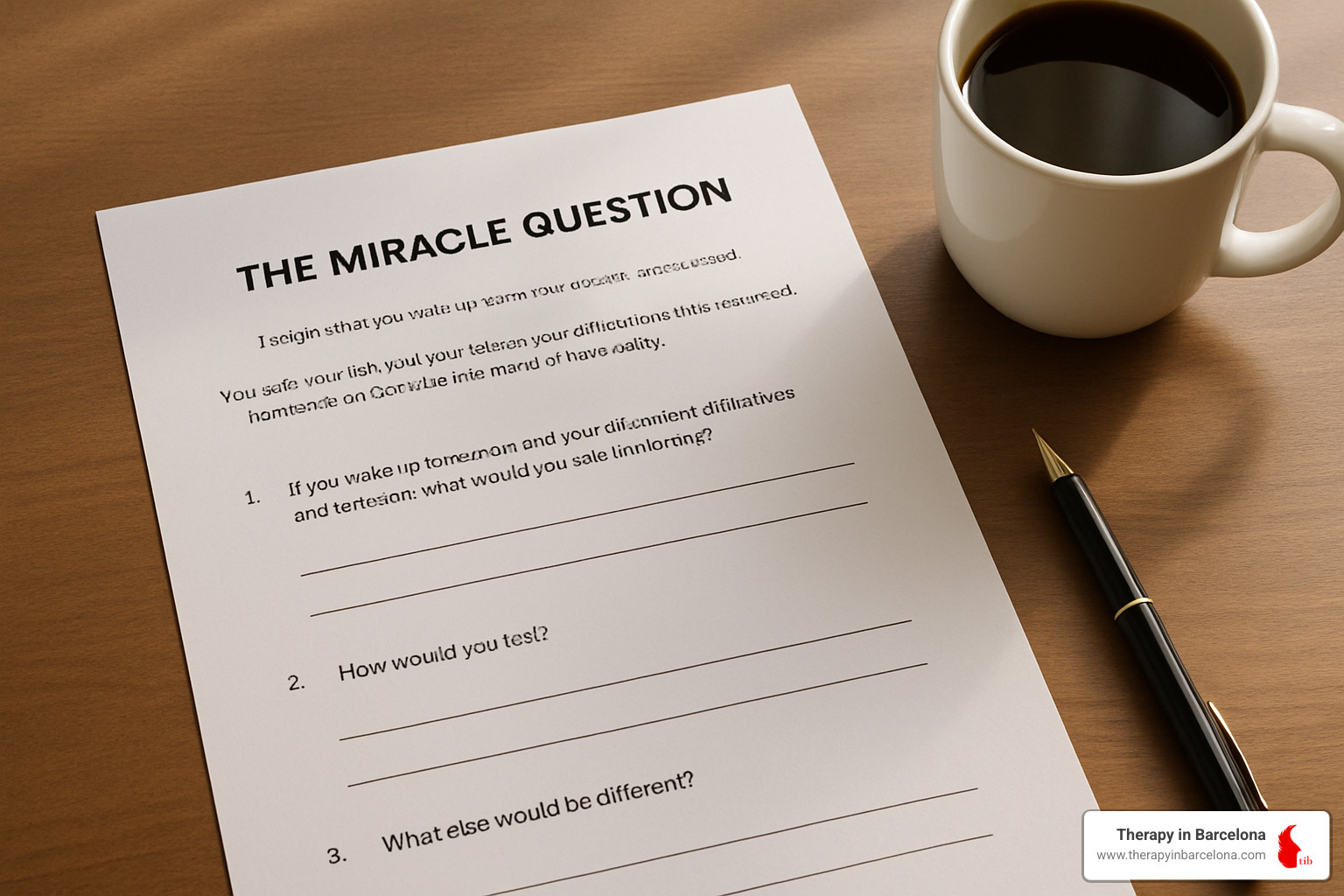
Expect a toolbox that is intuitive rather than technical:
- Miracle question – visualise your preferred future.
- Scaling questions – rate progress (1-10) and define the next small step.
- Exception finding – spotlight moments when the problem eased.
- Coping questions – uncover how you already keep going on tough days.
- SMART+ goals – Specific, Measurable, Achievable, Relevant, Time-bound, and personally meaningful.
The Miracle Question: Envisioning a Better Tomorrow
Your therapist might ask, “When you wake tomorrow after a miracle, what’s the first sign?” The exercise bypasses overthinking and turns hazy hopes into actionable goals—“I’d say ‘yes’ to after-work drinks” is much easier to chase than “I want to feel happier.”
Scaling & Exception Questions: Tracking Tiny Wins
If you rate your adjustment as a 4 today, brainstorm what a 5 would look like—perhaps emailing that hiking group. Later sessions revisit the scale to celebrate progress. Meanwhile, exception questions mine recent days for successes you may have missed, converting them into homework experiments (“repeat that Sunday stroll that lifted your mood”).
A Typical SFBT Journey—From First Call to Graduation
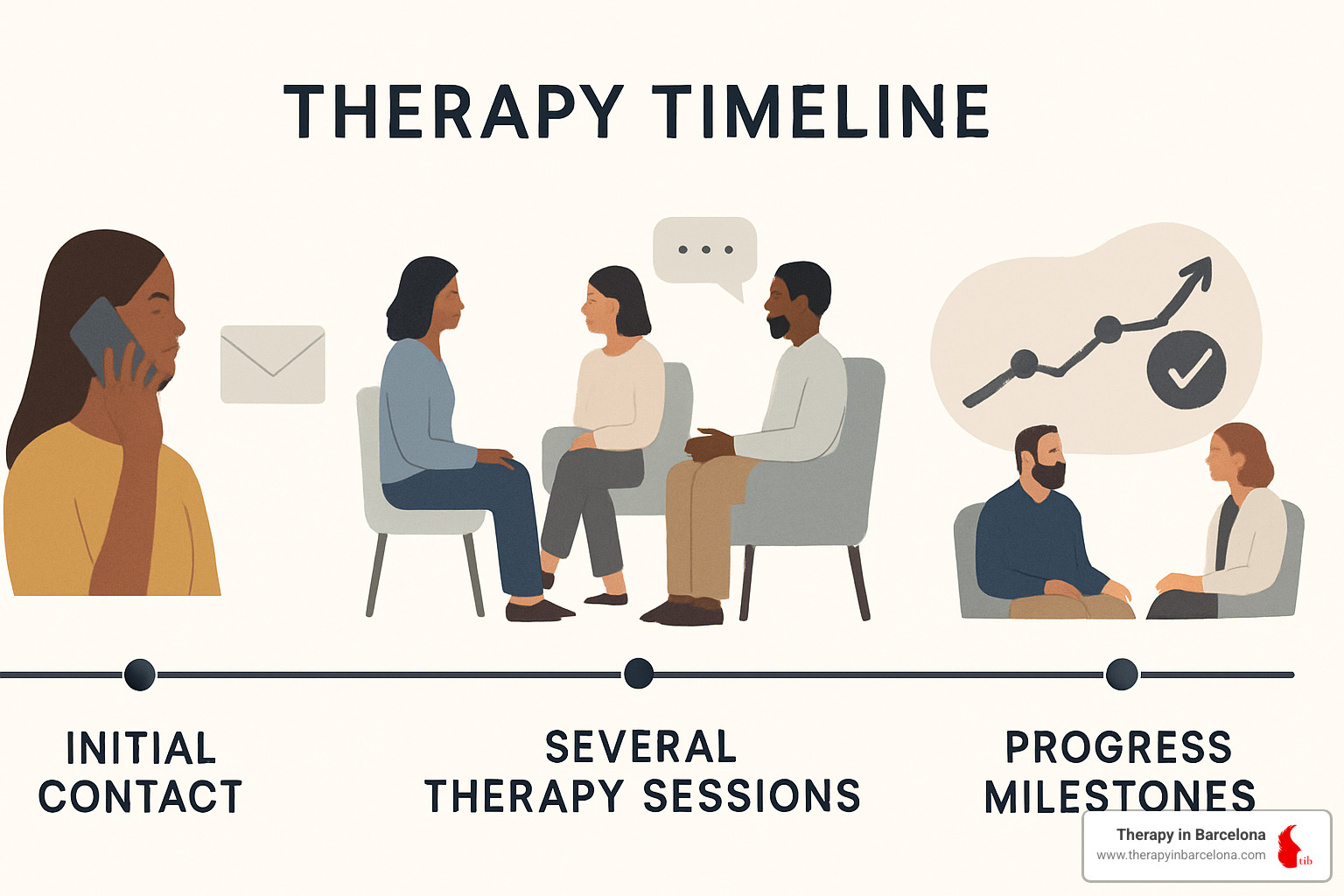
When you first reach out to Therapy in Barcelona, you’re probably feeling a mix of hope and uncertainty. The intake process begins with understanding not just what’s troubling you, but what you’re hoping to achieve. This collaborative approach continues throughout your solution-focused therapy for adjustment disorder journey.
Most clients find the structured yet flexible nature of SFBT reassuring. Unlike open-ended therapy that might continue for months or years, SFBT typically unfolds over 3-8 sessions, with each session building purposefully on the last. This timeline aligns perfectly with adjustment disorder’s temporary nature—you’re not signing up for endless exploration, but for focused work toward specific goals.
SFBT vs CBT for Adjustment Disorder:
| Aspect | SFBT | CBT |
|---|---|---|
| Duration | 10-12 sessions | 12-20 sessions |
| Focus | Future solutions | Thought patterns |
| Approach | Strengths-based | Problem-solving |
| Homework | Experiments | Monitoring thoughts |
| Best for | Time-limited issues | Chronic patterns |
Session 1-2: Goal-Setting & Strength Mapping
Your first session might feel different from what you expect therapy to be. Instead of diving deep into your problems, your therapist begins with hope instillation—helping you recognise that change is not only possible but that you already possess many of the resources needed to create it.
“What would you like to be different in your life when we finish working together?” This question, rather than “What problems brought you here?” sets the tone for your entire therapeutic journey. You’re not broken and in need of fixing—you’re someone with goals who could benefit from support in achieving them.
Alliance building happens naturally through this collaborative stance. Your therapist’s genuine curiosity about your strengths and past successes creates a safe space where you feel heard rather than judged. This is particularly important for expats who might already feel vulnerable or displaced.
During these initial sessions, you’ll engage in strength mapping—identifying resources you might have overlooked. Perhaps you successfully steerd a difficult career change five years ago, or you’ve maintained close friendships despite living in different countries. These aren’t just nice memories; they’re evidence of your resilience and capability.
Session 3-4: Experimenting with Solutions
Once your goals are clear and strengths identified, the real work begins. Based on your responses to the miracle question and the exceptions you’ve found, you’ll design behavioural tasks to try between sessions. These aren’t generic homework assignments—they’re personalised experiments custom to your specific situation and goals.
If you noticed you felt more confident after certain activities, you might experiment with incorporating more of those into your week. If you felt less homesick when you explored new neighbourhoods, you might plan specific routes or areas to find. The key is that these tasks emerge from your own insights about what works for you.
Session 5+: Consolidating Change & Planning Ahead
As positive changes become more consistent, later sessions focus on consolidating gains and preparing for the future. This isn’t about assuming you’ll struggle again, but about recognising that adjustment is an ongoing process, especially for expats who might face multiple transitions.
Self-efficacy building becomes crucial here. Your therapist helps you recognise that the improvements you’ve experienced aren’t just happening to you—you’re actively creating them through your choices and actions. This recognition is empowering and builds confidence for handling future challenges independently.
Evidence, Benefits, and Things to Keep in Mind
A review of 56 studies (1993-2019) found consistent, positive outcomes for SFBT across health settings, schools, and community services. Importantly for expats, many trials involved people facing major life changes—cancer treatment, relocation, educational shifts—mirroring the pressures of moving abroad.
What the Research Shows
- Rapid gains – significant symptom drops often appear within the first two or three sessions.
- Sustained change – follow-ups regularly show benefits maintained months later.
- Improved self-efficacy – participants report stronger belief in their ability to handle future problems.
A single-case example: a 19-year-old’s Hamilton Depression score fell from 21 (severe) to 6 (normal) after six SFBT meetings. While everyone’s path differs, the speed of change is typical.
When SFBT Might Not Be Enough
SFBT excels when goals are clear and immediate. Complex trauma, active suicidal thoughts, or severe co-occurring conditions may call for additional or alternative care (e.g., trauma-focused therapies or psychiatric support). Therapists at Therapy in Barcelona routinely assess this and, thanks to their own expat backgrounds, do so with cultural sensitivity.
Integrating SFBT into a Holistic Adjustment Plan
Solution-focused therapy for adjustment disorder can stand alone or blend with other evidence-based tools. At Therapy in Barcelona, clinicians often layer in:
- Mindfulness for moment-to-moment grounding.
- CBT techniques to challenge unhelpful thoughts (useful for language-related anxiety, for example).
- Interpersonal skills for deeper relationships with local friends or colleagues.
The From Stress to Success resource explains more about tailoring goals.
Working with Your Therapist Between Sessions
Most progress happens in daily life. Journals or quick voice notes help you notice what improved (“Felt braver ordering lunch in Catalan”). Mind-mapping lets visual thinkers link goals, resources, and next steps.
Lifestyle Tweaks That Boost Results
- Sleep – keep a steady bedtime despite Barcelona’s late dinners.
- Connection – even one meaningful friendship buffers against homesickness; try a language exchange or hiking group.
- Self-compassion – remind yourself you’re learning a whole new life, not failing an exam.
These micro-adjustments reinforce the solution-focused changes you design in session.
Frequently Asked Questions about Solution-Focused Therapy & Adjustment Issues
When you’re considering solution-focused therapy for adjustment disorder, it’s natural to have questions about what to expect. As an expat facing life transitions, you want to understand how this approach works and whether it’s right for your situation.
How many sessions will I need?
The beauty of solution-focused therapy lies in its efficiency. Most clients experience meaningful improvements within 3-8 sessions, with many noticing positive changes after just their first or second meeting. This isn’t about rushing through your concerns—it’s about focusing intensively on what works.
Think of it this way: if you’re dealing with adjustment challenges from relocating to Barcelona, you’re not looking for years of analysis. You need practical tools and renewed confidence to steer your transition. Some clients find that 3-4 sessions provide enough momentum and strategies to continue progressing independently. Others benefit from 6-8 sessions to fully consolidate their changes and build lasting confidence.
Your therapist will work collaboratively with you to determine the right duration. Since adjustment disorder typically resolves within six months anyway, the brief nature of SFBT aligns perfectly with your brain’s natural adaptation process. You’re not committing to an endless therapeutic journey—you’re investing in focused, goal-oriented support during a challenging but temporary period.
Will I still talk about my past?
This is one of the most common concerns expats have about solution-focused therapy for adjustment disorder. The answer is yes, but not in the way you might expect from traditional therapy approaches.
SFBT doesn’t ignore your past experiences—it uses them strategically. You’ll explore past successes and times when you coped well with similar challenges. If you successfully steerd a previous international move, changed careers, or adapted to a new culture, these experiences become valuable resources for your current situation.
However, you won’t spend extensive time analysing childhood experiences or past traumas unless they directly relate to your current goals. The focus remains firmly on how your past experiences can inform present solutions. For instance, if you managed homesickness during university by maintaining regular contact with family, you might explore how to adapt that strategy for your current Barcelona experience.
Can SFBT be combined with other approaches?
Absolutely. Many therapists at Therapy in Barcelona integrate SFBT techniques with other evidence-based approaches when it serves your specific needs. The key is ensuring that any combination supports your goals rather than creating confusion or conflicting messages.
For example, if you’re dealing with adjustment disorder alongside anxiety about speaking Spanish at work, your therapist might use SFBT goal-setting combined with CBT techniques for managing anxious thoughts. Or if you’re struggling with cultural identity questions, they might blend solution-focused approaches with mindfulness practices to help you stay grounded in the present moment.
The therapists at Therapy in Barcelona are trained in multiple therapeutic modalities, including CBT, ACT, mindfulness, and interpersonal therapy. This means they can draw from various approaches while maintaining the forward-focused, strengths-based foundation that makes SFBT so effective for adjustment issues.
Conclusion
The journey from feeling overwhelmed to finding your footing in a new country doesn’t have to be a marathon. Solution-focused therapy for adjustment disorder offers something refreshingly different: a path that honours your existing strengths while building concrete steps toward the life you want to create.
What makes this approach so powerful for expats isn’t just its efficiency—though the typical 3-8 session timeframe certainly appeals to busy internationals. It’s the fundamental belief that you already possess the resources to steer this transition successfully. Sometimes you just need someone who understands the unique challenges of expat life to help you access those resources.
The research consistently shows that brief, strengths-based interventions can create lasting change for adjustment difficulties. But beyond the statistics, there’s something deeply empowering about an approach that asks “What’s already working?” rather than “What’s wrong with you?” This shift in perspective often becomes the catalyst for broader positive changes in how you approach challenges.
If you’re reading this while struggling with cultural adjustment, work transitions, or that particular kind of homesickness that comes with choosing to live abroad, know that seeking support isn’t admitting defeat—it’s demonstrating the same courage and resourcefulness that brought you to Barcelona in the first place.
At Therapy in Barcelona, we understand these complexities because we’ve lived them ourselves. Our team of expat therapists brings both professional expertise and personal experience to every session. We know what it’s like to question your decision to move abroad, to feel caught between cultures, or to wonder if you’ll ever truly feel at home in your new city.
The solution-focused therapy for adjustment disorder approach recognises that adjustment isn’t about becoming a different person—it’s about becoming the version of yourself that thrives in your new environment. It’s about building bridges between who you were and who you’re becoming, rather than feeling like you have to choose between them.
Your adjustment journey is uniquely yours, but you don’t have to steer it alone. With the right support, cultural understanding, and solution-focused tools, you can transition from merely surviving to genuinely thriving in your new life.
Ready to explore how this approach might work for your specific situation? More info about our services can help you take that first step toward feeling more settled and confident in your Barcelona trip.

