


Why Coping with Isolation Matters More Than You Think

Coping with isolation becomes a crucial skill when you’re living abroad, yet it’s one that most of us never expected to need. Many expats describe an overwhelming sense of disconnection that can creep in when everything familiar suddenly feels foreign. This experience is common, but it can be deeply unsettling.
Here are the key strategies for coping with isolation as an expat:
- Rebuild your social world – Join local groups, take language classes, volunteer for causes you care about.
- Nurture your inner world – Establish daily routines, practise self-compassion, challenge negative thought patterns.
- Use technology wisely – Schedule regular video calls home, join online communities, but limit social media comparison.
- Seek professional help when isolation affects your daily functioning or mental health.
Living abroad means rebuilding your entire social ecosystem from scratch. Research shows that social isolation can increase your risk of death to a similar degree as smoking, whilst loneliness affects cognitive functioning and increases the risk of feeling anxious or persistently down.
The good news? Understanding why isolation hits so hard is the first step toward addressing it. Whether you’ve just arrived in Barcelona, settled into life in Valencia, or you’ve been in Madrid for years but still feel disconnected, recognising that isolation is both common and manageable can help you take the next steps toward building meaningful connections.

Understanding Expat Isolation: It’s More Than Just Missing Home
Moving to a new country feels like an adventure at first. The excitement of exploring Barcelona’s Gothic Quarter or finding a hidden café in Valencia can mask what’s happening beneath the surface. For many internationals, the honeymoon phase gives way to a profound sense of coping with isolation that goes deeper than missing your favourite tea.
Cultural shock is more than adjusting to late dinners; it’s the exhausting work of decoding new social cues. Language barriers can make simple tasks feel monumental, draining your energy. Then there’s the loss of your support network—the friends and family who knew your history are now thousands of kilometres away. This often triggers an identity crisis, as the social roles that once defined you are suddenly gone.
Take Jessica, a 34-year-old from the UK who moved to Valencia for work imagining sun-soaked evenings with new friends. She’s fictional, but her story mirrors many expats’ experiences. Instead of the social life she’d imagined, she found herself scrolling through social media, feeling that she was the only one struggling to connect. Her experience represents countless internationals who find that feeling like an outsider can persist even in welcoming cities.
From an evolutionary perspective, this struggle makes sense. Humans are social creatures, and when we’re isolated, our bodies respond as if under threat, increasing stress hormones. Research suggests that isolation can significantly impact our stress response and inflammatory processes, affecting our wellbeing in ways we might not immediately recognise.
The Difference Between Social Isolation and Loneliness
Social isolation and loneliness aren’t the same, though they often go together. Understanding this difference is crucial for coping with isolation effectively.
Social isolation is objective—it’s the actual number of social contacts you have. If you’ve just moved to Sevilla and haven’t made local friends, you’re likely socially isolated.
Loneliness, however, is subjective. It’s the aching feeling that your relationships lack depth. You could be at a busy tapas bar in Madrid, surrounded by people, and still feel profoundly lonely. Conversely, someone living alone in a quiet Alicante neighbourhood might feel deeply connected.
Think of it this way: social isolation is about quantity; loneliness is about quality. You might have many acquaintances but still long for someone who truly understands you.
Why Internationals Are Particularly at Risk
Living abroad creates a perfect storm for isolation. It’s the accumulation of multiple disruptions that can overwhelm even the most resilient people.
- Loss of familiar routines: Your daily habits were opportunities for casual social connection. Rebuilding these micro-connections from scratch is surprisingly draining.
- Navigating new social codes: Constantly second-guessing social interactions is exhausting and can make you hesitant to reach out, deepening the cycle of isolation.
- Professional identity shifts: You might have been an expert back home, but now you’re navigating new workplace dynamics, possibly in a second language, which can shake your confidence.
- Distance from loved ones: Video calls help, but they can’t replace spontaneous coffee dates or comforting hugs. Time zones further complicate staying connected.
- Building deep connections: In a transient expat community, it can be tempting to keep relationships surface-level, fearing that new friends may soon move away.
As Leigh Matthews—an Australian Psychologist in Barcelona since 2011 and the founder of Therapy in Barcelona, experienced in supporting internationals says that expats need to actively work on creating a sense of belonging. This means moving beyond the expat bubble to connect authentically with both locals and other long-term internationals.
The Sneaky Ways Isolation Affects Your Health

When you’re coping with isolation abroad, the effects go far beyond just feeling lonely. Your body and mind react in ways that might surprise you. Your brain treats loneliness like a physical threat, triggering a stress response that keeps you in a constant state of alert. Research examining isolation’s impact on mental health reveals how profound these effects can be, showing that even everyday isolation follows patterns similar to more extreme cases.
Physical Health Impacts
Chronic isolation takes a toll on your body. The constant state of alert leads to raised levels of stress hormones like cortisol, which wears your system down over time. This can cause chronic inflammation, increasing the risk for heart disease, high blood pressure, and obesity.
Sleep is another casualty. Isolation often leads to disrupted sleep patterns, making it harder to get restorative rest. This, in turn, can lead to a weakened immune system, leaving you more vulnerable to illness. It’s a vicious cycle: poor sleep can make you feel more isolated, and isolation can make sleep more elusive.
Mental Health Impacts
The mental toll of isolation can be just as severe. Intense feelings of worry are common, which can make the thought of meeting new people in your Barcelona neighbourhood feel overwhelming.
Isolation also significantly increases your risk of experiencing persistent low mood. Feelings of sadness, hopelessness, and a lack of motivation can become persistent. You might lose interest in activities you once enjoyed, like exploring a new market in Málaga or joining a hiking group in Alicante.
Your cognitive function can also take a hit, leading to brain fog and difficulty concentrating. Some people become hypersensitive to social cues, reading rejection into neutral interactions. This can make you want to withdraw even further, deepening the cycle.
If these symptoms sound familiar, you’re not alone. Individual therapy can help you work through these challenges and develop healthier ways of connecting.
Practical Strategies for Coping with Isolation as an Expat

The good news about feeling isolated? There are real, practical steps you can take. Coping with isolation is about actively rebuilding your connection to the world and your inner well-being. Whether you’re in Barcelona, Valencia, or Málaga, these strategies can help.
Rebuild Your Social World
Putting yourself out there is hard, but you can start small with things you already love.
- Join clubs or groups: Shared interests like hiking, books, or cooking are natural conversation starters. Platforms like Meetup are great for finding local events and other expats.
- Take a language class: You’ll learn Spanish and meet other internationals who understand what you’re going through.
- Volunteer for a cause: Research shows that volunteering expands your social network, especially during life transitions. Helping at an animal shelter or a beach clean-up in Alicante connects you with like-minded people.
- Connect with neighbours and locals: A simple “hola” in the lift can be a start. Attending local festivals or workshops gives you a reason to be around people without pressure.
Quality beats quantity. A few meaningful connections are better than a calendar full of superficial ones.
Nurture Your Inner World for Coping with Isolation
Your relationship with yourself is just as important as your external connections.
- Establish a daily routine: When everything feels uncertain, a routine provides structure. Start simple: wake up at the same time, get dressed, and go for a daily walk. A walk gets you out, provides gentle exercise, and can lead to unexpected interactions.
- Practise self-compassion: Treat yourself with the same kindness you’d offer a friend. Challenge harsh thoughts like “I should be settled by now.”
- Challenge negative thoughts: Our brains are wired for negativity. When you notice yourself spiralling, write down the negative thought and then a more balanced, realistic response.
- Use mindfulness techniques: The RAIN method (Recognize, Allow, Investigate, Non-identification) can help you process difficult emotions without getting swept away. For young people facing these challenges, therapy can provide valuable additional tools.
Use Technology Wisely for Coping with Isolation
Technology can be a friend or a foe. Use it intentionally.
- Schedule regular video calls: A quick weekly video chat with loved ones back home can significantly reduce loneliness.
- Join online communities: Find forums or groups related to your hobbies or profession to connect with people without the pressure of meeting face-to-face.
- Use apps to connect: Language exchange or friend-finding apps can help bridge the gap between online and offline relationships.
- Limit social media comparison: Social media is a highlight reel. Comparing your inner struggles to someone’s curated feed is a recipe for feeling worse. Don’t hesitate to mute or unfollow accounts that trigger negative feelings. Your mental well-being comes first.
The goal is to use technology to improve real connections, not replace them. Online therapy is another way technology can support you, offering flexible, accessible help.
Finding the Right Support: When and How to Seek Help
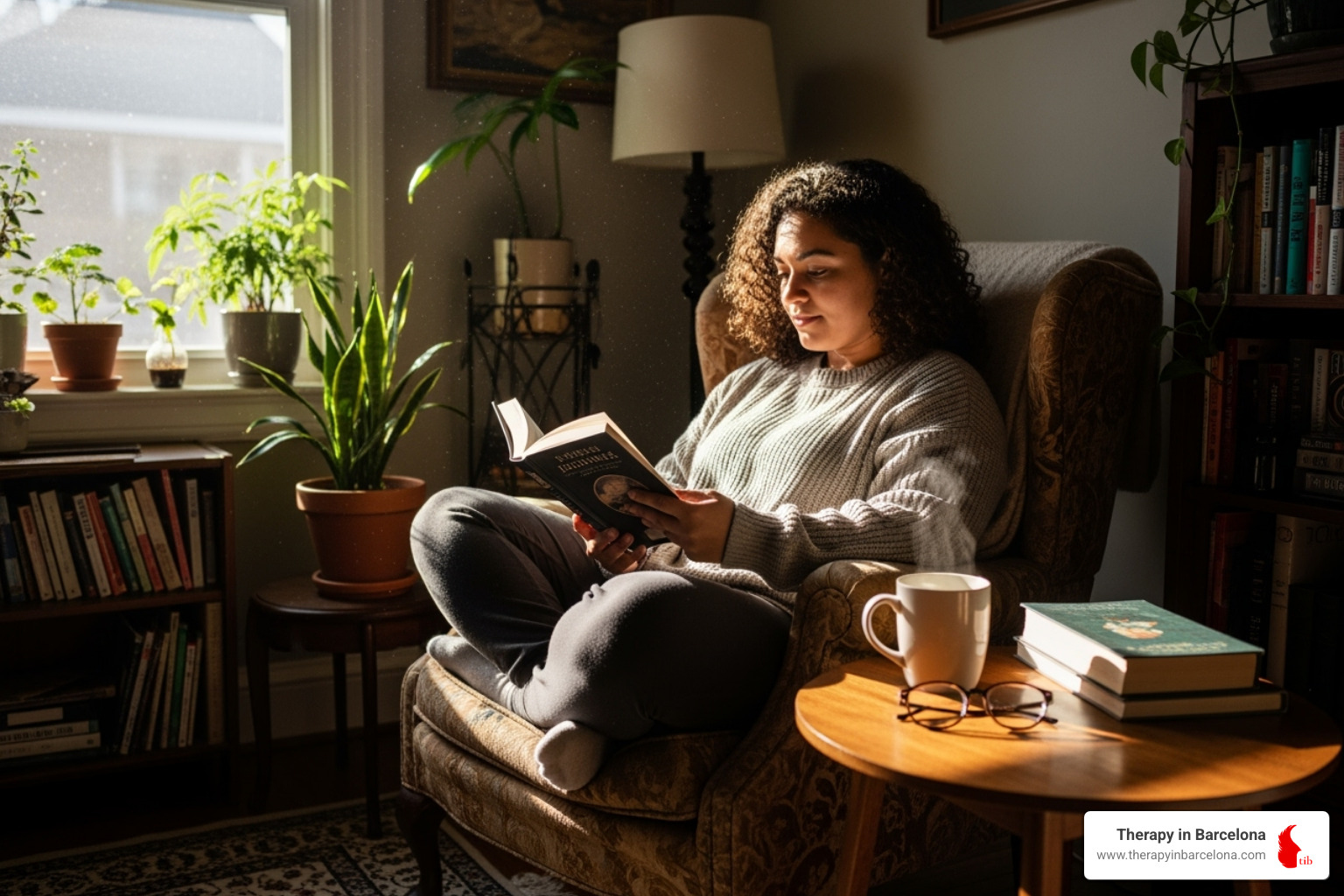
Sometimes, despite your best efforts at coping with isolation, the usual strategies aren’t enough. Living abroad brings unique pressures, and recognising when you need professional support is a sign of strength, not weakness.
Signs It’s Time to Talk to a Professional
It might be time to talk to a professional if you experience:
- Persistent loneliness that affects your ability to function.
- Avoiding social situations out of fear.
- Intense sadness or hopelessness that lingers for weeks.
- A profound sense of not belonging anywhere.
- Difficulty with daily tasks like getting dressed or going to work.
If you are in crisis or worried about your safety, call your local emergency number (112 in Spain) or find immediate support via Befrienders Worldwide: https://www.befrienders.org/. We do not provide crisis care.
Understanding Your Therapy Options in Spain
Once you decide to seek help, understanding your options can be another challenge. The public healthcare system offers services, but finding an English-speaking therapist can be difficult, and wait times can be long. Large online therapy platforms offer convenience, but their automated matching might miss the cultural nuances of the expat experience. Local private therapists offer more choice, but finding one who truly understands expat life requires research.
At Therapy in Barcelona, we focus on bespoke therapist matching, connecting you with a professional who understands the nuances of your situation and cultural background. Our team is made up of psychology-trained therapists who are also expats. We’ve been a trusted practice supporting the international community since our founder, Australian Psychologist Leigh Matthews, established the practice in Barcelona in 2011. Our diverse team brings together qualified therapists from various backgrounds. We are a collaborative group practice that supports adults, couples, teens and families.
We offer care in English, and some of our therapists also work in German, French, Spanish, Afrikaans, Portuguese, Swedish, Austrian-German and Swiss-German.
We offer a private, confidential service and we do not sell your data. We provide support for couples, families, and children. You can learn more about all our services and our fees on our website.
We work with clients online worldwide (including the USA and Canada) and face-to-face in our Barcelona office. As a private-pay service, we maintain high standards of care, though some therapists offer sliding scale fees for those with financial difficulties.
Frequently Asked Questions about Coping with Isolation
How is social isolation different from loneliness?
Social isolation is an objective lack of social contact—it’s about the number of people in your life. Loneliness is the subjective feeling of being unhappy with your connections. You can be at a busy tapas bar in Alicante and feel lonely, or live alone in Zaragoza and feel deeply connected. It’s about the quality of your relationships, not the quantity.
What are the first steps to take when feeling isolated abroad?
First, acknowledge your feelings without judgement; it’s a normal part of the expat experience. Then, start small:
- Create a simple routine. A daily walk to a local café in your Barcelona or Madrid neighbourhood can provide structure.
- Take one small step to connect. Join one online group, try a language exchange app, or just say hello to a neighbour. Small, consistent actions are more effective than grand gestures.
How can I find friends in a new city like Barcelona or Madrid?
Focus on shared interests rather than just searching for “friends.” When you do activities you enjoy, connections happen more naturally.
- Use Meetup to find groups for hiking, book clubs, or board games.
- Volunteer for a cause you care about to meet people who share your values.
- Take a class in something you’re passionate about, like Spanish, flamenco, or cooking. The shared learning experience creates natural conversation starters.
Be patient with yourself. Building deep friendships takes time, especially when dealing with cultural and language barriers. Enjoy the activities, and let relationships develop organically.
You Don’t Have to Steer This Alone
Coping with isolation as an expat is a common challenge, but it doesn’t have to define your story abroad. Building a new life in Barcelona, Valencia, or Madrid takes courage and time. The feelings of loneliness or disconnection are valid and shared by many.
Taking small, practical steps can shift you from isolation toward connection. But sometimes, professional support is needed to make those steps effective. The journey isn’t always linear, and that’s a normal part of building resilience as an expat.
If you’re struggling, seeking support is a sign of strength. At Therapy in Barcelona, we understand the expat journey because we’ve lived it. Our team of psychology-trained therapists offers personalised, culturally sensitive therapy online worldwide and in-person at our Barcelona office.
Your story doesn’t end with isolation. With the right support, you can create the connected life you envisioned. If you’d like support, book a Free Discovery Call.
