


Couples’ Compass: A Self-Help Guide to Sex Therapy

Starting on a journey to improve your relationship might lead you to consider a couples sex therapy self help guide. Understanding the dynamics of intimacy and communication within a partnership can significantly improve both emotional and physical connections. Here’s what you should know if you’re considering this path:
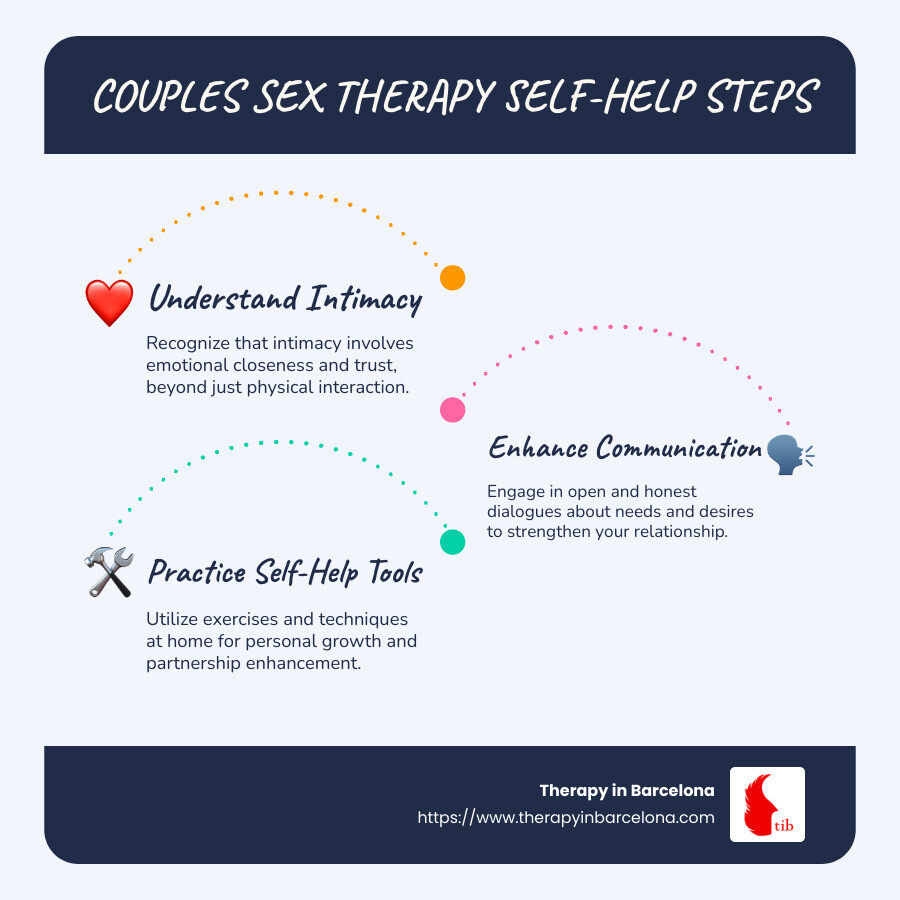
- Intimacy: It’s more than physical; it’s about feeling emotionally close to your partner.
- Communication: Open dialogue about needs and desires strengthens bonds.
- Self-help Tools: Exercises and techniques you can practice at home can make a big difference.
Couples sex therapy encourages partners to focus on these crucial elements, fostering a healthier and more fulfilling relationship. Exploring therapy techniques at your own pace allows for personal growth and deeper connection.
In this post, Leigh Matthews, Therapy in Barcelona Director and Founder, Australian Registered Psychologist, shares a couples sex therapy self help guide. At Therapy in Barcelona, we understand the cultural and personal challenges of expat life. Guiding you through meaningful solutions for intimacy and communication is one of our passions.
Understanding Couples Sex Therapy
In the field of couples sex therapy, the focus is on building emotional intimacy and improving sexual communication. Therapy sessions are designed to help partners connect on a deeper level, both emotionally and physically.
Emotional Intimacy
Emotional intimacy is the bedrock of a strong relationship. It’s about sharing your thoughts, feelings, and experiences with your partner openly. This connection fosters trust and understanding, making it easier to steer the ups and downs of life together.
In couples therapy, couples learn to express their emotions in a safe environment. This often involves discussing past experiences, fears, and hopes for the future. By understanding each other’s emotional landscapes, partners can support each other more effectively.
Sexual Communication
Talking about sex can be challenging, but it’s essential for a healthy relationship. Sexual communication involves discussing desires, boundaries, and any concerns you might have.
Therapists use various exercises to help couples improve their sexual communication. For example, they might encourage partners to ask each other questions like, “What do you enjoy most about our intimate moments?” or “Is there something new you’d like to try?” These conversations can break down barriers and lead to a more satisfying sexual connection.
Therapy Sessions
Couples therapy sessions provide a structured space for couples to work on their relationship. Each session is custom to the couple’s unique needs, focusing on areas where they want to grow.
During sessions, therapists might introduce techniques like Sensate Focus, where couples practice mindful touching without the pressure of performance. This helps partners become more attuned to each other’s bodies and sensations, enhancing their physical connection.
Therapists also guide couples through communication exercises, teaching them how to express their needs and listen actively. By practicing these skills in therapy, partners can apply them in their everyday lives, leading to lasting improvements in their relationship.
Understanding the dynamics of emotional intimacy and sexual communication is key to successful couples sex therapy. By participating in therapy sessions, partners can strengthen their bond and enjoy a more fulfilling relationship.
Couples Sex Therapy Self Help Guide
Welcome to the Couples Sex Therapy Self Help Guide. This section is all about empowering couples to take charge of their relationship growth outside of therapy sessions. We’ll explore self-help exercises, communication tasks, and the Sensate Focus technique.
Self-Help Exercises
Self-help exercises are like homework for your relationship. They give you the chance to practice what you’ve learned in therapy and apply it to real-life situations. Think of it as building a muscle; the more you exercise, the stronger it gets.
- Daily Check-Ins: Spend 10 minutes each day talking with your partner about how you feel. This simple habit can help you stay connected and aware of each other’s emotional states.
- Gratitude Journals: Write down three things you appreciate about your partner each day. Sharing these with each other can boost positivity and appreciation in your relationship.
Communication Tasks
Communication is the heart of any relationship. It can be tough, but with practice, you can improve.
- Uninterrupted Listening: Take turns speaking for 15 minutes while your partner listens without interrupting. Afterward, the listener should paraphrase what they heard. This helps ensure you’re really understanding each other.
- Question Exchange: Use questions like “When do you feel the sexiest?” or “What can I do to make you feel loved?” These prompts can open up deeper conversations and help you understand each other’s desires and needs.
Sensate Focus
Sensate Focus is a cornerstone technique in sex therapy, developed by Masters and Johnson. It’s all about exploring touch without expectations. The goal is to reduce anxiety and increase intimacy.
- Phase 1: Begin by taking turns touching each other without focusing on sexual areas. This could involve gentle massages or simply holding hands. The idea is to be present and mindful of the sensations.
- Phase 2: Gradually introduce more intimate touches as you both feel comfortable. The focus is not on performance but on exploring and enjoying each other’s bodies.

By incorporating these self-help exercises and techniques into your routine, you can improve your intimacy and communication. These tools are designed to help couples build a stronger, more fulfilling relationship, even outside the therapy room.
Next, we’ll dive into the Top Strategies for Enhancing Intimacy, where we’ll explore how to engage all five senses and adopt a pleasure-based approach for mutual satisfaction.
Top Strategies for Enhancing Intimacy
Enhancing intimacy in your relationship can be a transformative experience. It’s not just about what happens in the bedroom but how you connect with each other on a deeper level. Here are some strategies to help you do just that.
Engage All Five Senses
Using all five senses can heighten your connection and make intimate moments more memorable. Here’s how you can incorporate each sense:
Sight: Set the mood with dim lighting or candles. Visual cues can create an inviting atmosphere.
Sound: Play soothing music to relax or excite. The right soundtrack can improve your emotional connection.
- Touch: Explore different textures and temperatures. Try using silk or feathers to find new sensations.
- Taste: Share a favourite treat or drink. This can be a fun way to bond and experiment with flavours.
- Smell: Use essential oils or scented candles. Aromas like lavender or vanilla can evoke relaxation and pleasure.
Adopt a Pleasure-Based Approach
Moving away from a performance-focused mindset can reduce pressure and increase satisfaction for both partners. Here’s how to make the shift:
- Focus on Enjoyment: Instead of aiming for a specific outcome, concentrate on enjoying the moment. This can make experiences more fulfilling.
- Explore New Activities: Try different forms of intimacy, like giving each other massages or engaging in deep conversations. Variety can keep your connection fresh and exciting.
- Communicate Desires: Talk openly about what feels good and what doesn’t. Clear communication can lead to more pleasurable experiences for both of you.
Aim for Mutual Satisfaction
Intimacy should be a shared journey. Here’s how to ensure both partners feel satisfied:
- Check-In Regularly: After intimate moments, discuss what you both enjoyed and what could improve. This ongoing dialogue helps maintain a satisfying relationship.
- Balance Giving and Receiving: Make sure both partners have the opportunity to give and receive pleasure. This balance is key to mutual satisfaction.
- Celebrate Small Wins: Acknowledge and celebrate progress in your intimacy journey, no matter how small. This positive reinforcement can strengthen your bond.
By integrating these strategies, you can create a more fulfilling and connected relationship. Intimacy is not a destination but a journey you start on together.
Next, we’ll explore Recommended Resources for Couples, where we’ll introduce books, podcasts, and online programs to further support your intimacy journey.
Recommended Resources for Couples
Starting on a journey to improve your relationship can be exciting yet challenging. Fortunately, there are numerous resources available to guide you along the way. Here are some top recommendations for books, podcasts, and online programs to support your couples sex therapy self help guide journey.
Books
Books offer in-depth insights and practical advice to help improve intimacy and communication. Here are a few noteworthy titles:
- “Come As You Are” by Emily Nagoski: This book explores the science of female sexuality and provides insights into understanding arousal and desire. Nagoski’s work is grounded in research and offers a fresh perspective on enhancing your sex life.
- “The New Male Sexuality” by Bernie Zilbergeld: Focused on men’s experiences, this book emphasises pleasure over performance. It’s a comprehensive guide for men and their partners to better understand male sexuality.
- “Queer Sex” by Juno Roche: This book is a celebration of trans and non-binary experiences, offering an empowering perspective on intimacy and relationships.
Podcasts
Podcasts are a convenient way to gain insights and tips from experts. Here are some recommended listens:
- Foreplay Radio: Hosted by Laurie Watson and George Faller, this podcast digs into emotional and physical aspects of couples’ sex lives. It’s praised for its practical advice and engaging discussions on various topics.
Online Programs
Online programs can offer structured guidance and flexibility to work at your own pace. Consider:
- Joyful, Sensual Social Media: Follow accounts that promote positive and inclusive views on sexuality. Engaging with such content can inspire new ideas and approaches in your own relationship.
By exploring these resources, you can find valuable tools and insights to support your relationship journey. Whether you’re reading a book, listening to a podcast, or participating in an online program, these resources can help you build a stronger, more intimate connection with your partner.
Next, we’ll address some Frequently Asked Questions about Couples Sex Therapy, answering common queries to help you better understand the process and benefits.
Frequently Asked Questions about Couples Sex Therapy
Can you do sex therapy by yourself?
Yes, you can engage in self-exploration and individual therapy to address sexual issues. While couples’ therapy focuses on the dynamics between partners, individual therapy allows you to dig into personal concerns.
Through self-help exercises and resources like books or online programs, you can gain valuable insights. For instance, resources such as the book DIY Sex & Relationship Therapy offer a toolkit for resolving sexual and relationship problems at home. This approach can help you understand your preferences and challenges, making it easier to communicate with your partner later on.
What happens during couples sex therapy?
In couples sex therapy, sessions are designed to improve intimacy and communication. The therapy process typically begins with an assessment, where the therapist gathers information about your relationship dynamics and sexual history. This helps identify the root causes of any issues.
During sessions, various techniques are employed to address these concerns. For example, sensate focus exercises encourage couples to explore non-sexual touch, gradually reintroducing sexual intimacy without pressure. These activities aim to improve emotional and physical connections.
Therapists create a safe, non-judgmental space for open discussion. This allows couples to express their needs and fears, fostering better understanding and cooperation.
Can couples therapy help with sex?
Absolutely. Couples therapy can significantly improve sexual relationships by addressing underlying issues. Often, intimacy problems stem from emotional disconnection, communication barriers, or unresolved conflicts. Therapy helps couples steer these challenges, leading to healthier relationships.
Research supports the effectiveness of couples therapy in enhancing satisfaction and resilience. By working with a therapist, couples can develop the love, affection, and commitment needed for a fulfilling sexual relationship.
Therapists guide couples in setting realistic expectations and exploring new ways to connect, ultimately fostering mutual satisfaction and intimacy.
By addressing these common questions, we hope to clarify the process and benefits of couples sex therapy. In the next section, we’ll conclude with information about Therapy in Barcelona and how their culturally sensitive support can help you on your journey.
Conclusion
At Therapy in Barcelona, we understand that each couple’s journey is unique. That’s why we offer personalised therapist matching to ensure you and your partner receive the support that fits your specific needs. Whether you’re an expat adjusting to life in Barcelona or navigating the complexities of a multicultural relationship, our therapists provide culturally sensitive support custom to your background and experiences.
Our team is dedicated to helping you build a healthier and more fulfilling relationship. We believe that therapy should be a collaborative effort, where both partners feel heard and understood. By fostering open communication and emotional intimacy, we aim to guide you toward a stronger connection.
If you’re ready to explore how couples sex therapy can improve your relationship, we invite you to learn more about our services. Visit our Sex Therapy page for further information on how we can support you and your partner on this journey.
Seeking help is a courageous step toward a more satisfying and loving partnership. We’re here to walk alongside you every step of the way.

