


Finding Connection and Understanding Through Sexual Therapy

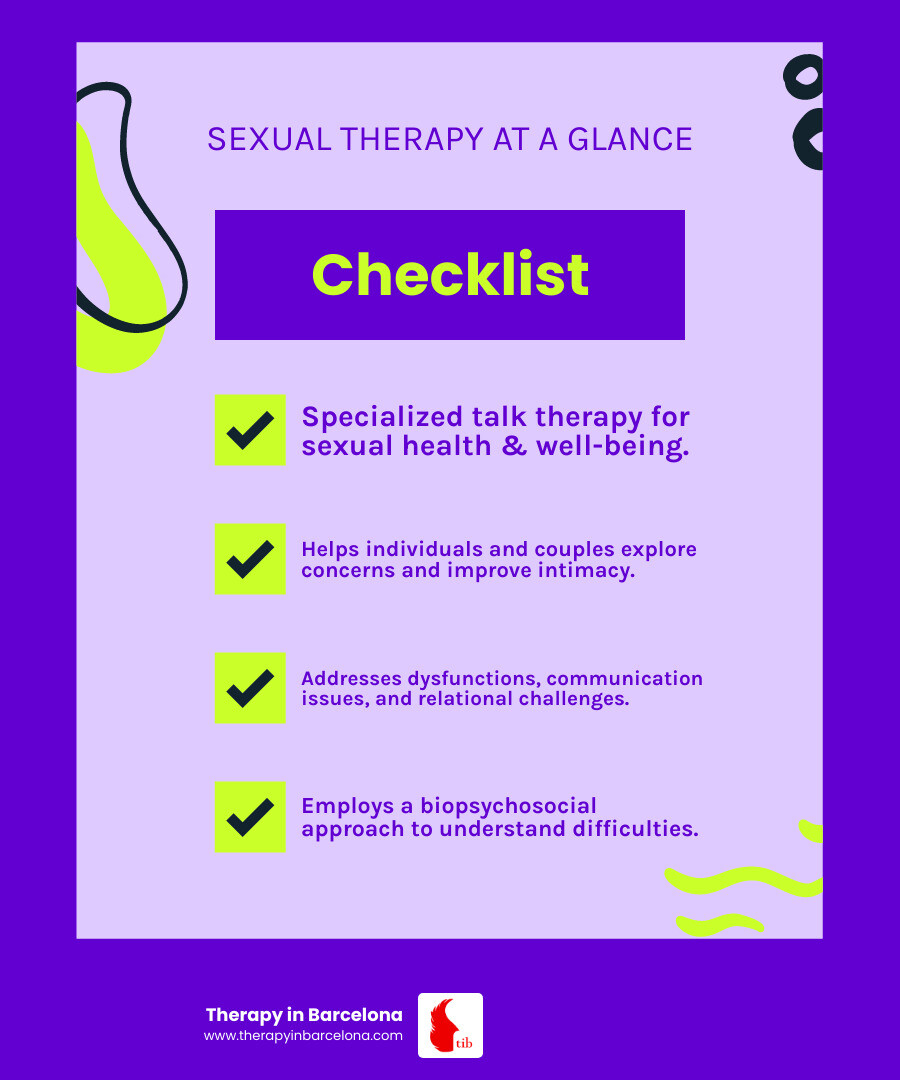
Sexual therapy is a specialised form of talk therapy designed to help individuals and couples address the emotional, psychological, and relational aspects of their sexual health. It provides a safe and supportive space to explore concerns, improve communication, and ultimately improve intimacy and sexual satisfaction.
Consider fictional examples like an expat from the UK living in Barcelona and struggling with new relationship dynamics, or an international couple in Madrid facing cultural differences around intimacy after relocating. These are composites, not real clients, but they reflect common challenges for internationals in Spain.
Here’s a quick overview of what sexual therapy is:
- What it is: A form of psychotherapy focused on sexual health and well-being.
- Who it’s for: Individuals and couples of any gender expression or sexual orientation, including older adults.
- What it helps with: Addressing sexual concerns, relational issues, and the impact of stress, relocation, and life changes on intimacy.
- How it works: Uses talk therapy and specific exercises to help you identify and address underlying causes of sexual dissatisfaction.
- Key benefit: Helps you reconnect with yourself and your partner sexually and emotionally, strengthening relationships.
This guide explains how sexual therapy works, what issues it addresses, and how it can help you build a more fulfilling intimate life. Many internationals in Barcelona, Valencia, Málaga, and across Spain find that living abroad adds extra layers to intimacy, and our aim is to offer a clear, compassionate roadmap.
What is Sexual Therapy and How Does It Work?
Sexual therapy is talk therapy for sexual concerns. Individuals or couples explore sex, desire, pleasure, emotions, and relationship patterns in a confidential, non-judgemental space. Unlike general therapy, it focuses specifically on improving sexual wellbeing, intimacy, and connection.
Sexual therapy often uses a biopsychosocial approach, looking at how physical health, emotions, thoughts, relationships, and culture all affect sexuality. For example, erection difficulties may involve both circulation and performance pressure. Therapy helps you understand these links and find practical ways forward.
Sexual therapy also differs from other forms of therapy in practice. While a general therapist might touch on sexual topics if they arise, a sex therapist has specialised training in human sexuality and sexual health. This expertise allows them to work in more depth with specific sexual concerns.
Sex therapists do not treat physical or medical conditions directly. If physical causes are suspected, they refer clients to a medical doctor, such as a primary healthcare provider, gynaecologist, or urologist, to rule out or address any underlying physical issues. This kind of collaboration means that both physical and psychological aspects of sexual difficulties can be considered.
There is no physical contact or sexual activity between the therapist and the client during a sexual therapy session. This is a core ethical boundary for licensed mental health professionals, including sex therapists. Instead, the focus is on conversation, education, and “homework” exercises to be practised privately or with a partner outside of sessions.
Modern sexual therapy evolved in the mid-20th century, when clinicians began developing structured behavioural interventions such as sensate focus exercises. Later developments brought together psychodynamic, cognitive-behavioural, and relational perspectives, showing how emotions, beliefs, past experiences, and relationship dynamics can all affect sexual functioning.
Today, sex therapists often blend evidence-based approaches such as Cognitive Behavioural Therapy (CBT), Acceptance and Commitment Therapy (ACT), systemic and psychodynamic therapy, and third-wave approaches including mindfulness-based methods.
Therapeutic Approaches Used
Sexual therapy draws upon a range of therapeutic approaches to address the many sides of sexual concerns. These are tailored to each person or couple.
One widely used approach is Cognitive Behavioural Therapy (CBT). This helps clients identify and challenge unhelpful thought patterns and behaviours that fuel sexual dissatisfaction or anxiety.
Emotion-Focused Therapy helps individuals and couples understand and express their emotions related to sexuality, supporting emotional connection and empathy. Mindfulness-based techniques encourage clients to be present and attentive to their sexual experiences, which can support arousal and pleasure.
Systemic therapy looks at the wider relational and family context, viewing sexual issues as part of a broader pattern involving partners, family dynamics, and cultural influences. Psychodynamic approaches may explore how past experiences and unconscious patterns affect current sexual functioning.
Some sex therapists may also draw from other evidence-based methods such as Schema Therapy, somatic approaches, or couples models like the Gottman Method or Imago Relationship Therapy when working with intimacy and communication.
A cornerstone technique often used is sensate focus. This involves a series of structured touching exercises designed to reduce performance pressure, increase awareness of physical sensations, and improve communication between partners. It helps people relearn how to connect with touch and pleasure without pressure to “perform”.
Common Reasons Individuals and Couples Seek Support
People seek sexual therapy for a wide array of reasons, as sexual well-being is influenced by a mix of physical, emotional, and relational factors. If your sexual health is causing a disruption in your relationship or day-to-day life, it is a good time to consider seeking professional help.

Common concerns include:
- Low sexual desire or mismatched desire: When one or both partners experience a lack of sexual interest, or their desire levels are significantly mismatched.
- Anxiety about sexual performance: Feelings of nervousness or fear about sexual performance, often leading to difficulty maintaining arousal or reaching orgasm.
- Difficulties with erections: Difficulty getting or maintaining an erection firm enough for sexual activity. For more on this, you can visit Finding the Right Therapist for Erectile Dysfunction.
- Concerns about ejaculation: Ejaculating sooner or later than desired.
- Difficulty reaching orgasm: Inability to achieve orgasm despite adequate sexual stimulation.
- Pain during sex: Experiencing pain during sexual activity, which can be due to involuntary muscle spasms or other physical or psychological factors.
- Intimacy Issues: Challenges in feeling emotionally or physically close to a partner, often linked to communication problems or past experiences.
- Pornography Concerns: When the use of pornography becomes problematic, affecting relationships, self-perception, or daily life.
- Unwanted sexual thoughts or compulsive behaviours: Distress or conflict arising from specific sexual interests or compulsive sexual behaviours.
- Sexual Confidence and Body Image: Issues related to self-esteem and comfort with one’s body in a sexual context.
- Relationship Communication: Difficulty discussing sexual needs, desires, or boundaries with a partner.
These issues can be experienced by individuals, or manifest within a couple’s dynamic, and may be influenced by a range of factors from stress and tiredness to deeper emotional or psychological roots.
Addressing Specific Life Stages and Experiences
Sexual therapy is highly adaptable, addressing concerns that arise across various life stages and unique personal experiences.
Aging and Sexuality: As people age, their bodies change, which can impact sexual function and desire. Sexual therapy for older adults looks at factors influencing sexuality, such as hormonal shifts, chronic health conditions, and changes in body image.
Sex therapy can help individuals and couples adapt to changes, explore new forms of intimacy, and maintain a fulfilling sex life over time. It also challenges the common myth that sexuality naturally disappears with age. Through open conversation, practical tools, and support with communication, sexual therapy helps people reconnect with pleasure, confidence, and closeness in ways that fit their current stage of life.
Postpartum Changes: Pregnancy and childbirth can significantly alter a woman’s body, hormones, and sense of self, impacting sexual desire and function. Sexual therapy offers support for navigating these changes, addressing issues like painful intercourse, decreased libido, and body image concerns in the postpartum period.
Sexuality with Illness or Disability: Chronic illness, surgery, or disability can present unique challenges to sexual expression and intimacy. Therapists help individuals and couples explore adaptive strategies, manage physical limitations, and maintain connection and pleasure.
LGBTQIA+ Identity Exploration: For individuals exploring their sexual orientation or gender identity, sexual therapy provides a safe and affirming space to understand their desires, steer societal expectations, and build confidence in their authentic selves.
Healing from Sexual Trauma: Sexual trauma can profoundly affect a person’s interest in or ability to enjoy intimacy and sex. Sexual therapy can be instrumental in helping survivors process their experiences, reclaim their bodies, and rebuild a healthy relationship with sexuality.
Research shows that combining trauma-based therapy with sex-positive techniques can help with trauma-related sexual difficulties, though some people may first need individual therapy to feel ready.
The Therapeutic Journey: What to Expect
Knowing what to expect from sexual therapy can ease any anxiety you might have. The process is collaborative, respectful, and always centred on your comfort and well-being.
The first session is a consultation. You meet the therapist, discuss your concerns, and see if their approach feels comfortable. They may ask about your health, sexual history, relationships, beliefs about sex, and goals. You can also ask questions and decide whether it feels like the right fit.
Sexual therapy can support individuals, couples, or both. Couple sessions help when the concern affects the relationship. Individual sessions may be better for trauma, body image, or personal sexual difficulties. Often, the best approach is a mix of both.
Confidentiality matters. Licensed therapists follow ethical and legal privacy rules, so you can speak openly and safely. Learn more here: Information on patient confidentiality under HIPAA.
The Role of Homework in Sexual Therapy
A distinctive aspect of sexual therapy is the role of “homework” or exercises to complete between sessions. These are practical, experiential tasks designed to help you apply what you talk about in therapy to your everyday life.
These exercises are never sexual acts performed with the therapist. They are carefully planned activities that encourage exploration, communication, and intimacy outside the therapy room. Common types of homework include:
- Communication exercises: Practising open and honest dialogue with a partner about sexual needs, desires, and boundaries.
- Sensate focus: A structured series of touching exercises, usually starting with non-genital touch, to reduce performance pressure and increase sensory awareness and pleasure.
- Educational resources: Reading articles or books to deepen understanding of sexual health, anatomy, or specific difficulties.
- Mindfulness practices: Bringing mindfulness into sexual experiences to support presence and reduce anxiety.
- Journaling: Reflecting on thoughts, feelings, and experiences related to sexuality.
- Role-playing: Practising difficult conversations or scenarios with a partner in a safe, structured way.
These assignments are discussed and adapted with your therapist, so they match your comfort level and goals. They often become the bridge between insight and change.
For internationals in Barcelona, Madrid, Valencia, Málaga, and other hubs like Alicante or Gran Canaria, these exercises can also include exploring how cultural differences, language, and life abroad affect closeness and desire.
Potential Outcomes and ‘Aha’ Moments
Sexual therapy can lead to lasting positive changes that go beyond resolving specific sexual issues. Many individuals and couples report a significant improvement in their overall well-being and relationship satisfaction.
Some of the potential positive outcomes include:
- Improved Communication Skills: Learning to articulate sexual needs, desires, and boundaries more effectively with a partner.
- Improved Intimacy and Connection: Deepening emotional and physical closeness within a relationship.
- Increased Sexual Confidence: Feeling more comfortable and secure in one’s own sexuality and body.
- Resolution of Specific Sexual Concerns: Successfully addressing issues like low sexual desire, difficulties with erections, or pain during sex.
- Strengthened Relationships: Building a more resilient and understanding partnership through shared vulnerability and problem-solving.
- Better Stress Management: Developing coping strategies for anxiety or stress that may impact sexual experiences.
- Greater Self-Understanding: Gaining insights into personal beliefs, values, and patterns related to sexuality, leading to personal growth.
These benefits can be transformative, empowering individuals and couples to lead more fulfilling lives. As highlighted in Why Every Woman Should Consider Sex Therapy, the journey often leads to a more positive and empowered sense of self.
Common Realisations in Sexual Therapy
Sexual therapy is often punctuated by powerful “aha” moments – sudden realisations that shift perspectives and open new pathways for growth. These insights can be incredibly liberating.
A common realisation is redefining sex and pleasure. Sex therapy often helps people see that satisfying intimacy does not have to mean penetrative sex. Exploring “outercourse” can reduce pressure, increase pleasure, and create more space for connection.
Another significant “aha” moment comes from understanding the impact of stress and other life factors on sexuality. Clients often realise that their sexual difficulties are not isolated but are deeply intertwined with work stress, relationship dynamics, mental health, or life transitions. Recognising this interconnectedness empowers them to address the root causes more holistically.
Letting go of shame is a profound realisation for many. Society often imposes rigid expectations and taboos around sex, leading to feelings of guilt or inadequacy. Sexual therapy creates a space where these feelings can be explored and released, fostering self-acceptance and a healthier relationship with one’s body and desires.
Finally, developing mind-body awareness is key. Clients learn to tune into their physical sensations and emotional responses, rather than intellectualising sex. This presence can open up new levels of pleasure and intimacy. These realisations build on long-standing sex therapy principles that emphasise being present in the moment, reducing pressure, and focusing on shared pleasure.
Finding the Right Therapist for You in Spain
Finding the right sexual therapist is a key step in your therapeutic journey. It is about finding a professional whose qualifications, approach, and personality feel right for you.
When choosing a sex therapist in Spain, look for a licensed mental health professional with training in psychology, psychotherapy, medicine, or a related field. They should also have specific experience or education in sexual health and relationships. Just as important: choose someone you feel safe speaking with, especially when discussing personal, intimate topics.
A strong rapport with your therapist matters. In the first session, notice whether you feel safe, respected, and understood. Ask questions, pay attention to their style, and trust your instincts. If it does not feel right, it is okay to try someone else. This trust is especially important when discussing sexual health.
Sex Therapist vs Sex Counsellor
While the terms “sex therapist” and “sex counsellor” are sometimes used interchangeably, there are differences in their scope and approach.
Sex therapist
- Focuses on psychotherapy: Offers in-depth talk therapy.
- Looks at deeper patterns: Works with emotional and relational roots of sexual problems.
- Suitable for more complex or long-term issues: Such as trauma-related sexual difficulties, long-standing desire issues, or complex relationship dynamics.
- Qualifications: Typically holds an advanced degree (for example, Master’s or Doctorate) in a mental health field and has specific training or certification in sex therapy.
Sex counsellor
- Focuses on education and guidance: Provides information, practical techniques, and short-term strategies.
- Addresses specific, often simpler issues: Helps with sexual health education, communication skills, or practical questions.
- Suitable for shorter-term, specific, or educational needs: For example, understanding the sexual response cycle or learning how to start conversations about intimacy.
- Qualifications: May have varied backgrounds, often with training in human sexuality, counselling, psychology, coaching, or sexual health education.
A sex therapist usually offers a broader psychotherapeutic approach to address underlying issues, while a sex counsellor tends to focus more on education and skills.
Understanding Your Options
When seeking sexual therapy in Spain, you have several options:
- Public health system clinicians: Often more affordable and sometimes covered by public insurance, though specialist sexual therapy services and English-speaking or multilingual providers may be limited.
- Large online platforms: Offer convenience and a wide pool of therapists, but may not always provide the tailored matching or expat-specific cultural sensitivity some internationals in Barcelona, Madrid, Valencia, Málaga or Alicante are looking for.
- Local practices: Smaller clinics or independent therapists in cities such as Barcelona, Madrid, Valencia, Sevilla, Marbella, Zaragoza, and Gran Canaria. These can vary widely in style, experience, and cultural fit.
At Therapy in Barcelona, we are one of these local options, with some distinct features that many internationals find helpful:
- Personalised matching: We take time with our intake process so we can thoughtfully match you with a therapist whose background, style, and expertise fit your needs, instead of simply assigning the next person on a list.
- Culturally sensitive expat therapists: Our therapists are all psychology-trained and offer their services as therapists in Spain. Many are expats themselves, and understand first-hand the impact of moving country, language barriers, and being far from familiar support when it comes to sex, relationships, and identity.
- Multilingual support: We work in English, and some of our therapists also speak other languages such as German, French, Spanish, Afrikaans, Portuguese, Austrian-German, and Swiss-German.
- How we work: We offer online therapy to clients across Spain and worldwide—including the USA and Canada—and face-to-face sessions in our office in Barcelona.
- Strict privacy: We are committed to confidentiality and do not sell your data.
- Private-pay service: We operate as a private-pay practice, which allows us to maintain a high-quality, personalised service without the constraints that can come with some public or insurance systems. Some therapists may offer sliding scale fees, and you can ask about this in your Free Discovery Call.
We have been a trusted practice in Spain since 2011, founded by Australian Psychologist Leigh Matthews, who has been living and working in Barcelona since 2011 and has extensive experience supporting internationals.
If you are considering sexual therapy and want to understand whether we are the right fit, you can start with a Free Discovery Call to explore your options in a low-pressure way.
Frequently Asked Questions about Sex Therapy
What if my partner doesn’t want to attend therapy?
If your partner does not want to attend sexual therapy, you can still go on your own. Individual therapy can help you understand your needs, communicate more clearly, and change your side of the relationship pattern. Sometimes, one person’s growth makes it easier for the other partner to engage later.
Is sex therapy expensive?
The cost of sexual therapy depends on the therapist, location, and session length. Therapy in Barcelona is a private-pay service, so it’s best to ask about fees upfront during your first contact or Free Discovery Call. Insurance coverage for psychotherapy varies, and some plans may not include it. You can read more here: More info about our fees.
How long does sex therapy take?
The duration of sexual therapy is highly individual and depends on the specific issues being addressed, the client’s goals, and their engagement in the therapeutic process. While some issues may be resolved in a relatively short period (e.g., 6-12 sessions), others, particularly those involving trauma or long-standing relationship patterns, may require longer-term support.
Sexual therapy is not a quick fix; it’s a collaborative process that requires commitment and patience. Your therapist will work with you to establish realistic goals and regularly review your progress, adapting the treatment plan as needed. The aim is to equip you with lasting tools and insights, fostering sustainable sexual wellness.
Taking the Next Step Towards a Fulfilling Sex Life
Sexual therapy is a path to understanding, healing, and enhancing your intimate life. From improving communication and sexual confidence to exploring how life abroad in places like Barcelona, Madrid, Valencia, Málaga, or Alicante shapes your relationships, the impact can be wide-reaching.
At Therapy in Barcelona, we focus on supporting the international community in Barcelona and across Spain. Our team of psychology-trained expat therapists offers culturally sensitive care for adults, couples, teens, and families. Many of us have moved countries ourselves, so we understand how relocation, language, and distance from home can affect intimacy and sex.
We work both online with clients worldwide—including the USA and Canada—and in person at our offices in Barcelona. We provide therapy in English, and some therapists also work in other languages such as German, French, Spanish, Afrikaans, Portuguese, Austrian-German, and Swiss-German.
If you’d like support, book a Free Discovery Call. In this brief call, we will learn a little about you and carefully match you with a therapist who understands your situation and can work with you towards more satisfying intimacy and sexual well-being.
