


Why Somatic Experiencing is Changing Expat Mental Health

Somatic Experiencing offers a unique body-based approach to trauma healing that’s particularly valuable for internationals navigating life abroad. Here’s what you need to know:
Training Options in Barcelona:
- 3-year official certification: 6 modules of 6 days each through Centro Adala
- Introductory workshops: Hybrid and online formats available
- Languages: English and Spanish instruction
- Cost: Training ranges €600-€2,200 depending on level
Finding Practitioners:
- Certified SEPs (Somatic Experiencing Practitioners) available
- International directory through SEI
- Sessions typically 70-95 euros individual, 90-115 euros couples
Moving abroad creates unique stressors that traditional talk therapy sometimes can’t fully address. Cultural adjustment, isolation, and the constant low-level stress of navigating a new country can become stored in your body as tension, anxiety, or chronic overwhelm.
Somatic Experiencing offers a body-based healing approach developed by Dr. Peter Levine, drawing on decades of research. Instead of working only through thoughts and emotions, SE helps regulate the nervous system and gently resolve stress and trauma responses held in the body.
As one Barcelona-based practitioner notes: “Trauma, mainly, our response to trauma is experienced and held in the body, our tissue which leads to shaping our emotional experience as well as the cognitive stories we tell ourselves about what’s happened in our life.”
This body-first approach is especially relevant for expats in Barcelona who arrive expecting a fresh start but instead find themselves dealing with anxiety, overwhelm, or a sense of disconnection. Their experience reflects a common challenge among international residents and shows how Somatic Experiencing can help process the complex emotions that often come with living abroad.
The method uses sensoperception – carefully tracking bodily sensations – to help your nervous system complete interrupted fight, flight, or freeze responses. It’s gentle, non-invasive, and works at your body’s own pace.
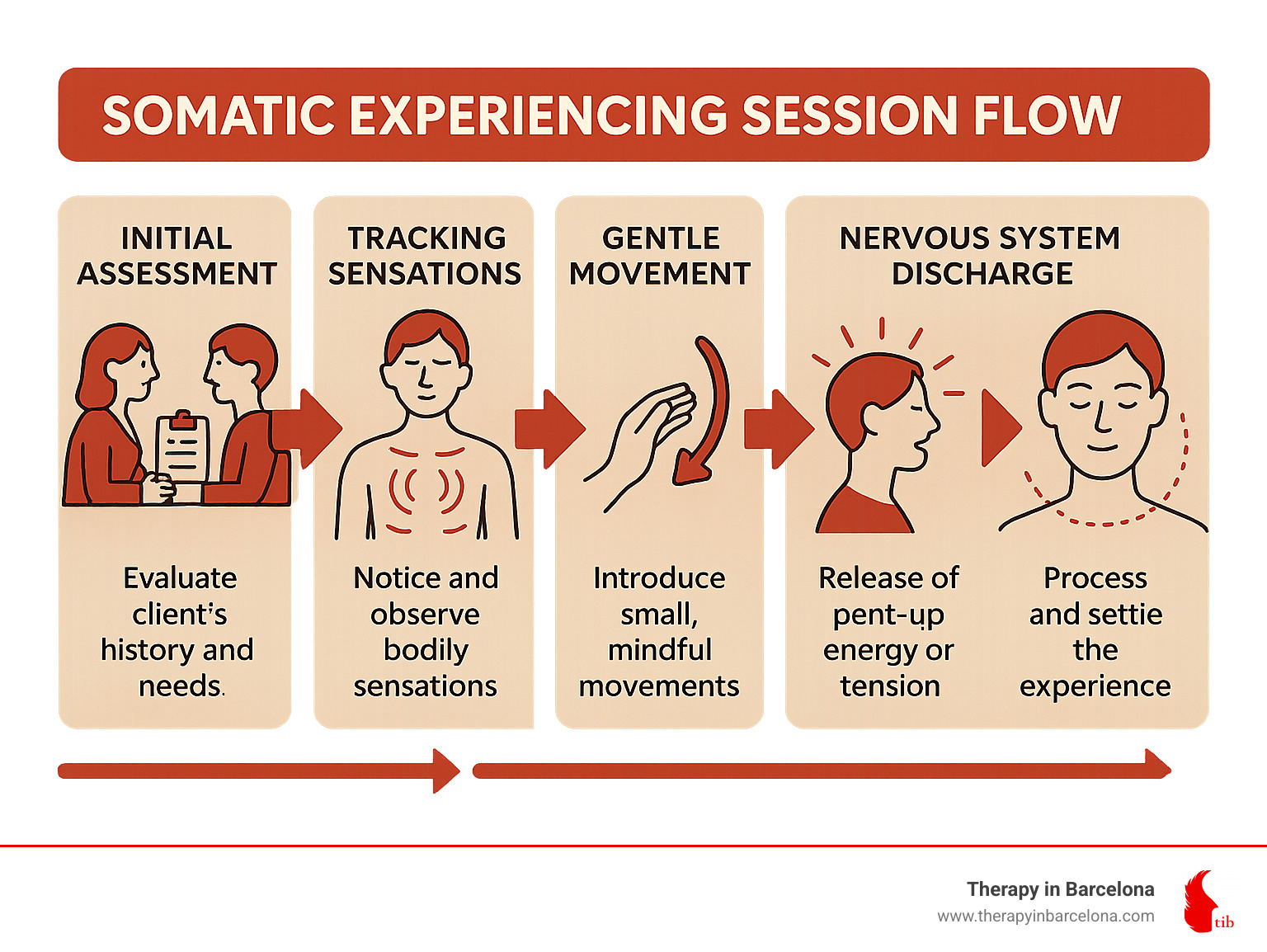
Somatic Experiencing: Key Principles & Origins
When you think about trauma, you might picture dramatic events or intense emotional breakdowns. But Somatic Experiencing offers a completely different perspective – one that recognises trauma isn’t stored in our thoughts, but in the very fabric of our bodies.
Picture this: you’re walking through Barcelona’s busy streets when suddenly a motorbike backfires nearby. Your heart races, muscles tense, and you instinctively duck. Within moments, you realise there’s no danger and… what happens next? For most of us, we simply carry on. But what if that survival energy never fully discharged?
This is exactly what fight, flight, or freeze responses are designed to handle. When we face overwhelming situations – whether it’s a car accident, the ongoing stress of cultural adjustment, or even chronic workplace pressure – our nervous system activates these primitive survival mechanisms. In the wild, animals naturally complete these cycles. A gazelle escapes a lion, shakes off the excess energy, and returns to grazing peacefully.
Humans, however, often get stuck. We suppress the shaking, hold back the tears, or push through without allowing our autonomic nervous system to complete its natural process. The result? That survival energy becomes trapped, manifesting as anxiety, depression, chronic pain, or that peculiar sense of emotional numbness that many expats describe when adjusting to life abroad.
This insight forms the foundation of sensoperception – the gentle art of tracking what’s actually happening in your body right now. Rather than diving into traumatic memories or analysing thought patterns, Somatic Experiencing works with the wisdom your nervous system already possesses.
Origins & History of Somatic Experiencing
The story begins in the 1960s with Peter Levine, a young researcher studying stress physiology and animal behaviour. While observing wildlife in Yellowstone National Park, he noticed something remarkable: despite facing life-threatening situations daily, wild animals rarely developed what we’d recognise as trauma symptoms.
This observation sparked a 45-year research journey that would challenge everything traditional therapy thought it knew about healing. Levine’s breakthrough came from recognising that trauma symptoms aren’t psychological damage – they’re incomplete biological responses seeking resolution.
Over decades of careful observation and clinical practice, he developed what we now know as Somatic Experiencing. The approach gradually spread worldwide, reaching Spain in the early 2000s. Today, Somatic Experiencing operates through Centro Adala as an official affiliate of Somatic Experiencing International, bringing this gentle yet powerful work to Barcelona’s diverse international community.
The Spanish SE community has flourished, with dedicated trainers like Rachporn Sangkasaad and Giselle Genillard leading the way. They’ve adapted the work to address the specific needs of expats, incorporating cultural sensitivity and multilingual support that recognises the unique stressors of living abroad.
How Somatic Experiencing Works in Barcelona Sessions
Forget everything you’ve seen in movies about dramatic therapy breakthroughs. A typical Somatic Experiencing in Barcelona session looks refreshingly different – no intense emotional releases or overwhelming re-experiencing of trauma.
Instead, your practitioner guides you through gentle awareness exercises. You might notice warmth spreading through your chest, a slight tingling in your hands, or an unexpected urge to stretch your shoulders. This is embodiment in action – learning to listen to your body’s subtle communications.
The process relies on three neat principles that respect your nervous system’s natural pace:
Titration means working with manageable amounts of activation at a time. Think of it like adjusting the temperature on a shower – you make small changes rather than shocking yourself with extremes. Your practitioner helps you stay within your “window of tolerance” – that sweet spot where you can process experience without becoming overwhelmed or shutting down completely.
Pendulation involves the natural movement between states of activation and calm. Just as your heart rate varies throughout the day, your nervous system needs to oscillate between engagement and rest. SE sessions honour this rhythm, allowing you to touch into difficult sensations briefly before returning to stability.
Discharge facilitates the completion of those interrupted survival responses. This might look like spontaneous yawning, gentle trembling, or simply taking a deeper breath. Your body knows exactly what it needs – the practitioner’s role is simply to create space for this natural wisdom to emerge.
Sessions typically last 50-90 minutes and might include subtle movement exercises, or simply sitting together while you track internal sensations. The pace is always determined by your nervous system’s capacity, never by external expectations of “progress.”
Somatic Experiencing vs Traditional Talk Therapy
Traditional therapy often works “top-down” – using cognitive strategies to influence emotions and behaviour. Somatic Experiencing takes a “bottom-up approach” – addressing the nervous system directly to create lasting change from the ground up.
This doesn’t mean SE replaces talk therapy. Many clients find the approaches beautifully complementary, with SE providing the nervous system stability that makes other therapeutic work more effective.
The key differences are striking: while traditional therapy focuses on story, SE prioritises sensation. Instead of analysing why you feel anxious, you learn to track how anxiety actually shows up in your body right now. This body-first focus often reveals surprising insights that pure cognitive work might miss.
The limited re-traumatisation risk makes SE particularly appealing for those who’ve felt overwhelmed by traditional approaches. By working with small amounts of activation, clients avoid becoming flooded by traumatic memories while still accessing profound healing.
Perhaps most importantly, SE teaches you to recognise your own somatic resources – those places in your body that feel stable, calm, or pleasantly alive. For expats dealing with the constant low-level stress of cultural navigation, this body-based resilience becomes invaluable.
Cultural stress often manifests physically first – tight shoulders from constant vigilance, digestive issues from dietary changes, or sleep disruption from overstimulation. Somatic Experiencing addresses these symptoms directly while building your overall capacity for self-regulation, creating a foundation of stability that supports every aspect of your expat journey.

Professional Training & Certification Path in Barcelona
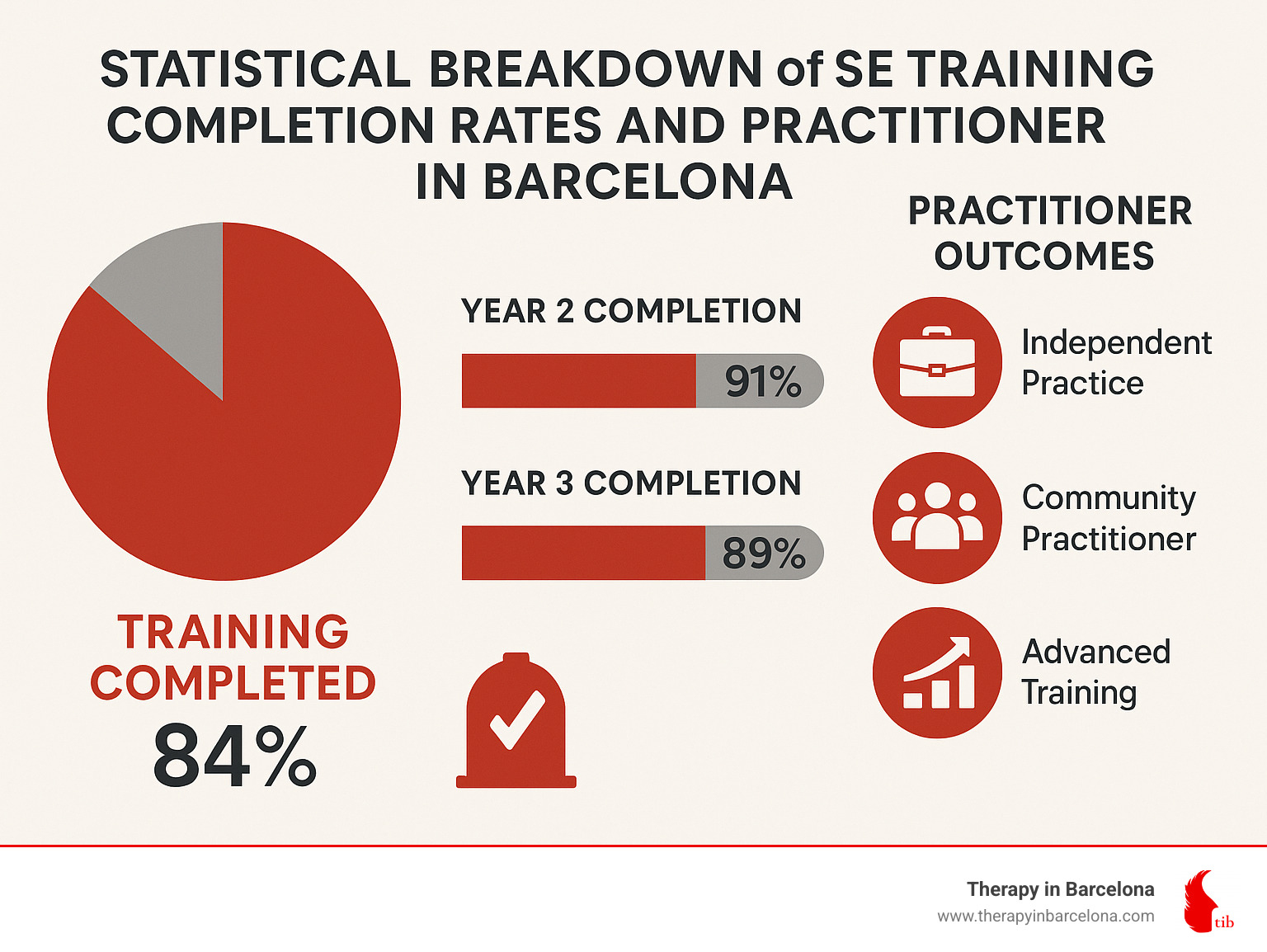
Somatic Experiencing Barcelona offers comprehensive professional training through its affiliation with Somatic Experiencing International. The official training program spans three years and provides thorough grounding in both theory and practical application.
The structure consists of six modules, each lasting six days, spread across three years. This spacing allows students to integrate learning between modules and develop their skills gradually. Centro Adala, Barcelona’s primary SE training centre, has been providing this education for over 15 years, establishing itself as a trusted hub for somatic education in Spain.
Training includes both online and in-person components, making it accessible to international students and working professionals. The bilingual nature of instruction (English and Spanish) reflects Barcelona’s international character and serves the diverse expat community seeking these skills.
Students learn to track nervous system responses, facilitate gentle discharge processes, and create safe therapeutic containers. The curriculum covers trauma theory, nervous system physiology, cultural sensitivity, and extensive hands-on practice with supervision. Scientific research on SE professional training demonstrates the effectiveness of this comprehensive approach.
“Somatic Experiencing Barcelona” Training Structure
The three-year journey follows a carefully designed progression:
Year 1 – Beginning Levels I & II: Students learn foundational concepts including nervous system basics, tracking sensation, and basic SE principles. These modules introduce the concept of titration and help students develop their own somatic awareness.
Year 2 – Intermediate Levels I & II: Advanced techniques including working with activation, understanding trauma responses, and developing therapeutic presence. Students begin practicing with volunteers under supervision.
Year 3 – Advanced Levels I & II: Integration of all skills, complex case work, and preparation for independent practice. Students complete required personal sessions and supervision hours whilst demonstrating competency in SE methodology.
Each module combines theoretical presentations, experiential exercises, and supervised practice. Students work in pairs and small groups, developing both giving and receiving skills. The learning environment emphasises safety, cultural sensitivity, and respect for individual differences.
Online components include pre-recorded lectures and live supervision sessions. This hybrid approach accommodates different learning styles whilst maintaining the essential hands-on elements that make SE training effective.
Trainers & Community in Barcelona
Barcelona’s SE training community includes both international faculty and local practitioners who bring diverse perspectives to the work. Trainers like Rachporn Sangkasaad offer introductory workshops and ongoing education, whilst advanced faculty provide supervision and mentorship.
The local SE community extends beyond formal training to include regular practice groups, case consultations, and continuing education workshops. This supportive network helps new practitioners develop confidence whilst providing ongoing professional development for experienced SEPs.
Cultural diversity within the trainer group reflects Barcelona’s international character. Many trainers are themselves expats who understand the unique challenges of providing therapy across cultural boundaries. This lived experience improves their ability to teach culturally sensitive practice.
Path to Becoming a Certified SEP in Spain
Certification as a Somatic Experiencing Practitioner (SEP) requires completing all six training modules plus additional requirements:
- Personal SE sessions: Students must receive a minimum number of SE sessions to understand the work from the client perspective
- Supervision hours: Supervised practice with real clients under guidance from certified SEPs
- Case documentation: Written reports demonstrating understanding and application of SE principles
- Final evaluation: Assessment of theoretical knowledge and practical skills
The entire process typically takes 3-4 years, depending on how quickly students complete requirements. Many students continue working in other therapeutic modalities whilst training, gradually integrating SE into their existing practice.
Upon certification, SEPs can practice independently and are listed in the international directory. They’re also eligible for advanced training modules and specialisation courses in areas like working with children, complex trauma, or specific populations.
Benefits for Trauma Recovery & Expat Well-Being
Somatic Experiencing offers particular benefits for the international community facing the unique stressors of expat life. The method’s gentle, non-invasive approach makes it accessible to people from diverse cultural backgrounds who may have different relationships with emotional expression or physical touch.
Research indicates that SE can be effective for various trauma-related symptoms including PTSD, anxiety, depression, and chronic pain. For expats, these benefits extend to cultural adjustment challenges, social anxiety in new environments, and the accumulated stress of constant adaptation.
The nervous system resilience developed through SE practice helps individuals steer ongoing challenges more effectively. Rather than simply managing symptoms, clients learn to strengthen their capacity for self-regulation and emotional flexibility. Scientific research on Polyvagal Theory provides the theoretical foundation for understanding how these nervous system changes support overall well-being.
Children and families particularly benefit from SE’s non-verbal approach. Third Culture Kids (TCKs) who struggle to articulate complex cultural experiences can work through body-based exercises that honour their unique developmental needs.
Why Expats Choose Somatic Experiencing in Barcelona
Several factors make SE particularly appealing to Barcelona’s international community:
Language accessibility: Many SE practitioners speak multiple languages and understand the nuances of providing therapy across linguistic barriers. The body-based nature of the work means that language limitations don’t prevent effective treatment.
Cultural sensitivity: SE trainers and practitioners often have their own expat experience, bringing understanding of cultural adjustment challenges. The method itself is culturally adaptable, working with universal nervous system responses rather than culture-specific concepts.
Hybrid delivery options: Online and in-person sessions accommodate the mobile lifestyles of many internationals. Digital nomads and frequent travellers can maintain therapeutic relationships regardless of location.
Community support: The SE community in Barcelona provides ongoing connection and resources beyond individual sessions. Practice groups and workshops create opportunities for social connection whilst developing self-regulation skills.
Complement to other support: SE works well alongside other therapeutic approaches, allowing clients to maintain existing therapeutic relationships whilst adding somatic elements.
Real-World Success Stories & Research Highlights
Whilst individual results vary, many clients report significant improvements in their ability to handle stress, regulate emotions, and feel comfortable in their bodies. The research base for SE continues to grow, with studies showing promising results for trauma symptoms, chronic pain, and nervous system regulation.
One Barcelona-based client shared: “The online training surprised me pleasantly. We learned a lot in a safe space.” This reflects the positive experience many have with SE’s gentle approach and supportive community.
Emerging research on polyvagal theory – the science underlying SE’s approach – provides increasing validation for body-based trauma treatments. Studies show that nervous system regulation techniques can improve both physical and mental health outcomes.
For expats specifically, SE’s emphasis on building resilience rather than just treating symptoms proves particularly valuable. The skills learned in SE sessions transfer to daily life, helping individuals steer cultural challenges with greater ease and confidence.
Getting Started with Somatic Experiencing in Barcelona & FAQs
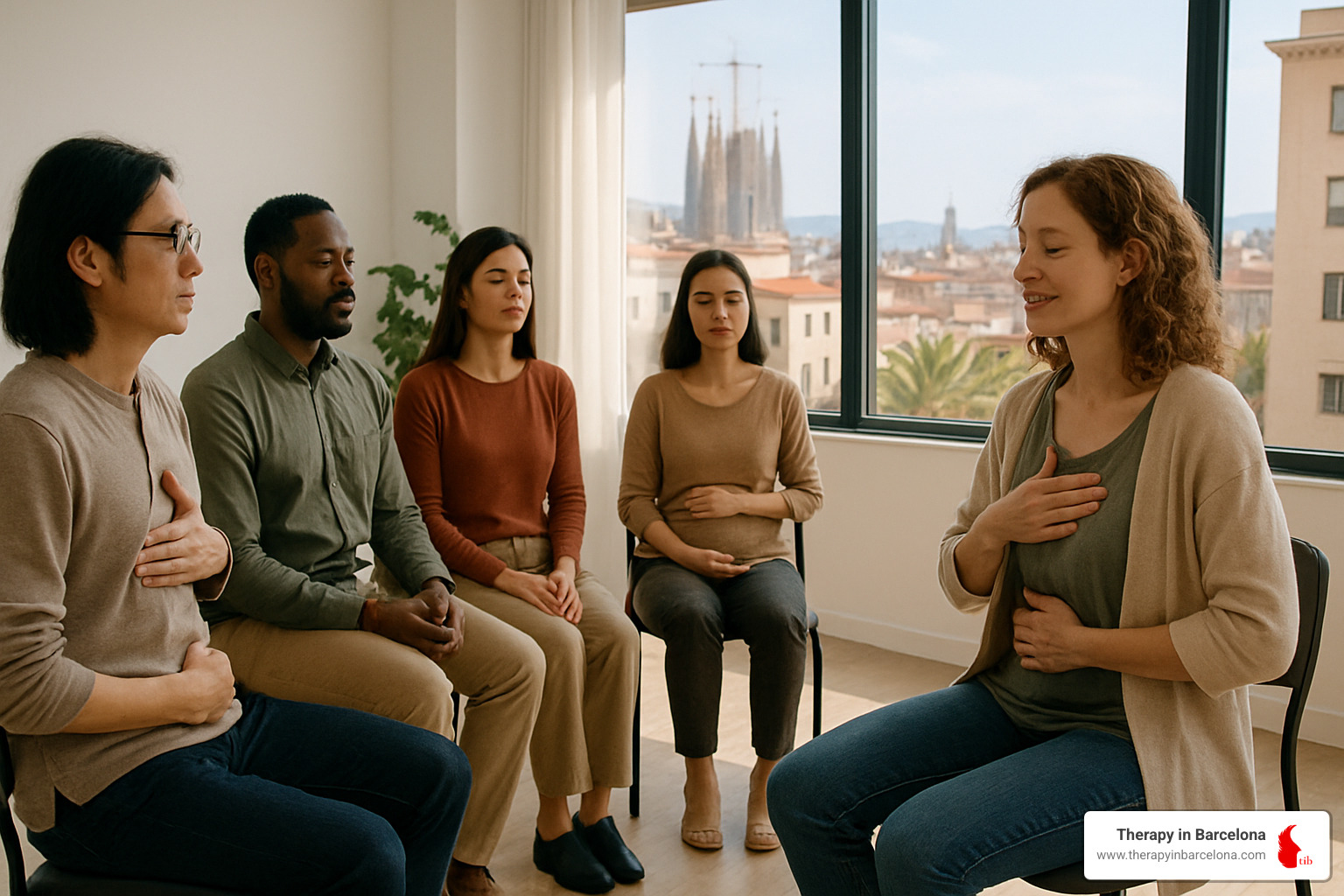
Taking your first steps with Somatic Experiencing in Barcelona might feel daunting, but the city offers welcoming pathways whether you’re seeking personal healing or professional training. The gentle nature of this approach means there’s no pressure to dive in headfirst – you can explore at your own pace.
Introductory workshops provide the perfect starting point for most people. These weekend sessions happen regularly throughout the year and give you hands-on experience with SE principles without any long-term commitment. Recent offerings have acceptd hybrid formats, allowing you to participate both in-person and online – perfect for Barcelona’s diverse international community with varying schedules and comfort levels.
If you’re drawn to individual support, finding the right practitioner becomes your next step. The beauty of Barcelona’s SE community lies in its multicultural nature – many practitioners speak multiple languages and understand the unique challenges of expat life firsthand.
For those considering professional training, the journey typically begins with experiencing the work personally. Most training centres recommend attending introductory workshops before applying to the comprehensive three-year programme. This gives you a real sense of whether SE resonates with your personal and professional goals.
Finding a Certified Practitioner or Workshop
The official Somatic Experiencing International website maintains a comprehensive directory of certified practitioners worldwide, including those based in Barcelona. When browsing, look for the SEP designation – this indicates completion of the full three-year training programme plus supervised practice hours.
Centro Adala serves as Barcelona’s primary hub for SE training and often maintains referral lists for individual sessions. What’s particularly valuable about Barcelona’s SE community is the linguistic diversity – many practitioners offer sessions in English, Spanish, Catalan, and other languages, reflecting the city’s international character.
Workshop calendars are typically published several months ahead, and early registration is wise as spaces fill quickly. Recent offerings have included basic principles workshops in weekend formats, introductory online sessions for those preferring digital connection, specialised workshops on topics like transgenerational trauma, and professional consultation groups for ongoing learning.
When selecting a practitioner or workshop, consider factors beyond just availability. Language preference matters enormously – you want to feel completely understood. Location and scheduling flexibility can make the difference between consistent attendance and dropping out. Many practitioners offer brief phone consultations to discuss whether their approach might suit your specific situation.
“Somatic Experiencing in Barcelona” Frequently Asked Questions
What issues respond best to Somatic Experiencing?
SE can be remarkably helpful for a wide range of stress and trauma-related symptoms. These include anxiety that seems to come from nowhere, depression that feels stuck in your body, PTSD symptoms that traditional talk therapy hasn’t fully addressed, chronic pain without clear medical causes, sleep difficulties, and emotional numbness that leaves you feeling disconnected from life.
For expats specifically, Somatic Experiencing often helps with cultural adjustment stress – that constant low-level tension from navigating a foreign environment. Social anxiety in new cultural contexts, the accumulated tension from constant adaptation, and even the physical symptoms of homesickness can respond well to SE’s gentle approach.
However, SE isn’t necessarily right for everyone. People with severe mental health conditions, active substance abuse, or certain medical conditions may need other forms of support first. A qualified practitioner can help determine whether SE is appropriate for your particular situation during an initial consultation.
How long is a typical session and what happens?
Sessions usually last 50-90 minutes, but unlike many therapeutic approaches, there’s no predetermined agenda or protocol. Your body’s natural pace guides the session rather than external timelines or therapeutic “homework.”
You might spend time simply noticing sensations – perhaps the warmth in your chest when you think of home, or the tension in your shoulders when discussing work stress. Sometimes you’ll explore gentle movements, track changes in breathing patterns, or notice shifts in heart rate. There’s absolutely no pressure to share traumatic stories or have dramatic emotional releases.
Many people find sessions surprisingly gentle and calming. One client described it as “finally having permission to slow down and listen to what my body has been trying to tell me.” The practitioner’s role becomes that of a skilled guide, helping you notice what’s already happening in your nervous system and supporting its natural healing responses.
Is SE safe alongside other therapies?
SE generally complements other therapeutic approaches beautifully. Many clients combine SE with traditional talk therapy, medication, or other healing modalities like yoga or massage. The body-based nature of SE often improves the effectiveness of other treatments by addressing the physiological aspects of trauma and stress that talking alone might not reach.
However, transparency with all your healthcare providers becomes essential. A qualified SE practitioner will want to know about other treatments you’re receiving and may coordinate with your existing support team to ensure everything works together harmoniously.
Contraindications are worth discussing during your initial consultation. Certain medical conditions or medications may affect SE work, so always inform your practitioner about health conditions and current treatments. This isn’t about exclusion – it’s about ensuring the work is custom safely to your specific circumstances.
For those interested in professional training, scholarship opportunities exist though they’re limited. Contact training organisers directly to inquire about financial assistance – the SE community often supports passionate students who might otherwise struggle with training costs.
The journey with Somatic Experiencing often begins with simple curiosity about what your body might be holding. Whether you start with a weekend workshop, an individual session, or professional training, you’re joining a community that understands healing happens at the pace of the nervous system, not the speed of our impatient minds.
Conclusion
Somatic Experiencing represents a powerful pathway to healing that honours both the wisdom of the body and the complexity of expat life. Whether you’re struggling with specific trauma symptoms or simply seeking greater resilience in navigating cultural challenges, SE offers tools that can transform your relationship with stress and support lasting well-being.
The growing community of practitioners and trainees in Barcelona reflects the method’s effectiveness and accessibility. From weekend workshops to comprehensive professional training, options exist for every level of interest and commitment. The bilingual, culturally sensitive approach makes SE particularly valuable for internationals who may not find their needs fully met by traditional therapeutic approaches.
For those considering this journey, healing happens at your own pace. SE’s gentle, body-based approach respects your nervous system’s natural timing whilst providing practical tools for daily life. Whether you’re dealing with recent challenges or long-standing patterns, the support is available to help you move towards greater ease and vitality.
If you’re ready to explore how somatic approaches might support your well-being, Therapy in Barcelona offers comprehensive information about somatic therapy options. Our international team understands the unique challenges of expat life and can help you find the right therapeutic support for your journey.
The path to healing isn’t always straightforward, but with the right support and tools, it’s absolutely possible to create the life you want whilst living abroad. Somatic Experiencing offers one valuable approach amongst many – one that honours your body’s wisdom whilst supporting your continued growth and adaptation in your new home.
