


The Real Truth About Couples Counseling: What Research Shows

Does couples counseling work?
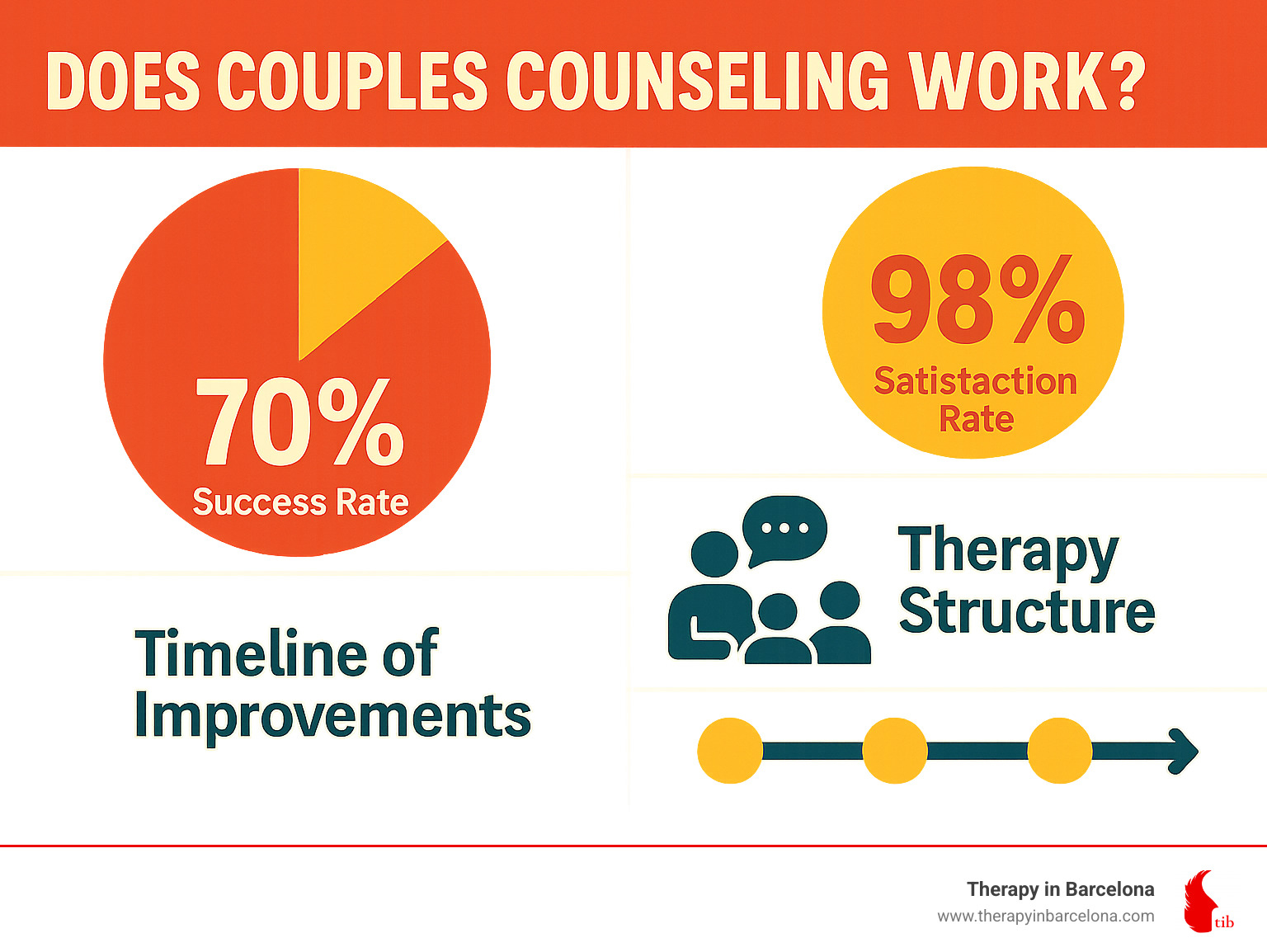
The evidence says yes—couples counseling is effective for many couples. Multiple studies, including a meta-analysis published in the Journal of Marital and Family Therapy, report that about 70% of couples benefit from counseling (Shadish & Baldwin, 2003). Satisfaction rates are even higher, with up to 98% of couples saying they received good or excellent help (American Association for Marriage and Family Therapy, 2012). These results are consistent across different approaches, including Emotionally Focused Therapy (EFT), the Gottman Method, and Integrative Behavioral Couple Therapy (IBCT) .
- Around 70% of couples see meaningful improvement after counseling, according to research
- 98% of couples rate their therapy experience as good or excellent
- Couples who attend therapy have significantly better outcomes than those who do not seek help
- Positive effects from couples counseling often last for years after treatment ends
- Starting therapy early in the relationship leads to higher success rates
While no approach works for everyone, couples therapy has proven especially effective for improving communication, rebuilding trust after infidelity, navigating life transitions, and addressing parenting conflicts.
Picture this: you and your partner sitting across from each other in a comfortable room, tensions high, wondering if this therapist can possibly help untangle the knots in your relationship. Whether you’re dealing with cultural adjustment in Barcelona as an expat couple or facing universal relationship challenges, that question lingers: is this worth it?
The skepticism is understandable. Many of us grew up seeing couples therapy as a last-ditch effort before divorce—something you try when things are already falling apart. But modern research paints a different picture.
According to the American Association for Marriage and Family Therapy, 98% of couples who attend counseling report having a good or excellent experience. More compelling still, a comprehensive review of couples therapy studies found that therapy has a positive impact on about 70% of people who try it.
These aren’t small improvements either. Couples often report profound shifts in how they communicate, resolve conflicts, and understand each other’s emotional needs.
For expat couples, the benefits can be even more significant. Living abroad adds unique stressors—language barriers, cultural adjustments, isolation from support networks—that can strain even the healthiest relationships. Having a professional guide who understands these challenges can make all the difference.
“The crimes of the heart are usually misdemeanors, even though they sometimes feel like felonies,” as one therapist aptly put it. Most relationship issues that feel catastrophic are actually common and treatable with the right approach.
However, timing matters enormously. Research shows couples typically wait six years too long before seeking help—often starting only when problems have become deeply entrenched. The earlier you begin, the better your chances of success.
Why This Conversation Matters
For expatriates living in Barcelona or other international settings, relationship challenges can feel particularly intense. The combination of cultural adjustment, language barriers, and distance from familiar support systems creates a perfect storm for relationship strain.
When couples face difficulties abroad, they often experience a double isolation—both from their home culture and from each other. Without extended family nearby or established friendship networks, the relationship bears the full weight of emotional support needs.
This is why understanding the effectiveness of couples counseling is especially relevant for international couples. Having access to professional support that understands both relationship dynamics and the unique challenges of expatriate life can be transformative.
Prevention also plays a crucial role. Many couples only consider therapy when they’re already in crisis, but research shows that earlier intervention leads to significantly better outcomes. Couples therapy can strengthen already functional relationships, helping partners steer transitions like relocating abroad, starting a family, or changing careers—all common experiences in expatriate communities.
What Exactly Happens in Couples Counseling?
Walking into your first couples therapy session can feel a bit like stepping into uncharted territory. Many people imagine a therapist sitting in judgment, deciding who’s right and who’s wrong in the relationship. But the reality is quite different—and much more supportive.
Couples counseling creates a safe harbor where both of you can express yourselves honestly while developing healthier ways to connect. It’s not about taking sides; it’s about creating change together.
The journey typically unfolds in several phases, starting with getting to know your unique relationship story. Your therapist will gather information about your history together, current challenges, and what you hope to achieve. Based on this understanding, you’ll work together to establish clear goals for therapy.
The heart of the process involves guided conversations and exercises designed to improve how you communicate, build deeper understanding, and resolve conflicts. Between sessions, you’ll often have “homework”—specific practices to try at home that reinforce what you’re learning. As you make progress, sessions might become less frequent, focusing on maintaining your gains and preventing old patterns from returning.
What makes modern couples therapy particularly effective is its foundation in research rather than just theory or opinion. Does couples counseling work? The evidence shows it does, especially when using established approaches like:
The Gottman Method, developed by Drs. John and Julie Gottman, focuses on building friendship, managing conflict, and creating shared meaning in your relationship. It’s especially helpful for improving communication and addressing those recurring arguments that never seem to get resolved.
Emotionally Focused Therapy (EFT), created by Dr. Sue Johnson, helps couples identify and change negative interaction patterns by focusing on emotional bonds and attachment needs. Studies show it has success rates around 75%.
Integrative Behavioral Couple Therapy (IBCT) combines traditional behavioral techniques with acceptance strategies, making it particularly effective for long-standing issues that have created deep relationship wounds.
More info about couples therapy services
Nuts-and-Bolts of the Room
“So what actually happens when we’re sitting in the therapist’s office?” This is one of the most common questions couples ask before starting therapy.
Most sessions last between 50-90 minutes and typically occur weekly, especially at the beginning. Your therapist will create an environment where both of you feel heard and respected—no small feat when tensions might be running high.
During your first few meetings, expect a thorough assessment. Your therapist might use questionnaires to identify both strengths in your relationship and areas needing attention. They’ll ask about your history as a couple, current concerns, and what you’re hoping to achieve through therapy.
Once your goals are established, you’ll explore the patterns that might be causing problems. This could involve practicing new communication skills, identifying emotional triggers, or examining how past experiences might be influencing your current relationship dynamics.
Homework between sessions is a crucial part of the process. These might be specific conversations to have, exercises to practice, or readings to complete. This extends the therapy beyond your weekly appointment and helps integrate new skills into your daily life together.
Perhaps most importantly, your therapist creates a space where difficult emotions can be expressed without fear of judgment or retaliation. As a neutral third party, they ensure both partners have equal opportunity to share their perspectives—something that might feel impossible to achieve on your own.
Does Couples Counseling Work for Every Issue?
Does couples counseling work for all relationship problems? While therapy can address many issues, its effectiveness varies depending on your specific situation and how committed both partners are to the process.
Communication problems respond particularly well to therapy. Learning effective communication skills is one of the most reliable outcomes of couples counseling, with many couples reporting significant improvements in how they talk and listen to each other.
Infidelity creates deep wounds, but research shows about a third of couples can successfully recover with therapeutic support. The process involves rebuilding trust, addressing underlying issues, and establishing new relationship agreements.
Parenting conflicts often create significant tension between partners. Therapy helps align your approaches and reduce conflicts around child-rearing—especially valuable for intercultural couples who may bring different cultural expectations to parenting.
Financial disagreements are among the most common sources of relationship conflict. In therapy, couples can develop shared financial goals and improve communication around money matters.
Intimacy issues, both emotional and physical, can be addressed through couples work. Partners learn to express needs more clearly and respond to each other’s bids for connection.
Cultural adjustment challenges are particularly relevant for international couples or those living abroad in Barcelona. Therapy can help steer cultural differences and the unique stresses of expatriate life.
However, couples counseling does have limitations. It may not be effective when:
- One partner isn’t genuinely willing to participate
- There’s ongoing, unaddressed substance abuse
- Active affairs continue during therapy
- Physical or emotional abuse is present in the relationship
In these situations, individual therapy might be more appropriate initially, or you may need specialized interventions before general couples counseling can be effective.
For expatriate couples in Barcelona, finding a therapist who understands both relationship dynamics and the unique challenges of international living can make all the difference in your therapeutic journey.
Does Couples Counseling Work? The Evidence
If you’re wondering “does couples counseling work?“, you’ll be reassured to know that extensive research says yes—and quite effectively. This isn’t just wishful thinking; it’s backed by solid science.
Multiple comprehensive studies have examined thousands of couples in therapy, and the results consistently show that couples counseling creates meaningful positive change for about 70% of participants. That’s an impressive success rate, especially considering the complexity of relationship dynamics and the challenge of helping two people simultaneously.
Even more encouraging, the American Association for Marriage and Family Therapy reports that 98% of couples rate their therapy experience as good or excellent. While therapy isn’t a perfect solution—about 38% of married couples still divorce within 4 years after completing counseling—this rate remains significantly lower than the general divorce rate of nearly 50%.
The benefits extend beyond just relationship satisfaction. Many couples also experience improvements in their individual well-being, including reduced symptoms of depression and anxiety. After all, when our closest relationship improves, our entire outlook often brightens.
Different therapeutic approaches show varying strengths, though all can be effective:

- Emotionally Focused Therapy (EFT) helps about 75% of couples, with benefits often lasting years after therapy ends. It’s particularly effective for rebuilding emotional bonds.
- The Gottman Method excels at improving relationship satisfaction and helping couples manage conflicts while building friendship and shared meaning.
- Integrative Behavioral Couple Therapy (IBCT) shows especially promising long-term outcomes, with benefits that often continue growing even after therapy concludes.
What’s particularly striking is that these aren’t just subjective feelings of improvement. Researchers have measured actual changes in behavior, communication patterns, and even physiological responses during conflict discussions.
Scientific research on couple distress
Global Studies Answer: does couples counseling work
The effectiveness of couples counseling isn’t just an American phenomenon—it works across cultures and countries, which is especially relevant for expatriate couples in Barcelona.
A significant Swedish study examined whether couple therapy methods developed primarily in Anglo-Saxon countries would translate effectively to a Swedish context. The results were clear: among 131 distressed couples, both marital satisfaction and family climate improved substantially after therapy. Similar findings have emerged from studies in Germany and other countries.
This cross-cultural effectiveness is particularly reassuring for expatriate couples, who often steer multiple cultural influences in their relationships. Even when partners come from different backgrounds or are living away from their home cultures, evidence-based couples therapy can help them find common ground and build stronger connections.
What about long-term benefits? Follow-up studies paint an encouraging picture. Many couples not only maintain their improvements but continue to improve their relationship quality years after completing therapy. Rather than providing just a temporary fix, good couples therapy helps partners develop skills and insights that continue benefiting their relationship over time.
Largest U.S. Trial Shows: does couples counseling work
The largest clinical trial to date—published in the Journal of Consulting and Clinical Psychology—shows that couples counseling is effective, even for couples facing chronic distress (Baucom et al., 2015; ).
This landmark study followed 134 chronically distressed married couples who received up to 26 therapy sessions over a year. What makes this research particularly valuable is its long-term follow-up—researchers continued collecting data every six months for five years after treatment ended.
The results tell a powerful story:
- About two-thirds of couples showed significant improvement immediately after treatment
- Five years later, 50% maintained significant improvements
- Only 25% had separated or divorced—far lower than would be expected for such distressed couples without intervention
- The remaining 25% showed no significant change
The study compared traditional behavioral couple therapy with integrative behavioral couple therapy (IBCT). While both approaches helped, IBCT showed stronger long-term benefits, suggesting that combining acceptance strategies with behavioral change techniques creates more lasting improvements.
This research has inspired the development of online couple therapy programs, making evidence-based help more accessible for expatriates in areas with limited access to English-speaking therapists—a valuable option for international couples in Barcelona and beyond.
The key takeaway? Even very distressed couples can benefit from therapy if both partners commit to the process. However, timing matters—couples who seek help earlier typically show better outcomes than those who wait until problems become deeply entrenched.
When Therapy Helps—and When It Doesn’t
Knowing when couples counseling is likely to succeed—and when it might not—can help you decide if it’s right for your relationship. After all, therapy isn’t a one-size-fits-all solution, especially for couples navigating the complexities of expatriate life in Barcelona.
Signs It’s Working
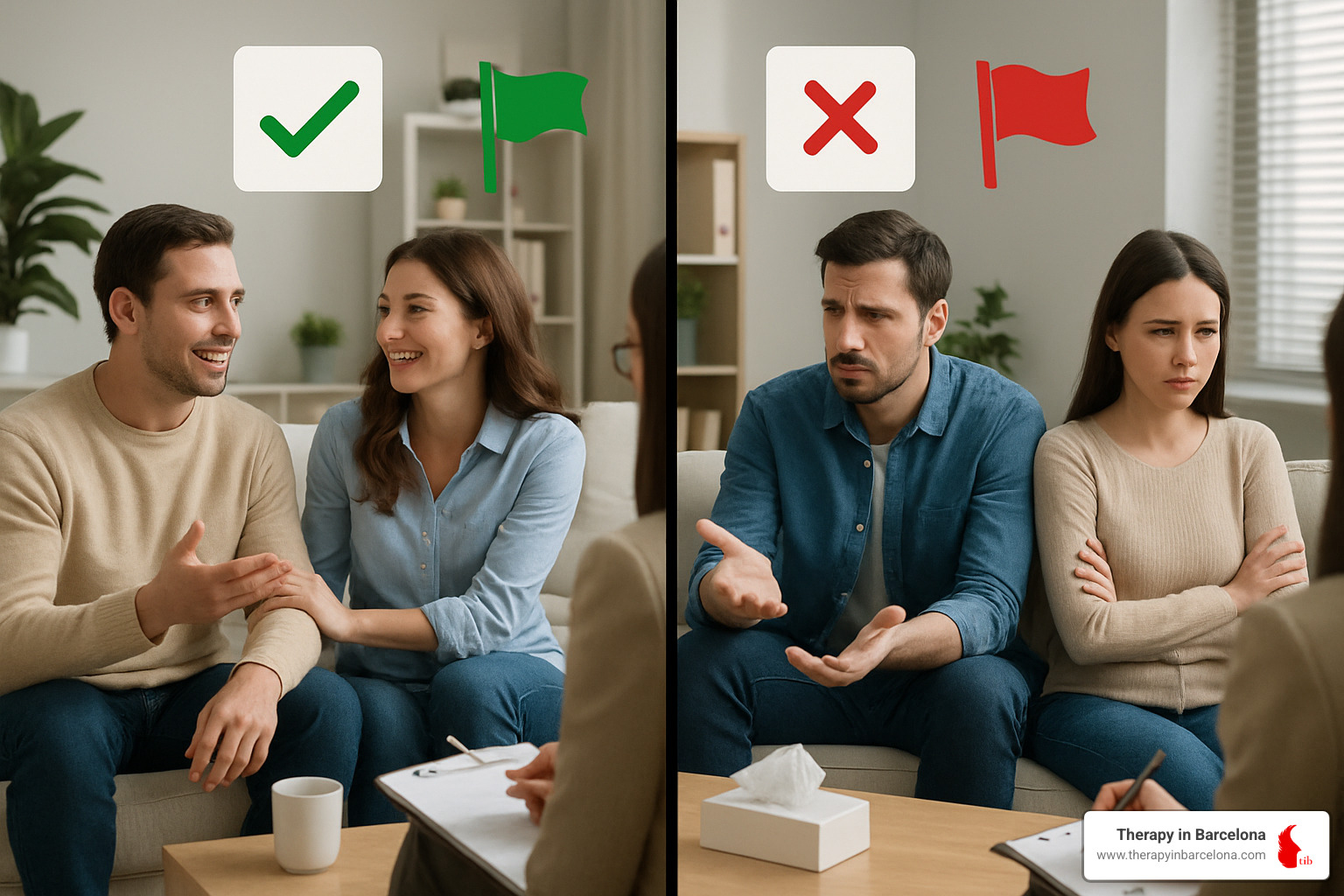
How can you tell if your couples therapy is making a difference? You might not experience dramatic breakthroughs in a single session, but keep an eye out for these encouraging signals:
You’ll likely notice improved dialogue first—fewer interruptions, less defensiveness, and more genuine listening. Rather than waiting for your turn to speak, you’re actually hearing each other.
Increased empathy is another powerful indicator. When your partner shares feelings that previously irritated you, you might find yourself thinking, “I can see why they feel that way,” even if you still disagree.
Couples who are benefiting from therapy start taking shared responsibility for their patterns. The blame game fades as you both recognize your contributions to recurring issues. This shift from “you always…” to “we tend to…” signals real progress.
You’ll also experience reduced reactivity during conflicts. Those hot-button topics that once triggered immediate arguments might still be sensitive, but you can discuss them without the conversation spiraling out of control.
Many couples report a sense of renewed connection—small moments of affection or appreciation that had disappeared from daily life begin to return. You might catch yourself smiling at your partner in ways you haven’t for months or years.
Perhaps most importantly, you’ll develop concrete skills you can identify and use outside the therapy room. These might include “time-outs” during heated moments or specific phrases that help de-escalate tension.
When couples start making future plans together again—whether it’s planning a holiday or discussing long-term goals—it’s a beautiful sign that hope has been restored to the relationship.
Red Flags & Limitations
While couples counseling works for many, certain circumstances can limit its effectiveness or even make it counterproductive:
Active abuse creates a dangerous power imbalance that standard couples therapy can’t safely address. If physical, emotional, or verbal abuse is present, individual therapy and safety planning should come first. Couples work might be appropriate later, but only with specialized approaches.
When one partner is completely unwilling to participate meaningfully, therapy becomes an uphill battle. If your partner attends sessions but refuses to engage or only does so to placate you, progress will be limited.
Ongoing affairs undermine the trust-building that’s essential to therapeutic progress. It’s nearly impossible to repair a relationship while one partner remains actively involved with someone else.
If you or your partner have already decided to end the relationship and are using therapy only to ease the transition, traditional couples counseling may not be appropriate. In these cases, “discernment counseling”—a specialized approach for couples with mixed agendas—might be more helpful.
Untreated individual issues like substance abuse, severe mental health conditions, or personality disorders often need to be addressed first. When these challenges are present, the affected partner may need individual treatment before couples work can be effective.
When partners have fundamentally different goals for therapy—perhaps one wants to improve the relationship while the other secretly hopes the therapist will help them separate—standard couples counseling faces significant challenges.
Factors That Tip the Scales
Several key factors influence whether your couples therapy will succeed:
Therapist fit is crucial. The quality of your connection with your therapist—what researchers call the “therapeutic alliance”—consistently predicts outcomes. For expatriate couples in Barcelona, finding a therapist who understands both relationship dynamics and cross-cultural challenges can make all the difference.
Timing matters enormously. Couples who seek help when problems first emerge typically need fewer sessions and achieve better results than those who wait until they’re in crisis. Research showing couples typically wait six years too long? Don’t be that statistic.
Different therapy approaches work better for different problems. EFT might be perfect if attachment issues underlie your conflicts, while the Gottman Method might be ideal if you’re struggling with persistent arguments about the same topics.
For international and intercultural couples, a therapist’s cultural competence is essential. Understanding how culture shapes communication, conflict resolution, and relationship expectations can transform therapy outcomes.
Expat-specific stressors add another layer of complexity. These include relocation stress, language barriers, distance from support networks, career imbalances (when one partner’s job drives the move), and uncertain future plans. A therapist familiar with these challenges can help you steer them more effectively.
At Therapy in Barcelona, we understand these unique expatriate pressures. Our therapists are expats themselves, bringing both professional expertise and personal understanding to your relationship challenges. We carefully match couples with therapists who can address their specific needs, creating the strongest foundation for successful therapy.
More info about communication help
Getting the Most Out of Counseling
Looking for ways to make your couples therapy journey truly effective? The truth is, couples counseling works best when both partners approach it with the right mindset and practical strategies. Let’s explore how to maximize your therapeutic experience.
When my partner and I first started couples counseling, I remember feeling both hopeful and uncertain. Would this really help us? The answer, I finded, depended largely on how we engaged with the process.
Successful couples therapy isn’t about quick fixes—it’s about building a foundation for lasting change. Most couples need at least 12-20 sessions to see meaningful improvements. Think of it as learning a new language together; you wouldn’t expect fluency after just a few lessons.
What really makes the difference? Taking therapy beyond the session room. The couples who benefit most don’t just show up weekly—they actively practice new skills between appointments. This might mean setting aside time for a daily check-in, trying out new communication techniques during disagreements, or completing journaling exercises your therapist suggests.
Progress rarely follows a straight line. Some sessions will feel breakthrough and others might leave you feeling frustrated. This is completely normal! The overall trajectory matters more than any individual session.

I’ve found it especially helpful to approach therapy with a team mindset—you and your partner working alongside your therapist, rather than expecting the therapist to “fix” things for you. This collaborative approach creates a sense of shared responsibility and empowers both partners.
Be honest with your therapist about what’s working and what isn’t. If a particular exercise feels uncomfortable or ineffective, speak up! Good therapists appreciate feedback and can adjust their approach to better suit your needs.
More info about communication help
Choosing the Right Therapist
Finding the right therapist is perhaps the most important decision you’ll make in your couples counseling journey. Research consistently shows that the therapeutic alliance—the relationship between you and your therapist—is one of the strongest predictors of successful outcomes.
When my wife and I were looking for a couples therapist in Barcelona, we interviewed three different professionals before finding someone who felt right for both of us. That initial investment of time saved us months of potential frustration.
What should you look for? Specialized training is essential. Look for therapists with specific certification in evidence-based couples therapy approaches like EFT, the Gottman Method, or IBCT. A therapist might be brilliant at individual therapy but lack the specialized skills needed for working with couples.
Experience with your specific issues matters too. If you’re struggling with cultural differences in your relationship or recovering from infidelity, a therapist who specializes in those areas will have valuable insights and techniques.
For international couples in Barcelona, cultural sensitivity is particularly important. A therapist who understands how cultural differences affect communication styles, conflict resolution, and relationship expectations can help you steer these complexities more effectively.
Most importantly, both partners should feel comfortable with the therapist. If either of you feels judged or misunderstood, therapy is unlikely to succeed. Many therapists offer an initial consultation specifically to assess this fit before committing to ongoing sessions.
Don’t hesitate to ask potential therapists about their approach, experience, and how they might work with your specific concerns. A good therapist will welcome these questions and provide thoughtful responses.
Scientific research on therapeutic alliance
Special Considerations for Expats & LGBTQ+ Couples
Living abroad brings unique challenges for couples—especially for LGBTQ+ partners. As an expat couple in Barcelona, you’re not only adapting to a new culture and language, but may also be facing unfamiliar attitudes toward sexuality and identity. For LGBTQ+ couples, finding inclusive, affirming support can be crucial, as local norms and legal protections may differ from what you’re used to at home. All of this is on top of the usual relationship dynamics and the distance from familiar support networks.
Intercultural relationships bring both richness and challenges. You and your partner might have fundamentally different expectations about communication, conflict resolution, or family involvement based on your cultural backgrounds. A therapist familiar with these dynamics can help you steer cultural differences without pathologizing them.
Even when both partners speak a common language, communication can be challenging when it’s not everyone’s native tongue. The partner who’s more fluent might have an advantage during arguments, creating power imbalances that affect the relationship. A skilled therapist can help level this playing field.
Relocation stress affects most expatriate relationships in unique ways. If you initiated the move to Barcelona, you might feel responsible for your partner’s happiness; if you’re the “trailing spouse,” you might resent sacrificing your career or support network. Both experiences are valid and deserve attention in therapy.

For LGBTQ+ couples, finding a therapist who genuinely understands your experience is crucial. Beyond the universal relationship challenges, you may be dealing with minority stress, varying legal protections across borders, or complex family planning decisions. A therapist who’s knowledgeable about these issues can provide more effective support.
At Therapy in Barcelona, many therapists are expatriates themselves, bringing personal understanding of international relationship dynamics alongside professional expertise. This experience with the expat journey allows them to offer more nuanced, relevant guidance for couples facing similar challenges.
Whether you’re dealing with cultural differences, language barriers, or the unique stressors of being an LGBTQ+ couple abroad, finding a therapist who truly “gets it” can make all the difference in your couples therapy experience.
Frequently Asked Questions about Couples Counseling
How long before we see change?
“When will we start to feel better?” This is one of the first questions most couples ask me when starting therapy. The good news is that many couples notice small improvements relatively quickly—often within the first 3-5 sessions. You might find yourselves having slightly calmer discussions or feeling more understood in certain moments.
However, meaningful, lasting change typically requires a commitment of 12-20 sessions. Think of it like learning any new skill—you wouldn’t expect to master a musical instrument after just a few lessons, and the same applies to changing relationship patterns that may have developed over years.
Several factors influence your pace of progress:
The depth and duration of your relationship challenges naturally affect your timeline. Couples who come in with recent issues often see faster improvement than those with years of accumulated hurt.
Early intervention makes an enormous difference. If you’re reading this while considering therapy for the first few signs of trouble, you’re already setting yourselves up for success.
Between-session practice is perhaps the most significant factor. Couples who actively work on their new skills between appointments typically progress much faster than those who rely solely on the therapy hour.
Rather than focusing only on how many sessions you’ll need, look for those small, incremental improvements in how you communicate, understand each other, and connect. These changes often snowball, creating positive momentum that builds over time.
Is it ever too late to start?
I’ve worked with couples who came to therapy as a last resort before divorce—and still found their way back to a loving relationship. So my short answer is: it’s rarely “too late” if both partners are willing to engage genuinely in the process.
Research supports this hopeful view. Even among couples beginning therapy in a state of severe distress, about 25% achieve significant improvement. Another 25% may use therapy to steer a healthier separation process, which can be valuable in its own right, especially when children are involved.
That said, I won’t sugarcoat the reality: earlier intervention consistently leads to better outcomes. The average couple waits six years after serious problems develop before seeking help. During those years, negative patterns become deeply entrenched, trust erodes, and emotional wounds deepen.
The best time to seek therapy isn’t when you’re in crisis—it’s when you first notice persistent patterns you haven’t been able to resolve on your own. If you find yourselves having the same argument repeatedly or feeling increasingly disconnected, that’s your relationship asking for attention.
For expat couples in Barcelona, this timing can be particularly crucial. The stresses of cultural adjustment often amplify existing relationship tensions, making early support even more valuable.
What if my partner refuses to come?
It’s a common scenario—one partner is eager for therapy while the other is resistant. If you’re facing this challenge, you have several meaningful options:
Consider individual therapy focused on relationship issues. Working on your own responses and behaviors can positively impact your relationship dynamics, even without your partner’s direct participation. Many of our therapists at Therapy in Barcelona work with individuals on relationship concerns.
Address your partner’s specific concerns about therapy. Are they worried about cost? Time commitment? Being blamed? Understanding their hesitation is the first step toward addressing it. For many expats, concerns about language or cultural understanding can be barriers—knowing we offer culturally sensitive therapy in English often helps ease these worries.
Start with relationship education rather than therapy. Some partners find workshops, books, or online courses less threatening than formal therapy. These can serve as a gateway to more structured support.
Suggest a limited trial of 3-5 sessions with no long-term commitment. This reduces the perceived pressure and gives your partner a chance to experience the benefits firsthand.
Explore alternative formats like online sessions or weekend intensives that might better fit your partner’s preferences or schedule.
Forcing or manipulating a partner into therapy rarely leads to positive outcomes. The decision to participate must ultimately be voluntary for therapy to be effective.
At Therapy in Barcelona, we understand these challenges and can help you steer this delicate situation, whether through individual support or eventually as a couple when both partners are ready.
Conclusion
So, does couples counseling work? The evidence clearly shows that for most couples who engage in the process, the answer is a resounding yes. With success rates hovering around 70% and remarkably high satisfaction ratings from participants, couples therapy stands as one of the most effective interventions available for relationship distress.
For expatriates facing the added challenges of international life, the benefits can be even more profound. Having a skilled professional who understands both relationship dynamics and the unique pressures of living abroad can transform not just your relationship but your entire expatriate experience.
Think of it as having a knowledgeable guide when navigating unfamiliar territory – someone who’s walked the path before and can help you avoid the common pitfalls.
Several key factors influence success in couples therapy:
Starting early is crucial – seeking help before problems become deeply entrenched gives you the best chance of success. Finding a therapist who feels right for both of you creates that essential foundation of trust. Your commitment to the process, including practicing new skills between sessions, directly impacts your outcomes. Approaching therapy as teammates rather than opponents shifts the entire dynamic. And working with a therapist who truly understands your specific challenges – whether cultural differences, language barriers, or expatriate stressors – can make all the difference.
Whether you’re struggling with communication breakdowns, navigating cultural differences in your relationship, rebuilding after a breach of trust, or simply wanting to strengthen an already good partnership, evidence-based couples therapy offers valuable tools and insights.
At Therapy in Barcelona, therapists understand the complex interplay between relationship dynamics and expatriate challenges. Their team includes professionals who are themselves expatriates, bringing both personal understanding and professional expertise to their work with international couples.
Taking the step to begin couples therapy isn’t an admission of failure—it’s a commitment to growth and a recognition that relationships, like individuals, sometimes benefit from skilled support during challenging times.
More info about couples counselling in Barcelona
Love doesn’t always need a therapist. But when it does, the research is clear: with the right approach and commitment, couples therapy can help transform conflict into connection and frustration into understanding. For many couples, it’s not just about saving a relationship—it’s about creating a stronger, more fulfilling partnership than they had before.
