


Understanding the Sources of Expat Stress

Here’s a quick guide to stress management for expats:
- Primary stressors: Expats often grapple with cultural adjustment, language barriers, homesickness, and feelings of social isolation.
- Cultural adjustment: Many expats face significant problems integrating into new cultures, which can dramatically increase stress.
- Homesickness: Effectively manage feelings of homesickness by maintaining connections with loved ones, establishing daily routines, and actively embracing your new cultural environment.
- Support network: Building a strong support system is vital for expat well-being, helping to combat isolation and provide a sense of belonging.
- Physical health: A balanced diet, regular exercise, adequate sleep, and proper hydration are fundamental to managing stress and enhancing resilience.
Moving to a new country is thrilling, but beneath the excitement, many expats struggle with unexpected challenges that lead to stress and anxiety. This blend of excitement and difficulty is a common part of life abroad.
Take Emily, a fictional composite example of a professional from the UK who moved to Barcelona. She soon found herself lonely and struggling with her limited Spanish. Her story, representing common expat challenges, echoes the experiences of many who find that the “expat blues” are a real part of their journey. It’s not a sign of failure; it’s a normal reaction to profound change.
Expats experience high stress due to adapting to new environments, often far from familiar support systems. These factors can lead to emotional disruption and a higher risk for mental health challenges. Understanding that this stress is normal is the first step. This guide will help you recognise these stressors and equip you with practical strategies to feel more in control of your experience abroad.
This section explores the real challenges that create stress for internationals in Spain—beyond the postcard image.
The Reality of Culture Shock and Adjustment
The initial weeks in a new country like Spain can feel like a holiday—the “honeymoon phase” of culture shock. But this is often followed by a frustration stage, where cultural differences, language barriers, and unfamiliar systems set in. Many expats report feeling like an outsider, struggling with new social rules, or experiencing bewildering cultural misunderstandings.
Consider grocery shopping in a busy Valencia market. You’re faced with unfamiliar products and a different pace of life. While these moments can become interesting anecdotes later, they contribute to daily stress during the adjustment phase.
Surveys of expatriates often reveal that a large number report significant challenges in integrating into the local culture. This difficulty can lift stress levels and affect mental well-being. From different work cultures to local customs, the continuous effort to adapt can be exhausting. Acknowledging these challenges as normal is where stress management for expats begins.
Common Stressors: Beyond the Obvious
Beyond culture shock, several other factors contribute to expat stress:
- Language Barriers: Trying to explain a complex issue to a bank teller in Málaga or understand a rental contract in Barcelona with limited Spanish is a primary source of anxiety. It can make everyday tasks frustrating and hinder social connections.
- Homesickness: The longing for familiar faces, places, and routines is a powerful stressor. Missing family and friends, especially during holidays, can lead to profound loneliness.
- Practical Logistics: The bureaucracy of setting up a new life can be overwhelming. Finding accommodation, opening bank accounts, and navigating healthcare systems can create a constant hum of background stress.
- Career Uncertainty: For some, moving abroad means navigating a new professional landscape, which can involve different work ethics or job security concerns, adding another layer of stress.
These stressors highlight why expats often experience higher rates of emotional disruption.
‘Expat Syndrome’ and Burnout
The cumulative effect of these stressors can lead to ‘Expat Syndrome,’ the emotional stress many expats face when adapting to a new culture. It’s common to feel overwhelmed, which can manifest as persistent worry or a deep sense of sadness.
Expatriates also face a high risk of burnout, a prolonged response to chronic emotional and interpersonal stressors. It shows up in three ways:
- Exhaustion: Feeling utterly drained, emotionally and physically.
- Cynicism or Detachment: Feeling increasingly cynical or detached from your new environment and the people in it.
- Inefficacy: A sense of not achieving much or feeling incompetent.
Unmanaged expat stress can have significant long-term impacts on health. Chronic stress disrupts the body’s balance, leading to a constant state of alert. This can contribute to serious health conditions. Preventing burnout is crucial for well-being. The People Mobility Alliance highlights the importance of cultural intelligence in mitigating these risks, a topic we will explore further.
A Practical Framework for Stress Management for Expats
When you’re feeling overwhelmed, it helps to have a simple way to think through what’s bothering you. The “5 A’s” framework offers five different approaches to managing stress, depending on the situation.
The 5 A’s: Avoid & Alter
Sometimes the most effective stress management for expats starts with tackling the source of stress directly. The first two strategies—Avoid and Alter—are about changing your external situation.
Avoid means stepping away from stressors you can eliminate. If scrolling through social media leaves you feeling anxious, or an expat forum in Gran Canaria consistently makes you feel inadequate, it might be time to step away. Not everything deserves your attention.
Alter is about changing your approach when you can’t avoid a situation. This often involves adjusting your behaviour or setting clearer boundaries.

Imagine navigating a busy market in Valencia, feeling overwhelmed by the rapid Spanish. You can’t avoid the market, but you can alter the experience. Learning a few key phrases like “¿Cuánto cuesta?” (How much is this?) can transform the interaction from stressful to manageable.
This principle also applies to work. If your workload feels crushing, talk to your manager about adjusting responsibilities. Setting clear boundaries around your time—saying no when you need to—is a powerful way to regain control. It’s not about being difficult; it’s about being sustainable.
The 5 A’s: Adapt & Accept
Not every stressor can be avoided or changed. For these, we turn to Adapt and Accept—strategies that shift your internal response.
Adapt means adjusting your expectations. Life in Barcelona or Madrid rarely unfolds as planned. Instead of resisting this, can you adapt your mindset? This might mean embracing the slower pace of life in Spain or redefining what “success” looks like. Viewing challenges as opportunities for growth can transform your experience.
Practising cultural humility also helps. This involves reflecting on your own assumptions, learning about local customs, and approaching differences with curiosity. When you adapt your perspective, daily frustrations become learning opportunities.
Accept is about acknowledging what’s beyond your control. The bureaucracy in Zaragoza, the occasional language barrier, the distance from loved ones—these are realities of expat life. Acceptance isn’t passive resignation. It means recognising what is, so you can stop struggling against it and redirect your energy toward what you can influence.
Shifting your perspective this way creates space for peace. It’s about working with your reality, not against it.
The 5 A’s: Be Active
The final A is about taking physical action—one of the most scientifically supported stress-relief strategies.
Be Active means engaging in regular physical movement. Exercise directly impacts your brain chemistry, releasing endorphins and reducing stress hormones like cortisol. Whether it’s a walk along the beach in Marbella, a yoga class in Barcelona, or joining a local football team in Sevilla, finding enjoyable ways to move can significantly improve your mental well-being.
Physical activity boosts energy, improves sleep, provides a sense of accomplishment, and creates opportunities for social connection. Creating a routine that includes regular movement can be a cornerstone of your stress management. If you’re struggling to build sustainable habits, individual therapy services can help you develop personalised routines that integrate physical activity into your life abroad.
The 5 A’s framework is flexible. Some days you’ll avoid a stressor, other days you’ll accept it. And nearly every day, being active can help. Together, these strategies give you options, which helps you move from feeling overwhelmed to feeling more in control.
Building Your Resilience Toolkit: Mind and Body
Developing personal coping skills is key to managing the pressures of expat life. Here are practical ways to strengthen your mental and physical well-being.
The Power of Mindfulness and Relaxation
In the hustle of expat life, it’s easy to feel constantly switched on. Mindfulness and relaxation techniques offer powerful tools to regain a sense of calm.
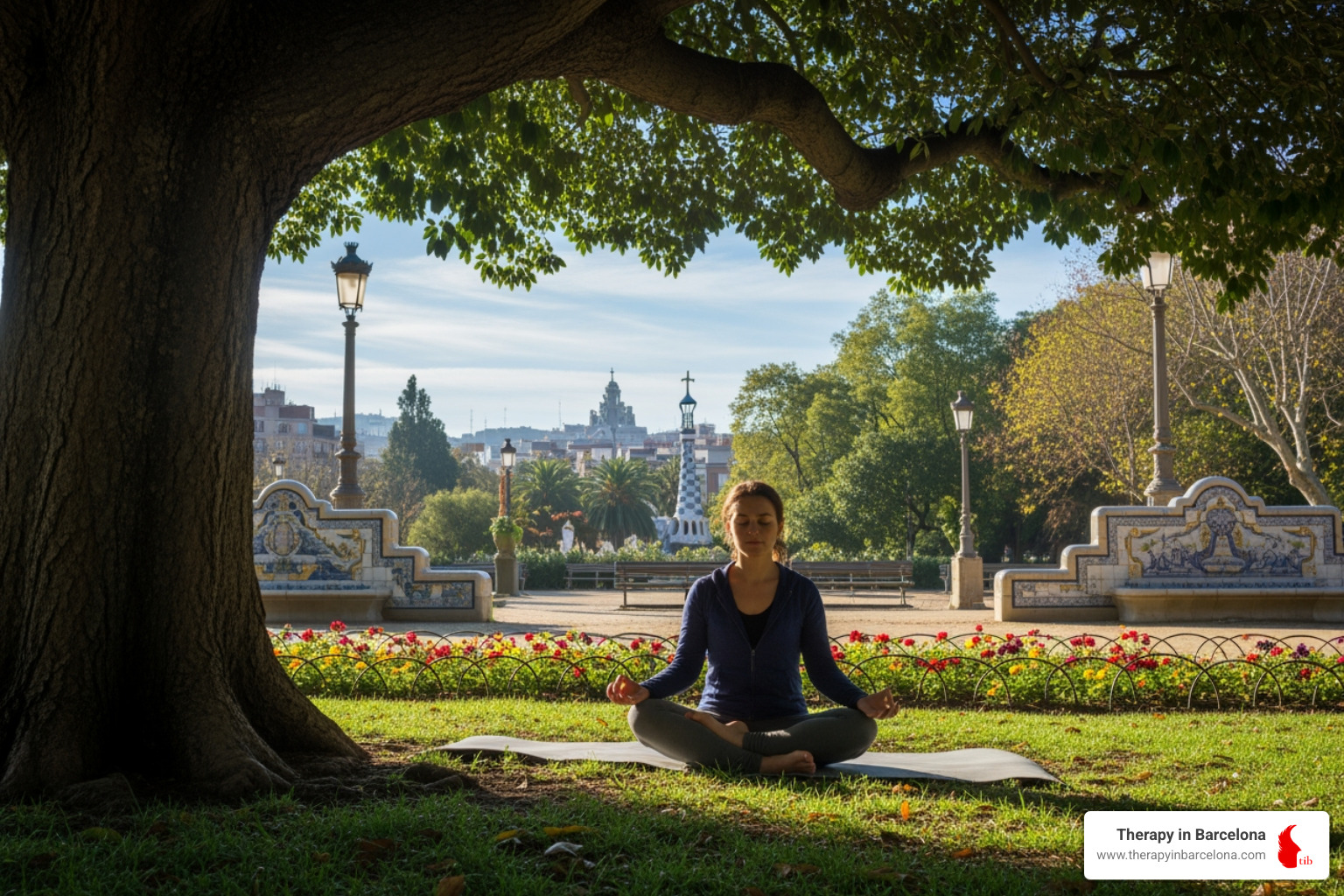
- Daily meditation, even for five minutes, can reduce stress. Find a quiet spot, close your eyes, and focus on your breath.
- Deep breathing exercises provide immediate calming. A slow, deep breath can activate your body’s relaxation response. It’s a tool you can use anywhere.
- Yoga combines physical movement with mindfulness, making it particularly effective for stress management for expats. Joining a class in Madrid or Sevilla also offers a chance to meet people.
- Journaling helps you process emotions, gain perspective, and identify stress triggers. Simply writing down your thoughts and feelings can be incredibly therapeutic.
- Progressive muscle relaxation involves tensing and then relaxing different muscle groups, helping you become aware of and release physical tension.
- Grounding techniques connect you with the present moment. Focus on your five senses—what you can see, hear, smell, taste, and touch—to interrupt anxious thoughts.
These practices, woven into your daily routine, create a powerful buffer against the stresses of living abroad.
Fuelling Your Well-being: Diet, Sleep, and Exercise
Your physical and mental health are deeply connected. When stressed, it’s tempting to neglect the basics, yet these are what your body and mind need most.
A balanced diet provides the energy to cope with daily demands. Living in Spain offers a chance to accept the Mediterranean diet, rich in fresh produce, lean proteins, and healthy fats. Exploring local markets in Málaga or Zaragoza can be an enjoyable part of your adaptation. Also, stay hydrated by drinking plenty of water.
Sleep hygiene is crucial for stress management for expats. Quality sleep is when your body and mind repair and process experiences. Aim for seven to eight hours per night. Create a consistent schedule and make your bedroom a restful environment. Avoid screens before bed. If sleep issues persist, mental health therapy can help address underlying stress.
Regular movement is non-negotiable. As discussed in the ‘Be Active’ principle, physical activity reduces stress hormones and releases endorphins. Find what you enjoy—whether it’s hiking in Gran Canaria or dancing in Barcelona. Even a 30-minute walk each day makes a significant difference.
How to Manage Homesickness and Stay Connected
Homesickness is a normal, often intense, feeling for expats. Managing it involves balancing connection to home with building a new life where you are.
Here are creative ways to stay in touch:
- Schedule regular video calls with family and friends.
- Plan visits home to have something to look forward to.
- Invite friends and family to visit you in Barcelona or Alicante to bridge the emotional gap.
- Create shared digital experiences, like watching a film simultaneously or playing online games.
- Balance old and new relationships. While maintaining home connections is vital, building new friendships in Spain is equally important.
Allow yourself to feel the sadness of homesickness, but also focus on the positive aspects of your new life. If it becomes overwhelming, family therapy services can provide support for you and your family back home.
Creating Your Support System Abroad
You don’t have to do this alone. Building a strong support network is one of the best ways to protect your well-being as an expat.
Finding Your Tribe: Building a Local Network
A challenge for expats is the loss of their familiar social network, making it crucial to intentionally build a new “tribe” abroad.
- Joining Expat Groups: Online platforms and local communities in cities like Barcelona or Madrid are excellent starting points.
- Using Social Media: Facebook groups for expats in your city (e.g., “Expats in Seville”) can be great for events and connections.
- Volunteering: Giving time to a local cause helps you meet like-minded people and practise the language.
- Language Exchange Partners: A great way to improve your Spanish and meet locals interested in cultural exchange.
- Local Clubs and Classes: Pursue a hobby by joining a hiking club, cooking class, or book club.
- Connecting with Locals: While expat groups offer comfort, integrating with locals provides a deeper understanding of your new home.
Building meaningful friendships takes time, but quality relationships are a strong protective factor against mental health issues.
Balancing Your Identity and Embracing Your New Home
Moving abroad often triggers an identity shift. The key is to maintain your core identity while embracing your new home.
- Cultural Integration Without Losing Yourself: Adopt new practices without abandoning your core values. It’s about finding a balance, like blending your holiday traditions with local Spanish customs.
- Building Cultural Intelligence (CQ): This is the ability to function effectively in culturally diverse settings. Research on the impact of cultural intelligence on burnout in expatriates shows that being motivated to engage in intercultural experiences significantly reduces the risk of burnout. The more open you are to understanding your new culture, the better equipped you’ll be to manage stress.
Therapy in Barcelona offers specialised expat therapy services that can help you work through these identity shifts, ensuring you feel rooted and authentic.
Comparing Your Support Options: Therapy and Beyond
When you need support for stress management for expats, it’s helpful to understand the options available in Spain.
Public Healthcare System in Spain
- Pros: Free or low-cost for residents.
- Cons: Often involves long wait times for mental health services and limited English-speaking therapists, which can be a significant barrier.
Large Online Therapy Platforms
- Pros: Convenient and flexible scheduling.
- Cons: Can lack local knowledge or expat-specific expertise. The “one-size-fits-all” approach may not work for expats with diverse backgrounds.
Local Practices
- Pros: Can offer in-person sessions and a sense of local community.
- Cons: While some practices in cities like Madrid or Valencia offer English-speaking therapists, not all specialise in expat issues.
- Specialisation: Our psychology-trained therapists are also expats who speak English and other languages. They bring a deep understanding of the expatriate experience.
- Accessibility: We offer online therapy worldwide and in-person sessions in Barcelona.
- Personalisation: We pride ourselves on personalised therapist matching to connect you with a professional who fits your specific needs.
- Credibility: Founded by Leigh Matthews, an Australian Psychologist and expat, we are a trusted practice committed to high standards of care since 2011.
- Privacy: We guarantee strict privacy and do not engage in data selling.
When to Seek Professional Help for Expat Stress
Knowing when to seek professional help is a sign of strength. While self-help strategies are valuable, there are times when expert guidance is essential.
Consider seeking support if you experience:
- Persistent feelings of sadness, anxiety, or hopelessness.
- Difficulty sleeping or changes in appetite.
- Loss of interest in activities you once enjoyed.
- Increased irritability or anger.
- Withdrawal from social interactions.
- Reliance on unhealthy coping mechanisms.
- Thoughts of self-harm.
Therapy can be incredibly beneficial for expats. Culturally sensitive, expat-informed care is particularly valuable because it acknowledges the specific context of your challenges. A therapist who understands expat life can help you develop effective coping strategies and approach cultural adaptation with more confidence. At Therapy in Barcelona, our personalised matching process ensures you connect with a professional who understands the challenges you’re facing as an expat.
Frequently Asked Questions about Expat Stress
What are the first signs of expat burnout?
Early signs of expat burnout typically include ongoing emotional and physical exhaustion, a pervasive feeling of being detached or cynical about your life abroad, and a sense of not achieving much—even when you’re putting in significant effort. You might also notice a decline in your performance at work, increased irritability, or a tendency to withdraw from social activities. These symptoms are more than just temporary tiredness; they indicate a prolonged response to chronic stress.
How is stress management for expats different from for locals?
While everyone experiences stress, expats face a unique set of additional stressors that locals typically do not. These include the constant effort of cultural adjustment, language barriers that can make daily life difficult, the absence of a familiar local support system of family and long-term friends, and navigating unfamiliar bureaucratic systems. Therefore, stress management for expats requires strategies that specifically address these layers of cultural adaptation, social integration, and the psychological impact of living away from home. Locals, while facing their own pressures, generally operate within a familiar cultural and linguistic framework.
How can I manage homesickness effectively?
Managing homesickness effectively involves a balanced approach: staying connected to your roots while actively building your new life. To start, set a routine, as predictability can be very comforting. Stay connected with loved ones through regular video calls, and plan future visits home to give yourself something to look forward to. Simultaneously, make a conscious effort to build a new social life in your host country, whether you’re in Gran Canaria or Barcelona. Join groups, pursue hobbies, and connect with other expats and locals. It’s important to allow yourself to feel the sadness that comes with missing home, but also to consciously focus on and appreciate the positive aspects and opportunities that your new life abroad offers.
Your Path to Thriving in Your New Home
Moving abroad is a truly bold step, isn’t it? It’s a testament to your courage and that incredible adventurous spirit within you. While stress is an inevitable part of this remarkable journey – sometimes a surprising one – it absolutely doesn’t have to hold you back from living your best life. By now, you’ve seen that understanding the unique stressors you face as an expat, using practical frameworks like the 5 A’s (Avoid, Alter, Adapt, Accept, Be Active), and diligently building your own personal resilience toolkit, can genuinely help you shift. It’s about moving from just getting by to feeling settled and fulfilled in your new environment.
You certainly don’t have to face these challenges alone. If you’d like some support along the way, we’re here for you. We invite you to book a Free Discovery Call with us today. We offer online therapy worldwide and in-person sessions right here in Barcelona. Our team of psychology-trained expat therapists doesn’t just understand these challenges; we’ve lived them too. This means you’ll receive culturally sensitive and empathetic care from someone who truly gets it. Let Therapy in Barcelona be your compassionate partner through the ups and downs of life abroad.
