


What Therapeutic Progress Really Looks Like (and Common Myths)
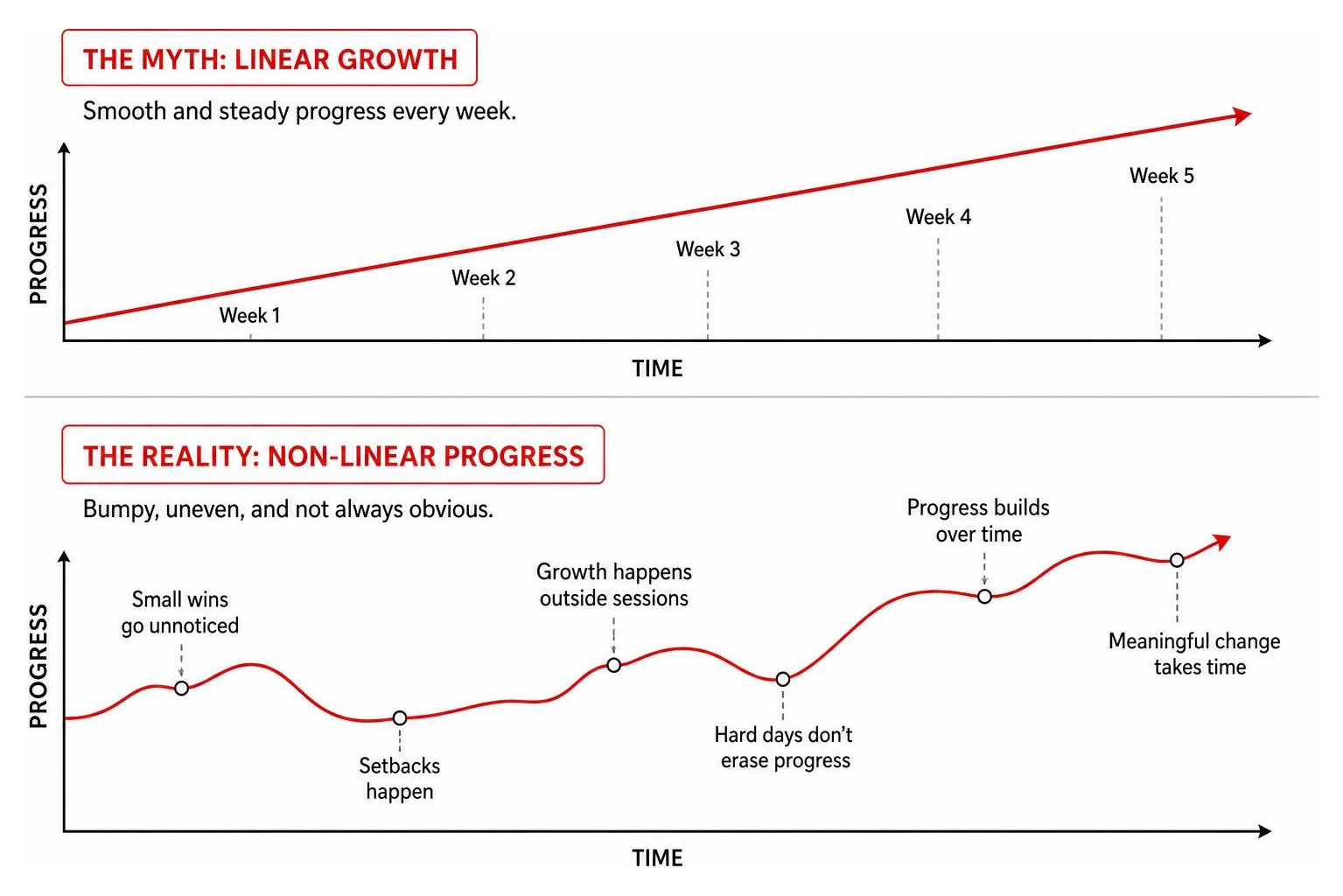
Many people imagine therapeutic growth as a smooth, ascending line where every week brings newfound clarity and relief. In reality, emotional recovery is non-linear. It is bumpy, quiet, and often subtle.
True progress frequently manifests outside of session conscious awareness. Rather than sudden epiphanies, you might notice somatic symptom reduction—fewer tension headaches, better sleep quality, or a reduction in the physical knot in your stomach when opening work emails.
Other key indicators of growth include:
- Improved emotional regulation: You recover faster from emotional triggers that used to derail your entire afternoon.
- Behavioural shifts: You set a firm boundary with a colleague, refrain from double-checking reassurance, or engage in social settings you previously avoided.
- Increased self-awareness: You notice your inner critic speaking up and choose not to take its narrative as absolute truth.
A major myth is that if you leave a session feeling drained, tearful, or temporarily worse, therapy must not be working. On the contrary, confronting suppressed grief or processing difficult memories unearths uncomfortable emotions before they can settle. Temporary discomfort is often a sign that you are doing meaningful psychological work.
Many expats seek therapy to cope with persistent anxiety and feelings of isolation after relocating abroad. It is common to feel frustrated if loneliness or anxiety still arise after a couple of months of therapy. However, progress is rarely linear, and experiencing difficult emotions does not mean therapy is not working.
However, over time, it often becomes clear that while feelings of loneliness may still arise occasionally, the response to those feelings has changed. Instead of spiralling into self-doubt or withdrawing, many people begin reaching out to others, practising self-compassion, and engaging in activities such as language exchanges. Circumstances may not change overnight, but the ability to navigate them can grow significantly.
A strong therapeutic alliance—the collaborative bond between you and your clinician—is the single strongest predictor of successful therapy outcomes. Evaluating therapist fit involves asking yourself whether you feel safe, respected, and appropriately challenged.
Understanding what the therapy process looks like and recognising the hallmarks of a good therapist will help you determine if your provider is equipped to support your journey.
Understanding Your Therapist’s Approach and Methods
Therapy is not a one-size-fits-all experience. Different therapeutic modalities offer distinct frameworks for facilitating and measuring growth:
- Cognitive Behavioural Therapy (CBT): Focuses on identifying and modifying unhelpful thought patterns and concrete behaviours, often tracking progress through symptom rating scales and structured between-session tasks.
- Acceptance and Commitment Therapy (ACT): Emphasises psychological flexibility, helping you accept difficult internal experiences while taking committed action aligned with your core values.
- Psychodynamic Therapy: Examines how past experiences and unconscious patterns influence your current choices and relational dynamics.

Regardless of the modality, structured treatment plan reviews and explicit goal-setting frameworks are essential for tracking development. Many clinicians also incorporate feedback-informed care by using brief, validated questionnaires periodically to monitor symptom trends and assess how well the therapeutic relationship is supporting progress.
Research demonstrates that when therapists receive systematic feedback on client progress, the risk of treatment stagnation decreases, leading to improved clinical outcomes. To explore how different therapeutic modalities function, read your guide to psychotherapy what it is and how it can help.
Key Questions to Ask About Your Progress in Therapy
Bringing structured questions about your progress into sessions transforms therapy from a passive conversation into an active, collaborative process. By comparing your current experiences with where you started and revisiting your initial goals, you create clear reference points for tracking your mental health journey.
Specific Questions to Ask About Your Therapy Progress to Track Growth
If you aren’t sure how to start the conversation, here are direct dialogue prompts you can take into your next appointment:
- “When we started therapy, my primary concern was [insert issue, e.g., feeling overwhelmed / persistent stress]. How do you see my relationship to that issue changing?”
- “Are there recurring emotional themes or behavioural patterns you notice across our sessions that I might be blind to?”
- “Do you observe any subtle ways I might be subconsciously avoiding certain topics or uncomfortable emotions?”
- “What is a recent choice I made or reaction I had that highlights personal growth from your perspective?”
Asking your clinician to mirror back their observations gives you insight into subtle developments you might be overlooking. To explore prompts that foster deeper self-reflection, check out these deep therapy questions for adults.
Honest Questions to Ask About Your Therapy Progress When You Feel Stuck
Feeling stagnant or plateaued in therapy is a normal part of long-term work. However, allowing unspoken frustration to linger can stall growth or lead to prematurely dropping out. Overcoming hesitation requires recognizing that asking direct questions is an act of self-advocacy, not an insult to your practitioner.
To structure these conversations without feeling confrontational, consider timing progress reviews at the beginning of a session so you have ample time to discuss them. You can also utilise structured communication strategies, such as DBT’s DEAR MAN technique (Describe, Express, Assert, Reinforce, Mindful, Appear confident, Negotiate), to frame your thoughts clearly.
Here are direct scripts for when you feel stuck:
- “I’ve noticed my anxious feelings feel about the same as they were two months ago. Can we review our current approach and see if we need to adjust our strategy?”
- “I value our sessions, but lately I feel like we’re spending most of our time venting about weekly stress rather than working on my core goals. How can we bring more structure back into our time?”
- “I’m feeling a bit stuck in our work right now. What are your thoughts on where we are, and what would it look like for us to try a different intervention?”
For additional guidance on navigating delicate topics in session, read how to ask your therapist the hardest questions without feeling awkward.
How to Track Progress Between Sessions and When to Switch Therapists
Growth doesn’t just happen during the 50 minutes you spend in your therapist’s office; it unfolds in your daily life. Integrating between-session reflection habits accelerates therapeutic outcomes.

Effective tracking strategies include:
- Targeted Journalling: Spend 5 minutes after a stressful interaction noting your physical sensations, automatic thoughts, and how you chose to respond.
- Micro-Win Logs: Write down one small example each week where you applied a tool or boundary discussed in therapy.
- Actioning Between-Session Tasks: Treat exercises suggested by your practitioner as real-world experiments rather than tedious homework.
Regular self-reflection helps you differentiate between standard therapeutic plateaus and true therapy completion. You may be reaching a natural conclusion when you consistently handle daily stressors independently, utilise your coping strategies effectively, and no longer have pressing goals to address.
However, if you have openly discussed stalled progress, adjusted your treatment plan, and still experience zero movement after several months, it may be time to evaluate alternative care options.
Choosing the Right Care Model for International Life
When evaluating options, it helps to understand how different mental health pathways compare, particularly for internationals living abroad in cities like Barcelona, Madrid, or Málaga:
Public Health System Clinicians
- Pros: Covered by national healthcare; no out-of-pocket fees.
- Cons: Long waiting lists (often several months); short, infrequent appointments; limited control over therapist selection; rare availability of English or native-language care.
Large Online Aggregator Platforms
- Pros: High accessibility; low initial price points; fast automated matching.
- Cons: High practitioner turnover; variable quality control; reliance on text algorithms rather than clinical matching; privacy concerns regarding user data; lack of local expat cultural context.
Local Standard Private Practices
- Pros: In-person local options; private-pay model ensuring strict confidentiality.
- Cons: May cater primarily to local populations; clinicians may lack specialized understanding of intercultural relationships, relocation stress, or third-culture dynamics.
Therapy in Barcelona (Bespoke Expat-Focused Group Practice)
- Pros: Established in 2011, we offer personalised therapist matching, culturally sensitive care in multiple languages, and flexible in-person or online therapy for expats worldwide.
- Cons: Private-pay service (though some therapists offer sliding scale fees for financial need).
If you are trying to determine whether your current therapeutic relationship is serving you, review 7 proven ways to decide what to discuss in therapy and the art of choosing a therapist.
Frequently Asked Questions About Evaluating Therapy Progress
How long does it usually take to see tangible progress in therapy?
While every individual’s timeline differs, many people begin noticing subtle shifts—such as improved emotional awareness or initial symptom relief—within 6 to 12 weekly sessions of structured, evidence-based therapy. Complex trauma, deep-seated relational patterns, or longstanding emotional difficulties naturally require longer, ongoing exploration.
What should I do if my therapist gets defensive when I ask about progress?
A qualified, ethical practitioner will welcome open dialogue about treatment efficacy. If a clinician responds to your inquiries with defensiveness, dismissiveness, or attempts to pathologise your reasonable questions as “resistance,” this is a significant red flag. You have the right to seek care from a provider who respects your agency and prioritises transparency.
Is it normal to feel worse after a therapy session even if I am making progress?
Yes, absolutely. Unpacking painful memories, challenging deeply ingrained coping mechanisms, or speaking unexpressed emotions out loud demands significant energy. Feeling emotionally drained, sore, or vulnerable post-session often indicates that you are actively processing underlying issues rather than avoiding them.
Taking the Next Step in Your Therapy Journey
Effective mental healthcare relies on active self-reflection, open communication, and a strong therapeutic relationship. Asking questions about your progress is an important part of ensuring your care stays aligned with your personal goals, needs, and priorities as they evolve over time.
At Therapy in Barcelona, we understand that living abroad brings unique personal growth challenges. Founded in 2011 by Leigh Matthews, an Australian Psychologist who experienced the adjustment of relocating to Spain firsthand, our practice was built specifically to serve the international community.
Our team consists of psychology-trained therapists who are expats themselves, offering culturally sensitive care tailored to internationals navigating life in Barcelona, Madrid, Valencia, Alicante, Málaga, Marbella, Sevilla, Gran Canaria, Zaragoza, and beyond.
Whether you prefer in-person sessions at our Eixample office in Barcelona or online sessions from anywhere in the world, including the USA and Canada, we prioritise bespoke therapist matching to give you the highest chance of therapeutic success from day one.
If you’d like support, book a Free Discovery Call with our team today.
