


What Couples Discuss in Premarital Counselling

Premarital counselling gives couples a structured place to talk honestly about the parts of marriage that are easy to postpone. What is discussed in premarital counselling usually includes:
- Communication habits and how each partner handles disagreement
- Money, debt, savings, and decisions about shared or separate finances
- Sex, affection, consent, and expectations around intimacy
- Children, parenting, household responsibilities, and career plans
- Family relationships, in-law boundaries, culture, religion, and values
- Personal history, emotional triggers, and the practical changes marriage may bring
The goal is not to prove that a couple is perfectly compatible. It is to identify differences early, practise respectful conversations, and make clear agreements before stress, wedding planning, relocation, or family pressure make those discussions harder.
For international and intercultural couples in Barcelona, this can also mean talking plainly about language, traditions, where to live, visits home, and how each person wants to stay connected to their own culture. A useful session may begin with something as ordinary as chores or holiday plans, then reveal deeper expectations about fairness, belonging, independence, or family loyalty.
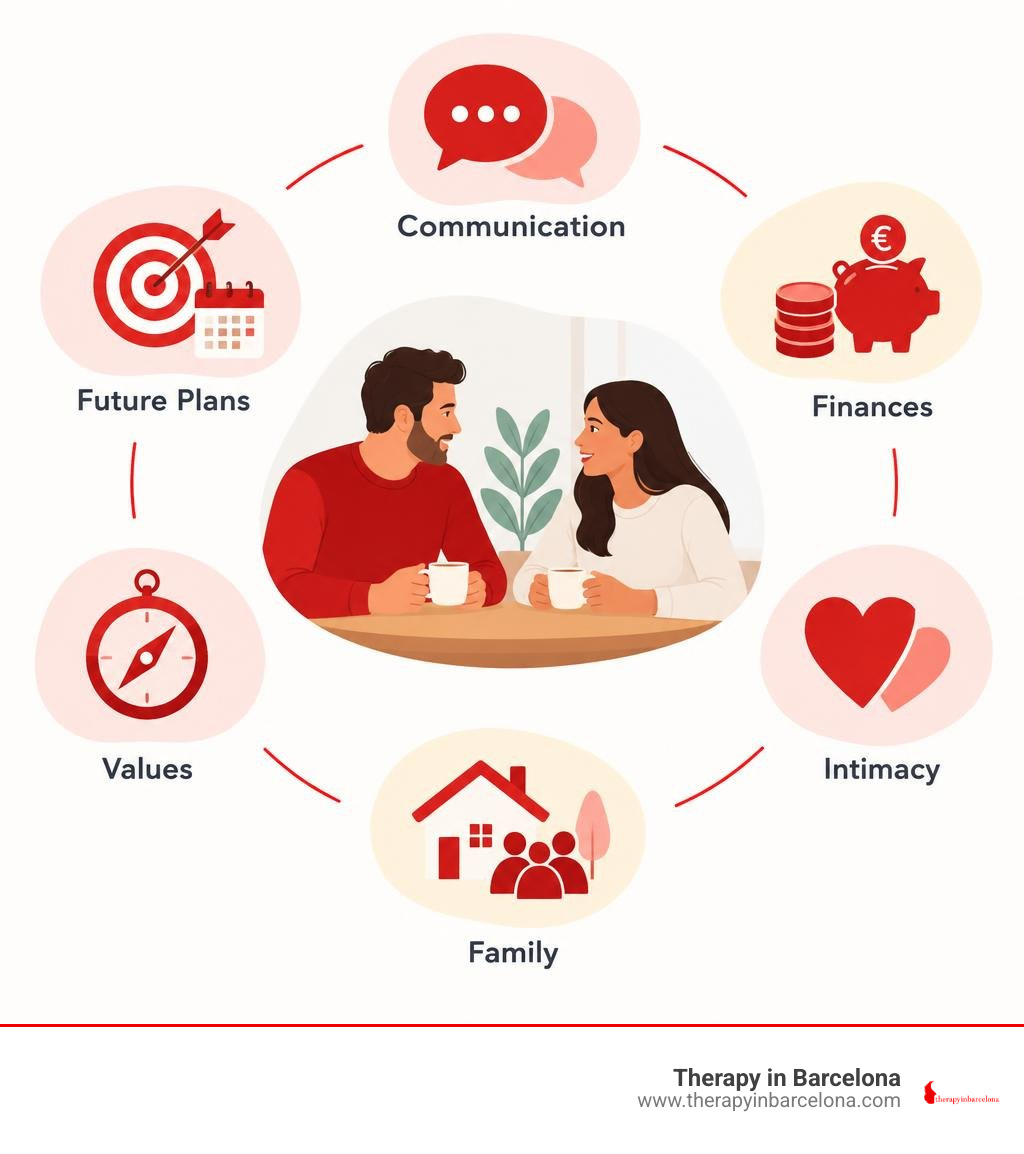
What Is Discussed in Premarital Counselling: The Core Relationship Pillars
Couples often arrive at their first session expecting a clinical test of their relationship. In reality, premarital work is a collaborative exploration of foundational values, emotional vulnerability, and shared goals. Instead of grading your compatibility, a therapist helps you understand the operational mechanics of your partnership. Exploring these themes proactively equips couples with the tools needed to navigate marital life before minor friction turns into entrenched resentment.

Research consistently shows that this preventative approach works. According to premarital counselling research, couples who participate in premarital education demonstrate up to a 31% lower likelihood of divorce. While a majority of premarital counselling historically took place within religious settings, modern couples increasingly seek secular, evidence-based therapy to prepare for life together.
Communication Patterns and Conflict De-escalation
Every relationship has a natural rhythm of conflict. Premarital sessions examine what happens when tension rises. Therapists assess individual nervous system responses—whether a partner tends toward fight, flight, freeze, or fawn during an argument.
Couples learn structured conflict de-escalation tools, such as the 5-5-5 rule:
- Speaker 1 shares their experience without interruption for 5 minutes.
- Speaker 2 shares their experience without interruption for 5 minutes.
- Both partners spend 5 minutes discussing a constructive way forward.
Sessions focus on emotional regulation, active listening, and building reliable repair rituals to reconnect quickly after disagreements. For couples seeking structured guidance on these dynamics, engaging with couples counselling support provides practical frameworks to replace defensive reactions with collaborative problem-solving.
Money, Shared Debt, and Financial Security
Finances are one of the most common sources of marital tension. In counselling, partners place all financial realities on the table to ensure complete transparency:
- Total personal debt, loans, and credit histories
- Current spending habits versus saving priorities
- Preferences for joint accounts, separate accounts, or a hybrid system
- Emergency fund targets and monthly budget structures
- Long-term investment philosophies and retirement visions
Therapists also explore each partner’s “money script”—the emotional meaning they attach to wealth based on their upbringing. For one person, a savings cushion represents safety; for another, spending represents freedom. Understanding these underlying meanings prevents everyday financial decisions from becoming power struggles.
Family of Origin, Parenting Philosophies, and In-Law Boundaries
Every person carries implicit rules absorbed from their childhood home. In premarital sessions, partners unpack these patterns to decide which traditions to keep and which to leave behind.
Key discussion areas include:
- Parenting Timelines and Visions: Desires regarding whether to have children, when to start, and family size.
- Childrearing Philosophies: Discipline methods, educational choices, and religious or cultural upbringings.
- In-Law Boundaries: Frequency of visits, expectations around holiday hosting, and guidelines for managing parental input.
For intercultural couples—such as an expat living with a local partner in Madrid or Valencia—these conversations clarify how to balance extended family obligations across different countries while establishing their own unified home culture.
Intimacy, Division of Roles, and Life Transitions
Marriage introduces evolving life stages that require ongoing renegotiation. Couples discuss career ambitions, dual-income balance, and the practical division of domestic labour to prevent invisible loads from falling disproportionately on one person.

What Is Discussed in Premarital Counselling About Sex and Intimacy
Intimacy requires open dialogue, yet many couples find sexual expectations difficult to voice without guidance. During premarital sessions, therapists create a neutral space to address physical connection with clarity and care.
Conversations typically cover:
- Desired frequency of physical intimacy and handling mismatched libidos
- Preferences around non-sexual affection (cuddling, hand-holding, words of affirmation)
- Practices around ongoing consent, boundaries, and comfort levels
- Sexual health histories and expectations for keeping intimacy vibrant over time
When couples experience persistent challenges or want to explore their physical relationship in greater depth, working with a specialist in sex therapy offers targeted, affirming strategies.
Emotional Health, Attachment Styles, and Personal Growth
A sustainable marriage allows space for both partners to grow individually. Premarital counselling explores individual attachment styles (secure, anxious, avoidant, or disorganised) to help partners recognise what triggers their insecurities.
Therapists invite transparency around personal mental health histories, past emotional burdens, and coping mechanisms. If individual concerns surface that require dedicated care outside of couples work, engaging in individual therapy ensures both individuals maintain their personal emotional well-being alongside the marriage.
(Note: The following case vignette is a fictional composite profile representing common expat challenges, not a real client.)
A couple entered premarital sessions feeling aligned on core values but repeatedly arguing over holidays. One partner saw family gatherings as an expression of loyalty, while the other experienced them as draining social obligations. By exploring family-of-origin patterns, they created a more balanced holiday plan that included dedicated downtime, reducing recurring tension before the wedding.
Timeline, Session Structure, and Red Flags
Understanding the practical structure of premarital counselling helps couples plan their preparation effectively.
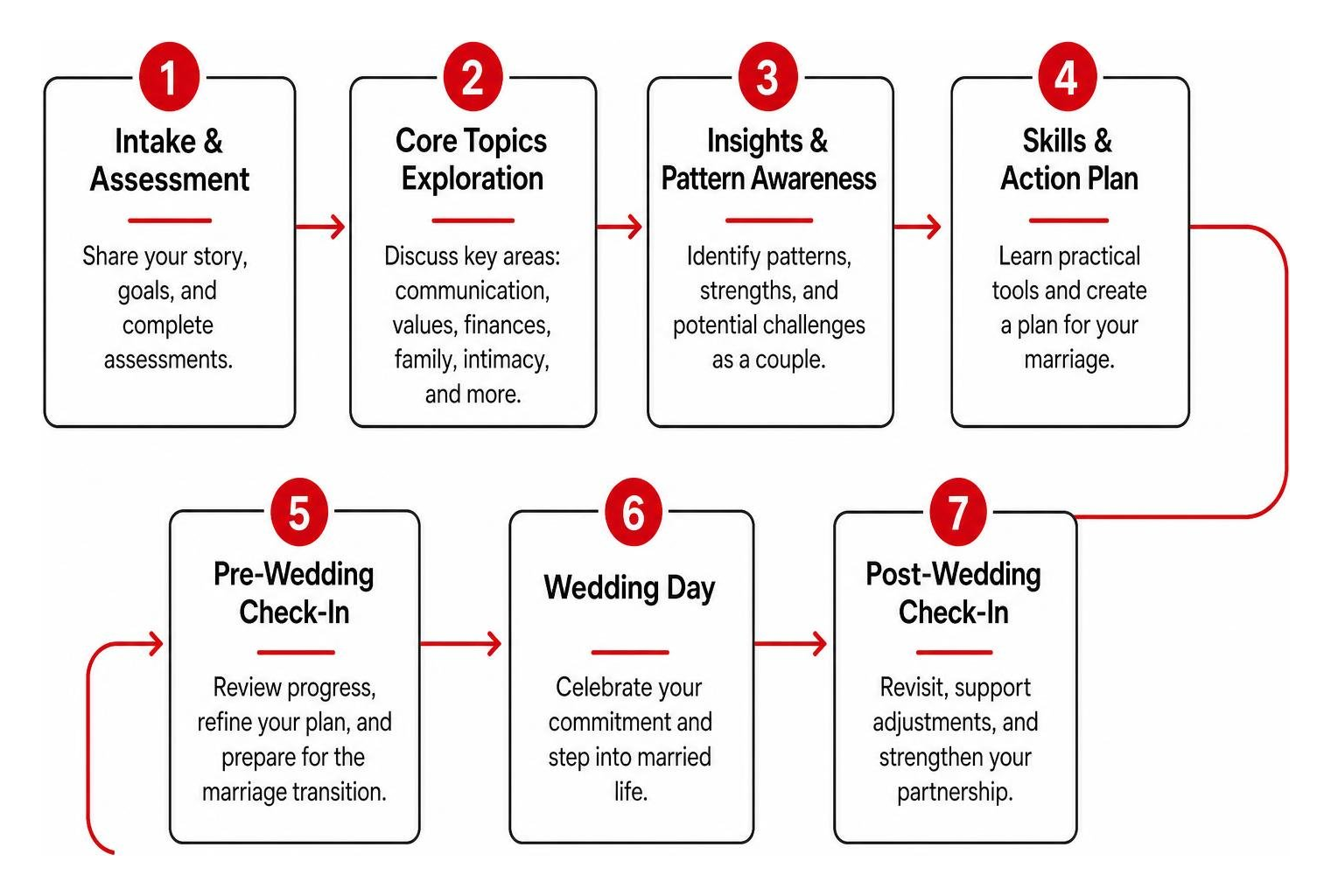
Therapists frequently draw upon structured frameworks such as the Gottman Method to identify relationship strengths and growth areas. Beginning this process well in advance provides sufficient space for meaningful skill practice without the pressure of imminent wedding logistics.
When to Start and Typical Programme Formats
The ideal time to begin premarital counselling is 6 to 12 months before the wedding. This window ensures conversations remain reflective rather than rushed by last-minute event coordination.
A typical trajectory includes:
- Initial Assessment (1–2 sessions): Reviewing relationship history, individual backgrounds, and assessment results.
- Core Skill-Building (4–6 sessions): Working through communication, finances, intimacy, and family dynamics.
- Integration & Action Plan (1–2 sessions): Creating concrete agreements and establishing rituals for future check-ins.
Sessions can be held face-to-face or via online therapy, providing flexibility for busy schedules or partners residing in different locations during their engagement.
Warning Signs and Relational Red Flags Therapists Monitor
While premarital work is primarily constructive and forward-looking, therapists actively monitor for relational patterns that require deeper intervention:
- Contempt and Disdain: Eye-rolling, mocking, or pervasive sarcasm during discussions.
- Chronic Stonewalling: Completely withdrawing from dialogue and refusing to engage in repair.
- Severe Power Imbalances: One partner controlling all decision-making, finances, or social connections.
- Unaddressed Addictions or Coercion: Active substance dependency, undisclosed financial debts, or emotional manipulation.
When red flags emerge, therapists help couples address these foundational concerns directly or provide appropriate specialist referrals.
Alternative Options and Choosing the Right Support
Engaged couples have multiple avenues available when seeking relationship guidance:
Public System Clinicians
Public healthcare systems offer essential mental health services for communities. However, premarital relationship education is rarely covered by public remits, and accessing care often involves lengthy regional waiting lists.
Large Online Platforms
General subscription apps and digital directories provide broad access, but they frequently lack specialised cultural understanding of expatriate transitions, multilingual communication, and international family dynamics.
Local Practices
Local neighbourhood clinics provide face-to-face sessions within the domestic healthcare framework, though finding English-speaking therapists familiar with cross-border family transitions can be challenging.
Specialised Private-Pay Practices (Therapy in Barcelona) Dedicated private practices deliver high-quality, private-pay care with bespoke therapist matching and strict privacy, ensuring no data selling. For internationals and expats living across Spain, working with psychology-trained professionals who understand cross-cultural realities and expat-specific dynamics ensures care that directly reflects their lived experience.
Frequently Asked Questions
What is discussed in premarital counselling regarding future finances?
Couples review complete financial disclosures, including current debts, credit histories, monthly spending styles, and existing assets. Discussions focus on establishing clear budgeting frameworks, deciding between joint, separate, or hybrid bank accounts, and aligning on long-term goals like purchasing property, investing, or retirement planning.
How many sessions of premarital counselling are typically recommended?
Most evidence-based premarital programmes span between 6 and 10 sessions, each lasting 50 to 60 minutes. This structure allows adequate time for initial assessments, in-depth discussions across core relationship pillars, skill practice between sessions, and establishing a post-wedding follow-up plan.
Do couples need premarital counselling if they have been together for years?
Yes. Long-term partners often develop comfortable routines that inadvertently sidestep difficult conversations regarding future family boundaries, long-term finances, or career sacrifices. Relationship resilience research suggests that counselling helps established couples update their relational agreements, dismantle entrenched communication habits, and proactively strengthen their foundation for the years ahead.
Building a Strong Foundation for Marriage
Entering marriage with mutual clarity, practical conflict tools, and aligned expectations is one of the most meaningful investments a couple can make. Discussing critical aspects of life—from shared finances and cultural expectations to intimacy and boundaries—ensures your relationship is built on deliberate understanding rather than unspoken assumptions.
Therapy in Barcelona was founded by Australian Psychologist Leigh Matthews, who has been in Barcelona since 2011 and brings extensive personal and professional experience in supporting internationals through life adjustments and intercultural relationships. Our team of psychology-trained therapists offers culturally sensitive care tailored to expats, international professionals, and diverse couples in Spain and across the globe.
If you’d like support, book a Free Discovery Call with Therapy in Barcelona (online therapy available worldwide, including the USA and Canada).
