


Understanding the Expat Dating Landscape

Dating as an expat offers a unique mix of excitement and challenges. Navigating cultural differences, language barriers, and the transient nature of expat life requires understanding what you’re truly up against.
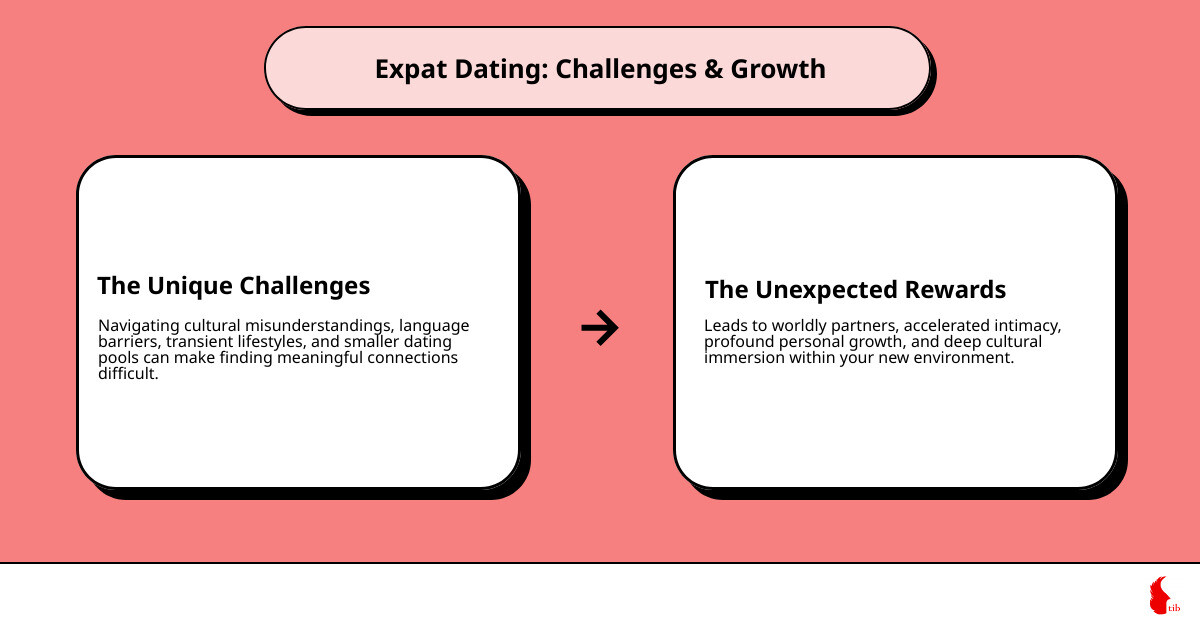
Key Challenges:
- Cultural misunderstandings and different dating norms
- Language barriers that can hide your personality
- The “revolving door” of transient relationships
- Smaller dating pools within the expat bubble
Unique Advantages:
- A more worldly, well-travelled dating pool
- Accelerated intimacy from shared expat experiences
- Personal growth through resilience and self-awareness
- Deep cultural immersion when dating locals
Take Emily, for example. She is a composite avatar based on many internationals we meet in our practice—a 34-year-old professional from the UK who moved to Barcelona seeking trip but now faces the reality of fleeting connections. “I thought dating would be easier here, but I keep having these intense connections that fizzle out when someone leaves the city,” she says.
Research shows that while about two-thirds of expats are in relationships, nearly a third remain single. This isn’t because dating abroad is harder—it’s just different. As one expat blogger put it, “Dating abroad is like regular dating thrown into a pressure cooker; everything is accelerated and more intense.”
Understanding these dynamics is the first step to navigating them successfully. If you’re feeling overwhelmed, know you’re not alone. Many internationals find that talking through these challenges with someone who understands the expat experience provides valuable clarity. Learn more about dating and relationship challenges.
The Magic and The Unexpected: Why Dating Abroad is a Unique Trip
While the challenges of dating as an expat get a lot of attention, there’s a certain magic to finding connection in a foreign land. The dating pool is often more vibrant and worldly, filled with people who share your passion for exploration. Conversations can skip the small talk and dive straight into what matters.
This shared experience of being “other” creates bonds that form surprisingly quickly. When you’re both navigating a new culture, an instant intimacy develops. You’re not just sharing stories—you’re sharing the vulnerability of being a beginner again. The romance itself becomes infused with novelty, as every shared experience is a first together, creating vivid and meaningful memories.
Perhaps the most profound aspect of dating as an expat is how it accelerates your personal growth. Communicating across cultural differences, sometimes in a second language, builds confidence and resilience. You find strengths you never knew you had and become more adaptable. This journey of self-findy, while sometimes challenging, often leads to a deeper understanding of who you are and what you want from life and love.
If you’re struggling with self-doubt or feeling overwhelmed by these changes, growth is often uncomfortable. Learn more about managing self-esteem and self-doubt during life transitions.
The Silver Lining of “Bad” Dates
Even dates that don’t spark romance can be valuable when you’re dating as an expat. In a new city, every interaction is an opportunity. That awkward first date might introduce you to a future friend, a travel buddy, or a new social circle. These connections are the foundation of your new community.
There’s also the cultural exploration aspect. Dating a local is like having a personal guide to your new city’s hidden gems, helping you fall in love with your new home. Even dates with fellow expats can introduce you to new neighbourhoods or activities. The key is to reframe your expectations: see every date as a chance to build your social network and deepen your connection to your new city. This takes the pressure off and allows you to enjoy the experience for what it is.
If you’re feeling isolated, remember every interaction is a step toward building your community. Learn more about making friends abroad and find social groups in Barcelona.
A Fast Track to Self-Finding
Dating as an expat is an unexpected catalyst for personal growth. Away from familiar social structures, you’re forced to confront who you are and what you want. This process builds confidence and resilience as you successfully steer cultural misunderstandings and adapt to new norms. The experience also clarifies your values and boundaries with startling precision. You become more open-minded by necessity and develop a deep sense of independence. This journey is transformative, making it one of the most rewarding aspects of the expat experience.
Navigating the Unique Challenges of Dating as an Expat
While alluring, dating as an expat comes with unique challenges that can feel overwhelming, making it feel like “regular dating thrown into a pressure cooker.”

Perhaps the biggest challenge is the inherent transience of expat life. People form deep connections, only to move away, creating a “revolving door of relationships.” The emotional toll of this constant cycle of attachment and loss can be exhausting, making it difficult to invest fully in new connections.
Adding to this is the surprisingly small dating pool within expat communities. While a city might have millions of people, the international community can feel remarkably intimate. This “expat bubble” can feel claustrophobic, as dating mishaps can quickly become common knowledge.
Despite this, research shows about two-thirds of expats are in relationships, suggesting finding love is possible. The journey just requires navigating these unique dynamics with patience. The constant push-pull can exacerbate existing attachment styles. If you’re struggling, you’re not alone. More info about Attachment Issues in Relationships.
The “Peter Pan Syndrome” and Fear of Commitment
In dating as an expat, some encounter the “Peter Pan syndrome”—a resistance to adult responsibilities and commitment. Expat life can provide the perfect excuse to avoid settling down, attracting individuals who are emotionally unavailable or use their transient lifestyle as a shield.
They might be charming but panic at the mention of future plans, using an uncertain visa status to avoid defining the relationship. This often stems from a fear of being tied down. Research suggests single expats may hold more insecure attachment traits, leading to a frustrating dynamic where individuals with avoidant attachment (Peter Pan tendencies) meet partners with anxious attachment styles who crave security. This creates a classic push-pull that can be emotionally exhausting. Protecting your well-being requires strong boundaries and clear communication about your needs.
Cultural Gaps and Language Barriers
Even when you speak the same language, dating as an expat involves cultural complexities. Simple things like dating etiquette (who pays for dinner?) can cause confusion. These differences reflect deeper values and can lead to misunderstandings.
The challenge deepens when you consider that 93% of our communication is non-verbal. Gestures and expressions carry different meanings across cultures, creating subtle barriers.
When navigating romance in a non-native language, many expats feel their personality is “lost in translation.” Your natural charm and humour can disappear, making it hard to be your authentic self. The mental effort can be exhausting, especially during intimate conversations. Humour, in particular, often fails to translate, leading to awkward moments. These barriers highlight the need for patience and clear communication. For couples working through these challenges, professional support can be invaluable. More info about Couples Communication Therapy.
The Great Debate: Dating Locals vs. Dating Other Expats
One of the biggest dilemmas for singles abroad is whether to date locals or other expats. Each path offers distinct experiences that shape your romantic journey.
Dating as an Expat: Locals vs Other Expats
Cultural Integration
Dating Locals: Deep and authentic immersion awaits you. You’ll discover hidden gems that tourists never see and gain genuine understanding of local customs through someone who’s lived them their entire life.
Dating Other Expats: Your cultural exploration stays limited to the shared expat experience, which can reinforce that familiar “expat bubble” rather than pushing you to truly integrate.
Shared Understanding
Dating Locals: There’s less immediate shared background, so you’ll need to put in more effort to bridge those cultural gaps and explain your expat experience.
Dating Other Expats: You get a high degree of immediate understanding about expat life – they just get your mindset without lengthy explanations.
Language Barrier
Dating Locals: This often requires significant effort or fluency in the local language. Those deep conversations might feel stilted until your language skills catch up.
Dating Other Expats: Communication usually happens in a shared language like English, making those heart-to-heart moments flow much easier.
Long-Term Potential
Dating Locals: This path can lead to deep roots and genuine stability in your host country, though it might mean one of you sacrificing connections to home.
Dating Other Expats: Relationships often feel more transient, with frequent goodbyes as people move on to new adventures or return home.
Family Integration
Dating Locals: You get full immersion into local family life, which is incredibly enriching but can also feel overwhelming when navigating different family dynamics.
Dating Other Expats: Both families are usually far away, so there’s less immediate pressure for complex family integration.
Social Circles
Dating Locals: You’ll find yourself integrating into established local friendships that have years of shared history.
Dating Other Expats: You form new friendships within the expat community, which tends to be more fluid and accepting of newcomers.
Outlook on Life
Dating Locals: You might find different life trajectories, values, and ideas about settling down versus exploring the world.
Dating Other Expats: There’s often a similar transient outlook and shared experiences of relocation and adaptation that create natural common ground.
The choice often boils down to what you’re seeking: deep cultural immersion or immediate understanding. Both paths present unique long-term considerations, like the “your country or mine?” question. For those navigating these dynamics, understanding intercultural relationships is key. More info about Intercultural Relationships.
The Pros and Cons of Dating a Local
Connecting with locals while dating as an expat can be transformative. It offers authentic cultural integration, insider knowledge, and accelerated language practice. For those seeking stability, a relationship with a local can provide genuine roots. However, this path has complexities. Navigating different family values and breaking into established social circles can be difficult. A lack of shared cultural references can also create subtle gaps in understanding, from untranslatable humour to different childhood touchstones, which can sometimes lead to feelings of isolation. Patience and open communication are essential. A few rules for navigating intercultural relationships.
The Pros and Cons of Dating a Fellow Expat
For many, dating within the expat community feels like finding a tribe. The immediate shared understanding of expat life is a huge advantage. You both get the challenges of adjustment, homesickness, and bureaucracy. This mutual support is invaluable. Yet, this path has its own drawbacks. The biggest challenge is transience, as one or both partners may eventually move, making long-term commitment feel precarious. This shared experience can also create an “expat bubble” trap, isolating you from the local culture and limiting your dating pool. It raises the question: are you building a life in your new country, or just recreating a familiar bubble? Navigating these dynamics often requires support and guidance. More info about Navigating Relationships with Expat Counseling.
Your Modern Toolkit: Using Dating Apps and Finding Connections
The digital age has revolutionised how we meet people, especially for those dating as an expat. Dating apps have become a primary gateway to romance, with research suggesting online dating can lead to happier marriages.

For expats, platforms like Tinder, Bumble, and Hinge offer immediate access to a broader network. However, success requires setting realistic expectations. The same offline challenges—cultural differences, language barriers, transience—still apply. Approach these platforms with patience and an open mind.
Safety should always be your top priority. Meet in public for first dates, tell a friend your plans, and trust your instincts. Be aware that some users may be dishonest about their intentions or length of stay. A healthy dose of scepticism combined with genuine openness will serve you well.
Best Practices for Your Online Profile
Your dating profile is your first impression. To make it count:
- Be honest about your timeline. If you’re only in town for a short time, say so. This attracts people seeking the same type of connection.
- Use high-quality, recent photos that tell a story. Include shots of you enjoying a hobby or a local landmark, not just selfies.
- Show, don’t tell. Instead of saying you’re funny, share a witty observation about your expat experience in your bio.
- Be transparent about your language skills. Mention you’re learning the local language positively. What you see as a mistake might be charming to the right person.
Beyond the Apps: Meeting People Offline
While apps are convenient, many genuine connections happen through shared interests. Meeting people organically can feel more authentic.
- Language exchanges: A perfect place to meet locals and expats in a relaxed setting.
- Meetup groups: Find like-minded people through groups for hiking, board games, book clubs, and more.
- Sports clubs or fitness classes: Combine staying active with socialising.
- Hobby classes: A cooking, art, or dance class is a great way to bond over a new skill.
- Volunteering: Connect with compassionate individuals while giving back to your new community.
- Expat community events: These are designed for people in your situation, looking to build connections.
- Ask friends for introductions: A personal recommendation often leads to a higher-quality connection.
For those in Barcelona, the city offers a vibrant community. More info on Social Groups in Barcelona can help you find local networks.
Building a Lasting Connection: From First Date to Long-Term Love
The path from casual dating to a committed relationship can be daunting when dating as an expat, as many seem hesitant to commit. This makes honest conversations about intentions crucial from the start.

Moving beyond new romance requires addressing practical realities. Visa and residency issues become relationship considerations, not just romantic ones. Questions about long-term settlement and career paths are immediate concerns.
Building trust in this environment demands exceptional open communication. You’re both navigating uncertainty, often without your usual support systems. This vulnerability can strengthen bonds, but it requires honesty about fears, hopes, and practicalities.
The foundation of any lasting relationship is emotional intimacy. This is even more important when dating as an expat, as you’re both dealing with the complexities of life abroad. Addressing these unique challenges early can prevent future misunderstandings. More info about Premarital Counseling Topics.
Nurturing an Intercultural Relationship
When dating as an expat leads to an intercultural relationship, success depends on embracing complexity. Communication is your lifeline—not just the words, but the cultural context behind them. Learning to interpret your partner’s actions through their cultural lens prevents countless misunderstandings.
Compromise becomes essential, not about erasing identity but about finding creative solutions that honour both backgrounds. Celebrate differences by creating new traditions together, like blending holiday celebrations or cooking each other’s comfort foods. This process requires patience and empathy. Navigating different family expectations also requires a united front. For couples facing these challenges, professional guidance can provide valuable strategies. More info about Couples Therapy for Expat and Intercultural Couples.
Special Considerations for the LGBTQIA+ Community when Dating as an Expat
For LGBTQIA+ individuals, dating as an expat adds another layer of complexity. While cities like Barcelona are progressive, cultural acceptance varies dramatically worldwide.
- Prioritise safety. Research local laws and social attitudes before dating in a new country.
- Find your community. Seek out local LGBTQIA+ groups and safe spaces for crucial support and connection.
- Use specific resources wisely. Dating apps for the LGBTQIA+ community can be invaluable, but always use discretion, especially in less tolerant environments.
- Understand legal considerations. Recognition of same-sex relationships and visa rights vary significantly. Understanding these realities early is crucial for long-term planning.
At Therapy in Barcelona, we are committed to providing culturally sensitive support for all internationals, including the LGBTQIA+ community, and offer a safe space to work through these unique experiences. More info about LGBTQIA Issues.
Conclusion: Embracing the Journey of Finding Love Abroad
The journey of dating as an expat is rarely straightforward. It’s filled with cultural misunderstandings, the revolving door of transient relationships, and moments of profound connection. Yet within these complexities lies an extraordinary opportunity for growth.
Dating as an expat isn’t just about finding a partner; it’s about finding parts of yourself you never knew existed. The worldly conversations, accelerated intimacy, and personal growth that come from constant adaptation are transformative experiences that shape who you become.
The challenges—from the “Peter Pan syndrome” to cultural gaps—are real. Navigating them requires patience and self-compassion. Struggling with the emotional roller-coaster of expat life doesn’t mean you’re doing it wrong; it simply means you’re human.
While Spain’s public health psychologists and large online platforms such as BetterHelp or Talkspace can be helpful starting points, many internationals tell us these options often feel impersonal or miss the cultural nuances of expat life. At Therapy in Barcelona, our team understands these unique challenges because we’ve lived them.
Founded by Leigh Matthews—an Australian Psychologist who has called Barcelona home since 2011—our practice is dedicated to providing culturally sensitive mental-health support to the international community. Our multilingual therapists, many of whom are expats themselves, offer warm, bespoke care that goes beyond generic advice. We never sell your data and pride ourselves on a personalised matching process that pairs you with the therapist best suited to your journey. Sessions are available in person in Barcelona and online across Spain (and worldwide, except the USA and Canada).
Dating as an expat will change you. Accept the journey, celebrate the growth, and remember that finding love abroad is also about finding yourself. Learn more about our approach to challenges living abroad.
