


Why Mental Health Expats Face Unique Psychological Challenges

Mental health expats face depression and anxiety at significantly higher rates than those who remain in their home countries. Multiple studies report that up to half of expatriates are at high risk for mental health challenges. Loss of support networks is frequently cited as a leading stressor, with one survey finding that 42% of expats struggle most with social isolation.
Quick answers for mental health expats:
- Most common challenges: Culture shock, isolation, unrealistic expectations, identity shifts
- Warning signs: Sleep changes, persistent sadness, anxiety, difficulty concentrating
- Professional help: Teletherapy, expat-specialised therapists, Employee Assistance Programs
- Self-care strategies: Routine building, social connection, realistic goal-setting
- Crisis support: Embassy contacts, international hotlines, local emergency services
Moving abroad isn’t just about packing your belongings and catching a flight. It’s about transplanting your entire emotional ecosystem to unfamiliar soil.
When Emily, a 34-year-old from the UK, first arrived in Barcelona, she expected the usual adjustment period. What she didn’t anticipate was how deeply the simple act of ordering coffee in Spanish would shake her confidence. Every small interaction became a reminder that she was an outsider. While Emily represents a composite of many expat experiences rather than an actual client, her story mirrors the struggles countless internationals face when adapting to life abroad.
The excitement of international life often masks a harsh reality: your brain doesn’t get a passport. It carries the same vulnerabilities, fears, and coping patterns across borders. But now it must steer them without familiar support systems, cultural cues, or even the comfort of expressing complex emotions in your native language.
Research reveals that expatriates face a perfect storm of psychological stressors. Cultural displacement, professional pressures, and social isolation combine to create what experts call “expat syndrome” – a unique constellation of mental health challenges that even the most resilient people struggle to manage alone.
The good news? Understanding these challenges is the first step towards addressing them effectively.
Why Moving Abroad Affects Your Mind
When you pack up your life and move to another country, you’re not just changing your address—you’re asking your brain to completely rewire how it processes the world. Unlike a holiday where everything feels delightfully foreign and temporary, expats face the exhausting reality of making unfamiliar territory feel like home, which takes a toll on the mental health of expats.
Think about the invisible mental workload that suddenly appears. Reading street signs becomes a puzzle. Understanding social cues requires detective work. Your brain, which used to cruise on autopilot through daily tasks, now operates in constant hypervigilance mode.
This mental exhaustion isn’t dramatic—it’s the quiet drain of having to think about everything. Where you once grabbed coffee without a second thought, you now rehearse your order. The cognitive load is relentless, leaving precious little mental energy for emotional regulation when you need it most.
Even when your move was entirely voluntary, grief shows up uninvited. You’re mourning the loss of spontaneous moments with friends, the comfort of knowing exactly how things work, and the security of cultural fluency. This “relocation grief” manifests differently for everyone—persistent sadness that catches you off guard, irritability over small frustrations, or a strange sense of disconnection from your new surroundings.
Research from studies on expat stress reveals that there are six key risk factors impacting expat mental health: history of psychological treatment, previous episodes of depression, family psychiatric history, occupational anxiety, home country worries, and physical health challenges.
The Honeymoon to Stabilisation Journey
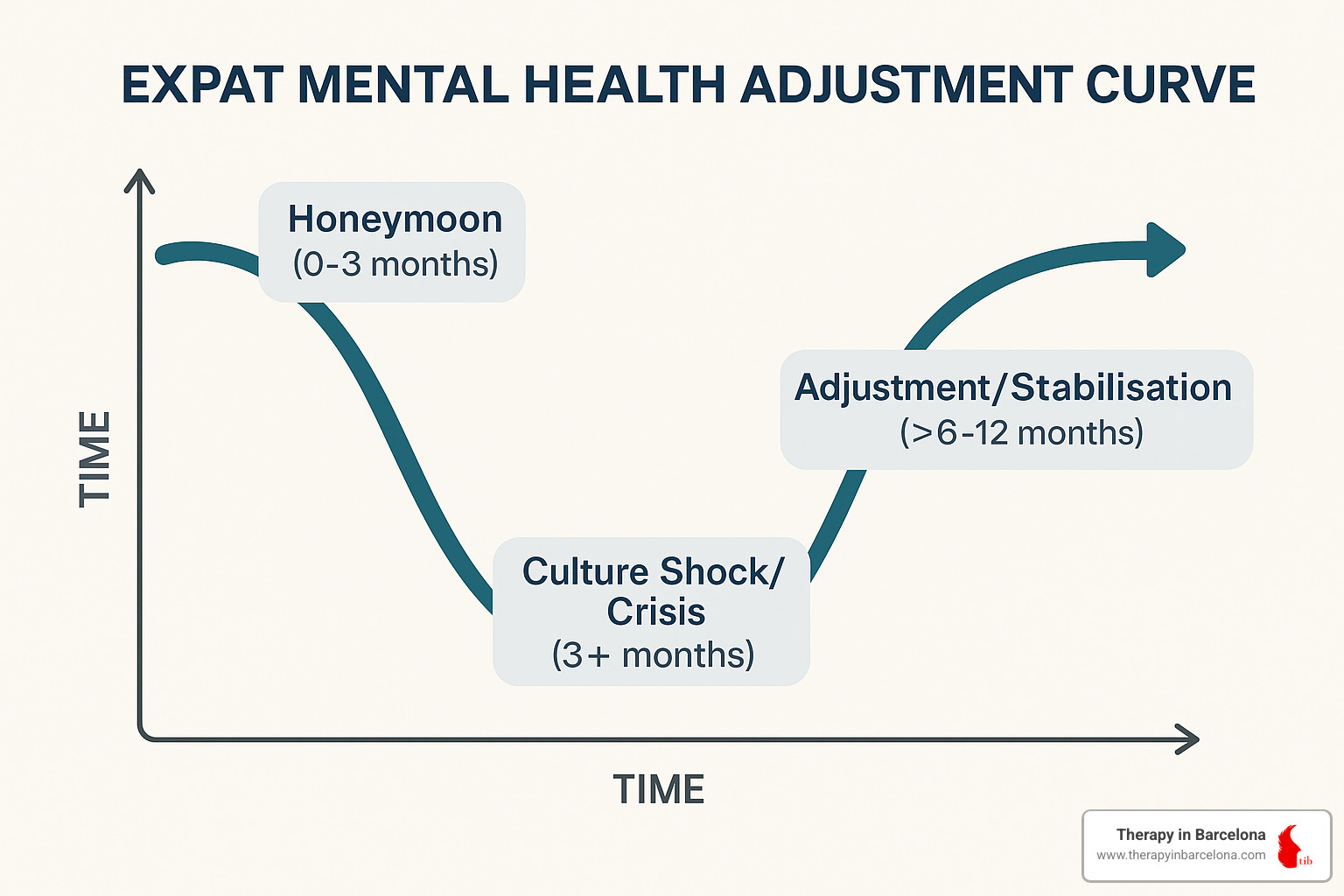
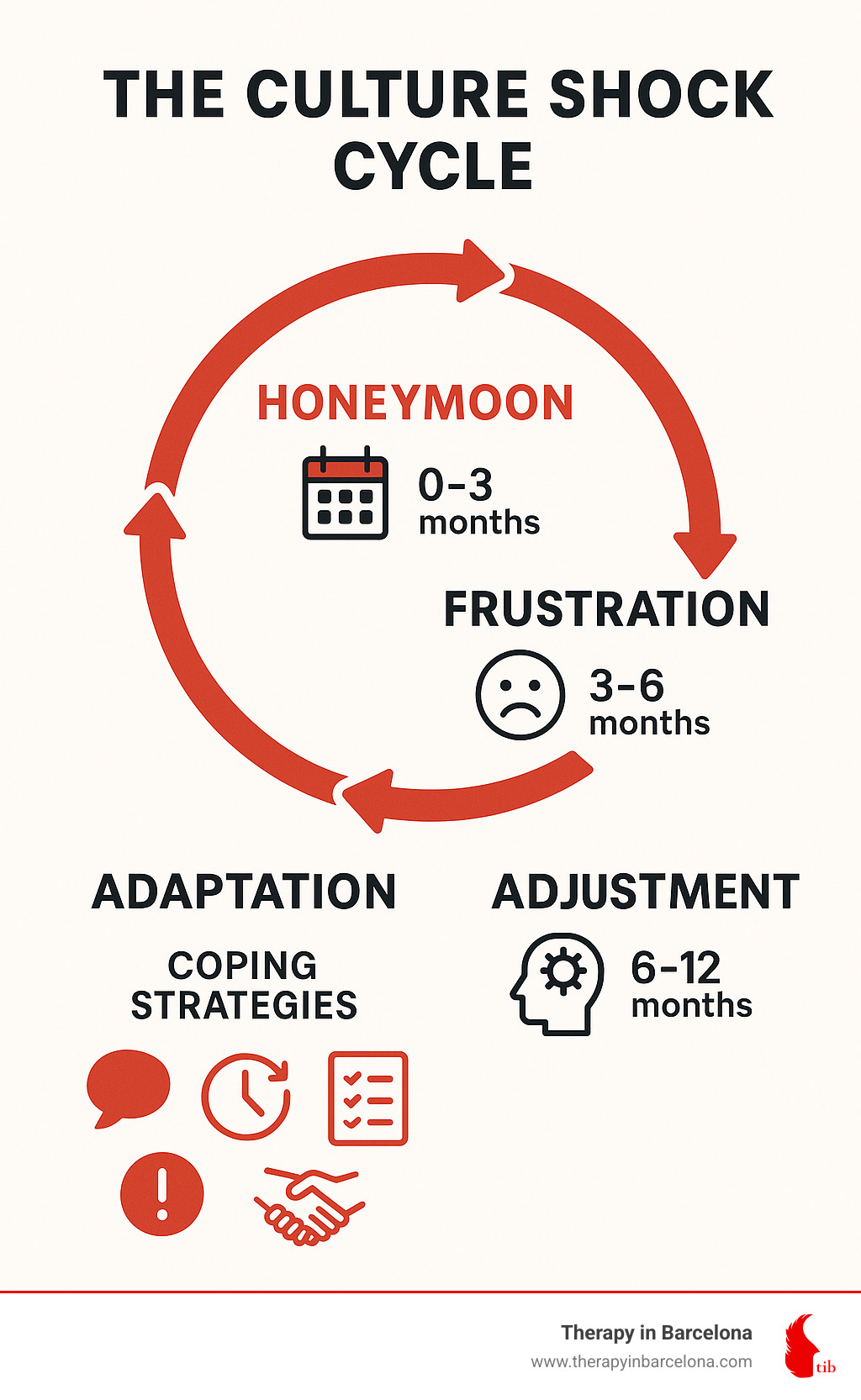
Most expatriates ride an emotional rollercoaster that follows a surprisingly predictable pattern. The timeline varies dramatically between individuals, but recognising these phases helps normalise the inevitable ups and downs of international adjustment.
The Honeymoon Phase typically sparkles for the first 0-6 months. Everything feels Instagram-worthy and adventurous. You’re collecting stories, trying new foods, and feeling rather proud of your bold life choices. Cultural differences seem charming quirks rather than daily obstacles.
Then The Dissonance Phase arrives like an unwelcome guest. Simple tasks become mountainous challenges. You catch yourself constantly comparing everything to “how we do it back home.” The novelty wears thin, replaced by frustration that being competent in your home country doesn’t automatically translate to competence abroad.
The Acculturation Phase marks the beginning of active problem-solving. You start taking language classes more seriously, developing specific coping strategies, and slowly building new routines that actually work. Progress feels glacially slow but steady.
Finally, The Stabilisation Phase arrives when you’ve developed enough local knowledge and social connections to feel genuinely settled. You can steer daily life without constant stress, though occasional curveballs still arise.
Warning Signs to Watch
Mental health difficulties among mental health expats often develop gradually, making them easy to dismiss as “normal adjustment stress.” However, certain symptoms deserve professional attention rather than being brushed aside.
Sleep disturbances that persist beyond the first month signal more than jet lag. Difficulty falling asleep, frequent waking, or sleeping much more than usual often indicate underlying anxiety or depression taking root.
Appetite changes that affect your relationship with food can manifest in opposite directions. Some expatriates lose interest in eating entirely, while others find themselves eating compulsively to cope with stress.
Persistent low mood lasting more than two weeks requires professional support, especially when accompanied by feelings of hopelessness. According to NHS guidance on depressive symptoms, these symptoms warrant immediate attention regardless of your circumstances.
Racing thoughts or excessive worry about things beyond your control—like constantly ruminating about whether you’ve made the right decision to move abroad—can trap you in cycles of anxiety that make adjustment even more difficult.
The key difference between normal adjustment stress and concerning symptoms lies in duration, intensity, and impact on daily functioning. Temporary difficulties are part of the expat journey, but persistent symptoms that interfere with work, relationships, or basic self-care deserve professional attention.
The Four Pillars of Expat Distress

Picture your expat stress as four ropes knotted together. To loosen the tangle you need to understand each strand:
- Culture Shock & Self-Esteem Hits
- Isolation & Homesickness
- Unrealistic Expectations & Goal Friction
- Pre-existing Mental Health History
These strands rarely appear alone, which is why day-to-day tasks can suddenly feel monumental.
1. Culture Shock & Self-Esteem Hits
Confusing bureaucracy, missed jokes, or needing to repeat yourself chip away at confidence. Psychologists call this “competence erosion.” Small wins – like completing a tricky visa appointment – help rebuild self-belief, so celebrate them.
2. Isolation & Homesickness
A move abroad dissolves the everyday support web most people take for granted. Time-zone gaps and social-media comparison amplify loneliness. Intentional community-building (language exchanges, volunteering, peer meet-ups) counters this slide into disconnection.
3. Unrealistic Expectations & Goal Friction
Instagram rarely shows the four hours it takes to open a bank account. When reality diverges from the “perfect-life-abroad” fantasy, frustration follows. The antidote is flexible expectations – adjusting plans when circumstances change.
4. Pre-existing Mental Health History
Relocation stress can reignite old struggles. Before moving, research medication continuity in your destination, and line up professional help early. Proactive planning beats last-minute scrambling every time.
Mental Health Expats: Accessing Professional Support

Finding help abroad can feel like yet another maze. The goal is not any therapist but one who understands expat life: visa anxiety, language fatigue, and cross-time-zone relationships.
Teletherapy – Your Portable Lifeline
Online sessions let you keep the same therapist through relocations or reach someone specialised in expat issues even if you live in a tiny Andalusian town. Check that the platform follows EU privacy rules and plan for time-zone overlap.
Choosing the Right Therapist Abroad
Look for professionals who explicitly list work with internationals in their bio. Use free consultation calls to ask about:
- Experience with cultural adjustment
- Language fluency for talking about emotions
- Qualifications, training and experience
Community Facebook groups and embassy lists are gold-mines for vetted recommendations.
Decoding Insurance & Employer Support
| Cover Type | Typical Mental-Health Benefits | Session Limits |
|---|---|---|
| Local Public | Low cost, long waits | Often unlimited once accepted |
| International Private | Fast access, wider choice | 10-20 sessions |
| Employer EAP | Short-term, crisis-focused | 3-8 sessions |
Always confirm whether you need pre-authorisation before booking.
In a Crisis
Save local emergency numbers (112 in Spain), embassy contacts, and any insurer crisis hotlines in your phone. Having these ready beats searching whilst distressed.
Building Resilience: Daily Habits & Social Strategies

Building resilience as an expat isn’t about developing superhuman strength to weather every storm. It’s about creating a toolkit of sustainable daily practices that keep you grounded when everything around you feels uncertain.
Think of resilience like tending a garden in foreign soil. You need to understand the local conditions, plant seeds that will actually grow in your new environment, and nurture them consistently. The most thriving mental health expats combine evidence-based self-care with intentional community building – because neither approach works in isolation.
Marcus, a software engineer from Germany living in Barcelona, learned this the hard way. He maintained his rigorous exercise routine and healthy eating habits after moving, but still felt increasingly isolated and anxious. It wasn’t until he started combining his morning runs with language exchange meetups that his mental health truly stabilised.
Crafting a Grounding Routine
Your daily routine becomes your psychological anchor when everything else feels like shifting sand. That morning coffee ritual or evening walk isn’t just pleasant – it’s a constant thread weaving through the fabric of an otherwise unpredictable expat life.
Sleep hygiene takes on extraordinary importance for internationals. Your body is already working overtime to process new languages, steer unfamiliar systems, and manage ongoing stress. Irregular schedules, different climates, and the mental load of constant adaptation can wreak havoc on your circadian rhythms.
Prioritising consistent sleep and wake times helps regulate both mood and cognitive function. This might mean saying no to that late dinner invitation on a weeknight, but your mental health will thank you for it.
Meal rituals offer a beautiful bridge between your old life and new one. Many expatriates find that cooking familiar foods or maintaining eating schedules from home provides emotional stability during particularly difficult periods.
Setting realistic daily goals prevents the overwhelm that comes from trying to accomplish too much while your brain is already stretched thin. Celebrate those small victories – successfully navigating a bureaucratic appointment, having a brief conversation with a neighbour, or simply getting through a challenging day without falling apart.
Growing Your Global Village
Building meaningful social connections abroad requires intentional effort and patience – two qualities that don’t always come naturally when you’re feeling vulnerable and homesick. Unlike organic friendships that develop naturally over years of shared experiences, expatriate relationships often need more deliberate cultivation.
Language exchange programmes serve a brilliant dual purpose: improving your communication skills while meeting locals who are genuinely interested in cross-cultural connection. These relationships often evolve far beyond language practice into genuine friendships built on mutual curiosity and support.
Coworking spaces and professional networking events provide structured social opportunities, especially valuable for expatriates working remotely or seeking career connections in their new country.
Volunteer work offers something many expatriates crave: meaningful engagement with local communities while contributing to causes you care about. Many internationals find that volunteering helps them feel less like outsiders and more like contributing community members.
Buddy systems and peer mentorship programmes can be lifesavers, connecting newcomers with experienced expatriates who remember exactly what those first months feel like.
For comprehensive strategies on building resilience and connection, explore expat mental health guidance.
Crisis Planning Far From Home
Mental health crises don’t wait for convenient timing or familiar surroundings. Having a crisis plan before you need it provides security and reduces panic during those moments when everything feels overwhelming.
Research local emergency mental health services and crisis hotlines before you’re in distress. Many countries offer multilingual crisis support specifically designed for international residents. Save these numbers in your phone and write them somewhere easily accessible.
Your embassy contacts can provide crucial support during mental health emergencies, including assistance with medical evacuation if necessary. Register with your embassy when you arrive and understand exactly what services they provide to citizens abroad.
Safety apps that share your location with trusted contacts provide additional security, especially valuable for expatriates living alone or travelling frequently for work.
Maintaining an emergency fund specifically designated for mental health needs ensures you can access private care quickly if public services aren’t available or appropriate. This financial cushion removes one barrier to getting help when you’re already struggling.
Unique Populations Under the Expat Umbrella

“Expat” is an umbrella term, but the rain hits everyone differently.
Partners & Families on Assignment
Trailing spouses often swap a clear professional identity for dependency paperwork and childcare logistics. Role-loss plus solo parenting in a new culture can heighten stress. Couple or family therapy offers a shared space to renegotiate roles and expectations.
Children & Teens Abroad
Third Culture Kids (TCKs) juggle multiple languages, school systems, and identity questions such as “Where’s home?”. Age-appropriate counselling or peer support groups help them weave their diverse experiences into a coherent story.
Solo Digital Nomads
Freedom can morph into rootlessness. Productivity dips, relationships feel transient, and basic admin (healthcare, taxes) becomes complex across borders. Regular routines, co-living communities, and periodic therapy check-ins keep isolation at bay.
Frequently Asked Questions about Mental Health Expats
What’s the difference between normal culture shock and a mental health disorder?
It’s completely natural to wonder whether your struggles abroad are just part of the adjustment process or something more serious. Many expats find themselves asking this exact question, googling “Mental Health Expats” during their first year in a new country.
Normal culture shock feels like riding an emotional rollercoaster – some days you’re excited about your new trip, others you’re frustrated by simple tasks like grocery shopping or understanding local customs. You might feel homesick, overwhelmed by language barriers, or annoyed that nothing works quite like it did back home. The key is that these feelings gradually improve as you adapt to your new environment.
Mental health disorders persist beyond the typical adjustment period and significantly interfere with your daily functioning. While culture shock might make you feel frustrated or sad occasionally, a mental health condition affects your ability to work, sleep, maintain relationships, or care for yourself consistently.
Warning signs that suggest you might need professional support include persistent sadness lasting more than two weeks, severe anxiety that prevents you from leaving your apartment or engaging in normal activities, sleep disturbances that worsen rather than improve over time, and any thoughts of self-harm or that life isn’t worth living.
The crucial difference lies in duration, intensity, and impact on your life. If symptoms are getting worse after several months abroad rather than gradually improving, or if they’re preventing you from functioning in important areas of your life, it’s time to reach out for help.
How can I find English-speaking therapists if I don’t live in a big city?
Living in a smaller Spanish city doesn’t mean you have to struggle alone with your mental health. The rise of online therapy has been a game-changer for mental health expats living outside major metropolitan areas.
Teletherapy platforms have revolutionised access to mental health care for internationals in remote locations. Many therapists now specialise in video sessions designed specifically for expatriate clients, understanding the unique challenges of international life regardless of where you’re physically located.
International therapist directories allow you to search by language, specialty, and even time zone compatibility. Some platforms cater specifically to expatriate communities and understand that your struggles with cultural adjustment in a small Andalusian town are just as valid as those experienced in Madrid or Barcelona.
Your local embassy website often maintains lists of English-speaking mental health professionals throughout their region. These resources typically include both local practitioners and telehealth options, giving you flexibility in how you access care.
Expatriate community forums and social media groups frequently share recommendations for mental health professionals who truly understand international challenges. Facebook groups for expats in Spain, LinkedIn networks for international professionals, and local WhatsApp groups can be goldmines of practical advice from people who’ve walked in your shoes.
What should I do in a mental health crisis abroad?
Mental health crises don’t wait for convenient timing, and being far from your support network can make these situations feel particularly frightening. Having a plan before you need it provides security and reduces panic when you’re already struggling.
Your immediate safety takes absolute priority. If you’re having thoughts of self-harm or suicide, contact local emergency services immediately – dial 112 in Spain for emergency assistance. Most countries have crisis hotlines with multilingual support, and many operators can connect you with English-speaking crisis counsellors.
Your embassy can provide crucial assistance during mental health emergencies that goes beyond what many people realise. Embassy staff can help steer local healthcare systems, assist with communication if language barriers are preventing you from getting help, contact family members if needed, and even provide information about medical evacuation if the situation requires it.
Many international health insurance policies include emergency mental health coverage and 24-hour crisis support hotlines with immediate access to qualified mental health professionals. Check your policy documents or call the customer service number – these services are designed specifically for situations like yours.
Crisis planning involves more than just knowing who to call. Consider creating a simple document with local emergency numbers, your embassy contact information, trusted friends who can provide support, and basic information about your mental health history that might be relevant in an emergency. Keep this information easily accessible on your phone and share it with at least one trusted person in your life.
Seeking help during a crisis isn’t a sign of weakness – it’s a sign of wisdom and self-care. The international community in Spain, whether in Barcelona, Madrid, or smaller cities, understands that living abroad can be challenging, and there’s no shame in reaching out when you need support.
Conclusion
Mental health expats face genuine challenges that deserve recognition and support rather than dismissal as mere “adjustment difficulties.” The statistics paint a clear picture: expatriates experience depression and anxiety at significantly higher rates than people living in their home countries.
Yet within these challenges lies tremendous opportunity for growth, resilience, and self-findy. Many expatriates emerge from their international experiences with improved emotional intelligence, improved cultural competence, and personal strength they never knew they possessed. The journey isn’t easy, but it can be transformative.
The key lies in approaching expat mental health proactively rather than reactively. Build your support network before you desperately need it. Establish grounding routines when everything else feels uncertain. Seek professional help at the first signs of persistent difficulties rather than waiting until you’re in crisis.
Asking for help demonstrates strength, not weakness. Every successful expatriate has faced moments of doubt, loneliness, and overwhelm. The difference lies in recognising these experiences as normal responses to extraordinary circumstances and taking action to address them effectively.
Your mental health deserves the same attention and investment as your career advancement, visa status, or housing arrangements. It’s not a luxury you can postpone – it’s a necessity for building the fulfilling international life you envisioned when you first decided to move abroad.
The international community needs expats who prioritise their wellbeing and model healthy coping strategies for others navigating similar challenges. The journey toward better mental health expats can inspire and support fellow expatriates who are struggling with their own adjustment difficulties.
For personalised support on your expatriate journey, consider exploring psychotherapy for expats. Therapy in Barcelona has provided culturally sensitive mental health support to the international community since 2011, offering personalised therapist matching to ensure you find the right professional for your unique needs and circumstances.
Whether you’re in Barcelona, elsewhere in Spain, or anywhere in the world, support is available. Your mental health matters, your struggles are valid, and your resilience is stronger than you know.
