


Why Therapy for Emotional Exhaustion is Your Path to Recovery
Understanding Emotional Exhaustion: More Than Just Feeling Tired
When you’re emotionally exhausted you aren’t simply sleepy after a long day. You’re running on empty – the tank that fuels motivation, patience, and joy has dried up.
For internationals in Spain this often looks like feeling homesick yet unable to settle, or thriving at work while privately running on fumes. The continual balancing act of language, culture, and career gradually wears down emotional reserves.
| Everyday Stress | Emotional Exhaustion | Burnout |
|---|---|---|
| Short-term response to challenges | Chronic feeling of being emotionally drained | Complete syndrome affecting work and life |
| Can be motivating | Persistent fatigue that doesn’t improve with rest | Includes cynicism and reduced sense of accomplishment |
| Manageable with usual coping strategies | Difficulty accessing positive emotions | Alienation from work-related activities |
| Specific to situations | Affects multiple areas of life | Recognised occupational phenomenon by WHO |
What is Emotional Exhaustion?
Emotional exhaustion is the central feature of burnout. It develops when demands stay high and the resources you draw on – time, support, meaning – stay low. Over time stress sediment builds up until enthusiasm can no longer flow.
Typical signs are a tiredness that sleep will not fix, feeling numb or overwhelmed, and moving through each week on autopilot.
How is it Different from Burnout and Stress?
Stress is the spark; burnout is the whole wildfire. Emotional exhaustion sits in-between – the smoke that warns the flames are growing. Stress can motivate when short-lived, but chronic stress depletes us and emotional exhaustion begins. If nothing changes the full syndrome of burnout appears, with cynicism and plummeting performance.
For expats, spotting the stage you are in matters because each requires a slightly different response. Therapy can help you name where you are and intervene before the fire spreads.
The Sneaky Signs and Symptoms of Emotional Exhaustion
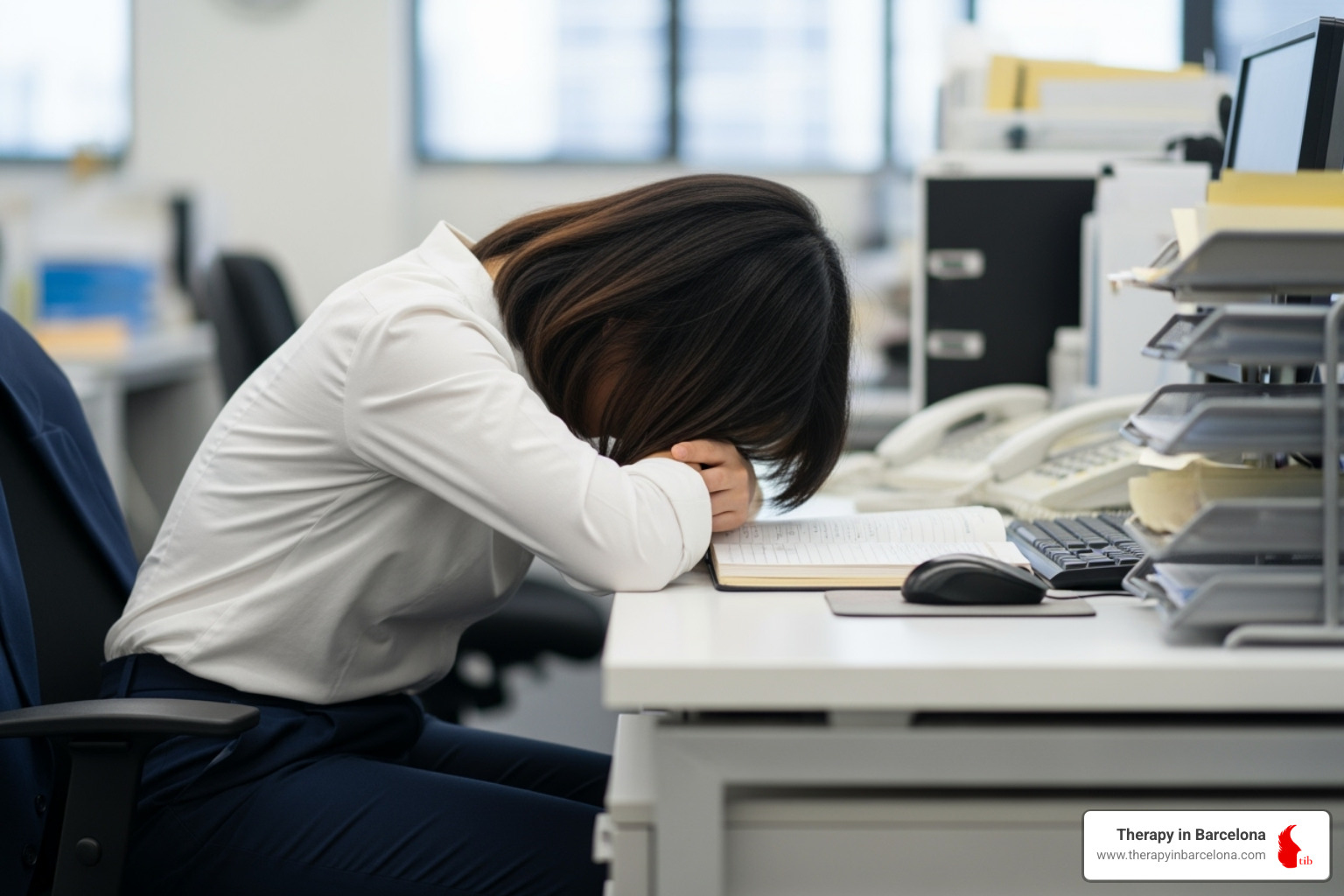
Emotional exhaustion rarely bursts in; it creeps, disguising itself as normal relocation fatigue. Recognising the clues early can save months of struggle.
Physical Signals
- Persistent fatigue that lingers after rest
- Tension headaches or tight shoulders
- Trouble falling asleep or waking unrefreshed
- Appetite or digestive changes
- Frequent colds or bugs
Long-term exposure to stress hormones can raise blood pressure and accelerate ageing. For more on the physical impact of stress, explore this research.
Emotional and Mental Signals
- Irritability or snapping at loved ones
- Losing interest in hobbies that once lit you up
- Feeling stuck, hopeless, or anxious about minor tasks
- Forgetfulness, foggy thinking, and indecision
- Growing cynicism and a daily sense of dread
Normal adjustment stress usually eases with time; emotional exhaustion hangs around.
What Causes Emotional Exhaustion, Especially for Expats?
Emotional exhaustion is seldom caused by one event; it is the result of many small stressors piling up until the scale tips. Expats face extra weight on every side.
High-pressure roles, long hours, or the urge to “prove yourself” drain reserves quickly. Caregiving from afar, supporting a partner’s adjustment, or juggling children’s schooling add more strain. Finances also loom larger when exchange rates fluctuate or flights home are pricey.
Culture shock and language barriers consume mental energy all day. Even fluent speakers describe the effort of decoding humour, social cues, and workplace norms. When your usual support network lives in another time zone, loneliness magnifies everything. For strategies, see our guide on work-life balance.
The Impact on Your Life, Work, and Relationships
Left unchecked, exhaustion ripples through every corner of life.
- Work: productivity drops, creativity dries up, sick days multiply.
- Relationships: you cancel plans, snap at loved ones, and feel detached.
- Body: sleep, immunity, and digestion all suffer.
The Mayo Clinic notes that this cycle is self-perpetuating – poorer performance breeds more stress, which deepens exhaustion. Spotting the pattern early is vital, especially when the people who know you best live thousands of kilometres away.
Your Path to Recovery: Effective Therapy for Emotional Exhaustion

The good news? You don’t have to fight through this alone. Professional support offers structure, perspective, and proven tools so that recovery doesn’t depend on sheer will-power or the next long weekend.
Some internationals try the Spanish public system or large online platforms such as BetterHelp or Talkspace. These options can be useful, yet many find them impersonal or culturally generic. Therapy in Barcelona is different: we deliberately match you with an English-speaking therapist who understands expat life and uses evidence-based methods.
How Professional Therapy Helps
- CBT – spot perfectionistic thoughts and replace them with balanced ones.
- MBSR – calm a nervous system stuck in fight-or-flight.
- ACT – build flexibility so you can stay present with difficult feelings and still move towards what matters.
- Meaning-Centred Therapy – reconnect with purpose when life feels flat.
Our collaborators set their own prices; individual sessions range from €80–€95. Once you’re matched we’ll confirm the fee and payment method. Read more about current fees and explore what counselling is.
Self-Care That Complements Therapy
Recovery also happens between sessions. Small, consistent habits keep the momentum going:
- 5–10 minutes of guided meditation
- A consistent sleep-wake routine
- Gentle movement such as walking the streets of Barcelona
- Balanced meals and steady hydration
- Regular check-ins with supportive friends, both near and far
Simple mindfulness practices:
- 5-4-3-2-1 grounding
- Three deep breaths
- Two-minute body scan
- Mindful walking
Healing isn’t about returning to your previous speed; it’s about creating a sustainable rhythm that lets you enjoy the trip of living abroad.
Preventing a Relapse: Building Long-Term Resilience

Getting back on your feet is only the first chapter. Staying well means developing habits and, where possible, shaping healthier workplaces.
Individual Strategies
- Notice early warning signs – irritability, mindless scrolling, cancelled plans.
- Schedule weekly self-check-ins or keep a brief mood journal.
- Protect boundaries; saying “no” keeps the “yes” meaningful.
- Nurture relationships that fill your cup, online and offline.
- Rotate stress-management tools so they remain fresh.
A Supportive Work Environment
Individual change is easier when organisations play their part. Supportive leadership, realistic workloads, and clear expectations lower the risk of relapse. If you lead a team, model healthy habits; if you’re an employee, advocate for them or search for companies that value wellbeing.

Frequently Asked Questions about Therapy for Emotional Exhaustion
How long does it take to feel better?
Every journey is different, but many clients notice small shifts – deeper sleep, lighter mornings – within the first month of regular sessions. More solid changes tend to appear around weeks 8–12, and building lasting resilience often takes three to six months but it is very individual. Remember: progress is rarely a straight line.
Can I recover without therapy?
Lifestyle adjustments certainly help mild exhaustion, but therapy offers three unique benefits: an objective view, specialised tools such as CBT or ACT, and built-in accountability. If your mood, relationships, or work are suffering, professional support is the faster, safer route. For more signs that it might be time, read our article on signs it’s time for therapy.
Is emotional exhaustion the same as depression?
They overlap, yet they are not identical. Emotional exhaustion is usually tied to ongoing stressors and can lift when those stressors ease. Depression tends to linger, colouring all areas of life even when circumstances improve. The two can coexist, which is why a qualified therapist can clarify what is happening and craft a plan that fits you.
Conclusion: Reclaim Your Energy and Find Your Footing
Emotional exhaustion is not a personal failure; it is a clear message that change is needed. With the right support it is absolutely possible to restore your energy and refind the sense of purpose that brought you to Spain in the first place.
At Therapy in Barcelona, every therapist is an expat who understands the highs and lows of international life. Our personalised matching process, evidence-based methods, and friendly space in Eixample (or online across Spain) give you a supportive framework from day one.
Choosing help is an act of courage. If you’re ready to feel like yourself again, we would be honoured to walk beside you.
