


Why Dealing with Alienation Starts with Your Unmet Needs

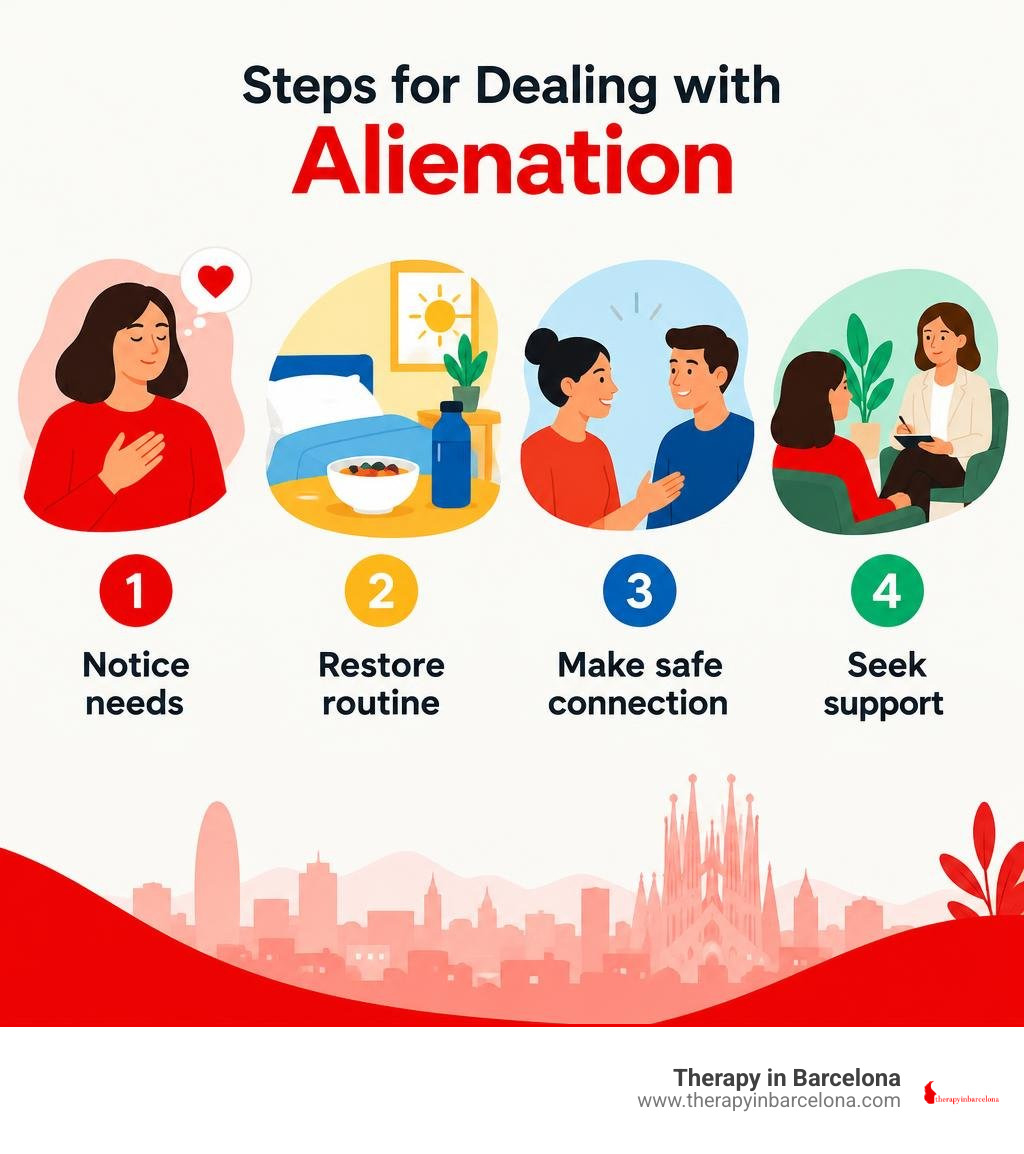
Dealing with alienation starts by noticing what feels missing rather than judging yourself for pulling away. Choose one small, repeatable action: name the feeling, protect a basic routine for sleep and meals, and make low-pressure contact with one safe person. If a move to Barcelona, relationship strain, work stress, illness, or cultural distance is part of the picture, ask yourself: What do I need more of right now – safety, rest, belonging, purpose, understanding, or support?
Alienation is more than loneliness. It can feel like being disconnected from other people, your work, your culture, or even your own emotions. You may feel numb, on edge, unable to concentrate, or distant from people you care about, even when they are close by. Prolonged stress, loss, emotional overwhelm, chronic health concerns, feeling persistently anxious or down, and relocation can all make this sense of disconnection stronger.
For internationals, alienation can be especially confusing. You may miss the ease of speaking your first language, feel outside local social circles, or wonder why a city you chose still does not feel like home. These experiences are not personal failings; they are useful signals that some important needs may not be getting enough attention.
What Is Alienation and Why Does It Happen?
Alienation describes a profound state of detachment where a person feels estranged from their surroundings, their community, or their own internal sense of self. It is not simply having a quiet weekend or enjoying solitary downtime. Instead, it involves an unsettling feeling of foreignness within familiar environments.
When people experience alienation, they often describe feeling like an outside observer in their own lives. Common signs include persistent emotional numbness, a sense of powerlessness, pervasive brain fog, difficulty concentrating, and disrupted sleep patterns. Over time, chronic alienation can erode a person’s sense of identity, leaving them feeling disconnected from social expectations, unmotivated at work, and fatigued by ordinary interactions.
To explore the clinical and sociological foundations of this state, you can read a reader-friendly overview of alienation. When underlying emotional signals are continually ignored, individuals often withdraw further, creating a self-reinforcing loop where isolation deepens emotional distress.
Six Dimensions of Human Disconnection
Sociologists and psychologists have identified several distinct ways human disconnection manifests:
- Cultural Estrangement: Feeling detached from the dominant values, customs, language, or social norms of the society in which you reside.
- Self-Estrangement: Losing contact with your personal passions, instincts, and authentic feelings, often acting on autopilot to satisfy external expectations.
- Social Isolation: Feeling excluded from meaningful networks, lacking a reliable sense of community, or feeling fundamentally invisible among peers.
- Meaninglessness: Struggling to find value or significance in daily routines, relationships, or broader life choices.
- Work Detachment (Alienation from Labor): Feeling detached from the product of your work, your colleagues, or the wider mission of your organisation.
- Normlessness (Anomie): A breakdown of personal or shared rules, leading to confusion about how to behave or what expectations to uphold.
Health and Developmental Causes Across Life Stages
Alienation can emerge at any point in life, influenced by biological, social, and environmental shifts.

During childhood, disruptions in early attachment or parental conflict can leave a young person feeling emotionally unanchored. In adolescence, peer rejection, intense identity formation, and social comparison frequently spark feelings of disconnection. During these years, emotional overwhelm, navigating unfamiliar social expectations, and feeling unsupported can heighten a sense of distance from peers and family.
In adulthood, alienation is often triggered by workplace burnout, relationship breakdown, chronic pain, or feeling fundamentally out of sync with unaccommodating everyday environments. Overwhelming stress and physical illnesses can also cause people to feel singled out or misunderstood by those around them. Addressing both physical health issues and emotional needs can help restore vitality, connection, and a greater sense of belonging.
The Difference Between Normal Independence and Family Alienation
Human relationships naturally shift over time, particularly within families. It is essential to distinguish between healthy developmental growth and severe relational conflict.
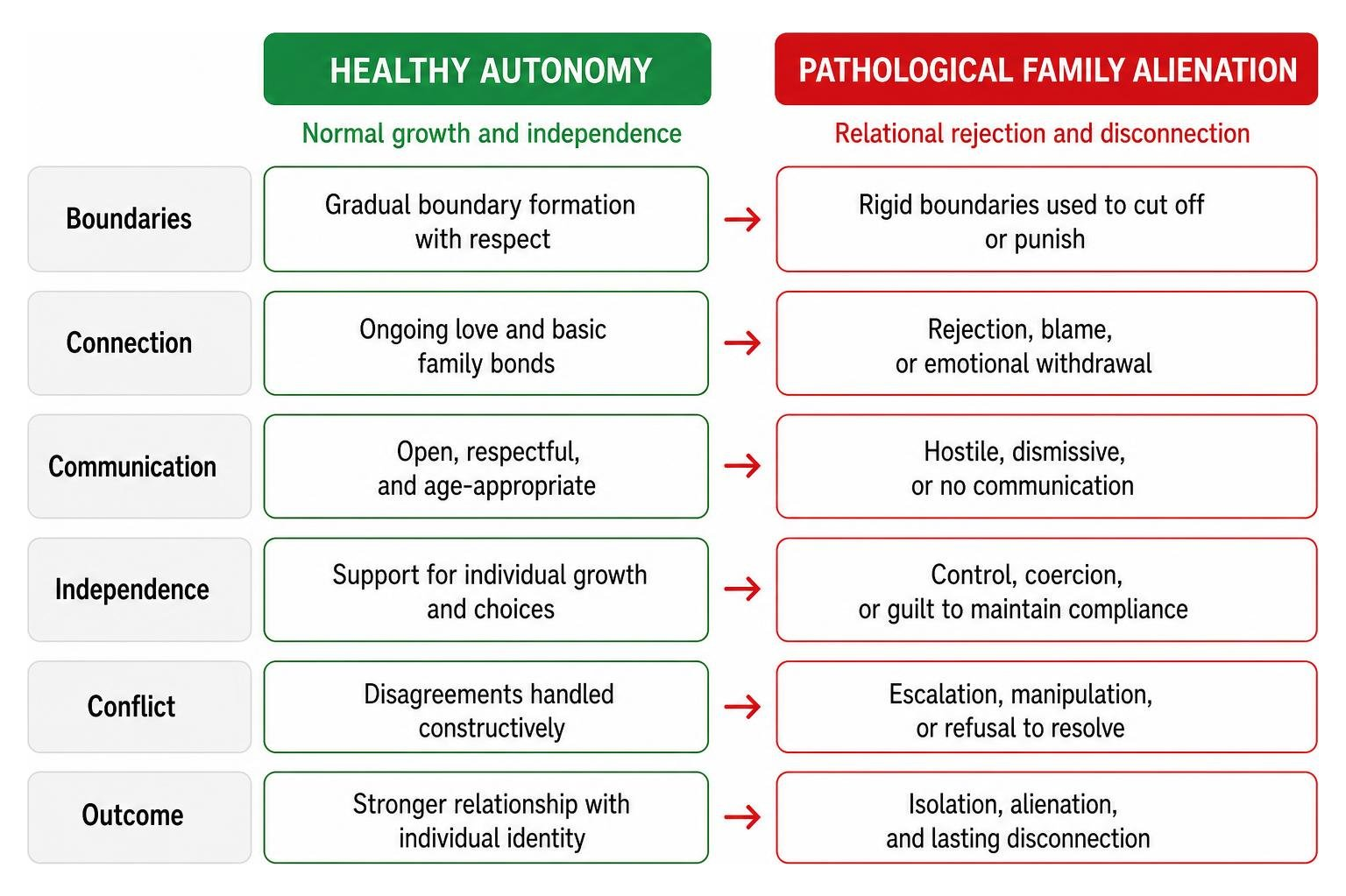
Healthy Autonomy Versus Relational Rejection
As teenagers mature into young adults, they naturally push for independence. Healthy adolescent separation involves:
- Gradual boundary formation while maintaining basic family bonds.
- Age-appropriate peer focus alongside continued family communication.
- Emotional ambivalence (feeling annoyed by parents one day, yet seeking comfort the next).
- A retained capacity to express affection and accept parental support.
When teenagers need help navigating social changes and identity shifts, dedicated adolescent support can offer a grounded environment to process developmental stress without breaking family ties.
Dealing with Alienation in High-Conflict Family Dynamics
In contrast, family alienation—frequently observed during acrimonious divorces or severe relational ruptures—looks remarkably different from standard teenage rebellion:
- Rigid, All-or-Nothing Hostility: The rejected parent is viewed as entirely bad or harmful, with no positive memories acknowledged, while the favoured parent is idealised.
- Borrowed Language: The child repeats adult legal phrasing or complex accusations that do not reflect their developmental stage.
- Lack of Ambivalence: Unlike a typical teen who experiences mixed emotions, an alienated child expresses total, guilt-free rejection.
- The Double-Bind Trap: Every action by the rejected parent—reaching out, stepping back, explaining facts, or remaining quiet—is twisted into further justification for rejection.
When navigating these painful circumstances, adopting a stance of calm authority is critical. This means setting steady personal boundaries without retaliating, offering low-pressure opportunities for contact, and engaging in gentle reality testing rather than entering defensive arguments. Families navigating these complex dynamics often benefit from targeted family therapy to untangle loyalties and rebuild communication.
Dealing with Alienation: 5 Practical Steps to Reconnect
Recovering from deep disconnection requires intentional, incremental steps rather than massive lifestyle overhauls.

Step 1: Identify and Validate Unmet Core Needs
Begin by noticing what your nervous system is asking for without self-criticism. Disconnection is often a self-protection strategy when emotional safety, relational warmth, or rest have been compromised. Practising somatic awareness—noticing where tension resides in your body—and cognitive reframing helps you treat alienation as a prompt for self-care rather than a personal failure.
Step 2: Establish Predictable Structure and Boundaries
Uncertainty feeds alienation. Creating dependable daily rhythms around sleep, balanced nutrition, light physical activity, and work breaks provides an internal sense of order. Maintain emotional steadiness by declining commitments that drain your energy and protecting space for restorative solitude. If you are struggling to build these boundaries alone, working with an experienced professional through individual therapy can help clarify your priorities.
Step 3: Cultivate Low-Pressure Micro-Moments of Trust
Reconnection does not require deep, intense conversations immediately. Focus on micro-moments: a friendly greeting with your neighbourhood barista, sending a brief text to a trusted friend, or joining a shared-interest group where active participation is voluntary. These low-stakes interactions gently reassure your nervous system that social connection is safe.
Step 4: Re-Anchor in Values and Meaningful Action
Alienation often strips away personal purpose. Re-engage with small, values-aligned activities that exist purely for personal enjoyment or contribution, such as gardening, volunteering, art, or learning a practical craft. Action often precedes motivation; engaging your hands and attention helps shift your brain out of passive detachment.
Step 5: Engage Professional and Community Support Systems
If feelings of alienation persist for several weeks or begin interfering with work, school, and relationships, professional guidance can provide the structure needed to heal. Exploring your attachment style and relational patterns with an empathetic clinician creates a steady roadmap back to connection.
Dealing with Alienation Abroad: Navigating Expat Isolation
Moving to a new city can be an exhilarating adventure, but it also carries significant emotional demands. Whether settling in Barcelona, working remotely in Madrid, or adapting to coastal life in Valencia, expatriates frequently experience sudden disruptions to their social networks and sense of belonging.
After relocating abroad, someone may enjoy the lifestyle yet still feel deeply isolated. Language barriers, remote work, and missing the ease of long-standing friendships can leave everyday life feeling disconnected and strangely hollow.
This experience is common. Relocation can involve culture shock, identity shifts, and the fatigue of navigating unfamiliar systems, all of which can contribute to loneliness and disconnection.
Therapeutic Modalities and Community Support Systems
Professional therapy provides evidence-based pathways to process and resolve alienation. Depending on your background and needs, several approaches can be tailored to support your recovery:
- Cognitive Behavioural Therapy (CBT): Identifies and restructures negative automatic thoughts that fuel withdrawal, such as “I don’t belong anywhere” or “No one understands me.”
- Acceptance and Commitment Therapy (ACT): Helps you accept difficult emotional states without struggling against them, guiding your energy toward actions aligned with your deepest personal values.
- Internal Family Systems (IFS) & Ego-State Work: Explores the protective “parts” of your internal system that use emotional numbness or isolation to shield you from vulnerability or past hurts.
- Interpersonal & Systemic Therapy: Examines how family dynamics, cultural background, and relational patterns influence how you attach and communicate with others.
Navigating Care Options in Spain
When seeking mental health support in Spain, understanding the different pathways helps you choose the right fit for your needs:
Public System Clinicians (CatSalut / SNS)
- Strengths: Fully subsidised public care integrated into local health centres.
- Considerations: Long waiting lists, high caseloads, and sessions are almost exclusively conducted in Spanish or Catalan, which can present barriers for non-fluent internationals.
Large Online Platforms
- Strengths: Broad therapist directories and automated booking.
- Considerations: High therapist turnover and limited focus on the specific cross-cultural nuances of living abroad.
Local Private Practices
- Strengths: In-person availability within your immediate neighbourhood.
- Considerations: Often geared towards permanent local residents, with limited availability of native English or expat-focused cultural insight.
Therapy in Barcelona (Specialised Private Practice)
- Strengths: Bespoke matching, psychology-trained therapists who are expats themselves, strict privacy with no data selling, and high-quality private-pay care tailored specifically to the international experience in English and multiple European languages.
- Considerations: Private-pay model. Prospective clients are welcome to inquire about sliding scale fee options where financial need exists.
If you are based in Valencia, Málaga, or Madrid, online sessions with our Barcelona team offer the same personalised matching and expat-focused support without the need to travel.
Frequently Asked Questions About Alienation
Is alienation classified as a formal condition?
Alienation is not a clinical diagnosis or medical condition. Instead, it is understood as a profound psychological state, a social experience, and a natural response when feeling persistently down, anxious, chronically stressed, or overwhelmed by past experiences. Acknowledging alienation focuses on validating your lived experience and addressing unmet needs rather than applying a diagnostic label.
What is the difference between everyday loneliness and alienation?
Loneliness is the emotional ache of desiring social companionship and wanting more meaningful contact with others. Alienation is broader and more systemic: you can feel alienated even in a room full of close friends or family. It encompasses feeling detached from your culture, values, work, social systems, or your own core identity.
When should someone seek professional guidance for alienation?
You should consider speaking with a mental health professional if your feelings of detachment persist for several weeks, if you experience ongoing emotional numbness, or if isolation begins impairing your work, health, or personal relationships.
Crisis Support Notice: If you or someone you know is experiencing overwhelming emotional distress, thoughts of self-harm, or an inability to stay safe, please reach out immediately to emergency services. In Spain, you can call 061 or 112, or dial the national mental health crisis hotline at 024. In the UK, call 111 or 999; in the US and Canada, call or text 988.
Finding Your Way Back to Connection
Feeling alienated is not a sign of personal weakness or an unfixable flaw. It is a natural human response when your core emotional, social, or cultural needs have been unmet for too long. Whether your disconnection stems from a major relocation, family friction, workplace stress, or internal fatigue, healing begins by honouring those signals with patience and self-compassion.
Therapy in Barcelona is a trusted psychology practice in Spain established since 2011, providing a supportive sanctuary for adults, couples, adolescents, and families.
Leigh Matthews, an Australian Psychologist who has been in Barcelona since 2011, founded Therapy in Barcelona and brings experience in supporting internationals navigating cultural transitions and life challenges. With a collaborative team of psychology-trained expat therapists, the practice offers culturally sensitive care tailored to the realities of living abroad.
If you’d like support, book a Free Discovery Call. Online therapy is available worldwide, including the USA and Canada, alongside in-person sessions at our Barcelona office.
