


Finding Mental Health Support as an Expat in Europe

If life abroad feels lonely or harder than you expected, start by looking for a therapist who speaks the language you use to express yourself most easily and understands the experience of living between cultures. Check whether they offer online or in-person sessions, work with your particular concerns, and can see clients where you live. You do not need to wait until things feel unmanageable to ask for support.
Navigating European expat mental health and finding the right professional support can feel like one more administrative task, but it is often the step that makes the rest of the move feel more manageable. Therapy in Barcelona is a psychology practice in Spain established in 2011. Its psychology-trained therapists work with adults, couples, teens and families, with personalised matching; sessions are primarily in English, and some therapists also offer German, French, Spanish, Afrikaans, Portuguese, Austrian-German or Swiss-German. You can meet online worldwide, including from the USA and Canada, or face to face at its Barcelona office. If you’d like support, book a Free Discovery Call.
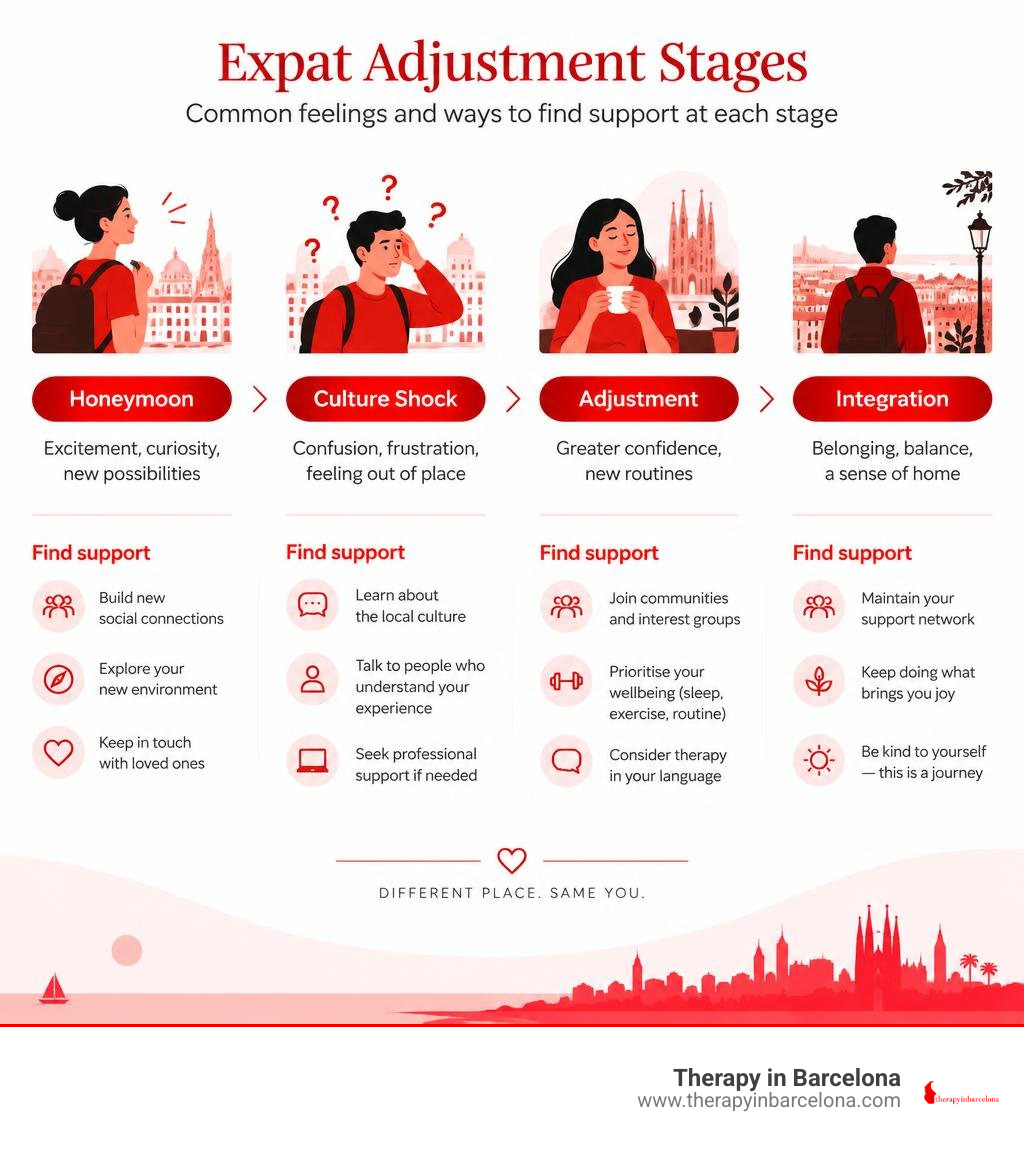
Understanding Europe Expat Mental Health Challenges and Pressures
Moving abroad is often celebrated as an exciting adventure, yet living overseas frequently places a significant strain on emotional wellbeing. When examining Europe expat mental health, international residents often encounter heightened levels of stress, emotional fatigue, and feeling persistently overwhelmed following relocation.
A primary driver of emotional strain is identity disruption. When you move to a new country, familiar markers of self-worth—such as professional status, established social circles, and shared cultural humour—can disappear overnight. You may find yourself asking, “Who am I here?” As highlighted in this DutchReview analysis on expat mental health struggles, international residents frequently face a complex mix of isolation, subtle cultural barriers, and systemic hurdles that can quietly wear down resilience over time.
The Transition From Honeymoon Phase to Culture Shock
Relocation typically begins with an initial honeymoon period. Everything feels novel, vibrant, and full of possibility. However, as daily routines set in, this euphoria often gives way to the frustration stage of culture shock.
During the frustration phase, basic daily logistics require deliberate cognitive effort. Ordering groceries, opening a local bank account, or arranging utility contracts in a foreign language creates continuous cognitive load. This ongoing mental strain can lead to language fatigue and nervous system overload, leaving you feeling emotionally depleted, irritable, or disconnected from the initial excitement of your move.
Why Internationals Face Heightened Emotional Strain
While local residents lean on long-standing networks of childhood friends, family, and familiar community spaces, internationals start from scratch. Many expats experience deep feelings of isolation after moving abroad, navigating unfamiliar social rules and physical distance from loved ones.
(Please note: The following vignettes are fictional composite profiles created for illustrative purposes, not real clients.)
Consider “Marcus,” a software engineer who relocated to Valencia. Back home, Marcus relied on a tight-knit running group and weekly family dinners to decompress. In Spain, despite enjoying the climate, he found the loss of his informal support system left him feeling unanchored and constantly uneasy.
Similarly, accompanying partners or trailing spouses often face an abrupt loss of professional identity. “Elena,” who moved to Madrid to support her partner’s corporate career, gave up her legal practice back home. Without work authorisation or a local professional community, she experienced profound identity disruption, leading to marital tension and feelings of isolation. Compounded by administrative bureaucracy, this ongoing friction can quickly turn into relocation burnout.
Barriers to Accessing Mental Healthcare Across Europe
When emotional struggles arise, seeking professional help across Europe presents several hurdles:
- Language and Cultural Nuances: Nuanced emotional expression is difficult in a second language. Working with a clinician who does not speak your native tongue can lead to misunderstandings and emotional distance.
- Public Healthcare Waitlists: Public systems across many European countries face substantial backlogs for psychological care, with waiting periods stretching over many months.
- Unfamiliar Healthcare Systems: Navigating public referrals (such as visiting a local general practitioner before being triaged to a specialist) can be overwhelming when you do not speak the local language fluently.
- Private Care Costs: High out-of-pocket expenses can deter individuals from seeking early intervention before minor adjustment challenges escalate.
Navigating Cross-Border Care and Insurance Options
International private medical insurance (IPMI) can provide a practical pathway to care abroad. Many international policies cover outpatient psychological support, offering options for both in-person visits and tele-health consultations.
To navigate coverage smoothly, review your policy terms for outpatient mental health limits, session maximums, and pre-authorization requirements. Reputable private practices provide itemised receipts and invoices, allowing you to submit out-of-network reimbursement claims directly to your insurer.
Evaluating Support: What to Look for in Expat Therapy

When selecting a therapist, cultural competence and shared expatriate experience are just as important as clinical qualifications. A therapist who has personally lived abroad intuitively understands the specific realities of relocation, cross-cultural relationship dynamics, and identity transitions.
Evidence-based modalities provide clear frameworks for working through these transitions. For instance, individual therapy for expats often incorporates Cognitive Behavioural Therapy (CBT) to reframe negative thought cycles and Acceptance and Commitment Therapy (ACT) to help clients accept difficult feelings while living in alignment with their values. Other approaches, including Schema Therapy, Internal Family Systems (IFS), and mindfulness-based interventions, support deeper emotional integration.
Signs You May Benefit From Professional Expat Mental Health Support
Adjustment stress is a normal part of moving abroad, but persistent symptoms indicate a need for professional guidance. Common signs include:
- Persistent low mood, feelings of despair, or unexplained tearfulness lasting more than two weeks.
- Chronic sleep disturbances, insomnia, or intense fatigue.
- Emotional numbness or feeling completely disconnected from your surroundings.
- Withdrawal from social interactions and avoidance of daily tasks.
- Substance use or coping mechanisms that begin to interfere with health or work.
As discussed in this insightful podcast discussion on expat mental health and community, living abroad requires proactive self-advocacy, and seeking professional guidance can lead to substantial, lasting improvements in emotional wellbeing.
Crisis Support Notice: Private outpatient therapy practices do not provide emergency or crisis intervention. If you or someone you know is in immediate distress, contact local emergency services immediately:
- European Emergency Number: Call 112 (available across the EU)
- Spain Emergency Mental Health: Call 024 (Line for Suicidal Behaviour) or 061
- UK Crisis Line: Call 111 or text SHOUT to 85258
- International Resources: Visit Befrienders Worldwide or Find A Helpline
Finding Tailored Europe Expat Mental Health Online Services
For individuals, international students, and couples living across Europe—whether in major metropolises like Madrid and Barcelona, or vibrant coastal hubs such as Málaga, Alicante, Sevilla, and Marbella—online therapy provides uninterrupted, flexible care. If you are experiencing intercultural tension with a partner, specialised couples counselling abroad can offer a neutral space to rebuild mutual understanding.
When exploring mental health pathways across Europe, internationals generally weigh several options:
- Public Healthcare Systems: State medical schemes offer essential low-cost care, though they typically involve lengthy waiting lists, require referrals from local general practitioners, and rarely provide consultations in English or other international languages.
- Large Digital Platforms: Broad international therapy networks offer quick scheduling, but practitioners may not always specialise in the unique cultural nuances of expatriate adjustment or provide bespoke therapist matching.
- Dedicated Expat Practices (Therapy in Barcelona): Established in 2011, Therapy in Barcelona operates as a trusted, private-pay group practice designed specifically for internationals. All therapists are psychology-trained expatriates themselves, offering personalised therapist-client matching, deep cultural understanding, and strict client privacy without selling personal data.
Practical Daily Strategies to Support Emotional Wellbeing Abroad

Alongside professional therapy, daily habits protect your mental health while building a life in a new country:
- 1. Anchor Your Daily Routine: Keep consistent sleep, meal, and exercise schedules. Predictable daily routines help ground your nervous system during times of change.
- 2. Micro-Dose Social Connection: You do not need to attend exhausting networking events every night. Short, low-pressure interactions—such as a friendly exchange with a local barista or a brief phone call with an old friend—counter isolation effectively.
- 3. Schedule Regular Cultural Rest Days: Give your brain permission to take a break from foreign languages. Spend an evening reading in your mother tongue, watching familiar films, or resting without the pressure to integrate.
- 4. Focus on Balanced Physical Health: Prioritise 7–9 hours of sleep, moderate caffeine and alcohol intake, and take daily outdoor walks in natural sunlight.
- 5. Break Bureaucracy into Micro-Steps: Tackle administrative tasks in small, manageable steps to prevent paperwork fatigue.
Frequently Asked Questions About Expat Mental Health in Europe
Is online therapy as effective as in-person therapy for expats?
Yes. Online psychological therapy is widely recognised as just as effective as face-to-face sessions for addressing persistent worry, low mood, and adjustment stress. Online therapy allows you to maintain consistent care if you travel, work remotely, or relocate between European cities, while ensuring you can access a therapist who speaks your native language regardless of your physical location.
How can I tell whether I’m having a difficult adjustment or need more support?
Adjustment stress is typical during the first few months of relocation and usually improves as you learn daily routines. However, if feelings of low mood, severe worry, numbness, or social withdrawal persist for more than a few weeks and begin to impair your daily work or relationships, working with a therapist can provide the tools needed to regain your footing.
Will my international insurance cover online therapy sessions in Europe?
Many international private medical insurance (IPMI) policies include outpatient mental health benefits covering online consultations. Coverage varies depending on your provider, deductibles, and whether pre-authorization is required. Always check your policy documentation and request itemised invoices from your therapy provider for straightforward reimbursement.
Finding Your Path Forward
Building a rewarding life abroad is an evolving process. Experiencing emotional dips, identity shifts, or loneliness does not mean you have failed in your move; it simply means your nervous system is adapting to a completely new environment. With empathetic, culturally attuned support, you can rediscover your confidence and emotional grounding.
Therapy in Barcelona is a trusted psychology practice in Spain established in 2011 by its founder, Leigh Matthews, an Australian Psychologist who has lived in Barcelona since 2011 and is experienced in supporting internationals. The practice provides personalised matching with qualified, psychology-trained therapists who are expats themselves. Therapy in Barcelona offers face-to-face sessions at its central Barcelona office as well as online therapy available worldwide.
If you’d like support, book a Free Discovery Call.
