


What is LGBTQ Couples Therapy and Why Does It Matter?

LGBTQ couples therapy is a specialised form of relationship counselling designed to support partners within the LGBTQ+ community — affirming their identities, addressing the unique pressures they face, and helping them build stronger, more connected relationships.
If you’re looking for affirming relationship support, here’s what you need to know at a glance:
- What it is: Couples therapy tailored to the specific experiences of LGBTQ+ partners, including gay, lesbian, bisexual, transgender, queer, and non-binary couples, as well as those in non-monogamous or polyamorous relationships.
- Who it’s for: Any couple seeking a non-judgmental space to work through communication issues, conflict, intimacy challenges, identity shifts, or life transitions.
- What makes it different: Affirming therapists don’t require you to explain or justify your identity. They come already informed about minority stress, internalised stigma, family rejection, and the realities of building a relationship without inherited social templates.
- Does it work? Yes. Couples therapy can improve relationship satisfaction, strengthen communication, and help reduce emotional distress for same-sex couples.
- How to access it: Through private practices, online platforms, or community health centres. This is typically a private-pay service, though some therapists offer sliding scale fees for those with financial need — always worth asking about during an initial consultation.
Relationships are hard work for anyone. But queer relationships carry additional weight — the kind that builds up quietly from years of navigating a world that hasn’t always made space for you.
Whether you’re an expat couple adjusting to life in Barcelona or Madrid, partners working through an identity shift, or two people who simply feel disconnected and want to find their way back to each other, the right therapeutic support can make a real difference.
And yet, finding a therapist who genuinely understands queer and trans experiences — rather than one who is merely tolerant — remains one of the most common frustrations LGBTQ+ couples report. That gap between “gay-friendly” and truly affirming care is more significant than it might sound, and it’s exactly what this guide is here to help you navigate.
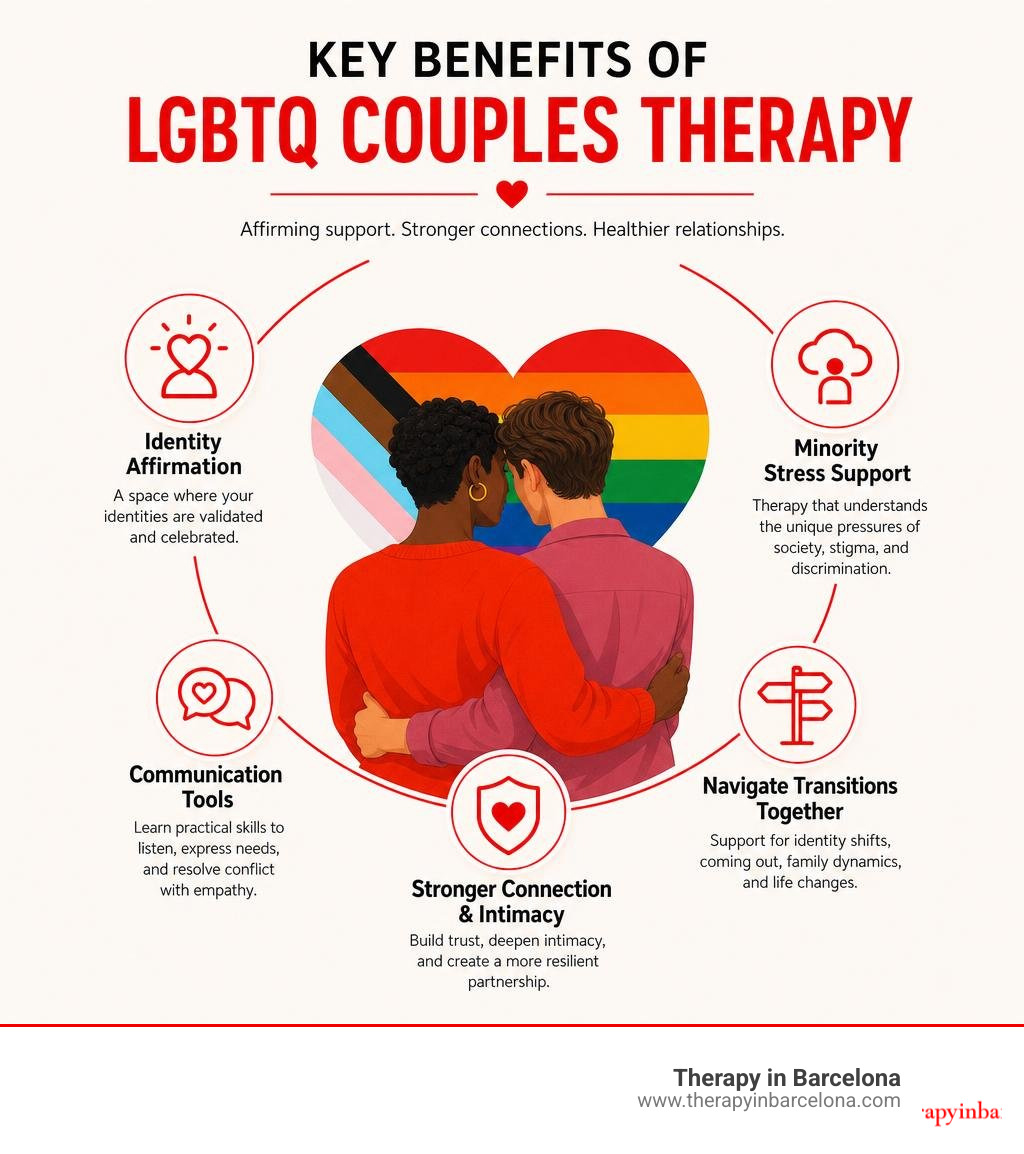
At its core, LGBTQ couples therapy is relationship support that actively centres and validates queer, trans, and non-binary experiences. Unlike traditional relationship counselling, which often operates under heteronormative or cisnormative assumptions, affirming therapy begins with the understanding that queer lives and relationships are diverse, healthy, and complete in their own right.
An affirming therapist understands LGBTQ+ identities and relationship dynamics from the start, allowing couples to focus on their goals instead of explaining their experiences.
Many LGBTQ+ couples seek therapy to strengthen their relationship and navigate unique challenges. An affirming therapist provides a safe, inclusive space with an understanding of these experiences.
For instance, queer individuals are statistically more likely to experience challenges with their mental well-being, such as feeling persistently down, anxious, or overwhelmed due to systemic discrimination.
When these individual struggles interact within a partnership, they can create unique relational dynamics. Scientific research on same-sex relationship satisfaction shows that tailored therapy can lead to significant improvements in relationship quality, emotional intimacy, and overall well-being.

A primary driver of these relational challenges is minority stress. This refers to the chronic psychological burden experienced by marginalised groups as a result of prejudice, microaggressions, and social exclusion. Minority stress does not just exist outside the home; it can seep into the relationship, manifesting as hypervigilance, defensive communication, or internalised shame.
By addressing these external pressures explicitly, therapy helps partners separate their love for one another from the stress of navigating a heteronormative society. To explore how these dynamics function in detail, couples can read More info on the power of affirming relationship support.
Unique Challenges Faced by Queer and Trans Partners
Queer and trans relationships have unique strengths and challenges. Differences in how “out” each partner is can create tension, especially when one partner feels the relationship must remain hidden.
Family-of-origin rejection is another profound stressor. Many LGBTQ+ individuals experience social isolation and rejection from biological family members. This lack of a traditional safety net can place immense pressure on the romantic partnership, as partners may rely solely on each other for emotional and physical support.
Therapy often focuses on helping couples process this grief, set firm boundaries with difficult family members, and actively build a “chosen family” of supportive friends and community members.

Other common challenges that bring queer couples to therapy include:
- Parenthood Planning: Navigating the complex legal, financial, and biological pathways to parenthood, such as adoption, surrogacy, or fertility treatments, which often involve systemic barriers.
- Gender Transitions and Identity Shifts: Supporting a partner through a gender transition or an evolving sexual identity, which requires renegotiating roles, expectations, and intimacy.
- Deconstructing Traditional Templates: Building a relationship without inherited societal scripts, which offers great freedom but also requires conscious, ongoing negotiation around roles, domestic labor, and monogamy.
- Relationship Violence: Addressing conflict safely, keeping in mind that LGBTQ+ couples can experience relationship violence due to the added pressures of social stigma and isolation.
When couples face these challenges without support, communication can break down, and emotional distance can grow. Seeking professional guidance early on can prevent these patterns from hardening. For a deeper look at how therapy addresses these dynamics, couples can consult More info on how marriage counselling empowers gay couples.
Evidence-Based Approaches in LGBTQ Couples Therapy
Affirming therapists do not rely on intuition alone; they adapt proven, evidence-based therapeutic modalities to suit the unique needs of queer and trans partners. Rather than applying a one-size-fits-all framework, they blend different methods to address communication, trauma, and emotional safety.
The primary modalities used in LGBTQ+ couples therapy include:
- The Gottman Method: A highly structured, research-backed approach that focuses on building friendship, managing conflict, and creating shared meaning.
- Emotionally Focused Therapy (EFT): A modality grounded in attachment theory that helps partners identify negative interaction loops and build a secure emotional bond.
- Acceptance and Commitment Therapy (ACT): A values-based approach that helps individuals develop psychological flexibility, allowing them to accept difficult emotions and commit to actions that align with their shared values.
To understand how these methods are structured in practice, partners can read More info on what to expect from marriage counselling for gay couples.
Tailoring the Gottman Method for LGBTQ Couples Therapy
The Gottman Method is highly effective for same-sex and queer relationships, particularly because research shows that LGBTQ+ couples often possess unique communication strengths. Queer couples often bring strengths such as humour, affection, and equality to their relationships. Like any couple, however, they can still experience recurring patterns of conflict that benefit from therapeutic support.
Therapists use the Gottman Method to help couples map their “Love Maps”—their deep, intimate knowledge of each other’s inner worlds, history, and dreams. This is especially useful for partners navigating identity transitions, as it provides a structured way to stay updated on each other’s evolving self-concept.
The method also addresses withdrawal patterns. When minority stress or trauma makes a partner shut down, the therapist can teach practical tools to de-escalate tension, repair emotional ruptures, and rebuild secure attachment.
How Acceptance and Commitment Therapy (ACT) Enhances LGBTQ Couples Therapy
Acceptance and Commitment Therapy (ACT) is particularly valuable for addressing the internalised shame, homophobia, or transphobia that many queer individuals carry. These internalised messages can act as a silent third party in the relationship, causing partners to doubt their worth or struggle with vulnerability.
ACT helps partners practice “unhooking” from these painful, self-critical thoughts. Instead of trying to eliminate difficult feelings or past trauma, partners learn to accept them with compassion while choosing to act in ways that align with their relationship values.
In trans-affirming care, ACT supports both the transitioning partner and their loved one, allowing them to navigate identity shifts with psychological flexibility, patience, and mutual respect.
What to Expect and How to Find a Queer-Competent Therapist
Entering therapy can feel intimidating, especially if partners have had negative experiences with medical or psychological professionals in the past. Knowing what to expect from the process can help demystify the experience and create a sense of control.
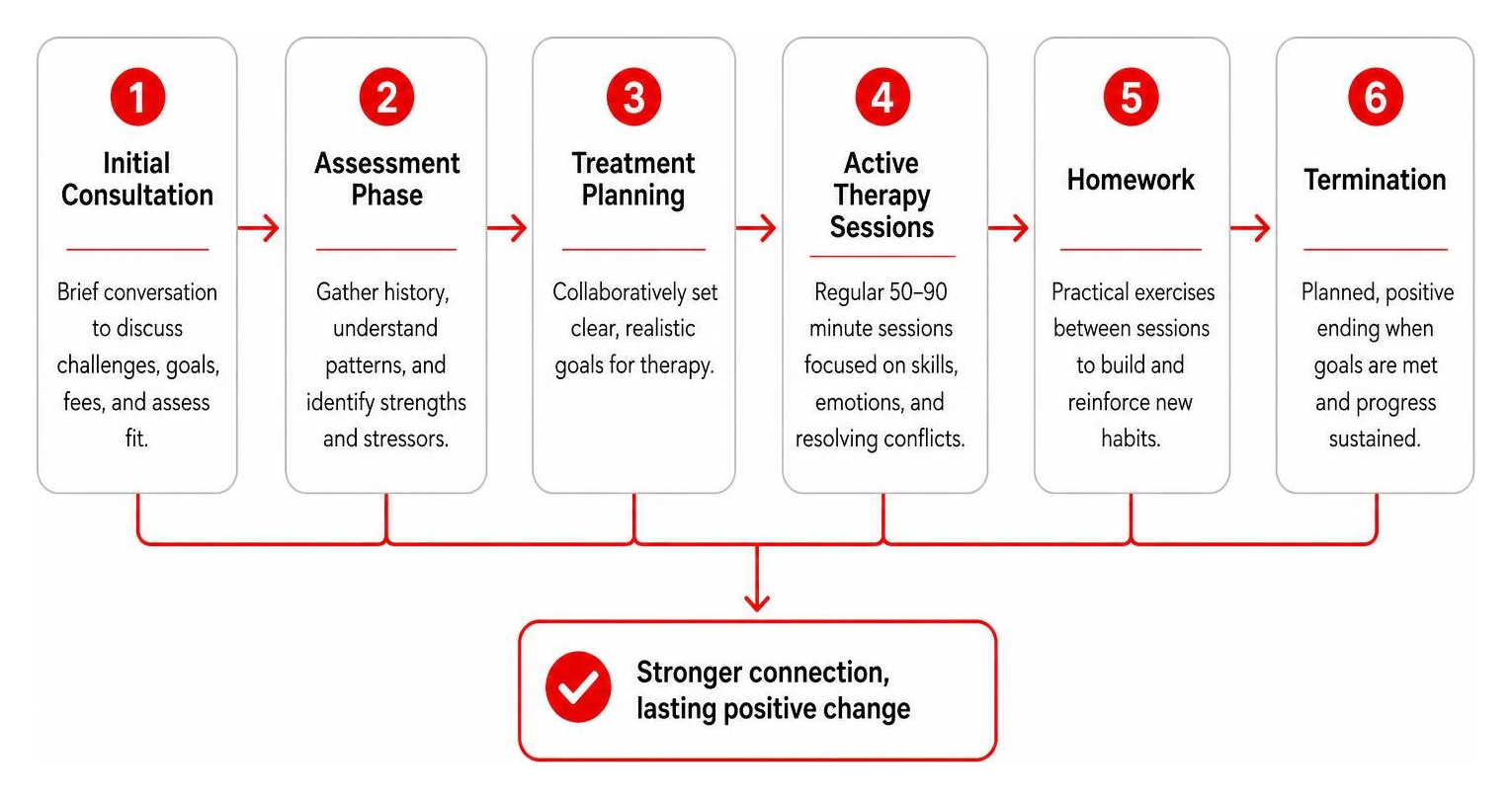
The therapeutic journey typically follows a clear path:
- Initial Consultation: A brief, low-pressure conversation to discuss current challenges, goals, and fee structures, and to assess whether the therapist is a good fit.
- Assessment Phase: The first few sessions are dedicated to gathering history, understanding relationship patterns, and identifying individual strengths and stressors.
- Treatment Planning: The therapist and partners collaboratively set clear, realistic goals for the therapy.
- Active Therapy Sessions: Regular 50 to 90-minute sessions focused on practicing new communication skills, processing emotions, and working through specific conflicts.
- Homework: Practical exercises to complete between sessions to integrate new habits into daily life.
- Termination: A planned, positive ending to therapy once relationship goals have been met and partners feel equipped to maintain their progress independently.
For expats living in major Spanish hubs, finding a therapist who understands both queer identity and the unique challenges of relocation is essential. Navigating cultural adjustment, language barriers, and the lack of a local support system can place extra strain on a relationship.
To find out more about accessing this specialised support, couples can read More info on navigating LGBTQ mental health support in Barcelona.
Navigating Your Options: Public Systems vs. Private Care
When seeking couples therapy in Spain, partners generally have three main pathways to choose from. Understanding the differences between these options can help couples make an informed decision that suits their budget, timeline, and emotional needs.
Public Health Systems
In Spain, public mental health services are accessible, but they are primarily designed for individual crisis intervention and severe psychiatric conditions.
- Pros: Cost-free for those registered in the public system.
- Cons: Very long waiting times, limited session frequency, and a lack of control over choosing a therapist. Furthermore, specialised couples therapy is rarely offered, and finding an English-speaking, queer-competent therapist within the public system is highly unlikely.
Large Online Platforms
Global online therapy directories and platforms offer quick access to a wide range of practitioners.
- Pros: Convenient, often lower in cost, and accessible from anywhere.
- Cons: These platforms often rely on automated matching algorithms rather than human insight. There is a risk of data sharing, and therapists may lack specific training in expat-related challenges or the nuances of the local culture in Spain.
Specialised Private Practices
Boutique private practices, such as Therapy in Barcelona, focus on providing high-quality, tailored care.
- Pros: Highly personalised matching processes conducted by real people, strict confidentiality with no data selling, and therapists who are themselves expats and psychology-trained. This ensures a deep, lived understanding of both international relocation and queer-affirming care.
- Cons: This is a private-pay service. However, some therapists offer sliding scale fees based on financial need, which prospective clients can always inquire about.
Moving Forward Together
Every relationship deserves a safe, non-judgmental space to grow, heal, and thrive. For LGBTQ+ couples, finding a therapist who truly understands their lived experience is not just a matter of convenience; it is a critical factor in the success of the therapy itself.
Relocating abroad can place extra strain on a relationship. Feelings of isolation, the stress of starting over, and differing expectations about building a new support network can all contribute to recurring conflict.
By engaging in specialised relationship support, they learned to identify how minority stress and relocation anxiety were driving their conflicts. With the guidance of an affirming therapist, they rebuilt their communication patterns, aligned their shared values, and successfully navigated their transition to life in Spain.
Founded in 2011 by Australian psychologist Leigh Matthews, Therapy in Barcelona provides culturally sensitive mental health support for English-speaking internationals.
Under her guidance, the practice has grown into a trusted sanctuary, offering personalised therapist matching for expats, adults, and couples across Spain, with active support in major hubs like Madrid, Valencia, and Málaga.
If you’d like support, book a Free Discovery Call. Whether you choose to meet online from anywhere in Spain or worldwide, or in person at our central Barcelona office, our team is here to help you and your partner build a stronger, more resilient connection.
