



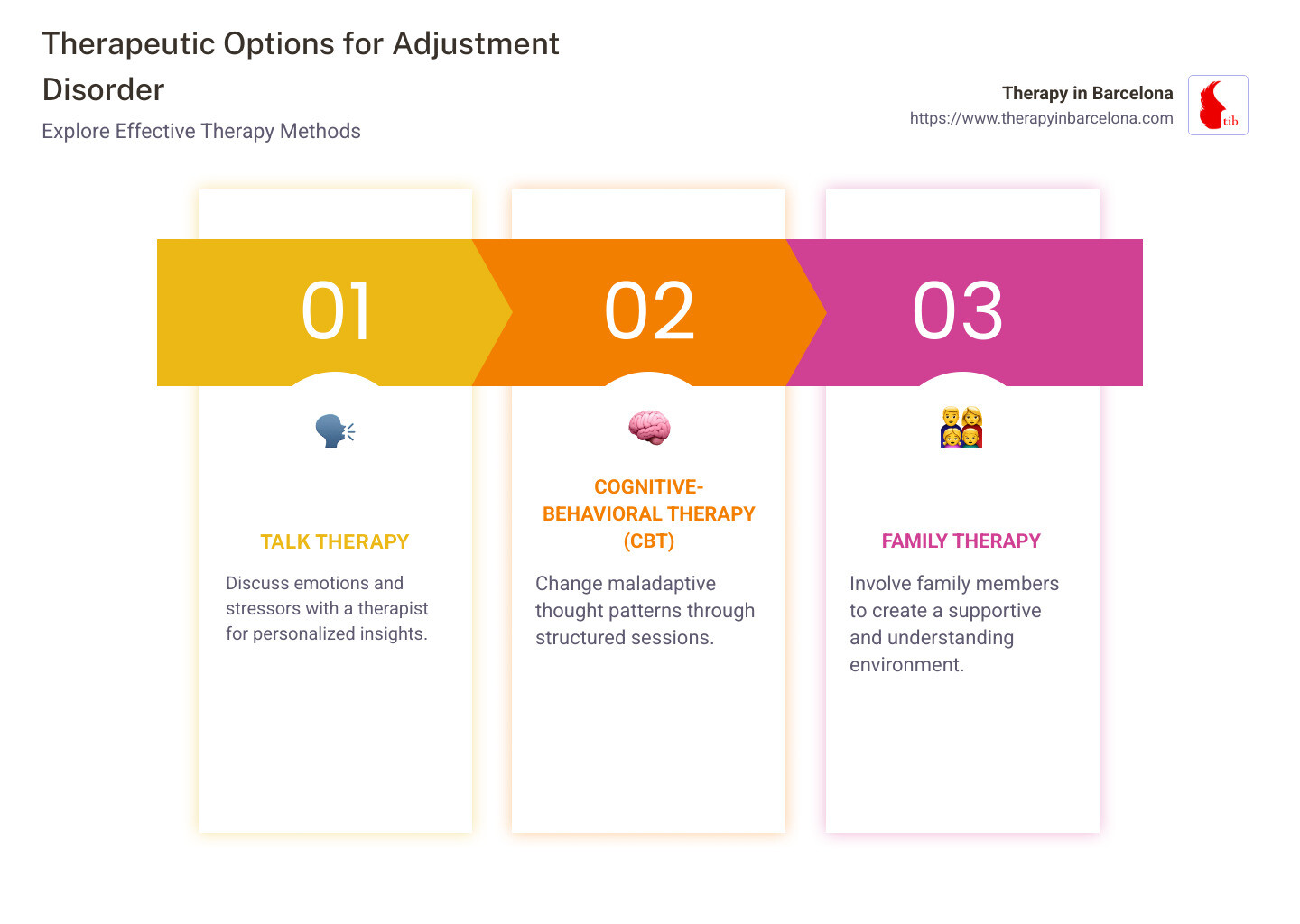
Seeking therapy for adjustment disorder? Here’s a quick guide to the essential options:
- Talk Therapy: Engaging with a therapist to explore emotions and stressors.
- Cognitive-Behavioral Therapy (CBT): Focusing on changing thought patterns and behaviours.
- Family Therapy: Involving loved ones to support and understand the emotional journey.
Adjustment disorder can happen when a major life change feels harder to manage than expected. For expats in Barcelona, stressors like relocation, job changes, relationship shifts, or feeling disconnected from home can trigger anxiety, low mood, or overwhelm.
Individuals experiencing Adjustment Disorder often report heightened levels of anxiety, depression, and irritability, which makes it challenging to steer daily life. Recognising these emotional responses early opens the path to effective therapy. This article digs into understanding Adjustment Disorder and explores custom therapy options available for those seeking balance amidst life’s turbulence.
Understanding Adjustment Disorder
Adjustment Disorder can feel like a storm of emotions when life’s changes get too heavy. It’s a psychological response to stressors that can make everyday life difficult. For many expats in cities like Barcelona, this can be the reality when adapting to new surroundings, cultures, and routines.
Types of Adjustment Disorders
Adjustment Disorders are not one-size-fits-all. They vary depending on the main symptoms experienced, and recognising these types can make a big difference in finding the right help.
1. Adjustment Disorder with Depressed Mood
This type often brings feelings of sadness and hopelessness. You might find yourself crying more often or losing interest in activities you once enjoyed. For example, someone who has recently moved to Barcelona may feel down more days than not, miss their old life, and struggle to enjoy the city around them.
2. Adjustment Disorder with Anxiety
Here, worry takes centre stage. You might feel jittery, nervous, or overwhelmed by everyday tasks. It’s like having a constant knot in your stomach. For some, this anxiety might also come with a fear of separating from loved ones or familiar places.
3. Mixed Anxiety and Depressed Mood
This type combines symptoms of both anxiety and depression. It can feel like being caught in a whirlwind of emotions, where you are anxious about the future while feeling low about the past. It’s a challenging mix that can make it hard to see a way forward.
4. Mixed Disturbance of Emotions and Conduct
This type involves not just emotional symptoms but also behavioural issues. You might find yourself acting out or engaging in risky behaviours. It’s a complex mix that can impact relationships and daily functioning.
5. Unspecified Adjustment Disorder
Sometimes, the symptoms don’t fit neatly into the other categories. You might experience physical symptoms like headaches or stomachaches without a clear emotional cause. This can be just as troubling and requires attention and care.
Recognising these types is the first step in seeking therapy for adjustment disorder. It’s about understanding that these feelings, while tough, are a response to real stressors and can be managed with the right support.
In the next section, we’ll explore how Cognitive Behavioral Therapy (CBT) and other therapeutic approaches can help you regain balance and find peace in your new surroundings.
Therapy for Adjustment Disorder
Cognitive Behavioral Therapy (CBT)
When life’s changes feel overwhelming, therapy for adjustment disorder can be a guide of hope. One of the most effective forms of therapy is Cognitive Behavioral Therapy (CBT). This approach focuses on helping individuals understand and change the way they think and behave.
Understanding Maladaptive Thoughts
CBT starts by identifying maladaptive thoughts: the negative patterns that can make a hard situation feel even heavier. For example, an expat in Barcelona might think, “I’ll never fit in here,” which can lead to isolation and sadness. CBT helps people notice these thoughts, question them, and replace them with more balanced ones. Instead of feeling defeated, they might learn to think, “Adapting takes time, and I can find my place here.”
Relaxation Strategies
Feeling tense and anxious is common when dealing with adjustment disorder. CBT incorporates relaxation strategies to help manage these feelings. Techniques like deep breathing or progressive muscle relaxation can calm the mind and reduce stress. These skills are simple yet powerful tools that can be used anytime, anywhere.
Problem-Solving Skills
CBT also builds problem-solving skills. Instead of facing a big stressor all at once, you break it into small, practical steps. If making friends in a new city feels hard, CBT might help you start with one doable action, like joining a club or attending a local event.
Talk Therapy and Family Therapy
Beyond CBT, talk therapy can help you process emotions and make sense of stressful changes. Family therapy may also help when adjustment disorder affects relationships at home, improving communication and support.

In the next section, we’ll dig into nonpharmacologic and pharmacologic approaches, exploring how different interventions can complement therapy and support your journey to well-being.
Nonpharmacologic and Pharmacologic Approaches
When navigating the complexities of adjustment disorder, a mix of nonpharmacologic interventions and pharmacotherapy can be part of a comprehensive treatment plan. Let’s explore how these approaches work and what they can offer.
Nonpharmacologic Interventions
Nonpharmacologic strategies focus on therapeutic methods that don’t involve medication. These can include:
- Cognitive Behavioral Therapy (CBT): As we discussed earlier, CBT is a powerful tool. It helps reframe negative thoughts and build problem-solving skills.
Stress Inoculation Training: This technique prepares individuals to handle stress by gradually exposing them to stressors in a controlled manner. It’s like a mental rehearsal for life’s challenges.
Relaxation Techniques: Practices like mindfulness, deep breathing, and yoga can reduce anxiety and improve emotional well-being.
Pharmacotherapy
Sometimes, medication might be considered to manage severe symptoms of adjustment disorder. It’s crucial to approach this option with caution:
Antidepressants: These can help manage symptoms of depression and anxiety. However, they should be prescribed and monitored by a healthcare professional to avoid dependency.
Benzodiazepines: Often used for short-term relief of acute anxiety, these medications can be effective but carry a risk of dependency.
Combination Therapies
A holistic approach often blends nonpharmacologic interventions with medications. This combination can address both psychological and physiological aspects of adjustment disorder, offering a more comprehensive strategy.
Dietary Supplements
Emerging research highlights the potential of dietary supplements as a safe alternative to traditional medications. Two promising components are:
Bioactive Peptides: These are short chains of amino acids that can have positive effects on the brain, potentially reducing anxiety and improving mood.
Magnesium: Known for its calming properties, magnesium can support nervous system health and help manage anxiety. It’s a natural option that offers a safer alternative to medications like benzodiazepines.
Incorporating these supplements into a treatment plan can provide additional support without the side effects often associated with pharmaceuticals.
We’ll explore how building resilience and adopting effective coping strategies can further improve your journey through adjustment disorder.
Building Resilience and Coping Strategies
When dealing with adjustment disorder, building resilience and adopting effective coping strategies can make a huge difference. These strategies are about taking care of your mental and emotional well-being. Let’s explore some practical steps you can take.
Lifestyle and Home Remedies
Emotional Support
Having a strong support system is vital. Whether it’s friends, family, or a community group, surrounding yourself with people who understand and care can help you steer tough times. Sharing your feelings and experiences can lighten the emotional load and provide comfort.
Stress Management
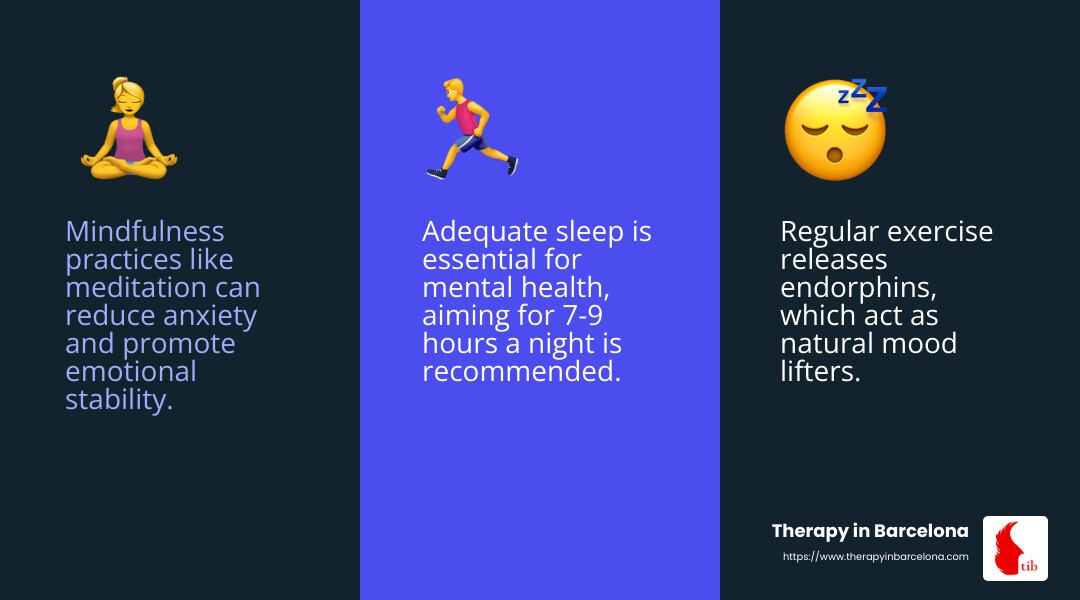
Stress is a natural part of life, but managing it effectively is key. Mindfulness practices like meditation and yoga can help calm your mind. These techniques teach you to focus on the present moment, reducing anxiety and promoting emotional stability.
Healthy Lifestyle
Living a healthy lifestyle is foundational to resilience. This includes:
Regular Exercise: Physical activity releases endorphins, which are natural mood lifters. Even a daily walk can make a difference.
Balanced Diet: Eating nutritious meals fuels your body and mind, helping you feel better overall.
Adequate Sleep: Good sleep is essential for mental health. Aim for 7-9 hours a night to help your brain and body recover from daily stresses.
Social Support
Connecting with others can provide both emotional and practical support. Join groups or clubs that interest you, or reach out to community resources. Being part of a supportive network can boost your resilience and provide a sense of belonging.
Mindfulness
Mindfulness is more than just a buzzword; it’s a powerful tool for managing stress and enhancing well-being. Techniques such as journaling, prayer, or yoga can help you stay grounded. These practices encourage you to be present, reducing the impact of stressors.
Building resilience isn’t about never facing difficulties. It’s about developing the tools to bounce back when challenges arise. By incorporating these lifestyle and home remedies, you can improve your ability to cope with life’s ups and downs.
Next, we’ll explore some frequently asked questions about therapy for adjustment disorder to give you a clearer understanding of the therapeutic options available.
Frequently Asked Questions about Therapy for Adjustment Disorder
What is the best therapeutic approach for adjustment disorder?
Talk therapy is a common treatment for adjustment disorder. It helps you process stress, name difficult emotions, and find practical ways forward. Cognitive-behavioral therapy (CBT) can be especially useful because it helps you spot unhelpful thought patterns, build coping skills, and respond to stress with more balance.
Why is CBT so effective? Because it equips you with practical tools. You’ll learn relaxation strategies to calm your mind and body. Plus, CBT emphasizes problem-solving skills, allowing you to tackle challenges in a structured way. This approach not only eases symptoms but also builds resilience for future stressors.
How does CBT help adjustment disorder?
CBT helps you spot unhelpful thoughts that fuel stress, anxiety, or low mood. It also teaches practical tools like breathing exercises, mindfulness, and problem-solving, so you can respond to challenges with more calm and confidence.
Real-world example: Imagine a 34-year-old expat from the UK living in Barcelona. After struggling with loneliness, they found relief through CBT. By identifying negative thought patterns and practicing relaxation strategies, they felt more grounded and capable of handling life abroad.
Can adjustment disorder be cured?
The good news is that adjustment disorder is typically a time-limited condition. This means it often resolves on its own as you adapt to new circumstances. However, therapy can speed up this process by providing coping mechanisms and building resilience. While “cure” might not be the right word, therapy fosters personal growth and equips you with tools to better manage stress in the future.
Incorporating these therapeutic approaches can make a significant difference in how you handle life’s transitions. Next, we’ll dig into more strategies to support your journey toward mental well-being.
Conclusion
Navigating life in a new country can be a thrilling trip, but it can also bring unexpected challenges. At Therapy in Barcelona, we understand the unique problems faced by expats and international residents. Our mission is to provide personalised support custom to your individual needs, ensuring you don’t have to face these challenges alone.
Therapy in Barcelona offers a safe, supportive space for internationals adjusting to life away from home. With culturally sensitive care, therapy can help you understand your feelings, build coping skills, and strengthen resilience as you navigate stress, change, and uncertainty.
Whether you’re dealing with stress, anxiety, or the emotional ups and downs of adjusting to a new environment, our therapists are here to help. We offer a range of therapeutic services, including cognitive-behavioral therapy (CBT), which is particularly effective for adjustment disorder.
Joining the expat community at Therapy in Barcelona means gaining access to a network of support and understanding. We believe in the power of connection and strive to foster a sense of belonging among our clients. By providing culturally informed care, we ensure that you feel seen, heard, and understood.
If you’re ready to take the first step toward healing and personal growth, reach out to Therapy in Barcelona by booking a discovery call. We’re here to guide you through the complexities of expat life and help you thrive in your new home. You’re not alone on this journey—together, we can steer the path to well-being.
