


Finding Your Ideal Counselor: A Guide for Expats and Locals
If you’re searching for the best counselors near me, here’s a quick guide to help you find the right support:
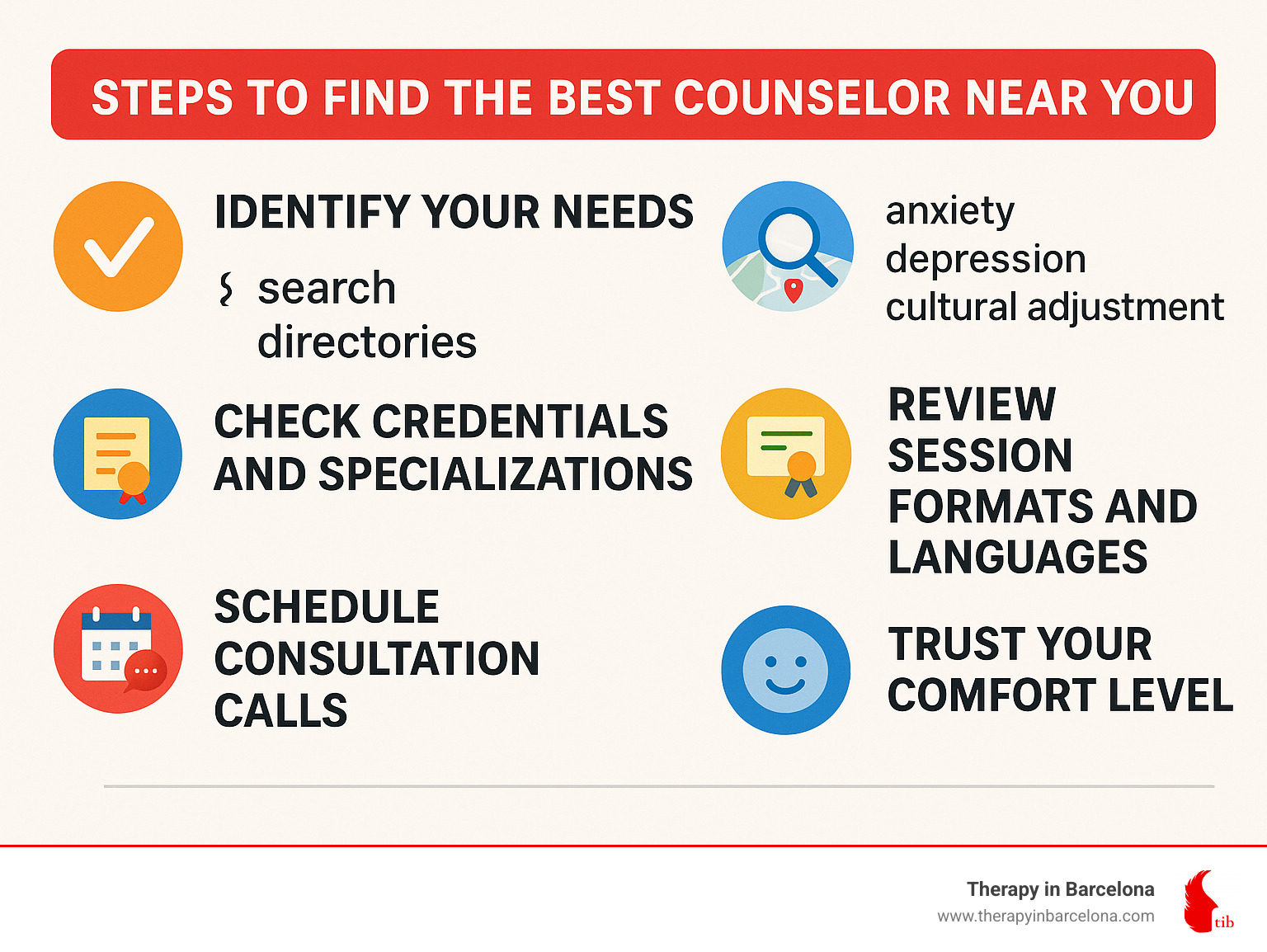
- Use specialized directories like Psychology Today, GoodTherapy, or local expat resources
- Filter by key criteria:
- Specialization (anxiety, depression, relationships, cultural adjustment)
- Languages spoken
- Insurance accepted
- Session format (in-person, online, hybrid)
- Availability (evenings, weekends)
- Verify qualifications – are they trained to help?
- Schedule a consultation to assess personal fit before committing
Finding the right counselor can feel overwhelming, especially when you’re already dealing with life’s challenges. Whether you’ve recently relocated to a new country or you’re facing personal difficulties in familiar surroundings, connecting with a qualified mental health professional is a crucial step toward wellness.
“Life is complicated, but finding the right therapist doesn’t have to be,” notes a mental health platform founded by therapists who recognized this common struggle. This sentiment rings especially true for internationals and expats who face unique challenges like cultural adjustment, language barriers, and feelings of isolation.
Recent studies highlight that expats face unique mental health challenges: according to a 2022 InterNations survey, 30% of expats report frequent stress, and 28% struggle with loneliness. Research from the International Organization for Migration also notes that expats are less likely to access mental health services due to language and cultural barriers. This makes finding accessible, culturally sensitive counseling even more important for those living abroad.
When searching for a counselor, consider what specific support you need. Are you dealing with anxiety about adapting to a new culture? Relationship challenges amplified by relocation stress? Or perhaps general feelings of depression that seem harder to manage in unfamiliar surroundings?
The good news is that many counselors now offer flexible options, with statistics showing that 57% of therapists provide both in-person and online sessions, while 43% work exclusively online. This flexibility can be particularly valuable for expatriates who may prefer a therapist who understands their home culture or speaks their native language.
Finding the right therapeutic match is personal, and at Therapy in Barcelona, we offer a comprehensive matching service to connect you with the therapist on our team who best fits your needs. While credentials are essential, your connection and comfort with your counsellor matter just as much. Our process includes an initial consultation to ensure you and your therapist are a good fit before starting regular sessions.
If cost is a concern, look for therapists who offer sliding scale fees based on your income, or consider online platforms—services like BetterHelp typically range from £70 to £100 per week. Though higher-quality services often come with a higher price tag, this reflects not just the expertise of your therapist but also their ability to invest in ongoing professional development and ethical practice. Therapy in Barcelona, for example, is a bespoke service that prioritises your privacy and will never sell your data—investing in a reputable provider means investing in your wellbeing.
What Does a Counselor Do & Which Type Do You Need?
When you’re searching for the best counselors near me, it helps to understand what these professionals actually do. Unlike friends who might offer well-meaning advice, counselors provide evidence-based support to help you develop effective coping strategies and work through life’s challenges.
Think of counselors as guides on your mental health journey—they’re trained to help you steer psychological, emotional, and social issues that affect your wellbeing without telling you what to do. Instead, they create a safe space where you can explore your thoughts and feelings while learning practical skills to improve your life.
Different mental health professionals serve different needs, and knowing the distinctions can help you find the right match:

Counselors and Therapists typically hold master’s degrees in counseling, psychology, or related fields. They specialize in talk therapy, somatic therapy, creative expressive arts therapy and helping you develop practical coping skills for specific issues. If you’re dealing with life transitions, relationship challenges, or need someone to talk through problems with, a counselor or therapist is often a great place to start. Our team of professionals at Therapy in Barcelona are all psychologists in their native countries, but offer their services in Spain as therapists. This means they will not diagnose or provide psychological assessments even though they are trained to do so.
Psychologists have doctoral degrees (PhD or PsyD) and can conduct psychological testing and assessments. They often specialize in specific therapeutic approaches and may work with more complex mental health conditions. For in-depth psychological assessment or specialized treatment approaches, a psychologist might be your best match.
Psychiatrists are medical doctors who can prescribe medication. While they may offer therapy, many focus primarily on medication management. If you’re experiencing symptoms that might benefit from medication (like severe depression or anxiety), a psychiatrist would be an important part of your care team.
Social Workers with clinical training (LCSW) offer therapy while also specializing in connecting clients with community resources. They’re particularly skilled at helping you steer systems and find additional support services.
Each of these professionals uses different therapeutic approaches to help you heal and grow. Some of the most common include:
Cognitive Behavioral Therapy (CBT) helps you identify and change negative thought patterns that affect your feelings and behaviors. It’s particularly effective for anxiety and depression.
Acceptance and Commitment Therapy (ACT) teaches you to accept difficult thoughts and feelings while committing to making positive changes in your life.
Eye Movement Desensitization and Reprocessing (EMDR) is especially helpful for processing traumatic experiences by changing how these memories are stored in your brain.
Internal Family Systems (IFS) explores different “parts” of your personality to promote healing and self-understanding.
Solution-Focused Brief Therapy (SFBT) concentrates on building solutions rather than dwelling on problems, making it effective for specific, targeted issues.
Common Issues Counselors Treat
Life throws all kinds of challenges our way, and counselors are equipped to help with a wide range of concerns. Whether you’re an expat adjusting to life in Barcelona or a local dealing with personal struggles, counselors can support you through:
Anxiety – From general worry that keeps you up at night to specific phobias or panic attacks that interfere with daily life. Statistics show that 91% of therapists prioritize treating anxiety, reflecting how common these concerns are.
Depression – Persistent sadness, loss of interest in activities you once enjoyed, or feelings of hopelessness that make even small tasks feel overwhelming.
Relationship challenges – Communication problems with your partner, conflict resolution difficulties, or rebuilding trust after a betrayal.
Grief and loss – Processing emotions after losing a loved one, ending a relationship, or experiencing major life changes like moving to a new country.
Self-esteem issues – Building confidence and developing a healthier self-image when you’re constantly doubting yourself.
Life transitions – Adjusting to changes like relocation, career shifts, becoming a parent, or retirement.
Cultural adjustment – For expats, navigating the emotional challenges of living in a new country can be particularly difficult—from language barriers to feeling disconnected from your support network.
As Leigh Matthews, founder of Therapy in Barcelona, explains: “Moving abroad isn’t just about changing your location—it’s about reshaping your entire identity and support system. The emotional impact of that shift deserves proper acknowledgment and support.”
Specialised Services Near You
When looking for the best counselors near me, consider professionals who specialize in your specific needs. Many therapists focus on particular areas of expertise:
Child counseling uses play therapy and age-appropriate techniques to help children express emotions they might not have words for yet. For expat families, this can be invaluable as children steer international schools and multicultural environments.
Teen therapy addresses adolescent-specific challenges like identity development, peer pressure, and academic stress—all of which can be amplified in international settings.
Couples counseling helps partners improve communication, resolve conflicts, and strengthen their relationship. For international couples or those in intercultural relationships, this specialized support can bridge cultural differences in communication styles.
Family therapy works with the entire family system to improve dynamics and resolve conflicts, particularly helpful when family members are adjusting to a new culture at different rates.
LGBTQIA+ affirming therapy provides support for issues related to gender identity, sexual orientation, and related life challenges, with sensitivity to how these experiences may differ across cultures.
Addiction counseling specializes in substance use disorders and behavioral addictions, understanding how stress factors like cultural adjustment can impact coping mechanisms.
Expat support focuses on the unique challenges faced by internationals living abroad, from navigating cultural differences to managing the grief of leaving one’s home country behind.
For expatriates in Barcelona, finding a counselor who understands the complexities of living abroad can make all the difference. “Expats face unique challenges that someone who hasn’t lived abroad might not fully grasp,” notes Leigh Matthews. “From navigating cultural differences to managing the grief of leaving your home country behind, having a therapist who ‘gets it’ creates an immediate foundation of understanding.”
When you’re ready to find support, the therapeutic relationship is deeply personal. Taking time to find the right match—someone who understands both your specific concerns and the context of your life—can make all the difference in your healing journey.
How to Find the Best Counselors Near Me
Finding the best counselors near me can feel like searching for a needle in a haystack, especially when you’re already dealing with life’s challenges. As an expat, this search becomes even more complex when you’re looking for someone who understands both your language and cultural background.
“Best Counselors Near Me” Search Checklist
When I first moved to Barcelona, I spent hours scrolling through therapist directories, feeling overwhelmed by all the options. What helped me—and what can help you—is having a clear filtering strategy.
Your specific concerns should guide your search too. Are you dealing with anxiety about adapting to a new culture? Relationship challenges amplified by relocation stress? Look for therapists who specialize in these areas rather than general practitioners.
Practical considerations matter just as much as therapeutic approach. If you work full-time, you’ll need someone with evening or weekend availability. If you travel frequently, a therapist offering telehealth options might be essential.
For many expatriates, language is non-negotiable. Therapy requires expressing complex emotions and thoughts—something that’s challenging enough in your native language, let alone a second or third one. Don’t compromise on this if it’s important to you.
Some people also have a strong gender preference for their therapist, which is completely valid and worth considering in your search. This comfort level can significantly impact how open you feel in sessions.
Top Platforms & Local Resources
When I’m helping clients find the right therapist match, I typically recommend starting with these trusted platforms:
Psychology Today offers one of the most comprehensive therapist directories available, with detailed filtering options that let you narrow down professionals by specialty, insurance, language, and more. Their profiles give you a good sense of each therapist’s approach and personality.
GoodTherapy is another excellent option, particularly if ethical standards are important to you. They carefully vet their listed therapists and provide helpful educational resources alongside their directory.
For those seeking a more modern, inclusive approach, TherapyDen emphasizes social justice and diversity in their platform, which can be especially valuable for internationals navigating cross-cultural issues.
The APA Psychologist Locator is a valuable resource provided by the American Psychological Association that can help you find licensed psychologists in your area with specific expertise.
Don’t underestimate the power of local expatriate groups either. These communities often have insider knowledge about which therapists truly understand the unique challenges of international living. University counseling centers and community mental health facilities can also be valuable resources, especially if budget is a concern.
As Leigh Matthews, Australian Psychologist and founder of Therapy in Barcelona, explains: “Finding a therapist who understands the expat journey is crucial. When a therapist has walked a similar path, they can relate to the unique challenges of adapting to a new culture while managing your mental health.”
This perspective is precisely why specialized services like Therapy in Barcelona exist—to bridge the gap between conventional therapy and the unique needs of the international community. Their approach includes thoughtful matching between clients and therapists based on specific needs and cultural considerations, rather than simply assigning the next available professional.

Choosing Your Ideal Therapist: Credentials, Fit & First Session
Finding the best counselors near me is just the first step – now it’s time to evaluate who might be your perfect therapeutic match. This isn’t just about professional qualifications; it’s about finding someone you can genuinely connect with.
Credentials to Look For
When reviewing potential therapists, take time to verify their professional background. Look beyond basic qualifications to their educational background, specialized training in areas relevant to your needs, and membership in recognized professional organizations. Reading the therapist bios on the Therapy in Barcelona site can give you this information.
Experience matters too – both general practice experience and specific expertise with your concerns. For expatriates, finding a therapist who understands the unique challenges of living abroad can make all the difference in feeling truly understood.
“One of the most important things I tell people searching for a therapist is to verify credentials, but also trust your instincts about connection,” explains Leigh Matthews of Therapy in Barcelona. “The best qualifications in the world won’t help if you don’t feel comfortable opening up to that person.”
Assessing the Therapeutic Relationship
The personal connection between you and your therapist is perhaps the most crucial factor for successful therapy. During your initial consultation, pay attention to how you feel in their presence:
Do you feel comfortable sharing personal information? Does the therapist listen attentively and respond thoughtfully? Can they explain their approach in terms that make sense to you? Do they seem genuinely interested in your specific concerns?
“The relationship between client and therapist is one of the strongest predictors of successful outcomes in therapy,” notes Leigh Matthews. “This is why at Therapy in Barcelona, we take the matching process so seriously—we want to ensure that clients connect with a therapist who fits their unique needs and personality.”

Signs You’ve Found the Right Match
Trust your feelings when assessing if a therapist is right for you. Positive indicators include feeling safe and respected in their presence, noticing that they demonstrate empathy without judgment, and seeing that they establish clear goals and a treatment plan custom to your needs.
You should also feel appropriately challenged while being supported. The right therapist won’t just agree with everything you say – they’ll gently push you to explore difficult areas while ensuring you feel secure doing so.
As one client at Therapy in Barcelona shared: “I feel incredibly comfortable and safe with my therapist. I recognise the importance of the therapeutic relationship and I am really happy with the therapy so far.”
Red Flags & How to Switch Counselors
Not every therapeutic relationship works out, and that’s perfectly normal. Be alert for warning signs that suggest you might need a different therapist:
Feeling consistently misunderstood or judged can indicate a poor fit. Watch for therapists who talk more than listen or share too much about their own lives (inappropriate self-disclosure). Lack of clear boundaries or feeling worse after most sessions are also concerning signs.
If you notice a lack of improvement after several sessions, it might be time to consider making a change. Most ethical therapists understand that fit matters and will help facilitate a transition if needed.
Switching therapists is straightforward: simply inform your current therapist that you’d like to end therapy, ask if they can provide referrals to colleagues who might be a better fit, request that your records be transferred (with your written consent), and schedule a consultation with someone new.
Finding the right match may take time, but it’s worth the effort. Many people try two or three therapists before finding someone they click with – this isn’t a failure but part of the process of finding the right support for your unique needs.
As expatriates often find, finding a therapist who truly understands the complexities of living abroad – the cultural adjustment, identity shifts, and unique stressors – can transform the therapeutic experience from merely helpful to truly life-changing.
Costs, Insurance & Low-Cost Alternatives
When searching for the best counselors near me, understanding the financial aspects of therapy is often a key concern. After all, investing in your mental health is important, but it needs to fit your budget too.
Typical Therapy Costs
The cost of therapy varies widely depending on several factors that affect what you’ll actually pay:
Location makes a big difference – therapy in major cities tends to be more expensive than in smaller towns. The therapist’s credentials and experience also play a role, with more specialized or experienced professionals often charging higher rates.
In the United States, you can expect to pay between $100 and $200 for a typical therapy session. Here in Barcelona, our fees at Therapy in Barcelona range from 70 to 95 Euros for individual sessions and from 90 to 115 Euros for couples therapy.
Insurance Coverage
Many therapists accept insurance, which can significantly reduce your out-of-pocket expenses. When checking if your insurance covers therapy, consider:
In-network providers have negotiated rates directly with your insurance company, which typically means lower costs for you. If your preferred therapist is out-of-network, your insurance might still cover a percentage of the cost, though you’ll likely pay more upfront.
Always check directly with your insurance provider to confirm what mental health services are covered—benefits can differ widely by region and plan. For example, in Florida, 87% of therapists accept Aetna, 80% accept Cigna, and 67% accept UnitedHealthcare. Keep in mind: professionals covered by insurance are less likely to speak your native language, which is why many expats choose private-pay services like Therapy in Barcelona for culturally sensitive support in English and other languages.

Making Therapy Affordable
If therapy costs feel prohibitive, don’t give up – there are several ways to make mental health support more accessible:
Sliding scale fees are available with many therapists, including some at Therapy in Barcelona. This means rates can be adjusted based on your financial situation. If you need a more affordable option, be sure to ask about sliding scale places during your intake process. This helps make quality mental health care accessible to more people.
Group therapy sessions typically cost less than individual therapy while still providing valuable support and insights. Many find the community aspect of group therapy particularly helpful when dealing with certain issues.
University training clinics often provide therapy at reduced rates, where supervised graduate students deliver care. While these therapists-in-training have less experience, they’re closely supervised by seasoned professionals.
Community mental health centers are another excellent resource for affordable therapy based on your income level. These centers often serve as vital safety nets in many communities.
If you’re considering digital options, online therapy platforms like BetterHelp can provide flexible pricing—usually between £70 and £100 per week—which may be more affordable than in-person sessions. However, be aware that these platforms have faced criticism and legal challenges over privacy and data practices, and many users report mixed experiences with the quality of care.
Many employers offer Employee Assistance Programs (EAPs) that include free, short-term counseling services. Check with your HR department to see if this benefit is available to you.
For expatriates specifically, it’s worth checking whether your international health insurance plan covers mental health services. Coverage varies widely, so review your policy details or speak with your HR department if you have employer-provided insurance.
At Therapy in Barcelona, we operate as a private pay service—meaning you pay directly for your sessions rather than going through insurance. This approach offers you greater privacy, as your therapy records are not shared with insurance companies. Each therapist sets their own fees, and you’ll receive clear information about costs and payment methods once matched. For the latest details, you can always check our current fees.
In-Person vs Online Counseling: Pros, Cons & Privacy
When searching for the best counselors near me, one of the biggest decisions you’ll face is whether to pursue in-person therapy, online sessions, or perhaps a blend of both. Each approach offers distinct advantages that might better suit your unique situation and preferences.
In-Person Therapy Benefits
There’s something special about sitting in the same room with your therapist. Face-to-face sessions create a dedicated therapeutic space where you can fully disconnect from daily distractions. Many clients find that the physical presence of their therapist helps them feel more connected and understood, as non-verbal cues and subtle body language become part of the therapeutic conversation.
“For some clients, the ritual of going to therapy—the journey there, the familiar waiting room, the dedicated space—becomes an important part of their healing process,” explains Leigh Matthews, founder of Therapy in Barcelona. “That physical separation from everyday life can help create a mental shift that supports deeper work.”
In-person therapy also offers complete privacy from digital concerns, which can be reassuring for those with confidentiality worries.
Online Therapy Advantages
The dramatic rise in virtual therapy options has revolutionized access to mental health support, particularly for the international community. Online therapy shines when it comes to convenience—no commute means saving time and transport costs, which can be especially valuable in a busy city like Barcelona.
For expatriates with mobility challenges, those living in remote areas, or individuals with demanding schedules, online therapy removes significant barriers to consistent care. You can connect with your therapist from the comfort of your own home, which many find helps them open up more freely.
Perhaps most importantly for the international community, online therapy expands your options beyond geographic limitations. You’re no longer restricted to therapists within commuting distance, which can be crucial when seeking someone who speaks your language or understands your cultural background.
“I was struggling to find an English-speaking therapist who understood the unique challenges of expatriate life,” shares one client. “Online therapy opened up possibilities that simply weren’t available in my immediate area.”

Privacy Considerations
Whether you choose in-person or online therapy, confidentiality remains a cornerstone of the therapeutic relationship. However, each format addresses privacy in different ways:
In traditional office settings, therapists create physically private spaces where conversations remain confidential. Online, reputable platforms employ robust encryption and comply with privacy regulations like HIPAA or GDPR to protect your information.
At Therapy in Barcelona, we take privacy seriously in both formats. “We ensure our online platforms meet the highest security standards,” notes Leigh Matthews. “And we provide clear information about the limitations of confidentiality in both settings, so clients always understand how their information is protected.”
Hybrid Solutions for Busy Expats
For many expatriates, particularly those with unpredictable travel schedules or who split time between countries, a flexible approach works best. Current statistics show that 57% of therapists now offer both in-person and online sessions, while 43% work exclusively online.
A hybrid approach might include:
Mixed format sessions that alternate between in-person and online depending on your schedule or needs. Perhaps you meet in person for deeper work and switch to online during busy periods or travel.
Weekend teletherapy provides another flexible option, accommodating those whose weekday schedules make regular appointments challenging.
Many therapists, including those at Therapy in Barcelona, offer detailed tech guides to help clients set up secure connections for their online sessions, ensuring both privacy and a smooth experience.
Therapy in Barcelona caters to this need for flexibility by offering both in-person sessions at their Eixample office and online therapy to expatriates worldwide (except USA and Canada), understanding that life abroad often requires adaptable solutions.
As one client reflected, “Being able to continue therapy online when I traveled for work made all the difference in maintaining momentum. I didn’t have to choose between my career and my mental health.”
What to Expect: First Session to Measuring Progress
Starting therapy can feel both exciting and nerve-wracking, especially when you’re searching for the best counselors near me in an unfamiliar place. Understanding what the journey looks like from beginning to end can help ease those initial butterflies.
The Initial Session
Your first therapy appointment sets the foundation for everything that follows. Most therapists begin with some practical elements:
You’ll complete paperwork covering consent forms, privacy policies, and insurance information. Your therapist will conduct a gentle assessment, asking about your concerns, relevant history, and what you hope to achieve. They’ll explain their approach and what you can expect from sessions, while giving you plenty of space to ask questions. By the end, you’ll typically have the beginnings of a treatment plan taking shape.
“My first session was already resourceful and we left the room with some insights to reflect on,” shares one client about their experience at Therapy in Barcelona. This initial meeting is about establishing comfort and connection as much as gathering information.
The Therapy Journey
Therapy isn’t a one-size-fits-all experience, but most journeys follow a general path:
During the first 1-3 sessions, your therapist focuses on understanding your concerns in depth. Together, you’ll establish clear, achievable goals that give your work direction and purpose. The heart of therapy involves regular sessions working toward these goals, with your therapist providing support, insights, and practical tools along the way.
Periodic check-ins help assess your progress and adjust the approach if needed. When you’ve met your goals or feel ready to continue on your own, you’ll work with your therapist to plan for a smooth conclusion to therapy.
The length of your therapy journey depends entirely on your unique situation. Some focused interventions might last just 6-8 sessions, while more complex issues could benefit from several months of support. Some clients choose to keep the connection with their therapist over years, to check in for tune-ups or, at times, need preventative care or support in significant life events. At Therapy in Barcelona, we believe in providing the time you need while working efficiently toward your goals.
Measuring Progress
How do you know if therapy is actually working? Effective therapy includes concrete ways to track improvement:
Goal achievement serves as the most straightforward measure—are you making progress toward what you hoped to accomplish? Symptom reduction offers another clear indicator, as you notice changes in the frequency or intensity of troubling feelings or behaviors.
Many clients report improved functioning in daily life, whether that’s better performance at work, healthier relationships, or more ease in everyday activities. You’ll likely develop new skills for managing challenges, from communication techniques to emotional regulation strategies. Perhaps most importantly, therapy fosters self-awareness—a deeper understanding of your patterns, triggers, and needs.
As one client at Therapy in Barcelona reflects: “I don’t think I would have been able to accomplish this much without my therapist’s help and guidance. She has helped me so much, provided me so much new insights and I’m very grateful for it.”
Confidentiality & Ethical Standards
Trust forms the backbone of the therapeutic relationship, and understanding the boundaries of privacy helps build that trust:
The general rule is that what you discuss in therapy remains confidential. However, there are important exceptions that your therapist will explain during your first session. These typically include situations involving imminent harm to yourself or others, suspected abuse of vulnerable populations, or when required by court order.
Therapists maintain secure clinical notes about your sessions, and you’ll receive clear information about privacy limitations through an informed consent process at the beginning of therapy.
Many large online therapy platforms have come under scrutiny for selling or sharing user data with third parties. At Therapy in Barcelona, we want to be clear: we will never sell or share your personal information. Our team is bound by strict GDPR regulations and follows the highest ethical standards—similar to HIPAA in the US. Your privacy and trust are our top priorities, and we are committed to transparent communication about how your information is protected.
Finding the best counselors near me means finding someone who not only has the right credentials but also creates a space where you feel understood, respected, and supported throughout your therapeutic journey.
Frequently Asked Questions about Finding the Best Counselors Near Me
Do I really need counseling or therapy?
It’s a question many of us ask ourselves. You might wonder if your struggles warrant professional support or if you should just “tough it out” a bit longer.
Consider reaching out to one of the best counselors near me if you notice:
Your emotions are getting in the way of daily life—perhaps affecting your sleep, work, or relationships. Maybe you’ve found yourself turning to unhealthy coping mechanisms like substance use or avoiding people and situations. Many people also seek therapy when they notice troubling patterns in their relationships or when facing major life changes.
Sometimes, it’s when we’ve tried everything on our own and still feel stuck, or when loved ones express concern about our wellbeing.
For expatriates, there are additional signs that might indicate therapy would be helpful. Persistent homesickness that doesn’t seem to improve with time, struggling to adapt to cultural differences, or feeling increasingly isolated in your new home can all signal that some professional support might be beneficial. Many internationals also experience a sense of identity confusion when living between cultures—something our therapists at Therapy in Barcelona understand deeply.
As one of our clients beautifully put it: “To one extent or another, everyone is in need of therapy as not everyone has all the tools and knowledge to take care of their mind.” This perspective reminds us that seeking therapy isn’t about being “broken”—it’s about giving yourself the support you deserve during challenging times.
How do I verify a counselor’s license?
When searching for the best counselors near me, verifying credentials is an essential step in ensuring you receive quality care. Here’s how to do it:
The most direct approach is simply looking at the therapist’s bio on the website and asking the therapist about their qualifications during your initial meeting. Most qualified professionals will be happy to discuss their background and credentials.
Don’t hesitate to request copies of relevant certifications if you have concerns. It’s also helpful to research what the specific credentials in your area actually mean, as licensing requirements vary significantly by location and professional title.
At Therapy in Barcelona, all our therapists have psychology training or equivalent qualifications from their native countries, ensuring you receive care from properly trained professionals.
Can I get help immediately if I’m in crisis?
While finding the best counselors near me is important for long-term support, crisis situations require immediate attention. If you’re experiencing a mental health emergency, there are several resources available:
For immediate danger, call emergency services—dial 112 in Europe. Go to our resources page to find specific information for crisis assistance
Hospital emergency departments are equipped to provide psychiatric assessments, and most countries have 24/7 suicide prevention hotlines staffed by trained professionals. In urban areas, walk-in crisis centers often provide same-day support without an appointment.
At Therapy in Barcelona, while we may not be able to provide immediate crisis intervention, we can help connect you with appropriate emergency resources and provide follow-up care once the immediate crisis has stabilized.
Reaching out during a crisis is a sign of strength, not weakness. Professional support can help you steer through difficult moments and develop strategies for managing future challenges.
Conclusion
Finding the best counselors near me isn’t just about searching a directory—it’s a deeply personal journey that deserves care and attention. Whether you’re an expat navigating the complexities of life abroad or someone seeking support in familiar surroundings, the right therapeutic relationship can transform your wellbeing and outlook on life.
For internationals in Barcelona or those seeking online support worldwide, there’s something particularly valuable about connecting with a therapist who truly understands the expat experience. At Therapy in Barcelona, our approach centers on thoughtful matching between clients and therapists who can provide culturally sensitive care that addresses the unique challenges of international living.
The impact of finding the right therapeutic match can be profound. As one of our clients beautifully expressed: “Therapy with you has transformed my life and I am so grateful! I really valued our sessions. Thank you for always practicing non-judgment and reminding me to practice self-care. Truly, my relationships with others and myself have improved tenfold.”
Seeking help isn’t a sign of weakness—it’s quite the opposite. Taking this step shows tremendous courage and self-awareness. By investing time in finding a counselor who feels right for you, you’re making a powerful commitment to your mental health and overall quality of life.
Whether you ultimately choose in-person sessions in a warm office environment, the convenience of online therapy, or a flexible combination that suits your lifestyle, what matters most is finding a professional with whom you feel comfortable, understood, and supported.
Begin your journey toward wellness today. Use the resources and strategies we’ve outlined to find a counselor who can walk alongside you through life’s challenges and help you not just survive but truly thrive, wherever in the world you may be.
