


When Low Mood Won’t Lift: Finding the Right Therapist for Depression

Finding a therapist for depression is one of the most important steps you can take when persistent sadness, exhaustion, or emptiness starts to shape your daily life. If you’re wondering where to start, here is a quick overview:
How to find a therapist for depression:
- Identify what you need – Consider whether you want in-person sessions, online therapy, or both. Think about language, cultural background, and any specific concerns like expat life or relationship stress.
- Look for qualified professionals – Seek psychology-trained therapists with experience in evidence-based approaches such as CBT, ACT, or IPT.
- Use trusted directories – Resources like the ADAA’s Find Your Therapist directory or Psychology Today list licensed professionals filtered by location, speciality, and insurance.
- Check for cultural fit – If you’re living abroad, look for therapists with expat experience and multilingual options.
- Book a consultation first – Many therapists offer a free introductory call so you can assess whether the relationship feels right before committing.
- Ask about costs upfront – Depression therapy is typically a private-pay service. Some therapists offer sliding-scale fees for those with financial need, so it’s worth asking.
Depression is more common than most people realise. In 2020 alone, an estimated 21 million adults in the United States — around 8.4% of the adult population — experienced at least one major depressive episode. Globally, the picture is just as striking, and among expats navigating life in a new country, the numbers are likely higher still.
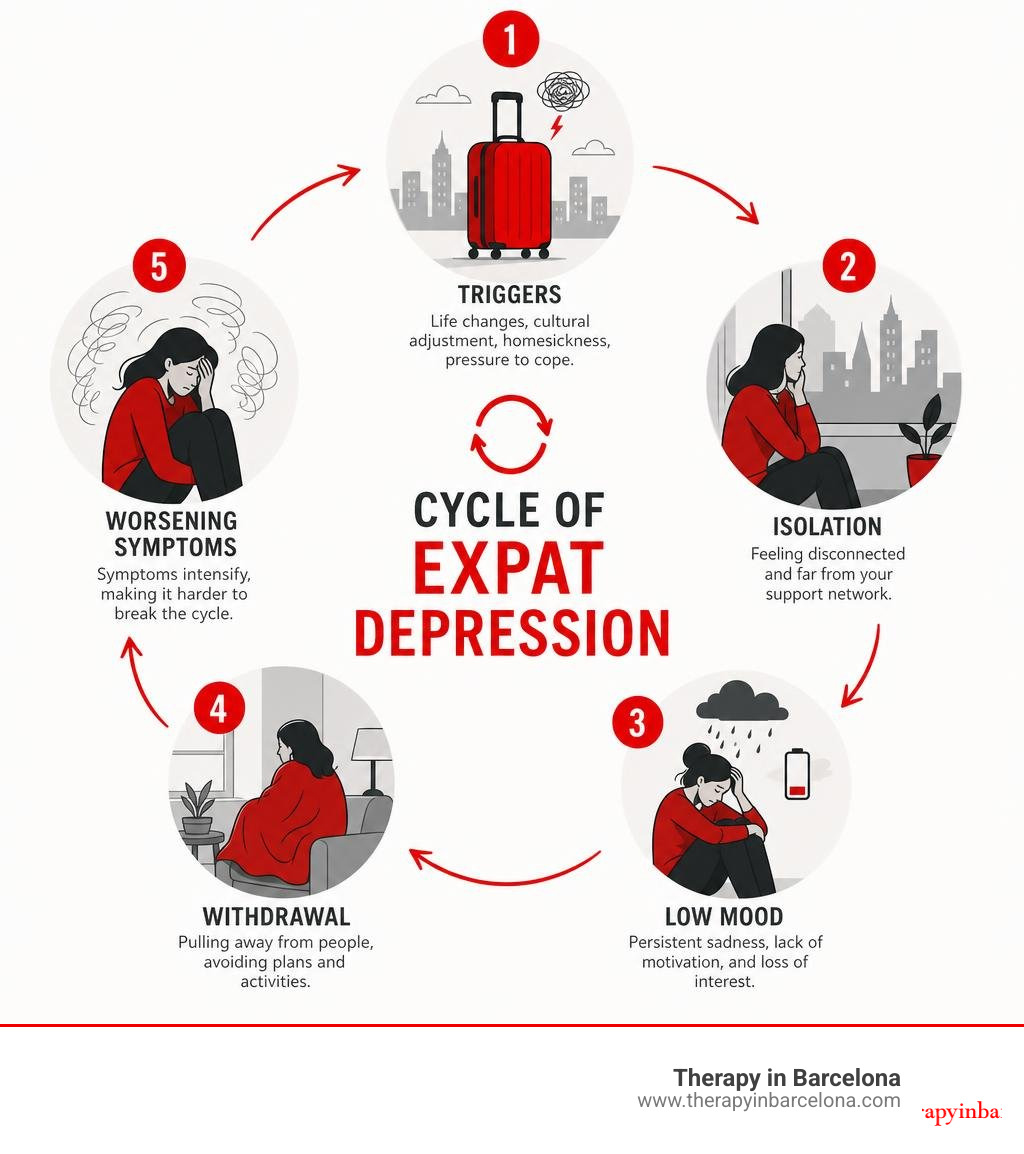
For people living abroad — in Barcelona, Valencia, Madrid, or elsewhere in Spain — depression can be harder to spot and even harder to address. The usual support networks are far away. Cultural and language barriers make it difficult to reach out. And the pressure to enjoy the “adventure” of expat life can make it feel shameful to admit that something is wrong.
This guide is here to help. Whether you’re newly arrived or have been living abroad for years, you’ll find practical, honest information on how to recognise depression, what therapy actually involves, and how to find the right professional for your situation.
Sadness vs. Clinical Depression: When to Seek a Therapist for Depression
It is entirely natural to feel down from time to time. Relocating to a new city, starting a new job, or adjusting to a different lifestyle can trigger temporary feelings of homesickness or sadness. But there is a distinct line between normal sadness and clinical depression.
Sadness is usually a temporary reaction to a specific event, like a difficult day at work or missing home. It passes, and it does not completely strip away your ability to experience joy or hope. Clinical depression, or a major depressive episode, is much heavier. It is persistent, lasting for at least two consecutive weeks, and it actively interferes with your ability to function in daily life.
Common signs that indicate it is time to consult a therapist for depression include:
- A persistent low mood or a feeling of empty numbness.
- Loss of interest or pleasure in activities you used to enjoy.
- Overwhelming fatigue and motivation challenges, where even simple tasks feel impossible.
- Sleep disruption, including insomnia or sleeping too much.
- Significant changes in appetite or weight.
- Feelings of worthlessness, excessive guilt, or helplessness.
- Difficulty concentrating, making decisions, or remembering things.
- Withdrawal from social connections and growing isolation.
To learn more about how these emotions present themselves, you can read about the physical and emotional Feelings of Depression.
These feelings can become particularly intense when you are living away from your home country. The challenges of cultural adaptation, language barriers, and the lack of a familiar support system can cause normal stress to spiral into something deeper. You can find detailed support on this in our guide, From Homesick to Hopeful: A Guide to Expat Depression Therapy.

Expat and Youth Depression Statistics
Depression can affect any age. In 2020, 8.4% of U.S. adults had a major depressive episode. Among 12- to 17-year-olds, the rate was even higher: about 17%, or 4.1 million young people. For international families in Spain, it is worth watching for changes in mood, sleep, school, or withdrawal, since teens may not always explain their distress clearly.
In real life, depression can look less dramatic than many people expect. An expat may move to Spain hoping for sunshine, adventure, and a fresh start, then find themselves staying home most weekends, feeling exhausted, and struggling to connect with colleagues or new friends.
They might feel guilty for not being happier in a place they worked so hard to reach. But when fatigue, low mood, and loss of interest persist beyond normal homesickness or adjustment stress, it may be time to speak with a therapist and get support rebuilding daily life.
How Evidence-Based Therapy for Depression Works
Therapy is not just about talking; it is a collaborative process that uses scientifically validated methods to help you understand your patterns, change unhelpful behaviours, and retrain your brain’s stress response. A professional therapist for depression will draw from several key modalities to tailor a plan to your unique needs.
Cognitive Behavioural Therapy (CBT)
CBT is one of the most widely researched and effective treatments for depression. It focuses on the relationship between your thoughts, feelings, and behaviours. When you are depressed, your mind often traps you in negative thought patterns (such as “I am a failure” or “Nothing will ever get better”).
CBT helps you identify these cognitive distortions, challenge their accuracy, and replace them with more balanced perspectives. It also uses behavioural activation to help you slowly reintroduce positive activities into your routine, rebuilding your energy and motivation levels step by step.
Acceptance and Commitment Therapy (ACT)
Instead of trying to force negative thoughts away, ACT teaches you to accept your feelings and thoughts without judgment, while committing to actions that align with your personal values. It uses mindfulness and psychological flexibility to help you live a meaningful life, even when pain or difficult emotions are present.
Interpersonal Therapy (IPT)
IPT is a short-term treatment that focuses on your relationships with others. Depression is often linked to interpersonal conflicts, unresolved grief, life transitions, or social isolation. IPT helps you improve your communication skills, build stronger support networks, and resolve relationship issues that may be contributing to your low mood.
Psychodynamic Therapy
This approach helps you explore how past experiences, early relationships, and unresolved conflicts influence your current emotional state. By gaining insight into these deeper patterns, you can understand the root causes of your depression and create lasting internal change.
Somatic and Advanced Approaches
Many therapists also integrate somatic therapy and Eye Movement Desensitisation and Reprocessing (EMDR) to address how trauma and stress are held in the body. If you want to explore this further, read about Beyond the Blues: How EMDR Can Lift the Weight of Depression.
Scientific research, such as the studies highlighted by Valencia College Counseling Services, consistently shows that evidence-based approaches like CBT and ACT are highly effective in reducing depression symptoms and preventing future relapses.
If you are preparing for your first session, you might find it helpful to review 7 Things to Talk About in Therapy for Depression to help structure your thoughts, or browse our resources under Tag: Therapy for Depression.
Choosing the Right Professional: Qualifications and Alternatives
When looking for a therapist for depression in Spain or elsewhere in Europe, navigating the local healthcare system and understanding professional credentials can feel overwhelming.
In Spain, you will encounter different types of mental health professionals:
- Psychology-Trained Practitioners / Counsellors: Professionals who have completed university degrees in psychology or counselling and offer therapeutic support, often specialising in expat care.
- Registered Psychologists (Psicólogos Colegiados): Licensed clinicians registered with the local official college of psychologists.
- Psychiatrists: Medical doctors who specialise in mental health and can prescribe medication.
For expats, finding an English-speaking therapist in Madrid or an English-speaking therapist in Barcelona is essential to ensure that language barriers do not hinder your healing process.

Comparing Your Mental Health Support Options in Spain
To help you make an informed decision, here is a mobile-friendly comparison of the primary mental health paths available to expats in Spain:
Option 1: The Spanish Public Health System (Seguridad Social)
- Accessibility: Free for residents registered in the social security system.
- Language: Almost exclusively in Spanish or regional languages (such as Catalan).
- Wait Times: Often very long, sometimes taking several months to see a specialist.
- Session Limits: Typically limited to short, infrequent appointments due to high demand.
- Best For: Basic care or those with no budget for private services.
Option 2: Large Online Therapy Platforms
- Accessibility: Highly accessible via apps, with quick automated matching.
- Language: Multilingual options are available.
- Privacy Concerns: Some platforms have faced scrutiny over data-sharing practices and selling user information.
- Specialisation: Often lacks expat-specific cultural understanding; you are matched with whoever is next in the database.
- Best For: General support on a highly flexible schedule.
Option 3: Specialised Private Expat Clinics (Like Therapy in Barcelona)
- Accessibility: Quick booking, with sessions available both in-person and online worldwide.
- Language: Multilingual care from therapists who are expats themselves.
- Privacy & Quality: Strict confidentiality with absolutely no data selling; private-pay model ensures high-quality, focused care.
- Specialisation: Bespoke matching process based on your unique expat journey, cultural background, and specific symptoms.
- Best For: Deep, culturally sensitive therapy tailored specifically to the international experience.
What to Look For in a Therapist for Depression
The single most important factor in the success of your therapy is the therapeutic rapport — the trust and connection you build with your therapist. You should feel safe, respected, and completely free from judgment.
For internationals, cultural sensitivity is just as vital. A therapist who understands the unique stresses of living abroad can help you address identity shifts, relationship strains, and feelings of isolation. Multilingual therapy is also a major asset; at Therapy in Barcelona, our team speaks English, and some of our therapists can offer support in German, French, Spanish, Afrikaans, Portuguese, Austrian-German, and Swiss-German.
If you are wondering what to bring to your sessions, explore our resources on Tag: What to Discuss in Depression Therapy. Whether you are looking for support in Barcelona, or searching for a professional through resources, taking the time to find a specialist who understands your cultural context is key.
How to Find a Therapist for Depression Near You or Online
If you are living in other hubs across Spain, such as Málaga, Sevilla, or Zaragoza, finding local English-speaking support can be challenging. You can search local expat networks or look up specialised directories, such as searching for professionals via Find Therapists in Las Palmas de Gran Canaria or exploring options through the Best Mental Health & Depression Treatment Centers in Marbella.
Fortunately, online therapy has proven to be just as effective as in-person sessions for depression. It allows you to access specialised, English-speaking support no matter where you are located. This is particularly beneficial for international students who face unique academic and cultural pressures. If you or a loved one are studying abroad, read our guide on From Homesick to Hopeful: Tackling Mental Health as an International Student.
Frequently Asked Questions About Finding a Therapist
How long does depression therapy typically take?
There is no single timeline for recovery, as it depends on the severity of your symptoms and your personal goals. However, clinical patterns show that many clients begin to feel a positive change within 6 to 8 sessions. Major, lasting improvements and deeper pattern shifts often occur within 15 to 20 sessions.
For chronic or severe depression, longer-term support may be recommended, with a strong focus on relapse prevention to help you maintain your well-being in the future.
How do insurance, sliding-scale fees, and out-of-pocket costs work?
Therapy in Barcelona operates as a private-pay service. While we do not bill insurance companies directly, many international health insurance plans offer out-of-network reimbursement. We can provide you with detailed invoices to submit to your provider.
To ensure therapy remains accessible, some of our therapists offer sliding-scale fees for those with genuine financial need; you are welcome to inquire about this during your initial contact.
Can therapy be combined with medication, and how is care coordinated?
Yes. For moderate to severe depression, a combination of psychotherapy and medication (such as antidepressants) often produces the best outcomes. Because our therapists are non-medical practitioners, they do not prescribe medication. However, they can collaborate closely with local English-speaking psychiatrists or your primary care doctor in Spain to coordinate your care, ensuring your treatment is safe, integrated, and holistic.
Conclusion: Taking Your First Step Toward Healing
Depression can make you feel completely isolated, but you do not have to carry this weight alone. Reaching out for professional support is a sign of strength, not weakness.
At Therapy in Barcelona, we have been providing a safe, compassionate sanctuary for the international community since 2011. Our practice was founded by Leigh Matthews, an Australian Psychologist and expat herself, who moved to Barcelona in 2011 and experienced the challenges of cultural adaptation first-hand. Guided by Leigh’s vision of professional excellence and deep empathy, our collaborative team of psychology-trained expat therapists is dedicated to helping you find hope and connection again.
Whether you are navigating bicultural relationships, family transitions, or the quiet weight of low mood, we are here to support you. Explore our articles on Tag: Depression Therapy to learn more.
If you are ready to take that first step, Book a Free Discovery Call today. We will listen to your story, understand your needs, and match you with the right therapist to accompany you on your journey toward healing.
(Note: If you are in an immediate mental health crisis, please contact your local emergency services or call 024 in Spain for the national suicide prevention hotline).
