Navigating Mental Health as an Expat in Spain

Living abroad brings a unique mix of excitement and challenges. If you’re an expat struggling with your mental health in Spain, you’re not alone. The sunshine and siestas may look idyllic on Instagram, but the reality often includes moments of isolation, confusion, and emotional strain.
Expat Mental Health Spain matters deeply to the growing international community throughout the country. While Spain offers beautiful landscapes and rich cultural experiences, navigating life as a foreigner can sometimes feel overwhelming – especially when you need mental health support.
Here’s what you need to know if you’re seeking guidance:
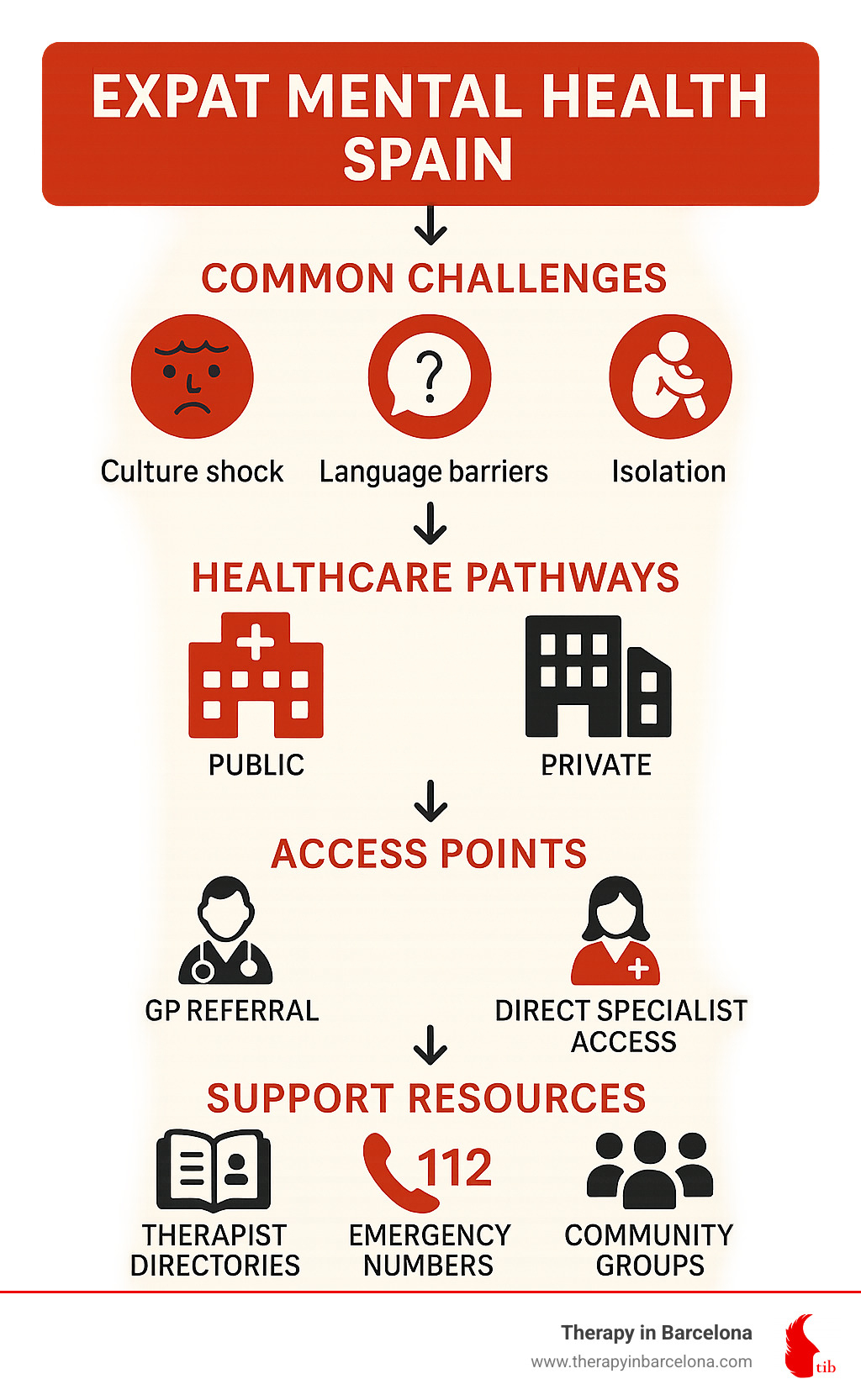
- Common challenges: 86% of expats report feeling isolated, with higher rates of anxiety and depression than in their home countries
- Healthcare options: Spain offers both public (SNS) and private mental health services, with therapy sessions costing €50-€100 privately
- Access pathways: Public care requires registration with social security and GP referrals; private care allows direct specialist access
- English resources: Various directories (ESHA, ANPIR) can help locate English-speaking therapists across Spain
- Emergency support: Call 112 for immediate crisis intervention or the Samaritans in Spain at 900 525 100
As one expat shared during our research: “Living abroad can make everything seem more difficult. Therefore, it’s important to celebrate even the smallest achievements.” This sentiment beautifully captures the double-edged nature of expat life – those daily victories alongside persistent challenges.
Spain’s mental healthcare system presents its own problems. The country allocates only 0.6% of its GDP to mental healthcare, significantly below the European average. With just 10.9 psychiatrists per 100,000 residents (one of Europe’s lowest ratios), finding appropriate care as a foreigner can sometimes feel like searching for a needle in a haystack.
The good news? Spain’s attitude toward therapy is generally positive, and resources do exist – particularly for those who know where to look. From public healthcare pathways to private English-speaking specialists, from community support groups to online therapy options, expats can find appropriate care throughout Spain.
This comprehensive guide will walk you through Spain’s mental health landscape, providing practical steps to access care, overcome barriers, and build the support network you need to thrive – not just survive – in your Spanish home.
Expat Mental Health Spain: Common Challenges & Stigma
Moving to Spain brings a whirlwind of emotions. While the Mediterranean sunshine and relaxed lifestyle draw many to these shores, the reality of expat life often includes mental health challenges that remain hidden beneath the surface of those picture-perfect Instagram posts.
Research paints a concerning picture: expats are twice as likely to experience anxiety compared to those living in their home countries. Even more troubling, they’re three times more likely to feel trapped or depressed. A staggering 86% of expats report feeling detached or alone during their time abroad.
“It is not a question of to be or not to be. It’s a question of to root oneself or not to root oneself,” explains Vera Hilb, a therapist experienced with internationals. This observation captures the existential challenge many face – the struggle to establish authentic belonging in a new country.
What many newcomers experience has been termed “Expat Syndrome” – an umbrella term for the emotional and psychological struggles that arise from cultural dislocation. You might recognize it as intense homesickness, persistent anxiety about daily interactions, feelings of isolation despite being surrounded by people, identity confusion, or difficulty forming meaningful connections.
As Claudia Ros Tusquets, another therapist who works with expatriates, notes: “There are a lot of adaptation issues that may be common among all expats when moving to a place with a new language, customs and culture.”
What Makes Expat Mental Health Spain Unique?
Spain presents specific challenges that can intensify the typical expat adjustment difficulties:
Language barriers create a fundamental obstacle. While many Spaniards in tourist areas speak some English, navigating healthcare, bureaucracy, and daily life often requires Spanish proficiency. In regions like Catalonia, Valencia, and the Basque Country, local languages add another layer of complexity.
Double anxiety is a common experience – the normal stress of a situation (like visiting a doctor) compounded by the stress of navigating it in a foreign language and system. What might be a simple task at home becomes an anxiety-producing challenge abroad.
The transient expat community, particularly in cities like Barcelona and Madrid, means just as you build friendships, people may move on. This creates a cycle of connection and loss that can be emotionally draining over time.
Regional variations mean the expat experience in sunny Andalucia differs significantly from life in cosmopolitan Barcelona or the traditional Basque Country. Cultural norms, pace of life, and local attitudes toward foreigners vary widely throughout Spain.
As one British expat in Barcelona shared: “It is a very difficult city in which to integrate. It’s an easy city to come and live in for a while, but it’s difficult to establish yourself and become part of the community.”
Stigma & Cultural Barriers in Expat Mental Health Spain
Despite Spain’s generally positive attitude toward therapy, mental health stigma remains a significant barrier. This stigma takes different forms across Spanish society:
Traditional views persist, especially in more rural areas, where mental health issues may still be viewed as character weaknesses rather than legitimate health concerns.
Machismo attitudes, though evolving, can discourage men from acknowledging emotional struggles or seeking help. This cultural expectation of strength and stoicism can leave male expats feeling particularly isolated when facing difficulties.
Regional differences in attitudes toward mental health create an uneven landscape of acceptance. Larger cities typically offer more progressive views, while smaller communities may hold more traditional perspectives.
Expat-specific hesitation adds another layer of complexity. Many internationals fear seeking help might signal they’re “failing” at expat life or worry that therapists won’t understand their unique cultural context.
The more serious the disorder, the greater the stigma tends to be in Spain. This can delay or prevent help-seeking, which is particularly problematic given that Spain lacks a national suicide prevention program, despite suicide being a leading cause of unnatural death with 7.6 deaths per 100,000 people.
For expats, these cultural barriers combine with practical challenges like language differences and unfamiliarity with the healthcare system, creating significant obstacles to accessing appropriate mental health support. But understanding these challenges is the first step toward overcoming them – and finding the support you need to thrive, not just survive, in your Spanish home.
For more detailed information about mental health prevalence in Spain, you can review the official Spanish health statistics.
Navigating Spain’s Mental Healthcare System
Spain’s healthcare system consistently ranks among the world’s best, but finding your way through it as an expat – especially for mental health services – can feel like navigating a maze without a map. Understanding its unique structure is your first step toward getting the support you need.
The Spanish National Health System (Sistema Nacional de Salud or SNS) is decentralized across Spain’s 17 autonomous communities. This means significant regional differences exist in service availability, waiting times, and even coverage details – what’s true in Barcelona might not apply in Seville.

Public Pathway Step-by-Step
The public healthcare route offers free or low-cost care for those properly registered, but follows a specific pathway that requires patience:
First, you’ll need to register for residency (empadronamiento) at your local town hall (ayuntamiento). Bring your passport, NIE (foreigner ID number), and proof of address – this is your entry ticket to Spain’s healthcare system.
Next, obtain your health card (Tarjeta Sanitaria Individual or TSI). After registering with Social Security (TGSS), visit your assigned health center with your documentation. This little card becomes your passport to healthcare services.
Your journey for mental health support begins with a visit to your GP (médico de cabecera). This general practitioner is the gatekeeper to all specialized services in the public system. You’ll need to explain your symptoms, receive an initial assessment, and potentially get medication. If needed, your GP will provide that all-important referral to specialized mental health services.
Following referral, you’ll attend your community mental health center where you’ll be assigned to a psychiatrist or psychologist. Here you might receive further assessment, medication management (from psychiatrists), and therapy sessions – though these are typically less frequent than weekly.
“The public system is comprehensive but slower,” shared one British expat in Madrid. “I waited three months for my first appointment with a specialist after my GP referral. But once I was in the system, the care was excellent.”
The public system has remarkable strengths: it’s free or very low-cost, staffed by well-trained professionals, offers comprehensive coverage for severe conditions, and doesn’t discriminate based on pre-existing conditions.
However, challenges include those infamous long waiting lists (often 1-3 months for initial specialist appointments), limited therapy sessions, few English-speaking providers, and significant regional variations in quality and availability.
Private Pathway & Regional Variation
For many expats, private mental healthcare offers advantages that outweigh the additional cost:
You can book directly with specialists without GP referrals – no gatekeepers here. Appointments are typically available within days rather than months, and finding English-speaking providers is much easier in the private sector.
Private care also offers greater consistency, with weekly therapy sessions being standard, unlike the often sporadic scheduling in the public system. Perhaps most importantly, you can choose your provider based on specialty, approach, and personal fit.
Private therapy sessions typically cost between €50-€100 per session, with psychiatrist consultations ranging from €80-€150. Many private insurance plans cover a portion of these costs.
Regional variations across Spain significantly impact your experience. Madrid and Barcelona offer the highest concentration of English-speaking mental health professionals and specialized services. Coastal areas with large expat communities (Costa del Sol, Valencia, Alicante) typically have good English-language options but fewer specialists.
Rural areas present the greatest challenges for accessing specialized mental health care, particularly in English. And historically, Andalucia has had longer public system waiting times compared to regions like Catalonia or the Basque Country.
As a Valencia-based expat noted: “I found excellent English-speaking therapists in the city center, but friends living in smaller towns nearby struggled to find similar resources. It really depends on where you’ve settled.”
At Therapy in Barcelona, we understand these challenges intimately. As expats ourselves, we’ve navigated these systems and know how overwhelming it can feel, especially when you’re already struggling with mental health concerns. That’s why we’ve created a service specifically designed to match internationals with therapists who understand both the clinical aspects of mental health and the unique challenges of expat life.
For a comprehensive directory of mental health associations across Spain, visit the Confederación Salud Mental España website.
Accessing & Funding Your Care
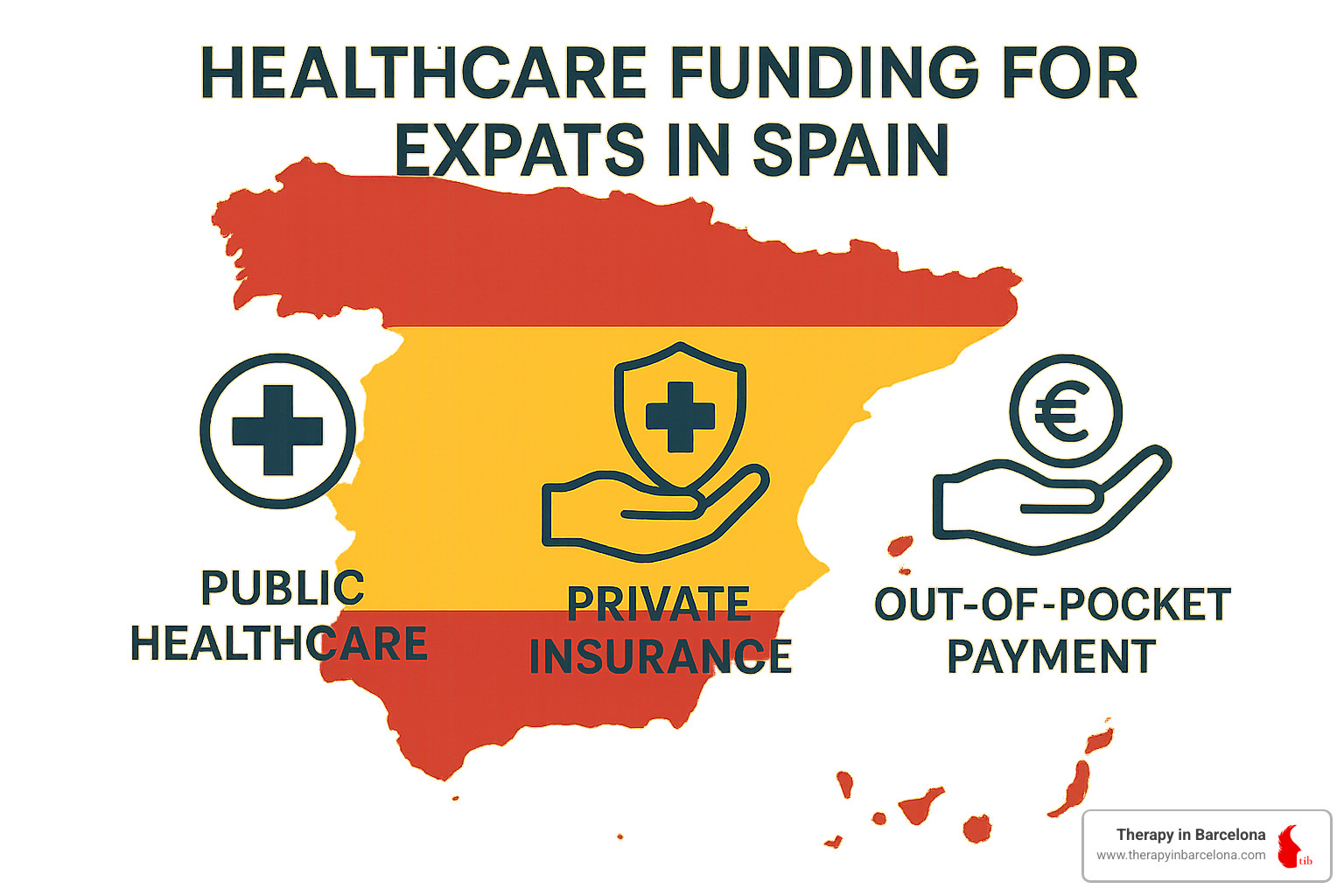
Understanding how to access and pay for mental health services is often one of the most confusing aspects of expat mental health Spain. Here’s a clear breakdown of your options:
Step-by-Step Access Guide for Expats
Navigating the Spanish healthcare system can feel like learning a new language—confusing at first, but manageable once you understand the basics.
For the public healthcare route, you’ll need to establish your eligibility first. EU citizens with an EHIC or GHIC card have temporary coverage, while employed residents contribute through social security. If you’re retired with an S1 form from your home country, you’re covered too. Self-employed folks paying autónomo contributions are also eligible, and legal residents can join after one year via the Convenio Especial (paying roughly €60-€157 monthly).
Once you’ve sorted eligibility, registration is your next step. Complete your empadronamiento at your local town hall—a crucial first step that establishes your residency in a specific area. Then register with Social Security (TGSS) to get your number, and finally visit your assigned health center to get your health card.
When you’re ready to access mental health services, the journey begins with your GP. As one British expat in Madrid shared: “My doctor was incredibly understanding when I explained my anxiety issues, though I did bring a Spanish-speaking friend to help with translation.” Your GP will assess your situation and, if appropriate, refer you to specialized mental health services. Be prepared for a wait—typically weeks to months—before your specialist appointment.
For those choosing the private route, you have more flexibility. You can pay directly for therapy sessions, use private insurance with mental health coverage, or mix both approaches for maximum flexibility. Many expats find a combination works best—using insurance for psychiatry appointments while self-funding regular therapy sessions.
Finding a provider privately is straightforward. Use directories like ESHA or ANPIR, ask for recommendations in expat Facebook groups, or contact private clinics directly. Services like Therapy in Barcelona can match you with a therapist based on your specific needs and preferences.
Before booking, verify important details like language capabilities (don’t assume all therapists at services other than Therapy in Barcelona speak English fluently), credentials, approach, session costs, and payment methods. If you’re using insurance, confirm coverage details to avoid unexpected expenses.
For more guidance on navigating change as an expat in Spain, check out Therapy in Barcelona’s guide to adaptation and growth.
Insurance Tips & Hidden Costs
Private health insurance can be a game-changer for accessing mental health services in Spain, but it comes with fine print worth understanding.
Many basic insurance plans limit therapy sessions to just 5-10 per year—barely enough for meaningful progress with most issues. As one American expat finded: “I thought I was fully covered, only to learn after my eighth session that I’d reached my annual limit. I had to pay out-of-pocket for the remaining months.”
Pre-authorization requirements can create delays, as some insurers require approval before beginning therapy. Network restrictions might limit you to providers within their specific network, which can be problematic if you’ve found a therapist you connect with who isn’t covered.
Even with insurance, copayments are common, meaning you’ll still pay a portion of each session’s cost. And perhaps most importantly, pre-existing conditions diagnosed before obtaining insurance may be excluded from coverage entirely.
Popular international insurance providers among expats include Cigna Global, Allianz Care, and BUPA, with monthly premiums typically ranging from €80-€300 depending on coverage level and age. Moving to Spain provides a guide to private health insurance for expats in 2025.
The bottom line? Read the mental health coverage details carefully before choosing a plan. The insurance that offers the lowest monthly premium might end up costing more if it severely limits mental health services.
For research on cost comparisons in healthcare systems, see the World Economic Forum’s report on productivity in healthcare.
Teletherapy & Online Counselling Options
The pandemic revolutionized how we access therapy, and online options have become a lifeline for the expat community in Spain.
Teletherapy offers remarkable accessibility advantages, allowing you to connect with mental health support from anywhere—perfect if you live in a rural area or smaller town where English-speaking therapists are scarce. As one American expat in a small coastal town noted: “Finding an English-speaking therapist locally was impossible, but online therapy gave me access to several qualified professionals who understood expat challenges.”
The language options are perhaps the biggest advantage for many. You can connect with therapists who speak your native language, regardless of location—something particularly valuable when discussing complex emotional issues.
Continuity of care is another significant benefit. If you relocate within Spain or travel temporarily, you can maintain the same therapeutic relationship without disruption. This consistency is invaluable during transitions, which are already stressful times.
Many expats also appreciate the scheduling flexibility of online therapy, which can accommodate work schedules or time zone preferences more easily than traditional in-person sessions.
Popular platforms serving the international community in Spain include global services like BetterHelp and Talkspace, though not all therapists on these platforms understand expat-specific challenges. Specialized services like Therapy in Barcelona offer online sessions specifically custom to expatriate experiences, with therapists who understand the unique complexities of international life.
Costs for online therapy vary widely from €40-€100 per session, with subscription plans on some platforms potentially offering savings.
The virtual therapy room has become a comfortable, accessible space for many expats in Spain. As one client shared: “Online therapy allowed me to speak with a therapist who really understood the cultural adjustment issues I was facing. I didn’t have to explain what it meant to be an expat—she already knew.”
Finding the Right Therapist as an Expat
Finding a therapist who truly understands the expat experience can dramatically improve your therapeutic outcomes. As Leigh Matthews, founder of Therapy in Barcelona and an Australian psychologist who became an expat herself in 2011, explains: “The connection and therapeutic alliance to one’s therapist is the most important factor for a successful outcome.”
When seeking support for Expat Mental Health Spain, it’s worth exploring several key resources. The ESHA (European Society for Health Associations) maintains a comprehensive directory of English-speaking health professionals throughout Europe, making it easier to find someone who speaks your language. Similarly, ANPIR (Asociación Nacional de Psicólogos Clínicos y Residentes), Spain’s national association of clinical psychologists, can help you find qualified professionals.
The International Therapist Directory offers a global database searchable by location and language, which is particularly useful if you’re looking for therapists who speak languages other than English or Spanish. Don’t underestimate the power of expat Facebook groups either – city-specific communities often share honest recommendations and personal experiences with local therapists.
Some expats prefer more personalized help in finding the right match. Services like Therapy in Barcelona offer custom matching services that connect you with the therapist best suited to your specific needs, taking into account your preferences, concerns, and therapeutic goals.
For a comprehensive overview of expat mental health resources, check out Therapy in Barcelona’s Complete Guide to Expat Mental Health Support & Resources.
Benefits of Working with an Expat-Specialised Therapist
While any qualified therapist can provide valuable support, working with someone who specializes in expatriate issues offers unique advantages that can make your therapeutic journey more effective.
Cultural understanding is perhaps the most significant benefit. An expat-specialized therapist understands the nuances of navigating between cultures and the profound impact this has on your sense of identity and belonging. Many therapists who work with expats are expatriates themselves, providing genuine empathy for your situation that goes beyond theoretical knowledge.
These specialists recognize the unique stressors that come with international life – from frustrating bureaucratic processes to the daily challenge of language barriers. They’re particularly skilled at helping you explore complex identity questions that arise when living between cultures, such as “Who am I now?” and “Where do I truly belong?”
Perhaps most importantly, an expat-specialized therapist offers validation and empowerment. They can normalize your experiences while helping you develop specific coping strategies for international life.
As one client shared: “My therapist understood immediately what I meant by ‘feeling like I don’t fully belong anywhere anymore.’ She didn’t pathologize it but helped me see it as a natural part of the expat journey.”
Where to Search & What to Ask
When evaluating potential therapists, it’s important to ask questions that help you determine whether they’re the right fit for your specific needs.
Regarding professional qualifications, ask about their credentials and where they trained. Confirm whether they’re licensed or registered in Spain or their home country, and inquire about any specific training or experience they have with expatriate issues.
For practical considerations, clarify what languages they work in and their level of fluency. This is crucial since therapy requires nuanced communication, and you’ll want to express yourself in the language you’re most comfortable with. Ask about their fees and whether they work with insurance, as well as whether they offer both in-person and online sessions for flexibility.
Understanding their therapeutic approach is also essential. Different modalities like Cognitive Behavioral Therapy (CBT), Acceptance and Commitment Therapy (ACT), or Internal Family Systems (IFS) might resonate differently with you. Ask how they typically structure therapy and, importantly, how they approach cultural differences in the therapeutic relationship.
Finally, don’t hesitate to ask expat-specific questions: Have they lived abroad themselves? What percentage of their clients are expatriates? How do they address culture shock and adjustment issues?
Many therapists offer an initial consultation (sometimes at a reduced rate) to assess fit before committing to ongoing therapy. This gives you a valuable opportunity to gauge your comfort level and determine if their approach aligns with your needs. Therapy in Barcelona offers two dedicated Intake Coordinators who are skilled in matching therapists to client needs, goals and preferences.
Leigh Matthews of Therapy in Barcelona emphasizes the importance of this matching process: “We take time to ensure we make the best match between therapist and client to improve the probability of positive therapeutic outcomes from the outset. We don’t just match a client with the next available professional.”
This thoughtful approach to matching reflects an understanding that therapy is a deeply personal journey, and finding the right guide for that journey can make all the difference in your expat mental health experience in Spain.
Self-Care, Community Support & Emergencies
Building resilience as an expat in Spain goes beyond professional therapy. It’s about creating a daily life that nurtures your mental health through self-care practices, meaningful connections, and knowing what resources are available when you need urgent support.
Building Your Support Network
When it comes to expat mental health Spain, isolation is often the greatest challenge. As therapist Vera Hilb wisely notes, “I do not believe in mental health on one’s own; I believe people have to be part of a community.”
Finding your people in a new country takes effort, but it’s incredibly rewarding. Expat groups and meetups provide ready-made opportunities to connect—whether through InterNations events, city-specific Facebook groups, or professional networking circles. These gatherings often become lifelines during the adjustment period.
Language learning does double duty for your mental health—it builds practical skills while creating natural opportunities for connection. Many expats find that language exchange events (intercambios) lead to genuine friendships with locals. As you stumble through new phrases together, bonds form through shared vulnerability and laughter.
Volunteering has been transformative for many internationals in Spain. “Working at an animal shelter gave me purpose during my first lonely months in Madrid,” shared one American expat. “I met Spanish volunteers who later introduced me to their friends, and suddenly I had a social circle.”

Sports and hobbies provide structured ways to meet like-minded people while caring for your wellbeing. Whether joining a hiking group exploring Catalonia’s trails, taking flamenco classes in Seville, or finding a football team in Valencia, shared activities create natural conversation starters and regular social contact.
Creating comfortable routines helps ground you in your new environment. Finding “your” café, park, or walking route provides a sense of belonging in small but meaningful ways. As therapist Marcial Arredondo observes, “We are predisposed to worry about things. This allowed us to survive evolutionarily, but now this is a problem for us.” Familiar spaces and routines help quiet that evolutionary anxiety.
For more comprehensive guidance on thriving abroad, visit Therapy in Barcelona’s Guide to Expat Mental Health.
Crisis & Helpline Directory
Even with good self-care and support networks, crisis moments can happen. Knowing where to turn during a mental health emergency is essential for expat mental health Spain.
For immediate emergencies, 112 works throughout Spain (similar to 911 in the US) and can dispatch emergency psychiatric services when needed. For health-specific emergencies, many regions use 061.
If you’re in crisis but not requiring immediate intervention, several English-speaking support lines can help:
Samaritans in Spain (900 525 100) offers free, confidential emotional support from 10am-10pm daily. Their English-speaking volunteers provide a compassionate ear when you’re struggling.
In Barcelona, the Barcelona Crisis Centre (93 227 05 97) operates 24/7 and can provide guidance during mental health emergencies.
For Spanish speakers, El Teléfono de la Esperanza (717 003 717) provides 24/7 crisis support, while the Teléfono Contra el Suicidio (911 385 385) offers specialized suicide prevention services.
Regional resources include Madrid’s Community Mental Health Emergency line (900 222 555), Andalucia’s Mental Health Information service (955 019 284), and Catalonia’s multilingual health advice line (061 CatSalut Respon).
One British expat shared: “I was so anxious I couldn’t talk to anyone I knew, and my family didn’t understand. I was nervous calling the helpline, but they were great—they let me talk and that helped. I just really needed someone to listen.”
If you’re experiencing severe crisis or thoughts of harming yourself, don’t hesitate to call 112 or go directly to the nearest hospital emergency department (urgencias). Emergency psychiatric care is available to everyone regardless of residency status—your wellbeing comes first.
Frequently Asked Questions about Expat Mental Health Spain
What services are free under the public system?
Spain’s public healthcare system (SNS) provides several mental health services at no cost for those properly registered:
GP consultations and initial assessments are always free and serve as your entry point to the system. Psychiatrist appointments and medication management are also covered, though wait times can be significant.
The public system typically offers limited psychologist sessions, though the number varies by region and is rarely weekly. Emergency psychiatric care is always available regardless of your status, and inpatient treatment is covered when medically necessary.
What’s generally not included are regular psychotherapy sessions (beyond the limited allocation), certain specialized therapies, and most non-emergency services for tourists or temporary visitors.
How do I find an English-speaking child psychologist?
Finding appropriate mental health support for children presents unique challenges for expat families. International schools can be excellent resources, as many have counselors or maintain lists of child specialists who work with their international students.
Family-focused expat groups on Facebook often share recommendations based on personal experiences. Your child’s pediatrician can usually provide referrals to child mental health specialists, even if the pediatrician doesn’t speak English themselves.
Specialized directories like ESHA and ANPIR allow filtering for professionals who work specifically with children. Services like Therapy in Barcelona offer dedicated child and adolescent therapy with English-speaking specialists who understand the unique challenges of Third Culture Kids.
Children under 15 in Spain receive more comprehensive public healthcare, which can sometimes include referrals to child psychologists when needed.
Can I keep the same therapist if I move within Spain?
Whether you can maintain therapeutic continuity after moving depends on several factors:
In the public system, changing health districts or regions typically means being reassigned to local providers. This lack of continuity is one of the system’s limitations.
With private in-person therapy, continuing with the same therapist is possible if you’re willing to travel, though this becomes impractical beyond a certain distance.
Online therapy offers the greatest flexibility—one of its major advantages for the mobile expat community. As long as your therapist is licensed to practice in Spain (or your home country for certain international arrangements), you can continue sessions regardless of where you move within Spain.
If you’re using private insurance, check whether your move affects network coverage or reimbursement rates, as these can vary by region.
As one Canadian expat shared: “When I moved from Barcelona to Valencia, continuing online sessions with my therapist provided crucial stability during a chaotic transition period. Having that one steady relationship made all the difference.”
Conclusion
Living abroad is a journey that tests your resilience while offering incredible opportunities for growth. Navigating Expat Mental Health Spain requires patience and self-compassion – qualities that are essential when building a new life far from home.
Throughout this guide, we’ve explored the rich mix of mental health resources available across Spain. From the structured pathways of public healthcare to the personalized approach of private specialists, from vibrant community support groups to convenient online therapy options – the key is understanding how to access what works best for your unique situation.
Seeking help isn’t a sign of weakness but rather an act of courage and self-care. As many therapists working with expats often say, “It takes a strong person to ask for help.”
When facing the beautiful yet sometimes overwhelming complexities of expat life in Spain, keep these thoughts close:
Be patient with yourself. Building a support system and finding the right care takes time – Spain operates at its own pace, and that’s part of its charm.
Celebrate small victories. As one expat beautifully put it, “Living abroad can make everything seem more difficult. Therefore, it’s important to celebrate even the smallest achievements.” Whether it’s successfully navigating a conversation in Spanish or finding your favorite local café, acknowledge these moments.
Balance is key. Work to integrate into Spanish culture while maintaining meaningful connections from home. This dual belonging is not just possible – it can become your superpower.
Make self-care non-negotiable. Incorporate mindfulness, physical activity, and meaningful routines into your daily life in Spain. The Mediterranean lifestyle actually encourages this balance!
Consider specialized support. Working with therapists who understand expatriate life, like those at Therapy in Barcelona who are expats themselves, can make all the difference in your journey.
Leigh Matthews, founder of Therapy in Barcelona, emphasizes this perfectly: “We understand the safe space you need in a challenging moment in a new place.” This culturally sensitive approach to therapy can transform your experience as an international in Spain.
Whether you’re dancing to flamenco rhythms in Andalucia, soaking up Mediterranean sunshine in Valencia, or navigating the cosmopolitan energy of Madrid, your mental wellbeing deserves attention and care. With the right support, your Spanish chapter can become not just a change of location, but a transformative journey of personal growth and findy.
For more information about expat therapy services in Barcelona, visit Therapy in Barcelona’s Expat Therapy page.