


The Essential First Steps: Visas, Residency, and Paperwork

Dreaming of emigrating to Spain from the UK? The allure of sun-drenched coasts and a relaxed lifestyle is as strong as ever. Many picture swapping grey skies for Mediterranean sunshine, and this dream is absolutely achievable, even with recent changes.
However, since Brexit, the journey has become more complex for UK citizens, who are now considered third-country nationals. This means new visa requirements and administrative steps are in place. This guide cuts through the confusion, offering clear advice to help you manage your move, from securing your visa to understanding healthcare and finding your new home.
A move abroad brings challenges, including cultural adjustments and language barriers. This guide addresses both the practical steps and the emotional journey, ensuring you have the information needed for a successful transition. With the right preparation, your Spanish adventure can be everything you hoped for.
Here’s a quick overview of the essential steps for moving to Spain from the UK post-Brexit:
- Secure the Right Visa: As a non-EU citizen, you need a long-stay visa for stays over 90 days.
- Obtain Your NIE & TIE: These crucial identification documents are your keys to Spanish life.
- Plan Your Finances: Demonstrate sufficient funds and understand tax implications.
- Arrange Healthcare: Ensure you have comprehensive health insurance coverage.
- Find Your Home: Research renting or buying property in your chosen Spanish location.
The days of simply hopping on a plane to settle in Spain are behind us. Since 1 January 2021, UK citizens planning on emigrating to Spain from the UK are treated as ‘third-country nationals’. This shift requires a formal approach to residency, starting with securing the right visa before you pack. Spanish bureaucracy can be a labyrinth, but with careful planning, you can manage it successfully. Your journey will involve obtaining a Spanish visa, your NIE number, and finally, the biometric TIE card.
Understanding Visa and Residency Requirements for UK Citizens
To live in Spain for more than 90 days in any 180-day period, you need a long-stay visa. There are several options, each with specific criteria. You apply through the Spanish consulates in London, Edinburgh, or Manchester. Processing can take several months, so start your application well in advance.
Here are the most common visa types for UK citizens:
- Non-Lucrative Visa: A popular choice for retirees or those with passive income. You must prove financial means of around €28,800 per year, plus €7,200 for each dependant. Comprehensive private health insurance from a Spanish provider is also required.
- Work Visa: If you have a job offer, your employer usually starts the work permit application. You must show the position couldn’t be filled by a Spanish or EU citizen.
- Digital Nomad Visa: This allows remote workers to live in Spain while working for non-Spanish companies. You need to show a minimum monthly income of around €2,000, with no more than 20% of it coming from Spanish sources.
- Golden Visa: This requires a significant investment, such as buying property worth €500,000 or more. It provides residency rights, but the Spanish government has announced plans to end this programme, so it’s crucial to check its current status.
- Student Visa: For study programmes longer than 90 days. You’ll need an acceptance letter from a recognised institution and proof of funds (around €750 per month).
- Family Reunification Visa: If you have a family member legally residing in Spain for at least a year, you may be able to join them, provided they can demonstrate sufficient earnings.
All visa types generally require proof of health insurance, a criminal record certificate, and a valid passport. UK documents must be officially translated into Spanish and apostilled. For details, check with the Spanish Consulate in London and the Spanish government’s information on residence permits.
The TIE Card and Padrón: Your Keys to Spanish Life
Once you arrive in Spain, two crucial steps await: getting your TIE card and registering on the padrón municipal.
- NIE (Número de Identificación de Extranjero): This is your Foreigner’s Identification Number, essential for almost any financial or administrative task in Spain. You can apply for it in the UK before you move or at a police station in Spain.
- TIE (Tarjeta de Identidad de Extranjero): This is your biometric Foreigner’s Identity Card, which serves as official proof of your legal residency. It displays your NIE, photo, and residence permit details. The TIE is the only residency document accepted for exemption from the upcoming EU Entry/Exit System (EES), simplifying future travel.
To get your TIE, you must book an appointment (cita previa) at an immigration office or police station. This can be challenging due to high demand, but persistence or help from a ‘gestor’ (an administrative consultant) can make it easier.
- Padrón Municipal: This is the municipal register at your local town hall (ayuntamiento). If you live in Spain, you must register. This ’empadronamiento’ is vital for accessing local services like healthcare and schools. You’ll often need a recent padrón certificate for other administrative tasks.
For more on this process, consult the Official guidance on registering your residency.
The Financials of Your Move: Costs, Banking, and Taxes
One appealing aspect of emigrating to Spain from the UK is the lower cost of living. While daily expenses might be lighter, the move itself requires careful financial planning. Understanding Spanish banking, tax obligations, and initial costs will help you settle in with confidence.
Budgeting for Your New Life: Cost of Living and Moving Expenses
Spain generally offers a more affordable lifestyle than the UK. Rent in Spanish cities is often 30% cheaper than in comparable UK locations, while groceries can cost about 20% less. These figures vary by location; Barcelona and Madrid are more expensive, while cities like Valencia, Málaga, and Alicante offer a lower cost of living with an excellent quality of life. For detailed comparisons, Numbeo’s cost of living data for Spain vs. UK provides helpful breakdowns.
Here’s a snapshot of average monthly costs comparing the UK to Spain:
Rent for a one-bedroom flat in the city centre: UK £1,031 vs. Spain £792
Utilities (electricity, heating, water, rubbish): UK £239 vs. Spain £111
Monthly transport pass: UK £70 vs. Spain £25
Three-course meal for two at a mid-range restaurant: UK £65 vs. Spain £42
While daily living is cheaper, your initial move involves significant expenses. Transporting your belongings from the UK to Spain typically costs between £2,000 and £7,500. Reputable international removal companies like PSS Removals and Pickfords can handle customs paperwork. Flights are generally affordable, but you should also budget for rental deposits (usually one to two months’ rent) and a financial buffer for unexpected costs.
Managing Your Money: Banking and Tax Obligations
Opening a Spanish bank account is a priority for paying rent and utilities. You’ll need your NIE number, passport, and proof of address (like a padrón certificate). You can open a non-resident account before you have your TIE card.
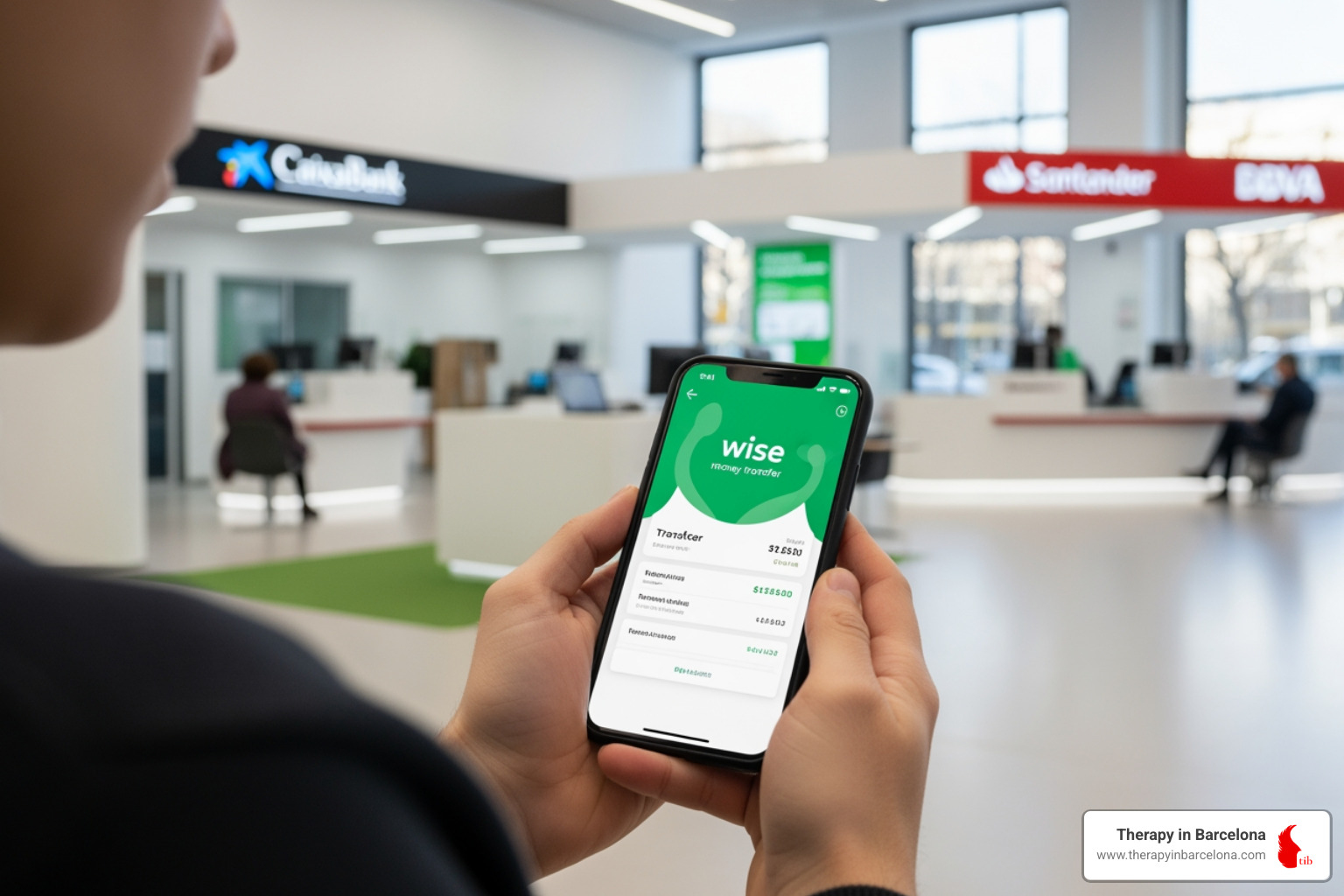
For international money transfers, services like Wise offer low-fee transfers at the mid-market exchange rate, which is often more cost-effective than traditional banks. This is useful for moving savings or receiving UK income.
Understanding your tax situation is crucial. Spain uses the 183-day rule to determine tax residency. If you spend more than 183 days in Spain in a calendar year, you become a Spanish tax resident and are liable for tax on your worldwide income. The UK-Spain Double Taxation Agreement prevents you from being taxed twice on the same income. You can review the details in the UK-Spain Double Taxation Treaty.
If your assets outside Spain exceed €50,000 in any category (bank accounts, property, investments), you must file an annual declaration called Modelo 720. This is an informational return, but penalties for failing to file can be severe. Spain also has a wealth tax (Impuesto sobre el Patrimonio) on worldwide net assets above a certain threshold, which varies by region.
Given the complexity, consulting with a gestor (an administrative consultant) or a tax adviser specialising in expat finances is highly recommended. They can handle your tax filings and help you stay compliant with Spanish regulations.
Setting Up Your Life in Spain: Work, Home, and Healthcare

Finding Work and Property as a UK Expat
Spain’s job market has opportunities if you know where to look. The tech sector is growing in cities like Barcelona and Madrid, tourism remains a major employer, and teaching English as a foreign language (TEFL) is always in demand. Networking within expat communities can be a great way to find work. You’ll need your NIE number to sign an employment contract.
To work for yourself, you can register as an ‘autónomo’ (self-employed). This involves registering with the tax and social security systems. The new Digital Nomad Visa is another great option for those working remotely for non-Spanish companies. Job portals like Expatica Jobs in Spain, Think Spain, and The Local are useful resources.
When it comes to housing, most people start by renting to get a feel for different areas. The process usually involves a security deposit of one to two months’ rent. If you’re buying, be aware that non-residents may find mortgage conditions are different, often with lower loan-to-value ratios offered than for residents. It’s essential to hire a solicitor who specialises in property law.
Popular locations for those emigrating to Spain from the UK include Barcelona for its vibrant city life, Valencia for a more relaxed pace, Málaga for year-round sun, Alicante for a family-friendly coastal lifestyle, and Madrid for its diverse job market. You can start your search on property portals like Idealista.com and Fotocasa.es.
Your Guide to the Spanish Healthcare System
Spain’s public healthcare system, the Sistema Nacional de Salud (SNS), is highly regarded. Once you are a resident and contributing to social security through employment, you and your dependants gain access. You’ll need to register at your local health centre.
UK pensioners can use an S1 form from the UK’s Overseas Healthcare Services to register for Spanish public healthcare, with the UK covering the costs.
However, many visa applications, especially the Non-Lucrative Visa, require you to have comprehensive private health insurance from a Spanish provider. This ensures you won’t be a burden on the state system. Many expats keep private insurance to reduce waiting times and access services like dental care, which may have limited public availability.
Your UK-issued EHIC or GHIC covers necessary treatment during temporary stays but is not a substitute for proper health insurance once you become a resident. For current information, consult the UK government guidance on healthcare in Spain.
Your Complete Guide to emigrating to spain from the uk
Beyond the initial setup, there are many practicalities to consider when emigrating to Spain from the UK, especially if you’re moving with family, pets, or managing pensions.

Emigrating to Spain from the UK with Family, Pets, and Pensions
Moving with family requires extra planning. Spain’s education system is compulsory from age six to sixteen, with public, private, and international schools available. For pets, they must be microchipped, have a rabies vaccination, and an Animal Health Certificate (AHC) from a UK vet. Check the Official rules for bringing pets to Spain for the latest details.
If you’re retiring, you can claim your UK state pension in Spain. It can be paid into a UK or Spanish bank account. For advice on managing your pension abroad, contact the International Pension Centre.
Practicalities of Expat Life: Driving, Social Security, and Emergencies
If you become a resident, you can use your valid UK driving licence for six months. After that, you must exchange it for a Spanish one without needing to take a test, thanks to a UK-Spain agreement. Book an appointment with the Dirección General de Tráfico (DGT). For details, see the Information on the driving licence exchange.
Your social security contributions (Seguridad Social) grant you access to benefits like public healthcare and a Spanish state pension if you work long enough.
For emergencies, the main number is 112, connecting you to police, ambulance, or fire services. Other direct numbers are 091 (police) and 061 (health emergencies). The ALERTCOPS app also provides direct communication with police.
Should you need to register life events like births or deaths, you’ll do so at the local civil registry (Registro Civil). If you ever decide to return to the UK, you’ll need to deregister with the Spanish authorities.
The Emotional Journey: Adapting to Your New Life in Spain

Dealing with Culture Shock and Building a Community
The first few months can feel disorienting. Everyday tasks take longer. Bureaucracy can be confusing. Even in Barcelona, Valencia, Málaga, Madrid, or Alicante, where many speak English, learning some Spanish will make life easier and more connected.
Join local and expat groups online and in person. The British Embassy in Spain’s page is useful for updates. Aim for a mix of expat and local friendships. Expect ups and downs. Patience and gentle routines (walks, calls with loved ones, a weekly café) help steady the transition.
Prioritising Your Mental Wellbeing as an Expat
You have options for support. Spain’s public system offers mental health care, though waits can be long. Large online platforms and local private practices are available too. Each route can help; the right fit depends on your needs, timing, language, and budget.
Therapy in Barcelona focuses on the international community. Founded in 2011 by Leigh Matthews, an Australian Psychologist in Barcelona since 2011, we’re a team of psychology-trained therapists who are also expats. We offer therapy in English and other languages such as German, French, Spanish, Portuguese, Afrikaans, Austrian-German and Swiss-German. We work with adults, couples, teenagers, international students, digital nomads, and families. Our personalised matching means we take time to pair you with a therapist whose approach fits your goals. We keep your data private and never sell it.
We draw on evidence-based approaches like Cognitive Behavioural Therapy (CBT) and Acceptance and Commitment Therapy (ACT), among others, and tailor them to your context and culture. Many clients tell us they feel seen not only as someone seeking help, but as a person making a brave change.
Therapy in Barcelona is a private-pay service, with some sliding-scale options. We offer sessions at our Barcelona offices (Calle Paris 162-164, 3o, 1a 08036) and online to expats worldwide. If you’d like support with your new life abroad, book a Free Discovery Call.
Frequently Asked Questions about Emigrating to Spain from the UK
How much money do I need to emigrate to Spain from the UK?
This depends on your visa. For a Non-Lucrative Visa, you must prove you have access to around €28,800 per year for one person, plus an additional €7,200 per year for each family member. Beyond the visa, you’ll need to budget for moving costs (flights, removals from £2,000 to £7,500), rental deposits, and initial setup expenses. It’s wise to have a financial buffer for any unexpected costs during the first few months.
Can I still move to Spain from the UK after Brexit?
Yes, absolutely. The main difference is that as a non-EU citizen, you must now obtain a long-stay visa before you move if you plan to stay for more than 90 days. The process involves more paperwork and planning, requiring you to provide proof of finances, health insurance, and a clean criminal record. It takes longer than before, but thousands of Brits successfully make the move each year. Start your application well in advance—six months or more is sensible—given processing can take time.
Can I work remotely in Spain for a UK company?
Yes, this is possible with Spain’s Digital Nomad Visa. It’s designed for non-EU citizens who work for companies located outside of Spain. To qualify, you must prove a stable income of around €2,000 per month from non-Spanish sources. The visa is initially valid for one year and can be renewed. If you live in Spain for more than 183 days a year, you will become a tax resident and must declare your worldwide income.
Ready for Your Spanish Adventure?
The move to Spain is a big step, full of excitement and its share of challenges. The admin, the culture shift, and the language all take energy. With support, routines, and patience, most people find their feet and build a life that fits.
If the emotional side feels heavy, you don’t have to handle it alone. Therapy in Barcelona has supported internationals since 2011 with culturally sensitive, evidence-based care and personalised therapist matching. We see clients in person in Barcelona and online worldwide.
If you’d like support, book a Free Discovery Call.
