


Building a Strong Foundation: Essential Premarital Counseling Questions

Premarital counseling questions are structured conversation prompts that help engaged couples explore critical aspects of their relationship before marriage. If you’re looking for the most important questions to discuss before saying “I do,” here are the key categories:
| Category | Essential Questions |
|---|---|
| Life Goals & Values | Why are we getting married? Where do we see ourselves in 10/20/30 years? |
| Finances | How will we manage money? Joint or separate accounts? How will we handle debt? |
| Children & Parenting | Do we want children? How many? What are our parenting philosophies? |
| Religion & Spirituality | How important is faith in our lives? How will we practice our beliefs? |
| Intimacy & Sex | What are our expectations around physical intimacy? How will we maintain connection? |
| Conflict Resolution | How do we handle disagreements? What’s our process for resolving issues? |
| Roles & Responsibilities | How will we divide household duties? What are our expectations of each other? |
Getting engaged is exciting, but it’s also the perfect time to have honest conversations about your future together. Whether you’re planning a wedding in Barcelona or anywhere else in the world, discussing these topics now can save you from painful surprises later.
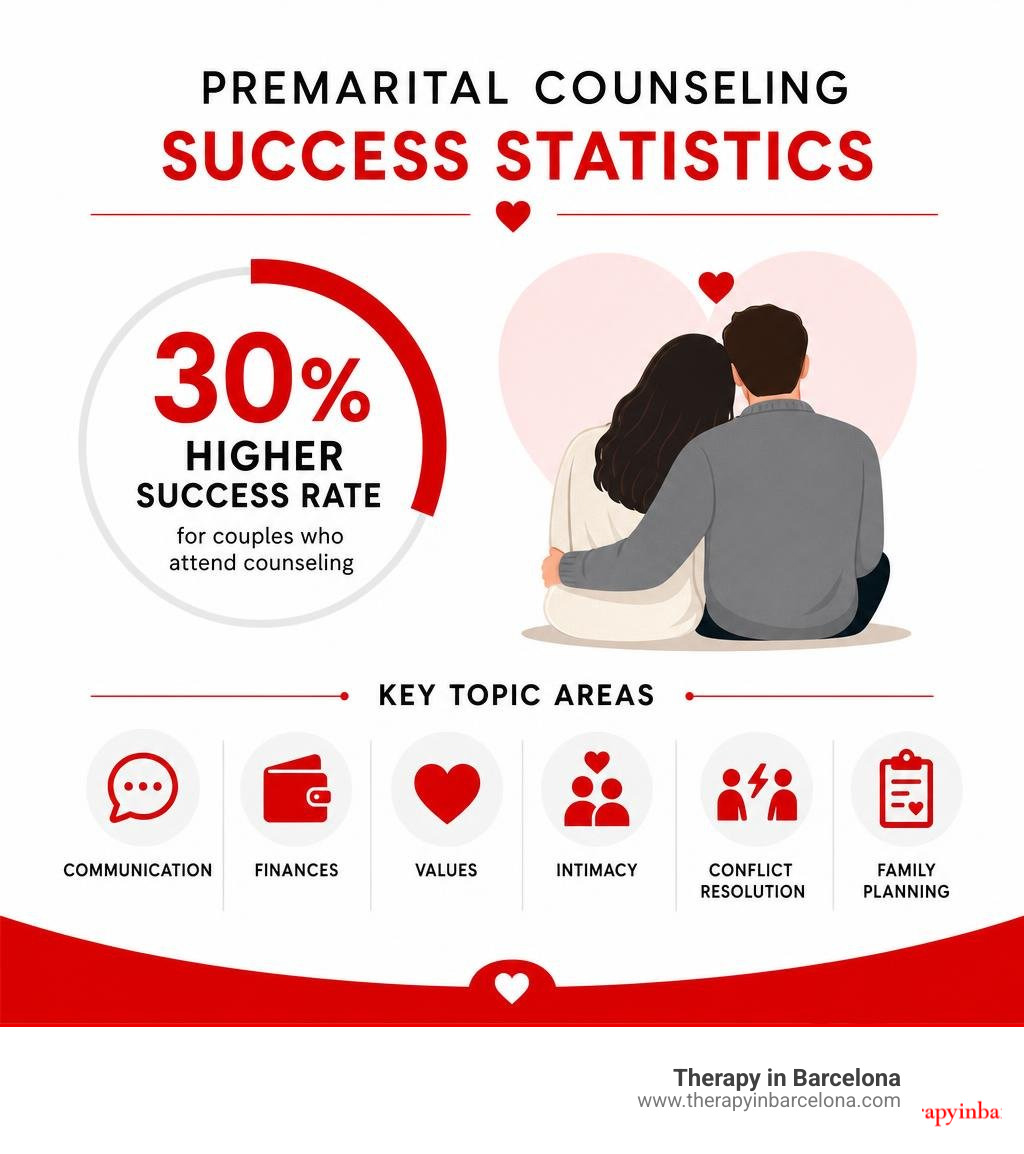
Did you know that couples who participate in premarital counselling have a 30% higher marital success rate than those who don’t? This statistic isn’t surprising when you consider what premarital counseling actually does: it creates a safe space for couples to align their expectations, practice healthy communication, and identify potential challenges before they become problems.
For international couples or expats living abroad, these conversations become even more important. Cultural differences, language barriers, and being far from family support systems can add extra layers of complexity to a marriage. Having structured discussions about these factors can help you steer your unique circumstances together.
Why read this guide?
This guide offers a comprehensive overview of the most important premarital counseling questions to discuss with your partner before marriage. It’s particularly valuable for:
- Couples seeking to build a solid relationship foundation
- Partners wanting to align expectations and avoid future conflicts
- Multicultural or international couples navigating additional complexities
- Individuals who want to approach marriage with realistic expectations
- Couples who may not have access to formal counseling but want to benefit from the process
As an expat-focused therapy service, we understand the unique challenges that international couples face. This guide integrates both universal relationship principles and culturally-sensitive considerations that are especially relevant for couples building a life together abroad.
Why Premarital Counseling Matters
Premarital counselling isn’t just a formality before your wedding day—it’s an investment in your relationship’s future. Research shows couples who participate in premarital counselling experience a 31% reduction in divorce rates compared to those who don’t. That’s a significant return on your emotional investment!

What makes premarital counseling so effective? It builds strong communication, practical conflict-resolution skills, and a deeper friendship—qualities that, according to relationship research by John Gottman, help couples navigate life’s challenges together.
Premarital counseling creates what Gottman calls “emotional safety”—an environment where both partners feel secure enough to be vulnerable and honest about their needs, fears, and expectations. This safety becomes the foundation upon which a lasting marriage can be built.
For international couples and expats, this preparation takes on even greater importance. Living abroad often means facing additional stressors like cultural adjustment, language barriers, and distance from family support networks—all factors that can strain even the strongest relationships.
Goals of counseling
Effective premarital counseling questions help accomplish several key objectives:
Creating a shared vision for the future allows couples to align on what they want their life together to look like—from career aspirations to where you’ll live and how you’ll celebrate holidays.
Identifying and addressing value differences helps uncover areas where your perspectives differ and find workable compromises before they become conflicts.
Developing decision-making tools establishes processes for how you’ll approach major life decisions together, whether it’s about finances, family planning, or relocations.
Building stress management strategies prepares you to handle inevitable challenges as a team rather than as adversaries.
Fostering realistic expectations helps partners understand that marriage requires ongoing work and commitment—the wedding is just the beginning of your journey together.
Typical session flow
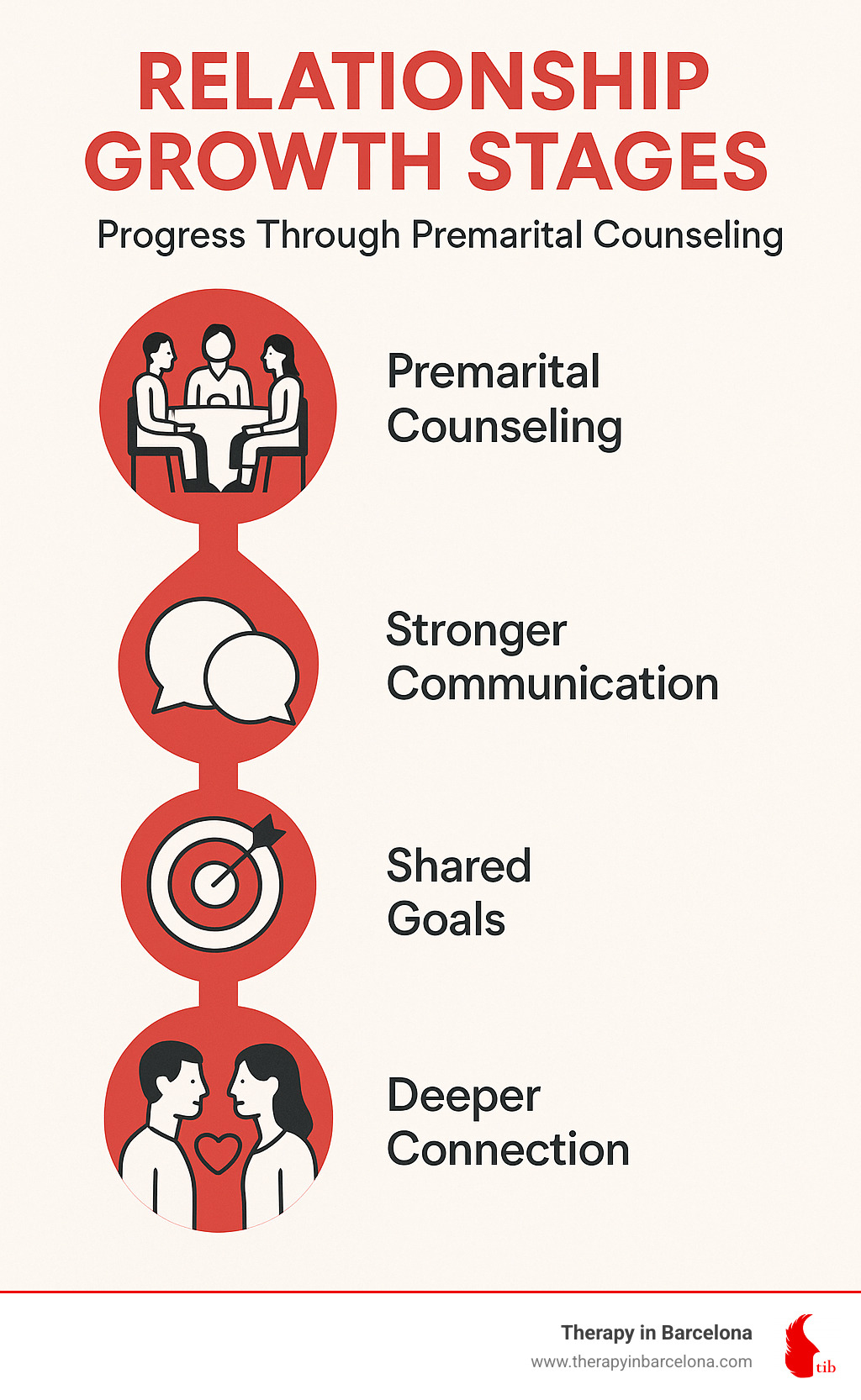
Most couples attend between 5-10 premarital counseling sessions, typically scheduled weekly or bi-weekly. Here’s what the process often looks like:
- Initial assessment: Your counselor gets to know you as a couple and your relationship history
- Topic exploration: Structured discussions around key areas like finances, children, intimacy, and family dynamics
- Skill building: Learning communication techniques and conflict resolution strategies you can use for a lifetime
- Homework assignments: Practicing new skills and continuing important discussions between sessions
- Integration: Bringing insights together and creating actionable plans for your future
While the structure may vary between secular and faith-based programs, the core elements remain similar:
| Secular Programs | Faith-Based Programs |
|---|---|
| Focus on relationship skills and compatibility | Include spiritual dimensions and religious teachings |
| Led by licensed therapists or counselors | Often facilitated by clergy or religious counselors |
| Emphasis on psychological research | Integration of religious texts and principles |
| Typically 5-8 sessions | May include more sessions (8-12) |
| Often includes personality assessments | May include faith-based assessments |
Essential Premarital Counseling Questions
Let’s explore the heart of what makes premarital counseling so valuable – the premarital counseling questions that spark meaningful conversations between you and your partner. These carefully crafted questions help you steer important topics before saying “I do,” creating a roadmap for your journey together.

Before diving into these questions, I’d recommend setting some ground rules with your partner. Commit to complete honesty, even when conversations become uncomfortable. Listen without interrupting or becoming defensive. Approach differences with curiosity rather than judgment. Understanding, not “winning,” is the goal.
Premarital Counseling Questions on Life Goals
Your shared vision for the future forms the foundation of your marriage. Consider discussing:
- Why marriage matters to you – What does this commitment mean to each of you?
- Your sense of purpose – What gives your life meaning, both individually and as a couple?
- Future living plans – Where do you see yourselves in 5, 10, and 20 years?
- Career aspirations – How important is professional advancement to each of you?
- Retirement dreams – What do you envision for your later years together?
- Bucket list experiences – What trips do you hope to share?
- Personal growth – How will you support each other’s development and dreams?
- Legacy hopes – What mark do you want to leave on the world?
For international couples, you’ll want to explore additional questions: Which country do you see as your long-term home? How will you balance time between your respective home countries? How will you handle visa challenges? What strategies will you use to maintain connections to both cultures?
Finance & Money Management
Financial disagreements consistently rank among the top predictors of divorce, making these premarital counseling questions particularly crucial:
- Banking arrangements – Should you have joint accounts, separate accounts, or a combination?
- Budgeting approach – How will you manage monthly expenses, savings, and discretionary spending?
- Debt disclosure – What financial obligations do you each bring to the marriage?
- Money personalities – Is one of you more of a spender and one more of a saver?
- Financial autonomy – How much can each of you spend without consulting the other?
- Financial goals – What are you saving for (home ownership, retirement, travel)?
- Family support – How will you handle financial assistance for extended family?
- Emergency planning – What’s your strategy for building a safety net?

According to research published in The Atlantic, financial conflicts are among the most common and challenging issues couples face. Understanding your financial compatibility before marriage can help prevent these conflicts from arising.
Children & Parenting Styles
Few decisions impact a marriage more profoundly than those related to children:
- Family planning – Do you want children? If so, how many and when?
- Alternative paths – What are your views on adoption, fostering, or fertility treatments?
- Childcare division – How will you share parenting responsibilities?
- Parenting approaches – What discipline styles do you each envision?
- Values transmission – What principles do you want to instill in your children?
- Educational choices – How will you approach schooling decisions?
- Family traditions – What rituals do you want to establish or continue?
- Relationship balance – How will you nurture your partnership while parenting?
For multicultural couples, consider: Which languages will you speak with your children? How will you help them develop cultural identities that honor both backgrounds? What implications might dual citizenship have for your family?
Religion & Spirituality
Spiritual beliefs often shape our core values and daily practices:
- Faith importance – How central is religion/spirituality in each of your lives?
- Shared practice – Do you follow the same tradition, and if not, how will you steer differences?
- Community involvement – How actively do you want to participate in religious communities?
- Home practices – What spiritual rituals do you want to maintain in your daily life?
- Holiday celebrations – How will you honor religious occasions and milestones?
- Children’s education – If you have children, how will you approach their spiritual upbringing?
- Decision influence – How might your beliefs shape major life choices?
- Mutual respect – How will you honor each other’s spiritual journey if they differ?
For more guidance on discussing spirituality and religion in relationships, Zencare offers a helpful resource that can guide these sensitive conversations.
Roles, Responsibilities & Domestic Life
Your day-to-day living arrangements significantly impact relationship satisfaction:
- Gender expectations – What assumptions do you each bring about roles in marriage?
- Household division – How will you share chores and responsibilities?
- Living standards – What cleanliness and organization levels matter to each of you?
- Work-life balance – How will you juggle career demands with family time?
- Home management – Who will handle which aspects of running your household?
- Personal space – How much alone time does each of you need to thrive?
- Home environment – How will you make decisions about your living space?
- Family rituals – What daily or weekly routines do you want to establish?
- Holiday planning – How will you divide time between extended families?
- Relocation decisions – How would you handle job offers in different locations?
For expat couples, consider how you’ll adapt domestic expectations to fit local cultural norms, manage household tasks if you don’t speak the local language fluently, and create a sense of “home” in a foreign country.
Intimacy & Sexual Expectations
Physical and emotional connection forms a vital component of a healthy marriage:
- Physical intimacy – What are your expectations regarding frequency?
- Affection styles – How do you each prefer to give and receive love?
- Love languages – Do you express love through words, time, touch, service, or gifts?
- Communication comfort – How openly can you discuss your needs and preferences?
- Connection maintenance – How will you stay close during stressful periods?
- Relationship boundaries – What limits do you want to establish with others?
- Desire differences – How will you handle mismatched levels of interest?
- Emotional closeness – What helps you feel deeply connected beyond physical intimacy?
- Relationship freshness – How will you keep your connection vibrant over time?
- Adapting together – How will you steer changes in your intimate life as you age?
These premarital counseling questions aren’t meant to be intimidating – they’re invitations to deeper understanding. By exploring them together in a spirit of openness and care, you’re not just preparing for your wedding day; you’re building the foundation for a lifetime of connection and growth together.
For more detailed guidance on essential premarital topics, check out our comprehensive resource on Setting the Stage: Must-Discuss Premarital Counseling Topics.
Navigating Hot-Button Topics with Confidence
Some premarital counseling questions touch on particularly sensitive areas that require careful navigation. How couples discuss these topics can be as important as the conclusions they reach.
Conflict Resolution and Communication Styles
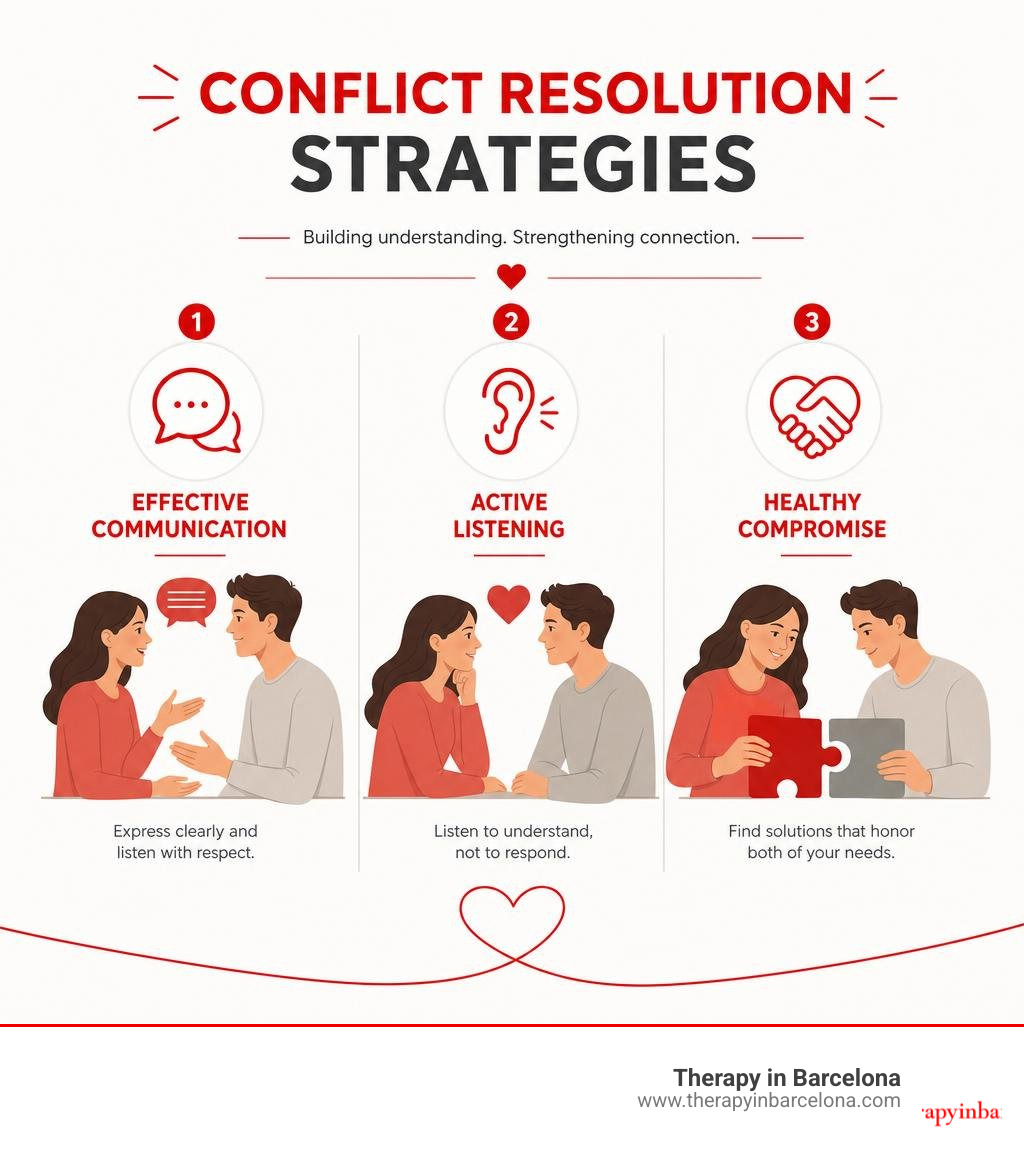
Understanding how you’ll handle disagreements is crucial for long-term success:
- How did your families handle conflict when you were growing up?
- What are our current patterns when we disagree?
- What behaviors feel disrespectful or hurtful during arguments?
- How can we signal when we need a time-out from a heated discussion?
- What’s our process for revisiting unresolved issues?
- How will we apologize and reconcile after conflicts?
- What topics tend to trigger strong emotional responses for each of us?
- How can we express needs without criticism or blame?
- What helps each of us feel heard and understood?
- How will we make decisions when we strongly disagree?
For more information on the Gottman Method and how it can help resolve conflicts, you can explore Zencare’s resource on the Gottman Method.
Extended Family Relationships
In-law and extended family relationships can significantly impact a marriage:
- What boundaries will we set with our families of origin?
- How will we handle unsolicited advice or criticism from family members?
- How often will we visit or host extended family?
- How will we divide holidays and special occasions?
- What role will our parents play in our marriage and potential parenting?
- How will we respond if family members don’t approve of our decisions?
- How much information about our relationship will we share with family?
- How will we handle financial requests or expectations from extended family?
- What family traditions do we want to maintain or modify?
For international couples, these questions take on additional dimensions:
- How will we maintain connections with family across distance and time zones?
- How will we help our families understand and respect cultural differences?
- What language barriers might exist, and how will we address them?
Crisis Planning and Resilience
Preparing for potential challenges can strengthen your ability to face them together:
- How will we support each other during health crises?
- What are our views on end-of-life care and decisions?
- How will we handle potential job loss or financial setbacks?
- What is our plan if one of us faces mental health challenges?
- How will we approach major life transitions (moves, career changes, etc.)?
- What support systems can we rely on during difficult times?
- How will we maintain our relationship during prolonged stress?
- What self-care practices are important to each of us?
- How will we check in with each other when life gets overwhelming?
Tips for Discussing Sensitive Premarital Counseling Questions
When tackling difficult topics, these strategies can help maintain productive conversations:
Choose the right time and setting: Discuss sensitive topics when you’re both calm and have sufficient time, not when you’re tired, hungry, or rushed.
Use “I” statements: Express your feelings using “I feel…” rather than “You always…” or “You never…” statements that can trigger defensiveness.
Practice active listening: Repeat back what you’ve heard to ensure understanding before responding.
Take breaks when needed: Agree that either person can call a time-out if the conversation becomes too heated, with a commitment to revisit the topic later.
Focus on understanding, not winning: The goal is mutual understanding, not convincing your partner that you’re right.
Acknowledge emotions: Recognize that strong feelings are normal when discussing important topics, and create space for those emotions.
Express appreciation: Acknowledge your partner’s willingness to engage in difficult conversations.
Making Agreements Stick
Once you’ve discussed these important topics, consider these strategies for maintaining your agreements:
- Document key decisions and revisit them periodically
- Schedule regular “relationship check-ins” to discuss how agreements are working
- Remain flexible and willing to adjust as circumstances change
- Consider annual couples retreats or “state of the union” conversations
- Seek professional support if you find yourselves struggling with the same issues repeatedly
Getting the Most from Your Premarital Counseling Sessions
Whether you’re working with a therapist or exploring these premarital counseling questions on your own, there are several ways to make this process truly transformative for your relationship.

Finding the Right Support
Finding the right guide for your premarital journey can make all the difference. If you’re an international couple in Barcelona or elsewhere, consider these key factors:
Look for a therapist match that resonates with your unique circumstances. For multicultural couples, having someone who understands the complexities of blending different backgrounds is invaluable. The approach matters too – whether it’s Gottman Method, Emotionally Focused Therapy, or another framework, research what feels right for your relationship style.
“At Therapy in Barcelona, we take special care to match couples with therapists who understand their unique circumstances,” explains Leigh Matthews, the founder. “For international couples especially, having someone who gets the nuances of expat life can transform the counselling experience.”
Consider whether in-person or online sessions would work better for your situation. Many couples find that online therapy offers flexibility, especially if you have demanding schedules or travel frequently. Others prefer the intimacy of face-to-face conversations for these important discussions.
Answering Premarital Counseling Questions Honestly
The true value of premarital counseling lies in your willingness to be honest – both with your partner and yourself. This isn’t always easy, but it’s essential for building a strong foundation.
Creating psychological safety is the first step. Agree that all feelings and perspectives deserve respect, even when they’re difficult to share or hear. Practice vulnerability by sharing your authentic thoughts, especially when they feel risky. Perfect alignment isn’t the goal – understanding each other is.
Try to avoid becoming defensive when your partner shares concerns. Instead, listen with genuine curiosity rather than judgment. Balance honesty with compassion – truth-telling doesn’t mean being harsh or unkind.
Session Logistics & Expectations
If you’re working with a professional counselor, here’s what you can typically expect:
Most premarital counselling sessions last between 50-90 minutes. In Barcelona, couples therapy sessions typically range from 98-125 Euros. You may be asked to complete assessments or questionnaires between meetings, and what you share remains confidential between you and your therapist. Most programs include homework exercises to practice between sessions.
If you’re exploring these questions on your own, create the right environment for success. Set aside dedicated, uninterrupted time for these conversations in a comfortable, neutral space. Taking notes on key insights and agreements can help you remember important points. Follow up on unresolved questions in future conversations.
If you encounter significant roadblocks in your discussions, consider booking even a single professional session to help steer particularly challenging topics. Sometimes having a skilled facilitator can make all the difference in changing potential conflict into deeper understanding.
The goal isn’t perfect agreement, but rather developing a shared understanding that honors both of your perspectives. With honesty, compassion, and the right support, these conversations can become the foundation of a thriving marriage.
Frequently Asked Questions about Premarital Counseling Questions
How many sessions do most couples need?
Most couples find that 5-10 premarital counseling sessions give them the space they need to explore important topics thoroughly. There’s no magic number that works for everyone, though. Some couples with strong communication skills might need fewer sessions, while others working through complex issues might benefit from more.
What matters most isn’t the quantity of sessions but the quality of the discussions you’re having and your willingness to engage honestly with the premarital counseling questions.
How do we handle big value clashes uncovered by these questions?
Finding significant differences in values doesn’t automatically mean you’re incompatible. In fact, these findies can become opportunities for deeper understanding and growth as a couple.
When you encounter important differences, try this approach:
First, seek to understand what’s beneath your partner’s perspective. Our values are shaped by our experiences, family backgrounds, and personal journeys. Listen with curiosity rather than judgment.
Next, identify which values are flexible for each of you versus those that feel non-negotiable. This clarity helps you focus your energy on finding solutions where they’re most needed.
Look for creative compromises that honor both sets of needs. Sometimes the best solutions aren’t obvious at first and require thinking beyond either/or scenarios.
Consider the long-term implications of various possible solutions. How might your compromises play out over years or decades?
If you’re struggling to find common ground on important issues, don’t hesitate to seek additional support from a professional. A skilled therapist can help you steer these conversations productively.
Can intercultural or long-distance couples benefit equally?
Absolutely—and in many ways, these couples may benefit even more from exploring premarital counseling questions. When you come from different cultures or have spent limited physical time together, there are often more unspoken assumptions to uncover.
Intercultural relationships involve navigating different expectations about marriage, family, and gender roles that may be so deeply ingrained they feel like “just how things are” rather than cultural perspectives. Having structured conversations helps bring these assumptions to light before they lead to misunderstandings.
For long-distance couples, establishing clear communication patterns and expectations becomes especially important as you transition to shared daily life.
Matthews recommends these couples pay special attention to:
- Exploring cultural assumptions about marriage, family dynamics, and gender roles
- Discussing how cultural differences will be honored and integrated in your shared life
- Establishing clear communication protocols, which is particularly important if you’ve had limited face-to-face time together
- Planning how to build shared experiences despite past distance or cultural differences
For expat couples or those planning international moves, exploring how you’ll handle cultural adjustment together can be especially valuable. Will you create your own unique family culture that blends elements from both backgrounds? How will you support each other through the challenges of living abroad? These discussions lay important groundwork for your future together.
Conclusion & Next Steps
Taking the time to explore premarital counseling questions together might just be one of the most meaningful investments you’ll make in your relationship. These conversations aren’t just boxes to tick—they’re the foundation stones of a strong, resilient marriage that can weather life’s inevitable storms.
Through these discussions, you’ve likely finded new dimensions of your partner and relationship. Perhaps you’ve uncovered shared dreams you never knew existed, or found creative ways to bridge differences in your expectations. What matters most isn’t perfect agreement, but the journey of understanding you’ve begun together.
For international couples especially, these conversations hold particular significance. When you’re building a life together far from familiar support networks, with the added complexities of cultural differences and adaptation challenges, clear communication becomes even more essential.
The beauty of this process lies in what it creates: a deeper emotional connection, stronger friendship, and practical tools for navigating whatever life brings your way. You’re not just planning a wedding—you’re crafting the foundation for a lifetime of partnership.
This work doesn’t end with marriage. The most successful couples continue these conversations throughout their relationship, revisiting important topics as life circumstances change and new challenges emerge. Consider scheduling regular “relationship check-ins” to maintain the openness and honesty you’ve established during this premarital period.
If you’re finding certain topics particularly challenging to steer, or if you’d like professional guidance through this process, seeking support can be invaluable.
At Therapy in Barcelona, we offer culturally-sensitive couples counselling with therapists who understand the unique dynamics of international relationships. Our team includes professionals experienced in helping couples steer the complexities of building a life together across cultures.
We understand that creating a strong marriage isn’t about achieving perfect harmony on every issue. Rather, it’s about developing understanding, respect, and effective communication strategies that will help you steer life’s journey together—wherever that journey may take you.
To learn more about our couples counselling services or to schedule a session, visit our couples counselling page or book a free discovery call.
