


Navigating the Uncharted: Your Guide to Coping with Culture Shock

When you move to a vibrant city like Barcelona, the initial excitement is palpable. You dream of sunny plazas, delicious tapas, and a new adventure. But soon after the novelty wears off, many internationals find themselves coping with culture shock, a natural reaction to being uprooted from familiar surroundings.
Here’s a quick overview of what to expect:
- What it is: Culture shock is the normal psychological and emotional response to adjusting to a new cultural environment where familiar cues, customs, and social supports are suddenly absent.
- Is it normal?: Absolutely. About 92% of expats find adapting to a new culture challenging, with 65% describing it as extremely difficult. It’s a sign your brain is working hard to adjust, not a sign of weakness.
- Can it be avoided?: No, it’s a natural process. However, its impact can be significantly managed and minimised through understanding and proactive strategies.
- Key coping strategies: Practise self-care, cultivate patience, actively seek support, and immerse yourself in the local culture.
This experience is more than just discomfort with strange food or unfamiliar customs. It’s a deeper psychological shift that arises from adapting to new ways of living, thinking, and valuing. While it can feel overwhelming, understanding culture shock is the first step towards transforming challenges into genuine personal growth.
It’s a journey that takes time, patience, and a willingness to embrace the unfamiliar. With the right strategies and mindset, you can move past the initial disorientation and truly thrive in your new home. This guide will walk you through what culture shock is, why it happens, and how to navigate its twists and turns.
What is Culture Shock and Why Does It Happen?
At its core, culture shock is a form of psychological disorientation. It occurs when the “internal compass” we’ve used our whole lives suddenly stops working. In your home country, you navigate life using a thousand tiny, subconscious cues—how to greet a stranger, how to order coffee, or how to interpret a pause in conversation. When you move abroad, those cues lose their meaning.
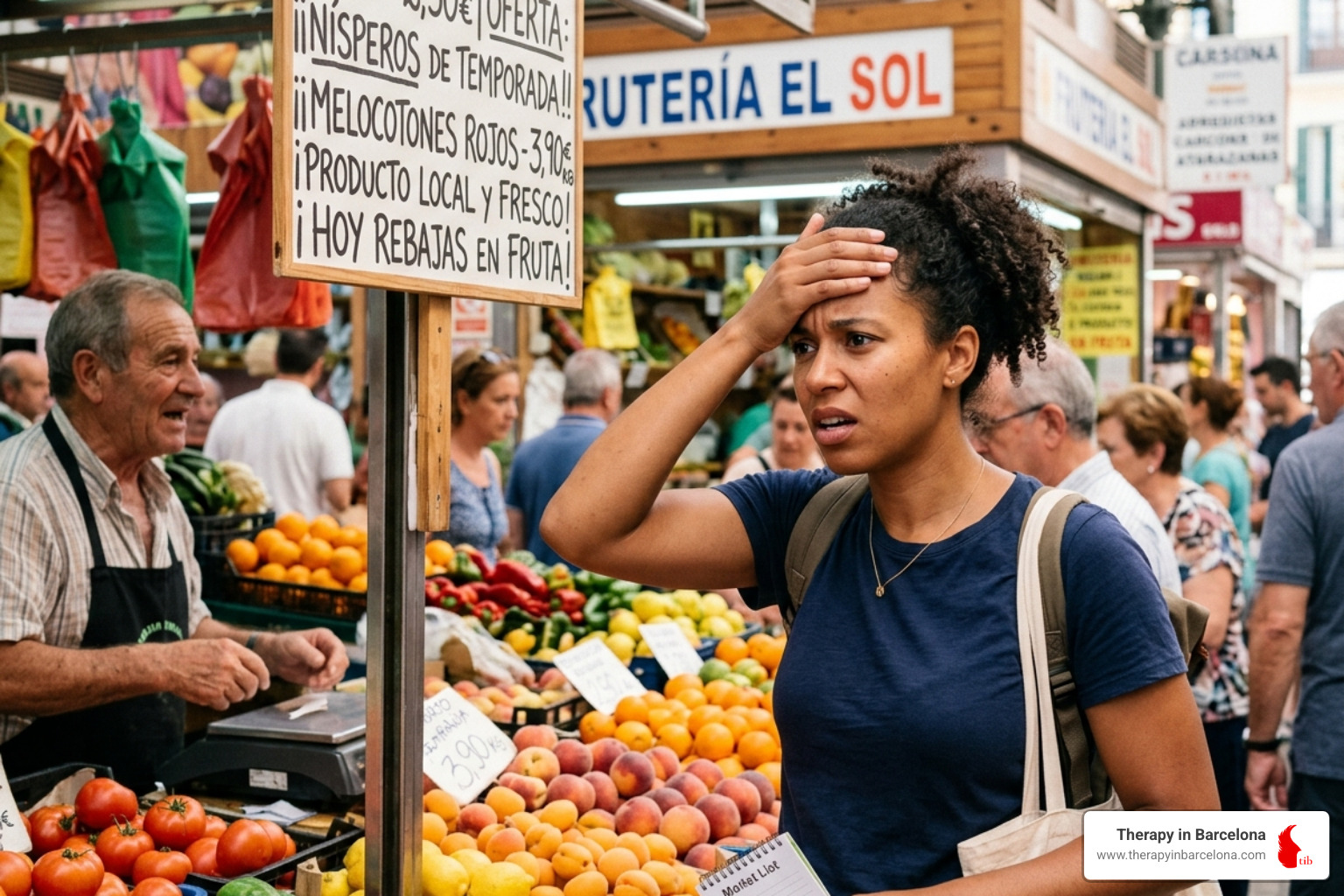
Culture shock is rarely caused by one dramatic moment. More often, it builds through small daily stresses: struggling to read supermarket labels, feeling thrown by a bank clerk’s directness, or realising the local pace of life is much slower, or faster, than what you’re used to.
Common factors that contribute to this strain include:
- Language barriers: Even if you speak the language, the mental effort of constant translation is exhausting.
- Loss of social supports: You’ve left behind the friends and family who “just get it.”
- Unfamiliar norms: Values regarding personal space, social etiquette, and even climate can feel abrasive.
The Difference Between Discomfort and True Culture Shock
It’s important to distinguish between simple “newcomer nerves” and true culture shock. Discomfort is momentary—like being annoyed that shops close for siesta. True culture shock is a deeper, more persistent psychological strain. It involves identity shifts where you might feel like a less capable version of yourself. You aren’t just missing home; you are reacting to the total loss of a familiar reality.
Spotting the Signs: Emotional and Physical Symptoms
Culture shock doesn’t just stay in your head; it often shows up in your body. When we are under cultural stress, our nervous system stays in a state of “high alert.”
Emotional and Mental Strain
The emotional signs can show up in different ways. You might notice:
- Intense homesickness: Remembering only the best parts of home while feeling resentful toward your new city.
- Irritability or anger: Feeling unusually frustrated by local habits, communication styles, or social norms.
- Withdrawal: Staying home, avoiding local people, or only spending time with people from your own country.
- Persistent low mood: Feeling flat, unmotivated, lonely, or unsure of where you belong.
Physical Manifestations of Cultural Stress
Research from Investopedia highlights that cultural adjustment often leads to physical symptoms triggered by stress. This might include:
- Sleep disturbances: Insomnia or, conversely, excessive sleeping to avoid reality.
- Appetite changes: Compulsive eating or a total loss of interest in food.
- Physical malaise: Frequent headaches, nausea, or a general sense of being unwell without a clear medical cause.
- Cleanliness obsession: An exaggerated concern for hygiene or the “purity” of food as a way to exert control over an unpredictable environment.
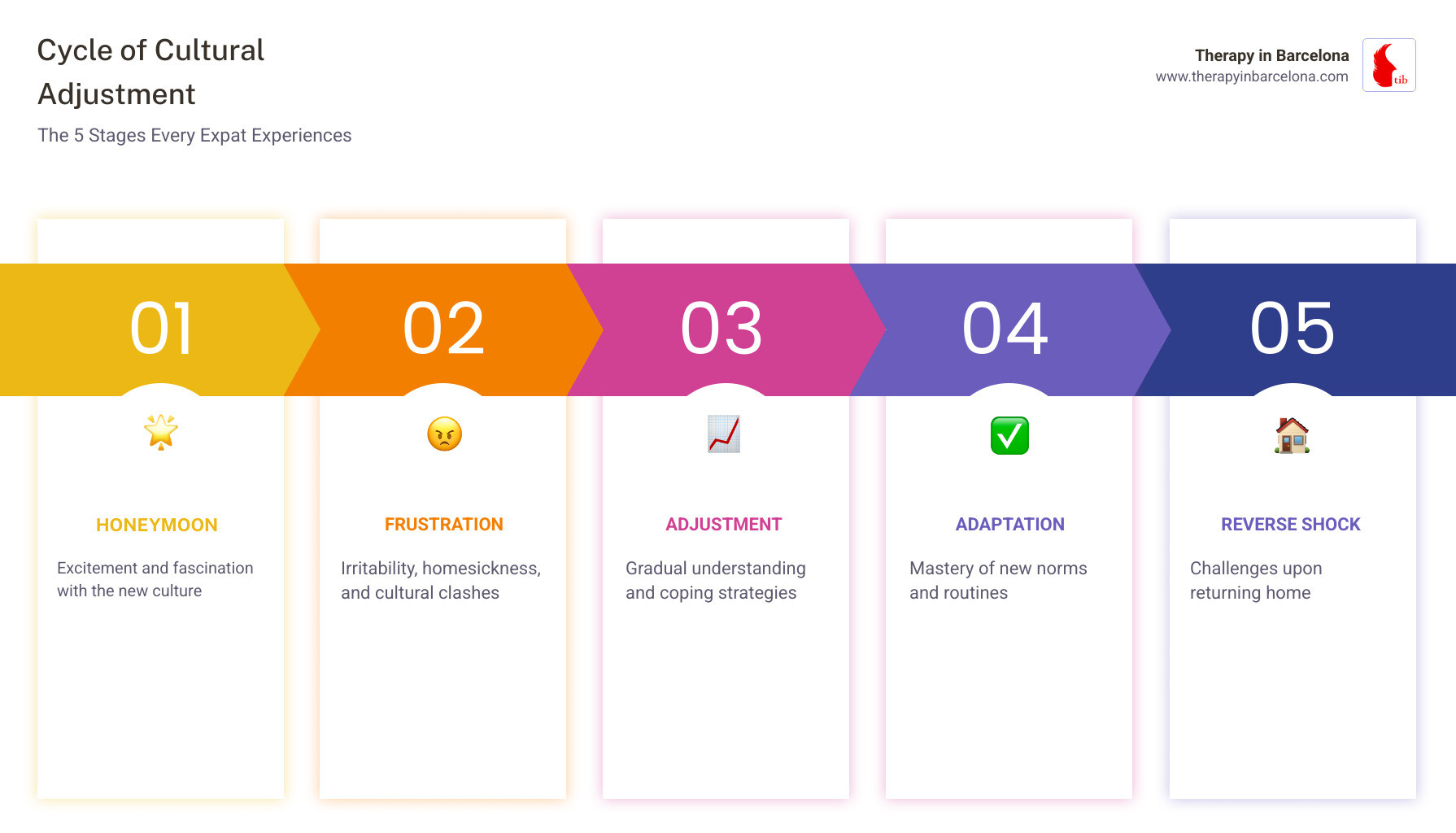
The 5 Key Stages of Coping with Culture Shock
Understanding that you are moving through a predictable cycle can be incredibly grounding. Most people experience these 5 key stages of culture shock:
- The Honeymoon Stage: Everything is new and wonderful. You love the architecture in Barcelona and the weather in Málaga. You’re a tourist on a permanent holiday.
- The Hostility (or Frustration) Stage: The novelty wears off. Bureaucracy becomes a nightmare, and the language barrier feels like a wall. This is the “fight or flight” phase where most people struggle.
- The Recovery Stage: You start to learn the “rules of the game.” You find a favourite cafe, make a few friends, and the local customs start to make sense.
- The Adaptation (or Acceptance) Stage: You feel at home. You no longer compare everything to “back home.” You appreciate the differences and feel capable in your daily life.
- Reverse Culture Shock: This happens when you go back to your home country and realize you—and it—have changed.
How Long Does Adjustment Take?
There is no fixed timeline for coping with culture shock. Some people settle in within weeks; others need months. It depends on your expectations, language confidence, past experience, personality, and support network. Resilience means moving through the discomfort with patience, self-awareness, and help when needed.
Factors Influencing the Intensity of the “Shock”
The “cultural distance” between your home and your new country is a major factor. Moving from the UK to Spain might feel less shocking than moving from Japan to Seville. Your tolerance for ambiguity and your flexibility also dictate how hard the “crash” feels after the honeymoon ends.
Practical Strategies for Adjusting Abroad
Adjusting isn’t a passive process; it requires action. You can’t think your way out of culture shock, but you can act your way into a better state of mind.
Daily Habits for Coping with Culture Shock
Structure is your best friend when life feels chaotic.
- Stick to a routine: Eat, sleep, and exercise at the same time every day. This gives your brain a sense of safety.
- Journaling: Write down your frustrations. It helps you track your progress and realize that “bad days” are temporary.
- Mindfulness: Use techniques like deep breathing to calm your nervous system when the local environment feels overwhelming. We offer essential stress relief tips for expats that focus on these grounding rituals.
Long-term Mindset for Coping with Culture Shock
- Increase Curiosity: Instead of judging a difference, ask why it exists. Looking for the logic behind local customs can turn frustration into fascination.
- Language Learning: Even learning basic greetings can reduce anxiety and build bridges with locals.
- Build Local Connections: While expat groups are great for venting, navigating change is easier when you have at least one local “cultural informant” who can explain things to you.
When to Seek Professional Support for Cultural Adjustment
Sometimes, self-help isn’t enough. If you find that your low mood is persistent, you’re having intense physical episodes of fear, or you’re unable to perform daily tasks like going to work or the grocery store, it’s time to seek professional help.
At Therapy in Barcelona, we specialise in culture shock therapy. We understand that your struggle isn’t a medical condition—it’s a reaction to a massive life transition.
Choosing the Right Support for Your Expat Journey
When looking for help, you’ll likely encounter a few options:
- Public Health Systems: Affordable, but mental health wait times can be long, and language or cultural gaps may make expat issues harder to explain.
- Large Online Platforms: Convenient, but matching is often algorithm-based, with variable continuity and privacy concerns.
- Therapy in Barcelona: Human-led matching, expat-focused therapists, strict privacy, and culturally sensitive support in your native language.
Therapeutic Approaches That Work
Our team uses evidence-based methods tailored to the expat experience:
- CBT (Cognitive Behavioural Therapy): To help you challenge the negative thoughts that arise during the frustration stage.
- ACT (Acceptance and Commitment Therapy): To help you accept the “messiness” of moving and commit to actions that align with your values.
- Mindfulness and IFS (Internal Family Systems): To manage the physical stress and explore the different “parts” of you that might be feeling scared or angry.
Crisis resources: If you are in immediate danger, please contact local emergency services (112 in Spain) or a local crisis hotline.
The “Coming Home” Hurdle: Understanding Reverse Culture Shock
Surprisingly, returning home can feel harder than leaving. This is known as reverse culture shock or re-entry shock. You expect home to be exactly as you left it, but you have changed, and so has the place you called home.
Why Returning Home Can Feel Harder Than Leaving
While abroad, home can become idealised. You remember the comfort, not the stress. When you return, friends may not understand how you have changed, and old routines can feel too small. That in-between feeling is common: not fully there anymore, but not quite here either.
Strategies for a Smoother Re-entry
- Patience: Give yourself the same grace you did when you first moved abroad.
- Maintain Connections: Keep in touch with your international friends. They are the ones who will understand your “reverse homesickness.”
- Integrate New Values: You don’t have to go back to being the person you were before. Take the parts of the foreign culture you loved (like the slower pace of life in Alicante or the social energy of Madrid) and find ways to keep them in your life.
Frequently Asked Questions about Culture Shock
Is culture shock a diagnosable condition?
No, culture shock is not a diagnosable medical condition. It is a natural psychological and emotional response to significant change. However, if left unmanaged, the chronic stress of cultural adjustment can lead to persistent states of low mood or overwhelming worry.
Can you prevent culture shock entirely?
You cannot avoid it entirely because it is a biological and psychological response to your environment. However, you can significantly reduce its intensity by preparing in advance, staying curious, and maintaining a healthy routine.
How do I know if I am making progress in my adjustment?
Progress is usually marked by “small wins.” You’ll know you’re adjusting when you stop constantly comparing everything to your home country, when you can navigate a local bureaucratic hurdle without a meltdown, and when you start to feel a genuine sense of belonging in your new neighbourhood.
Moving Forward with Confidence
Coping with culture shock is an exercise in building cultural resilience. It is one of the most challenging experiences an international can face, but it is also one of the most rewarding. By pushing through the disorientation, you develop a “growing mind” and a deeper understanding of yourself and the world.
Whether you are struggling with the bureaucracy of Barcelona, the social norms of Sevilla, or the isolation of working remotely in Zaragoza, you don’t have to do it alone. The strengths you use to move abroad are the same ones that will help you thrive.
If you’d like support navigating your transition, book a Free Discovery Call. We provide multilingual therapy (including English, German, French, and more) both in-person in Barcelona and online worldwide. Let us help you turn your homesickness into a home-run.
