


Why Understanding Stress Management Matters for Your Well-being

How is stress managed effectively? The answer lies in understanding your body’s natural responses and developing a toolkit of practical strategies that work for you.
Here are the key ways stress is managed:
- The 4 A’s Framework: Avoid, Alter, Adapt, and Accept.
- Physical strategies: Regular exercise, proper sleep (7-9 hours), and balanced nutrition.
- Mental techniques: Deep breathing, mindfulness, and reframing negative thoughts.
- Social support: Connecting with others and building strong relationships.
- Professional help: Seeking therapy when stress becomes unmanageable.
Living as an expat in Barcelona, Valencia, or anywhere in Spain brings unique joys and challenges. One moment you’re marvelling at the Mediterranean sunset, the next you’re wrestling with bureaucracy or feeling isolated. This emotional rollercoaster isn’t a sign of weakness—it’s your body’s natural response to change and uncertainty.
Stress affects a majority of people regularly, and for internationals adjusting to new cultures and languages, the pressure can be even greater. The good news? Stress management isn’t about eliminating all pressure from your life—it’s about learning to respond rather than react.
Whether you’re dealing with work demands in Madrid or cultural adjustment in Málaga, the strategies in this guide offer practical steps to find your balance. Small, consistent changes can create remarkable shifts in how you feel and function.
Understanding Stress and Its Impact
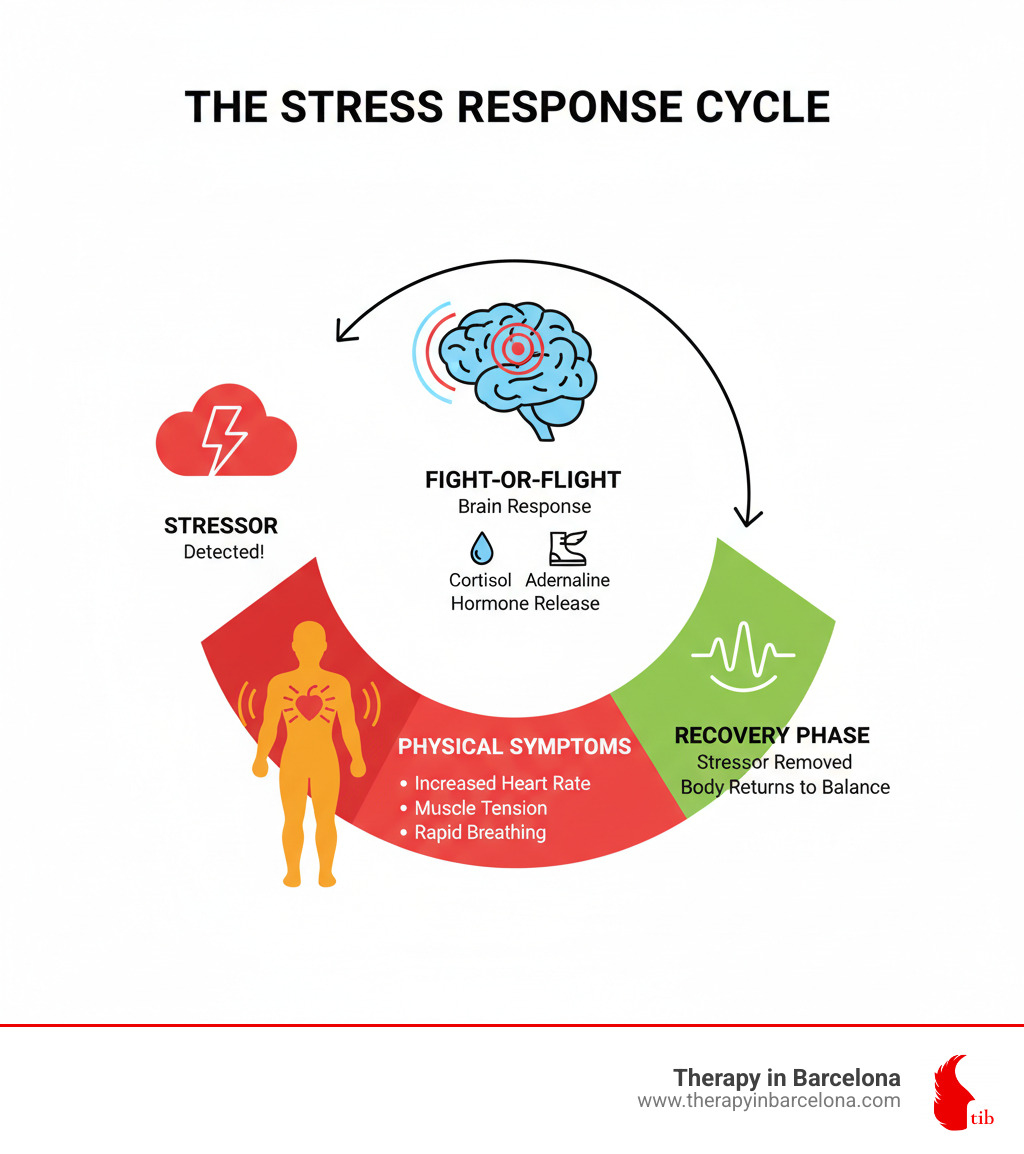
Stress is your body’s built-in alarm system. When you face challenges (stressors), your body kicks into gear with physical and mental responses designed to help you adapt. It’s a natural and universal experience.
How is stress managed by your body naturally? When you perceive a threat, your autonomic nervous system triggers the “fight-or-flight” response. Hormones like adrenaline and cortisol flood your system, increasing your heart rate, quickening your breathing, and giving you a burst of energy. In short bursts, this response is helpful, even life-saving. But when the alarm stays on due to chronic stress, it wears down your body and mind, as detailed in research on the impact of stress on body function.
Stress isn’t a one-size-fits-all experience. It shows up in different forms:
- Acute stress is short-term, coming and going quickly. You might feel it before a presentation at your Barcelona office or during a tense conversation.
- Episodic acute stress occurs when you experience acute stress frequently without enough recovery time, common in demanding careers.
- Chronic stress is the most concerning, persisting for weeks or months. It can stem from ongoing challenges like financial worries or the sustained effort of adapting to a new culture as an expat.
Living abroad brings its own unique stressors. Relocation is a major life event, while work-life balance in cities like Madrid can be challenging. Cultural adjustment, whether in laid-back Málaga or busy Barcelona, requires significant mental energy.
The signs of stress can be physical, psychological, and behavioural.
- Physical symptoms can include aches, exhaustion, headaches, muscle tension, and digestive issues.
- Psychologically, stress may manifest as anxiety, irritability, sadness, or difficulty concentrating.
- Behavioural changes might involve social withdrawal, changes in eating or drinking habits, or increased impatience.
Unmanaged chronic stress can compromise your immune system, affect cardiovascular health, and increase the risk of persistent low moods and overwhelming feelings of worry. Understanding these responses is the first step toward managing them. Your body’s stress system is working as designed; the key is to learn how to work with it.

The 4 A’s: A Practical Framework for Managing Stress
How is stress managed proactively? The “4 A’s” framework—Avoid, Alter, Adapt, and Accept—offers a roadmap for taking charge of your response to stress. Instead of just reacting, you can decide which battles to fight and which to let go, a crucial skill for an expat in Barcelona or Madrid. For more on building healthy habits, explore Mastering Stress: Healthy Habits for a Calm Mind.
Avoid the Unnecessary Stressor
Sometimes, the best strategy is to step away from what’s draining you. This means learning to say no to over-commitments, managing your time to focus on priorities, and limiting contact with people who drain your energy. Paring down your to-do list and controlling your environment, like finding a less stressful commute, are practical ways to avoid unnecessary pressure.
Alter the Situation
When you can’t avoid a situation, try to change it. This often involves communication. Expressing your feelings openly and respectfully can prevent resentment from building. Practise assertive communication to get your needs met and be willing to compromise to find a middle ground, whether with a flatmate in Valencia or a partner.
How is stress managed by adapting your mindset?
If you can’t change the situation, you can change your perspective. This is where the real work of stress management happens.
- Reframe problems. A delayed residency appointment is extra time to prepare. A language barrier in Málaga is proof you’re expanding your world.
- Look at the big picture. Ask yourself: will this matter in five years? This question often provides a calmer context.
- Practise gratitude. Acknowledging what’s going well trains your brain to notice the positive. Research shows that practising gratitude can reduce anxiety and increase happiness.
Accept the Things You Can’t Change
Acceptance isn’t about giving up; it’s about channelling your energy where it can make a difference. Some things, like visa processing times, are beyond your control.
Focus on what you can control, like your response to a situation. Share your feelings with trusted friends or a therapist to gain relief and perspective. Forgiveness—of others and yourself—frees you from resentment. Viewing challenges as opportunities for growth transforms your relationship with difficulty. Every bureaucratic hurdle teaches persistence, and every cultural misunderstanding builds empathy. For more on this, read Mindfulness Calling: A Truce with Our Thoughts and Emotions.
How is Stress Managed Through Healthy Lifestyle Habits?
Building resilience against stress involves cultivating daily practices that fortify your mind and body. Self-care is a necessity, especially when adjusting to expat life in Barcelona, Sevilla, or any new environment. The foundation of how stress is managed lies in your daily choices—the walk you take, the meal you prepare, the sleep you get.

Move Your Body to Soothe Your Mind
Physical activity is a natural stress reliever that boosts feel-good endorphins. Even a brief 10-minute walk can reduce tension. Rhythmic exercises like walking, running, or swimming are particularly calming. Yoga combines postures, breathing, and mindfulness to address both physical and mental tension. In Spain, walking in nature—whether in Valencia’s Turia Gardens or along Málaga’s coast—offers an added mood boost. For more, see Exercise and stress: Get moving to manage stress.
Fuel Yourself Wisely: The Role of Diet and Sleep
What you eat and how you rest profoundly impact your stress levels. A balanced diet with fruits, vegetables, and whole grains provides steady energy. It’s wise to limit caffeine and sugar, as they can amplify your stress response. Staying hydrated is also key, as dehydration can increase irritability. Quality sleep is non-negotiable; research shows most adults need 7 to 9 hours a night to process the day and repair the body, and you can find more on the sleep-stress connection in this research. A relaxing bedtime routine—like reading or listening to music instead of scrolling on screens—signals to your body it’s time to rest.
Find Your Calm: Relaxation and Mindfulness Techniques
These practices offer both immediate relief and long-term benefits.
- Deep breathing is one of the most accessible tools. A few slow, deep breaths can activate your body’s relaxation response anywhere, anytime.
- Progressive muscle relaxation, tensing and then relaxing different muscle groups, helps you release physical tension.
- Journaling helps you process overwhelming thoughts and gain perspective.
- Music and creativity offer a healthy distraction and a sense of accomplishment.
- Social connection is a powerful antidote to stress. Spending quality time with supportive people reminds you that you’re not alone. Building a strong support network as an expat is invaluable for managing stress. For more ideas, explore 10 Ways to Practice Mindfulness Without Hitting a Meditation Mat.
When to Seek Professional Support for Stress
While self-care is vital, there are times when professional support is needed. How is stress managed when your usual coping mechanisms fail? It’s time to reach out if you experience persistent symptoms that don’t improve, or if stress significantly affects your relationships, work, or daily life.
Feeling constantly overwhelmed, helpless, or trapped are valid signals. Relying on unhealthy behaviours like excessive drinking or eating to cope is another sign that you need different tools. Most importantly, if you are experiencing thoughts of self-harm, please seek help immediately. In Spain, you can call 024 for mental health support.

How is stress managed with professional guidance?
Therapy provides a safe, non-judgmental space to process emotions and develop healthier response patterns. A therapist helps you identify the root causes of your stress, understand your triggers, and learn new coping tools. Evidence-based approaches like Cognitive Behavioural Therapy (CBT) help change negative thought patterns, while Acceptance and Commitment Therapy (ACT) helps you commit to actions that align with your values. For more on CBT, explore CBT Therapy for Stress Management.
Finding the Right Support as an Expat in Spain
Finding the right support as an international can be challenging. Public system clinicians are accessible but may have long waiting lists and lack services in English. Large online platforms are convenient but can feel impersonal and may not grasp the nuances of expat life. Local practices may offer English-speaking therapists but might not understand the specific stressors of relocation and cultural adjustment.
Therapy in Barcelona was founded by an expat psychologist to specifically address these gaps. Our approach is different:
- Personalised Therapist Matching: We take the time to match you with a therapist who fits your specific needs, increasing the likelihood of a positive outcome from the start.
- Expat Therapists: Our psychology-trained professionals are also expats. They have first-hand experience with the challenges of living abroad, offering unique empathy and insight.
- Cultural Sensitivity: Our international team provides culturally informed care, which is crucial when navigating life in a new country.
- Flexible Care: We offer online therapy worldwide, and in-person sessions at our office in Barcelona. We are a private-pay service, but some therapists offer sliding scale fees.
- Strict Privacy: We do not sell your data. Your information stays between you and your therapist.
- Quality, Private-Pay Care: High-quality private-pay service focused on clinical excellence.
- Collaborative Expertise: We are a group practice of highly qualified, psychology-trained therapists who share knowledge and offer coordinated support when helpful.
- Languages: We speak English, and some of our therapists also speak German, French, Spanish, Afrikaans, Portuguese, Swedish, Austrian-German and Swiss-German.
- Who we work with: Adults, couples, teens and families.
Frequently Asked Questions about Stress Management
What are the fastest ways to relieve stress?
When you need immediate relief, simple techniques can signal to your nervous system that it’s safe to calm down.
- Deep breathing: A few slow, deep breaths can make a noticeable difference in minutes.
- Sensory grounding: The “5-4-3-2-1” technique (name 5 things you see, 4 you hear, etc.) pulls your focus to the present moment.
- A short walk: Movement helps metabolise stress hormones and clears your head, whether on your block in Barcelona or a park in Valencia.
- Music: A calming song can shift your emotional state quickly.
- Physical release: Simple shoulder rolls or neck stretches can discharge physical tension.
Can stress ever be good for you?
Yes. Not all stress is harmful. “Eustress” is a positive type of stress that motivates and energises you. Think of the excitement before a first date or the focus you feel when working on a meaningful project. This is eustress. It sharpens focus and boosts performance. The stress of learning Spanish in Málaga, while challenging, builds resilience. The key is whether the stress feels manageable and meaningful (eustress) or overwhelming and endless (distress).
How do I know if my stress is serious enough for therapy?
Consider seeking help if stress is negatively impacting your daily life.
- Is it affecting your relationships or work? Snapping at loved ones or struggling to concentrate are key signs.
- Do you have persistent physical symptoms? Chronic headaches, digestive issues, or fatigue can indicate your body is struggling.
- Do you feel hopeless or overwhelmed? If these feelings persist despite your efforts, therapy can provide relief and practical tools.
- Have your coping strategies stopped working? This is often a sign you need additional support.
If you’re having thoughts of self-harm, please seek immediate help by calling 024 in Spain or a local crisis hotline. As one client shared, “To one extent or another, everyone is in need of therapy as not everyone has all the tools and knowledge to take care of their mind.”
Conclusion
Managing stress effectively is a personal journey. There’s no single answer, but the key is realising you have control over your response. Throughout this guide, we’ve explored practical tools, from the 4 A’s framework to lifestyle changes. These are steps you can start using today, whether it’s saying no to a commitment or practising gratitude during your morning coffee in Madrid.
Living as an expat brings unique stressors, and feeling overwhelmed at times is human. The goal isn’t a pressure-free life, but developing the skills to respond thoughtfully when challenges arise.
At Therapy in Barcelona, we understand these pressures intimately. Our team of psychology-trained expat therapists has walked similar paths. Since 2011, we’ve provided culturally sensitive support to internationals in Barcelona, across Spain, and worldwide through our online services.
What sets us apart is our commitment to personalised matching. We take the time to understand your needs and connect you with a therapist whose expertise aligns with your goals. Our multilingual team offers therapy that goes beyond language to cultural understanding, supporting adults, couples, teens and families with issues from anxiety to relationship challenges.
If you’d like support, book a Free Discovery Call. We offer both online therapy worldwide and in-person sessions at our welcoming office in Barcelona’s Eixample district.
You’ve already taken the first step by learning about stress management. Trust yourself to take the next one.
