


From Panic to Peace: Psychotherapy Techniques for Anxiety Relief
Psychotherapy techniques for anxiety can help transform feelings of panic into a sense of peace. If anxiety is a familiar companion in your life, you’re not alone. Many expatriates and internationals feel overwhelmed as they adjust to new environments, steer cultural differences, and explore identity. Anxiety disorders, such as social anxiety and generalized anxiety disorder, are common yet treatable aspects of mental health.
Quick Answers:
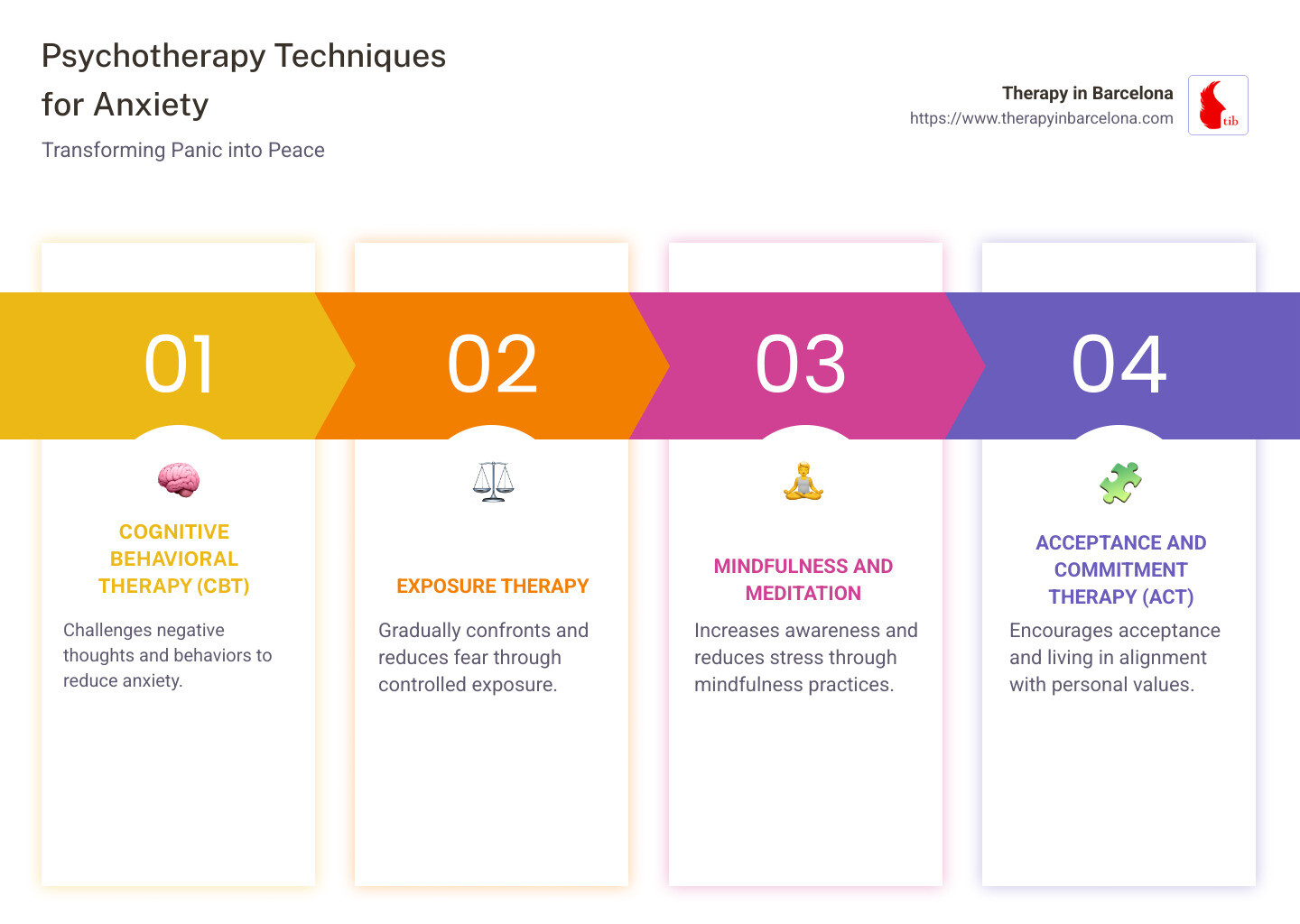
- Cognitive Behavioral Therapy (CBT): Challenges negative thoughts and behaviours.
- Exposure Therapy: Gradually confronts and reduces fear.
- Mindfulness and Meditation: Increases awareness and reduces stress.
- Acceptance and Commitment Therapy (ACT): Encourages acceptance and living in alignment with personal values.
By exploring these psychotherapy techniques, individuals can find pathways to manage their anxiety effectively. Each of these methods has been shown to offer significant benefits by better equipping individuals to handle stress and emotional challenges.
The transformative power of therapy can open doors to understanding and managing anxiety. Whether it’s through redefining thought patterns, embracing mindfulness, or engaging in gradual exposure to fears, therapy offers valuable insights and tools. For those navigating life as an expat or international, these therapies not only address anxiety but also improve overall mental well-being.
Understanding Anxiety Disorders
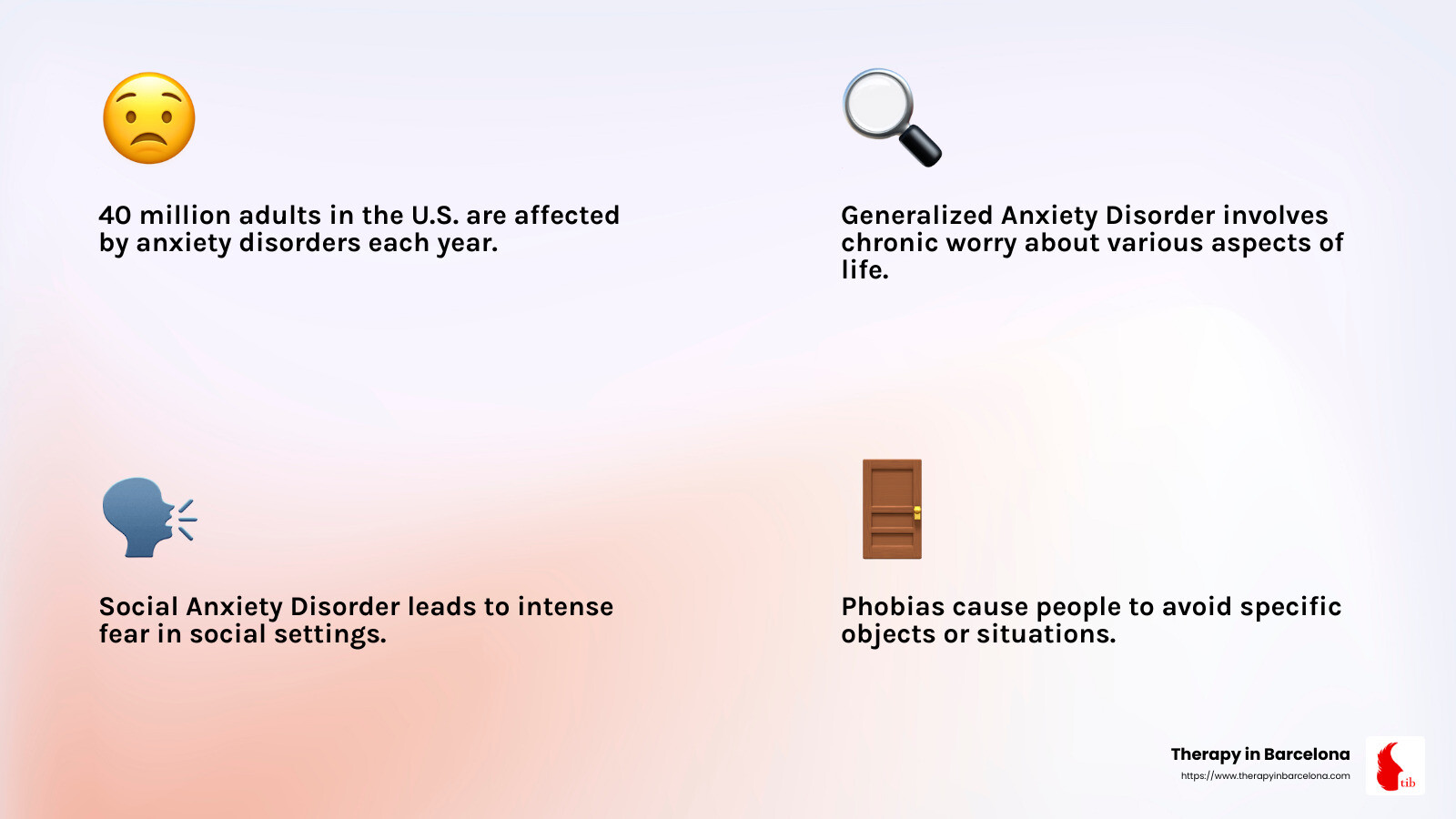
Anxiety disorders are more than just occasional worry or fear. For many, they represent a constant challenge that can impact daily life. Let’s break down some of the most common types of anxiety disorders, with a focus on how they might affect expats living in a new country like Spain.
Generalized Anxiety Disorder (GAD)
Generalized Anxiety Disorder is like a constant hum of unease. Imagine feeling worried about everything—work, health, relationships—even when there’s nothing specific to worry about. This persistent anxiety can lead to physical symptoms like headaches and insomnia. For expats, this might manifest as concerns about adapting to a new culture or language barriers.
Social Anxiety Disorder
Social Anxiety Disorder often feels like a spotlight is on you, even in casual social settings. For those with social anxiety, everyday interactions can trigger intense fear of being judged or embarrassed. This can lead to avoiding social situations altogether. Expats might find this particularly challenging when trying to make new friends or integrate into a new community.
Panic Disorder
Panic Disorder involves sudden and repeated panic attacks. These attacks are intense and can feel like losing control or even having a heart attack. The fear of having another panic attack can be debilitating, affecting daily activities and routines. For someone new to a city like Barcelona, the unfamiliar environment can sometimes exacerbate these feelings.
Phobias
Phobias are intense fears of specific objects or situations. Whether it’s a fear of flying, heights, or spiders, these fears can lead to avoidance behaviors. For example, someone with agoraphobia might avoid leaving their home due to the fear of being in situations where escape might be difficult. This can be particularly isolating for expats trying to explore their new surroundings.
Obsessive-Compulsive Disorder (OCD)
Obsessive-Compulsive Disorder involves unwanted, intrusive thoughts (obsessions) and repetitive behaviors (compulsions). These behaviors are attempts to ease the anxiety caused by the obsessions. For instance, excessive hand-washing to alleviate fear of germs. In a new cultural setting, these compulsions might become more pronounced due to stress and uncertainty.
Posttraumatic Stress Disorder (PTSD)
Posttraumatic Stress Disorder can develop after experiencing a traumatic event. Symptoms may include flashbacks, nightmares, and severe anxiety. Everyday sounds or sights can trigger memories of the trauma, making it difficult to feel safe. Expats who have experienced trauma may find certain aspects of their new environment triggering.
Separation Anxiety
While often associated with children, Separation Anxiety can affect adults too. It involves excessive fear about being apart from loved ones or familiar environments. This anxiety can disrupt normal routines and relationships. For expats, being far from family and friends can intensify these feelings.
Understanding these disorders is the first step in finding the right treatment. Each type of anxiety disorder has its unique challenges, but with the right support and therapy, managing them becomes possible. Therapy in Barcelona offers a culturally sensitive approach to help internationals navigate these challenges.
In the next section, we’ll dig into how psychotherapy techniques for anxiety can offer relief and help individuals regain control over their lives.
Psychotherapy Techniques for Anxiety
When anxiety feels overwhelming, psychotherapy can be a guide of hope. Let’s explore some key psychotherapy techniques for anxiety that can help bring calm and clarity.
Cognitive Behavioral Therapy (CBT)
Cognitive Behavioral Therapy (CBT) is like a mental workout for your brain. It helps you identify and change negative thought patterns. Imagine you’re constantly worried about failing at work. CBT teaches you to challenge this thought by asking, “What evidence do I have that I’ll fail?” This helps shift your perspective to a more balanced view.
CBT is often short-term and involves setting specific goals. It’s effective for many types of anxiety, including social anxiety and panic disorder. Research shows that CBT can be as effective as medication for some people with anxiety disorders.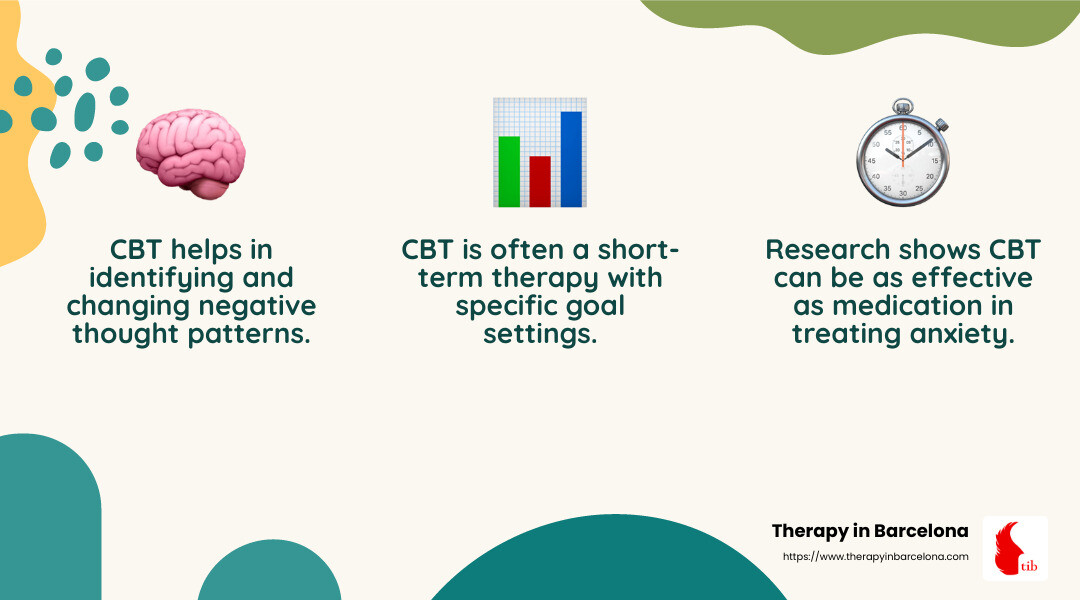
Exposure Therapy
Exposure Therapy is about facing your fears in a safe, controlled way. If you’re afraid of flying, exposure therapy might start with looking at pictures of airplanes, then gradually working up to visiting an airport. This gradual exposure helps reduce fear over time.
It’s particularly useful for phobias, OCD, and PTSD. The goal is to build tolerance and reduce avoidance behaviors, helping you regain control over your life.
Dialectical Behavior Therapy (DBT)
Dialectical Behavior Therapy (DBT) combines cognitive techniques with skills training. It focuses on mindfulness, distress tolerance, and emotional regulation. Imagine you’re feeling overwhelmed by anxiety. DBT teaches you to pause and use mindfulness to ground yourself, rather than reacting impulsively.
DBT is especially helpful for those who struggle with intense emotions and is often used in group settings to build interpersonal skills.
Acceptance and Commitment Therapy (ACT)
Acceptance and Commitment Therapy (ACT) encourages embracing your thoughts and feelings rather than fighting them. It’s like learning to surf on the waves of emotions instead of getting swept away. ACT helps you focus on what truly matters, even when anxiety is present.
Using mindfulness and value-based actions, ACT promotes psychological flexibility. This means accepting what you can’t control and committing to actions that align with your values.
Psychodynamic Therapy
Psychodynamic Therapy dives deep into the unconscious mind. It explores how past experiences shape current behaviors and emotions. If you’re experiencing anxiety, psychodynamic therapy might help uncover hidden fears or unresolved conflicts from your past.
By bringing these unconscious processes to light, you can gain insight into your anxiety and learn healthier ways to cope.
Each of these psychotherapy techniques for anxiety offers unique tools and strategies. Whether it’s challenging negative thoughts, facing fears, or embracing emotions, therapy can guide you toward a more peaceful and fulfilling life.
In the next section, we’ll explore how Cognitive Behavioral Therapy (CBT) specifically targets anxiety, offering concrete techniques to reshape your thought patterns and behaviors.
Cognitive Behavioral Therapy (CBT) for Anxiety
Cognitive Behavioral Therapy (CBT) is a powerful tool for managing anxiety. It focuses on changing negative thought patterns and behaviors that fuel anxiety. Let’s explore some key components of CBT: thought challenging, cognitive restructuring, and behavior therapy.
Thought Challenging
Thought challenging is like being a detective of your own mind. Imagine you’re Emily, a fictional expat who recently moved to Barcelona and feels anxious about starting a new job. She often thinks, “I’ll definitely mess up at work.” In CBT, Emily learns to question this thought. She asks herself, “What evidence supports this?” and “Have I succeeded in similar situations before?” By examining these thoughts, Emily can replace them with more balanced ones, reducing her anxiety.
Cognitive Restructuring
Cognitive restructuring is about reshaping how you perceive situations. It’s similar to adjusting the lens through which you view the world. For example, Emily might initially see a social gathering as a daunting task. Through CBT, she learns to reframe it as an opportunity to meet new friends. This shift in perspective can lead to a significant decrease in anxiety.
Behavior Therapy
Behavior therapy involves taking small, manageable steps to face fears. Suppose Emily avoids speaking in meetings due to fear of judgment. Her therapist might encourage her to start by contributing a small comment. Over time, these small actions build confidence and reduce avoidance, helping Emily engage more fully in her new environment.
CBT is effective for various anxiety disorders, including social anxiety, phobias, and generalized anxiety disorder. Research indicates that many individuals see improvements in just a few sessions. By focusing on both thoughts and behaviors, CBT offers a comprehensive approach to managing anxiety.
In the next section, we’ll explore Exposure Therapy and how it helps individuals face their fears gradually, building resilience and control over anxiety.
Exposure Therapy: Facing Your Fears
Exposure Therapy is a powerful method for helping individuals confront and manage their fears. Imagine you’re Emily, a fictional expat in Barcelona who feels anxious about public speaking. Exposure therapy can help her gradually face this fear, reducing its hold over her life.
Systematic Desensitisation
Systematic desensitisation is a step-by-step approach to conquering fears. It involves creating a list of anxiety-provoking situations and tackling them one by one, from least to most scary. For Emily, this might start with imagining herself speaking in front of a small group. As she becomes more comfortable, she can progress to speaking in larger settings.
Relaxation Techniques
Relaxation techniques are crucial in exposure therapy. They help calm the body’s natural anxiety response, making it easier to face fears. Techniques like deep breathing or progressive muscle relaxation can be practiced before and during exposure exercises. These methods teach Emily to manage physical symptoms of anxiety, such as a racing heart or shaky hands.
Gradual Exposure
Gradual exposure is about taking small, manageable steps. For Emily, this might mean first speaking to a friend, then a small group, and eventually a larger audience. Each step builds confidence and reduces fear. Over time, Emily learns that she can handle anxiety-provoking situations, gaining a sense of control over her fears.
Research shows that exposure therapy is effective for various anxiety disorders, including phobias, social anxiety, and PTSD. By facing fears gradually and with support, individuals like Emily can transform anxiety into resilience.
In the next section, we’ll dig into Dialectical Behaviour Therapy (DBT) Skills and explore how mindfulness, distress tolerance, and emotional regulation can further aid in managing anxiety.
Dialectical Behaviour Therapy (DBT) Skills
Dialectical Behaviour Therapy (DBT) offers essential tools for managing anxiety. This approach focuses on building specific skills to help individuals cope with intense emotions and distress. Let’s explore three key DBT skills: mindfulness, distress tolerance, and emotional regulation.
Mindfulness
Mindfulness is about being present in the moment without judgment. For many expats, like our fictional Emily, living in a new city like Barcelona can be overwhelming. Mindfulness helps by encouraging awareness of thoughts and feelings without getting caught up in them.
Imagine Emily sitting in a busy café, feeling anxious about her language skills. Instead of spiralling into worry, she can practice mindfulness by focusing on her breath or the sounds around her. This simple practice can reduce anxiety by creating a pause between her thoughts and reactions.
Distress Tolerance
Distress tolerance skills are about handling difficult situations without making them worse. They help individuals survive immediate emotional crises. Techniques like ACCEPTS (Activities, Contributing, Comparisons, Emotions, Push away, Thoughts, Sensations) provide practical ways to cope.
For Emily, who might feel homesick, distress tolerance could involve engaging in a favourite hobby or calling a friend back home. These strategies offer temporary relief, allowing her to steer challenging emotions more effectively.
Emotional Regulation
Emotional regulation focuses on understanding and managing emotions. It involves recognising emotions, reducing vulnerability to negative emotions, and increasing positive experiences.
Consider Emily’s anxiety about making friends in a new city. Emotional regulation skills might help her identify triggers, such as social gatherings, and develop strategies to manage them. This could include setting small, achievable social goals or practicing positive self-talk.
DBT skills empower individuals like Emily to handle anxiety with greater ease and resilience. By integrating mindfulness, distress tolerance, and emotional regulation, DBT provides a comprehensive toolkit for managing the emotional ups and downs of expat life.
In the next section, we’ll explore Self-Care and Lifestyle Changes and how they complement therapeutic techniques in managing anxiety.
Self-Care and Lifestyle Changes
Anxiety can feel like a constant companion, but self-care and lifestyle changes can make a big difference. Let’s explore how exercise, relaxation techniques, social support, and healthy habits can help manage anxiety.
Exercise
Physical activity is a powerful tool for reducing anxiety. According to a study by Nyberg et al., regular exercise releases endorphins, which are natural mood lifters. Imagine Emily, our fictional expat, starting her day with a jog along Barcelona’s beautiful beaches. This simple routine not only boosts her mood but also helps her cope with the stresses of living in a new city.
Exercise doesn’t have to be intense to be effective. Even a brisk walk or a short yoga session can help clear the mind and reduce anxious feelings.
Relaxation Techniques
Relaxation techniques are essential for calming the mind and body. Practices like square breathing or the 54321 grounding exercise can be particularly helpful. Picture Emily feeling overwhelmed by her new job. She takes a moment to practice square breathing—breathing in for four counts, holding for four, exhaling for four, and holding again. This simple technique helps slow her racing heart and brings her back to the present moment.
Social Support
A strong social network can significantly impact mental health. Harandi et al. found that social support can improve one’s ability to manage anxiety. For expats like Emily, building connections in a new city is crucial. Joining a local club, attending community events, or even participating in a support group can provide much-needed connection and understanding.
If opening up to new friends feels daunting, online support groups can also offer valuable connections and insights.
Healthy Habits
Small changes in daily habits can have a big impact on anxiety. Reducing caffeine and nicotine, maintaining a balanced diet, and getting enough sleep are key. Imagine Emily replacing her afternoon coffee with a calming herbal tea and finding that her anxiety levels decrease.
Creating a structured daily routine can also be beneficial. As noted in a Harvard Business Review article, time management can positively impact mental health. Emily might start her day with a to-do list, helping her feel more in control and less anxious.
By integrating these self-care and lifestyle changes with therapeutic techniques, individuals can better manage anxiety and find peace in their daily lives. Next, we’ll move on to some Frequently Asked Questions about Psychotherapy Techniques for Anxiety and explore common queries like the 3 3 3 rule and the best psychotherapy options.
Frequently Asked Questions about Psychotherapy Techniques for Anxiety
What is the 3 3 3 rule for anxiety?
The 3 3 3 rule is a simple grounding technique that helps bring you back to the present moment when anxiety strikes. Here’s how it works:
- Look around and name three things you see.
- Listen carefully and identify three sounds you hear.
- Move three parts of your body, such as your fingers, toes, or shoulders.
This technique interrupts anxious thoughts and redirects your focus to your surroundings, making it a powerful tool for calming the mind.
What is the 5 things technique for anxiety?
The 5 things technique, also known as the 54321 grounding exercise, is a mindfulness practice that uses sensory awareness to reduce anxiety. It involves:
- 5 things you can see: Look around and name five things you see in your environment.
- 4 things you can feel: Notice four things you can feel, like the texture of your clothes or the warmth of the sun.
- 3 things you can hear: Listen for three distinct sounds around you.
- 2 things you can smell: Identify two scents, or if you can’t smell anything, think of your favorite scents.
- 1 thing you can taste: Focus on one thing you can taste, like sipping water or imagining a taste.
This exercise helps ground you in the present, easing the grip of anxiety.
What is the best psychotherapy for anxiety?
Choosing the best psychotherapy technique depends on individual needs and preferences. However, two of the most effective methods are Cognitive Behavioural Therapy (CBT) and Exposure Therapy.
Cognitive Behavioural Therapy (CBT) is highly effective for anxiety. It focuses on identifying and challenging negative thought patterns. By changing these thoughts, you can alter your emotional response to anxiety-inducing situations. CBT is often short-term and structured, making it accessible and practical.
Exposure Therapy is a type of CBT that helps you face your fears in a controlled environment. Gradual exposure to anxiety triggers can reduce fear over time. This technique is particularly useful for phobias and PTSD, as it helps you build resilience against anxiety.
Both therapies are backed by extensive research and have shown significant success in helping individuals manage anxiety. By understanding these psychotherapy techniques for anxiety, you can make informed decisions about your mental health journey.
Next, we’ll dig into more detailed aspects of these therapies and explore how they can be custom to suit individual needs.
Conclusion
At Therapy in Barcelona, we understand that living in a foreign country presents unique challenges, especially for expats dealing with anxiety. Our mission is to offer culturally sensitive support that addresses these specific needs, ensuring that therapy is not only effective but also empathetic and relatable.
Personalised Therapist Matching
One of the standout features of Therapy in Barcelona is our personalised therapist matching process. We recognise that the therapeutic relationship is crucial for effective treatment. By carefully matching clients with therapists who understand their cultural background and personal challenges, we improve the likelihood of successful outcomes. This approach ensures that clients feel understood and supported from the very first session.
Culturally Sensitive Support
Navigating life in a new country can bring about feelings of isolation, cultural shock, and anxiety. Our team of multilingual therapists, many of whom are expats themselves, are uniquely equipped to provide culturally sensitive care. They bring a deep understanding of the expatriate experience, making Therapy in Barcelona a sanctuary for those seeking comfort and guidance in a foreign land.
Our commitment to providing a range of therapeutic approaches, including Cognitive Behavioural Therapy (CBT), Acceptance and Commitment Therapy (ACT), Somatic Therapy or Body Based approaches and more, ensures that every client can find a method that resonates with them. We tailor our services to meet the diverse needs of the international community, helping individuals, couples, children, and families steer the complexities of expat life.
If you’re looking for a supportive and understanding community to help you manage anxiety and other mental health challenges, consider reaching out to Therapy in Barcelona. Our expert team is ready to guide you on your journey towards healing and personal growth.
