


Navigating Relationship Challenges: Essential Questions for Couples Counseling

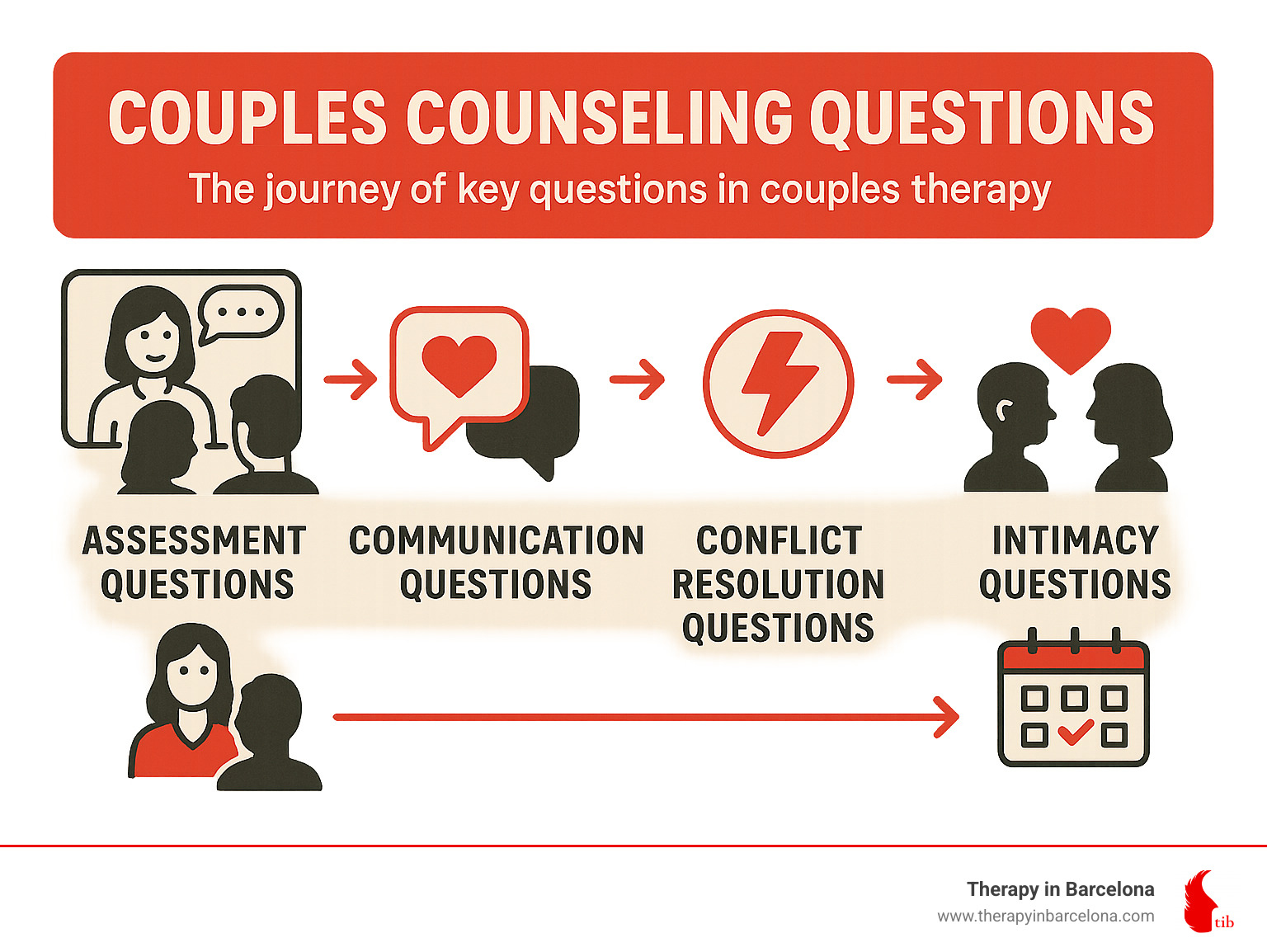
Couples counseling questions are powerful tools that help partners explore their relationship dynamics, improve communication, and build stronger connections. If you’re searching for effective questions to address in therapy, here’s a quick guide:
Key Types of Couples Counseling Questions:
- Communication Questions: “How do you feel when your partner interrupts you?” “What would help you feel more heard?”
- History & Connection Questions: “What first attracted you to your partner?” “What are your favorite memories together?”
- Conflict Resolution Questions: “What patterns do you notice in your arguments?” “How do you repair after disagreements?”
- Intimacy & Trust Questions: “What helps you feel emotionally safe?” “How do you define intimacy in your relationship?”
- Future Vision Questions: “Where do you see your relationship in five years?” “What shared goals are most important to you?”
When couples face relationship challenges, especially in the context of expat life with its unique stressors, finding the right questions to explore together can make all the difference. Couples counseling questions serve as conversation bridges, helping partners understand each other more deeply and work through difficulties with greater empathy and clarity.
Studies show that couples typically wait an average of 2.68 years after problems arise before seeking professional help. This delay often allows issues to become more entrenched and difficult to resolve. However, couples who engage in therapy have a 30% higher chance of experiencing long-term relationship success compared to those who don’t seek support.
Whether you’re navigating cultural differences, communication breakdowns, or simply wanting to strengthen your bond, the right questions can open doors to deeper understanding and connection. In this guide, we’ll explore essential questions that therapists use to help couples move from strain to strength in their relationships.
When Should Couples Seek Counseling?
Knowing when to reach out for professional help can be one of the toughest decisions couples face. Is it when conversations turn into arguments more often than not? When trust begins to crack? Or perhaps when you’re both considering whether the relationship can even continue?
The truth is, there’s no perfect moment—but timing does matter tremendously.
Early intervention beats crisis mode
Research paints a clear picture: addressing relationship issues early leads to significantly better outcomes. Yet most couples wait an average of 2.68 years after problems begin before seeking help—a period when small irritations often grow into deeply entrenched patterns that become much harder to change.
“One of the most common regrets we hear from couples is that they wish they’d come in sooner,” says Leigh Matthews, Australian Psychologist and founder of Therapy in Barcelona. As an expat herself, Leigh understands the unique pressures international life places on relationships. “Living abroad can amplify relationship stress—you’re often without your usual support networks, navigating cultural differences, and perhaps dealing with language barriers.”
For expatriate couples in Barcelona and beyond, these additional stressors can accelerate relationship difficulties:
- Cultural differences in how you communicate and express emotions
- Disagreements about adapting to local customs and lifestyle
- Career imbalances when one partner follows the other abroad
- Navigating expectations from family members across different cultures
- Clashing approaches to parenting influenced by diverse backgrounds
When you address these challenges early, you can prevent the buildup of resentment and toxic communication patterns that make reconciliation so much harder later on.
Signs it’s time to book that first appointment
While preventive counseling is ideal (think of it as relationship maintenance rather than crisis intervention), certain signs clearly indicate that professional help would be beneficial:
Communication has become negative or non-existent. When discussions regularly spiral into arguments, or you’ve stopped talking altogether about important matters, it’s time to seek help. Silence can be as damaging as constant fighting.
The same conflicts keep recurring. If you’re having the same argument over and over with no resolution—whether about money, intimacy, or how to load the dishwasher—you’re stuck in a pattern that likely needs outside perspective.
One or both partners are considering affairs or separation. Thoughts of finding connection elsewhere signal serious disconnection that deserves immediate attention.
Major life transitions are causing strain. Relocation, career changes, becoming parents, or empty nesting can all trigger relationship difficulties that benefit from professional guidance.
Cultural or value differences are creating ongoing tension. Especially relevant for intercultural couples navigating different backgrounds and expectations about everything from gender roles to holiday traditions.
Intimacy has significantly decreased. Whether physical or emotional connection has diminished, this often signals deeper issues that need addressing.
Financial disagreements have become a source of conflict. Different approaches to money management can create stress that affects all areas of your relationship.
For expat couples specifically, it’s worth considering counseling when:
- The stress of adapting to Barcelona or a new country is spilling into your relationship
- One partner is thriving in the new environment while the other struggles to adjust
- You disagree about how long to stay abroad or where to settle next
- Extended separation due to work assignments is straining your connection
Seeking counseling isn’t admitting failure—it’s a proactive step toward strengthening your relationship. Couples who attend therapy together are 30% more likely to experience long-term relationship success compared to those who don’t seek support when facing challenges.
Scientific research on therapy timing confirms that early intervention significantly improves outcomes. To learn more about how couples therapy works, visit our guide on The Art of Healing.
What Happens in Your First Couples Counseling Session?
First sessions can feel intimidating, especially if you’ve never been to therapy before. Understanding what to expect can help ease anxiety and prepare you for a productive experience.

“We take time to ensure we make the best match between therapist and client,” explains Leigh Matthews, founder of Therapy in Barcelona. “Some potential clients find this information-gathering a hassle, but it is key to providing a personalised and effective service.”
This careful matching process is especially valuable for expat couples. When you’re already navigating the complexities of international life together, being paired with a therapist who understands the unique challenges of cross-cultural relationships can make all the difference in how quickly you feel understood and supported.
Your first session typically unfolds as a gentle but structured conversation. Your therapist will help create a comfortable atmosphere, explain confidentiality boundaries, and begin exploring your relationship journey—from how you met to what’s brought you to therapy now. Rather than diving straight into problems, most therapists also take time to identify your relationship strengths, which creates a foundation of hope and reminds you both of what initially connected you.
The session usually wraps up with a preliminary discussion about goals and what you hope to achieve together. Your therapist will also explain their approach and answer any questions you might have about the process ahead.
Setting shared goals together
One crucial aspect of the first session is beginning to establish shared goals. Your therapist will help you articulate what success looks like for your unique situation, ensuring that both partners feel heard in this process.
Effective relationship goals are specific, measurable, and mutually agreed upon. For expat couples, these might include improving communication around cultural differences, finding compromise on key decisions like how long to stay abroad, rebuilding connection after a period of transition stress, or developing healthier ways to steer family expectations across cultures.
Having clear, shared objectives gives your therapy sessions direction and purpose. It also allows you to track your progress over time, celebrating small wins as you move toward your larger relationship goals.
Key first-session couples counseling questions
During your initial session, your therapist will ask thoughtful couples counseling questions designed to understand your relationship dynamics and concerns. These questions help establish a foundation for therapy and give your therapist insight into your unique patterns.
For most couples, these questions explore areas like what brought you to therapy now, how your relationship was at its best, your main current concerns, what you’ve already tried to address issues, and how you hope your relationship will change through therapy.
Intercultural and expat couples can expect additional couples counseling questions that address your specific circumstances:
“How have cultural differences impacted your relationship dynamics?”
“What challenges has living abroad created in your partnership?”
“How do you steer differences in family expectations across cultures?”
“What aspects of your partner’s culture do you appreciate or find challenging?”
These questions begin the process of helping you see your relationship from new perspectives. They also help your therapist understand the unique stressors you face as an international couple, allowing them to tailor their approach to your specific needs.
Your first session is just the beginning of your journey. You don’t need to have all the answers or solve everything immediately. The goal is simply to start the conversation and establish a comfortable working relationship with your therapist—creating a foundation for the deeper work to come.
Top Couples Counseling Questions to Open up Deeper Connection
Have you ever felt like you and your partner were speaking different languages? The right questions can bridge that gap, opening doorways to understanding that might otherwise remain closed.
“The goal of these couples counseling questions isn’t to criticize or blame,” explains Leigh Matthews. “Instead, they foster understanding, empathy, and growth. Questions should always come from a place of curiosity, not accusation.”
Let’s explore the questions that therapists use to help couples transform their relationships, organized by the areas that matter most.
Communication & Conflict: couples counseling questions that create clarity
Most couples who seek therapy are struggling with how they talk to each other. The right questions can help identify patterns and improve both speaking and listening skills:
“What happens during conversations that seems to make communication break down for you?” This question helps identify specific triggers rather than placing blame.
“How do you feel when your partner raises their voice or goes silent during disagreements?” Understanding emotional reactions can lead to greater empathy.
“What would help you feel more heard and understood?” This focuses on solutions rather than problems.
For expat couples juggling multiple languages, communication challenges can be even more complex. Questions like “How does communicating in a non-native language affect your ability to express emotions?” address the unique struggles of intercultural relationships.
Cultural differences in communication styles often go unnoticed until they cause problems. A therapist might ask, “What cultural differences do you notice in how you each approach conflict?” to bring these differences into awareness.
Trust & Intimacy: couples counseling questions that rebuild closeness
The foundation of any secure relationship is trust and intimacy. When these are damaged, specific questions can help rebuild connection:
“When do you feel most emotionally connected to your partner?” This highlights positive moments to build upon.
“What helps you feel safe enough to be vulnerable?” Understanding safety needs is crucial for deeper intimacy.
“How would you describe the quality of your sex life, and what would make it more satisfying?” Direct questions about physical intimacy open important conversations many couples avoid.
For couples working through betrayal or trust issues, more targeted questions help: “What specific actions would help rebuild trust between you?” or “What boundaries would help you feel more secure in this relationship?”
These questions move beyond blame to focus on concrete steps toward healing.
Money, Family, and Culture: practical couples counseling questions
Daily life matters often become significant sources of conflict. These questions address the concrete aspects of building a life together:
“What are your expectations when it comes to financial security?” Money views are often deeply rooted in our upbringing and culture.
“How do your cultural backgrounds influence your views on money management?” This question is particularly relevant for intercultural couples.
“What role do you expect your partner to play with your extended family?” Family relationships can be especially complicated across cultures.

For expatriate and intercultural couples, additional questions help steer unique challenges: “How do you handle holidays and traditions from different cultural backgrounds?” or “What aspects of each other’s cultures do you want to preserve in your relationship?”
Living abroad adds another layer of complexity. “What challenges has relocation created in your relationship?” helps couples name and address expatriate-specific stressors.
Future Vision & Growth: solution-focused couples counseling questions
Looking toward the future with hope and shared purpose can reinvigorate a relationship that feels stuck. These questions help couples co-create their vision:
“Where do you see your relationship in five years? Ten years?” This encourages thinking beyond current problems.
“What shared dreams or goals would you like to work toward together?” Finding common purpose strengthens bonds.
“How can you support each other’s individual growth while strengthening your partnership?” This acknowledges both personal and relationship needs.
A particularly powerful technique is the “Wonder Question,” which helps couples envision positive possibilities: “Suppose tonight, while you slept, a miracle occurred. When you wake up tomorrow, what would be the first small sign you’d notice that things were better between you?”
This future-oriented approach moves couples beyond current problems to create the relationship they truly want. Rather than dwelling on what’s wrong, it focuses energy on what could be right.
By exploring these carefully crafted couples counseling questions with a skilled therapist who understands the unique challenges of expatriate life, couples can find new pathways to connection and understanding. The questions themselves become tools that couples can continue to use long after therapy ends, maintaining the growth they’ve achieved together.
At-Home Tools: Exercises, Worksheets, and Conversation Starters
The real magic of couples therapy happens between sessions, in the everyday moments you share. Having practical tools to continue your growth at home can make all the difference in building lasting connection.
Step-by-step routines for busy expats
Living abroad often means juggling demanding careers, cultural adaptation, and limited support networks. As expats ourselves at Therapy in Barcelona, we understand these unique pressures. Here are some time-efficient practices that fit into even the busiest international lifestyles:
Daily micro-connections make a huge difference when you’re both stretched thin. Try a simple 5-minute check-in before bed: share one highlight and one challenge from your day, express one thing you appreciated about your partner, and mention one need you have for tomorrow. These brief moments of connection add up significantly over time.
For a more structured approach, consider a weekly relationship “CEO meeting” – yes, that’s what we call it! Set aside 30 minutes at the same time each week (Sunday mornings work well for many couples) to handle the business side of your relationship. Review your upcoming schedule, address any small irritations before they grow, acknowledge each other’s efforts, and express needs clearly. Ending with appreciation helps maintain a positive tone.
Once a month, carve out a deeper connection date (about 2 hours) where you choose one meaningful topic from the couples counseling questions we’ve explored. Take turns sharing your thoughts without interruption, practice reflective listening (“What I hear you saying is…”), and identify one small action step each. The key is scheduling something fun afterward – maybe trying a new restaurant in Barcelona or taking a beach walk – to end on a positive note.
DIY couples counseling questions for Sunday brunch
There’s something special about combining meaningful conversation with a relaxed meal. Many of our expat clients create beautiful rituals around Sunday brunch – a perfect time to connect more deeply.
One favorite approach is creating a question jar filled with conversation starters. Write individual couples counseling questions on slips of paper, place them in a decorative container, and take turns drawing and answering during meals. The key is listening without judgment or interruption, and expressing gratitude for sharing before moving to the next question.
Some sample questions to get you started:
- “What made you smile this week?”
- “When did you feel closest to me recently?”
- “What’s something new you’d like us to try together?”
- “What’s one thing I did this week that you appreciated?”
- “How can I better support you right now?”
Another powerful exercise is strengths spotting. Identify three character strengths you see in your partner and share specific examples of when you’ve seen these strengths in action. For intercultural couples, this can be especially meaningful as you may notice and value different qualities based on your cultural backgrounds. Discuss how these strengths contribute to your relationship and explore how you can create more opportunities to use these strengths together.
The appreciation game is wonderfully simple but remarkably effective. Set a timer for five minutes and take turns sharing things you appreciate about each other. Be specific and detailed – not just “I appreciate your cooking” but “I loved how you remembered to make the pasta al dente just the way I like it.” No criticisms allowed during this exercise – only positive observations. Many couples are surprised by how this short activity shifts their emotional connection.
These exercises build positive interaction patterns that research shows are crucial for relationship satisfaction. According to relationship expert Dr. John Gottman, thriving relationships maintain at least a 5:1 ratio of positive to negative interactions – these at-home tools help tip that balance in the right direction.
For busy expat couples, integrating these practices into your routine creates islands of connection in what can sometimes feel like a sea of stress and cultural adjustment. Even five focused minutes of meaningful conversation can sustain your bond through challenging times.
Measuring Success and Maintaining Growth
How do you know if couples therapy is working? What signs indicate progress, and how can you maintain momentum after formal therapy ends?

When couples counseling questions turn into habits
The real magic of therapy happens when those thoughtful questions you practice in sessions become part of your everyday conversations. You’ll know you’re making progress when you notice these changes:
You’re having conflicts that resolve more quickly rather than dragging on for days. The defensiveness that used to appear instantly now takes longer to surface—or doesn’t appear at all. That feeling of walking on eggshells around certain topics? It’s being replaced by a sense of emotional safety with your partner.
“Clients often tell me they catch themselves using the techniques we practice in session without even thinking about it,” says Leigh Matthews. “That’s when I know the work is really taking hold.”
Other signs of progress include taking more responsibility for your own patterns, feeling genuinely curious about your partner’s perspective, and being able to repair after disagreements without the help of your therapist. Perhaps most importantly, you’ll notice a growing sense of hope about your relationship’s future.
Most couples complete therapy within 12 to 20 sessions, though this timeline varies based on your specific challenges and how actively you engage with the process. Some couples benefit from shorter, solution-focused approaches, while others—particularly those working through complex issues like infidelity or trauma—may need longer-term support.
Research on Emotionally Focused Couple Therapy (EFT) is particularly encouraging, showing increased relationship satisfaction and secure attachment that lasts up to two years after therapy concludes. This suggests that the skills you learn become integrated into your relationship in lasting ways.
Life after therapy: keeping the momentum
The end of formal therapy doesn’t mean the end of your relationship growth. Think of it as graduating—you now have the tools to continue the journey together. Here are some ways to maintain and build on your progress:
Schedule Regular Relationship Check-ins
Create a quarterly “relationship date” where you revisit key couples counseling questions from your therapy:
“What’s going well between us right now?” “Which areas of our relationship could use more attention?” “How connected do we feel on a scale of 1-10?” “What’s one thing we can each do this month to strengthen our bond?”
These check-ins don’t need to be lengthy—even 30 minutes of focused conversation can help you stay on track and address small issues before they grow.
Consider Booster Sessions
Just as your car needs occasional tune-ups, your relationship may benefit from periodic “booster” therapy sessions. These can be especially helpful during major life transitions (new job, moving homes), after significant stressors (family illness, financial setbacks), or around the anniversary of relationship trauma. Some couples schedule a session every six months as preventive maintenance.
Build Community and Support
For expatriate couples in particular, creating community is vital for relationship health. Consider joining couples workshops or retreats, reading relationship books together, or connecting with other international couples who understand the unique challenges of building a life abroad.
“Expat relationships face additional stressors that can strain even the strongest bonds,” notes Leigh Matthews. “Building a support network of other international couples can provide validation and practical strategies for navigating these challenges.”
For couples living the international life, maintaining connection requires extra attention:
Create portable rituals that can travel with you from country to country—perhaps a special way of celebrating anniversaries or a Sunday morning coffee ritual.
Build a relationship toolkit of strategies that work specifically for your partnership, regardless of where in the world you are.
Schedule regular video dates during periods of separation, focusing on quality connection rather than just logistics.
Be gentle with each other during transitions and acknowledge the unique stresses that come with international relocations.
The goal isn’t perfection—it’s progress. By continuing to ask thoughtful questions, maintaining curiosity about each other, and treating your relationship as a priority, you can build on the foundation established in therapy and create a partnership that grows stronger over time.
Frequently Asked Questions about Couples Counseling Questions
How many sessions do most couples need?
Most couples find meaningful change happens over 12-20 sessions, though everyone’s journey is different. Some see significant improvements in just 8-10 meetings, while others benefit from longer-term support.
At Therapy in Barcelona, we typically begin with weekly sessions to build momentum. This creates a rhythm that helps couples practice new skills between meetings and maintain progress. As you begin to see positive changes, we might shift to less frequent sessions.
Your therapy journey often unfolds in natural phases:
First, we spend 1-3 sessions getting to know your relationship through thoughtful couples counseling questions that help us understand your unique dynamics. Then we move into 6-10 sessions of active work, where you’ll learn and practice new communication skills and conflict resolution techniques. As you gain confidence, we’ll spend 3-5 sessions reinforcing these positive changes and preparing you for independence. Many couples then benefit from occasional “booster” sessions during significant transitions or when they notice old patterns returning.
“Think of these occasional check-ins like relationship tune-ups,” explains Leigh Matthews. “They help ensure the tools you’ve developed stay sharp and effective.”
What if my partner is reluctant to attend?
Partner reluctance is incredibly common – you’re not alone in facing this challenge. Hesitation often stems from understandable concerns: fear of being blamed, previous negative experiences with therapy, cultural stigma around seeking help, worries about cost or time commitment, or concern the therapist might take sides.
If your partner is hesitant, try these gentle approaches:
Frame therapy as an investment in your relationship rather than a sign that something is “wrong.” Share specific hopes you have for your future together instead of focusing on problems. Offer to start with just a single session with no obligation to continue – this often reduces the pressure significantly.
For busy expat couples, mentioning our online therapy options can help address scheduling concerns. You might also share information about our therapist matching process, which helps ensure you’ll work with someone who understands your unique situation as an international couple.
Most importantly, express how much the relationship matters to you. A simple, heartfelt statement like “Our relationship is important to me, and I’d really value your partnership in making it even stronger” can make a significant difference.
At Therapy in Barcelona, we understand these concerns and create a balanced, non-blaming environment where both partners feel heard and respected.
How do we know the questions are helping our relationship?
Effective couples counseling questions create positive ripples you’ll begin to notice both during and between sessions. You might find yourselves understanding each other’s perspectives more deeply or feeling more emotionally connected after discussions. Many couples report feeling less defensive during difficult conversations and gaining new insights about patterns they hadn’t noticed before.
The most telling sign is seeing concrete changes in how you interact day-to-day. Perhaps you’re catching yourselves before old patterns take hold, or finding new ways to express needs without triggering defensiveness.
A growing sense of hope and possibility for your relationship is another powerful indicator that the work is making a difference.
It’s worth noting that productive discomfort is sometimes part of growth. Addressing difficult topics may feel challenging initially – that’s normal and even necessary. What matters is whether these conversations ultimately lead to greater closeness and understanding rather than disconnection.
“The questions themselves are tools,” Leigh Matthews explains. “Like any tool, their effectiveness depends on how they’re used. If you find that certain discussions consistently lead to greater conflict or disconnection, bring this up with your therapist. We can adjust our approach to better suit your unique relationship dynamics.”
Growth isn’t always linear. Some sessions might feel more productive than others, and that’s perfectly normal. What matters most is the overall trajectory of your relationship and whether you’re building a stronger foundation of understanding, respect, and connection over time.
Conclusion
When it comes to relationships, especially for those navigating the expat journey, the path from strain to strength rarely follows a straight line. But with thoughtful guidance and the right couples counseling questions, you can build a deeper connection that not only survives but thrives through life’s challenges.
For expatriate and intercultural couples, relationship growth often comes with extra layers of complexity. The stresses of international life—cultural differences, building community in unfamiliar places, maintaining connection through constant transitions—can feel overwhelming. Yet these very challenges, when approached with curiosity rather than judgment, can become the foundation for extraordinary relationship development.
Couples counseling questions become particularly powerful when they acknowledge these unique expat experiences. They help partners explore not just their relationship dynamics but also how their international journey shapes their connection.
At Therapy in Barcelona, we understand these challenges firsthand. Our team of qualified professionals are expats themselves, bringing both clinical expertise and personal understanding to every session. We’ve walked similar paths and steerd our own intercultural relationships, which gives us unique insight into the questions that matter most for international couples.
The journey you’ve begun by exploring these couples counseling questions shows your commitment to growth. It demonstrates how much you value your partnership—enough to be curious, to listen deeply, and to work through challenges together.
If you’re ready to move from relationship strain to strength, we invite you to reach out. Our personalized therapist matching process ensures you’ll work with someone who truly understands your specific situation and concerns as an international couple.
Seeking support isn’t a sign of relationship failure—it’s a powerful commitment to growth and a testament to how much you value your partnership. The questions we’ve explored in this guide are just the beginning of a conversation that can transform your relationship.
Take that first step today. Your relationship is worth it.

